Aircraft
Top 10 Largest Passenger Aircraft in the World
Updated 11 min read
Large Passenger Aircraft Market, October 2026
Fleet status: The Airbus A380 is out of production, with 251 delivered. Boeing built its last 747 in January 2023. The 777-9 is still in certification, with first delivery targeted for 2027.
Production: Only twin-engine jets are built in this size class: the A350-1000 and A350-900, the 787-10 and the 777F freighter. The 777-9 will join them. Four-engine production has ended.
Largest in production: The Airbus A350-1000 (73.79 m long, up to 410 seats). The Boeing 777-9 will be longer at 76.7 m once it is certified.
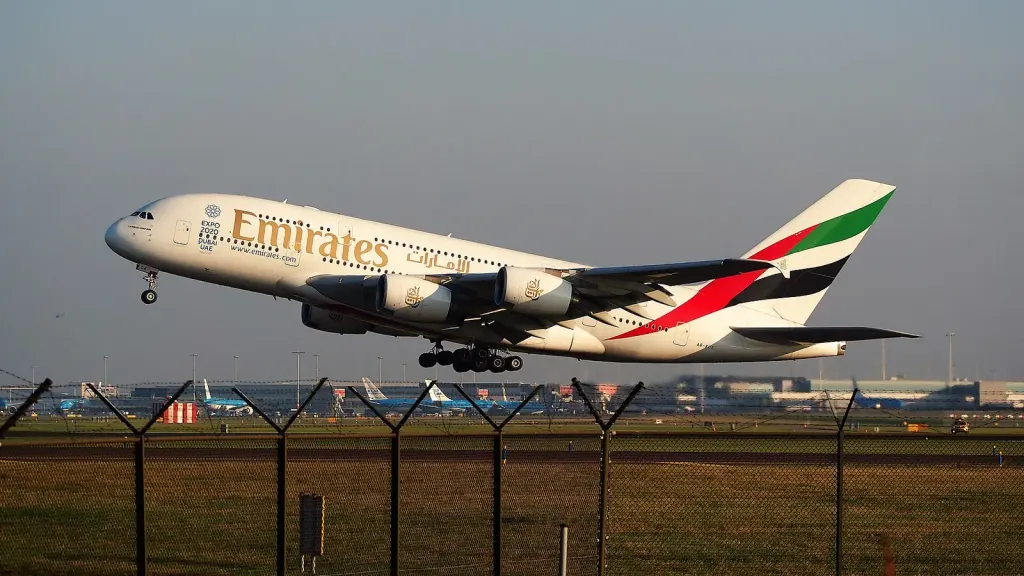
Fleet changes: British Airways retired its 747s in 2020. Lufthansa is phasing out its 747-400s and A380s and scheduled its last A340-600 passenger flight for 18 October 2026. Emirates is the largest A380 operator with about 116 on its books.
Market trends: Twin-engine efficiency is winning with the 787 and A350. More point-to-point flying reduces demand for 500-seat aircraft. The 747 and A380 now fly mostly at big hubs.
How we chose: We looked at each company's own website, its fleet or services, where it operates, and its record in our directory of 21,000+ aviation companies. The Flying Engineer has been online since 2012. Companies cannot pay to be on this list or for their position. Featured companies on our directory are always labelled.
Commercial aviation has changed hugely since the Wright Brothers' first powered flight in 1903. Propeller aircraft gave way to huge widebody jets that connect continents.
This guide ranks the world's largest passenger aircraft by typical seating capacity, size and role.
How We Ranked the World's Largest Passenger Aircraft
We looked at several factors. These aircraft serve the world's busiest airports and the toughest routes.
Seating Capacity
We use typical three-class seating where the maker quotes it. Airlines choose their own layouts, so real seat counts vary. Some ranges overlap, for example the A350-900 (300 to 350 seats) and 787-10 (about 330).
Overall Dimensions
Length, wingspan and maximum takeoff weight (MTOW) add context. They affect payload and which airports can take the aircraft.
Market Relevance
We include aircraft still in production and older types that still serve major airlines.
1. Airbus A380-800: The Largest Passenger Aircraft Ever Built
Length: 72.72m Wingspan: 79.8m Seats: 525 MTOW: 575t Range: 8,000nm Engines: 4
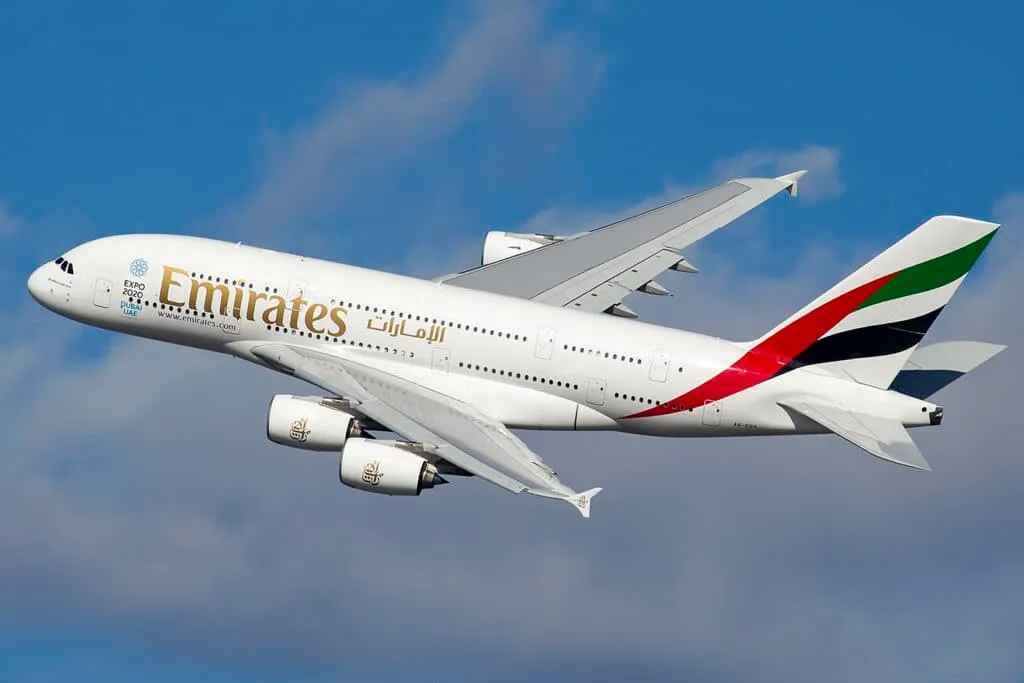
The Airbus A380 is still the largest passenger aircraft ever built. The double-deck, four-engine jet seats 525 passengers in a typical three-class layout. The certified maximum is 853.
It is 72.72 metres long with a 79.8-metre wingspan. The MTOW is 575 tonnes and the range is about 8,000 nautical miles.
Airbus stopped production in 2021. Airlines preferred smaller, more fuel-efficient twin-engine jets. It was not an engineering failure.
A380 Status, October 2026: Airbus delivered 251 A380s. The last one went to Emirates on 16 December 2021. About 190 are on airline books across 10 operators, though some are in heavy maintenance. Fleets on the books in mid-2026 were: Emirates 116, British Airways 12, Singapore Airlines 12, Qantas 10, Etihad 9, Lufthansa 8, Qatar Airways 8, Asiana 6, Korean Air 5 and ANA 3. Air France retired its A380s in 2020.
Future Outlook: Emirates plans to fly the A380 well into the 2030s and beyond. Other airlines have set retirement windows. Lufthansa plans to phase its A380s out around 2030, Qantas from 2028 and Korean Air before 2031.
2. Boeing 747-8: The Largest Boeing Passenger Aircraft
Length: 76.25m Wingspan: 68.4m Seats: 467 MTOW: 448t Range: 7,730nm Engines: 4
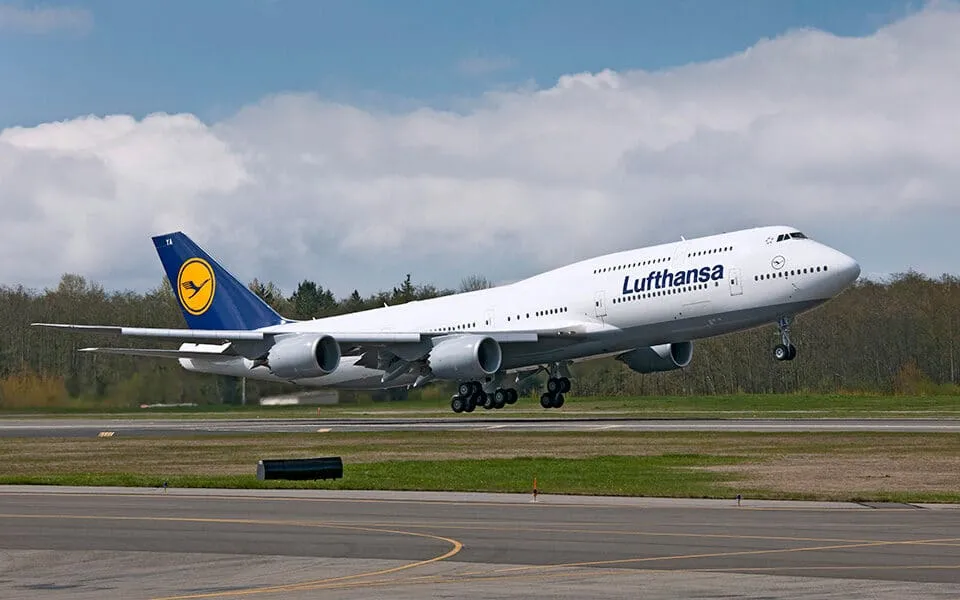
The Boeing 747-8 is the last version of the jumbo jet. At 76.25 metres it is the world's longest airliner in service. The 777-9 will beat it once it is certified. Built by one of the leading aircraft manufacturers, it seats 467 passengers in three classes and has a 68.4-metre wingspan.
Four GE GEnx-2B67 engines power it. Boeing says it is about 16% more fuel-efficient than the 747-400. The MTOW is about 448 tonnes, and the range is about 7,730 nautical miles.
Boeing delivered the last 747, a 747-8 freighter for Atlas Air, on 31 January 2023. That ended a 54-year production run.
747-8 Status, October 2026: Boeing built about 48 passenger 747-8s and 107 freighters. Most passenger aircraft went to Lufthansa (19), Korean Air (10) and Air China (7). Freighters sold much better than passenger jets, partly because Airbus never built an A380 freighter.
Passenger Operations: Lufthansa flies the 747-8 from Frankfurt to several US cities and expects to keep it into the 2030s. Korean Air and Air China also fly it. The 747-8 never sold as well as Boeing hoped. It was too big for most routes, and four-engine economics lost to the 777-300ER and A350.
3. Boeing 777-9: The Next-Generation Widebody
Length: 76.7m Wingspan: 71.8m Seats: 426 MTOW: 352t Range: 8,000nm Engines: 2
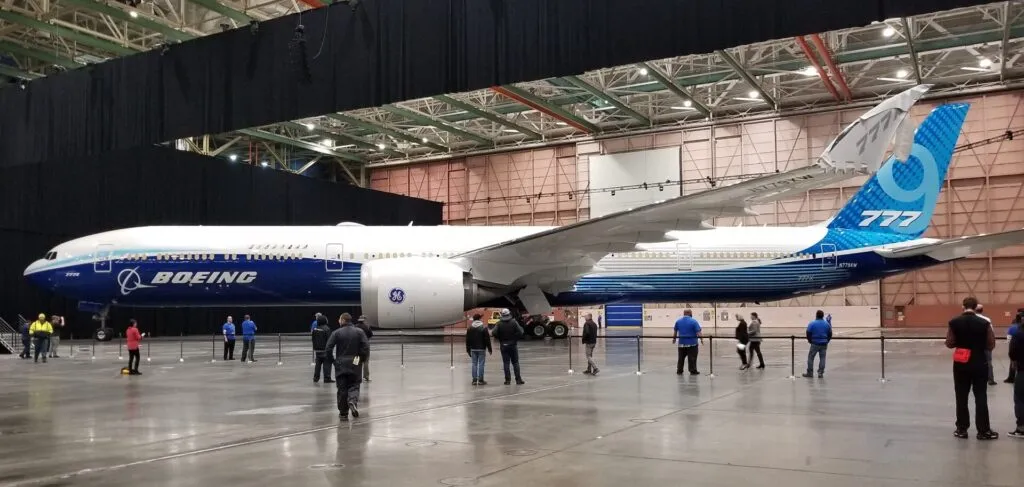
The Boeing 777-9 will be the world's largest twin-engine passenger aircraft when it enters service. It is 76.7 metres long, longer than the 747-8. Boeing quotes 375 to 450 seats in two classes, and about 426 is a typical figure.
Certification Status (October 2026): Boeing's July 2026 report said the test fleet had flown more than 4,800 hours on about 1,700 flights, with about half of the planned certification testing done. Most FAA Type Inspection Authorizations were granted, with TIA 5 and the ETOPS tests still to come. Boeing targets first delivery in 2027.
Development Timeline: The first flight was on 25 January 2020. The aircraft was first meant to enter service in 2020. Inspections found cracked thrust links, the parts that join the engines to the wings, in August 2024. Boeing paused testing and redesigned the part. In late 2025 it took a $4.9 billion charge linked to the delay.
Technical Innovation: Folding wingtips reduce the wingspan from 71.8 metres to 64.8 metres on the ground, so the aircraft fits normal gates. GE9X engines power it. They are among the most powerful commercial turbofans ever built.
Orders and Operators: Boeing holds about 546 orders for the 777-9. The whole 777X family, with the 777-8 and 777-8F freighter, has about 682 orders. Emirates has ordered 270 777X aircraft, Qatar Airways 124, Korean Air 48, Cathay Pacific 35 and Singapore Airlines 31.
Competitive Position: The 777-9 competes directly with the Airbus A350-1000. The A350-1000 entered service in 2018 and has a proven record. The 777-9 offers more capacity once certified.
4. Boeing 747-400: The Queen of the Skies
Length: 70.66m Wingspan: 64.44m Seats: 416 MTOW: 397t Range: 7,285nm Engines: 4
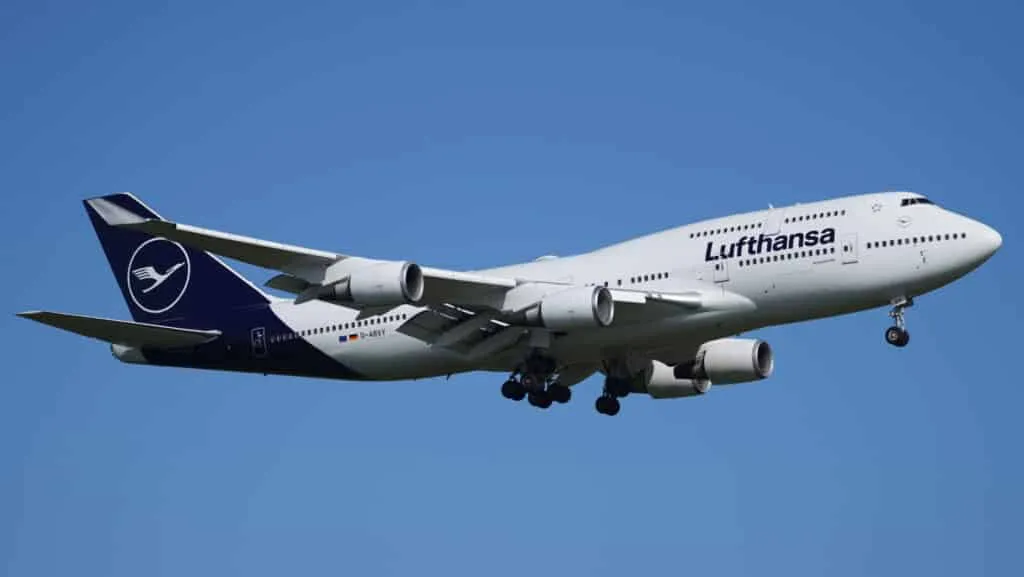
The Boeing 747-400 earned the nickname "Queen of the Skies" over decades on the toughest routes. It seats about 416 passengers in three classes and has the humpbacked shape that defined long-haul travel for a generation. Its fans include the top airlines for business class travel.
It is 70.66 metres long with a 64.44-metre wingspan. The standard MTOW is about 397 tonnes, and the 747-400ER was certified at about 413 tonnes. Boeing built almost 700 747-400s, including freighters and combis.
Most airlines have retired the 747-400 passenger jet for efficient twins. Lufthansa is one of the last operators and plans to say goodbye to the type in 2027. Many 747-400s still fly as freighters.
5. Airbus A350-1000: Longest Airbus Widebody
Length: 73.79m Wingspan: 64.75m Seats: 410 MTOW: 322t Range: 9,000nm Engines: 2
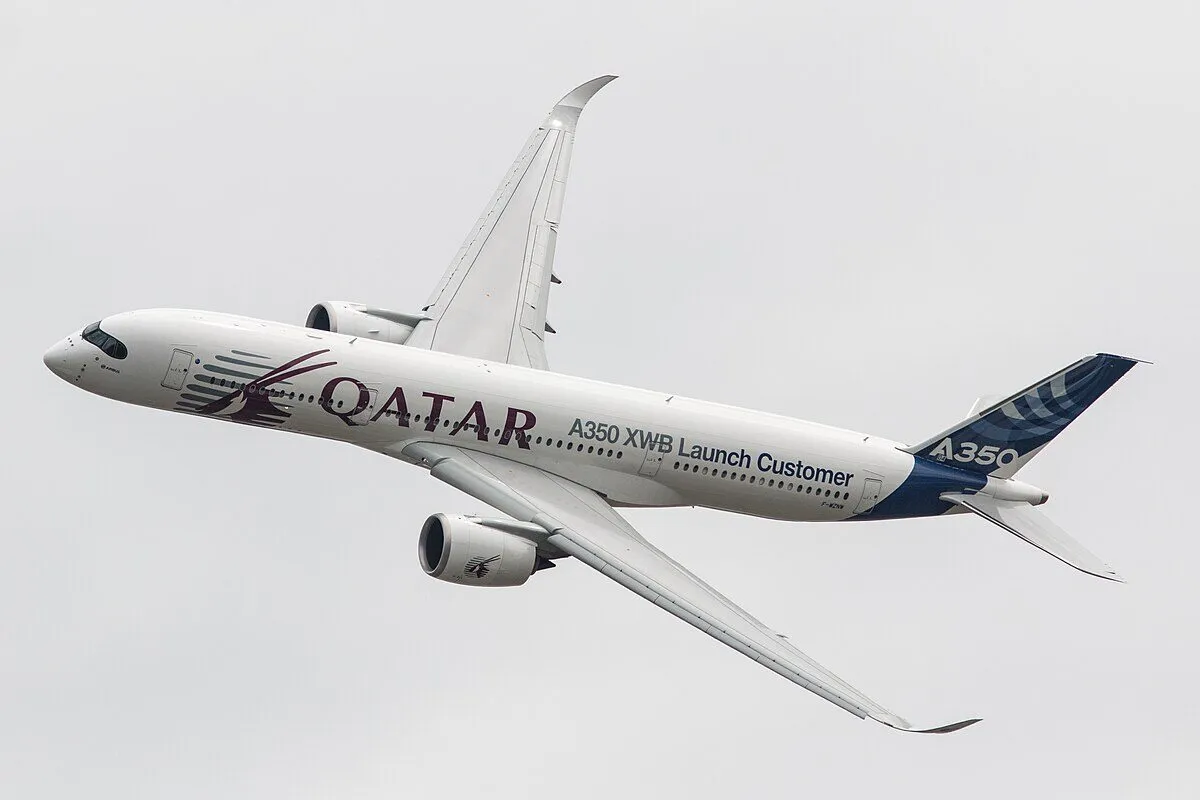
The Airbus A350-1000 is the longest A350. It seats 350 to 410 passengers in a 73.79-metre fuselage and is the largest aircraft in production today by length. Its certified maximum is 480 seats.
Airbus builds about 53% of the A350 from composite materials. Rolls-Royce Trent XWB-97 engines power it. The range is about 9,000 nautical miles and the MTOW is 322 tonnes.
Qatar Airways, Cathay Pacific, British Airways and Etihad fly the A350-1000 on flagship routes. About 120 had been delivered by September 2026, with about 250 more on order. It competes with the Boeing 787 and 777 families.
6. Boeing 777-300ER
Length: 73.86m Wingspan: 64.8m Seats: 396 MTOW: 352t Range: 7,500nm Engines: 2
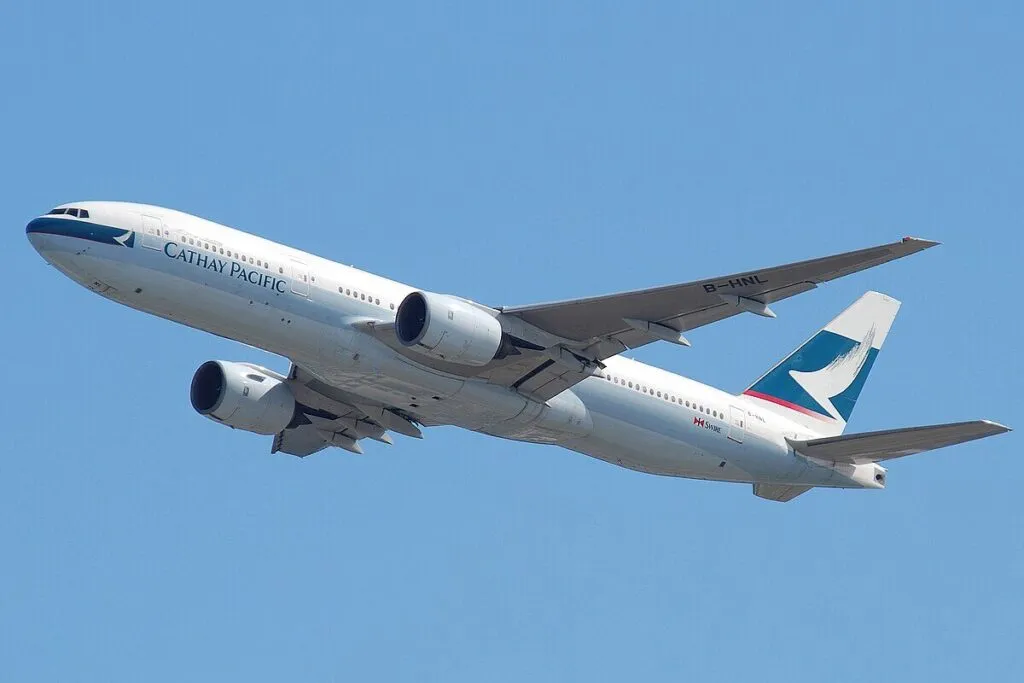
The 777-300ER became the workhorse of long-haul flying. Boeing delivered more than 800 of them from 2004 until the last passenger delivery in 2024. It seats about 396 passengers in three classes, 350 to 425 in two classes, and is 73.86 metres long.
Two GE90-115B engines power it. They were the most powerful turbofans in service when the type launched. The MTOW is about 351.5 tonnes.
Emirates is the largest 777 operator. The 777-300ER replaced many aging 747-400s and burns far less fuel per seat.
7. Airbus A340-600
Length: 75.36m Wingspan: 63.45m Seats: 380 MTOW: 380t Range: 7,800nm Engines: 4
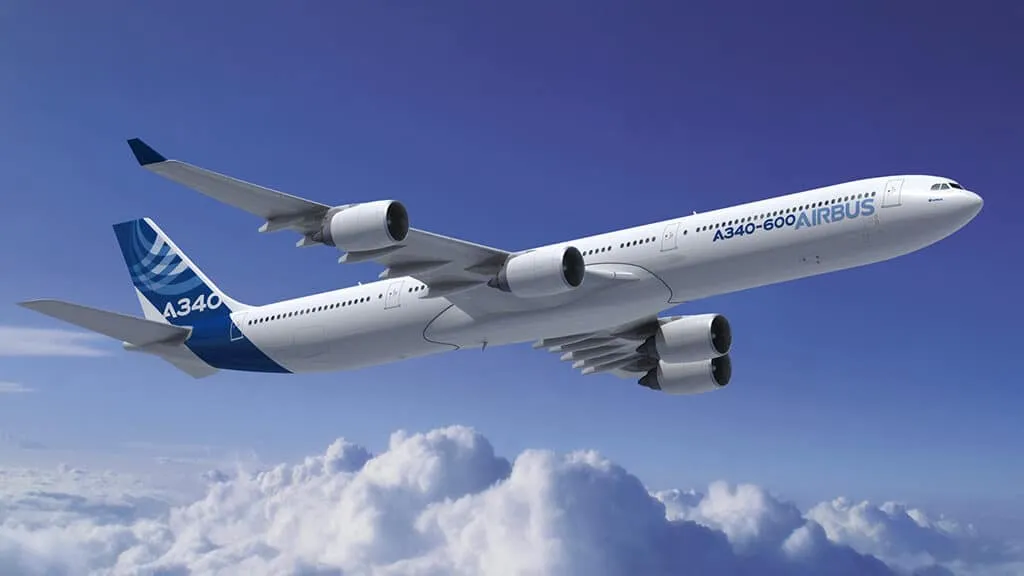
The Airbus A340-600 was the world's longest airliner when it debuted in 2002. At 75.36 metres it was longer than the 747-400 and the A380. It seats about 380 passengers in three classes.
Four Rolls-Royce Trent 556 engines power it. Four engines were an advantage at high-altitude airports and on routes with few places to divert.
Airbus ended A340 production in 2011 after 377 deliveries, because twin-engine jets proved cheaper to run. Airbus built 97 A340-600s. Lufthansa, the biggest operator with 24, scheduled its final A340-600 passenger flight for 18 October 2026.
8. Airbus A350-900
Length: 66.8m Wingspan: 64.75m Seats: 350 MTOW: 283t Range: 8,500nm Engines: 2
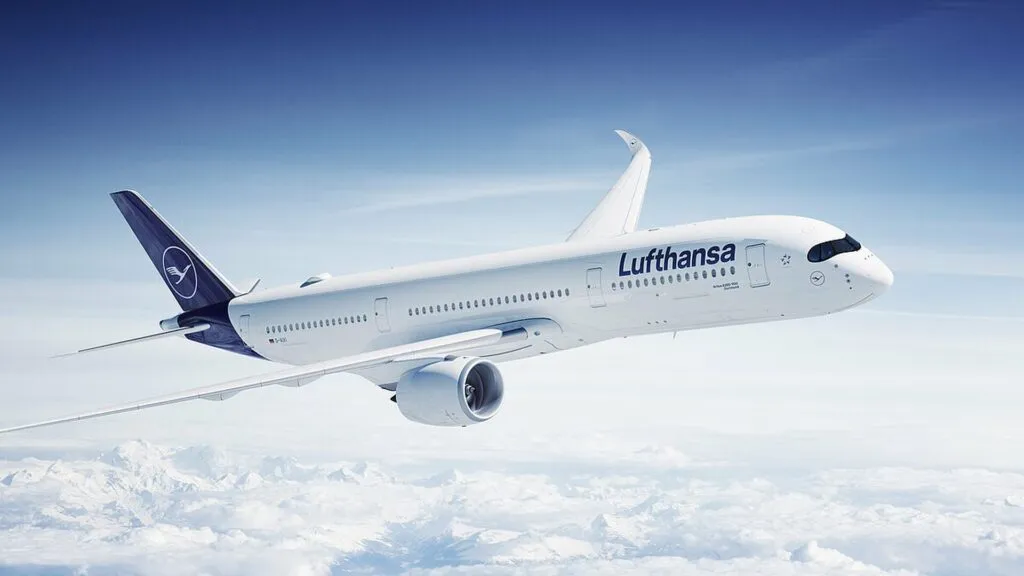
The A350-900 is the base of Airbus's newest widebody family. It seats 300 to 350 passengers in a 66.8-metre fuselage. The wingspan is 64.75 metres, the same as the larger A350-1000.
The MTOW is 283 tonnes and the range is about 8,500 nautical miles. Airbus says it burns about 25% less fuel than the previous generation. Carbon-fibre construction also allows higher cabin pressure for passenger comfort. The ultra-long-range A350-900ULR flies up to 9,700 nautical miles.
Singapore Airlines, Delta Air Lines and Turkish Airlines use the A350-900 as a core long-haul type. By September 2026 Airbus had delivered more than 600 and had over 500 more on order.
9. Boeing 787-10 Dreamliner
Length: 68.28m Wingspan: 60.12m Seats: 330 MTOW: 254t Range: 7,500nm Engines: 2
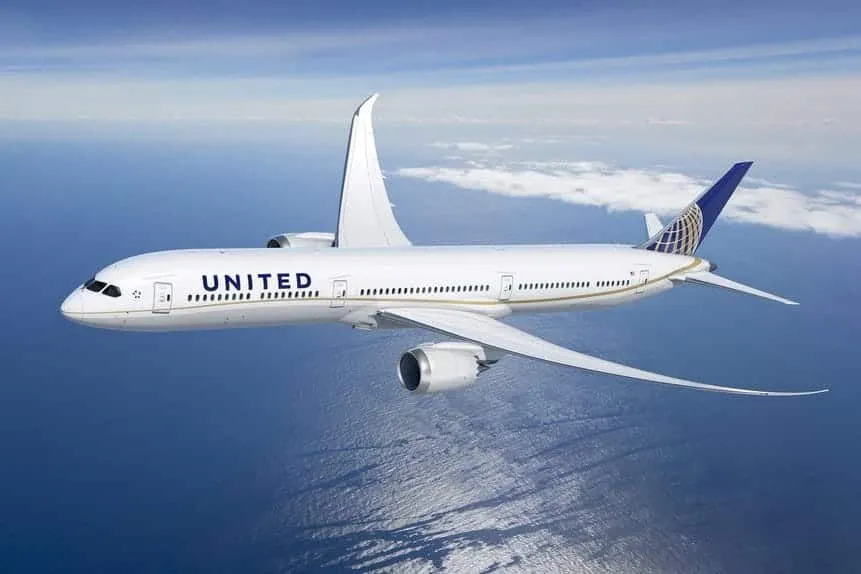
The Boeing 787-10 is the longest Dreamliner at 68.3 metres. Boeing quotes 300 to 375 seats in two classes, and about 330 is a typical figure.
The airframe is mostly composite, which keeps it light and fuel-efficient. The MTOW is about 254 tonnes, and Boeing lists the range at up to 7,500 nautical miles. That suits high-density routes.
Singapore Airlines, United Airlines and Etihad fly the 787-10 on routes where capacity matters more than extreme range. Its fuel efficiency also helps airlines lower emissions.
10. Airbus A340-500
Length: 67.93m Wingspan: 63.45m Seats: 313 MTOW: 372t Range: 9,000nm Engines: 4
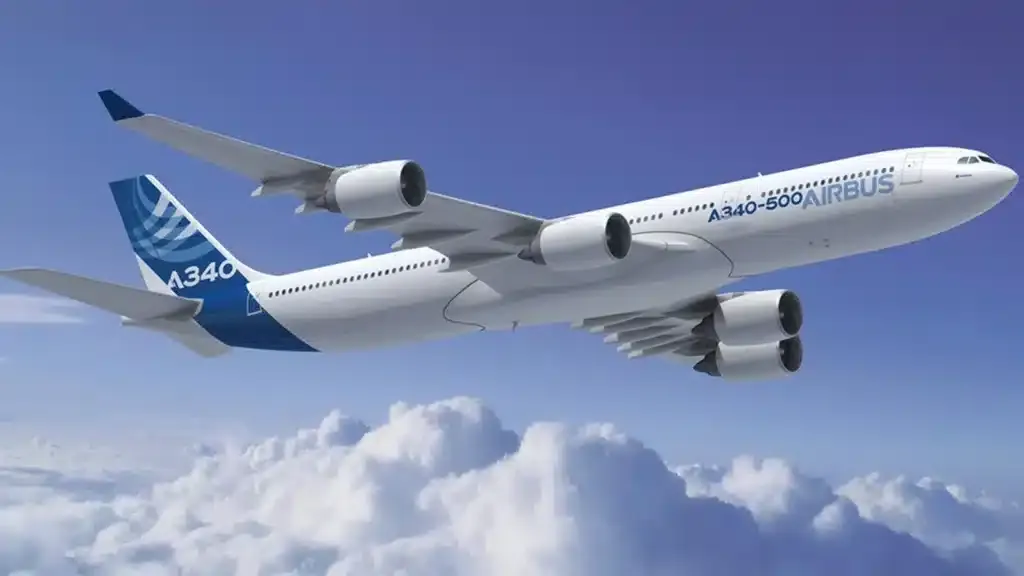
The Airbus A340-500 was the longest-range airliner when it entered service in 2002, with a range of about 9,000 nautical miles. It seats only 270 to 313 passengers in three classes, which is modest for this list. But it opened ultra-long-haul routes that were impossible before.
Singapore Airlines flew the A340-500 from Singapore to Newark from 2004 until 2013. At the time it was the longest scheduled commercial flight, at over 15,000 kilometres.
The A340-500 carried too few passengers to be profitable on most routes, and it has been retired from most airlines. Its achievements paved the way for ultra-long-range twins like the Airbus A350-900ULR, which now flies the Singapore to New York route.
Summary Table: Largest Commercial Aircraft (By Seating & Size)
| Rank | Aircraft | Typical Seating | Length (m) | Wingspan (m) | MTOW (tonnes) | Range (nm) |
|---|---|---|---|---|---|---|
| 1 | Airbus A380-800 | 525 | 72.72 | 79.8 | 575 | 8,000 |
| 2 | Boeing 747-8 | 467 | 76.25 | 68.4 | 448 | 7,730 |
| 3 | Boeing 777-9 (not yet in service) | 426 | 76.7 | 71.8 | 352 | 8,000 |
| 4 | Boeing 747-400 | 416 | 70.66 | 64.44 | 397 | 7,285 |
| 5 | Airbus A350-1000 | 410 | 73.79 | 64.75 | 322 | 9,000 |
| 6 | Boeing 777-300ER | 396 | 73.86 | 64.8 | 352 | 7,500 |
| 7 | Airbus A340-600 | 380 | 75.36 | 63.45 | 380 | 7,800 |
| 8 | Airbus A350-900 | 350 | 66.8 | 64.75 | 283 | 8,500 |
| 9 | Boeing 787-10 | 330 | 68.28 | 60.12 | 254 | 7,500 |
| 10 | Airbus A340-500 | 313 | 67.93 | 63.45 | 372 | 9,000 |
Maximum certified seats are 853 for the A380, 480 for the A350-1000 and 440 for the A350-900. Range figures come from the makers and change with payload.
Why Airlines Are Phasing Out Large Four-Engine Jets
Airlines are moving from four engines to twins. The reasons are technical and financial.
Modern twins like the Boeing 777 and Airbus A350 burn less fuel per seat than four-engine types. Two engines mean less drag, less weight and less maintenance than four.
Regulators also changed the rules. Extended-range twin-engine operations (ETOPS) now let twins fly far from the nearest airport. The A350 has been approved for up to 370 minutes of diversion time, which opens nearly every route to two-engine aircraft.
Maintenance costs also favor twins. Each extra engine adds inspections, repairs and spare parts. Airlines flying 777s usually see better reliability and lower costs than with 747s or A340s.
Future of Large Passenger Aircraft
The super-jumbo era looks over. But large widebodies are still key for busy hub routes. The Boeing 777X family is the next step in size and efficiency. Work on electric aircraft may one day shape bigger designs.
Sustainable aviation fuel (SAF) will matter as well. Current widebodies are certified for SAF blends, and makers are studying aircraft built for higher blends and hydrogen. Biofuels and synthetic SAFs will play a big part in cutting emissions.
Composite materials keep improving. The A350's carbon-fibre design showed that they work at scale, and future aircraft will likely use more.
Point-to-point travel favors mid-size long-range aircraft over hub-dependent super-jumbos. Aircraft like the Airbus A321XLR, a long-range single-aisle, may carry traffic that once needed larger jets. See our A321neo vs 737 MAX 9 comparison.
Aircraft manufacturers are unlikely to build a new super-jumbo soon. Expect small improvements to current widebodies instead.
Summary
The largest passenger aircraft show decades of engineering progress, from the Boeing 747-400 to the Airbus A380. These jets have carried billions of passengers.
Production of the A380 and 747 has ended, but their lessons live on in the A350 and 777X. Those aircraft aim for efficiency and flexibility.
The future belongs to twin-engine widebodies that can serve big hub routes and point-to-point markets.
Frequently Asked Questions
What is the largest passenger aircraft currently in production?
By length, the Airbus A350-1000 is the largest passenger jet in production, at 73.79 metres and up to 410 typical seats. The Boeing 777-9 will be longer and have more seats once it is certified, with first delivery targeted for 2027.
Why did Airbus stop making the A380?
Airbus ended A380 production in 2021 because demand was too low. Airlines wanted smaller twin-engine aircraft with better economics. The hub-and-spoke model the A380 was designed for gave way to point-to-point flying with mid-size widebodies.
Which aircraft has the longest range?
Among the aircraft here, the Airbus A340-500 and A350-1000 both list about 9,000 nautical miles. The Airbus A350-900ULR reaches about 9,700 nautical miles, which allows non-stop Singapore to New York flights. Boeing lists the 777-8 at up to 9,500 nautical miles, but it is not yet in service.
What makes twin-engine aircraft more efficient than four-engine jets?
Twins have less weight, less drag and simpler maintenance. Modern turbofans are powerful and reliable enough to fly large widebodies across oceans.
Will there be another aircraft larger than the A380?
No maker has announced one. The market favors efficiency over raw capacity, and airlines want mid-size widebodies that can serve many routes.
Sources: Airbus and Boeing product pages, Boeing certification progress report (July 2026), Boeing orders and deliveries, AeroCorner A380 operator table (September 2026), Lufthansa announcements, Wikipedia aircraft and order lists. Checked 26 October 2026.

About the author
Radu Balas
Founder, Flying Engineer
View author profile Editorial policy and correctionsExplore Aircraft Sales
Browse 772 companiesNeed a charter, a part or a service?
Tell us what you need and we share it with up to 3 relevant companies, who reply to you directly.