Sustainability
Advanced Biofuels and Synthetic SAF: Where the Next Generation of Aviation Fuel Stands
Advanced biofuels and power-to-liquid e-fuels are meant to take SAF beyond waste oils, but by 2025 they were still a tiny share of a market under 1% of jet fuel.
Updated 4 min read
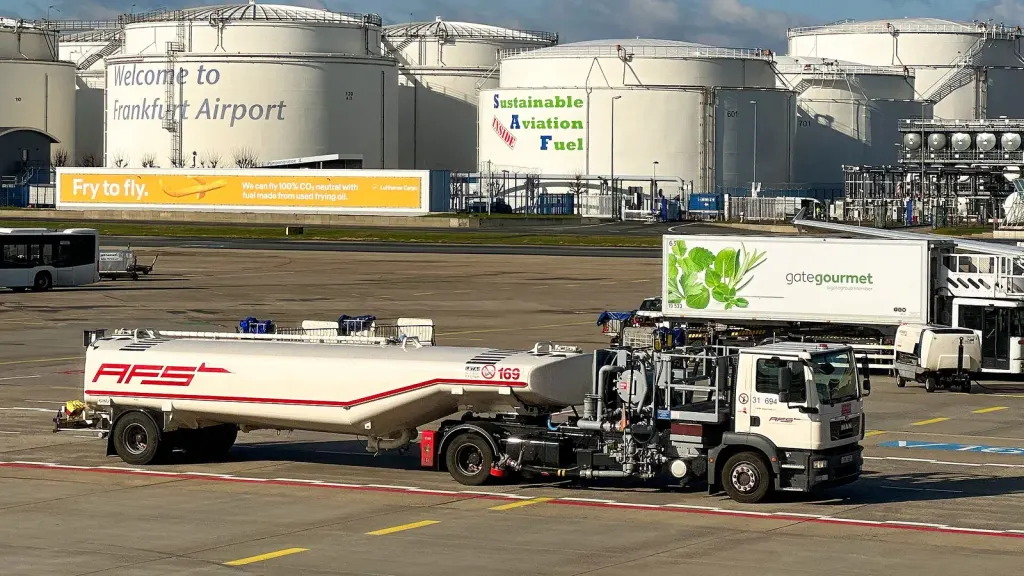
Sustainable aviation fuel (SAF) is the main tool airlines have for cutting emissions from today's aircraft, but almost all of it currently comes from a single source: waste fats and oils processed into jet fuel. The next generation, advanced biofuels made from agricultural and forestry residues or municipal waste, and synthetic fuels made from hydrogen and captured carbon dioxide, is needed because that feedstock is limited. In 2025 both were still at an early stage.
Where SAF production stands
The International Air Transport Association (IATA) estimates that SAF output roughly doubled from 1 million tonnes in 2024 to about 1.9 million tonnes in 2025. That is still only around 0.6 per cent of the jet fuel airlines use. Most of it is HEFA (hydroprocessed esters and fatty acids) fuel, made from used cooking oil, animal fats and similar wastes. HEFA is commercially proven but its feedstock is finite, which is why regulators in Europe and the UK have set separate targets for other routes.
Advanced biofuels
Advanced biofuels use feedstocks that do not compete with food crops. The main routes are:
- Gasification and Fischer-Tropsch synthesis: solid biomass or municipal waste is turned into a synthesis gas of carbon monoxide and hydrogen, then built up into liquid hydrocarbons.
- Alcohol-to-jet: ethanol or isobutanol, which can be produced from residues such as corn stover or from industrial waste gases, is converted into jet fuel.
- Algae and novel oils: one approved pathway uses hydrocarbons from a specific type of algae. Algae has attracted research interest for decades, but production costs have kept it far from commercial scale.
Synthetic fuels
Synthetic SAF, often called e-SAF or power-to-liquid (PtL) fuel, is made by combining hydrogen produced by electrolysis using renewable electricity with carbon dioxide captured from industrial sources, biogenic sources or the air. The gases are then processed, usually through Fischer-Tropsch synthesis, into kerosene.
Like any jet fuel, e-SAF releases carbon dioxide when burned. Its potential benefit is on a lifecycle basis: if the carbon was captured and the electricity is renewable, net emissions can be cut sharply. Projects typically claim reductions of 90 per cent or more against fossil kerosene. Its main advantage over biofuels is that supply is limited by renewable electricity and capital rather than biomass. Its main drawback is cost; IATA has warned that e-SAF could cost many times as much as conventional jet fuel.
Approved production pathways
SAF must meet the ASTM D7566 specification before it can be blended with conventional jet fuel and used in existing aircraft. The main approved routes are:
| Pathway | Typical feedstock | Maximum blend |
|---|---|---|
| HEFA-SPK | Waste oils, fats, vegetable oils | 50% |
| Fischer-Tropsch (FT-SPK) | Biomass, municipal waste, or CO2 and hydrogen | 50% |
| Alcohol-to-jet (ATJ-SPK) | Ethanol, isobutanol | 50% |
| Catalytic hydrothermolysis (CHJ) | Fats and oils | 50% |
| Synthesised iso-paraffins (SIP) | Fermented sugars | 10% |
| HC-HEFA | Algal hydrocarbons | 10% |
Aircraft and engine manufacturers are working towards approval for 100 per cent SAF, which would remove the blending limits, but that requires changes to fuel specifications.
Policy is setting the pace
The economics of SAF depend on government policy. Two mandates in Europe now require suppliers to blend increasing amounts:
- EU (ReFuelEU Aviation): 2 per cent SAF from 2025, 6 per cent from 2030, 20 per cent from 2035 and 70 per cent by 2050, with a synthetic sub-mandate starting at 1.2 per cent in 2030 and rising to 35 per cent in 2050.
- UK SAF Mandate: 2 per cent from 2025, rising to 10 per cent in 2030 and 22 per cent in 2040. The share that can come from HEFA is capped from 2027, and a separate power-to-liquid obligation starts in 2028, reaching 3.5 per cent of jet fuel in 2040.
The synthetic targets are what is pushing investment into e-SAF. Without them, the gap in cost against fossil kerosene would leave little commercial reason to build plants. Oil prices also matter: when fossil jet fuel is cheap, the premium for SAF widens.
What has happened since
- December 2025: IATA cut its 2025 estimate to 1.9 million tonnes and blamed poorly designed mandates in the EU and UK for raising prices without securing supply. It said airlines paid a premium of about US$2.9 billion for SAF in 2025.
- February 2026: Concrete Chemicals, a joint venture of Zaffra and Enertrag, secured €350 million of German federal and Brandenburg funding for an e-SAF plant at Schwedt designed to produce about 30,000 tonnes of e-SAF a year. A final investment decision is targeted for 2027, with output intended to meet the EU's 2030 synthetic target.
- June 2026: IATA forecast SAF production of about 2.4 million tonnes in 2026, around 0.8 per cent of airline fuel use, at an extra cost to airlines of US$4.3 billion. Director General Willie Walsh called it another disappointing year.
The European Union Aviation Safety Agency publishes a summary of the ReFuelEU targets on its website.