Aircraft
Why Do Airplane Windows Have a Tiny Hole?
Why is there a tiny hole in airplane windows? Learn how it controls cabin pressure, prevents fog, and helps keep passengers safe during flight.
Radu BalasReviewed by Adrian Man
Published 6 min read

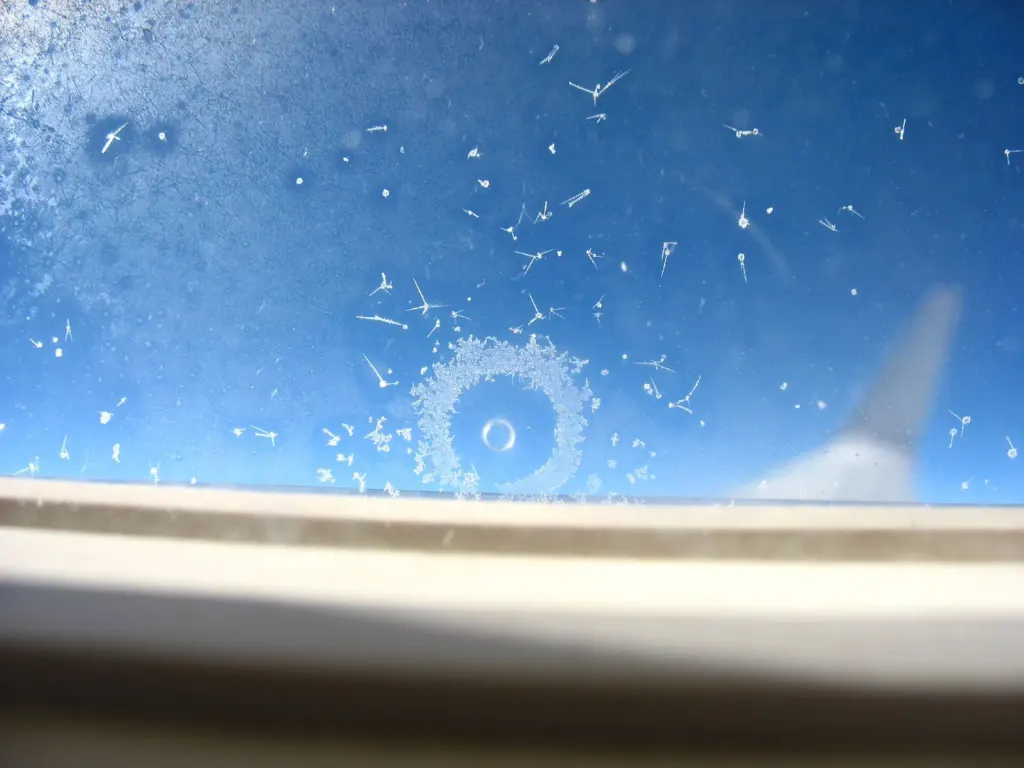
You take your seat by the window and notice a tiny hole near the bottom. Is the window cracked? No. That hole is there on purpose. It controls pressure between the window panes and helps keep a backup pane ready if the outer one breaks.
It is barely wider than a pin, but it plays an important part in keeping you safe at cruising altitude.
Our 29 minute film tells the full story of airplane windows, and the written version follows below.
Why do airplane windows have a tiny hole?
The tiny opening is called a bleed hole or breather hole. It measures about 1 millimetre (0.040 inch) across and sits near the bottom of the middle window pane.
Cabin air passes through this hole into the gap between the middle and outer panes. This keeps the pressure equal on both sides of the middle pane. The outer pane alone holds back the pressure difference, about 8 pounds per square inch at cruising altitude.
Without the hole, air trapped between the panes on the ground would expand as the airplane climbed. Both panes would bend under pressure and weaken together over repeated flights.
The hole prevents that. It lets the middle pane remain unstressed and ready to act as a backup.
If a bird or hailstone breaks the outer pane, the hole is too narrow for cabin air to escape quickly. The middle pane then takes the pressure while the pilots descend.
What are the three panes in an airplane window?
Modern airplane windows contain three separate panes. They are made from stretched acrylic, a tough, clear plastic. Ordinary glass is too rigid and brittle.
The pane closest to you is called the scratch pane. It is thin and loosely attached to the cabin wall. Your elbow may touch it, but it holds back no air pressure.
Its job is to protect the real window from bags, spills and fingernails.
Behind it sit two thicker structural panes. The middle pane contains the breather hole. The outer pane carries the pressure load during normal flight.
During scheduled maintenance, engineers check the panes for tiny surface cracks called crazing. They also inspect rubber seals for leaks and make sure lint or sealant has not blocked the hole.
Why is there frost around the hole?
You may have seen a small white ring around the hole while flying. Those are frost crystals.
The breather hole lets moisture move between the cabin and the space inside the window. At cruising altitude, that moisture can freeze around the opening.
The same opening also helps prevent the window from fogging up. It acts as both a pressure equalizer and a moisture vent.
Cabin air and moisture are closely connected. You can also read why aircraft cabins feel so dry.
Why are airplane windows round?
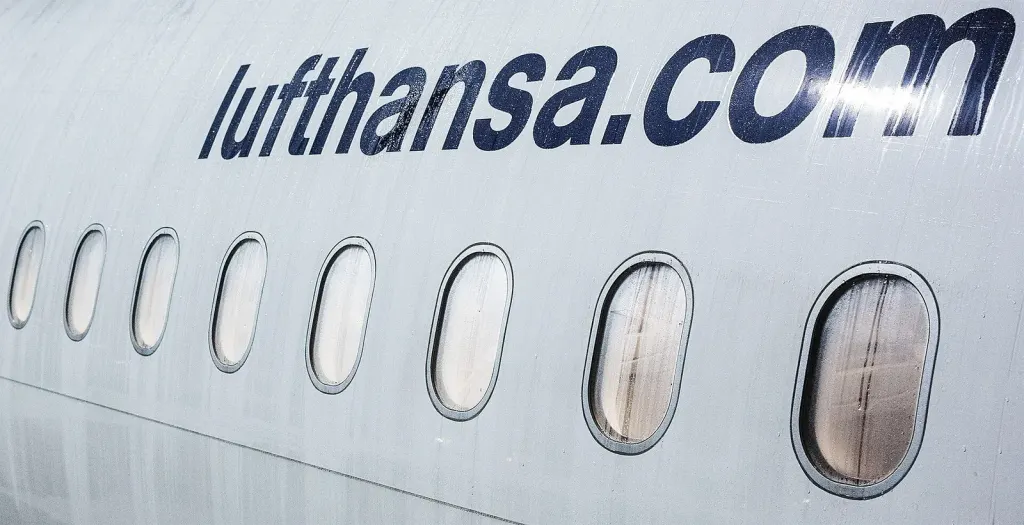
Look along the cabin of a modern airliner. Every passenger window has rounded corners.
The reason goes back to the de Havilland Comet, the world's first commercial jetliner. Built at Hatfield near London, it was designed under Ronald Bishop. Sir Geoffrey de Havilland founded the company.
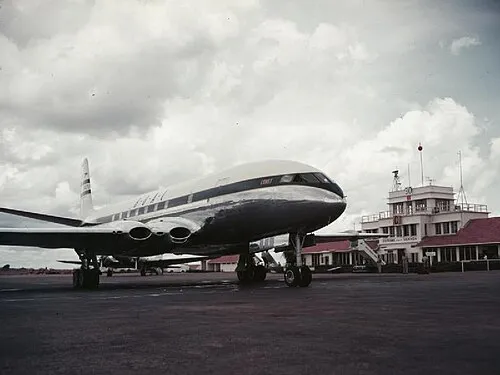
BOAC began passenger service on 2 May 1952, flying from London to Johannesburg with 36 passengers. The Comet could cruise at 40,000 feet. Its cabin was quiet and smooth.
But on 10 January 1954, BOAC Flight 781 broke apart near Elba, killing all 35 people aboard. Another Comet, South African Airways Flight 201, broke apart south of Naples on 8 April 1954 with 21 people on board.
The Comets were grounded. Investigators needed to understand why their thin aluminum skins were failing.
The passenger windows already had rounded corners. The dangerous sharp corners were found around smaller roof aerial windows and escape hatch windows.
The water tank that solved the Comet mystery
At Farnborough, director Arnold Hall built a steel water tank around a Comet fuselage. The tank was 112 feet long, with the wings extending through sealed openings.
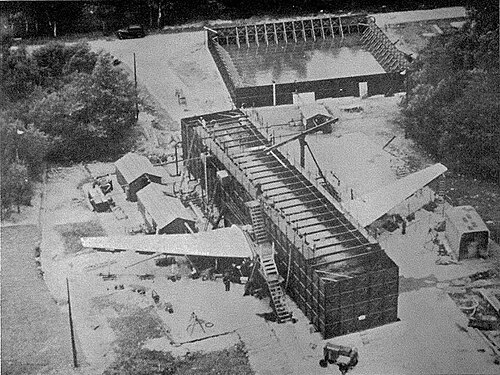
The aircraft, G-ALYU, had already flown about 1,200 flights. Pumps moved water into and out of the cabin to copy repeated pressure changes. Hydraulic jacks flexed the wings.
Water was safer for testing because it does not compress. A crack would not cause the same explosive release of energy as compressed air.
On 24 June 1954, after about 1,800 simulated flights, the fuselage split near a sharp corner of a forward escape hatch window. That meant about 3,000 flights in total.
Investigators also found fatigue cracks around a squared off roof window in the wreckage from Elba.
Repeated pressure changes made tiny cracks grow around stressed corners and rivet holes. Eventually the metal failed.
Rounded windows help spread these stresses along a curve instead of concentrating them at a corner.
Before the jet age: flying under the weather
Before pressurized cabins, passengers flew much lower. In the early 1930s, aircraft like the Ford Trimotor generally stayed below 10,000 feet.
They could not climb above storms and often had to fly through them. Above that height, the air pressure made getting enough oxygen difficult.
American pilot Wiley Post explored higher flight. After circling the world alone in 1933, he worked with B.F. Goodrich engineer Russell Colley on a pressure suit in 1934.
The first suit leaked and ruptured during testing. The second was too tight. The third worked.
On 5 September 1934, Post flew above 40,000 feet over Chicago. That December, he reached an unofficial height of around 50,000 feet.
Another answer was to pressurize the entire cabin. The Boeing 307 Stratoliner, rolled out in 1938, became the first pressurized commercial airliner.
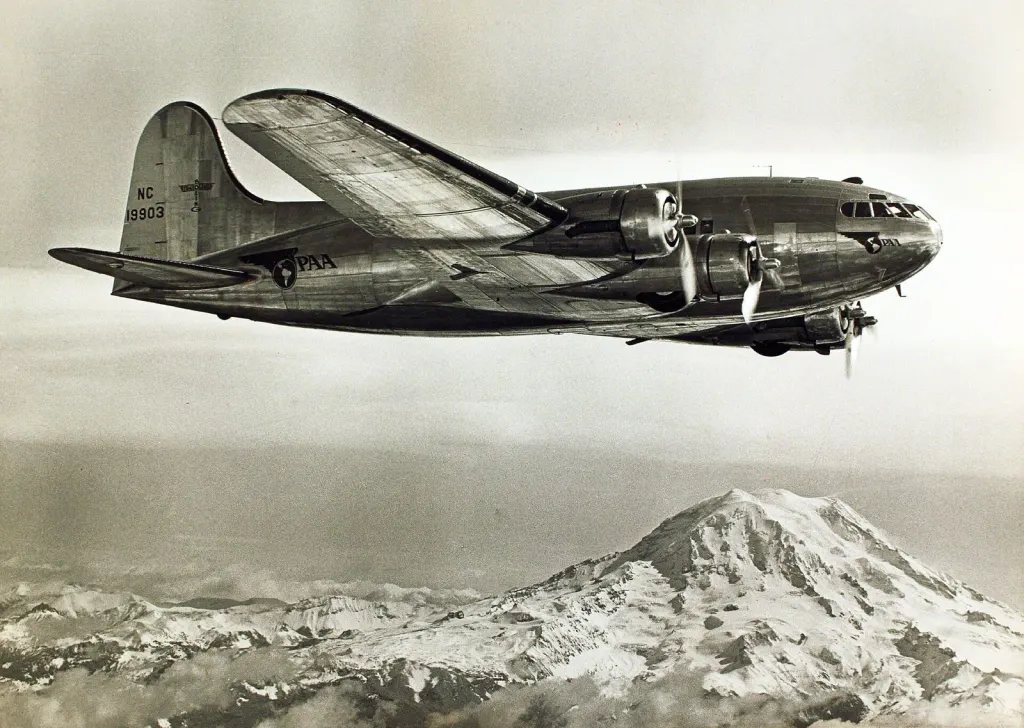
Its round fuselage spread pressure evenly. Pan American and TWA began passenger flights in summer 1940. The aircraft carried 33 passengers at 20,000 feet, above much of the weather.
Why Concorde had such small windows
Concorde faced a different problem. It flew at 60,000 feet, at twice the speed of sound.
Air compression and friction heated its nose to about 120 degrees Celsius. The cabin skin became hot enough to approach the boiling point of water.
Acrylic could soften in those conditions. Concorde therefore used double glazed toughened glass.
Its windows were about the size of a passport. Their small size limited how quickly air could escape if a pane failed, giving pilots time for an emergency descent.
Passengers even reported that the inner windows felt warm to the touch.
Aloha Flight 243 and the rules for older jets
On 28 April 1988, Aloha Airlines Flight 243 left Hilo for Honolulu. The Boeing 737-200 was 19 years old and had completed nearly 90,000 pressurization cycles.
About 20 minutes after takeoff, at 24,000 feet, an 18 foot section of the cabin roof tore away.
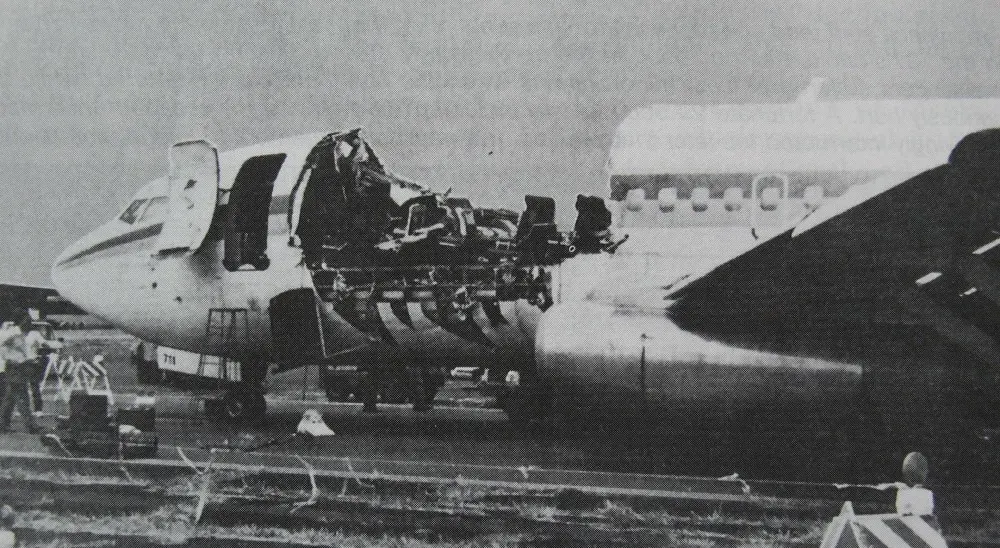
Flight attendant Clarabelle Lansing was swept out and died. Captain Robert Schornstheimer and First Officer Madeline Tompkins landed at Kahului Airport 13 minutes later. Of the 95 people aboard, 94 survived.
Investigators found fatigue cracks and corrosion along a glued joint in the fuselage skin.
In 1991, Congress passed the Aging Aircraft Safety Act. The Federal Aviation Administration began its National Aging Aircraft Research Program.
Aircraft age is now judged by pressure cycles as well as years. Technicians inspect older aircraft for hidden cracks using special probes. This also helps explain why airlines retire aircraft early.
Questions people ask about airplane windows
Is the hole in a plane window dangerous?
No. The hole is designed to balance pressure and moisture. It also keeps the middle pane ready to take over if the outer pane fails.
What is the hole called?
It is called a bleed hole or breather hole. It sits in the middle pane, not the outer pane.
What happens if an airplane window cracks?
If the outer pane breaks, the middle pane takes the pressure load. The tiny hole limits how quickly cabin air can escape while pilots descend.
Are airplane windows made of glass?
Modern airliner cabin windows use stretched acrylic. Concorde was different, using double glazed toughened glass because of the heat it faced.
For the complete story, watch the film on YouTube. You can also explore what flying was really like in the 1930s.

About the author
Radu Balas
Founder, Flying Engineer
View author profile Editorial policy and correctionsExplore Aircraft Sales
Browse 813 companiesNeed a charter, a part or a service?
Tell us what you need and we share it with up to 3 relevant companies, who reply to you directly.