Aircraft
Boeing Aircraft Overview: Complete Fleet Guide
Updated 13 min read
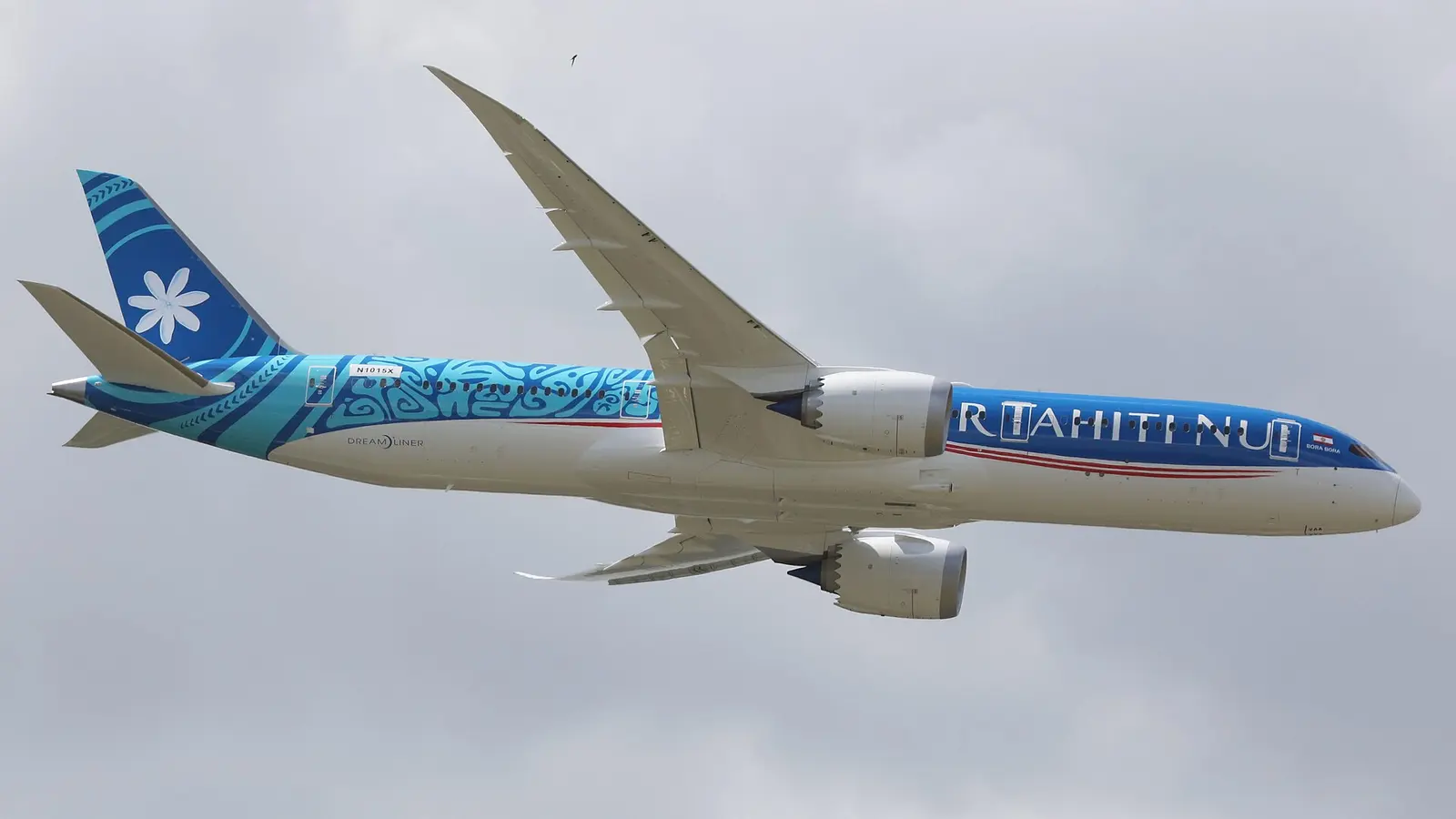
Boeing aircraft have been the backbone of commercial aviation for decades. 2026 is a year of recovery, with progress and some delays.
Boeing delivered 600 aircraft in 2025, its best year since 2018. Through September 2026 it delivered 475, up 8% on the same period a year earlier. The FAA lifted the 737 production cap in October 2025, and Boeing has been working to build 47 a month. In 2026 the FAA also certified two long-delayed jets: the 737 MAX 7 in August and the 737 MAX 10 in October.
Watch our 44-minute documentary on Boeing's evolution from a Seattle boat shed in 1916 to today's aviation giant through pivotal decisions.
The 777X is still in testing, and the Air India 787 accident investigation is not closed. Boeing's backlog stood at 6,371 aircraft at the end of September 2026.
This guide covers every Boeing airliner flying today and what is coming next, with specs and operating notes for fleet planners.
Boeing Aircraft Families at a Glance
Boeing builds three main commercial families today. A fourth, the 777X, is in certification.
| Aircraft Family | Type | Seats (two-class) | Range | Status |
|---|---|---|---|---|
| 737 MAX | Single-aisle | 135-210 | 3,100-3,800 nm | In production |
| 787 Dreamliner | Widebody | 200-375 | 7,500-8,300 nm | In production |
| 777/777F | Widebody | 300-425 | 7,500-8,500 nm | Freighter only in production |
| 777X | Widebody | 350-450 | 8,000-9,500 nm | Certification in progress, first delivery 2027 |
| 767 | Widebody | Freighter and tanker only | 3,255 nm (767-300F) | Production ending 2027 |
Here is each family and what operators need to know.
737 MAX Family
The 737 MAX has been through a lot. Two fatal crashes. A worldwide grounding. An FAA production cap. A door plug incident.
But the aircraft keeps selling.
As of September 2026, Boeing had delivered about 2,480 MAX aircraft and had about 4,870 more on order. The MAX 8 dominates the order book. In September 2026 Turkish Airlines ordered 100 MAX jets in one deal.
"MAX" means CFM LEAP-1B engines on an updated 737 airframe. Boeing says the MAX cuts fuel use and CO2 by 20% against the 737 it replaced, and the split-tip winglets add efficiency.
After the Alaska Airlines door plug incident in January 2024, the FAA capped 737 output at 38 a month. It lifted the cap in October 2025, which allowed 42 a month. In May 2026 Boeing's CEO said the line had passed its review for 47 a month. In September he said that holding that rate had taken longer than expected.
The whole family is designed to operate as one type. According to Boeing, airlines can use the same pilots, mechanics and maintenance program across MAX variants.
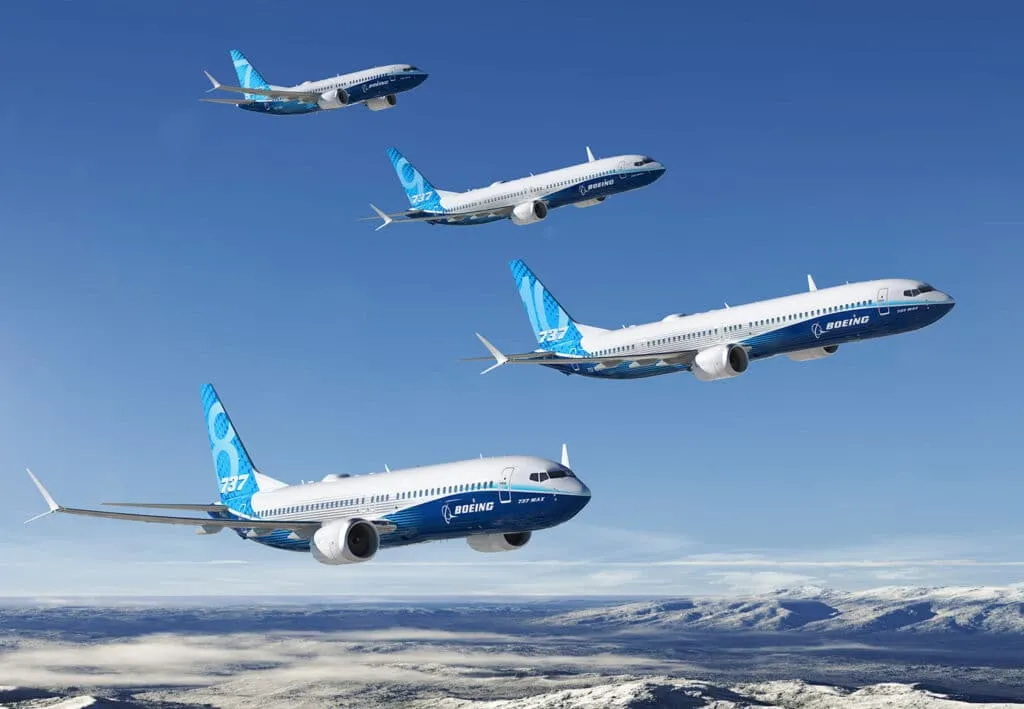
737 MAX 7
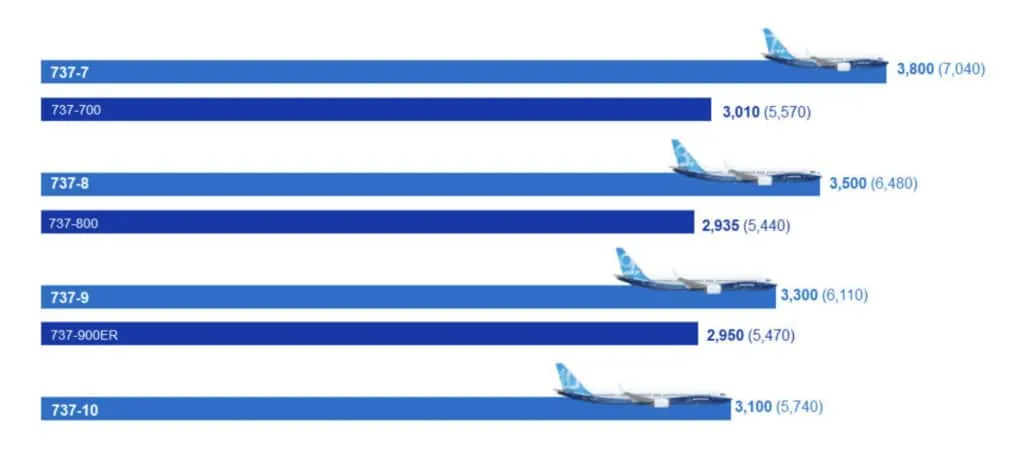
The smallest variant. It seats 135-160 passengers in two classes and flies up to 3,800 nautical miles, the longest range of any MAX.
The FAA certified the MAX 7 on 3 August 2026 after seven years of delay. An engine anti-ice problem and software changes held it up. Southwest Airlines is the launch customer. No delivery date has been announced.
737 MAX 8
The workhorse. It seats 160-180 passengers, up to 210 in the high-density MAX 200 version. Range is 3,500 nautical miles.
The MAX 8 accounts for most MAX deliveries. Ryanair flies the MAX 200 with dense seating. The economics work on short-haul routes where fuel efficiency drives profit.
737 MAX 9
The mid-stretch variant. It seats 175-195 passengers, up to 220. Range is 3,300 nautical miles.
Orders are weaker than for the MAX 8 and MAX 10. Most operators pick the MAX 8, or step up to the MAX 10 for more capacity.
737 MAX 10
The stretched variant seats 185-210 passengers, up to 230, with 3,100 nautical miles of range.
The FAA certified the MAX 10 on 20 October 2026. More than 30 customers have ordered about 1,555 of them. The approval requires an enhanced angle-of-attack system, which will be fitted to all new MAX jets and retrofitted to jets already flying. Boeing expects EASA and Transport Canada approval within a couple of months and first deliveries to begin in 2027.
For a comparison with the competing Airbus narrowbody, see our A321neo vs 737 MAX 9 analysis.
| 737 MAX Model | Length | Seats (two-class) | Maximum seats | Range |
|---|---|---|---|---|
| MAX 7 | 35.6 m | 135-160 | 172 | 3,800 nm |
| MAX 8 | 39.5 m | 160-180 | 210 | 3,500 nm |
| MAX 9 | 42.2 m | 175-195 | 220 | 3,300 nm |
| MAX 10 | 43.8 m | 185-210 | 230 | 3,100 nm |
Boeing's long-term target is 52 737s a month. Each step up needs FAA agreement, so the date is not fixed.
787 Dreamliner Family
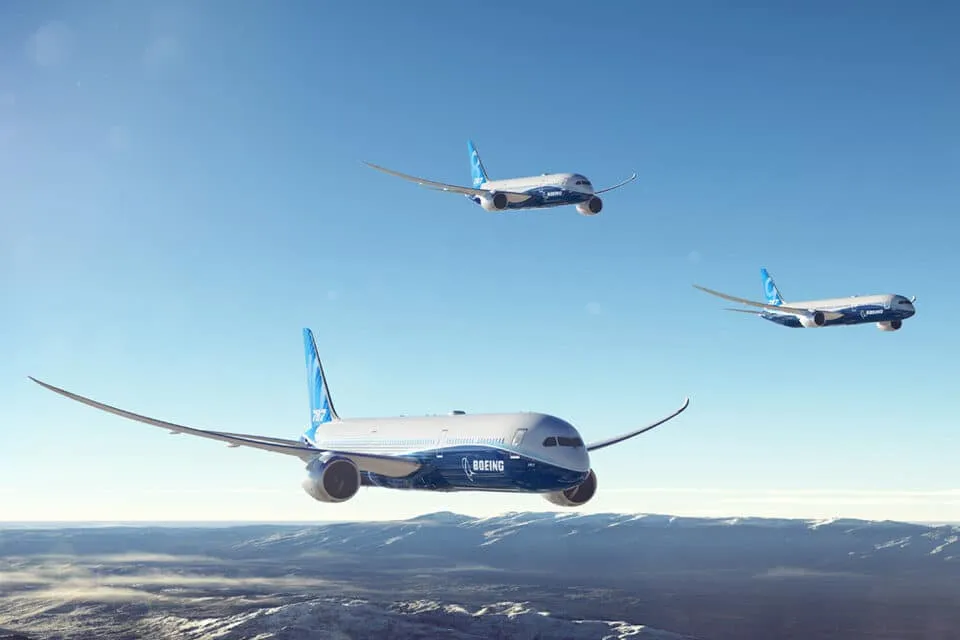
The 787 changed how airlines plan widebody routes. Carbon fiber composites make up about half of the airframe by weight. The aircraft is lighter and burns about 20% less fuel than the jets it replaced.
That opened routes that did not work before.
Since entering service in 2011, the Dreamliner has carried about 1.3 billion passengers and opened more than 550 new nonstop routes, according to Boeing. Perth to London, Auckland to New York and Melbourne to Dallas are examples.
Boeing has taken about 2,490 Dreamliner orders and delivered about 1,310. The backlog of more than 1,100 aircraft supports years of production. In September 2026, Biman Bangladesh and other buyers placed 23 new 787 orders.
The 787 had no fatal accidents until June 2025. Air India Flight 171, a 787-8 bound for London, crashed shortly after takeoff from Ahmedabad. 260 people died. The preliminary report from India's AAIB said both engine fuel control switches moved to CUTOFF seconds after takeoff. It did not call for action by 787 or GEnx engine operators. As of 26 October 2026 the final report has not been published. The AAIB told India's Supreme Court in July that a draft was expected in October.
For operators comparing widebodies, see our Boeing 787 vs Airbus A350 comparison.
787-8
The original variant. It seats 200-275 passengers with up to 8,000 nautical miles of range.
It is the smallest Dreamliner. Airlines use it on thinner long-haul routes where a 787-9 would fly with empty seats.
787-9
The stretched version. It seats 250-325 passengers with up to 8,300 nautical miles of range.
This is the volume seller. The 787-9 has attracted more than twice the orders of the 787-10. Its mix of capacity and range suits most long-haul operations.
787-10
The biggest stretch. It seats 300-375 passengers with up to 7,500 nautical miles of range.
Boeing traded range for capacity. The shorter reach limits route choice, but operating costs on medium-haul routes are hard to beat. Singapore Airlines put the variant into service in March 2018.
| 787 Model | Length | Seats (two-class) | Range | Engines |
|---|---|---|---|---|
| 787-8 | 57 m | 200-275 | 8,000 nm | GEnx-1B or Trent 1000 |
| 787-9 | 63 m | 250-325 | 8,300 nm | GEnx-1B or Trent 1000 |
| 787-10 | 68 m | 300-375 | 7,500 nm | GEnx-1B or Trent 1000 |
Boeing built about 8 Dreamliners a month at the start of 2026, up from 5 a year earlier. The goal is 10 a month. Boeing delivered 62 Dreamliners in the first nine months of 2026, against 61 a year earlier. A $1 billion expansion at the South Carolina site, including a second assembly building due in 2027, supports higher rates later.
777 Family
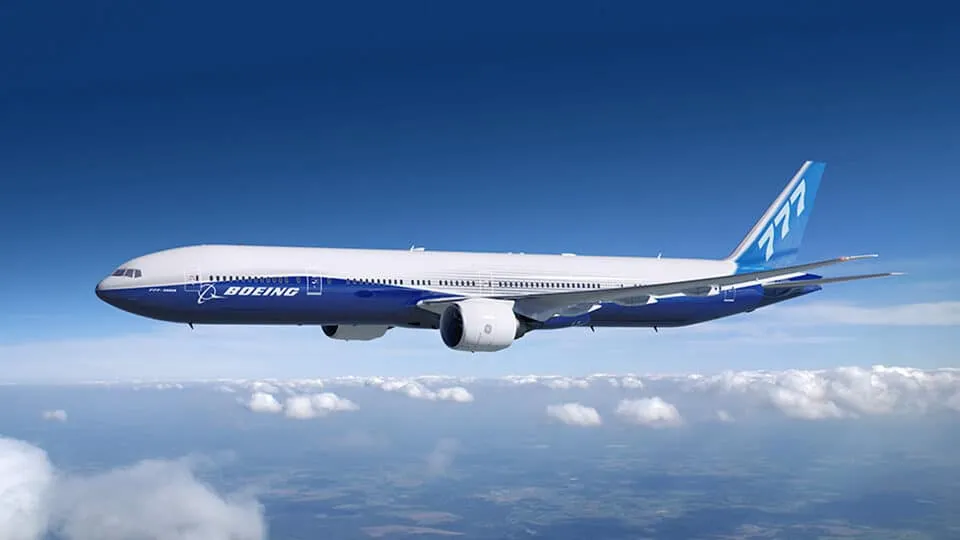
The 777 is the most-built widebody airliner, with about 1,800 delivered to more than 60 customers.
The passenger 777 is effectively finished. The last 777-300ER was delivered in 2024. A few passenger orders remain on paper, but few expect them to be built. What is left is the 777F freighter.
The 777F was due to stop at the end of 2027, when new ICAO emissions rules apply to newly built aircraft. In September 2026 the FAA granted Boeing an exemption for up to 35 more 777Fs to receive their first airworthiness certificates from 2028. That lets production continue until the 777-8F arrives. Boeing had 38 unfilled 777F orders at the end of August.
For cargo operators, the 777F is the benchmark heavy widebody freighter. It carries 102 tonnes over about 4,970 nautical miles. FedEx, Emirates SkyCargo, Qatar Airways Cargo and Air China Cargo all fly it.
777-200LR
The longest-range 777. It seats 300-375 passengers over up to 8,500 nautical miles.
Production ended years ago, but the aircraft still serves operators who need maximum range.
777-300ER
The workhorse of the family. It seats 350-425 passengers in two classes with up to 7,500 nautical miles of range.
Emirates is the largest 777 operator. The 777-300ER led the long-haul market until the 787 and A350 arrived with better fuel economics.
777F
The freighter carries 102 tonnes over about 4,970 nautical miles.
Boeing delivered 20 777 family aircraft in the first nine months of 2026, down from 29 a year earlier. Most were freighters.
| 777 Model | Length | Capacity | Range | Status |
|---|---|---|---|---|
| 777-200LR | 63.7 m | 300-375 pax | 8,500 nm | Out of production |
| 777-300ER | 73.9 m | 350-425 pax | 7,500 nm | Final delivery 2024 |
| 777F | 63.7 m | 102 tonnes | 4,970 nm | In production, FAA exemption from 2028 |
777X Family
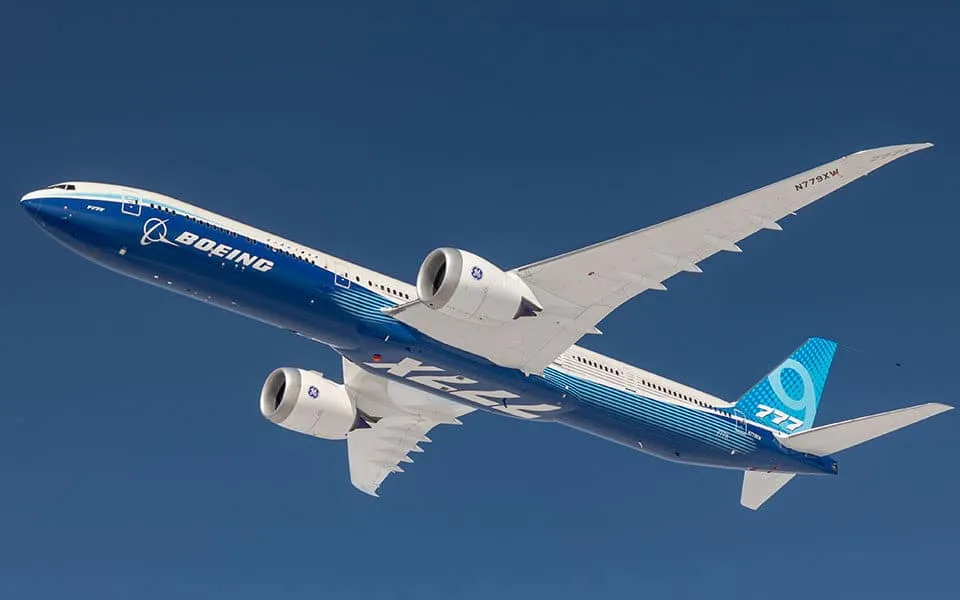
The 777X program is years late.
It was planned to enter service in 2020. Boeing now targets first delivery in 2027. In late 2025 Boeing took a $4.9 billion charge linked to the delay.
Problems have included an uncommanded pitch event in 2020 testing and a cracked thrust link, the part that joins the engine to the wing, found in August 2024. Testing paused while Boeing made repairs.
Airlines still want the aircraft. Boeing holds about 682 orders for the family: 546 for the 777-9, 35 for the 777-8 and 101 for the 777-8F. Emirates has ordered 270, Qatar Airways 124, Korean Air 48, Cathay Pacific 35 and Singapore Airlines 31.
Boeing's July 2026 progress report said the test fleet had flown more than 4,800 hours on about 1,700 flights. About half of the planned certification testing was done. Most FAA Type Inspection Authorizations had been granted, with TIA 5 and the ETOPS tests still to come. Boeing says it needs all of 2026 to finish certification.
777-8
The long-range variant seats 350-425 passengers over up to 9,500 nautical miles.
Boeing is focusing on the 777-9 first, so the 777-8 will enter service later.
777-9
The high-capacity variant. It seats 375-450 passengers and flies up to 8,000 nautical miles.
The 777-9 has a 71.8 m wingspan, with folding wingtips that fold up on the ground to bring the span to 64.8 m. That lets it use gates built for current 777s.
GE9X engines power the aircraft. They are the largest commercial jet engines ever built.
777-8F
The freighter variant carries up to 118 tonnes and flies 5,000 nautical miles with 110 tonnes.
Qatar Airways launched the program as lead customer with 34 orders. Other customers include Lufthansa Cargo, Cargolux, Silk Way West and, in September 2026, Ethiopian Airlines with eight.
Boeing expects the first 777-8F about two years after the first 777-9 delivery. That points to around 2029.
| 777X Model | Length | Capacity | Range | Status |
|---|---|---|---|---|
| 777-8 | 70.9 m | 350-425 pax | 9,500 nm | After the 777-9 |
| 777-9 | 76.7 m | 375-450 pax | 8,000 nm | First delivery 2027 |
| 777-8F | 70.9 m | 118 tonnes | 5,000 nm at 110 tonnes | About 2029 |
767 Family
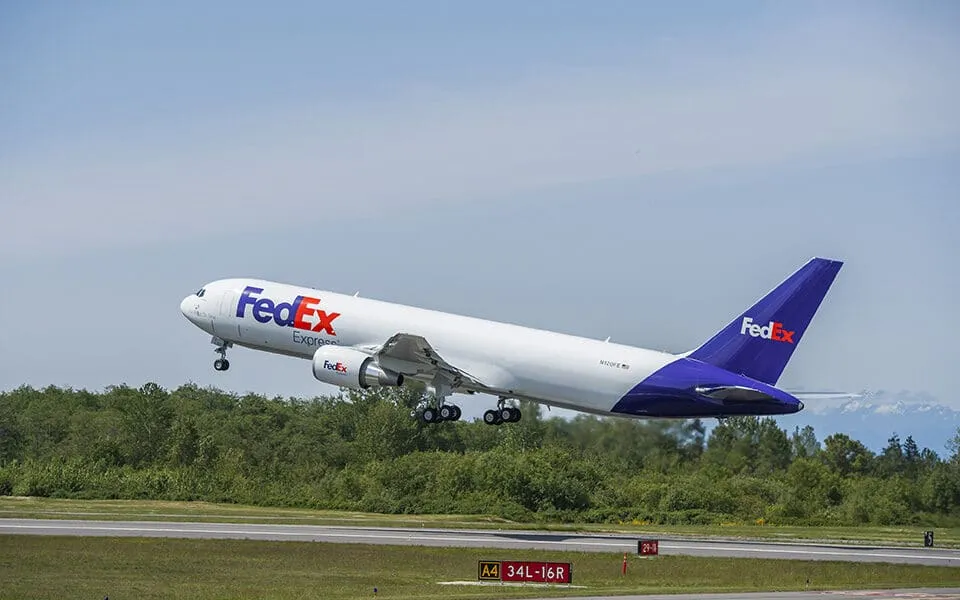
The passenger 767 ended production in 2014. The freighter kept selling.
FedEx, UPS, DHL and Amazon Air built cargo networks around the 767-300F. It fits between converted narrowbody freighters and the larger 777F.
Time is running out. The 767-300F does not meet the ICAO emissions standard that applies to new aircraft from 2028. Boeing plans to end production in 2027 once current orders are filled.
Boeing has taken about 1,450 orders for the 767 and delivered about 1,380. In the first nine months of 2026 it delivered 26 767s, including freighters and KC-46 tankers.
The 767-2C continues as the basis for the KC-46A Pegasus tanker, which has its own US Air Force order book.
767-300F
The production freighter carries 52.7 tonnes over 3,255 nautical miles.
Dependable engines and simple maintenance made it the workhorse of regional cargo for decades.
| 767 Model | Length | Capacity | Range | Status |
|---|---|---|---|---|
| 767-300F | 54.9 m | 52.7 tonnes | 3,255 nm | Production ends 2027 |
| 767-2C (KC-46) | 48.5 m | Military tanker | N/A | In production |
Boeing Orders and Backlog, September 2026
Boeing's total backlog was 6,371 aircraft at the end of September 2026, up from 6,156 a month earlier. These figures are rounded and come from Boeing data as reported in public order lists. Check Boeing's orders and deliveries page for exact counts.
| Aircraft Family | Delivered | Unfilled orders |
|---|---|---|
| 737 MAX | About 2,480 | About 4,870 |
| 787 | About 1,310 | About 1,180 |
| 777X | 0 | About 680 |
| 777 and 777F | About 1,800 (all 777s) | 38 freighters (end of August) |
| 767 | About 1,380 | About 70 |
At the 2025 delivery rate of 600 a year, the backlog is more than ten years of production. That helps with fleet planning, even if delivery slots keep shifting.
For a list of companies building aircraft around the world, see our aircraft manufacturers directory.
Which Boeing Aircraft Fits Your Operation?
Fleet choices come down to route economics and operating needs.
Short to medium-haul with 140-230 passengers
The 737 MAX family leads here. The MAX 8 balances capacity and range for most operators. The MAX 7 and MAX 10 are now certified for operators who need a smaller or larger jet, though deliveries are still to start.
Medium to long-haul with 240-340 passengers
The 787 Dreamliner has strong fuel efficiency and passenger appeal. The 787-9 suits most long-haul operations.
Long-haul high-density with 380+ passengers
The 777-9 offers the most twinjet capacity once it enters service in 2027 or later. If you need aircraft sooner, the A350 is in service today.
Heavy cargo operations
The 777F is still the benchmark for long-haul freight until the 777-8F arrives, around 2029. For regional cargo, the 767-300F works well, but production ends in 2027.
Boeing Deliveries in 2026 So Far
| Aircraft | Jan-Sep 2025 | Jan-Sep 2026 | Full year 2025 |
|---|---|---|---|
| 737 | 330 | 367 | 447 |
| 787 Dreamliner | 61 | 62 | 88 |
| 777/777F | 29 | 20 | 35 |
| 767 | 20 | 26 | 30 |
| TOTAL | 440 | 475 | 600 |
Boeing's peak was 806 deliveries in 2018. Full recovery to that level is still some way off. Boeing would need about 126 deliveries in the fourth quarter of 2026 to match its 2025 total.
737 MAX
Boeing is building at up to 47 a month. Its CEO has said sustaining that rate took longer than expected. The longer-term goal is 52 a month. Airbus delivered 547 aircraft in the first nine months of 2026, 72 more than Boeing.
787 Dreamliner
Boeing is aiming for 10 a month. Supply chain and seat availability have been limits for the industry.
777 and 767
Both lines now build freighters, and the 767 line also builds KC-46 tankers. The 777 line will keep running past 2027 under the FAA exemption, while the 767 line is expected to close in 2027.
777X
No deliveries yet. Boeing targets 2027 for the first 777-9.
737 MAX 7 and MAX 10
Both are now certified. The MAX 7 is waiting on Southwest to prepare for service. The MAX 10 still needs approval from EASA and Transport Canada.
FAQ
How many Boeing aircraft fly worldwide?
More than 12,000 Boeing 737s have been delivered. The Airbus A320 family passed the 737 in total deliveries in October 2025, according to Cirium. Boeing publishes its delivery counts by model on its orders and deliveries page.
What happened to the 737 MAX?
Two fatal crashes in 2018 and 2019 killed 346 people and were linked to the MCAS flight control system. A worldwide grounding lasted from March 2019 to November 2020. Boeing agreed to pay over $2.5 billion to settle a US investigation. A door plug incident in January 2024 led to more FAA scrutiny and a production cap, which was lifted in October 2025.
Which Boeing aircraft flies the farthest?
Among passenger aircraft in service, the 777-200LR has the longest listed range at 8,500 nautical miles. The 787-9 reaches up to 8,300 nautical miles. The 777-8 is planned to fly up to 9,500 nautical miles once it enters service.
When will the 777X deliver?
Boeing expects the first 777-9 delivery in 2027. The 777-8F freighter should follow about two years later. The 777-8 passenger variant comes after the 777-9.
What engines power Boeing aircraft?
Engine options vary by family:
737 MAX: CFM LEAP-1B only
787 Dreamliner: General Electric GEnx-1B or Rolls-Royce Trent 1000
777: General Electric GE90-115B on the 777-300ER, 777-200LR and 777F
777X: General Electric GE9X
767: General Electric CF6 or Pratt & Whitney PW4000
How many passengers does the 737 MAX 10 hold?
Up to 230 passengers in a high-density layout. Typical two-class layouts seat 185-210.
Which airlines operate the most Boeing aircraft?
Large US carriers such as American, United and Delta fly many Boeing jets. Southwest flies only Boeing 737s. Emirates is the largest 777 operator. Check each airline's fleet page for current counts.
The Bottom Line on Boeing Aircraft
Boeing aircraft still dominate narrowbody and widebody sales despite years of trouble. The 737 MAX backlog is close to 5,000 aircraft, and the 787 is the best-selling widebody of its generation.
The next step is execution. That means steady production, MAX 10 deliveries, the 777X certification and quality that rebuilds trust with regulators and customers.
For fleet planners, the choice between Boeing and Airbus often comes down to delivery slots. Boeing's backlog runs more than ten years. Airbus faces similar limits. Airlines are still ordering from both.
Sources: Boeing orders and deliveries, Boeing 737 MAX, 787 and 777X product pages, Boeing certification progress report (July 2026), FAA announcements on the 737-7 and 737-10, FAA 777F exemption docket (September 2026), India AAIB statements, Cirium. Checked 26 October 2026.

About the author
Radu Balas
Founder, Flying Engineer
View author profile Editorial policy and correctionsExplore Aircraft Sales
Browse 813 companiesNeed a charter, a part or a service?
Tell us what you need and we share it with up to 3 relevant companies, who reply to you directly.