Airlines
What Flying Was Really Like in the 1930s
Wicker seats, nurses as the first stewardesses, 12 days to Australia and dinner on the Hindenburg. What passengers lived through in the 1930s.
Radu BalasReviewed by Adrian Man
Published 7 min read

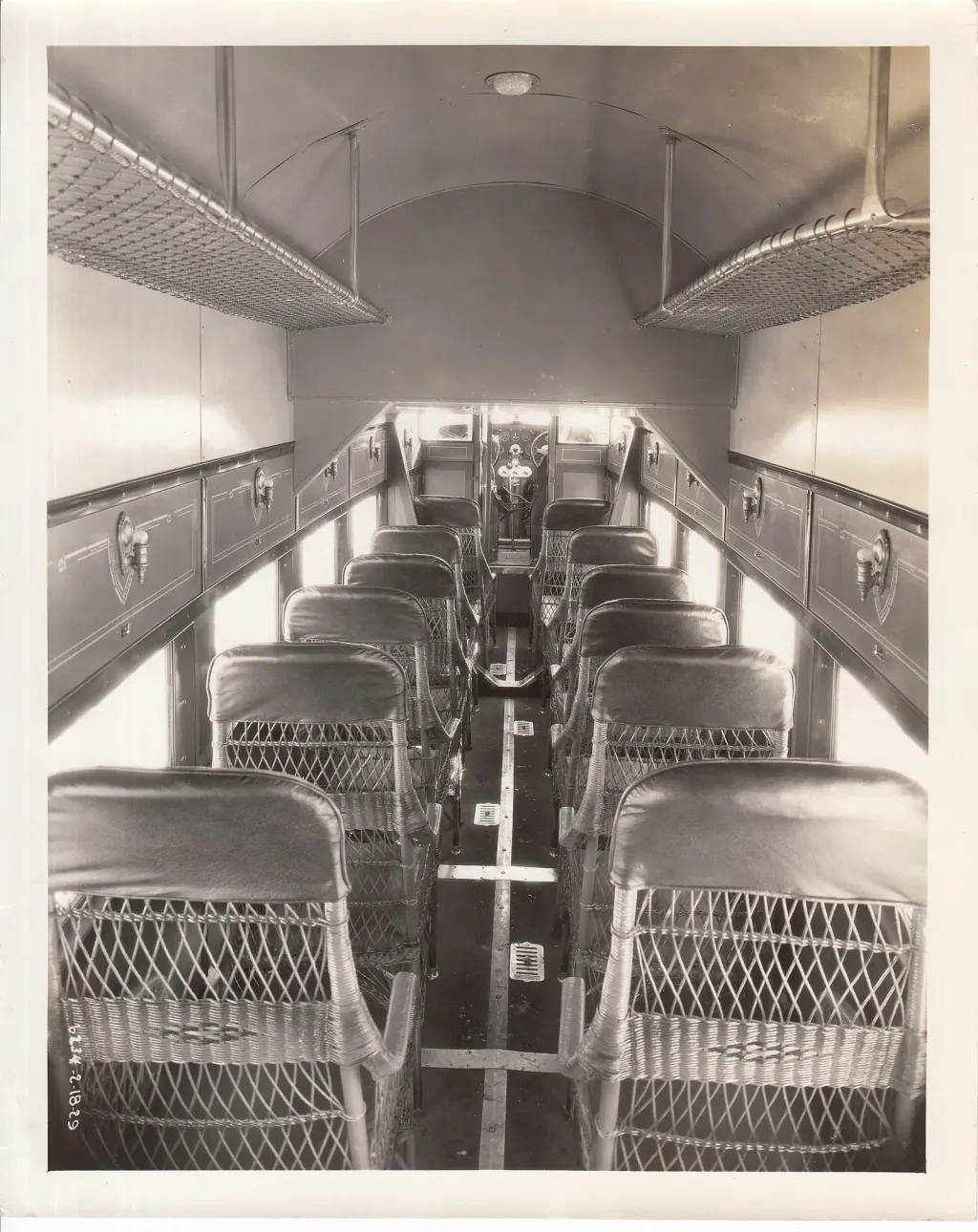
In 1930, a seat on an airliner was a wicker chair bolted to a metal floor. The cabin was cold in winter and hot in summer. It smelled of hot oil, leather and disinfectant. On takeoff, a Ford Tri-Motor was so loud that the noise could damage your hearing for good.
And yet people paid a lot of money to sit there. In the United States, about 6,000 people flew on airlines in 1929. By 1938 it was 1.2 million. This is how the decade went, told through the people who lived it.
Our 39 minute film covers fourteen stories from the decade. Below is the short written version, with the facts behind each one.
Who could afford to fly?
Not many people. A coast to coast round trip in the US cost around $260, about half the price of a new car. A 1930 survey found that 85 percent of passengers came from big businesses and high income areas.
Flying also looked risky to insurers. In 1932, a $5,000 travel insurance policy cost $2 for a flight. The same cover for a train trip cost 25 cents.
The planes flew low, at about 6,000 feet in a Ford Tri-Motor. That put them right in the bumpy weather, so airsickness was common. Cabin crew used small megaphones to be heard over the engines. Later in the decade, Eastern Air Lines stewards handed out chewing gum to help with ear pressure.
1930: nurses become the first stewardesses
Ellen Church was a registered nurse in San Francisco. She wanted to fly airliners as a pilot, but airlines did not hire women for that job. So she went to Boeing Air Transport with a different idea: put nurses on board to calm passengers who were afraid of flying.
The airline hired eight nurses for a three month trial. They had to be single, no older than 25, and small and light. Their first flight left on 15 May 1930 in a Boeing 80A, from Oakland to Chicago. It took about 20 hours and made 13 stops.
The job paid $125 a month. The women loaded bags, punched tickets, served cold chicken and hot drinks from vacuum bottles, and wound the cabin clock. They also had to make sure passengers opened the toilet door and not the emergency exit. A 1935 airline magazine put it simply: "the psychological effect of having a girl on board is enormous."
1931: the crash that ended wooden airliners
On 31 March 1931, a TWA Fokker F-10 crashed near Bazaar, Kansas. All eight people on board died, including Knute Rockne, the famous Notre Dame football coach. Moisture had weakened the glue inside a wooden wing, and the wing came off in flight.
The crash changed the industry. Fokker trimotors were grounded for more checks. The US government stopped keeping crash findings secret. Airlines turned away from wood, and that pushed the move to all metal airliners like the Boeing 247 and the Douglas DC-2.
1932 to 1933: one letter that led to the DC-3
In August 1932, Jack Frye of TWA sent a letter to aircraft makers. He wanted a plane for twelve passengers that could take off fully loaded on any combination of two engines. Douglas answered, and the DC-1 contract was signed in September 1932.
Boeing got there first with the 247 in 1933. The Smithsonian calls it the first modern airliner. It carried 10 passengers, flew 50 percent faster than the Ford Tri-Motor and crossed the US in under 20 hours. Douglas then stretched its design into the 14 seat DC-2.
Europe: lunch in a giant biplane
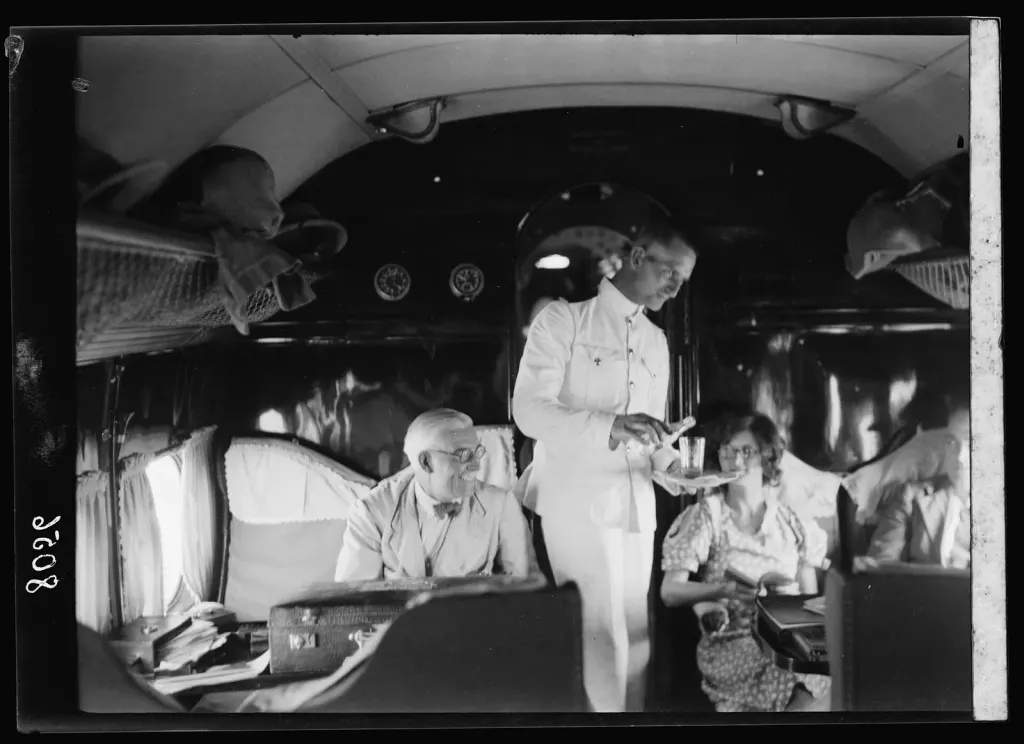
In Britain, Imperial Airways flew the Handley Page HP42 from 1931 to 1939. It was a huge, slow biplane with four engines and a cruise speed of about 100 mph. Passengers sat in saloons where full meals were served in flight. The eight aircraft flew ten million miles without a fatal accident, according to the Science Museum Group.
In 1933, several French airlines merged into Air France. The new airline kept a winged seahorse logo that the French still call "la crevette", the shrimp. Today the group is part of Air France KLM.
1932: a hotel inside a desert fort
Planes of the time could not fly far without fuel. When Persia stopped letting British aircraft land, Imperial Airways needed a new stop on the Gulf. The ruler of Sharjah, Sheikh Sultan bin Saqr Al Qasimi, offered land. The rent was 800 rupees a month in silver, plus 5 rupees for each landing.
The first airliner, the HP42 Hanno, landed there on 5 October 1932 with four passengers. Next to the runway stood a guest house behind barbed wire, with armed guards. People called it the Sharjah Fort Hotel. The building is now the Al Mahatta Museum. Today the emirate is served by Sharjah Airport.
1934: a town that flashed its lights
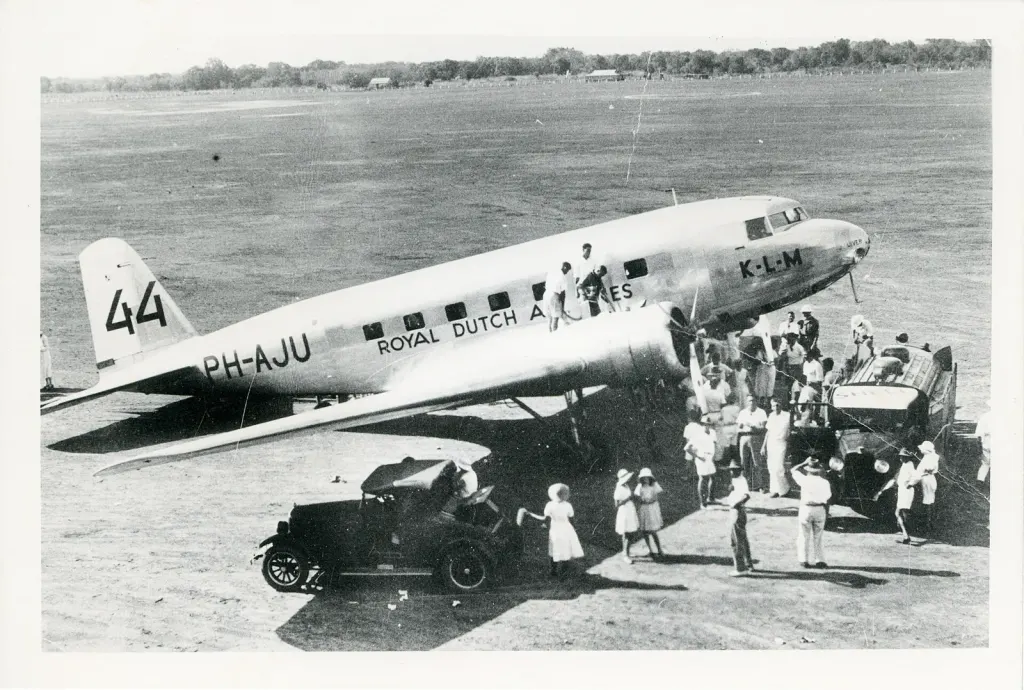
In October 1934, a race ran from England to Melbourne. A KLM DC-2 named Uiver came second while carrying passengers, and it won the handicap prize.
On the last leg, the Uiver got lost in a storm over Australia. Lightning cut its radio. In the town of Albury, people heard the engines overhead. A newspaper man, an electrical engineer and a postal inspector who knew Morse code flashed the town's street lights to spell out "ALBURY". A local radio station asked drivers to light up the racecourse, and about 80 cars came. The Uiver landed at 1:17 in the morning.
The plane sank into the mud, and hundreds of residents pulled it free with ropes. Sadly, a few weeks before Christmas that year, the Uiver crashed in Iraq on a mail flight and all seven on board were killed.
1935: London to Australia in twelve and a half days
From April 1935, Imperial Airways and Qantas Empire Airways ran a weekly passenger service from London to Brisbane. It took twelve and a half days. Passengers slept in places like Alexandria, Baghdad, Sharjah, Calcutta, Singapore and Darwin.
A single ticket cost £195. In 1935, a British coal miner earned about £2 5s a week, so the fare was more than 80 weeks of his pay. Today Qantas flies from Perth to London nonstop in about 17 hours.
1935: the China Clipper
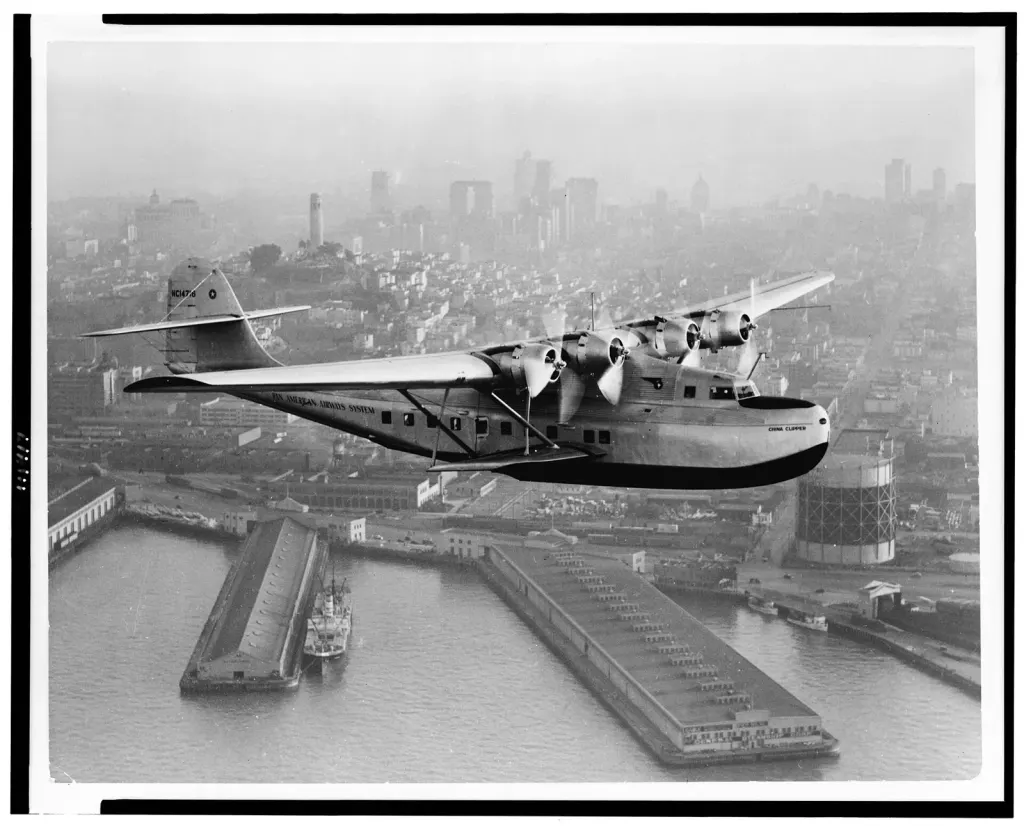
Pan Am wanted to fly across the Pacific, but there was nowhere to stop. So it sent a ship to build bases on the small islands of Midway and Wake. On 22 November 1935, the Martin M-130 China Clipper left Alameda with mail for Manila. Tens of thousands of people watched.
Pan Am's boss Juan Trippe gave the order on the radio: "Captain Musick, you have your sailing orders." The plane was so heavy it could not climb over the half built Bay Bridge, so it flew under it. It reached Manila after about 60 hours in the air. A ship took more than two weeks. The first paying passengers followed in October 1936, for about eight hundred dollars one way.
1936: the DC-3 and the Hindenburg
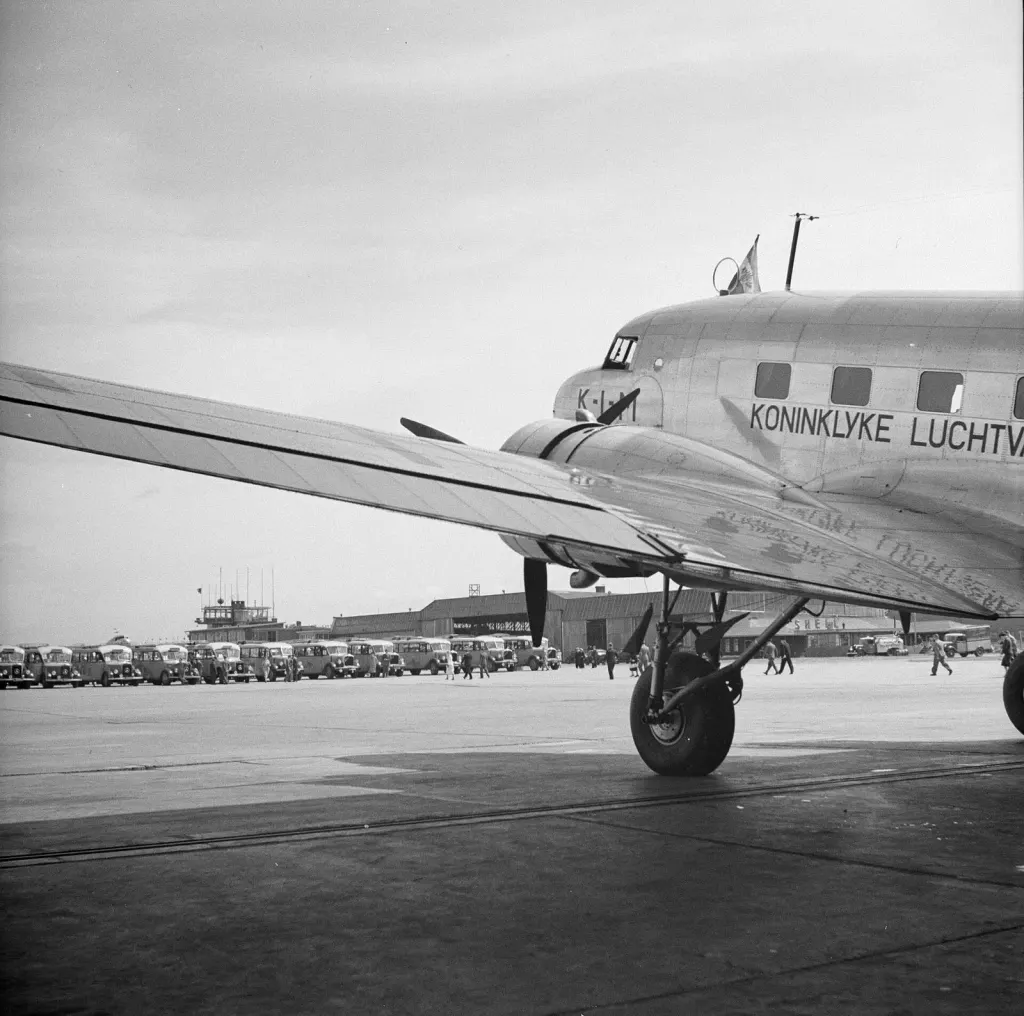
The Douglas DC-3 flew for American Airlines from June 1936. It carried 21 passengers and crossed the US in under 16 hours. American's C.R. Smith said it was "the first airplane in the world that could make money just by hauling passengers." By 1939, most US airline passengers flew on DC-3s.
The Hindenburg offered a very different trip. It had cabins with hot and cold water, a dining room and a smoking room sealed off from the hydrogen. It flew so smoothly that a pencil could stand on end on a table. A one way ticket from Germany to the US cost $400.
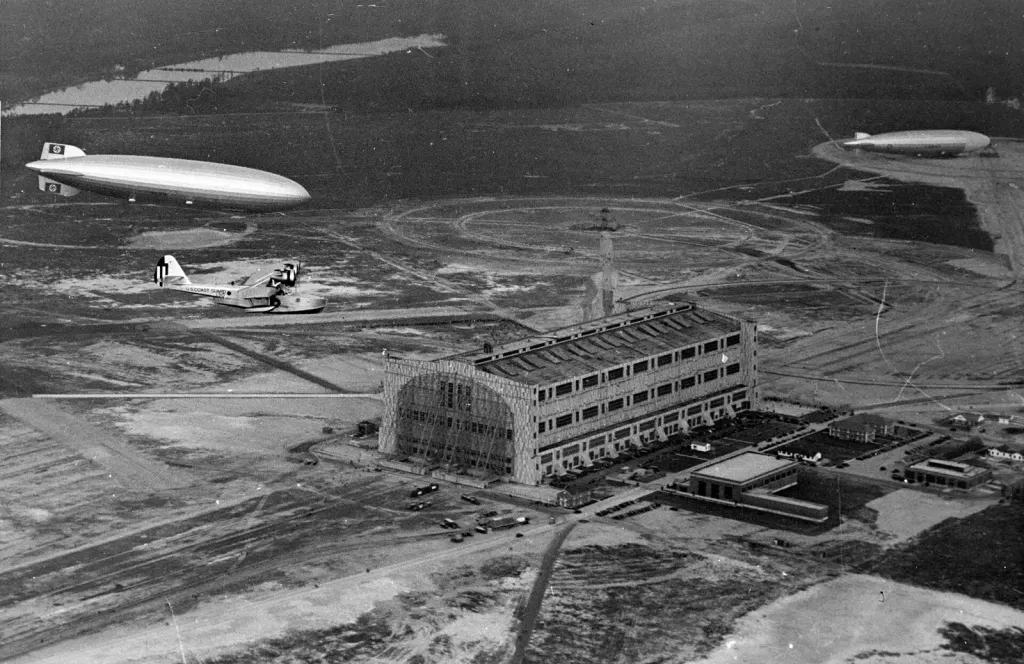
On 6 May 1937 it caught fire while landing at Lakehurst, New Jersey. 36 people died. The cause has never been proven.
1939: dinner over the Atlantic
At the end of the decade came the Boeing 314 flying boat. It had a dining room with china and linen, berths and a honeymoon suite. On 28 June 1939, the Dixie Clipper took 22 paying passengers from New York to Marseille via the Azores and Lisbon, in about 42 hours.
Compare that with today. IATA expects about 5.2 billion airline passengers in 2026, and 2023 had the lowest fatal accident risk it has ever recorded.
Questions people ask about 1930s flying
Was flying in the 1930s safe?
It was much riskier than today. Crashes such as the 1931 Fokker accident and the loss of the Uiver in 1934 were part of the decade. Insurance for one flight cost eight times more than the same cover for a train trip.
How much did a plane ticket cost in the 1930s?
A US coast to coast round trip cost about $260. London to Brisbane cost £195 one way in 1935. On the DC-3, a one way ticket across the US cost $160.
Who were the first flight attendants?
Eight registered nurses hired by Boeing Air Transport in 1930, led by Ellen Church. Their first flight was on 15 May 1930.
If you like aviation history, watch our film on the Spruce Goose, the giant flying boat that flew only once.
Sources: Smithsonian National Air and Space Museum; US Centennial of Flight Commission; Wyoming State Historical Society; Science Museum Group; Historic England; The National (UAE); Uiver Memorial Albury; TIME (December 1935); UK Hansard (1937); IATA; Wikipedia articles on Ellen Church, the 1931 Fokker F-10 crash, the HP42, the MacRobertson Air Race, the Kangaroo Route, the China Clipper and the Hindenburg.

About the author
Radu Balas
Founder, Flying Engineer
View author profile Editorial policy and corrections