
General Aviation Flight Simulator
A Cessna 172 based flight simulator prototype, built for basic and instrument training, with a 225 degree visual system and a configurable cockpit.
 Radu BalasFounder, The Flying Engineer2 min read
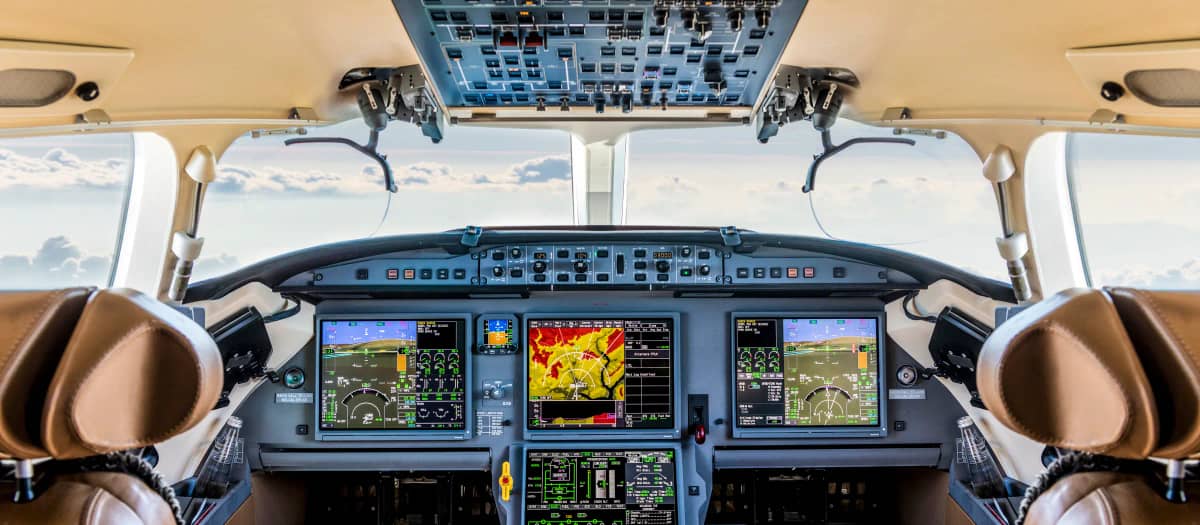
The General Aviation Flight Simulator (GAFS) was a prototype designed and built by The Flying Engineer. For its cost class it was described as one of the most professional and flexible simulators for basic flying training and instrument practice.
Design effort
Weeks went into studying a real Cessna 172: its manuals, its dimensions, and long talks with pilots. Pilots watched the design as it grew. With a low budget, the aim was a simulator as close to the real aircraft as possible. The simulator was fully 3D modelled, reviewed by pilots, studied for ergonomics, and shaped by careful technical trade offs. It drew on earlier professional experience in technical aviation and simulation.
The team
- A skilled aerospace design engineer who had worked on the Boeing 787 flight controls at Honeywell.
- An experienced technical manager who had developed the flight management system for the Boeing 777, 787, A320, A340 and A380, and who holds United States patents.
- Cessna 172 pilots.
- The Flying Engineer.
Intended use
The simulator was meant for basic flying training, advanced training that adds instruments, systems training and aerospace research. It was modelled on one popular trainer, but could be set up as the cockpit of almost any general aviation aircraft, and changes were meant to be simple and quick.
Features
- Full instrument and system simulation.
- A realistic aircraft performance model.
- A wrap around visual system with a 225 degree horizontal field of view.
- A traditional cockpit with analog gauges and a Garmin GNS 530 or 430, or a glass cockpit based on the Garmin G1000.
- A cockpit layout that can be changed to suit a specific aircraft type.
- Day and night flying, CAVOK and bad weather.
- Dual map, dome and glareshield lights.
- Single pilot controls (yoke and rudder) that can grow into dual controls.
- Suited to basic flying, systems training, instrument flying, visual flying practice and research.
- Certifiable as a BATD or an AATD.
- Full pilot control of all available systems.
- An ergonomic design that follows cockpit design philosophy, with a few allowed differences from the real aircraft for comfort and for the job at hand.
- Simple custom hardware for reliability without losing function.
- An optional instructor station, which brings failure simulation as a default add on.
Prototype use
At that point the prototype was for the personal use of The Flying Engineer. Commercial pilot licence holders who wanted to brush up on aircraft or navigation procedures could visit by invitation and fly it. Building it took five months away from aviation journalism, and showed a firm commitment to technical aviation.
More projects.
About the author
Radu Balas
Founder, Flying Engineer
View author profile Editorial policy and corrections

