The B-2 Spirit Bombers: America's Most Advanced Stealth Warfare Platform
 Radu BalasFounder, The Flying EngineerPublished Updated 7 min read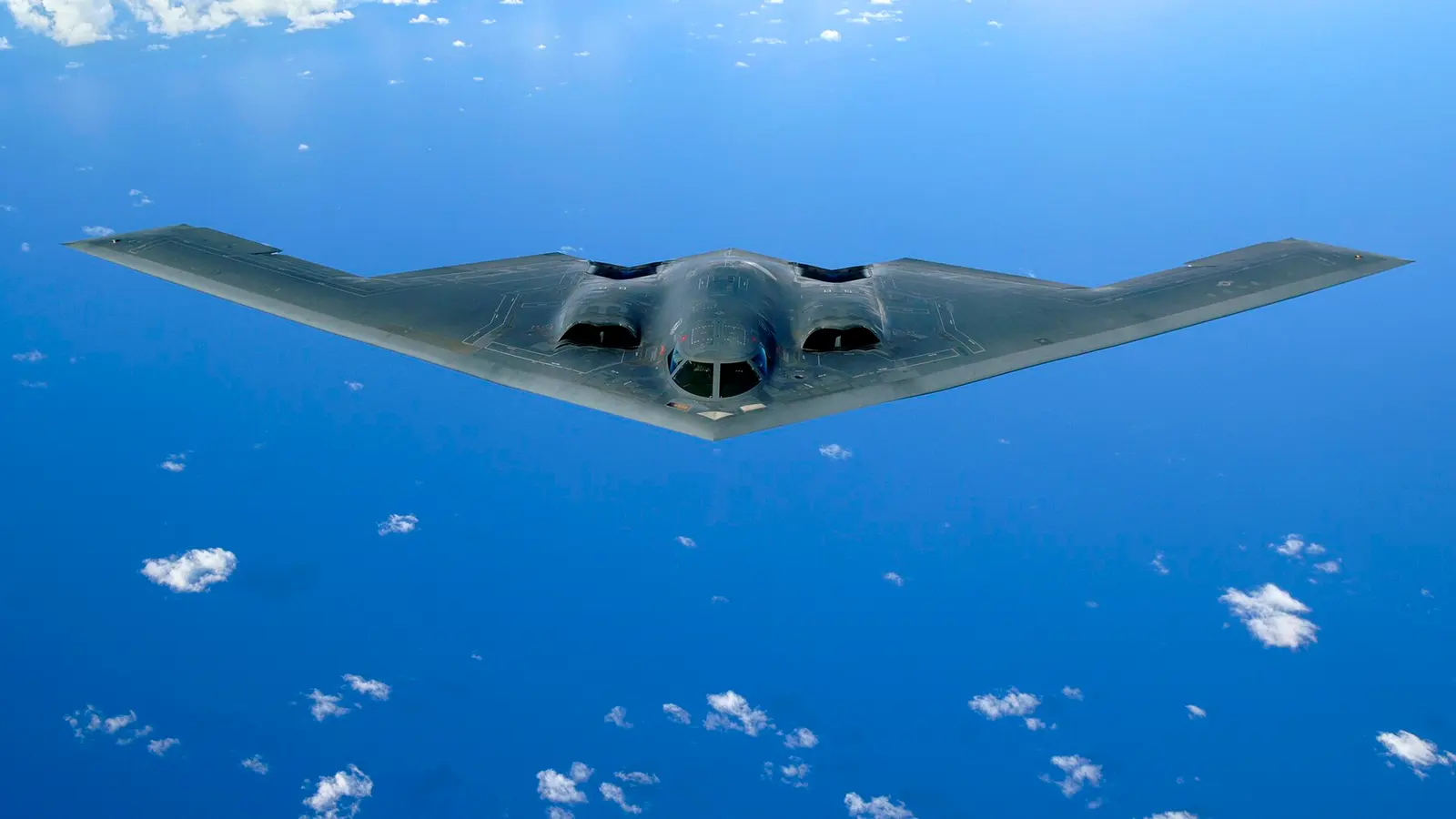
The aviation world witnessed history on June 21, 2025, when seven B-2 Spirit Bombers executed Operation Midnight Hammer. These flying fortresses penetrated Iranian airspace undetected, delivering devastating bunker-buster bombs to nuclear facilities. It was the most significant demonstration of American air power in decades.
This wasn't just another military operation. It was validation of a technology that many considered too expensive, too complex, and too ambitious when development began in the late 1970s. The B-2 Spirit bombers has proven its critics wrong time and again.
Today, we examine why this revolutionary aircraft remains the pinnacle of aviation engineering. From its groundbreaking stealth capabilities to its recent combat effectiveness, the B-2 continues reshaping modern warfare nearly four decades after its inception.
B-2 Spirit Bombers: Engineering the Invisible
Revolutionary Design Philosophy
The B-2 Spirit represents a quantum leap in aviation stealth technology. Its distinctive flying wing configuration isn't just aesthetically striking-it's a masterpiece of electromagnetic engineering. The aircraft's radar cross-section is reportedly comparable to that of a small bird, making it nearly invisible to conventional radar systems.
Engineers at Northrop Grumman didn't simply adapt existing technology. They invented everything from scratch, adhering to stringent Department of Defense acquisition regulations for advanced aircraft systems. The stealth bomber design incorporates:
- Radar-absorbing materials (RAM) coating the entire airframe
- Angular surfaces that deflect radar waves away from receivers
- Composite construction minimizing metal components
- Internal weapons bays preserving the aircraft's stealth profile
- Specialized engine inlets reducing infrared signatures
Breakthrough Materials and Manufacturing
The unique composite construction, fly-by-wire controls, and top radar-absorbent material that coats the entire plane were all major breakthroughs in technology. The manufacturing process requires climate-controlled facilities and precision assembly techniques that remain classified.
Truth is, building a B-2 is more like constructing a high-tech laboratory than assembling a conventional aircraft. Each plane requires specialized tools, custom software, and 3D modeling systems developed exclusively for this program.
Combat-Proven Stealth Performance
Recent operations have validated the B-2's stealth capabilities against modern air defense systems. During Operation Midnight Hammer, Iranian forces were caught completely off-guard-their fighters did not fly, and surface-to-air missile systems did not detect the approaching bombers.
Unprecedented Combat Capabilities
Massive Ordnance Capacity
The B-2 Spirit bomber carries up to 40,000 pounds of munitions internally. The bomber's internal weapons bays are specifically designed to maintain stealth characteristics while accommodating large ordnance loads. This includes:
- 80 x 500-pound JDAM GPS-guided bombs
- 16 x 2,400-pound B83 nuclear bombs
- 2 x GBU-57 Massive Ordnance Penetrator bombs
- Various cruise missiles and standoff weapons
Global Strike Range
The B-2 has an unrefueled range of more than 6,000 nautical miles and over 10,000 nautical miles with one refueling, giving it the ability to fly to any point in the world within hours. This global reach eliminates the need for forward-deployed bases, reducing political complications and operational risks.
Operating under FAA regulations for military aircraft operations in civilian airspace, the B-2 maintains strict flight protocols during transit to and from target areas.

USA army patriot analyzes aerial reconnaissance data to come up with tactics gaining battlefield advantage. United States military unit in headquarters controls drones attacking strategic targets
Recent Combat Operations: Iran Strikes 2025
The June 2025 Iran operations showcased the B-2's unique capabilities. Seven B-2 bombers dropped 14 GBU-57 Massive Ordnance Penetrator bombs on Iranian nuclear facilities, marking the first operational use of these 30,000-pound bunker-buster weapons.
Here's what made this mission remarkable:
- 30+ hour round-trip flight from Whiteman AFB to Iran
- Complete surprise achieved despite advanced Iranian air defenses
- Precision targeting of deeply buried nuclear facilities
- No losses to enemy fire or mechanical failure
Technical Specifications and Performance
Flight Characteristics
| Specification | Details |
| Wingspan | 172 feet (52.4 meters) |
| Length | 69 feet (21 meters) |
| Height | 17 feet (5.2 meters) |
| Maximum Speed | 628 mph (1,010 km/h) |
| Service Ceiling | 50,000 feet |
| Crew | 2 (pilot and mission commander) |
Propulsion System
Four General Electric F118-GE-100 turbofans provide 17,300 pounds of thrust each. The engines lack afterburners, reducing infrared signatures and extending range. Smart engineering choice-stealth trumps speed in modern warfare.
Cost and Production Numbers
The B-2 program represents one of the most expensive military projects in history. Each aircraft cost an average of $2.13 billion, including development, engineering, testing, and production. Only 21 aircraft were built, with 19 remaining in active service.
Strategic Impact and Future Role
Nuclear Deterrence and Global Influence
The B-2 Spirit serves as a cornerstone of America's nuclear triad, operating under strict International Civil Aviation Organization standards for military aircraft. Its ability to penetrate enemy airspace and deliver nuclear weapons provides unmatched strategic deterrence. A USAF assessment showed that two B-2s armed with precision weaponry can perform the role of 75 conventional aircraft.
The aircraft's strategic role aligns with broader NATO interoperability requirements for allied air operations, ensuring seamless integration during coalition missions.
Evolving Mission Profile
Originally designed for nuclear strikes against the Soviet Union, the B-2 has adapted to modern threats:
- Counter-terrorism operations in Afghanistan and Iraq
- Precision strikes against hardened targets
- Power projection missions worldwide
- Strategic deterrence against near-peer adversaries
Competition from Next-Generation Platforms
The B-21 Raider is intended to replace the B-2 Spirit by 2040, featuring advanced materials, propulsion, and stealth technology. However, the B-2 will remain operationally relevant for decades.
Challenges and Operational Realities
Maintenance Complexity
Operating the B-2 requires extraordinary maintenance protocols. The stealth coatings are sensitive to weather and require climate-controlled hangars. Each flight hour demands extensive preparation and post-flight inspection.
Operational Costs
The B-2 Spirit is an aging, imperfect weapons platform, rife with pitfalls of complex, sensitive equipment. Yet its unique capabilities justify the investment for missions no other aircraft can accomplish.
Weather Limitations
The sophisticated stealth coatings can be compromised by moisture and extreme temperatures. Mission planning must account for weather conditions throughout the entire flight profile.
Recent Modernization Efforts
Avionics Upgrades
Northrop Grumman leads modernization efforts to ensure the B-2 remains fully mission capable against evolving worldwide threats, following Boeing technical specifications for advanced avionics integration. Recent upgrades include:
- Enhanced communication systems
- Improved navigation and targeting
- Advanced defensive management systems
- Upgraded computing architecture
Mission Flexibility Improvements
Modern upgrades focus on expanding the B-2's mission envelope. Enhanced data links allow real-time target updates during flight, while improved sensors provide better battlefield awareness.
Global Implications and Strategic Messaging
Deterrence Through Demonstration
The Iran strikes sent clear messages to potential adversaries worldwide. Only the United States possesses heavy bombers capable of carrying such weapons, making this capability uniquely American.
Alliance Reassurance
B-2 operations reassure allies of American commitment and capability. The aircraft's global reach means allies need not host forward-deployed forces to benefit from this deterrent effect.
Technological Superiority
Despite being decades old, the B-2 remains technologically superior to any comparable aircraft worldwide. This technological edge provides significant diplomatic and military advantages.
Frequently Asked Questions
Q.1 How many B-2 bombers are currently operational?
Answer: The United States has 19 B-2 bombers in active service, all based at Whiteman Air Force Base in Missouri.
Q.2 What makes the B-2 so expensive compared to other aircraft?
Answer: The B-2's cost reflects its revolutionary technology, low production numbers, and extensive development costs. Each aircraft required custom tooling, specialized materials, and classified manufacturing processes.
Q.3 Can other countries detect the B-2 Spirit?
Answer: While no stealth technology is perfect, the B-2's radar cross-section remains extremely small. Modern air defense systems may achieve limited detection under specific conditions, but tracking and engaging the aircraft remains extremely difficult.
Q.4 What weapons can the B-2 carry besides nuclear bombs?
Answer: The B-2 can deploy a wide range of conventional weapons including JDAM precision bombs, JSOW glide bombs, JASSM cruise missiles, and the massive GBU-57 bunker-buster bombs used against Iran.
Q.5 How long can a B-2 stay airborne?
Answer: The B-2 holds the record for the longest air combat mission in history-a 44-hour mission in 2001, with total flight time exceeding 70 consecutive hours including refueling stops.
Q.6 Will the B-2 be replaced by the B-21 Raider?
Answer: The B-21 is scheduled to begin replacing the B-2 fleet around 2040, though the B-2 may continue operating in specialized roles beyond that timeframe.
Q.7 Can allies purchase or operate B-2 bombers?
Answer: The B-2 has never been offered for export due to its highly classified technology. Even close allies like the United Kingdom and Australia operate different aircraft for their strategic bombing needs.
Conclusion: Legacy of the Sky's Ultimate Predator
The B-2 Spirit bomber stands as perhaps the greatest aviation achievement of the late 20th century. From its revolutionary stealth technology to its recent combat successes, this aircraft has redefined what's possible in military aviation.
Bottom Line Up Front: The B-2 remains America's most capable strategic bomber, combining unmatched stealth, global reach, and devastating firepower. Recent operations prove its continued relevance despite advancing enemy technologies.
The 2025 Iran strikes demonstrated that even after nearly three decades of service, no adversary has developed effective countermeasures against this technological marvel. The B-2's ability to appear anywhere, anytime, without warning continues serving as history's most effective deterrent.
As we look toward the future with the B-21 Raider on the horizon, the B-2 Spirit has secured its place in aviation history. It proved that American engineering excellence, given sufficient resources and determination, can create weapons that fundamentally alter the balance of global power.
The ghost that strikes from above remains very much alive-and very much feared.
About the author
Radu Balas
Founder, Flying Engineer
View author profile Editorial policy and correctionsExplore Aircraft Sales
Browse 772 companiesNeed a charter, a part or a service?
Tell us what you need and we share it with up to 3 relevant companies, who reply to you directly.