Aircraft
Airbus A330-800neo vs. Boeing 787-8: My Take
Two mid-size long-haul twins with almost the same range: the re-engined A330-800neo against the composite Boeing 787-8, and my verdict.
Updated 8 min read
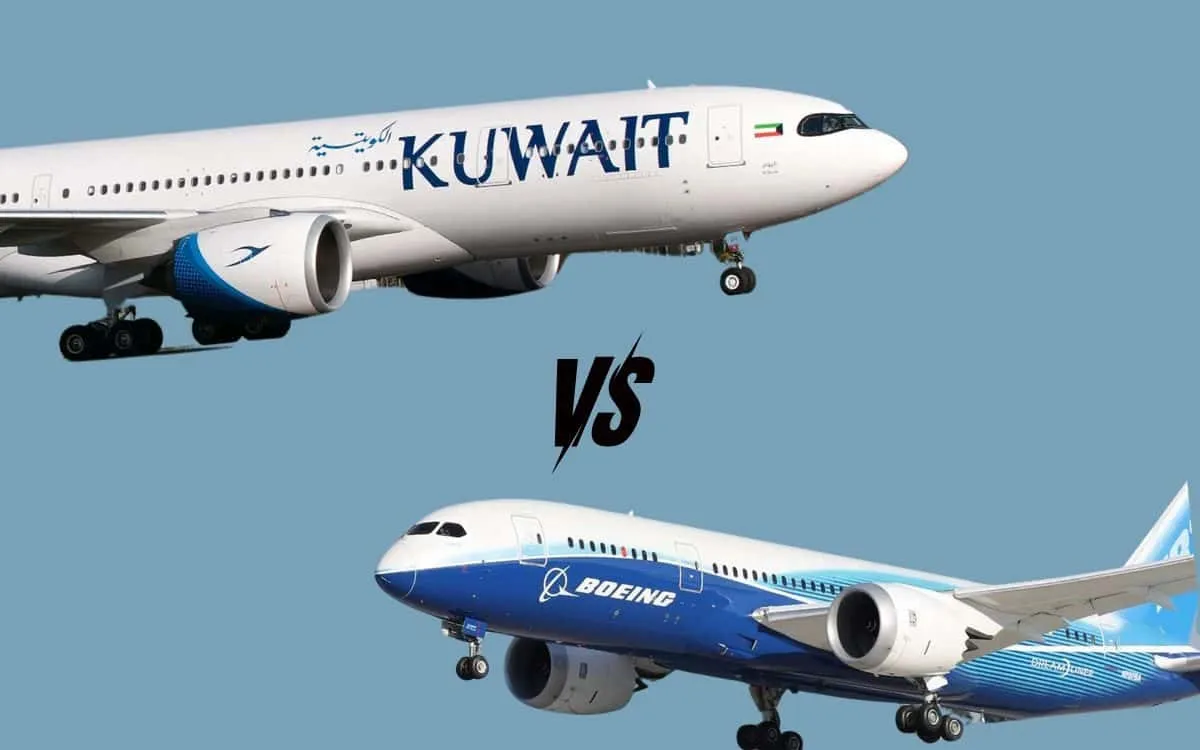
I love comparing aircraft that look alike on paper but come from very different ideas. The Airbus A330-800neo and the Boeing 787-8 are a perfect pair: both are mid-sized long-haul twins with similar seat counts and range, yet one is a re-engined classic and the other a clean-sheet composite jet.
They have also both ended up as the less popular member of their family. As of 2026, only seven A330-800s fly, while most 787 buyers now choose the larger 787-9 and 787-10. That makes the comparison more interesting, not less, so here is my take.
Key Takeaways
- Range is almost the same: up to 8,100 nm for the A330-800 and up to 8,000 nm for the 787-8, according to the manufacturers.
- The A330-800 is heavier and has the wider wing; the 787-8 is lighter thanks to its composite structure.
- The A330-800's big selling point is commonality with existing A330 fleets. The 787-8's is lower fuel burn and a more modern cabin environment.
- Only three airlines fly the A330-800: Kuwait Airways, Uganda Airlines and Air Greenland.
Introduction to the A330-800neo and the 787-8
The A330-800 is the shorter of the two A330neo models Airbus launched in 2014. It keeps the A330 fuselage but adds Rolls-Royce Trent 7000 engines, a longer wing with new sharklets and the Airspace cabin. Airbus quotes a 25% cut in fuel burn and CO2 against previous-generation jets such as the 767-300ER. The first one went to Kuwait Airways in 2020.
The 787-8 was the first Dreamliner, in service with All Nippon Airways since 2011. Boeing built it mostly from carbon composites, which makes it lighter for its size and allows a lower cabin altitude and higher humidity.
| Feature | A330-800neo | 787-8 |
|---|---|---|
| Engine Type | Rolls-Royce Trent 7000 | GE Aerospace GEnx-1B or Rolls-Royce Trent 1000 |
| Maximum Range (nautical miles) | 8,100 | Up to 8,000 |
| Typical Seating | 257 to 271 (three-class) | 200 to 275 (two-class) |
| Wingspan (meters) | 64.0 | 60.1 |
| Fuselage Width (meters) | 5.64 | 5.77 |
| Length (meters) | 58.36 | 56.7 |
Choosing between these long-haul aircraft depends on the airline's existing fleet and routes more than on the spec sheet.
Design Philosophy: Addressing Different Market Needs
The Airbus vs. Boeing contest here is really old airframe with new engines against new airframe from the start. Each approach has a clear logic.
Understanding Airbus's Strategy with the A330-800neo
Airbus kept development cost low by reusing the A330 airframe and type rating. For an airline already flying A330ceos, the A330-800 slots in with the same pilots, much of the same ground equipment and familiar maintenance. It was pitched mainly as a replacement for older A330-200s.
Boeing 787-8's Approach to Efficiency and Technology
The 787-8 uses composites, a more electric architecture without traditional engine bleed air, and a high-aspect-ratio wing to save fuel. It opened many long, thin routes that could not support a 777 or 747, which was exactly its purpose.
| Feature | Airbus A330-800neo | Boeing 787-8 |
|---|---|---|
| Material Used | Mainly aluminium, with composite parts | About 50% composite by weight |
| Fuel Efficiency | 25% lower fuel burn than previous-generation jets (Airbus) | About 20% lower fuel burn than the jets it replaced |
| Operational Cost | Lower for existing A330 operators through fleet commonality | Lower fuel cost from a lighter airframe |
| Range | 8,100 nautical miles | Up to 8,000 nautical miles |
| Passenger Comfort | Airspace cabin, eight-abreast economy | Lower cabin altitude, higher humidity, larger dimmable windows |
For an airline, the best aircraft choice is the one that fits its network and fleet, not the one with the better brochure.
The Battle of the Skies: Airbus A330-800neo vs. Boeing 787-8
The 787-8 is lighter and more advanced. The A330-800, though based on an older design, is easy and cheap for A330 operators to add, with little extra training.
When Airbus launched the A330neo, Boeing called the strategy a mess and said the jet would be dead on arrival, as Leeham News reported in 2016. The larger A330-900 proved them wrong, with Delta, TAP and others ordering it. The -800, however, has stayed a niche aircraft.
| Feature | Airbus A330-800neo | Boeing 787-8 |
|---|---|---|
| Fuel Efficiency | Good | Better per trip, thanks to lower weight |
| Passenger Capacity | 257 to 271 three-class, up to 406 maximum (Airbus) | 200 to 275 two-class (Boeing) |
| Range | 15,000 km | Up to 14,820 km |
| Body Material | Aluminium and composites | Carbon-fibre composite |
The 787-8 leads on fuel efficiency, which matters most on long flights. For airlines with A330 fleets, the A330-800 is still a sensible choice because crews and engineers already know the type.
Performance Metrics Compared: Which Plane Takes the Lead?
Both jets can fly 15 to 16 hour sectors with a full cabin. The differences show up in weight, fuel and cargo.
Analyzing Runway Performance and Payload Capacity
The A330-800 has a higher maximum take-off weight (251 tonnes against 227.9 tonnes for the 787-8) and carries more fuel, but it also has to lift a heavier airframe. Runway needs depend on the route, temperature and airport elevation, so compare airport analysis for your own case rather than headline figures. Pilots have long debated this on forums such as Airliners.net.
Fuel Efficiency Comparison for Long-Haul Flights
The 787-8's lighter structure gives it lower trip fuel on most long sectors. On a per-seat basis the gap narrows, because airlines usually fit a few more seats in the A330-800's wider economy section. For a broader view of where both jets stand, see this analysis of the 787-8 and A330-800neo.
| Aircraft Model | Max take-off weight | Max fuel capacity | Lower-deck cargo |
|---|---|---|---|
| Airbus A330-800neo | 251,000 kg | 139,090 litres | 8 pallets or 27 LD3 containers |
| Boeing 787-8 | 227,930 kg | 126,206 litres | 28 LD3 containers |
The numbers show two jets built for the same job from different starting points. The A330-800 brings more weight and fuel; the 787-8 brings a lighter airframe.
Operational Costs: Balancing Efficiency and Effectiveness
Fuel, maintenance and training make up most of the operational costs that decide an airline's long-term results.
Considering Fleet Commonality and Training
Pilots can fly the A330neo and older A330s on a common type rating, so an A330 operator can add the -800 with short differences training. That means less downtime and simpler crew planning.
Maintenance Requirements and Turnaround Times
The 787-8's composite structure resists corrosion and fatigue, which can lower long-term maintenance costs. The A330-800's familiar systems mean existing A330 operators already have the tooling, spares and know-how.
Airbus went for simplicity and commonality, Boeing for new technology. Both can work; the right one depends on the fleet you already have.
Passenger Experience: Cabin Comfort and Amenities
From a passenger seat, the two jets feel different, mainly because of how airlines lay out economy.
Evaluating Cabin Layout and Seat Configuration
Most A330-800 operators fit eight seats across in economy, which gives seats of around 18 inches. Most 787-8 operators fit nine across, which gives seats of around 17 to 17.5 inches. That small difference is noticeable on a 10-hour flight.
Onboard Technology and Passenger Satisfaction
The 787-8's advantage is the cabin environment: a cabin altitude of about 6,000 feet, higher humidity and large electronically dimmable windows. Many passengers find they arrive less tired. The A330-800's Airspace cabin has new lighting, larger bins and modern in-flight entertainment, but uses conventional aluminium-jet pressurisation.
| Feature | Airbus A330-800neo | Boeing 787-8 |
|---|---|---|
| Seat Width (Economy Class) | About 18 inches (eight-abreast) | About 17 to 17.5 inches (nine-abreast) |
| Cabin Pressure | Conventional | Lower cabin altitude, about 6,000 ft |
| Humidity Levels | Standard | Higher than older jets |
| Onboard Entertainment | Airline choice, Airspace cabin | Airline choice |
If you want more seat width, look for an A330-800. If you want to feel fresher on arrival, the 787-8 has the edge.
Conclusion: My Take
The 787-8 is the better aircraft on technology and fuel burn, and it sold far better, with more than 400 orders. The A330-800 is the better fit only for an airline that already flies A330s and needs a long-range jet a little smaller than the A330-900. That is why so few were built: Kuwait Airways, Uganda Airlines and Air Greenland operate the seven in service.
If I were planning a new long-haul fleet from scratch in 2026, I would not pick either. I would look at the 787-9 or the A330-900, which is where both manufacturers' orders now are. Back in 2014, Leeham News mapped out the logic behind Airbus's widebody decisions, and it reads well today.
FAQ
What are the main differences between the Airbus A330-800neo and the Boeing 787-8?
The A330-800 is a re-engined A330 with Trent 7000 engines, a new wing and the Airspace cabin, and it shares a type rating with older A330s. The 787-8 is a clean-sheet composite design, lighter for its size, with a lower cabin altitude and higher humidity.
Which is more fuel-efficient, the A330-800neo or the 787-8?
The 787-8 usually burns less fuel per trip thanks to its lighter structure. Per seat the gap is smaller, and real numbers depend on cabin layout and route.
Do the A330-800neo and the 787-8 have similar passenger capacities?
Yes. Airbus quotes 257 to 271 seats in three classes for the A330-800, and Boeing quotes 200 to 275 in two classes for the 787-8. Real cabins vary by airline.
How do the A330-800neo and the 787-8 compare in terms of range?
They are almost equal. Airbus quotes 8,100 nm (15,000 km) for the A330-800 and Boeing quotes up to 8,000 nm (14,820 km) for the 787-8.
Which aircraft offers a more comfortable passenger experience?
The A330-800 usually has wider economy seats (about 18 inches at eight-abreast against about 17 to 17.5 inches at nine-abreast on the 787-8). The 787-8 has a lower cabin altitude and higher humidity, which helps on long flights.
Are there any advantages to an airline choosing the A330-800neo over the 787-8?
Yes, for existing A330 operators: common type rating, shared spares and familiar maintenance. The A330-800 also uses about 25% less fuel than the older jets it replaces, according to Airbus.
How does technology differ between the A330-800neo and the 787-8?
The 787-8 uses a composite fuselage and wing, a more electric system architecture and electronically dimmable windows. The A330-800 has new engines, a new wing and a new cabin on a proven airframe. Both have modern avionics and in-flight entertainment.
Which aircraft is better for airlines that focus on cargo transportation?
Neither is a freighter. In the belly, the A330-800 takes 8 pallets or 27 LD3 containers and the 787-8 takes 28 LD3 containers, so both offer similar cargo space for passenger airlines that also sell freight.
Which airlines fly the A330-800?
Kuwait Airways (four aircraft), Uganda Airlines (two) and Air Greenland (one).
What should airlines consider when choosing between the A330-800neo and the 787-8?
Their current fleet, routes, cargo needs, the passenger experience they want to offer and their budget. In practice, most new orders now go to the larger 787-9 and A330-900.
Source Links
- https://epsilonaviation.wordpress.com/2018/12/07/is-the-a330neo-or-787-better-for-airlines/ - Is the A330neo or 787 better for airlines?
- https://www.airliners.net/forum/viewtopic.php?t=1477481 - 787 vs A330 Runway Performance/Requirements
Sources: Airbus A330-800 key figures and orders and deliveries; Boeing 787 product page; Flight Global reports on Kuwait Airways and Air Greenland A330-800 deliveries.

About the author
Radu Balas
Founder, Flying Engineer
View author profile Editorial policy and correctionsExplore Aircraft Sales
Browse 772 companiesNeed a charter, a part or a service?
Tell us what you need and we share it with up to 3 relevant companies, who reply to you directly.