Airports
Airport Firefighter: Pay, Training and the 3 Minute Rule
Airport firefighters at Washington airports earn from US$67,454.40 to US$108,118.40 a year. Learn about ARFF training, duties and the 3 minute rule.
Radu BalasReviewed by Adrian Man
Published 6 min read

An airport firefighter at Washington's two major airports earns US$67,454.40 to US$108,118.40 a year, according to the Metropolitan Washington Airports Authority. The median for all US firefighters is US$59,280 a year, according to the US Bureau of Labor Statistics.
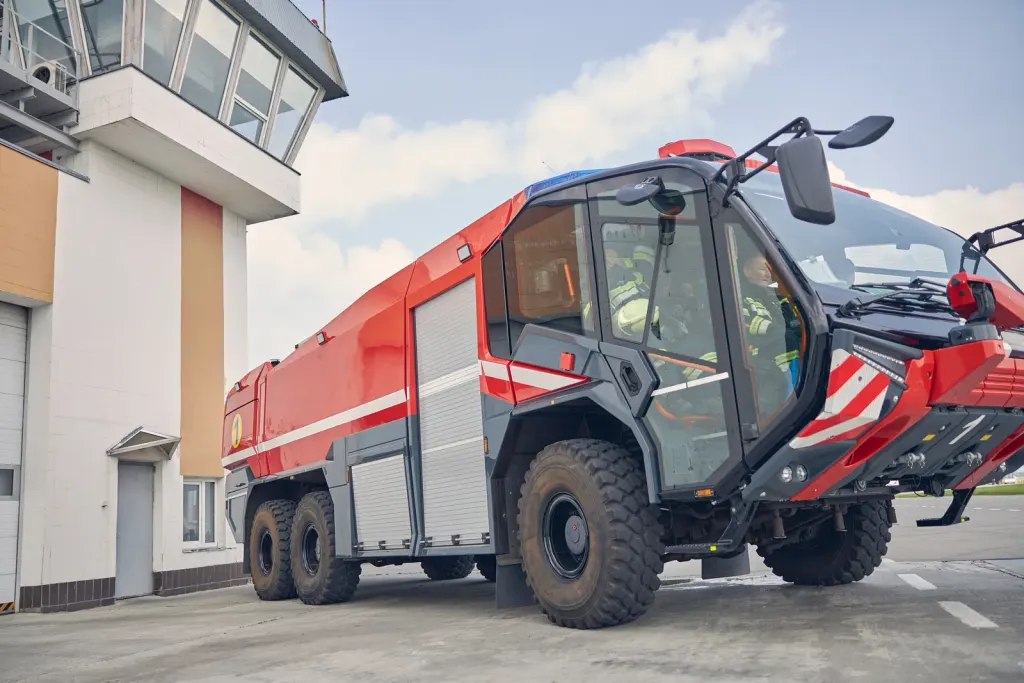
Airport firefighters work in aircraft rescue and firefighting, known as ARFF in the US. Their job is to respond when an aircraft needs emergency help.
Under US airport safety rules, the first required fire truck must reach a specified runway point within three minutes of the alarm.
What does an airport firefighter do?
Airport firefighters prepare for aircraft emergencies. But aircraft fires are only part of their work.
At Minneapolis-St Paul airport, the fire department handles more than 3,000 calls each year. Nearly 75 percent are medical calls, according to MSP Airport.
The department has about 60 staff working from two fire stations.
Philadelphia International Airport shows a similar mix of work.
Its Engine 78 recorded 80 aircraft alerts during fiscal year 2023. In 2022, it handled 1,942 medical calls. It also handled 457 fire calls that did not involve aircraft. These figures come from Philadelphia International Airport.
That means an airport firefighter may spend much more time on medical emergencies than aircraft alerts.
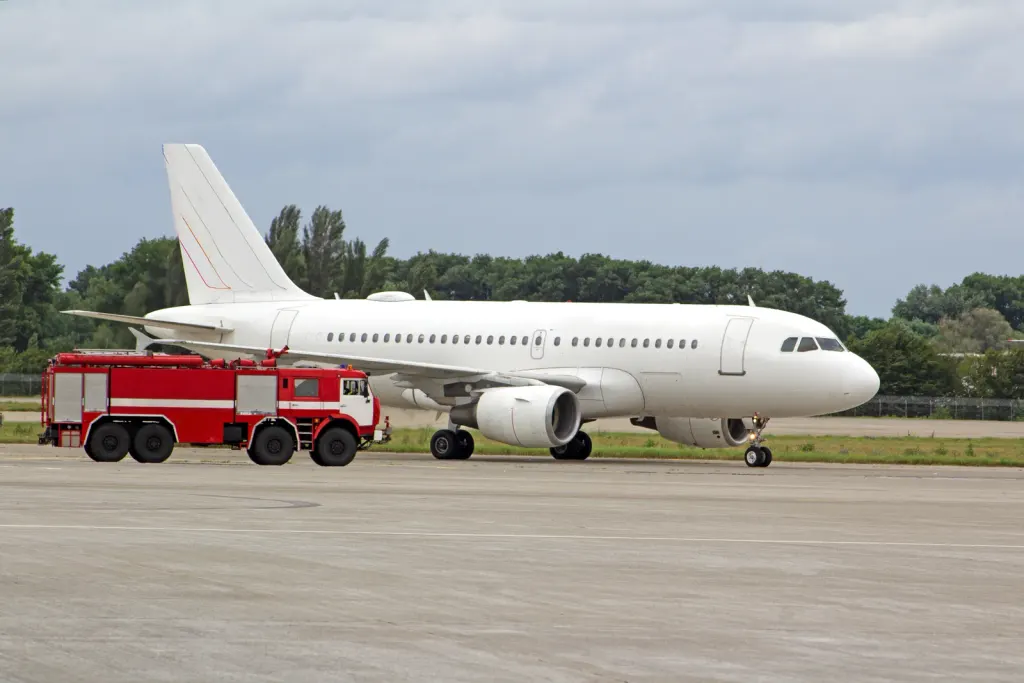
Aircraft emergencies also require special vehicles.
One example is the Oshkosh Striker, an airport rescue and firefighting truck.
The manufacturer describes three versions.
The Striker 4x4 carries 1,500 gallons of water and 210 gallons of foam. The larger 6x6 carries 3,000 gallons of water.
The Striker 8x8 carries 4,500 gallons of water and 630 gallons of foam. It can accelerate from 0 to 50 mph in less than 20 seconds.
These trucks carry the water and foam needed for aircraft firefighting.
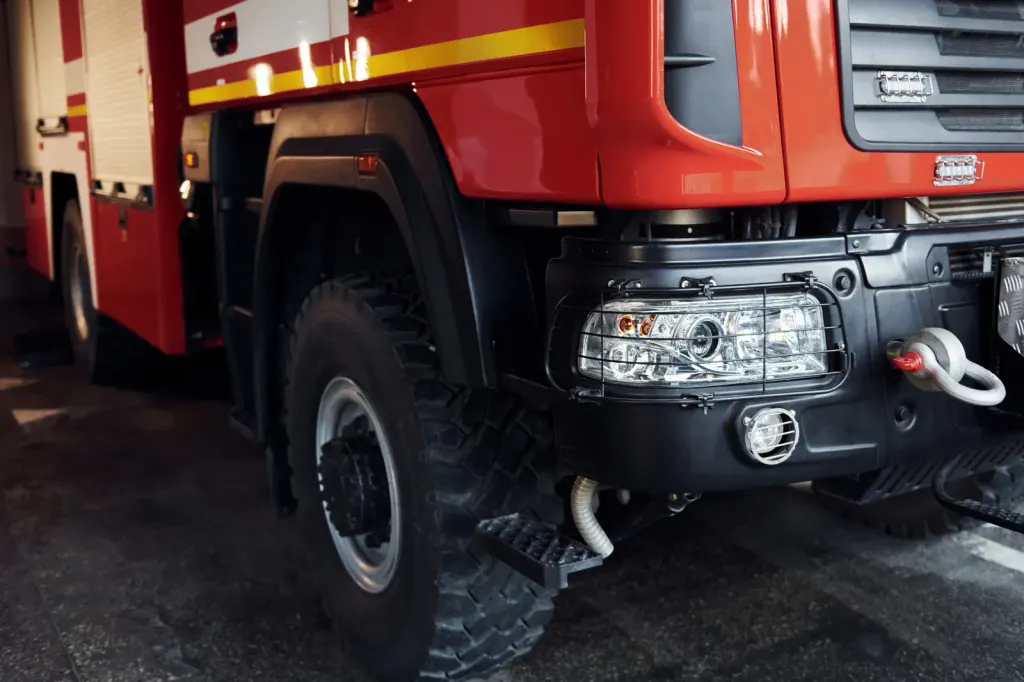
The 3 minute rule
Airport firefighters work under strict response time requirements.
In the US, 14 CFR 139.319(h) sets the response time.
Within three minutes of the alarm, the first required ARFF vehicle must reach a specific point. That point is the midpoint of the farthest runway.
The crew must also begin applying its extinguishing agent, such as water or foam.
All other required vehicles must reach that point within four minutes.
European guidance uses slightly different wording.
The European Union Aviation Safety Agency says response time should not exceed three minutes. Its operational objective is two minutes.
The size of an airport's firefighting service also depends on the aircraft using it.
The US uses an ARFF index from A to E, based on aircraft length.
Under 14 CFR 139.315, Index A covers aircraft under 90 feet long. Index E covers aircraft 200 feet and longer.
A higher index requires more trucks, water and foam.
The response time becomes especially important when an aircraft crashes.
On 6 July 2013, Asiana Flight 214 struck a sea wall before the runway in San Francisco. The Boeing 777 carried 307 people. Three died.
The tower raised the alarm at 11:28:00. The first fire truck reached the scene at 11:31:11, according to the Flight Safety Foundation.
The times show how quickly an airport fire crew must respond to an aircraft accident.
How much does an airport firefighter make?
Airport firefighter salaries depend on the employer and position.
Some employers publish annual salaries. Others advertise hourly pay.
The following figures come from job advertisements and official firefighter career information.
| Employer or group | Pay | Source and year |
|---|---|---|
| Washington airports authority, Firefighter II | US$67,454.40 to US$108,118.40 a year | Airports authority, 2025 |
| Spokane Airports, ARFF Specialist | US$31.94 to US$46.25 an hour | Job advert, 2026 |
| US Army, Fort Rucker airfield firefighter | US$50,460 to US$65,599 a year | USAJOBS, 2026 |
| All US firefighters, median | US$59,280 a year | BLS, May 2025 |
| All UK firefighters | GBP 28,000 starter to GBP 42,000 experienced | National Careers Service |
The Washington figures cover Firefighter II positions at Dulles and Reagan National airports.
The same recruitment page lists Firefighter I Trainee pay starting at US$62,254.40.
The Fort Rucker position is a federal GS-07 job. Its advertisement requires Airport Firefighter certification.
For comparison, the BLS reports that the lowest paid tenth of US firefighters earn less than US$34,910. The highest paid tenth earn more than US$101,040.
These national figures cover all firefighters, not only those working at airports.
There is no official pay figure for airport firefighters alone in the US or UK.
The UK's National Careers Service gives pay for firefighters generally. It does not provide a separate airport figure.
UK airports publish their own salaries in job advertisements. Those advertisements eventually close.
How to become an airport firefighter
In the US, the usual starting point is general firefighter training.
According to the BLS, entry requirements normally include a high school diploma and a driver's license.
The minimum age is 18.
Applicants also need emergency medical training. Many fire departments ask for emergency medical technician certification, called EMT certification.
New firefighters typically spend a few months at a fire academy. They then complete a probation period.
Airport firefighting requires additional preparation.
Under 14 CFR 139.319(i), every airport firefighter must receive training before starting duty. Training must then take place every 12 consecutive calendar months.
Each firefighter must also take part in a live fire drill before starting duty. That drill must be repeated every 12 months.
At least one person on duty must have basic emergency medical training. The rule requires at least 40 hours of that training.
In the UK, the Civil Aviation Authority sets the rules for airport rescue and firefighting services.
The UK uses the term rescue and firefighting service, or RFFS.
The Fire Service College offers an Aviation Firefighter Initial Course. It lasts five weeks, or 25 days, and follows the Civil Aviation Authority standard.
For broader career options, see our guide to aviation jobs without a college degree.
Our directory also lists aviation recruitment agencies and job boards.
What the job is really like
Airport firefighting involves long shifts and periods of waiting between emergency calls.
At Washington's airports, firefighters work a 56 hour week on rotating shifts, according to the airports authority.
At Minneapolis-St Paul, crews work 24 hour shifts, according to MSP Airport.
Medical calls form a large part of the work at some airports. Aircraft emergencies happen less often.
Crews still need to keep their firefighting skills ready.
The required live fire drill is an important part of that preparation.
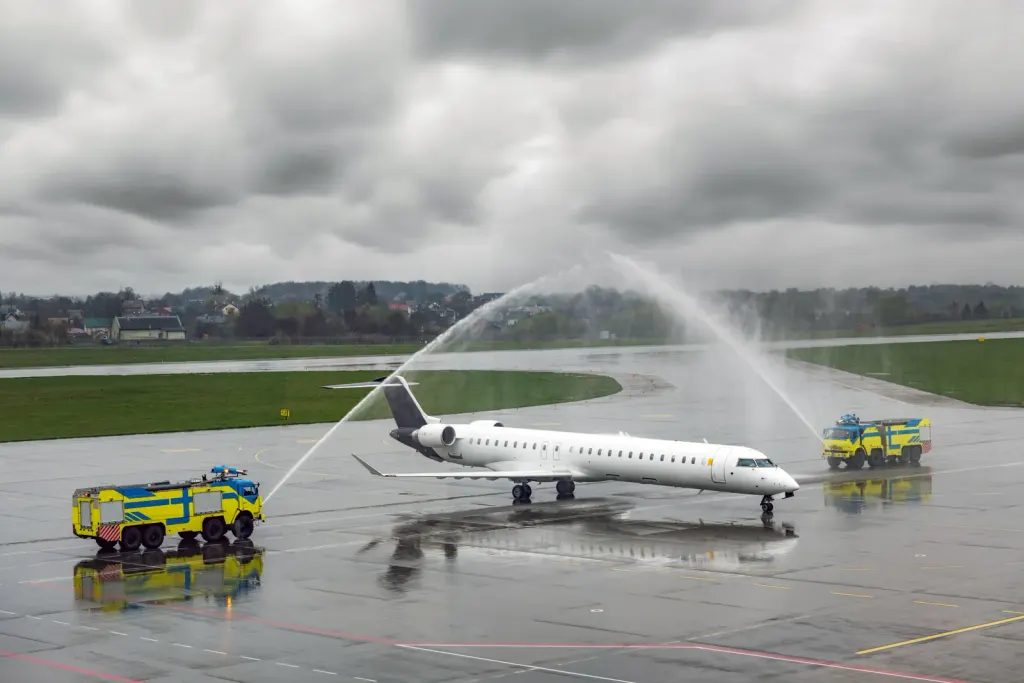
The job also carries serious risks.
On 3 August 2016, Emirates Flight 521 crashed during landing in Dubai.
The Boeing 777 caught fire. All 300 passengers and crew escaped, but one firefighter died fighting the fire.
The incident was reported by Khaleej Times.
It is a reminder that airport firefighting can be dangerous, even when everyone aboard survives.
Career path and outlook
Airport firefighting is a specialized part of the wider fire service.
The US Bureau of Labor Statistics recorded about 355,300 firefighter jobs. It expects employment to grow 4% from 2025 to 2035.
That forecast covers all US firefighters. It is not a separate forecast for airport firefighters.
Entry positions and specialist requirements differ between employers.
The Washington airports authority lists a trainee position alongside Firefighter II. The Fort Rucker airfield position requires Airport Firefighter certification.
These examples show why applicants should check each job advertisement carefully.
The wider aviation industry also includes airports, airport service companies and aviation security and safety companies.
For another look at working in this industry, read our guide on whether aviation is a good career.
Airport firefighting offers a different kind of aviation job. Much of the work involves medical calls and regular training. But crews must remain ready for an aircraft emergency at any time.
Sources
- Cornell Law School, 14 CFR 139.319, ARFF operational requirements
- Cornell Law School, 14 CFR 139.315, ARFF index requirements
- EASA, airport rescue and firefighting response times
- Flight Safety Foundation, Asiana Flight 214 response
- MSP Airport, airport fire department operations
- Philadelphia International Airport, Engine 78 annual calls
- Oshkosh Airport Products, Striker ARFF vehicle comparison
- Metropolitan Washington Airports Authority, fire rescue recruitment
- Spokane Airports, ARFF Specialist job advertisement
- USAJOBS, Fort Rucker airfield firefighter vacancy
- US Bureau of Labor Statistics, firefighter pay and career outlook
- UK National Careers Service, firefighter job profile
- Fire Service College, Aviation Firefighter Initial Course
- UK Civil Aviation Authority, rescue and firefighting services
- Khaleej Times, Emirates Flight 521 accident

About the author
Radu Balas
Founder, Flying Engineer
View author profile Editorial policy and correctionsExplore Ground Handling
Browse 1,399 companiesNeed a charter, a part or a service?
Tell us what you need and we share it with up to 3 relevant companies, who reply to you directly.