
Top 10 Busiest Airports in the U.S. Ranked by Passenger Traffic (2026)
Radu BalasPublished Updated 13 min read

Over 950 million passengers flow through U.S. airports annually, with the top ten facilities handling nearly half this massive volume. Understanding which are the busiest airports in the US reveals critical patterns in American aviation including airline hub strategies, geographic advantages, and evolving passenger preferences shaping the industry's future.
Airport passenger traffic ranking provides essential insights for travelers planning connections, airlines optimizing route networks, and airport authorities projecting infrastructure needs. The largest airports in the US don't necessarily correlate with physical size, as passenger throughput depends heavily on airline hub operations, connecting traffic patterns, and regional population centers.
US airport traffic statistics for 2026 show continued post-pandemic recovery with domestic travel exceeding pre-2019 levels while international traffic gradually returns toward historical norms. The gap between the top-ranked airport and tenth position spans tens of millions of annual passengers, demonstrating the concentration of U.S. air traffic through major hub facilities.
This comprehensive ranking analyzes the ten busiest airports in America by total passenger movements, examining why each facility dominates its region and what role it plays in the broader national and international aviation network.
How Airport Traffic Is Measured
Aviation authorities measure airport activity through multiple metrics, with total passenger traffic (enplanements plus deplanements) serving as the primary ranking criterion for this analysis. This metric counts every passenger boarding or arriving at an airport, whether originating, connecting, or terminating their journey, as tracked by the FAA's airport traffic statistics.
Aircraft movements (takeoffs and landings) provide an alternative measurement focusing on operational intensity rather than passenger volume. Cargo-heavy airports like Memphis or Louisville rank highly by movements despite modest passenger numbers, while major hubs balance both metrics.
The distinction between domestic and international passengers matters for infrastructure planning and economic impact. Some airports move predominantly domestic traffic while others serve as critical international gateways connecting the U.S. to global destinations.
Top 10 Busiest Airports in the United States (2026)
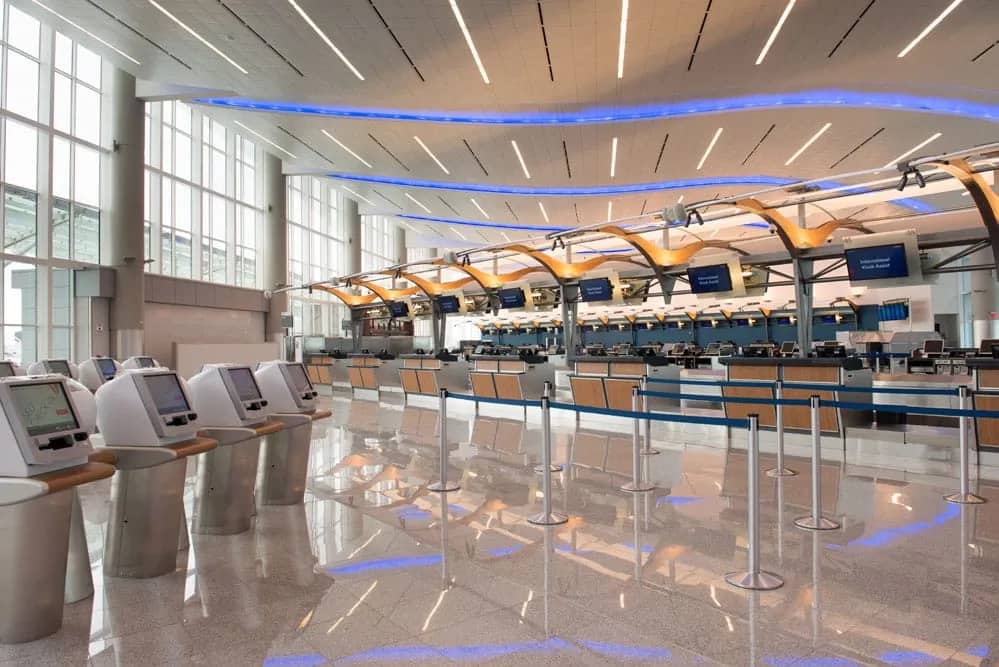
#1 Hartsfield-Jackson Atlanta International Airport (ATL)
Location: Atlanta, Georgia
Annual Passengers (2026 estimate): Approximately 107-110 million
Why It's Busy: Atlanta maintains its position as the world's busiest airport by passenger traffic, driven by Delta Air Lines' massive hub operation handling roughly 75% of airport traffic. ATL's geographic location in the southeastern U.S. makes it an ideal connecting point for domestic travel, with Delta operating over 1,000 daily flights to more than 200 destinations.
Key Airlines: Delta Air Lines (dominant hub), Southwest Airlines, Spirit Airlines
Role: Primary domestic hub with significant international connectivity to Latin America, Europe, Asia, and Africa. The airport serves as Delta's global headquarters and largest hub, creating an aviation ecosystem supporting tens of thousands of jobs regionally.
#2 Dallas/Fort Worth International Airport (DFW)
Location: Dallas-Fort Worth, Texas
Annual Passengers (2026 estimate): Approximately 80-83 million
Why It's Busy: DFW serves as American Airlines' largest hub and global headquarters, with the carrier operating roughly 900 daily flights. The airport's central U.S. location provides efficient connections between coasts and internationally to Latin America. The Dallas-Fort Worth metropolitan area's population exceeding 7.5 million generates substantial O&D (origin and destination) traffic beyond connecting passengers.
Key Airlines: American Airlines (dominant hub), Spirit Airlines, Southwest Airlines (nearby Love Field)
Role: Major international gateway and domestic connecting hub, with five terminals spanning 18,000 acres making it one of the world's largest airports by land area.

#3 Denver International Airport (DEN)
Location: Denver, Colorado
Annual Passengers (2026 estimate): Approximately 77-80 million
Why It's Busy: Denver's geographic position in the central U.S. creates natural connecting traffic patterns for transcontinental flights. United Airlines operates a major hub alongside significant Southwest and Frontier presence. The airport serves as the primary gateway to Colorado's ski resorts and mountain tourism destinations, generating strong seasonal leisure traffic.
Key Airlines: United Airlines (major hub), Southwest Airlines, Frontier Airlines (headquarters)
Role: Critical connecting hub for north-south and east-west U.S. travel, with growing international service to Europe, Asia, and Latin America.

#4 Chicago O'Hare International Airport (ORD)
Location: Chicago, Illinois
Annual Passengers (2026 estimate): Approximately 80-82 million
Why It's Busy: O'Hare serves as United Airlines' second-largest hub and American Airlines' third-largest hub, creating intense operational activity. Chicago's position as the Midwest's largest metropolitan area (9.6 million population) drives substantial local traffic complementing hub operations. The airport's role connecting East Coast to West Coast traffic patterns ensures consistent demand.
Key Airlines: United Airlines (major hub), American Airlines (hub), Southwest Airlines (Midway)
Role: Historic aviation crossroads and critical domestic/international hub serving the Midwest and connecting coasts.

#5 Los Angeles International Airport (LAX)
Location: Los Angeles, California
Annual Passengers (2026 estimate): Approximately 87-90 million
Why It's Busy: LAX functions primarily as an O&D airport serving the Los Angeles metropolitan area's 13+ million residents while serving as the West Coast's primary international gateway. The airport handles more international passengers than any other U.S. facility, with extensive connections to Asia-Pacific, Latin America, Europe, and the Middle East. Limited hub operations mean most traffic originates or terminates in Los Angeles rather than connecting through.
Key Airlines: American Airlines, Delta Air Lines, United Airlines, Southwest Airlines, Alaska Airlines
Role: Primary West Coast international gateway with heavy O&D traffic and limited connecting operations compared to hub-dominated airports. The airport serves as a critical entry point for business aviation and private jet operations in Southern California.

#6 Charlotte Douglas International Airport (CLT)
Location: Charlotte, North Carolina
Annual Passengers (2026 estimate): Approximately 55-58 million
Why It's Busy: American Airlines operates its second-largest hub from Charlotte, with over 700 daily departures to 175+ destinations. The airport's southeastern location provides efficient connections throughout the U.S. and to Latin America and Europe. Charlotte's relatively uncongested airspace compared to Northeast airports allows reliable operations attracting connecting traffic.
Key Airlines: American Airlines (dominant hub), Southwest Airlines
Role: Major connecting hub for American Airlines' eastern U.S. and transatlantic operations, with strong domestic connectivity.

#7 Las Vegas Harry Reid International Airport (LAS)
Location: Las Vegas, Nevada
Annual Passengers (2026 estimate): Approximately 57-60 million
Why It's Busy: Las Vegas' tourism economy drives massive O&D traffic as visitors from across the U.S. fly to experience gaming, entertainment, and conventions. The airport operates minimal connecting traffic, with nearly all passengers originating or ending journeys in Las Vegas. Low-cost carriers including Spirit, Frontier, and Allegiant maintain significant presence alongside legacy carriers.
Key Airlines: Southwest Airlines, Spirit Airlines, Frontier Airlines, Delta Air Lines, American Airlines, United Airlines
Role: Pure O&D leisure destination airport with minimal hub operations, driven entirely by Las Vegas tourism demand.

#8 Orlando International Airport (MCO)
Location: Orlando, Florida
Annual Passengers (2026 estimate): Approximately 55-57 million
Why It's Busy: Theme park tourism including Walt Disney World, Universal Studios, and SeaWorld generates enormous leisure travel demand. The airport sees strong seasonal patterns with peak traffic during school holidays and summer vacation periods. Both domestic and international visitors fly to Orlando, making it Florida's busiest airport and a critical gateway for Central Florida tourism.
Key Airlines: Southwest Airlines, Spirit Airlines, JetBlue Airways, Delta Air Lines, United Airlines
Role: Tourism-driven O&D airport serving Central Florida attractions with strong domestic and international leisure traffic.

#9 Miami International Airport (MIA)
Location: Miami, Florida
Annual Passengers (2026 estimate): Approximately 52-55 million
Why It's Busy: Miami serves as the primary U.S. gateway to Latin America and the Caribbean, handling more international passengers to the region than any other U.S. airport. American Airlines operates a major hub focusing on Central and South American connectivity. The airport's geographic position and Miami's role as a Latin American business and tourism center drive consistent international demand.
Key Airlines: American Airlines (Latin America hub), LATAM Airlines, Avianca, Copa Airlines
Role: Critical international gateway specializing in Latin American and Caribbean connectivity, with American Airlines hub operations.

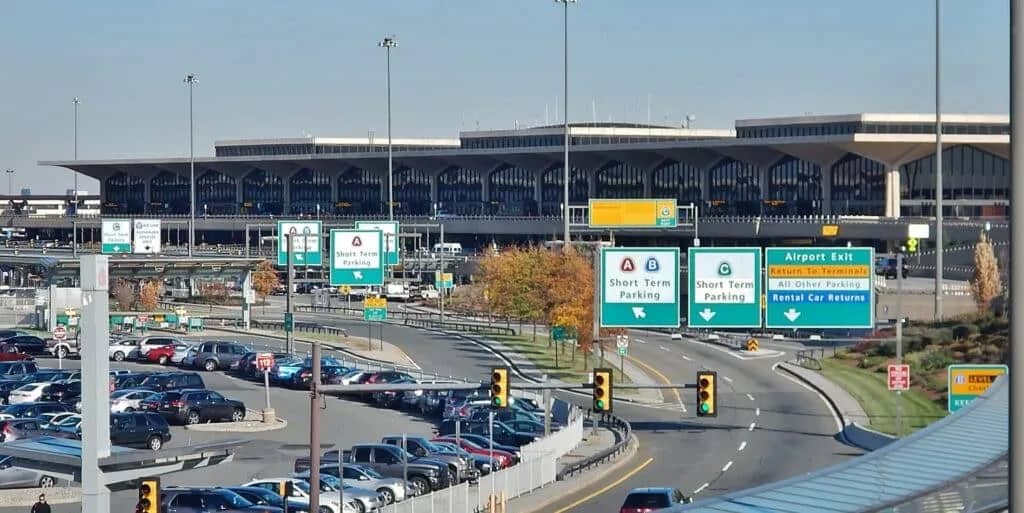
#10 Newark Liberty International Airport (EWR)
Location: Newark, New Jersey (New York metro area)
Annual Passengers (2026 estimate): Approximately 46-49 million
Why It's Busy: Newark serves the New York metropolitan area alongside JFK and LaGuardia, with United Airlines operating its third-largest hub from the facility. The airport's proximity to Manhattan and its role as a Star Alliance hub drive strong international traffic to Europe, Asia, and Latin America. Newark handles more United flights than any other New York-area airport.
Key Airlines: United Airlines (major hub), JetBlue Airways
Role: New York area international gateway and United Airlines East Coast hub with strong transatlantic operations.
Quick Comparison Table - Busiest U.S. Airports (2026)
| Rank | Airport Code | City | Annual Passengers (millions) | Primary Hub Airline |
|---|---|---|---|---|
| 1 | ATL | Atlanta | 107-110 | Delta Air Lines |
| 2 | DFW | Dallas-Fort Worth | 80-83 | American Airlines |
| 3 | DEN | Denver | 77-80 | United Airlines |
| 4 | ORD | Chicago | 80-82 | United / American |
| 5 | LAX | Los Angeles | 87-90 | Multiple carriers |
| 6 | CLT | Charlotte | 55-58 | American Airlines |
| 7 | LAS | Las Vegas | 57-60 | Southwest Airlines |
| 8 | MCO | Orlando | 55-57 | Southwest Airlines |
| 9 | MIA | Miami | 52-55 | American Airlines |
| 10 | EWR | Newark | 46-49 | United Airlines |
Note: 2026 passenger figures represent estimates based on historical trends and post-pandemic recovery patterns. Actual numbers may vary based on economic conditions and airline network changes.
Why These Airports Are So Busy
Multiple factors converge to create the massive passenger volumes characterizing America's top ten airports.
Strategic Geographic Location
Airports positioned centrally within the continental U.S. (Atlanta, Dallas, Denver, Chicago) naturally attract connecting traffic as passengers travel between coasts. These facilities minimize total trip distance and time compared to routing through coastal airports, making them ideal hub locations for airline networks optimizing ground transportation and passenger connections.
Coastal airports (Los Angeles, Miami, New York) serve as international gateways where geography dictates their role connecting domestic networks to overseas destinations. Miami's position relative to Latin America or Los Angeles' proximity to Asia-Pacific creates unavoidable routing advantages.
Airline Hub Operations
The hub-and-spoke model concentrates airline operations at specific airports, funneling passengers from multiple origins through central hubs before distributing them to final destinations. Delta's Atlanta hub, American's Dallas and Charlotte hubs, and United's Denver, Chicago, and Newark hubs deliberately create traffic concentration driving passenger volumes.
Hub operations provide airlines with economies of scale, market dominance, and network connectivity supporting both business and leisure travel demand. The top ten airports all feature significant hub operations or exceptional O&D traffic justifying their rankings.
Tourism and Business Demand
Leisure destinations including Las Vegas, Orlando, and Miami generate enormous O&D traffic from tourists nationwide and internationally. These airports see minimal connecting traffic, instead serving passengers specifically traveling to visit these regions.
Large metropolitan areas (Los Angeles, New York, Chicago) combine substantial business travel with leisure demand, creating diverse traffic patterns less vulnerable to economic cycles affecting pure leisure or pure business markets.
Population and Economic Centers
Airports serving major population centers benefit from local demand driving traffic volumes. The Dallas-Fort Worth metroplex (7.5M), Los Angeles area (13M+), and Chicago metro (9.6M) generate millions of originating passengers annually beyond any connecting traffic passing through.
Trends in U.S. Airport Traffic
Several significant patterns shape current and future airport traffic rankings across the United States.
Post-Pandemic Recovery Patterns
Domestic leisure travel recovered quickly, with many airports exceeding 2019 levels by 2023-2024. Business travel recovery lags as remote work and video conferencing permanently reduced some corporate travel demand, according to Bureau of Transportation Statistics data. Leisure-focused airports (Las Vegas, Orlando) rebounded faster than business-heavy markets.
International traffic recovery proceeded more slowly due to varying pandemic restrictions, economic conditions in source countries, and reduced business travel. Miami and Los Angeles, with heavy international components, took longer reaching pre-pandemic passenger volumes than primarily domestic airports.
Low-Cost Carrier Expansion
Southwest, Spirit, Frontier, and Allegiant expanded networks during recovery, pressuring legacy carriers on price-sensitive routes while opening previously underserved markets. This competition benefits passengers through lower fares while distributing traffic more evenly across secondary airports.
Low-cost carriers increasingly operate from major airports alongside traditional hubs, though many prefer secondary airports (Southwest at Love Field, Allegiant at smaller facilities) where costs and congestion are lower.
Infrastructure Capacity Constraints
Several top-ranked airports operate near physical capacity during peak periods, limiting growth potential. New York area airports, LAX, and others face challenges expanding infrastructure within constrained urban environments, potentially allowing less-congested competitors to capture growth. Premium services including fast-track processing help manage passenger flow during peak congestion.
Which Airport Will Be #1 in the Future?
Atlanta's position as the world's busiest airport appears secure through 2030 barring dramatic airline network shifts. Delta's commitment to ATL as its global hub, combined with the airport's geographic advantages and available expansion capacity, reinforces its top ranking.
However, DFW, DEN, or ORD could challenge Atlanta's lead if American or United significantly restructured hub operations or if Delta reduced ATL capacity. Denver's central location and room for expansion make it a strong candidate for long-term growth potentially rivaling Atlanta's volumes by the 2030s.
LAX will likely maintain high rankings due to Los Angeles' massive population and international gateway role, though connecting traffic limitations prevent it from reaching Atlanta-level volumes under current airline network structures.
How U.S. Airports Compare Globally
Hartsfield-Jackson Atlanta consistently ranks as the world's busiest airport by passenger traffic, though Dubai International periodically challenges for the top position. The U.S. dominates global aviation with four airports typically ranking in the world's top ten by passenger volumes, according to Airports Council International rankings.
However, Asian airports including Tokyo Haneda, Beijing Capital, Hong Kong, and Shanghai increasingly compete as Asia-Pacific aviation grows faster than mature U.S. markets. Chinese domestic travel volumes rival U.S. totals, with multiple Chinese airports ranking among global leaders.
European hubs including London Heathrow, Paris Charles de Gaulle, and Frankfurt handle substantial traffic but generally rank below top U.S. facilities due to Europe's multiple competing hubs distributing traffic across more airports than America's concentrated hub system.
Frequently Asked Questions
What is the busiest airport in the United States?
Hartsfield-Jackson Atlanta International Airport (ATL) is the busiest airport in the United States and typically the world's busiest by total passenger traffic. Atlanta handles approximately 107-110 million passengers annually in 2026, driven primarily by Delta Air Lines' massive hub operation moving roughly 75% of airport traffic. ATL's strategic location in the southeastern U.S. makes it an ideal connecting point for domestic travel, with Delta operating over 1,000 daily flights to more than 200 destinations.
How is airport traffic actually measured?
Airport traffic is measured primarily by total passenger movements (enplanements plus deplanements), counting every person boarding or arriving at the airport regardless of whether they're originating, connecting, or terminating their journey. This metric provides the clearest picture of overall airport activity. Alternative metrics include aircraft movements (takeoffs and landings) which measure operational intensity, and cargo tonnage for freight activity. International versus domestic passenger splits help airports plan customs facilities and international terminal infrastructure.
Which U.S. airport handles the most international passengers?
Los Angeles International Airport (LAX) typically handles the most international passengers among U.S. airports, serving as the West Coast's primary gateway to Asia-Pacific, Latin America, Europe, and other international markets. Miami International (MIA) leads for Latin American and Caribbean traffic specifically, while New York JFK serves as a major transatlantic hub. LAX's advantage stems from serving the Los Angeles metro area's 13+ million residents plus connecting West Coast passengers to international destinations across multiple airlines and alliances.
What are the fastest-growing airports in the U.S.?
Denver International Airport (DEN) has shown strong consistent growth, benefiting from Colorado's population increases and its central U.S. location attracting more connecting traffic. Austin-Bergstrom (AUS) and Nashville (BNA) experienced rapid growth driven by technology sector expansion and population migration to Sun Belt cities. Orlando (MCO) and Las Vegas (LAS) grow with tourism demand. Southwest Florida airports including Tampa and Fort Myers see growth from retirement migration and leisure travel. These airports typically grow 5-8% annually compared to 2-3% at mature major hubs.
Why is Atlanta the busiest airport when it's not the largest city?
Atlanta's position as the busiest airport despite not being among America's three largest metropolitan areas results from Delta Air Lines' strategic hub operations rather than local population size. Delta deliberately concentrates operations at ATL, funneling passengers from across its network through Atlanta for connections to hundreds of destinations. The airport's location in the southeastern U.S. provides geographic advantages for domestic connecting traffic. Delta operates over 1,000 daily flights from Atlanta, creating traffic volumes far exceeding what Atlanta's metro population (6 million) would generate alone.
Do larger airports always have more runways?
Not necessarily. Airport size by land area doesn't directly correlate with passenger volume or runway count. Denver International (DEN) covers 33,500 acres with six runways but handles fewer passengers than Atlanta (ATL) which operates on 4,700 acres with five runways. Dallas-Fort Worth (DFW) spans 18,000 acres with seven runways. Runway configuration, length, and parallel spacing matter more than total count for capacity. Efficient terminal design, taxi-way layout, and airspace management often matter more than physical size for maximizing passenger throughput.
Conclusion
The top ten busiest airports in the United States represent critical nodes in America's aviation infrastructure, collectively handling nearly 750 million passengers annually. Atlanta's continued dominance reflects Delta's hub strategy and favorable geography, while other airports leverage unique advantages including international gateway status, tourism demand, or central locations attracting connecting traffic.
Understanding these rankings reveals how airline network strategies, geographic positioning, and local demand patterns shape American aviation. The concentration of traffic through major hubs creates efficiency for airlines while providing passengers with extensive connectivity, though it also creates vulnerability to disruptions at these critical facilities.
Future rankings will evolve with airline network adjustments, infrastructure investments, and shifting passenger preferences, but the fundamental factors driving current rankings - hub operations, geography, and population centers - will continue determining which airports lead American aviation through coming decades.