
Aviation in Focus: Dubai Under Fire, a Supersonic Milestone, and the Industry's Supply Chain Reality
 Radu BalasFounder, The Flying EngineerPublished 5 min read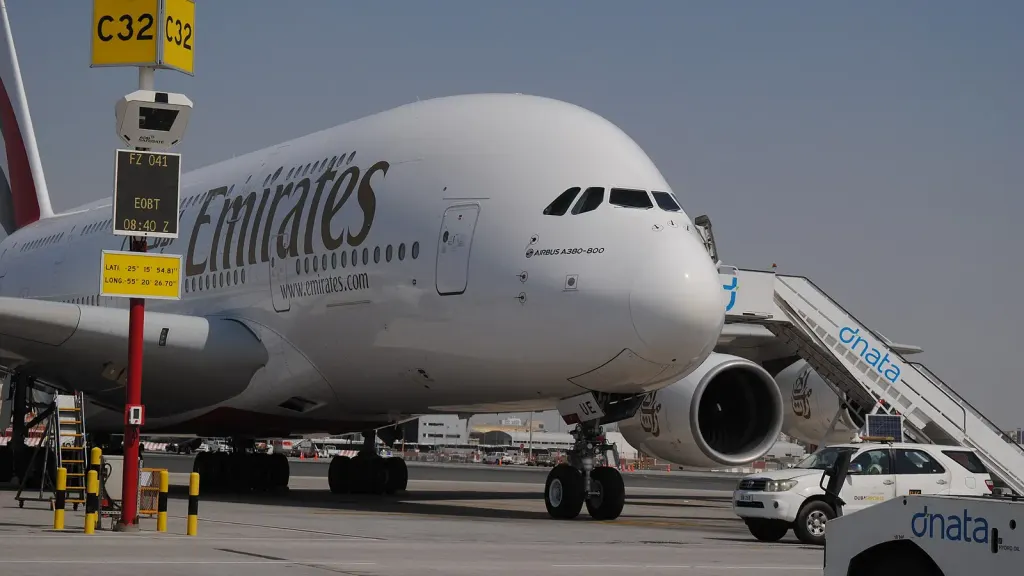
The past two weeks have made clear that aviation in 2026 operates at the intersection of geopolitics, engineering ambition, and industrial strain. A drone disabled the world's busiest international airport for over seven hours. An American startup flew a supersonic-capable prototype for the second time in under a year. And the industry's most persistent headache — a fractured supply chain — showed no signs of resolving itself before the next decade. Here is what you need to know.
Dubai International Ground-Stop: How a Single Drone Paralysed the World's Busiest Airport
On March 16, an Iranian drone struck a fuel storage tank near Terminal 3 at Dubai International Airport (DXB), igniting a fire that triggered a complete suspension of flight operations. The shutdown lasted more than seven hours — the longest halt at DXB since the UAE established "safe air corridors" at the outset of the wider regional conflict.
Dubai International handled over 87 million passengers in 2024, making it the world's busiest international airport by passenger volume. The implications of any extended stoppage extend far beyond the UAE: DXB is a critical transit hub connecting Europe, Asia, Africa, and Australasia. (For context on how flight disruptions cascade across the region, see our earlier coverage of the Pacific flight disruption triggered by tsunami warnings.)
The Civil Aviation Authority suspended all flights as a precautionary measure. Several inbound aircraft were diverted to Al Maktoum International Airport, and others in the air were forced to divert to alternate airports to refuel after access to DXB's fuel network was disrupted. Operations eventually resumed on a limited schedule late on March 16, with full normality restored through March 17.
Critically, this was the fourth drone-related incident at Dubai Airport in recent months. Each previous incident caused a temporary stoppage; this one was the most operationally disruptive to date. The incident has renewed scrutiny of airport perimeter security and counter-drone systems at major international hubs. The UAE airspace was briefly closed entirely, with Bahrain, Kuwait, Qatar, and Saudi Arabia also reporting intercepted drones and missiles in the same window.
The broader pattern raises a pointed question the industry cannot defer indefinitely: as drone technology becomes cheaper and more precise, how does civil aviation infrastructure protect itself from geopolitical spillover without becoming prohibitively expensive to operate?
Sources: CNBC · Al Jazeera · Bloomberg · The National
Hermeus Flies the Quarterhorse Mk 2.1: America's Supersonic Bet Takes Another Step Forward
On March 2, US aerospace start-up Hermeus conducted the first flight of its Quarterhorse Mk 2.1 at Spaceport America in New Mexico. It was the company's second maiden flight in under nine months — a pace of development that is almost unprecedented for a high-speed aircraft programme.
The Mk 2.1 is roughly the size of an F-16 and marks the first Quarterhorse variant to feature a delta-wing configuration, specifically optimised for supersonic aerodynamics. It is powered by a modified Pratt & Whitney F100 engine fitted with Hermeus' proprietary precooler system in the air inlet, designed to prevent overheating at the elevated temperatures generated by sustained high-speed flight. The aircraft is uncrewed.
The March 2 flight was a subsonic maiden intended to validate the aircraft's systems and aerodynamic behaviour before the flight envelope is expanded. The roadmap from here calls for incremental speed increases, leading ultimately to supersonic flight in a future Mk 2.2 variant. Hermeus' stated long-term objective is an aircraft capable of challenging — and eventually breaking — the New York-to-London speed record set by the SR-71 Blackbird.
What makes the Hermeus programme notable is not just its technical ambition but its development philosophy. Rather than spending years refining a design before first flight, the company is iterating in hardware, using real flight data from each aircraft to drive the next. This approach — borrowed in spirit from the software world and more recently applied in orbital rocketry — is being applied here to a domain that has historically moved in decade-long cycles.
Sources: AIAA · New Atlas · PR Newswire
The Aircraft Delivery Gap Is Getting Wider — and It Won't Close Before the 2030s
While geopolitics disrupts operations and start-ups advance new technology, the commercial aviation industry's most structural problem continues to compound quietly: the gap between how many aircraft airlines need and how many are actually being delivered.
The numbers are stark. The global commercial aircraft delivery shortfall now totals at least 5,300 aircraft. The combined Boeing and Airbus order backlog has surpassed 17,000 aircraft — equivalent to nearly 60 per cent of the world's entire active commercial fleet. The industry consensus is that this structural imbalance will not normalise before 2031–2034, meaning airlines will continue operating older, less fuel-efficient fleets for most of the next decade. The cost to airlines in 2025 alone, largely in excess fuel burn from older aircraft, exceeded $11 billion according to IATA.
The immediate bottleneck is engines — and it is worth understanding just how concentrated the aircraft engine manufacturing sector really is. Airbus — which is targeting 870 deliveries in 2026 — has described its engine supply situation as "unsatisfactory," with Pratt & Whitney delivering roughly 85 engines for every 100 planned. Boeing, meanwhile, is showing signs of recovery: it delivered 46 commercial aircraft in January 2026 alone, compared with 19 by Airbus in the same month, with its 737 programme driving the bulk of that volume.
Boeing received more orders than Airbus in 2025 for the first time since 2018 — a meaningful marker of restored confidence after years of programme delays and regulatory scrutiny. Whether that confidence is justified will depend on whether production rates can be sustained and expanded, which in turn depends on a supply chain that has been running below capacity for years.
The paradox facing aviation right now is a striking one: demand has arguably never been stronger, the order books have never been longer, and yet the industry's ability to translate that demand into delivered aircraft is constrained by problems that no individual aircraft manufacturer can solve alone.
Sources: CNBC — Airbus Deliveries · CNBC — Boeing Recovery · IATA Supply Chain · Forecast International
The Week in Sum
Three stories, three different dimensions of the same industry. Dubai's shutdown is a reminder that aviation infrastructure, for all its engineering sophistication, sits within a political world it cannot fully insulate itself from. Hermeus is a reminder that the ambition to go faster has not faded — it has simply shifted from national programmes to nimble, well-funded start-ups. And the supply chain data is a reminder that the most consequential aviation story of this decade may not be any single dramatic event, but the quiet, grinding mismatch between what the world needs and what the industry can currently build.
Stay current with the latest developments in commercial aviation, aerospace technology, and industry trends. Subscribe for weekly coverage.
About the author
Radu Balas
Founder, Flying Engineer
View author profile Editorial policy and correctionsExplore Aircraft Sales in United Arab Emirates
Browse 7 companiesNeed a charter, a part or a service?
Tell us what you need and we share it with up to 3 relevant companies, who reply to you directly.


