Industry
US Lawmakers Reach Agreement on ADS-B In Requirements for Civilian Aircraft
US lawmakers have agreed in principle to require ADS-B In on aircraft already required to carry ADS-B Out. Congress must still approve the plan.
Radu BalasReviewed by Adrian Man
Published 2 min read

US House and Senate lawmakers reached an agreement in principle on 17 November 2026 to require ADS-B In on civilian aircraft already required to carry ADS-B Out. Senators announced it at the US Capitol in Washington, DC, during an event organised by families of victims of the January 2025 collision.
Which aircraft would need ADS-B In?
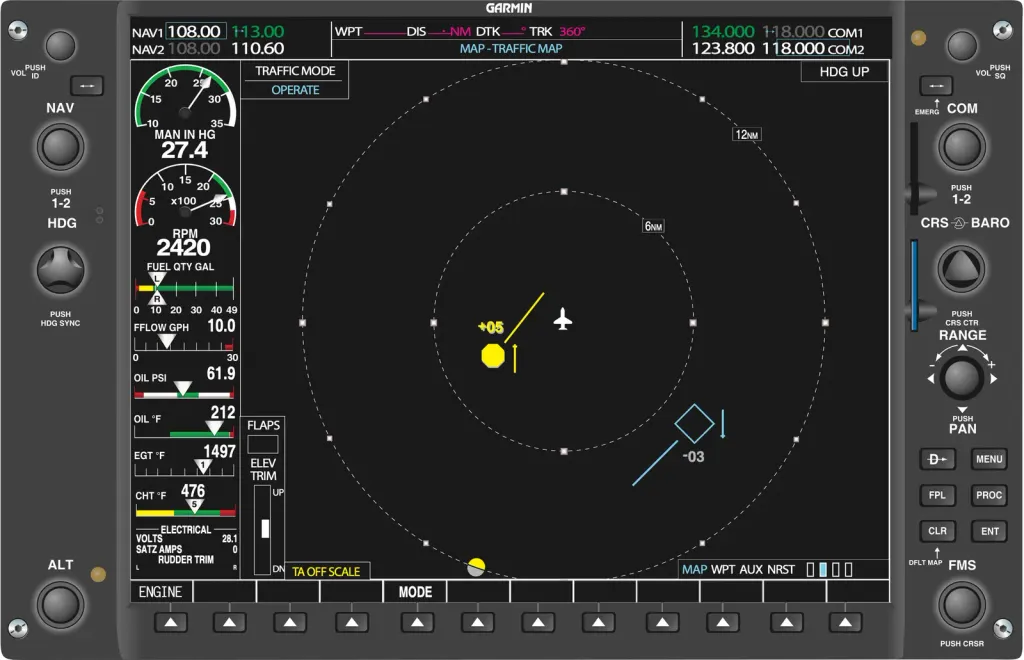
ADS-B Out broadcasts an aircraft's position. The Federal Aviation Administration (FAA) requires it in much of US controlled airspace. ADS-B In receives nearby aircraft information so pilots can see traffic on cockpit displays. The FAA does not yet require ADS-B In.
The requirement would cover airliners, business aircraft and general aviation aircraft flying where ADS-B Out is mandatory. Aircraft legally flying without ADS-B Out, including some vintage light airplanes and hot-air balloons, would not automatically be covered.
The Senate-passed ROTOR Act sets 31 December 2031 as the installation deadline. Aircraft under 12,500 pounds maximum takeoff weight flying under Part 91, which covers most US private flying, could use cheaper equipment, including portable receivers. The FAA would decide what qualifies.
Why lawmakers want the change
The law follows the 29 January 2025 collision between American Airlines Flight 5342 and a US Army Black Hawk helicopter over the Potomac River near Ronald Reagan Washington National Airport. PSA Airlines operated the CRJ700 regional jet. All 67 people died, including 64 on the jet and three on the helicopter.
The National Transportation Safety Board (NTSB) found that FAA and Army failures in airspace design, oversight and risk management contributed to the accident. Its simulation found that an ADS-B based alert could have warned the airline crew about the helicopter 59 seconds before impact, followed by another warning 35 seconds before impact.
The NTSB made 50 recommendations and urged the FAA to require ADS-B In.
What happens next in Congress?
The agreement is not yet law. Both chambers passed separate safety bills and must agree on one version before Congress can approve it.
Military aircraft requirements remain unresolved. Republican Senator Ted Cruz of Texas hoped Congress would pass the law before the end of the year.
The final text, voting date and operator costs remain unknown.
On The Flying Engineer
Owners and operators can explore avionics companies, the Federal Aviation Administration, uAvionix, an ADS-B equipment maker, and Garmin Aviation, an avionics maker. Read How to choose an avionics shop. Avionics shops and makers meet at the AEA International Convention and Trade Show 2027 and EAA AirVenture Oshkosh 2027.
Source: AeroTime

About the author
Radu Balas
Founder, Flying Engineer
View author profile Editorial policy and corrections