Best Air Ambulance Aircraft for Medical Transport
Five aircraft types used for air ambulance work, from the Learjet 45 to the Pilatus PC-12, compared by range and maximum take-off weight.
 Radu BalasFounder, The Flying EngineerPublished Updated 4 min read
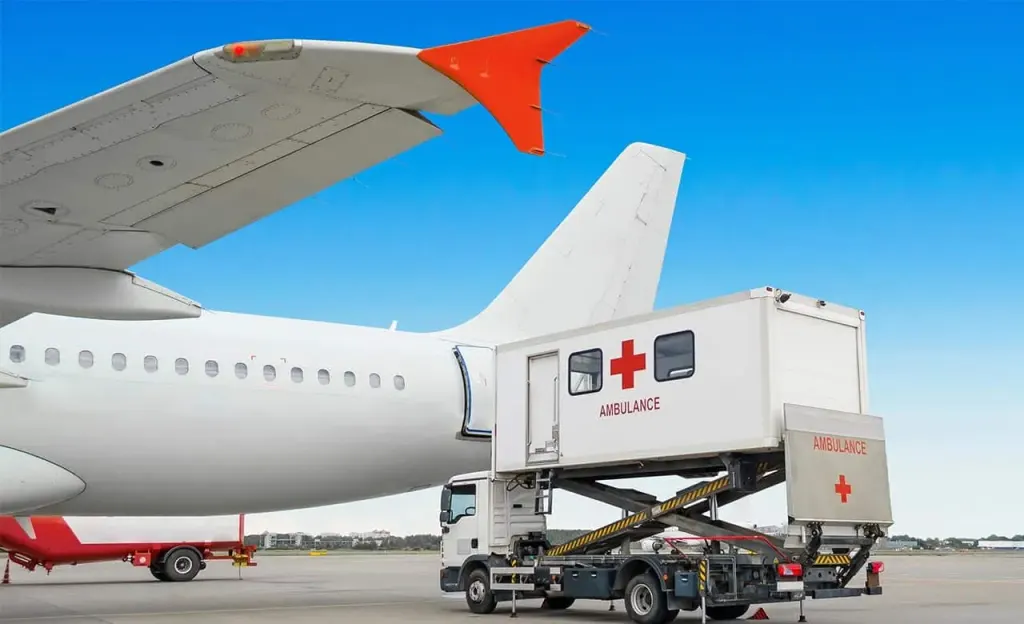
Air ambulances move critically ill or injured patients faster than any road ambulance can, and over far longer distances. A fixed-wing air ambulance is essentially a small flying intensive care unit: a stretcher system, oxygen, monitors, ventilator and infusion pumps, with a flight nurse, paramedic or doctor on board.
How we chose: We looked at each company's own website, its fleet or services, where it operates, and its record in our directory of 16,500+ aviation companies, online since 2012. Companies cannot pay to be on this list or for their position. Featured companies on our directory are always labelled.
The aircraft decides what a mission can do: how far it can fly without a fuel stop, how short a runway it can use, how much equipment and how many people it can carry. This guide covers five aircraft types that operators around the world use for medical transport, with their range and maximum take-off weight from manufacturer data.
Light jets such as the Learjet 45 and Citation XLS are the workhorses for long-distance and international transfers. Turboprops like the King Air and Pilatus PC-12 handle shorter regional flights and rough or short strips. Operators such as REVA Air Ambulance fly Learjets for exactly this kind of work.
More Information:
Aircraft Spreadsheet: See more aircraft data in our Google Spreadsheet
YouTube Video: Watch our short guide to the best air ambulance aircraft
Best Air Ambulance Aircraft
A note on the numbers: range figures depend on load, reserves and conditions, and a medical interior plus crew reduces range compared with the brochure. Use them to compare types, not to plan a specific flight.
Learjet 45

- Description: The Learjet 45 is fast and climbs high, so it covers long distances with few stops. Its cabin fits a stretcher, medical equipment and two or three medical crew. Production ended in 2012 and Bombardier closed the Learjet line in 2022, so operators buy used aircraft, but support is still widely available.
- Range: about 1,700 to 2,000 nautical miles, depending on load (45XR)
- Max take-off weight: 20,500 lb (Learjet 45); 21,500 lb (45XR)
King Air 350

- Description: The King Air 350 is a twin turboprop that can use short and unpaved runways, which makes it a favourite for regional patient transfers. The current production model is the King Air 360, and Beechcraft notes that its reconfigurable interior suits air ambulance missions.
- Range: up to about 1,800 nautical miles (King Air 360: 1,806 nm)
- Max take-off weight: 15,000 lb
Pilatus PC-12

- Description: The Pilatus PC-12 is a rugged single-engine turboprop that works from gravel and short strips. Its large rear cargo door makes stretcher loading easy, which is why services such as Australia's Royal Flying Doctor Service fly large PC-12 fleets.
- Range: about 1,800 nautical miles (PC-12 NGX: 1,803 nm)
- Max take-off weight: 10,450 lb
Gulfstream G150

- Description: The Gulfstream G150 is a fast mid-size jet with a long range, well suited to international medical evacuations. It is no longer in production, so operators use pre-owned aircraft.
- Range: about 3,000 nautical miles
- Max take-off weight: 26,100 lb
Cessna Citation XLS

- Description: The Citation XLS has a stand-up cabin that gives medical crews room to work, and it handles both short and longer flights well. The current version is the Citation XLS Gen2.
- Range: about 2,100 nautical miles
- Max take-off weight: 20,200 lb
Table of Best Air Ambulance Aircraft
| Aircraft Model | Range (nautical miles) | Max take-off weight (lb) | Description | Usage |
|---|---|---|---|---|
| Learjet 45 / 45XR | About 1,700 to 2,000 | 20,500 / 21,500 | Fast light jet, room for stretcher, equipment and medical crew. Out of production. | International and long-distance transfers. |
| King Air 350 / 360 | Up to about 1,800 | 15,000 | Twin turboprop, short and unpaved runways, comfortable cabin. | Regional and medium-distance missions. |
| Pilatus PC-12 | About 1,800 | 10,450 | Rugged single turboprop, remote and rough strips, large cargo door. | Remote areas with limited infrastructure. |
| Gulfstream G150 | About 3,000 | 26,100 | Fast mid-size jet, long range. Out of production. | Long-haul medical evacuations. |
| Cessna Citation XLS | About 2,100 | 20,200 | Stand-up cabin, good short and long-distance performance. | Regional to cross-country medical transfers. |
Read More: Best Air Ambulance Services in the USA: Top Air Ambulance Companies
How to Choose
For flights under about 500 nm, or into short and unpaved strips, a turboprop such as the PC-12 or King Air is usually the right tool and costs less per hour. For international repatriation or long overwater legs, a jet like the Learjet, Citation XLS or G150 saves hours and fuel stops. In every case, the medical fit-out and crew matter as much as the aircraft.
To find operators near you, browse our directory of air ambulance companies.
Sources: Bombardier and published Learjet 45/45XR specifications; Textron Aviation (Beechcraft King Air 360, Cessna Citation XLS Gen2); Pilatus (PC-12 NGX); Gulfstream (G150).
About the author
Radu Balas
Founder, Flying Engineer
View author profile Editorial policy and correctionsExplore Air Ambulance
Browse 764 companiesGet air ambulance quotes
Tell us where the patient is and where they need to go. For an emergency, call your local emergency number first.