Guides
The Drone Threat Nobody Sees Until Someone Starts Looking
DESPYR founder Marcel Düssil explains drone detection, hidden risks at events and critical sites, and why knowing what's overhead matters.
Marcel DüssilEdited by Radu Balas
Published 6 min read

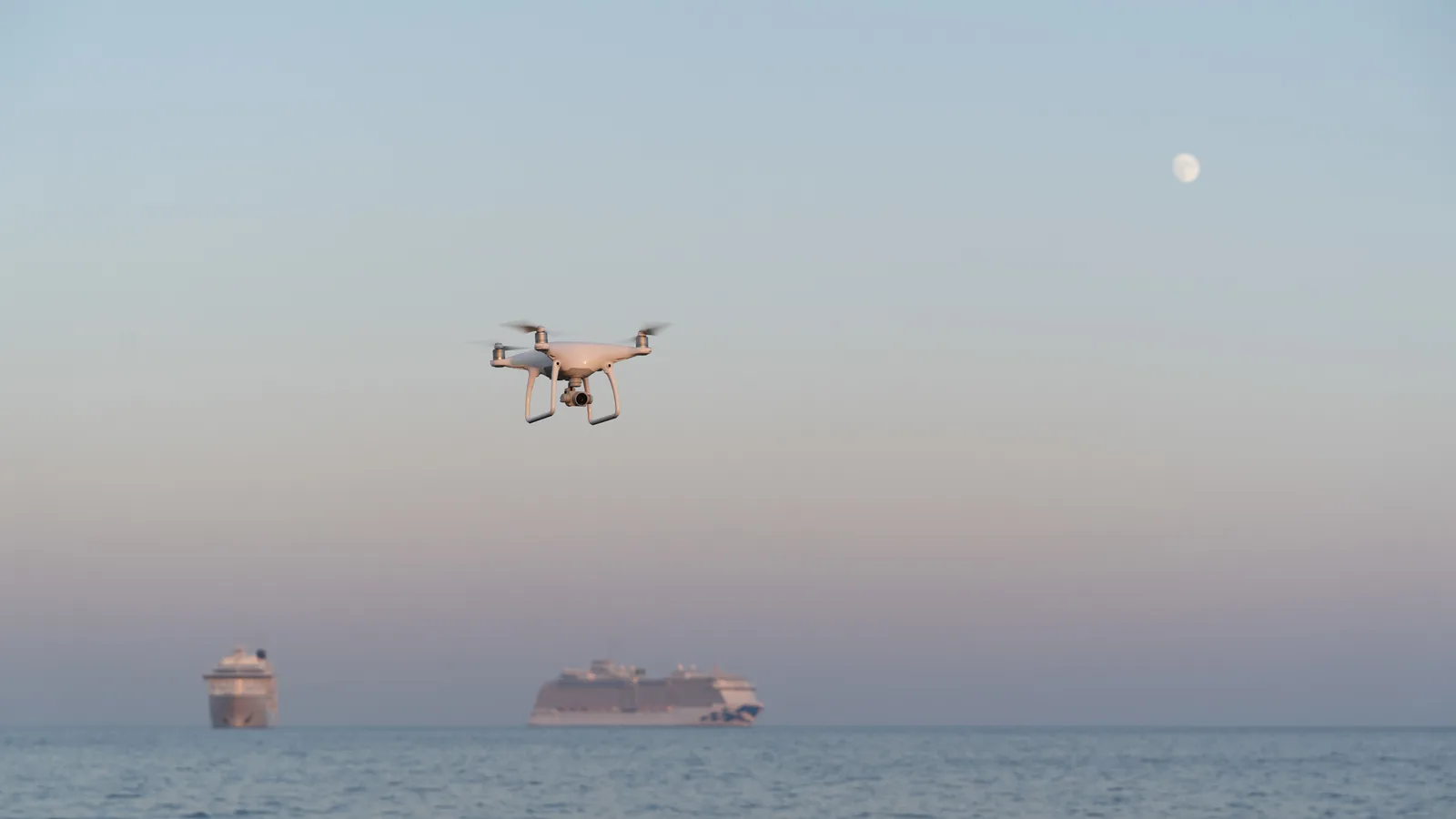
A drone doesn't need to cross a fence to cause damage. It can watch a site, film a concert or collect information without anyone noticing. I've spent years working in IT security, where you can't respond to something you haven't detected. The same rule now applies to the sky.
From IT security to drone detection
Since 2017, my company, DUESSIL.systems, has managed IT infrastructure and security for companies across Germany and, in some cases, internationally.
A large part of our work involves security information and event management, known as SIEM, and incident response. When something unusual happens, we receive an alert. Someone investigates and takes action.
The idea for DESPYR came in February 2022, when the war in Ukraine began.
At that time, most people still thought of drones as tools for photographers or farmers. Within weeks, commercial drones that anyone could buy were being used for reconnaissance and attacks.
I kept asking myself what would happen when someone used them that way in Europe.
Over the following years, drones appeared above airports, military sites and energy facilities across Europe.
For me, it's no longer a question of if. It's a question of when.
In many ways, DESPYR is a security operations center for the sky above an event or a site.
I'm also an active firefighter and hold a deputy leadership role in civil protection. I've learned that working under pressure isn't just about speed.
Speed helps, but what really counts is doing the right thing.
That's the standard I set for DESPYR.
Our aim is to contribute to public safety. That includes places facing risks of attack or espionage. It also includes events where privacy or image and video rights are at stake.
We provide everything as a fully managed service. The client tells us what needs protection. We handle the preparation and operation.
Wherever a drone could cause real damage, someone should be watching.
Why finding a drone isn't always enough
Most drones still have a pilot on the ground.
That means a flight usually has two ends. There's the drone in the air and the ground control station in the pilot's hands.
But this is changing.
More drones now fly autonomous missions. Some follow preprogrammed routes. Others use AI assistance. Some have no radio link to an operator during flight.
In those cases, there's no control signal and no pilot to locate.
That's why we never rely on one detection method.
DESPYR is a passive counter-UAS service. We observe drones, but we never interfere with them.
Our work involves detecting, classifying and tracking drones around a site or event. Several independent sensor layers feed a common operating picture.
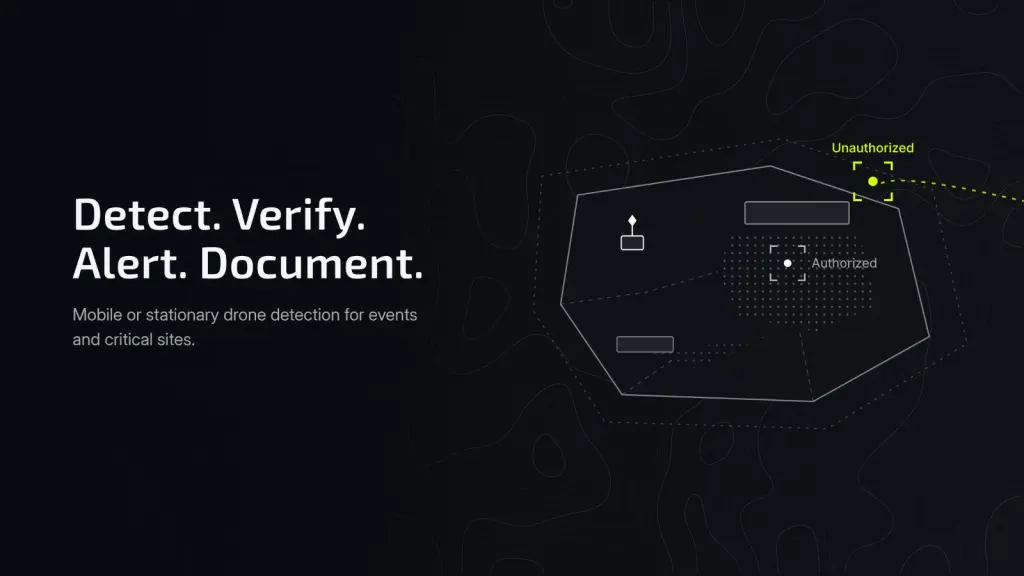
Visual verification helps confirm what the sensors report and reduces false alarms.
When a control link exists, we can often locate the ground control station.
That can be more useful than finding the drone itself.
You can't ask a drone what it's doing there, but you can ask the person flying it.
Non-cooperative drones present the greatest challenge. Under EU rules, newer class-marked drones broadcast a Direct Remote ID. The drones that concern us most often don't.
Autonomous flights make detection harder still.
Nobody can seriously promise a 100 percent detection rate. We don't either.
We also don't publish the technical details of our detection methods. Those discussions happen under a non-disclosure agreement.
Anyone who knows exactly how detection works also knows how to avoid it.
What happens before a major event
Our main focus is large events and critical infrastructure.
Event organizers want to protect their visitors. They also want control over who films their shows.
Infrastructure operators want to know what's happening above their sites.
Authorities can also request our support at short notice during special situations.
For a major event, work begins weeks before visitors arrive.
We survey the site and assess possible threats. Terrain, visibility and likely approach routes help determine where sensors should be placed.
We then agree on a plan with the organizer.
That plan covers reporting, escalation and authorized drone flights. For example, an organizer might have its own media drones.
Those flights belong on an approved list.
On event day, our mobile unit can be operational in under half an hour.
Every drone contact follows the same process:
Detect. Identify. Track. Report.
Our alerts enter the organizer's existing security structure.
We report what we see and recommend next steps. But decisions stay with the organizer, head of security or police.
Afterwards, we provide documentation with timestamped tracks. This creates evidence that can be reviewed if questions arise later.
For sites with a permanent need, our equipment can remain in place for months or years.
The mistake organizers and site operators make
Most event organizers have plans for fires, storms and crowd surges.
Very few have a plan for the sky.
When I raise the subject, I often hear that drones are the police's responsibility.
Then I ask a simple question.
What happens if a drone hovers above your main stage at eleven at night?
Who notices it? Who decides whether the show continues? Who calls the police? Who answers questions the following morning?
Many organizers haven't considered these situations.
There's also the issue of filming rights.
A drone above a concert isn't always a safety threat. It can still create a business problem.
Unlicensed aerial footage of a headliner might appear online before the concert ends.
Critical infrastructure operators make a different mistake.
They believe their sites are protected because their fences are high and their cameras work.
But perimeter security ends at the top of the fence.
A drone doesn't need to enter a site to collect valuable information.
It can film a plant or substation. It can observe shift changes and patrol movements.
Often, the greater concern is espionage rather than an immediate attack.
The same problem affects companies testing prototypes outdoors.
One overflight might be curiosity. Three in a month is a pattern.
Without detection, that pattern stays invisible.
Another common belief is that a no-fly zone solves the problem.
But a UAS geographical zone is a rule, not a physical barrier.
Someone with bad intentions won't check a map before taking off.
Detection, the law and what the numbers tell us
In Germany, private companies can detect drones when they comply with applicable laws. They are not allowed to stop them.
Passive detection must respect data protection rules.
A pilot's location or operator registration number can count as personal data under the GDPR.
In most cases, legitimate interest under Article 6(1)(f) provides the legal basis. Larger sites may also need a data protection impact assessment.
Active measures are different.
Jamming, spoofing or bringing down a drone are reserved for the police and, in certain cases, the armed forces.
Our role is to provide information. Authorities decide what happens next.
The legal framework is changing. Germany introduced new powers for federal authorities in 2026, while critical infrastructure operators face growing physical protection duties.
I believe operators of critical infrastructure will eventually have more options. When that happens, we want to serve that field as well. Until then, detection remains the first step.
I won't name our clients or events. Discretion is part of our service.
Public figures show why detection matters.
Germany's Federal Criminal Police Office registered more than 1,000 suspicious drone flights in 2025. Many involved military facilities, airports, defense companies and ports.
The agency believes the real total is much higher.
During UEFA EURO 2024, police detected 88 drones across four host cities in North Rhine-Westphalia. Pilots were identified in only 41 cases.
Berlin's airport reported eight drone sightings throughout 2025.
In the first half of 2026, it reported 28.
German air traffic control suggested that a new detection system might partly explain the increase.
That brings me to a simple point.
The drones probably didn't suddenly show up. They just became visible.
The first step is knowing what's there
We can't protect every site from every possible drone.
But we can start by understanding what's happening above it.
A quiet sky doesn't necessarily mean an empty sky.
If nobody reports drones at a site, that doesn't automatically mean there aren't any.
Often it just means nobody is looking.
Marcel Düssil, CEO and owner of DUESSIL.systems and DESPYR (despyr.de).

About the author
Marcel Düssil
CEO and owner, DUESSIL.systems and DESPYR
View author profile Editorial policy and corrections