Industry
Avflight Installs Beta Electric Aircraft Chargers at Michigan Airports
Beta Technologies chargers are online at Avflight's Lansing and Holland FBOs, with Traverse City and Willow Run to follow, funded by a $2.6 million Michigan state grant.
Updated 3 min read
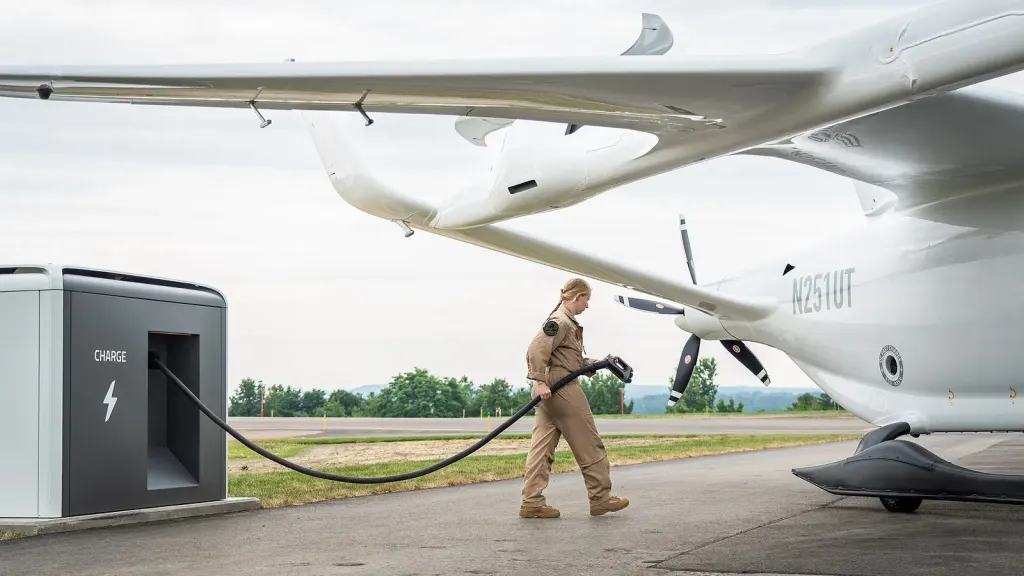
Avflight, the Ann Arbor-based operator of fixed-base operations (FBOs), has begun hosting electric aircraft chargers built by Beta Technologies at its Michigan locations. Chargers are already online at Avflight Lansing, at Capital Region International Airport (LAN), and Avflight Holland, at West Michigan Regional Airport (BIV). Installations at Avflight Traverse City, at Cherry Capital Airport (TVC), and Avflight Willow Run (YIP), near Detroit, are to follow. The companies announced the progress on 28 August 2025.
State funding behind the network
The chargers are paid for through Michigan's Advanced Air Mobility (AAM) Activation Fund, a joint programme of the Michigan Department of Transportation, the state's Office of Future Mobility and Electrification and the Michigan Economic Development Corporation. In July 2024 the fund awarded just over $6 million to four projects. Beta Technologies received $2.6 million of that to install multimodal chargers at the four airports, with the aim of creating an intrastate charging network for electric aircraft and lowering costs for regional transport operators.
Lansing was first. Capital Region International Airport and Beta commissioned Michigan's first electric aircraft charger at the airport in summer 2025, marking the event with a flyover by Beta's Alia electric aircraft.
The charging equipment
Beta's airport unit is the Charge Cube. According to the airport and the state, it is UL-certified, rated at up to 320 kW and able to charge an electric aircraft in under an hour. It has a 50-foot cable and works with Beta's thermal management system, which cools the aircraft battery during fast charging.
The chargers are built around the Combined Charging System (CCS), the plug standard used by most electric cars in North America and Europe. That means the same unit can charge electric aircraft from different manufacturers as well as electric ground vehicles such as cars, tugs and airport service vehicles. For an FBO, that flexibility matters: aircraft movements by electric types are still rare, so a charger that can also earn its keep on the ramp or in the car park is easier to justify.
Joe Meszaros, Avflight's vice president of operations, said the stations reinforced the company's commitment to innovation and environmental responsibility. Nate Ward, who leads charging network development at Beta, described the four Michigan chargers as a meaningful step towards advanced air mobility, and noted the state's long record of transport innovation.
Avflight's wider network
Avflight runs a chain of full-service FBOs in North America and is part of the Avfuel-branded network. Before the Michigan installations, it had Beta chargers at two locations: Avflight Akron-Canton (CAK) in Ohio and Avflight Columbus (GTR) in Mississippi. The four Michigan sites will triple the number of Avflight FBOs with electric aviation infrastructure, from two to six.
Beta Technologies and the Alia
Beta Technologies, based in South Burlington, Vermont, develops the Alia family of electric aircraft. The CX300 is a conventional take-off and landing aircraft, while the Alia 250 is an electric vertical take-off and landing (eVTOL) version. The company has pursued a charging network in parallel with its aircraft, installing chargers at airports across the United States so that its own aircraft, and those of other manufacturers using CCS, can make cross-country flights.
Why it matters
Electric aircraft have short ranges, so they depend on chargers being in place at airports along their routes before they can be used commercially. That creates a chicken-and-egg problem: operators will not buy aircraft without charging, and airports are reluctant to invest without aircraft. State funding such as Michigan's is intended to break that cycle by putting a basic network in place early.
The four Michigan airports cover the state capital, the west Michigan lakeshore, the northern tourism market around Traverse City and the Detroit area. Lansing to Traverse City, for example, is a short regional hop well within the range expected of first-generation electric aircraft, the kind of route on which battery aircraft are expected to be used first for cargo, medical logistics and training.
Placing chargers at FBOs rather than at separate facilities also reflects how electric aviation is expected to grow: within the existing general aviation system, using the same airports, ramps and service providers as conventional aircraft.
What has happened since
- November 2025: Beta Technologies listed on the New York Stock Exchange under the ticker BETA on 4 November 2025, raising just over $1 billion in an upsized initial public offering priced at $34 a share.
- July 2026: Beta, Archer Aviation and Macquarie Capital formed America's Consortium for Electric Skyways, which aims to deploy interoperable, CCS-based charging at more than 250 US airports and vertiports by 2030.
- Certification: As of autumn 2026 the Alia CX300 had not yet received FAA type certification. Beta was targeting approval before the end of 2026, with the Alia 250 eVTOL expected to follow about a year later.

About the author
Radu Balas
Founder, Flying Engineer
View author profile Editorial policy and corrections