Industry
Air Canada Picks Palma de Mallorca for First A321XLR Route
Air Canada named Montreal-Palma de Mallorca, four times weekly from 17 June 2026, as the first new route for its A321XLR, which seats 182 including 14 lie-flat seats.
Updated 3 min read
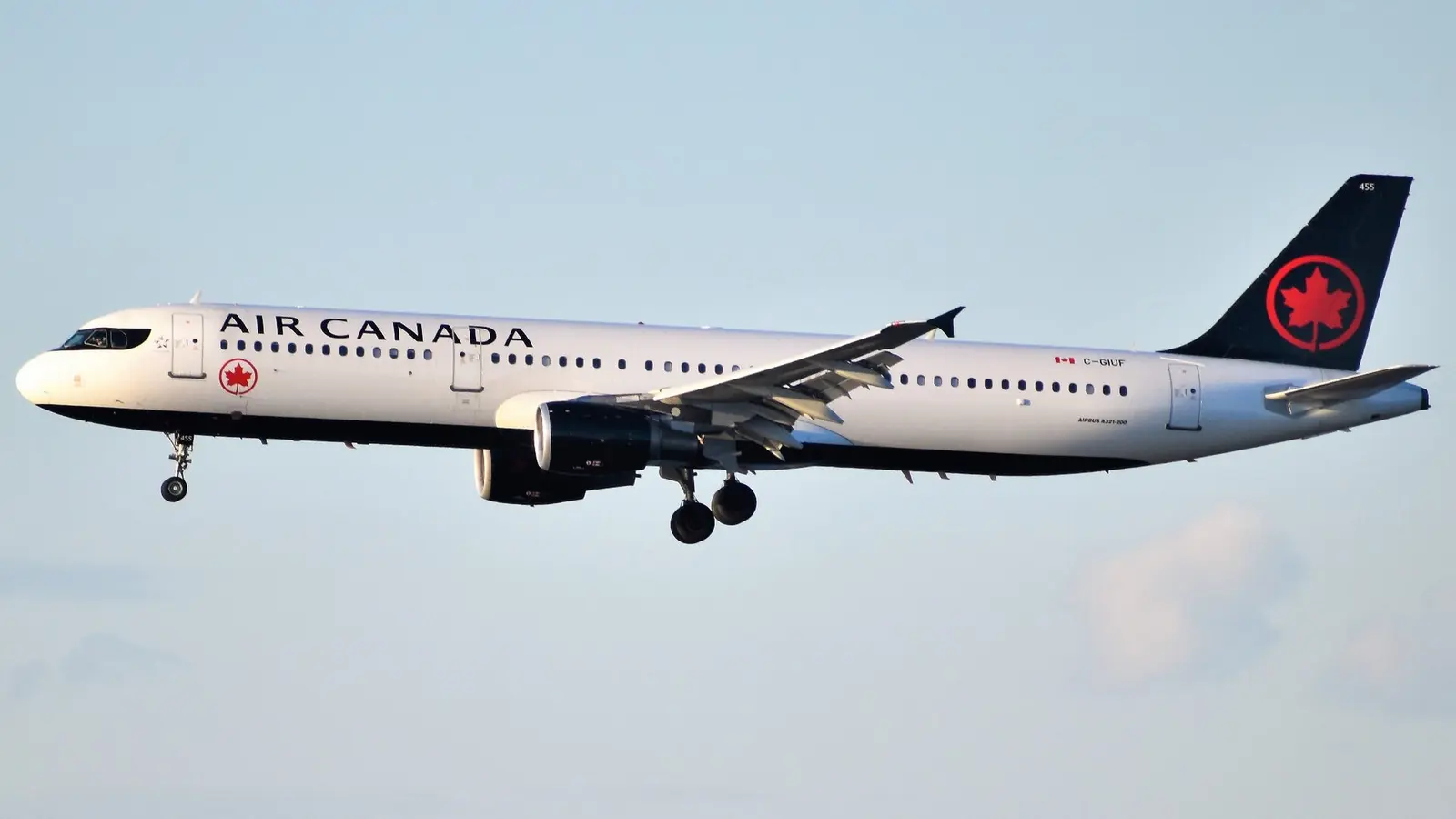
Air Canada said in September 2025 that Palma de Mallorca would be the first new destination for its Airbus A321XLR, the long-range single-aisle jet it was due to start receiving in 2026. A seasonal Montreal to Palma service was scheduled from 17 June to 24 October 2026, four times a week, giving Air Canada its first nonstop link to the Balearic Islands.
The Montreal to Palma schedule
The route was planned as an overnight eastbound service with a daytime return:
- AC924: Montreal 18.45 on Mondays, Wednesdays, Fridays and Saturdays, arriving in Palma at 08.25 the next morning
- AC925: Palma 12.15 on Tuesdays, Thursdays, Saturdays and Sundays, arriving in Montreal at 15.10 local time
The great-circle distance is about 3,280 nautical miles, well inside the XLR's range but beyond what a standard A321neo can fly with a commercial load. Before the XLR, a route like this would have needed a widebody, which is hard to fill on a leisure market of this size outside the peak summer weeks.
Air Canada also said it would move two existing routes to the new type in 2026: year-round Montreal to Toulouse and the seasonal Montreal to Edinburgh service. Chief commercial officer Mark Galardo described the aircraft as opening new international opportunities by combining widebody range with an improved cabin product.
The aircraft and the order
Air Canada is acquiring 30 A321XLRs. The first was due in the first quarter of 2026 on lease from Air Lease Corporation, with up to 10 more to follow during the year and further deliveries continuing to 2029.
| Air Canada A321XLR | Detail |
|---|---|
| Seats | 182: 14 Signature Class, 168 economy |
| Business seat | Lie-flat, 1-1 layout, a first for an Air Canada narrowbody |
| Economy | 3-3 layout |
| Range (Airbus figure) | Up to 4,700 nm |
| Fleet plan | 30 aircraft, first in Q1 2026 |
The XLR is a development of the A321neo. Its extra range comes mainly from a permanent rear centre tank built into the fuselage, holding about 12,900 litres, and a maximum take-off weight of 101 tonnes. EASA certified the type in July 2024 and the FAA in October 2024, after Airbus redesigned the tank to meet regulators' concerns about fire protection and fuel-tank integrity. Iberia flew the first commercial XLR service in November 2024.
Why the XLR matters to Air Canada
Montreal is well placed for transatlantic flying. It sits close to Europe by North American standards and has strong demand to France, Spain, Portugal and Italy. Air Canada already uses Boeing 737 MAX 8s on some shorter transatlantic routes, including Montreal to Edinburgh, but standard narrowbodies lack the range to reach southern Europe from Montreal with a full load.
The XLR changes the economics of thinner routes. An airline can open a city pair with about 180 seats instead of 250 to 300 on a widebody, run it on fewer days, and drop it for the winter without leaving an expensive aircraft idle. Air Canada's decision to fit a lie-flat Signature cabin also matters: it means business travellers on these routes do not have to accept a recliner seat, which has been the weakness of earlier narrowbody transatlantic products.
For Palma, a Mediterranean leisure market with strong summer demand and little in winter, the seasonal model fits. For Toulouse, the home of Airbus, a year-round service with a smaller aircraft better matches the traffic.
Competition and context
Air Canada is not alone. Iberia and Aer Lingus were already flying the XLR across the Atlantic by 2025, and several North American carriers had the type on order. The Palma announcement was part of a wider summer 2026 network update in which Air Canada also said it would resume Toronto to Budapest and Toronto to Shanghai, start year-round Vancouver to Bangkok and add Montreal to Catania in Sicily.
What has happened since
Air Canada's first A321XLR, registered C-GXLR, made its first flight at Airbus's Hamburg Finkenwerder plant on 27 February 2026, ahead of delivery.
The Palma plan changed before launch. Schedule updates reported in May 2026 showed the XLR operating the inaugural departure on 17 June 2026 and eight round trips in June, with a Boeing 787-8 taking over for most of the season. The reports linked the change to the 787's greater capacity and more predictable performance in hot summer conditions.