Industry
UK Sustainable Aviation Fuel Mandate: How It Works
Since 1 January 2025, UK jet fuel suppliers must make 2% of their fuel SAF, rising to 10% in 2030 and 22% in 2040. The first official supply statistics followed in August 2025.
Updated 4 min read
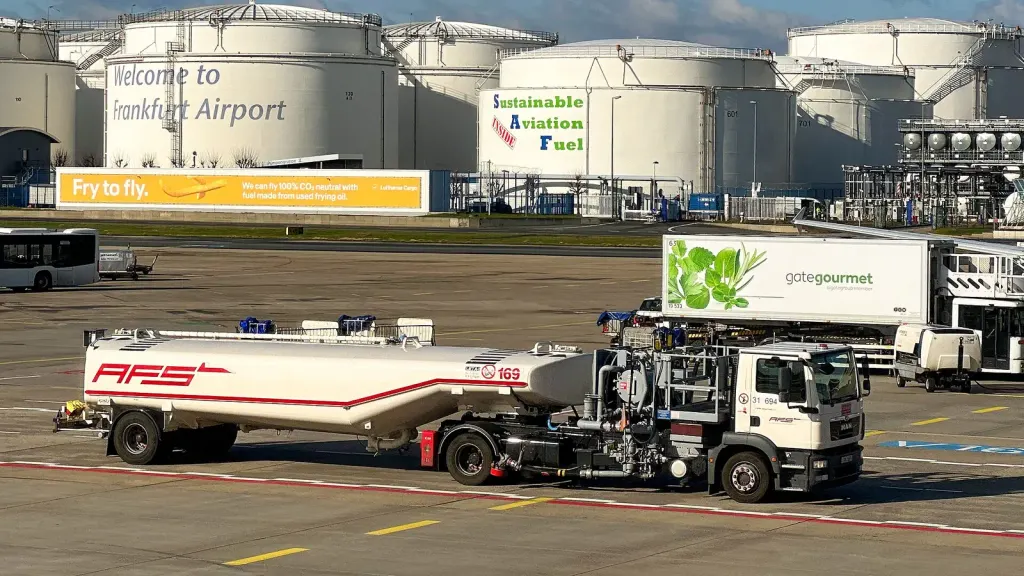
The UK's sustainable aviation fuel (SAF) mandate has now been in force for almost eight months. Since 1 January 2025, suppliers of jet fuel in the UK have been legally required to ensure that at least 2% of the fuel they supply is SAF, and on 14 August 2025 the Department for Transport (DfT) published the first official statistics on how much SAF is being supplied under the scheme. The mandate makes the UK one of the first countries to put a binding SAF blending requirement into law.
What the mandate requires
The obligation falls on fuel suppliers, not airlines. Any company supplying aviation fuel in the UK above a minimum threshold must either supply its share of SAF or meet its obligation in other ways. The required share rises steadily over 15 years:
- 2% of total UK jet fuel demand in 2025
- 10% in 2030
- 15% in 2035
- 22% in 2040, after which the level is held until there is more certainty about future supply
Aviation Minister Mike Kane signed the mandate into law in late 2024, saying that from that point aviation would become a greener and more sustainable form of travel. The airline trade body Airlines UK supported the scheme, describing it as a practical tool for reducing aviation's carbon emissions.
Caps, sub-targets and the buy-out price
The mandate is designed to steer the industry away from relying on a single production route. Most SAF available today is HEFA (hydroprocessed esters and fatty acids) fuel made from waste fats and oils such as used cooking oil. Supplies of these feedstocks are limited, so the mandate caps the share of the obligation that can be met with HEFA: 100% in the early years, falling to 71% in 2030 and 35% in 2040.
A separate obligation for power-to-liquid (PtL) fuel, made from green hydrogen and captured carbon dioxide, begins in 2028 at 0.2% of jet fuel demand, rising to 0.5% in 2030 and 3.5% in 2040.
Suppliers earn tradeable certificates for each unit of eligible SAF they supply. Those that fall short can buy certificates from suppliers that exceed their obligation, or pay a buy-out price. The buy-out is set at the equivalent of £4.70 per litre for the main obligation and £5.00 per litre for the PtL obligation. The levels are high enough to make supplying actual SAF the cheaper option in most cases, while capping costs if fuel is simply not available.
The fuel
SAF is a drop-in fuel: it is chemically similar to fossil kerosene and can be used in existing aircraft and airport fuel systems once blended. International fuel standards currently allow blends of up to 50% SAF with conventional jet fuel. The government says SAF delivers, on average, about 70% lower lifecycle carbon emissions than the fossil fuel it replaces, with the saving coming mainly from the feedstock rather than from what happens in the engine. Only fuel from approved sustainable feedstocks, such as wastes and residues, counts towards the mandate. Crop-based fuels are excluded.
The main obstacle is cost. SAF costs considerably more than conventional jet fuel to produce, and the UK has very little domestic production. Most early supply has been imported.
Revenue certainty for UK plants
To encourage domestic production, the government has committed to a revenue certainty mechanism, a guaranteed price arrangement intended to give investors enough confidence to finance first-of-a-kind SAF plants in the UK. It introduced the Sustainable Aviation Fuel Bill to Parliament in May 2025 to create the legal basis for the scheme, which is to be funded by a levy on aviation fuel suppliers rather than by taxpayers.
Why it matters
For airlines, the mandate means higher fuel costs, which are likely to be passed on in fares, but also a fixed timetable that lets them plan. For fuel producers, a legal requirement creates a guaranteed market. The UK scheme runs alongside the European Union's ReFuelEU Aviation regulation, which also began at 2% in 2025, so airlines flying in both markets face broadly similar requirements in the early years.
Questions remain about feedstocks. Used cooking oil is limited worldwide, and much of it is imported from Asia, which makes supply chains long and harder to audit. The HEFA cap and PtL obligation are intended to push investment towards newer technologies, but those are not yet produced at scale.
What has happened since
- January 2026: Provisional DfT figures covering January to late October 2025 showed 163 million litres of SAF supplied out of about 10 billion litres of jet fuel, a share of 1.63%. All of it was made from used cooking oil, 72% of which came from China and the rest from Japan and Taiwan.
- March 2026: The Sustainable Aviation Fuel Act received Royal Assent on 5 March 2026, putting the revenue certainty mechanism and the levy that funds it into law.
- July 2026: The fifth provisional release of SAF mandate statistics showed 333 million litres of SAF supplied in 2025, equal to 2.26% of UK aviation fuel, indicating the first-year 2% target was met. All of it was conventional SAF, with no PtL fuel. Final, verified figures for 2025 are due in November 2026.

About the author
Radu Balas
Founder, Flying Engineer
View author profile Editorial policy and corrections