Company news
Heathrow Expansion: UK CAA Opens Consultation on Early Project Costs
The CAA consulted from 14 August 2025 on whether Heathrow and the Arora Group could recover early third-runway planning costs through airline charges.
Updated 5 min read
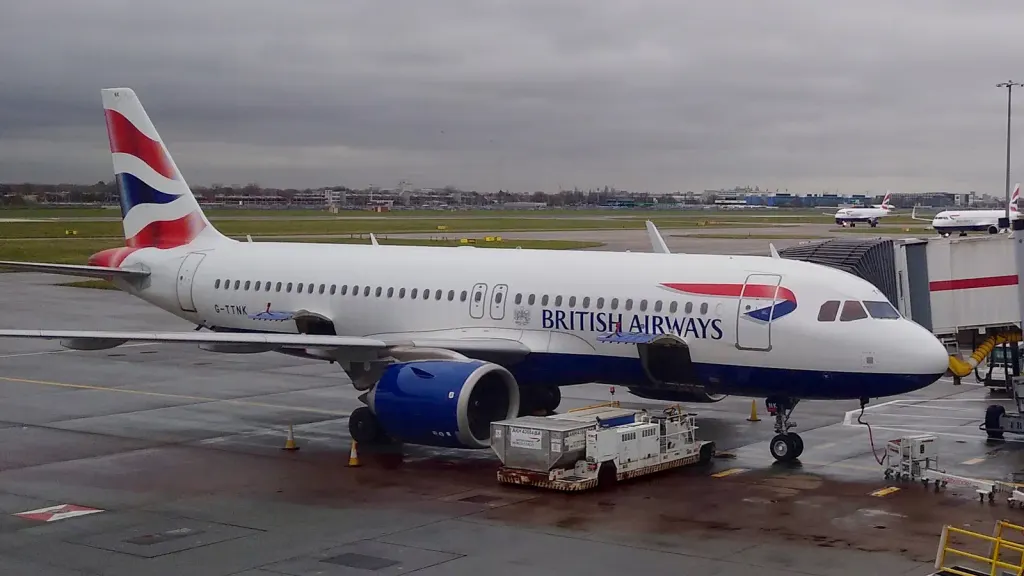
The Civil Aviation Authority (CAA) opened a consultation on 14 August 2025 on whether the early costs of planning a third runway at Heathrow should be paid for through the charges the airport levies on airlines. The question had been put to the regulator by the two groups then competing to promote expansion: Heathrow Airport Limited (HAL), which owns and runs the airport, and the Arora Group, whose rival scheme was being developed through its company Heathrow West.
The consultation, published as CAP3149, ran until 10 September 2025. The CAA said it expected to set out its decision on the principles for recovering HAL's early planning costs by the end of September, with further decisions to follow later in the year.
What counts as an early cost
In the CAA's definition, early costs are those a promoter incurs before the Government decides whether to grant a Development Consent Order (DCO), the planning consent required for infrastructure of this size. The regulator listed environmental assessments, legal advice, architectural design, land surveys and public consultation as typical examples. Land purchases and site preparation can also fall into the category, and that is where the sums become much larger.
How much the promoters asked for
The two requests were very different in scale.
- HAL asked to recover £71 million of early costs in 2025, including an initial £20 million to the end of September 2025, and a further £249 million in 2026. That made £320 million in total, in 2024 prices, by the end of 2026. It wanted the CAA to raise the capital expenditure ceiling in its current H7 price control to make room for the spending.
- The Arora Group said it had spent around £2.5 million between the Government's January 2025 announcement and the end of July, and expected to spend a further £1 million to £1.5 million by the end of 2025, roughly £3.5 million to £4 million in all. It asked for its costs to be treated in the same way as HAL's.
HAL already has a route to recover costs: it holds an economic licence and its charges to airlines are set by the CAA. Rival promoters have no licence and no way of recovering money from airport users unless the regulator creates one.
The four options
The CAA set out four broad approaches:
- Option 1: allow HAL to recover its efficient costs, either within the existing H7 capital governance and incentive framework or under a new framework.
- Option 2: allow recovery only for alternative promoters with credible and appropriately mature proposals.
- Option 3: allow recovery for both HAL and alternative promoters that meet that test.
- Option 4: allow no recovery of early costs.
The regulator's initial view leaned towards allowing recovery. It argued that licensed companies should expect, though are not guaranteed, to recover costs they incur efficiently, and that rivalry between credible promoters could drive down costs and produce a more thorough examination of the options. One idea it floated was a change to HAL's licence that would require HAL to collect money through airline charges and pass it on to other qualifying promoters.
The CAA was more cautious about 2026, when HAL's forecast spending rose sharply and the risk of two promoters paying for duplicate work, including land purchases, grew. Under every option, only efficiently incurred costs directly related to expansion planning would be recoverable.
A project with a long history
Heathrow handled 83.9 million passengers in 2024 on two runways and has operated close to its capacity for years. Parliament approved the Airports National Policy Statement (ANPS) backing a north-west runway in 2018, but the programme stalled in 2020 amid legal challenges and the collapse in air travel during the pandemic.
That first attempt left a regulatory precedent. Between 2014 and 2020 the CAA allowed HAL to recover planning costs under a framework with an overall cap of £500 million; in broad terms about £490 million was eventually allowed, including the cost of winding the programme down. The CAA had also assessed an earlier version of the Arora Group's plans as reasonably mature and credible in 2020.
In January 2025 the Chancellor, Rachel Reeves, announced Government support for a third runway and invited proposals by the end of July 2025. Both HAL and the Arora Group submitted schemes. The Government's stated aim is a decision on a planning application within the current Parliament, which HAL has translated into a target of securing a DCO by 2029.
Why it matters
Any costs the CAA allows end up in airport charges, which airlines pay per passenger and generally pass on in fares. Airlines at Heathrow have repeatedly challenged the level of those charges and were expected to resist paying for planning work before any scheme had consent. For the promoters, the decision affects how much they can afford to spend before approval, and so how quickly a DCO application can be prepared. For the Government, the speed of that work is central to its timetable.
What has happened since
- 25 September 2025: the CAA said it was minded to let HAL recover efficient planning costs incurred in 2025 and the first half of 2026, and to let other credible promoters recover early planning costs over the same period. It postponed a decision on land and enabling works because of the risk of duplication. Airline respondents had argued for Option 4, no recovery before a successful DCO.
- 25 November 2025: the Government selected HAL's scheme, with a runway of up to 3.5 km, as the basis for its review of the ANPS, calling it the most credible and deliverable option. The Arora Group's shorter-runway scheme was not chosen.
- December 2025: the CAA proposed a £320 million cap on HAL's recoverable early costs for 2025 and 2026, this time including land and enabling costs. HAL told the regulator that month its costs could reach around £350 million.
- 18 June 2026: the Department for Transport published a draft Heathrow Expansion National Policy Statement for public consultation, which closed on 1 September 2026.
- 30 July 2026: the CAA confirmed its final decision. HAL can recover up to £320 million (2024 prices), subject to independent expert assurance, cost reporting and a later efficiency review. Heathrow West can recover £4.14 million of costs incurred up to November 2025. The CAA put the effect on charges at around 15p per passenger in 2028 and about 30p in later years. HAL and airlines were given six weeks to appeal to the Competition and Markets Authority.
The original consultation document is available on the CAA website.

About the author
Cristina Gabriela
Marketing Strategy Manager
View author profile Editorial policy and corrections