Careers & crew
Flight Attendant Salary: What Cabin Crew Really Earn
The US median flight attendant salary is US$63,580 a year. See first-year pay, UK and Emirates salaries, training costs and how to enter the job.
Radu BalasReviewed by Adrian Man
Updated 6 min read

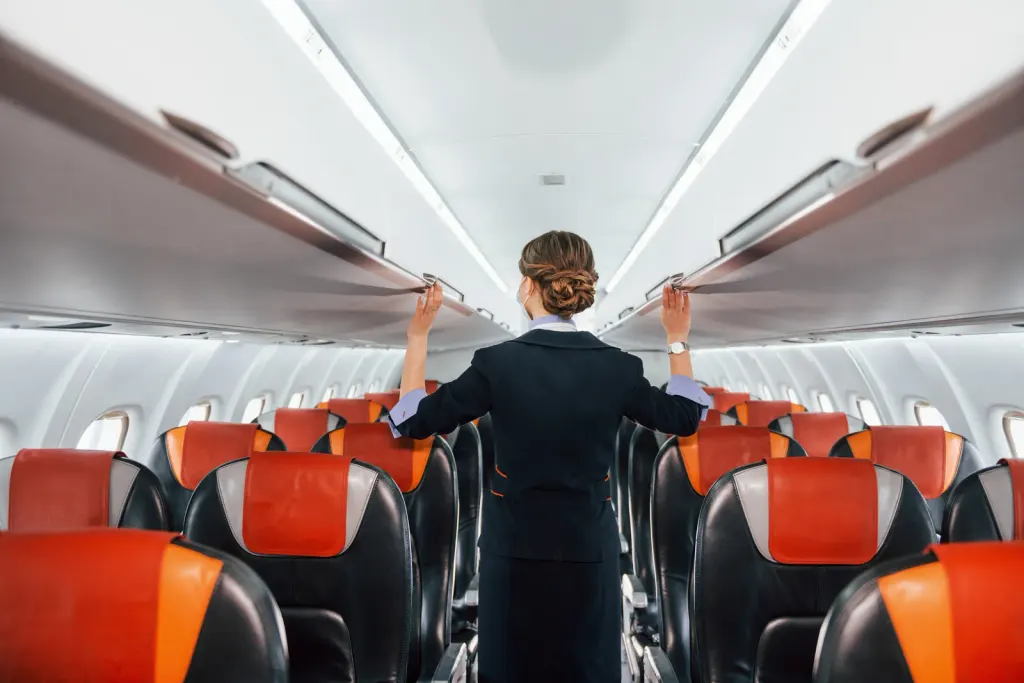
The median flight attendant salary in the United States is US$63,580 a year, according to the Bureau of Labor Statistics. That means half of flight attendants earn more, and half earn less.
But new crew often earn much less. Starting pay can be low, and some time spent working remains unpaid. The airline, country, and years of service all matter.
How much do flight attendants make?
The US Bureau of Labor Statistics reports these annual earnings for May 2025:
- Median salary: US$63,580.
- Lowest paid tenth: less than US$35,110.
- Highest paid tenth: more than US$136,430.
These figures cover flight attendants at different stages of their careers. They do not represent a new employee's starting salary.
In May 2024, Fortune reported on an American Airlines new hire letter. It stated a starting salary of US$27,315 a year before incentives.
That salary qualified a single-income household for food stamps in several states. These included Massachusetts and New York. The flight attendant union APFA confirmed the letter.
Other airlines offered similarly low starting pay.
Washington Post reporting, summarized by Newser in August 2024, gave these projected first-year salaries:
- Frontier: US$23,000.
- Alaska: US$25,000.
- American: US$27,000.
- Delta: US$32,000.
These were projected starting figures from 2024, not current airline salary offers.
They show why the national median can give a misleading impression of starting pay.
For comparison, our aviation salary report covers pilots and other aviation careers.
Flight attendant salary by country
Cabin crew salary varies between countries and airlines. Some employers publish salary ranges. Others advertise estimated earnings or pay with allowances.
The following figures come from government information, airline recruitment pages, and published job advertisements.
| Country | Pay | Source and year |
|---|---|---|
| United States | US$63,580 median annually | BLS, May 2025 |
| United Kingdom | GBP 21,000 starter to GBP 28,000 experienced annually | National Careers Service |
| Ireland/Europe (Ryanair advert) | Up to EUR 27,000 annually | Crewlink advert, 2025 |
| United Arab Emirates (Emirates) | AED 4,980 monthly basic pay. Average total about AED 11,244 monthly (about US$3,060) | Emirates Careers, 2026 |
These figures are not directly comparable. The US figure is a median, while the UK figures show career stages.
The Ryanair figure is an advertised maximum. Emirates includes flying pay in its average total. Emirates also provides free shared housing in Dubai, according to its recruitment information.
For another airline comparison, see our Qantas cabin crew salary guide.
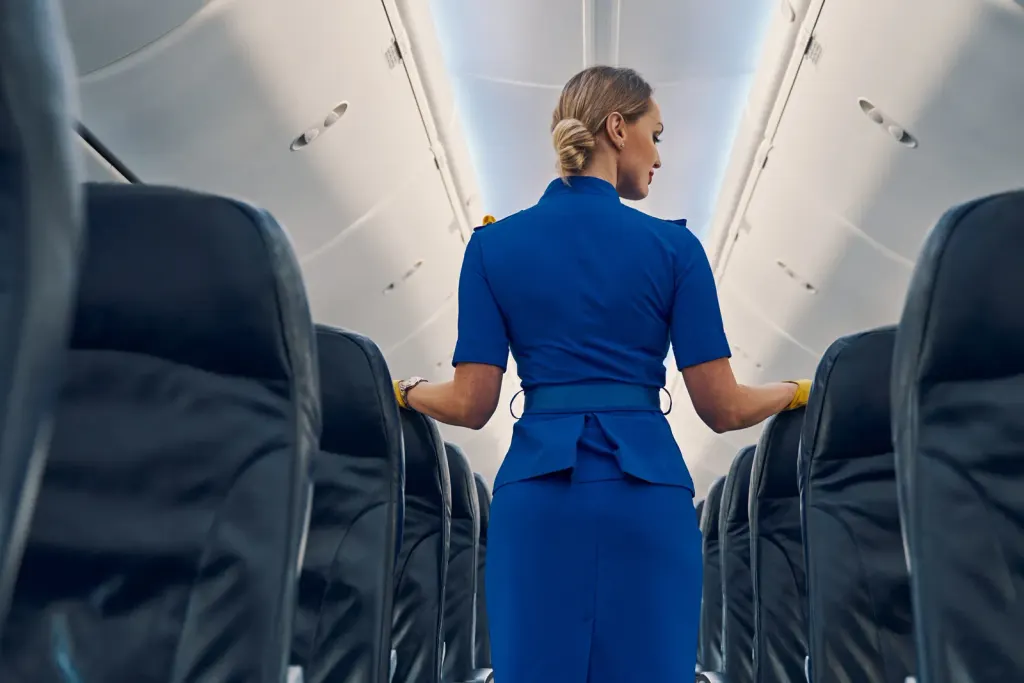
Why first-year pay is so low
One major issue is when paid work begins.
For decades, US flight attendants generally received no pay during passenger boarding. Their paid time usually started when the aircraft doors closed.
That meant crew could work before departure without receiving their normal hourly pay.
In June 2022, Delta introduced boarding pay. It became the first major US airline to do so. The airline paid boarding time at half the regular hourly rate.
Other airlines later negotiated similar changes.
On September 12, 2024, American Airlines flight attendants approved a new contract.
It covered about 28,000 employees, with 87% voting in favor. The agreement delivered immediate raises of 18% to 20.5%. It also introduced boarding pay at 50% of the hourly rate.
United Airlines followed in May 2026. Nearly 30,000 attendants ratified a five-year contract. It included an average 31% raise and boarding pay.
These agreements show how union negotiations can change earnings.
Low starting salaries create another problem. Some new hires take additional jobs to cover expenses.
Reporting from 2024 described attendants driving for Uber or Lyft. Others shared crowded crashpads. A crashpad is a shared apartment near an airport, used by crew between duties.
How to become a flight attendant
In the United States, a college degree is not typically required.
The Bureau of Labor Statistics says applicants generally need a high school diploma.
Airlines provide initial training. This typically lasts several weeks or a few months.
After completing training, new attendants receive an FAA Certificate of Demonstrated Proficiency. They must complete training again each year.
Other US requirements include:
- A minimum age, typically 18 or 21.
- Vision correctable to at least 20/40.
- Meeting the airline's own height requirements.
In the United Kingdom, there are several entry routes.
The National Careers Service lists college courses, direct airline applications, and a Cabin Crew Level 3 apprenticeship. The apprenticeship takes about 12 months.
Applicants must be over 18, physically fit, and pass a medical check. They also need enhanced background checks and a valid passport.
Applicants must live within 90 minutes of their base airport. Many airlines require a 25 metre swim. Most seek applicants between 5ft 2in (157cm) and 6ft 2in (188cm).
In the European Union, crew need a cabin crew attestation. This is a qualification recognized across EU member states.
Applicants must be at least 18. They must finish initial training and pass an exam, according to EASA.
Training costs depend on the airline and recruitment system.
US reporting from 2024 described initial training lasting 3 to 6 weeks. It was often unpaid.
A 2025 Ryanair recruitment advert offered free training. However, Ryanair had described a different system earlier.
In December 2017, Ryanair told UK lawmakers that third-party training cost EUR 2,400 to EUR 3,000. Students paid those costs.
For more entry routes, read our guide to aviation jobs without a college degree.
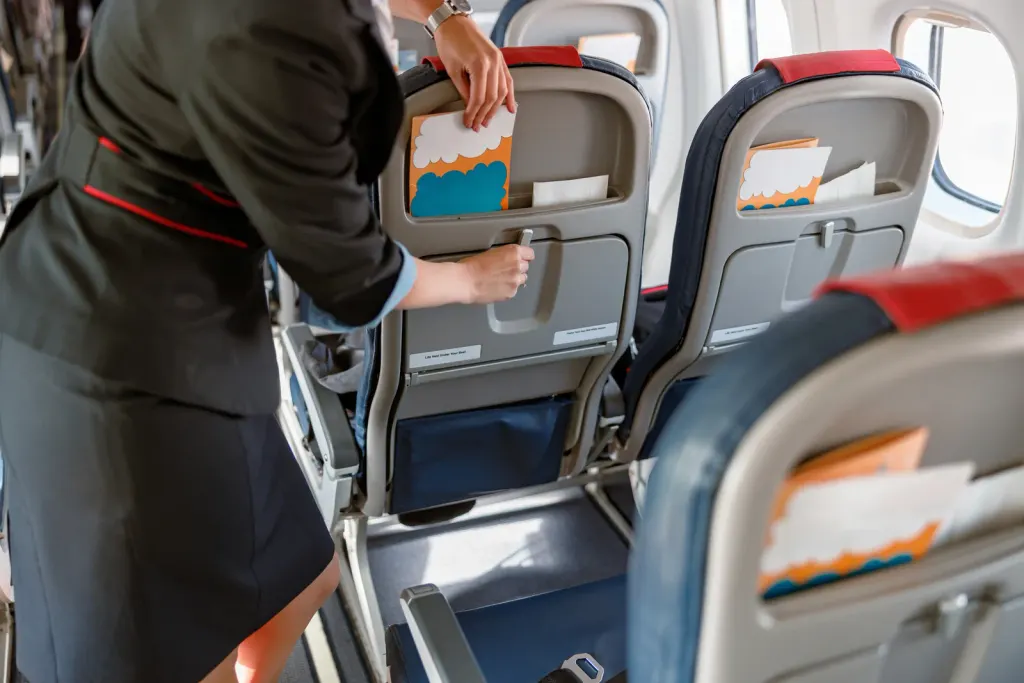
What the job is really like
Flight attendant work does not follow a regular office schedule.
The BLS says crew work nights, weekends, and holidays. On-duty shifts can last from 4 to 18 hours or longer.
Attendants often spend several nights each week or month away from home.
UK cabin crew typically work 30 to 40 hours weekly. Evening, weekend, and bank holiday duties are common.
The work also carries physical risks. The BLS places flight attendants among occupations with the highest injury and illness rates.
Schedules can begin very early. A 2025 Ryanair recruitment advert described a roster of 5 days working and 3 days off. Starts could be as early as 5am.
Low pay has also led to public disputes.
In February 2017, British Airways Mixed Fleet cabin crew went on strike.
The union Unite said starting pay was GBP 12,000, averaging GBP 16,000. British Airways disputed that picture. The airline said crew earned GBP 21,000 with allowances.
Crew member Charly Bacon told reporters she had "friends having to sleep in their cars".
The dispute showed how differently airlines and staff could describe earnings.
It also showed why salary figures need context. Published pay may include allowances that differ from basic salary.
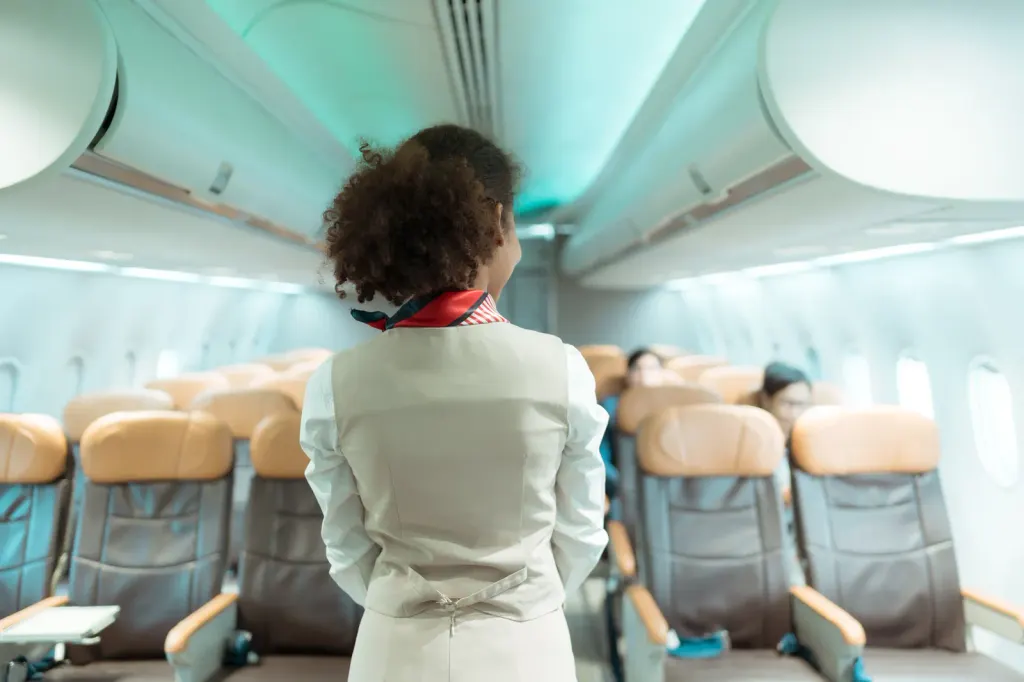
Career path and job outlook
Flight attendants can earn more as their careers progress.
In the United States, the BLS says advancement generally follows seniority. That means length of service affects career progression.
Senior attendants may move into management positions.
In the UK, crew can become supervisors or senior cabin crew. Some later take ground-based jobs in training or recruitment, according to the National Careers Service.
However, reliable published figures for purser salaries are not available in the sources used here. A purser is a senior cabin crew member. There is no confirmed salary figure to give for that role.
Employment forecasts suggest continued demand.
The BLS counted about 133,700 US flight attendant jobs in 2025. It projects employment growth of 9% from 2025 to 2035. That represents about 18,500 openings each year.
The global forecast is also substantial.
In its July 2025 Pilot and Technician Outlook, Boeing forecast demand for 1,000,000 new cabin crew worldwide by 2044.
Those figures describe future demand, not guaranteed employment for individual applicants.
For anyone considering this career, published starting pay matters more than the national median. Training terms, boarding pay, schedules, and seniority also shape the experience.
Prospective applicants can explore employers through our airline directory. Our aviation recruitment directory also lists agencies and job boards.
Sources
- US Bureau of Labor Statistics, Flight Attendants Occupational Outlook Handbook
- Fortune, American Airlines starting salary letter
- Newser, summary of Washington Post reporting on starting salaries
- NPR via WWNO, Delta boarding pay
- AirlineGeeks, American Airlines flight attendant contract
- Associated Press, United Airlines flight attendant contract
- UK National Careers Service, Cabin Crew
- International Business Times UK, British Airways cabin crew strike
- Crewlink, Ryanair cabin crew recruitment advert
- HuffPost UK, Ryanair training costs
- European Union Aviation Safety Agency, Cabin Crew Attestation
- Emirates Group Careers, Cabin Crew
- Boeing, Pilot and Technician Outlook 2025

About the author
Radu Balas
Founder, Flying Engineer
View author profile Editorial policy and correctionsExplore Flight Schools
Browse 2,079 companiesCompare flight schools
Tell us what you want to learn and where, and we will pass it to suitable schools.