Baggage Handler Salary: Pay, Hours and the Hard Part
Baggage handler salary ranges from GBP 21,000 to GBP 28,000 in the UK. See US pay figures, working hours, entry requirements and the physical demands.
Radu BalasReviewed by Adrian Man
Published 6 min read

A baggage handler in the UK earns GBP 21,000 to GBP 28,000 a year. In the US, the closest official occupation has a median wage of US$19.45 an hour.
The US government does not publish a separate salary figure for airline baggage handlers. Some union airline positions pay much more. At Southwest Airlines, the top ramp agent rate reaches US$38.00 an hour after 10 years.
Baggage handlers move passenger luggage between airport buildings and aircraft. The work includes lifting bags, loading carts, and working inside aircraft holds. It also means shifts, outdoor weather, and repeated physical effort.
How much does a baggage handler make?
Baggage handler salary depends on the country, employer, and experience. The job title also matters. Some airlines call these workers ramp agents or fleet service agents.
In the UK, the National Careers Service gives a yearly salary range of GBP 21,000 to GBP 28,000. It lists working hours of 37 to 45 per week, on shifts.
The UK National Living Wage is GBP 12.71 an hour from 1 April 2026 for workers aged 21 and over. This is a legal minimum, not a baggage handler salary figure.
US figures need more care. The Bureau of Labor Statistics does not publish one wage for airline baggage handlers alone.
Its classifications separate baggage porters from aircraft service workers. Baggage porters can work in hotels and terminals. Aircraft service attendants perform ramp duties, including fueling, towing, and servicing aircraft.
For aircraft service attendants, O*NET reports a 2025 median of US$19.45 an hour. The annual figure is US$40,450. These figures cover a wider occupation, not baggage handlers alone.
Union contracts offer another useful comparison. Southwest Airlines ramp agents load and unload baggage. Their union, TWU Local 555, ratified a contract in March 2024.
The agreement covered about 19,500 workers. Its top pay rate is US$38.00 an hour after 10 years. That is a top union rate, not a national average.
Baggage handler pay by country
| Country | Pay | Source and year |
|---|---|---|
| United Kingdom | GBP 21,000 to GBP 28,000 a year | National Careers Service |
| United States, closest government figure | US$19.45 an hour, US$40,450 a year | O*NET, 2025 |
| United States, union top rate | US$38.00 an hour after 10 years | TWU, March 2024 contract |
| Netherlands | EUR 5.25 extra per hour worked during summer 2022 | Schiphol, 2022 |
The Netherlands figure is a temporary supplement, not a normal wage. Amsterdam Schiphol and unions agreed it after staff shortages. It covered security, cleaning, baggage, and apron workers during summer 2022.
The figures are not directly comparable. They describe different occupations, pay arrangements, and periods.
What does a baggage handler do?
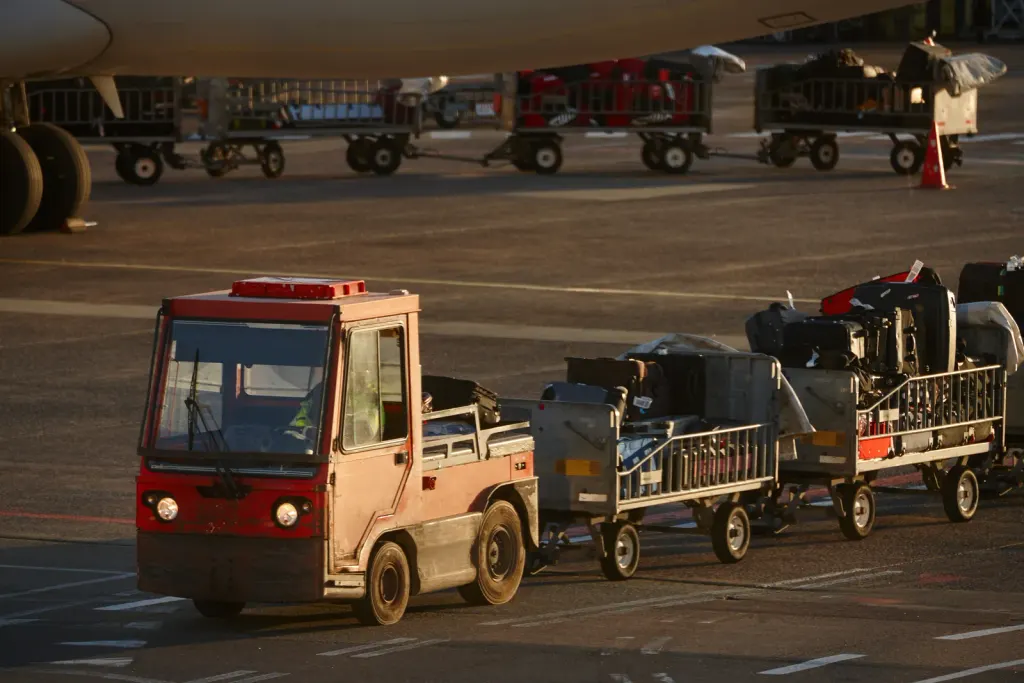
A baggage handler moves luggage through the final stages of an airport's baggage operation. Bags travel from the sorting hall to carts, then to the aircraft.
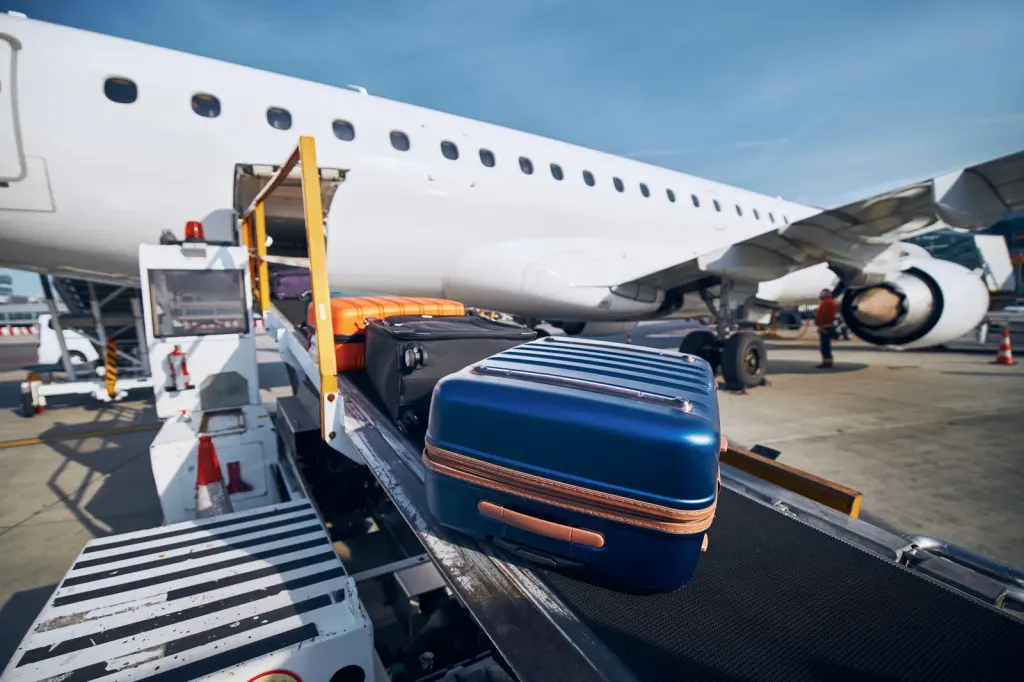
At the aircraft, handlers move bags onto a belt loader. This conveyor carries luggage toward the open cargo hold.
Handlers then stack bags inside the hold. After landing, they reverse the process and unload the arriving luggage.
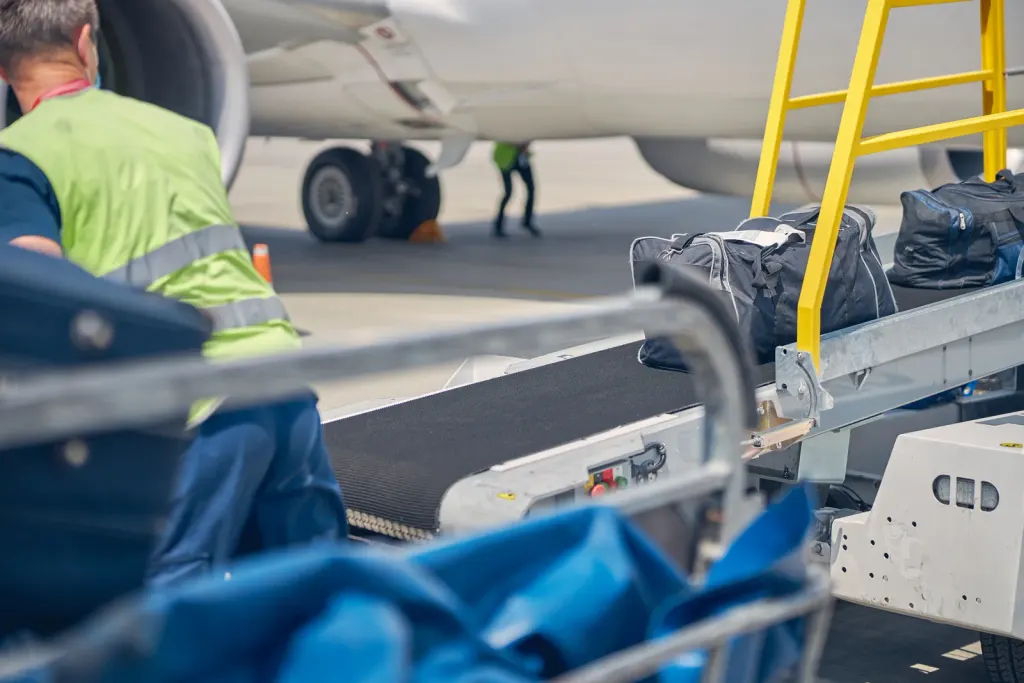
The job involves repeated lifting and moving between equipment and aircraft. Some work happens inside the hold, where space is limited.
In the US, airlines often use the titles ramp agent or fleet service agent. These names can describe workers who handle passenger bags.
Ground handling companies carry out much of this work. The Flying Engineer has a directory of ground handling companies.
Airports also rely on systems that follow bags through their journey. One example appears in our article about the baggage tracking system at Virgin Australia.
How to become a baggage handler
Entry requirements vary by country. The UK National Careers Service lists several conditions for airport baggage handler jobs.
Applicants must be over 18. They need a medical check, security checks, and enhanced background checks.
Workers may also need their own transport. Shift times can make travel to the airport difficult.
In the US, aircraft service attendant jobs usually require a high school diploma or GED. A GED is an alternative high school qualification.
According to O*NET, workers normally receive training on the job.
A college degree is therefore not the usual entry requirement for this occupation. Our guide covers more aviation jobs that do not need a college degree.
Applicants can look at airlines and ground handling employers. The Flying Engineer also lists aviation recruitment agencies and job boards.
It helps to understand the working conditions before applying. This is a physically demanding job with shift work.
What the job is really like
The hardest part is often the lifting. Bags arrive in different sizes and weights. Handlers must move them repeatedly, sometimes while bent inside an aircraft hold.
A 2005 study by the UK Health and Safety Executive examined baggage loading. It found that an average bag weighed about 15 kg.
About one bag in ten weighed over 25 kg. That creates a demanding workload when bags keep arriving.
The researchers observed loaders making one lift every 6 seconds. They worked in a stooped position inside the aircraft hold.
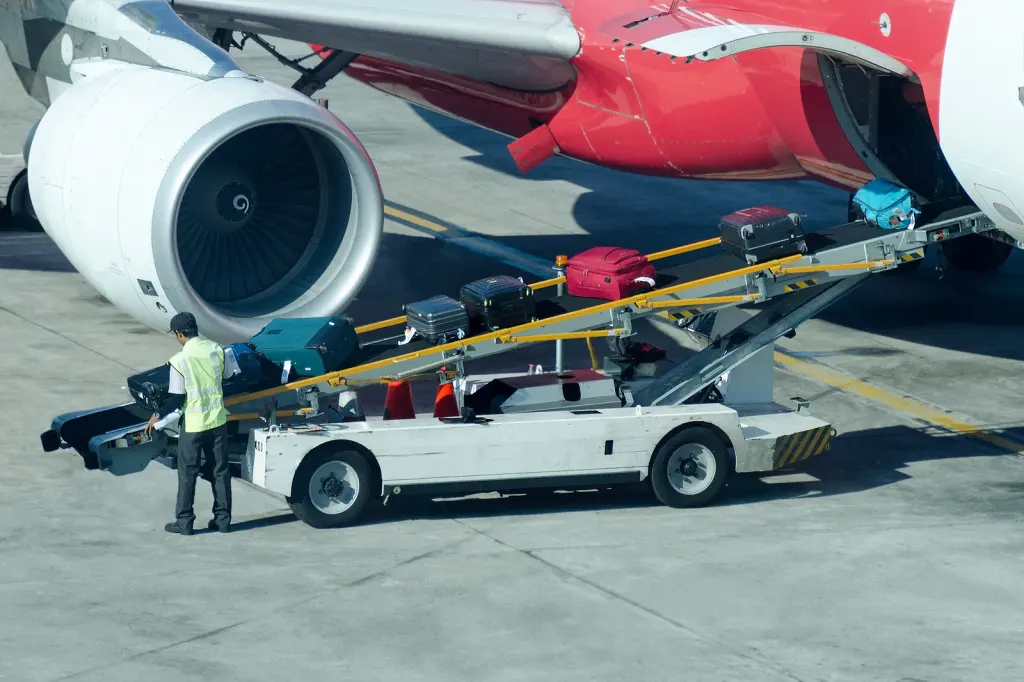
Repeated lifting can affect the back, muscles, and joints. These problems are called musculoskeletal disorders.
The same HSE report says these disorders accounted for 40% of airport personal injury incidents reported to HSE. Most involved ground handlers.
One study cited in that report found low back pain among 62% of baggage handlers during the past year. The comparison across all industries was about 40%.
These are historical research findings, not current injury rates. They still explain why baggage handling receives attention from workplace safety authorities.
The HSE identifies several main risks. These include stacking bags inside aircraft holds and lifting bags frequently.
Bag weight also matters. So does lifting below knee height or above shoulder height.
Airlines and airports use bag weight rules to reduce handling problems. The HSE explains industry guidance from the IATA Airport Handling Manual.
IATA is the International Air Transport Association. Its guidance says a single checked bag should not exceed 23 kg (50 lb) without prior arrangement.
Some airlines accept bags weighing up to 32 kg. Bags over 23 kg need a heavy tag showing their weight.
Weight limits can make a difference. British Airways introduced a 32 kg limit per bag in 2003.
The airline recorded about 17% fewer injuries from heavy bags. The industry later adopted 32 kg as a voluntary limit.
Bag rules do not remove every risk. Handlers still lift bags repeatedly and work in confined aircraft holds.
The work also happens outdoors. The UK National Careers Service describes working in all weathers.
Shifts are another important consideration. Airport baggage handling does not follow a normal office schedule.
The wider air transportation industry also has safety risks. In 2024, the US Bureau of Labor Statistics recorded 6.5 injury and illness cases per 100 full-time workers.
That figure covers the wider air transportation industry. It is not a baggage handler injury rate.
Pay and working conditions have also led to labor action. On 8 December 2022, airport service workers held rallies and strikes at 15 US airports.
They called for a US$15 minimum wage. The action shows why wages remain an important issue for airport service workers.
Physical risks also matter to employers. Our guide to airport and ground handling insurance covers this part of airport operations.
Career path
Baggage handling can be an entry point into airport ground operations. Workers learn how luggage moves between airport facilities and aircraft.
Experience can also lead to team responsibilities. The UK National Careers Service identifies lead ramp hand as a possible next step.
A lead ramp hand is a team leader. This gives experienced workers a route into supervising baggage handling work.
The airport directory at The Flying Engineer can help readers explore airport organizations.
For someone considering this career, salary is only part of the decision. The work demands regular lifting, outdoor shifts, and comfort around aircraft equipment.
The entry requirements are relatively straightforward. The physical demands deserve just as much attention as the pay.
Sources
- UK National Careers Service: Airport baggage handler
- UK Government: National Minimum Wage rates
- US Bureau of Labor Statistics: Occupational classification definitions
- US Department of Labor O*NET: Aircraft Service Attendants
- Transport Workers Union: Southwest Airlines ramp agent contract
- Schiphol: Summer worker compensation agreement
- UK Health and Safety Executive: Baggage loading study
- UK Health and Safety Executive: Air transport FAQs
- UK Health and Safety Executive: Baggage handling risks
- US Bureau of Labor Statistics: Air transportation industry injury data
- NBC News: Airport service worker rallies and strikes

About the author
Radu Balas
Founder, Flying Engineer
View author profile Editorial policy and correctionsExplore Flight Schools
Browse 2,202 companiesCompare flight schools
Tell us what you want to learn and where, and we will pass it to suitable schools.