

A single-aisle aircraft flying transatlantic routes. A narrowbody connecting secondary European cities to North America. An aircraft challenging the conventional wisdom that long-haul requires widebodies.
The Airbus A321XLR entered service in late 2024, and by 2026, airlines worldwide are deploying it on routes that previously needed larger aircraft. The question everyone asks: can this narrowbody actually replace widebodies?
The answer isn’t simple. The A321XLR opens new route possibilities while creating economic trade-offs airlines must carefully evaluate. Understanding this aircraft reveals the future of long-haul aviation.
What Makes the A321XLR So Special?

The A321XLR (Extra Long Range) represents Airbus’s answer to a specific airline need: efficiently serving thin long-haul markets that don’t justify widebody aircraft. Airbus officially launched the A321XLR at the 2019 Paris Air Show.
Built on the proven A321neo platform, the XLR extends range dramatically through engineering modifications rather than a complete redesign, as detailed by aviation industry publication Aviation Week.
The Rear Centre Tank Innovation
The XLR’s defining feature: a permanent Rear Centre Tank (RCT) integrated into the aircraft structure. This adds significant fuel capacity beyond standard A321neo variants.
Previous A321 long-range variants used removable additional centre tanks. The XLR’s permanent RCT holds more fuel while maintaining structural integrity at higher takeoff weights.
This single innovation extends range by over 700 nautical miles compared to the A321LR (Long Range) predecessor.
Strengthened for Greater Weight
The XLR’s maximum takeoff weight reaches 101 tonnes (223,000 pounds) – substantially higher than earlier A321 variants. This required strengthened landing gear and structural reinforcements. The aircraft competes directly with Boeing 787 on certain route types.
Optimized wing trailing-edge flaps maintain takeoff performance despite the increased weight. The aircraft needs reasonable runway lengths despite carrying more fuel.
Range That Changes Everything
The A321XLR flies 4,700 nautical miles (8,700 kilometers / 5,400 statute miles). That’s enough for transatlantic crossings, Middle East to Europe, Asia medium-haul, and transcontinental routes with margin.
Compare this to the standard A321neo’s 4,000 nautical mile range. Those extra 700 miles unlock dozens of city pairs previously requiring widebodies.
| Specification | A321XLR | Context |
|---|---|---|
| Maximum Range | 4,700 nautical miles | New York to Rome, London to Delhi |
| Maximum Takeoff Weight | 101 tonnes (223,000 lbs) | 20% heavier than original A321 |
| Typical Seating | 182-206 passengers | Depends on premium cabin size |
| Engines | Pratt & Whitney GTF or CFM LEAP-1A | Customer choice |
| Fuel Burn Advantage | 30% lower per seat | vs previous generation aircraft |
| First Delivery | October 2024 (Iberia) | Service entry November 2024 |
Note: Range of 4,700 nautical miles (highlighted in gold) enables transatlantic and long transcontinental routes. Fuel burn advantage (highlighted in green) represents 30% improvement per seat versus previous generation aircraft. Swipe left to see full table on mobile devices.
Which Airlines Are Getting the A321XLR First?
By March 2026, multiple airlines operate the A321XLR with more receiving deliveries monthly. The early operators reveal different strategic approaches to the aircraft, according to aviation data provider Cirium.
Iberia (Launch Customer)

Iberia received the first A321XLR on October 30, 2024, and operated the first passenger flight November 6, 2024. The Spanish carrier immediately deployed it on Madrid-Boston transatlantic service. The aircraft certification process was completed after extensive testing.
Iberia’s strategy: connect Madrid to secondary North American and Latin American cities that don’t justify widebody capacity year-round.
American Airlines (First US Operator)

American Airlines became the first US carrier operating the A321XLR, starting December 18, 2025 on the JFK-Los Angeles transcontinental route.
American’s configuration features 20 Flagship Suite business class seats with lie-flat beds and direct aisle access, 12 Premium Economy seats, and 123 Main Cabin seats – total 155 passengers.
By March 2026, American operates the XLR on JFK-Edinburgh (launched March 8, 2026), with JFK-San Francisco and Boston-LAX routes starting later in 2026. Understanding American’s premium aircraft deployment shows how the A321XLR fits their strategy.
American ordered 50 A321XLRs total, positioning the type as key to their transatlantic expansion from New York and premium transcontinental service.
Air Canada (Major North American Order)

Air Canada received its first A321XLR in early March 2026. The aircraft, registered C-GXLR, completed its test flight on March 2, 2026.
Air Canada’s 182-seat configuration includes 14 lie-flat business class seats and 168 economy seats. First commercial service launches May 1, 2026 on domestic Calgary-Montreal routing for crew training.
By June 2026, Air Canada deploys XLRs on transatlantic routes from Montreal to Palma de Mallorca, Toulouse, Edinburgh, and Dublin. The carrier ordered 30 A321XLRs to serve thin European markets year-round.
Air Canada’s strategy: maintain year-round presence on seasonal European routes using right-sized aircraft instead of operating widebodies only in peak summer months.
Qantas (Asia-Pacific Pioneer)

Qantas operates A321XLRs primarily on domestic Australian routes in early 2026, with its first international XLR route launching October 2026: Brisbane-Manila.
The Brisbane-Manila service increases from five weekly A330 flights to daily A321XLR operations. Right-sizing aircraft allows higher frequency while maintaining profitability.
Qantas ordered 16 internationally-configured XLRs with lie-flat business seats arriving from 2028 for Southeast Asian expansion. Current domestic XLRs seat 197 passengers with four lavatories.
Aer Lingus (Transatlantic Focus)
Aer Lingus received early A321XLRs and quickly deployed them on transatlantic routes from Dublin. The Irish carrier specializes in connecting Ireland to secondary North American cities.
The XLR enables routes that previously couldn’t support widebody economics. Aer Lingus operates year-round instead of seasonal-only service.
Other Early Operators
IndiGo (India’s largest carrier) uses XLRs for international expansion to Europe and Middle East, following their strategy of opening new international routes. Wizz Air deploys them on ultra-long-haul low-cost routes. Qanot Sharq (Uzbekistan) operates the type.
United Airlines, JetBlue, and numerous other carriers have XLR orders but haven’t received deliveries by March 2026. The backlog extends into the 2030s.
How the A321XLR Is Changing Long-Haul Flights
The A321XLR doesn’t just add range to a narrowbody. It enables business models impossible with traditional long-haul aircraft.

Opening Secondary City Pairs
The XLR’s economics work on routes generating 100-180 daily passengers – too few for widebodies like the 787 or A330.
Examples emerging in 2026: New York JFK to Edinburgh, Montreal to Palma de Mallorca, potential US cities to European secondary markets.
These routes never existed as nonstops before. They required connections through major hubs. The XLR makes direct service viable.
Hub Bypassing Strategy
Point-to-point connections bypass traditional hubs. Passengers traveling from secondary cities no longer connect through London, Frankfurt, or Paris.
This particularly benefits business travelers who value direct flights over connections, even if paying premium fares. Time savings justify higher ticket prices.
Higher Frequency on Thin Routes
Airlines can operate XLRs more frequently than widebodies on routes with moderate demand. Instead of three weekly 787 flights, operate daily A321XLR service.
Higher frequency improves schedule convenience for passengers while maintaining profitability. Business travelers especially value daily options over sparse schedules.
Seasonal Route Extension
Routes viable only in summer with widebodies can operate year-round with XLRs. Lower capacity matches winter demand without losing money.
Air Canada’s European routes exemplify this. Previously seasonal A330 operations become 12-month XLR presence, maintaining market awareness and corporate contracts.
Lower Entry Barriers
Launching new routes costs less with narrowbodies. If a route underperforms, redeploying an A321XLR elsewhere is easier than repositioning a widebody.
This flexibility encourages airlines to experiment with new markets without massive financial risk.
A321XLR vs Boeing 787 vs Airbus A330: When Each Aircraft Wins
The replacement debate requires understanding each aircraft’s economic sweet spot. No single answer applies universally.
| Aircraft | Range | Typical Seats | Trip Cost | Best Use Case |
|---|---|---|---|---|
| Airbus A321XLR | 4,700 nm | 182-206 | Lower | Thin long-haul, secondary cities, 100-180 daily pax |
| Boeing 787-8 | 7,350 nm | 242-250 | Moderate | Medium-density long-haul, 180-230 daily pax, ultra-long routes |
| Airbus A330-900neo | 7,200 nm | 287-310 | Higher | High-density routes, 250+ daily pax, cargo-heavy operations |
Note: Green row (A321XLR) shows lowest trip cost advantage for thin routes. Yellow row (787-8) represents middle ground. Red row (A330-900neo) indicates higher trip cost but better for high-density markets. Trip cost = total operating cost per flight regardless of load factor. Swipe left to see full table on mobile devices.
Trip Cost vs Seat Cost Trade-Off
The A321XLR has lower trip cost (total cost to operate one flight) but higher seat-mile cost (cost per seat per mile) than widebodies.
On routes with moderate load factors, lower trip cost wins. The XLR makes money carrying 140 passengers while a 787 needs 180+ to break even.
But on consistently full routes with 250+ daily passengers, widebody economics win. Spreading costs across more seats reduces per-passenger costs dramatically.
When the A321XLR Wins
Thin long-haul markets: 100-180 daily passengers where widebodies fly half-empty. Better to fly full A321XLR than half-full 787.
Seasonal routes: Destinations with summer peaks and winter lows. Right-size capacity year-round instead of operating seasonally.
New route launches: Test markets with lower financial risk. If successful, upgauge to widebody. If not, redeploy XLR elsewhere. Understanding the 787 vs A350 comparison shows widebody alternatives when routes mature.
Off-peak frequencies: Midweek or overnight flights with lower demand. Operate XLR on Tuesday/Wednesday while widebody flies Friday-Sunday.
When Widebodies Win
High-density trunk routes: London-New York, Singapore-Sydney, Tokyo-Los Angeles. These generate 300+ daily passengers requiring widebody capacity.
Premium-heavy markets: Routes with strong business class demand. Widebodies offer 40-50 business seats versus XLR’s 12-20.
Cargo-reliant routes: Many long-haul flights generate significant belly cargo revenue. Widebodies carry far more freight than narrowbodies.
Ultra-long-haul: Routes exceeding 5,000 nautical miles need 787 or A350 range. Singapore-New York, Perth-London require widebody capability. Exploring A330neo vs 787 trade-offs reveals widebody selection factors.
Will the A321XLR Replace Widebody Aircraft?
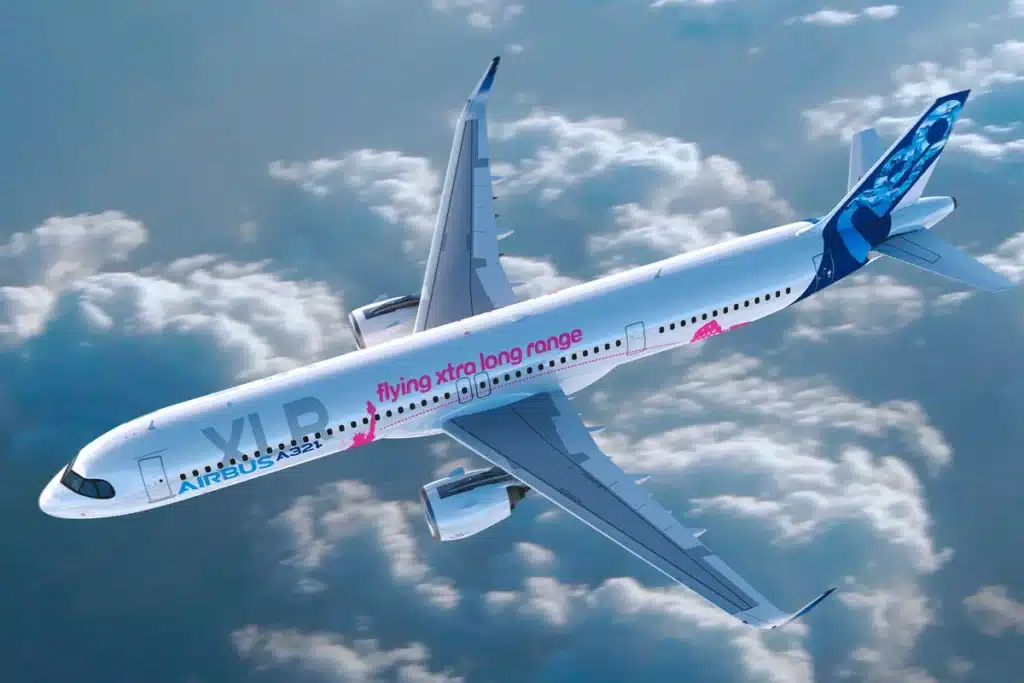
The question dominates aviation discussions. The nuanced answer: partial replacement on specific routes, not wholesale substitution.
Where Replacement Happens
Secondary transatlantic routes see the most immediate replacement. Routes like New York-Edinburgh, Montreal-Toulouse, or potential Boston-Manchester don’t need widebody capacity.
Airlines previously operated these routes seasonally with 757s or 767s (both now retired). The XLR fills that capability gap with modern efficiency.
Intra-Asia medium-haul routes from India, China, or Southeast Asia to Middle East and Europe also fit XLR economics. Routes currently using aging A330-200s may downgauge.
Transcontinental US routes face pressure. American, United, and others operate widebodies on transcon routes. XLRs offer comparable premium products at lower operating costs.
Where Replacement Fails
Major city pairs generate enough demand to fill widebodies profitably. No airline replaces 787s on London-New York with A321XLRs.
The math doesn’t work when routes consistently carry 300+ passengers daily. Operating multiple XLR frequencies costs more than single widebody flight.
Cargo-dependent routes need widebody belly space. Airlines earn substantial revenue from freight on long-haul flights. XLRs carry minimal cargo compared to 787s or 777s.
Premium-focused routes require large business class cabins. Widebodies accommodate 40-60 business seats. XLRs max out at 20-24 premium seats due to fuselage width.
The Real Impact: Market Expansion
The XLR’s true impact isn’t replacement but market creation. It enables routes that never existed as direct service.
These new routes don’t replace widebody operations. They create incremental traffic that previously connected through hubs or didn’t travel at all.
Think expansion, not substitution. The XLR grows the total long-haul network rather than cannibalize existing widebody routes.
Economic Impact for Airlines
The A321XLR delivers measurable economic benefits beyond just range capability. These advantages drive airline orders.
Fuel Efficiency Advantage
The XLR burns 30% less fuel per seat than previous-generation aircraft on comparable routes. This matters enormously given fuel represents 25-30% of airline operating costs.
Lower fuel burn also means reduced carbon emissions, helping airlines meet sustainability targets without sacrificing connectivity.
Airlines operating sustainable aviation fuel benefit from lower fuel consumption reducing SAF costs.
Fleet Simplification Benefits
Common type rating with other A320 family aircraft reduces training costs. Pilots qualified on A320s can fly A321XLRs without extensive retraining. Implementing effective fleet management maximizes these pilot commonality benefits.
Maintenance commonality with the broader A320neo family reduces spare parts inventory and maintenance complexity. Airlines operating A320neos add XLRs with minimal infrastructure changes.
This simplification delivers significant cost savings compared to adding new aircraft types requiring separate pilot pools and maintenance programs.
Lower Capital Costs
A321XLRs cost $140-150 million list price, versus $240-280 million for 787s and $250-300 million for A330neos (actual prices vary with discounts and configuration). Professional aircraft appraisal services help determine accurate market values.
Lower capital requirements mean airlines can acquire more aircraft for the same investment, increasing network coverage and frequency. Effective aircraft leasing strategies further optimize fleet costs.
Revenue Management Advantages
Right-sizing aircraft to demand optimizes load factors and yields. Flying full 180-seat XLR generates more revenue than half-full 250-seat widebody.
Higher frequencies with smaller aircraft also enable better yield management. Business travelers pay premiums for convenient departure times enabled by multiple daily flights.
Passenger Experience Considerations
The A321XLR’s economics impress airlines. But passengers face narrowbody realities on 8+ hour flights.
Single-Aisle Cabin Constraints
One aisle creates bottlenecks during boarding, deplaning, and meal service. On full flights, accessing lavatories requires navigating queues and disrupting seated passengers.
Eight-hour flights on single-aisle aircraft feel more confined than widebody equivalents. Psychological factors matter beyond pure seat dimensions.
Lavatory Limitations
Most A321XLRs feature four to five lavatories for 180-200 passengers. That’s one lavatory per 36-50 passengers.
Compare to widebodies offering one lavatory per 25-35 passengers. Longer queues and reduced availability frustrate passengers on long flights.
Business Class Configurations
Premium cabins on XLRs typically feature 12-20 lie-flat seats. American’s 20-seat Flagship Suite and Air Canada’s 14-seat business class represent typical configurations.
These match regional widebody business class size. The seats themselves offer full-flat beds comparable to widebody products.
However, cabin width limits personal space. Single-aisle business class feels more intimate than widebody equivalents, which some prefer while others find constraining.
Cargo and Baggage Limitations
Narrowbody cargo holds accommodate fewer checked bags and less freight. On heavily booked flights, airlines may restrict baggage allowances more than widebody operations. Understanding air cargo documentation requirements helps with freight operations.
Business travelers with multiple bags might find XLR restrictions more limiting than widebody alternatives.
Weather and Turbulence
Narrowbodies experience more noticeable turbulence than widebodies due to lower wing loading and smaller mass. Long overwater flights can feel rougher on XLRs.
This doesn’t affect safety but impacts passenger comfort perception on long sectors.
What This Means for the Future of Long-Haul Travel
The A321XLR represents broader trends reshaping aviation beyond a single aircraft program.
Rise of Point-to-Point Long-Haul
Traditional hub-and-spoke networks lose ground to direct connections. Secondary cities gain nonstop service without routing through major hubs.
This benefits passengers through shorter total travel time and eliminates connection risks. It pressures major hubs as more traffic bypasses them.
Network Fragmentation
Long-haul connectivity spreads across more city pairs with lower frequencies. Instead of 10 daily flights between major hubs, see 50 routes with 1-2 daily flights as airlines expand networks with right-sized aircraft.
This creates more options for travelers but potentially reduces schedule flexibility on individual routes.
Sustainability Through Right-Sizing
Fuel efficiency per seat improves by matching aircraft size to actual demand. Flying full 180-seat aircraft beats flying half-full 300-seat widebodies.
The industry moves toward optimizing load factors rather than maximizing aircraft size. This reduces overall fuel consumption and emissions.
Secondary Airport Development
Smaller airports gain long-haul service previously concentrated at major hubs. Edinburgh, Palma de Mallorca, and similar cities receive transatlantic flights.
This stimulates economic development in secondary markets and relieves congestion at overcrowded major airports.
Low-Cost Long-Haul Expansion
Low-cost carriers like Wizz Air use XLRs for ultra-low-cost long-haul service. The aircraft’s efficiency enables profitability at low fares.
Expect more leisure-focused long-haul routes operated by LCCs challenging traditional full-service carriers.
More Long-Range Narrowbodies Coming
The XLR’s success encourages Boeing and other manufacturers to develop competing products. The concept validates market demand for efficient long-range narrowbodies. Analyzing emerging airline route patterns shows how these aircraft reshape networks.
Future developments may extend range further or offer cargo-specific variants. The long-range narrowbody category becomes permanent, not experimental. IATA forecasts continued growth in this aircraft segment through 2030. Industry publication FlightGlobal tracks aircraft orders and deliveries comprehensively.
Frequently Asked Questions
How far can the A321XLR fly?
The A321XLR flies 4,700 nautical miles (8,700 kilometers / 5,400 statute miles). This enables transatlantic crossings like New York to most European cities, transcontinental US flights, Middle East to Europe routes, and intra-Asia long-haul connections. The range depends on payload, winds, and fuel reserves, but 4,700 nautical miles represents the aircraft’s design capability with full passenger loads.
When will airlines receive the A321XLR?
Airlines began receiving A321XLRs in October 2024 with deliveries continuing through 2026 and beyond. Iberia received the first aircraft October 30, 2024. American Airlines received deliveries starting October 2025. Air Canada, Qantas, Aer Lingus, and others received aircraft in late 2025 and early 2026. The production backlog extends into the 2030s with over 500 orders placed. Most carriers with orders will receive aircraft between 2026 and 2031.
Is the A321XLR replacing the 787?
No, the A321XLR is not replacing the 787 on most routes. The XLR serves thin long-haul markets with 100-180 daily passengers where 787s would fly half-empty. High-demand routes with 250+ daily passengers still require 787 capacity. The XLR creates new routes that didn’t exist as nonstops rather than directly replacing widebody operations. Think market expansion not substitution.
Which airlines ordered the A321XLR?
Over 500 A321XLRs have been ordered by airlines worldwide. Major customers include American Airlines (50), Air Canada (30), United Airlines, Iberia, Aer Lingus, IndiGo, Qantas (16 international configuration), JetBlue, Wizz Air, and dozens of others. Airlines from North America, Europe, Asia, Middle East, and Australia have placed orders. The customer list continues growing as airlines recognize the aircraft’s capabilities.
Is the A321XLR good for transatlantic flights?
Yes, for thin transatlantic routes with moderate passenger demand. The XLR’s 4,700 nautical mile range comfortably covers most North America to Europe city pairs. Airlines use it for secondary cities (New York-Edinburgh, Montreal-Palma de Mallorca) where widebodies aren’t economical. Business class features lie-flat seats matching widebody products. However, high-volume routes like New York-London still justify widebody operations for capacity. The XLR excels on secondary transatlantic markets.
How many seats does the A321XLR have?
Typically 182-206 seats depending on configuration. Airlines choose layouts based on route strategy. American Airlines: 155 seats (20 business, 12 premium economy, 123 economy). Air Canada: 182 seats (14 business, 168 economy). Qantas domestic: 197 seats. Maximum single-class configuration could reach 240+ seats but long-haul operators prioritize premium cabins. Most airlines install 12-24 business class seats for long-haul routes.
What’s the difference between A321neo and A321XLR?
The XLR adds 700 nautical miles range through a permanent Rear Centre Tank, strengthened landing gear, and higher takeoff weight. A321neo flies 4,000 nautical miles; A321XLR flies 4,700 nautical miles. The XLR weighs 101 tonnes maximum versus 97 tonnes for standard neo variants. Both share engines, cockpit, and type rating. The XLR costs more but enables routes the standard neo cannot reach with full passenger loads.
Will the A321XLR be profitable for airlines?
Yes, on appropriately selected routes with 100-180 daily passengers. The XLR’s lower trip cost versus widebodies enables profitability on thin long-haul markets. Airlines must avoid routes requiring widebody capacity or cargo space. Success depends on matching aircraft to demand – flying full 180-seat XLR beats half-full 250-seat widebody. Proper route selection and yield management determine profitability outcomes.
Conclusion
The Airbus A321XLR entered service in late 2024 and by 2026 operates with multiple airlines worldwide. It’s not hype – it’s reshaping how airlines approach long-haul routes.
The aircraft’s 4,700 nautical mile range and narrowbody economics enable direct service on thin markets that never justified widebodies. Secondary transatlantic routes, intra-Asia medium-haul, and transcontinental operations benefit most.
Will it replace widebodies? Partially, on specific routes. Major trunk routes with 300+ daily passengers still need widebody capacity. But secondary markets, seasonal routes, and new market tests shift to XLRs.
The real story isn’t replacement – it’s expansion. The XLR creates routes that didn’t exist, connecting secondary cities directly instead of through major hubs. This fragments networks while increasing total connectivity.
Passengers gain more direct flight options but experience narrowbody cabins on 8-hour flights. Trade-offs include single-aisle constraints versus convenient nonstop service.
Airlines benefit from lower trip costs, fleet commonality, and route flexibility. The aircraft enables network experimentation with reduced financial risk.
Early operators – Iberia, American Airlines, Air Canada, Qantas, Aer Lingus – demonstrate diverse strategic approaches. Some focus on secondary transatlantic routes, others on premium transcontinental service, still others on Asia-Pacific expansion.
By 2026, the A321XLR proves its economics work in practice, not just theory. Airlines continue ordering with 500+ outstanding orders representing years of production.
The XLR validates long-range narrowbodies as a permanent aircraft category. Expect competing products and further range extensions as manufacturers recognize market demand.
Looking ahead, the A321XLR represents aviation’s move toward right-sized aircraft matched precisely to demand. Efficiency gains through optimal capacity rather than maximum size.
The aircraft won’t replace widebodies on major routes. But it creates dozens of new city pairs that enhance global connectivity while improving airline economics and environmental performance.
That’s the A321XLR’s legacy: expanding the network rather than consolidating it, connecting more cities with efficient, sustainable aircraft. Understanding aircraft manufacturer strategies shows how the XLR fits broader industry evolution.
The revolution isn’t about replacing existing flights. It’s about making new flights possible. That changes everything.