
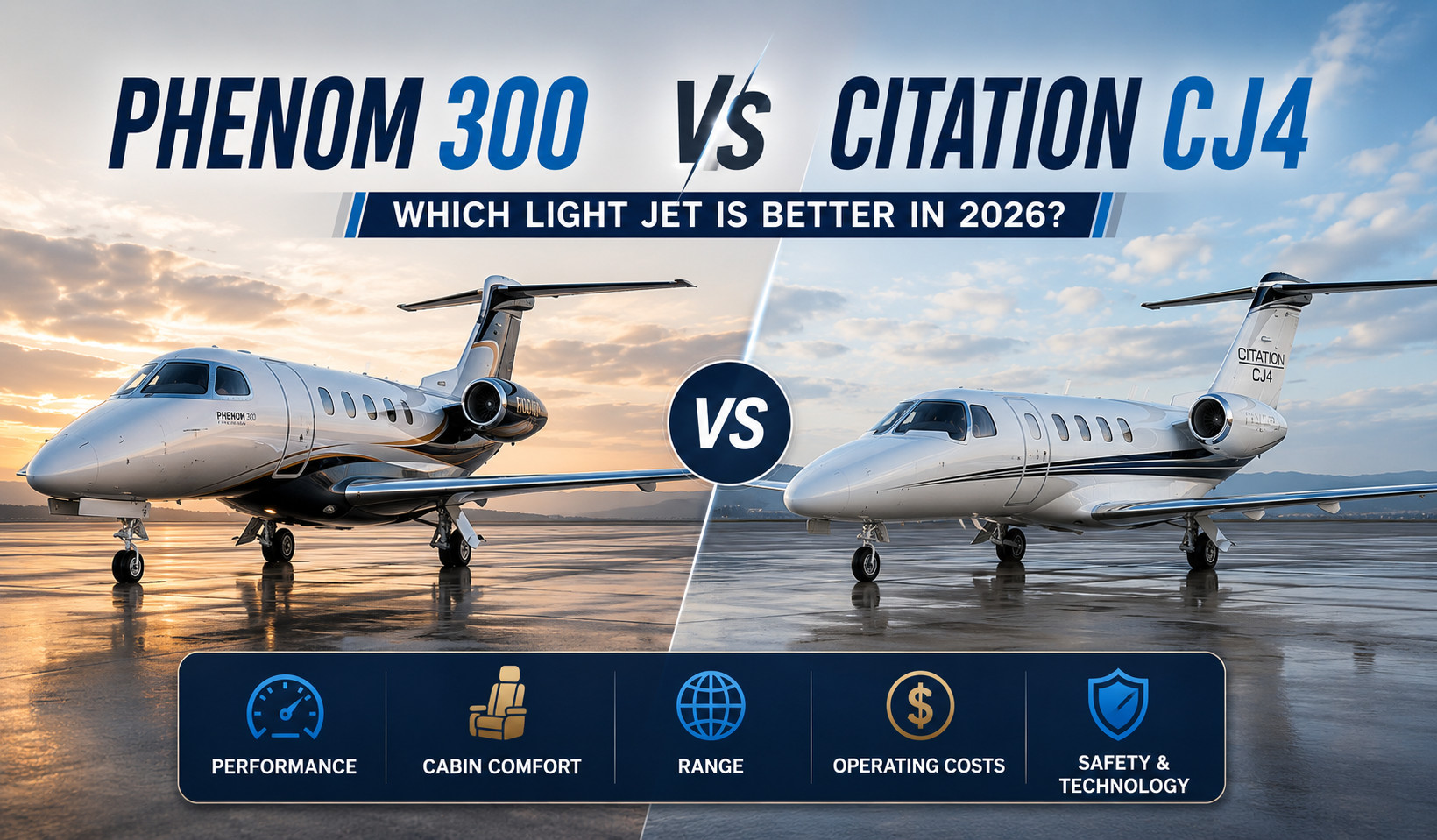
The light jet market represents one of the most competitive segments in private aviation, where efficiency, versatility, and operating economics determine success. Two aircraft dominate this category: the Embraer Phenom 300 and the Cessna Citation CJ4, each representing decades of engineering refinement and market leadership.
The Phenom 300 vs Citation CJ4 debate drives countless conversations among corporate flight departments, fractional ownership providers, and owner-pilots evaluating their next aircraft acquisition. Both jets deliver exceptional capability for regional missions while maintaining operating costs that justify private aviation over commercial alternatives for frequent travelers.
Understanding which aircraft better serves specific missions requires examining cabin comfort, operational flexibility, pilot experience, and the total cost of ownership that ultimately determines whether private jet operation remains economically viable. This comparison provides the practical analysis buyers need to make informed decisions in this highly competitive market segment.

Meet The Two Best-Selling Light Jets
The Embraer Phenom 300 has dominated light jet sales for over a decade, consistently ranking as the most-delivered business jet globally. Embraer designed the Phenom 300 specifically to outperform competitors through superior cabin space, range, and operating economics while maintaining single-pilot certification.
The Phenom 300E (Enhanced) represents the latest iteration, incorporating improved avionics, increased range, and refined cabin technology. The aircraft appeals to corporate flight departments requiring reliable regional connectivity, charter operators prioritizing passenger comfort, and owner-pilots seeking the most capable single-pilot jet available.
Typical Phenom 300 buyers include:
- Corporate flight departments operating regional route networks
- Charter operators serving business travelers on 2-3 hour routes
- Owner-pilots upgrading from turboprops or smaller jets
- Fractional ownership providers like NetJets and Flexjet
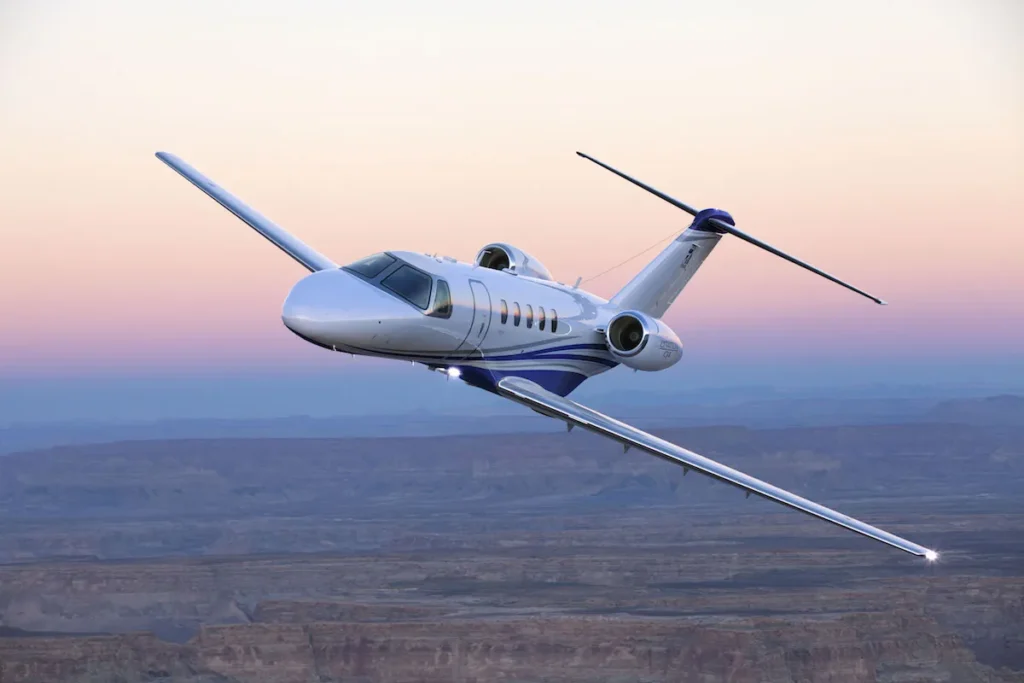
The Cessna Citation CJ4 builds on Cessna’s legendary Citation brand, representing the largest aircraft in the CJ (CitationJet) family. Textron Aviation positions the CJ4 as the ultimate balance between light jet economics and midsize jet capability, appealing to operators requiring maximum cabin volume in the light jet category.
The Citation CJ4 Gen2 incorporates Garmin G3000 avionics, autothrottle, and refined cabin appointments while maintaining the operational simplicity and reliability Citation customers expect. The aircraft serves similar markets as the Phenom 300 but attracts buyers prioritizing cabin size and Cessna’s established support network.
Both aircraft achieve single-pilot certification, critical for owner-operators and smaller corporate flight departments managing pilot costs. This capability separates light jets from larger aircraft requiring two-pilot crews, fundamentally changing operational economics and flexibility for smaller operators.
Cabin Comfort And Passenger Experience
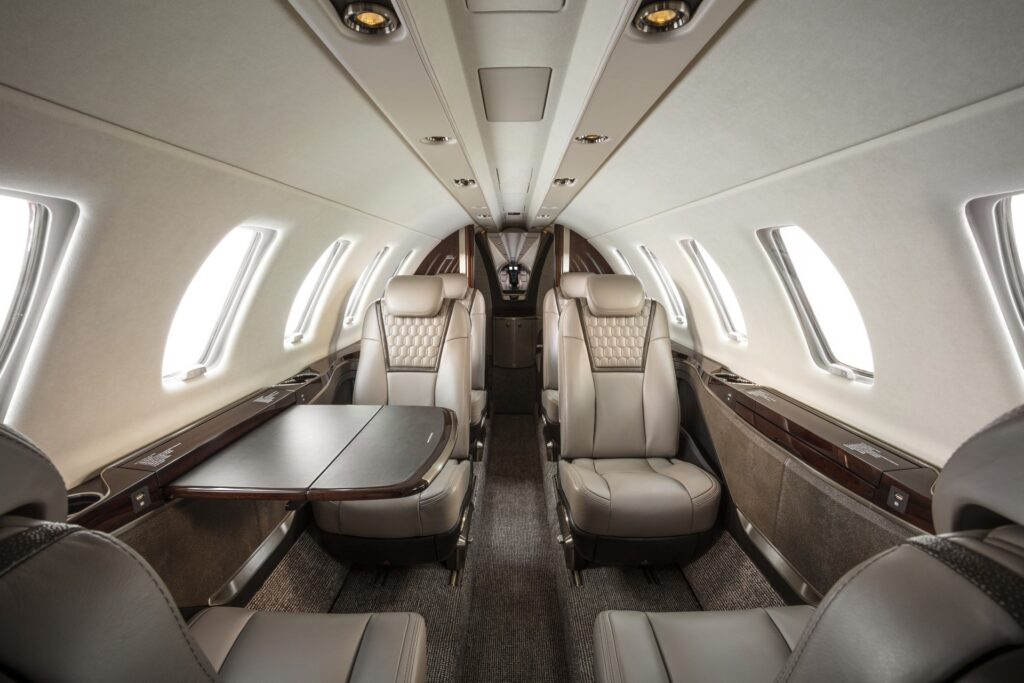
Cabin dimensions define passenger experience in light jets where every inch matters. The Citation CJ4 claims advantage through pure volume, offering the largest cabin in the light jet segment.
CJ4 cabin dimensions:
- Length: 21.1 feet
- Width: 4.9 feet
- Height: 4.8 feet
- Passenger capacity: Up to 10
- Baggage: 77 cubic feet
The extra width enables true side-by-side seating without shoulder overlap, critical for passenger comfort on 2-3 hour flights. The flat floor throughout eliminates awkward step-ups, while the cabin height accommodates most passengers standing comfortably in the aisle.
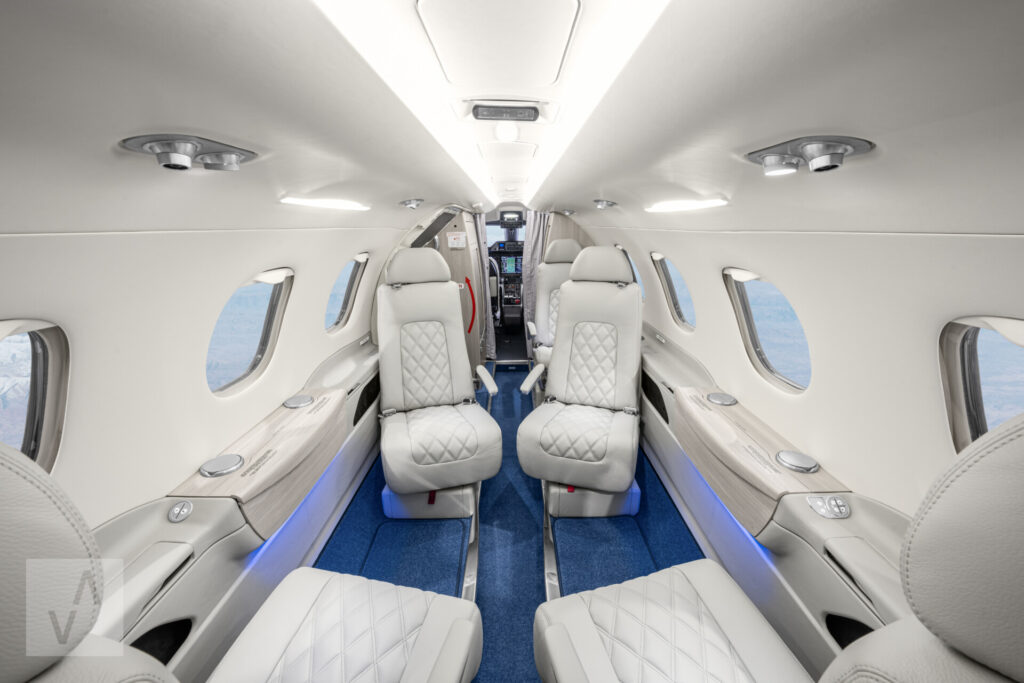
The Phenom 300 offers slightly smaller cabin dimensions but achieves remarkable efficiency through intelligent design and superior noise reduction.
Phenom 300E cabin dimensions:
- Length: 17.2 feet
- Width: 5.1 feet
- Height: 4.9 feet
- Passenger capacity: Up to 11
- Baggage: 84 cubic feet (with optional enclosed lavatory)
The Phenom 300’s extra width (5.1 feet versus 4.9 feet) enables comfortable seating despite shorter cabin length. Embraer’s interior design creates a more spacious feeling through large oval windows, modern lighting, and strategic placement of galleys and lavatories.
Noise levels favor the Phenom 300, which incorporates advanced soundproofing creating the quietest cabin in its class. This advantage becomes noticeable on longer flights where lower ambient noise reduces passenger fatigue. The CJ4 remains acceptably quiet but operates at slightly higher decibel levels typical of the Citation family.
Both aircraft feature modern cabin management systems, high-speed Wi-Fi connectivity, and comfortable seating accommodating business work or relaxation. The choice between them often depends on whether buyers prioritize total cabin length (CJ4) or cabin width and noise reduction (Phenom 300).
Which Jet Has Better Range?
Range capability determines mission flexibility for light jets operating regional route networks. The Phenom 300E achieves maximum range of 2,270 nautical miles with four passengers, enabling nonstop connectivity across most regional routes.
Typical Phenom 300E missions include:
- New York to Miami: 1,090 nm — easily accomplished with reserves
- London to Athens: 1,500 nm — comfortable nonstop
- Los Angeles to Phoenix: 370 nm — short regional hop
- Dubai to Muscat: 200 nm — frequent Middle East route
The Citation CJ4 achieves 2,165 nautical miles maximum range with four passengers, slightly less than the Phenom 300E but sufficient for most light jet missions. The 105-nautical-mile difference rarely impacts practical operations, as both aircraft cover typical regional routes comfortably.
For transcontinental or longer international missions, both aircraft require fuel stops. A Los Angeles to New York flight (2,450 nm) necessitates a stop in both aircraft, though the Phenom 300E’s extra range provides slightly more routing flexibility and better reserves for weather diversions.
Buyers evaluating range should consider typical mission profiles rather than maximum published numbers. For operations within 1,500 nautical miles – covering most corporate and charter missions – both aircraft perform equivalently with adequate reserves for weather and alternate airports.
Speed And Performance Comparison
The Phenom 300E holds clear speed advantages. Maximum cruise speed reaches 521 mph (453 knots), making it one of the fastest light jets flying. High-speed cruise of Mach 0.80 enables time-sensitive missions where every minute matters.
This speed translates to meaningful differences on typical routes. A New York to Miami flight (1,090 nm) takes approximately 2.4 hours in the Phenom 300E versus 2.7 hours in the CJ4 — saving roughly 20 minutes. Over hundreds of flights annually, these minutes compound significantly for time-conscious operators.
The Citation CJ4 cruises at 451 mph (392 knots), respectable though noticeably slower than the Phenom 300E. Cessna prioritizes fuel efficiency over absolute speed, arguing that most regional missions benefit more from lower operating costs than marginal time savings.
Runway performance slightly favors the CJ4. Its balanced field length of approximately 3,410 feet enables operations from shorter runways serving smaller communities. The Phenom 300E requires roughly 3,290 feet, providing marginally better performance enabling access to additional airports.
Climb performance favors the Phenom 300E, reaching 45,000 feet maximum altitude faster and with better single-engine climb capability. This advantage proves valuable operating in mountainous terrain or congested airspace where rapid climb to cruise altitude improves efficiency and safety.
Cockpit Technology And Pilot Experience
Both aircraft employ Garmin avionics suites, though different generations and configurations create distinct pilot experiences.
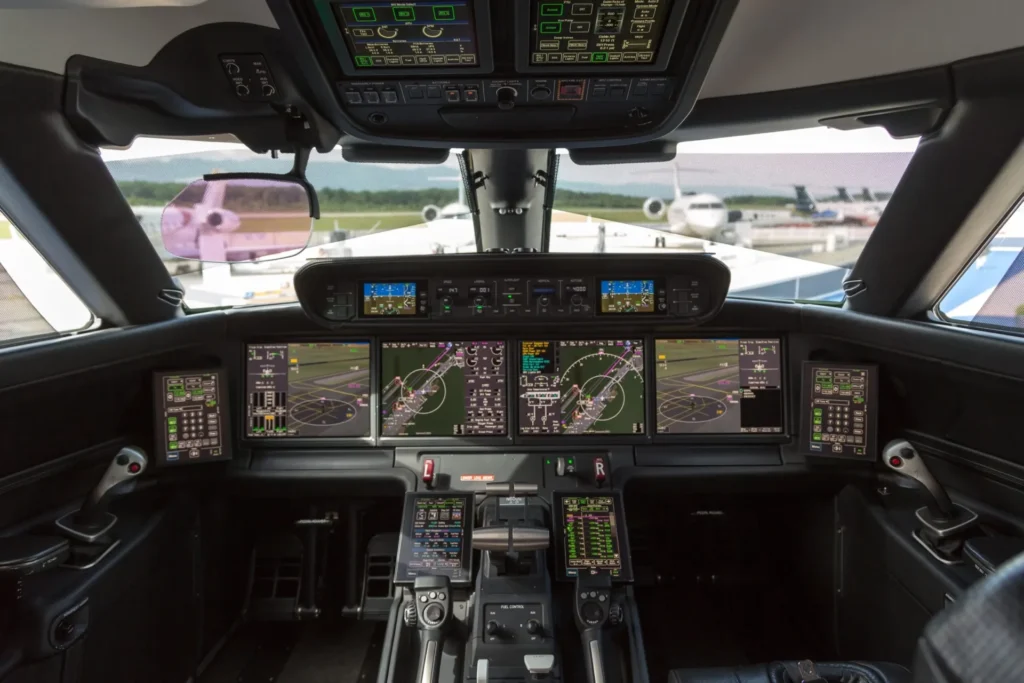
The Phenom 300E features the Prodigy Touch flight deck based on Garmin G3000 technology with touchscreen interfaces throughout. The system includes:
- Touchscreen primary flight displays: Intuitive interaction reducing pilot workload
- Synthetic vision technology: Enhanced situational awareness
- Flight stream connectivity: Wireless flight plan transfer from mobile devices
- Advanced autothrottle: Reducing pilot workload during all flight phases
Embraer emphasizes owner-pilot friendliness, creating systems that reduce workload while maintaining safety margins. The Phenom 300E remains one of the most popular jets for owner-operators transitioning from smaller aircraft.
The Citation CJ4 Gen2 employs Garmin G3000 avionics with autothrottle and enhanced capabilities:
- Dual touchscreen controllers: Managing flight planning and systems
- Integrated autothrottle: Standard equipment reducing single-pilot workload
- Synthetic vision: Standard across all displays
- Garmin Emergency Autoland: Available as option for ultimate safety backup
Cessna’s reputation for pilot-friendly aircraft extends to the CJ4, which many pilots consider among the easiest jets to fly. The Citation handling characteristics prioritize stability and forgiveness, particularly valuable for owner-pilots managing both flying and business responsibilities.
Both aircraft achieve single-pilot type rating certification, though most corporate and charter operations employ two pilots for safety and workload distribution. The single-pilot capability matters most for owner-operators and smaller flight departments managing crew costs.
Operating Costs And Ownership
Operating economics determine long-term ownership viability in the light jet segment where buyers carefully evaluate total cost of operation. The Phenom 300E typically operates at approximately $2,000-2,400 per flight hour including fuel, maintenance, crew, insurance, and variable costs.
Phenom 300E operating advantages include:
- Lower fuel burn: ~200 gallons per hour at typical cruise
- Competitive maintenance reserves
- Strong global support network through Embraer Service Centers
- Excellent parts availability worldwide
The Citation CJ4 operates at approximately $2,100-2,500 per flight hour, slightly higher than the Phenom 300E primarily due to fuel consumption. However, Cessna’s extensive service network and decades of Citation support infrastructure provide operational advantages offsetting marginally higher costs.
CJ4 ownership benefits include:
- Largest Citation service network globally
- Extensive parts availability through Textron Aviation
- Strong resale values due to Citation brand recognition
- Proven reliability reducing unexpected maintenance costs
Annual fixed costs for both aircraft run approximately $400,000-600,000 including crew salaries, insurance, hangar, and fixed maintenance regardless of utilization. These costs make light jet ownership practical primarily for operators flying 200+ hours annually where per-hour costs justify private aviation over commercial alternatives.
Buyers should consider tax implications and ownership structures optimizing depreciation benefits and operational deductions. Both aircraft qualify for Section 179 expensing and bonus depreciation under current U.S. tax law, significantly reducing effective acquisition costs for qualifying business use.
Which Aircraft Is More Comfortable For Passengers?
Passenger comfort extends beyond cabin dimensions to environmental systems, pressurization, and overall ride quality. The Citation CJ4 maintains cabin altitude of approximately 8,000 feet when cruising at 45,000 feet — typical for light jets though not exceptional.
The Phenom 300E achieves similar cabin altitude performance while excelling in noise reduction. Embraer’s acoustic engineering creates noticeably quieter cabins enabling comfortable conversation without raised voices, particularly valued on longer 2-3 hour flights where noise fatigue affects passengers.
Both aircraft incorporate modern climate control systems maintaining comfortable temperatures throughout cabins. Neither suffers the hot-spots or inadequate cooling common in older light jets, creating pleasant environments regardless of external conditions or ground operations.
Ride quality proves comparable in both aircraft, with modern wing designs and flight control systems dampening turbulence effectively. The CJ4’s slightly larger wing area provides marginally smoother rides in moderate turbulence, while the Phenom 300E’s speed enables climbing above weather more quickly.
Why The Phenom 300 Became So Popular
The Phenom 300’s market dominance stems from successfully combining speed, range, cabin comfort, and operating economics in one platform. No competitor matches this complete package, explaining why the aircraft consistently leads global business jet deliveries.
Key success factors include:
- Speed advantage: Fastest light jet enables time-sensitive missions
- Cabin design: Widest cabin with superior noise reduction
- Range capability: Longest range in class enables more nonstop routes
- Operating costs: Competitive economics justify private aviation
- Owner-pilot friendly: Single-pilot certification with excellent handling
The Phenom 300 also benefits from Embraer’s commercial aviation heritage, incorporating airline-level engineering and quality control into business aircraft. This approach creates reliability and durability exceeding competitors built purely from general aviation foundations.
Why Many Pilots Still Love The Citation CJ4
The Citation CJ4 maintains strong market presence despite the Phenom 300’s sales dominance, appealing to buyers prioritizing proven reliability, extensive support networks, and the largest light jet cabin available.
Citation CJ4 advantages include:
- Cabin size: Longest cabin in light jet category
- Citation heritage: Decades of proven reliability and support
- Service network: Most extensive global support infrastructure
- Handling characteristics: Stable, forgiving flight characteristics
- Resale values: Strong residual values from Citation brand strength
Many pilots appreciate Citation handling characteristics emphasizing stability over performance, particularly valuable for owner-operators or part-time pilots managing business and flying responsibilities simultaneously. The CJ4 forgives minor errors and provides ample warning before approaching performance limits.

Technical Specifications Compared
| Specification | Phenom 300E | Citation CJ4 |
|---|---|---|
| Maximum Range | 2,270 nautical miles | 2,165 nautical miles |
| Max Cruise Speed | 521 mph (453 knots) | 451 mph (392 knots) |
| Passenger Capacity | Up to 11 | Up to 10 |
| Cabin Length | 17.2 feet | 21.1 feet |
| Cabin Width | 5.1 feet | 4.9 feet |
| Cabin Height | 4.9 feet | 4.8 feet |
| Baggage Capacity | 84 cubic feet | 77 cubic feet |
| Engines | Pratt & Whitney PW535E1 (2x) | Williams FJ44-4A (2x) |
| Max Altitude | 45,000 feet | 45,000 feet |
| Hourly Operating Cost | $2,000-2,400 | $2,100-2,500 |
| Base Price | ~$10.5M | ~$10.7M |
Category Winners Analysis
| Category | Winner | Why |
|---|---|---|
| Speed | Phenom 300E | 521 mph vs 451 mph — significant advantage |
| Range | Phenom 300E | 2,270 nm vs 2,165 nm |
| Cabin Length | CJ4 | 21.1 ft vs 17.2 ft — notably longer |
| Cabin Width | Phenom 300E | 5.1 ft vs 4.9 ft |
| Noise Level | Phenom 300E | Quietest cabin in light jet class |
| Operating Cost | Phenom 300E | $200-300/hr lower typical costs |
| Service Network | CJ4 | Most extensive Citation support globally |
| Resale Value | CJ4 | Citation brand strength maintains values |
Phenom 300 vs Citation CJ4 — Which Jet Should Buyers Choose?
No universal winner emerges from the Phenom 300 vs Citation CJ4 comparison because these aircraft serve similar missions through different design philosophies prioritizing distinct operational characteristics.
Choose the Phenom 300E if speed, range, operating costs, and cabin quietness matter most. The aircraft delivers the best overall performance package in the light jet category, explaining its consistent sales leadership. The Phenom 300E suits:
- Time-sensitive corporate operations prioritizing speed
- Charter operators maximizing daily utilization
- Owner-pilots wanting the fastest, most capable single-pilot jet
- Operators in regions with limited service infrastructure (global Embraer network covers most markets)
Choose the Citation CJ4 if maximum cabin length, proven Citation reliability, and extensive service network drive your decision. The CJ4 provides the most spacious light jet cabin while maintaining Citation's legendary support infrastructure. The CJ4 suits:
- Operators prioritizing passenger comfort over speed
- Buyers valuing decades of proven Citation reliability
- Operations in North America benefiting from extensive Citation service centers
- Pilots appreciating stable, forgiving handling characteristics
Both aircraft cost similarly (~$10.5-10.7M), operate comparably ($2,000-2,500/hour), and deliver exceptional value in the light jet segment. The choice depends on whether buyers prioritize performance and economics (Phenom 300E) or cabin space and support infrastructure (CJ4).
For buyers comparing these aircraft against competitors like the ultra-luxury jets or ultra-long-range models, remember that light jets serve fundamentally different missions. The Phenom 300 and CJ4 excel at regional connectivity where operating economics justify private aviation, while larger jets target transcontinental and international operations requiring greater range and cabin space.
Frequently Asked Questions
Which Is Faster, Phenom 300 Or Citation CJ4?
The Phenom 300E is significantly faster, achieving maximum cruise speed of 521 mph (453 knots) compared to the Citation CJ4's 451 mph (392 knots). This 70 mph advantage translates to approximately 20 minutes saved on a typical New York to Miami route (1,090 nm). The speed difference compounds over multiple flights, making the Phenom 300E more attractive for time-sensitive operations and charter services maximizing daily aircraft utilization. However, the CJ4's slightly slower cruise speed contributes to better fuel efficiency, partially offsetting the time advantage through lower operating costs on missions where speed matters less than economics.
How Much Does A Phenom 300 Cost?
The Embraer Phenom 300E lists at approximately $10.5 million base price for new aircraft. However, actual acquisition costs including avionics options, custom interior configurations, and paint schemes typically range $11-12 million for fully equipped aircraft. Pre-owned Phenom 300 aircraft (earlier generation) range $5-9 million depending on age, total time, and equipment. Hourly operating costs run approximately $2,000-2,400 including fuel, maintenance reserves, crew, insurance, and variable expenses. Annual fixed costs add $400,000-600,000 for insurance, hangar, crew salaries, and scheduled maintenance regardless of utilization. Financing and ownership structures significantly impact effective costs.
How Much Does A Citation CJ4 Cost?
The Cessna Citation CJ4 Gen2 lists at approximately $10.7 million base price for new aircraft, with fully equipped configurations reaching $11.5-12.5 million including typical options and custom interiors. Pre-owned CJ4 aircraft range $6-10 million depending on year, total time, and avionics configuration. Hourly operating costs run approximately $2,100-2,500 including all variable expenses. Annual fixed costs total $450,000-650,000 covering insurance, hangar, crew, and maintenance. The CJ4 historically maintains strong resale values due to Citation brand recognition and extensive service network, offsetting slightly higher operating costs through better residual values. Buyers should evaluate total cost of ownership over intended holding period rather than focusing solely on acquisition price.
Which Light Jet Is Best For Owner Pilots?
Both the Phenom 300E and Citation CJ4 excel as owner-pilot aircraft, each offering single-pilot type rating certification and manageable workload characteristics. The Phenom 300E appeals to owner-pilots prioritizing performance, featuring faster cruise speeds, longer range, and more modern Prodigy Touch avionics with intuitive touchscreen interfaces. The Citation CJ4 attracts owner-pilots valuing stable, forgiving handling characteristics and the extensive Citation training network offering recurrent training at numerous locations globally. For less-experienced owner-pilots transitioning from smaller aircraft, the CJ4's stability and Citation heritage provide confidence. For experienced pilots wanting maximum performance, the Phenom 300E delivers superior speed and efficiency. Both aircraft require significant training commitment and proficiency maintenance appropriate for jet aircraft operations.
Two Exceptional Choices In The Light Jet Market
The Phenom 300 vs Citation CJ4 comparison reveals two outstanding aircraft dominating the light jet segment through different approaches to the same mission requirements. The Phenom 300E leads through superior speed, range, operating economics, and market-leading sales numbers proving its appeal to corporate, charter, and owner-pilot operators worldwide.
The Citation CJ4 maintains strong market presence through proven reliability, the largest light jet cabin, and Cessna's unmatched service infrastructure. Both aircraft deliver exceptional value in the $10-11 million acquisition range, providing regional connectivity that justifies private aviation for frequent travelers and corporate operations.
Neither aircraft represents a universally superior choice because buyers prioritize different operational characteristics. Speed and economics favor the Phenom 300E. Cabin space and support network favor the CJ4. Both aircraft achieve what matters most: delivering reliable, comfortable, efficient regional connectivity that enables businesses and individuals to maximize productivity and maintain schedules impossible through commercial aviation.
The light jet market benefits from this intense competition. Both manufacturers continuously improve their products, forcing innovation that elevates the entire category. Whether choosing Embraer or Cessna, buyers access proven aircraft representing decades of engineering refinement and operational experience serving thousands of satisfied owners worldwide.