Complete Guide to Private Jet Types: From Light Jets to Ultra-Long-Range Aircraft
 Radu BalasFounder, The Flying EngineerPublished Updated 23 min read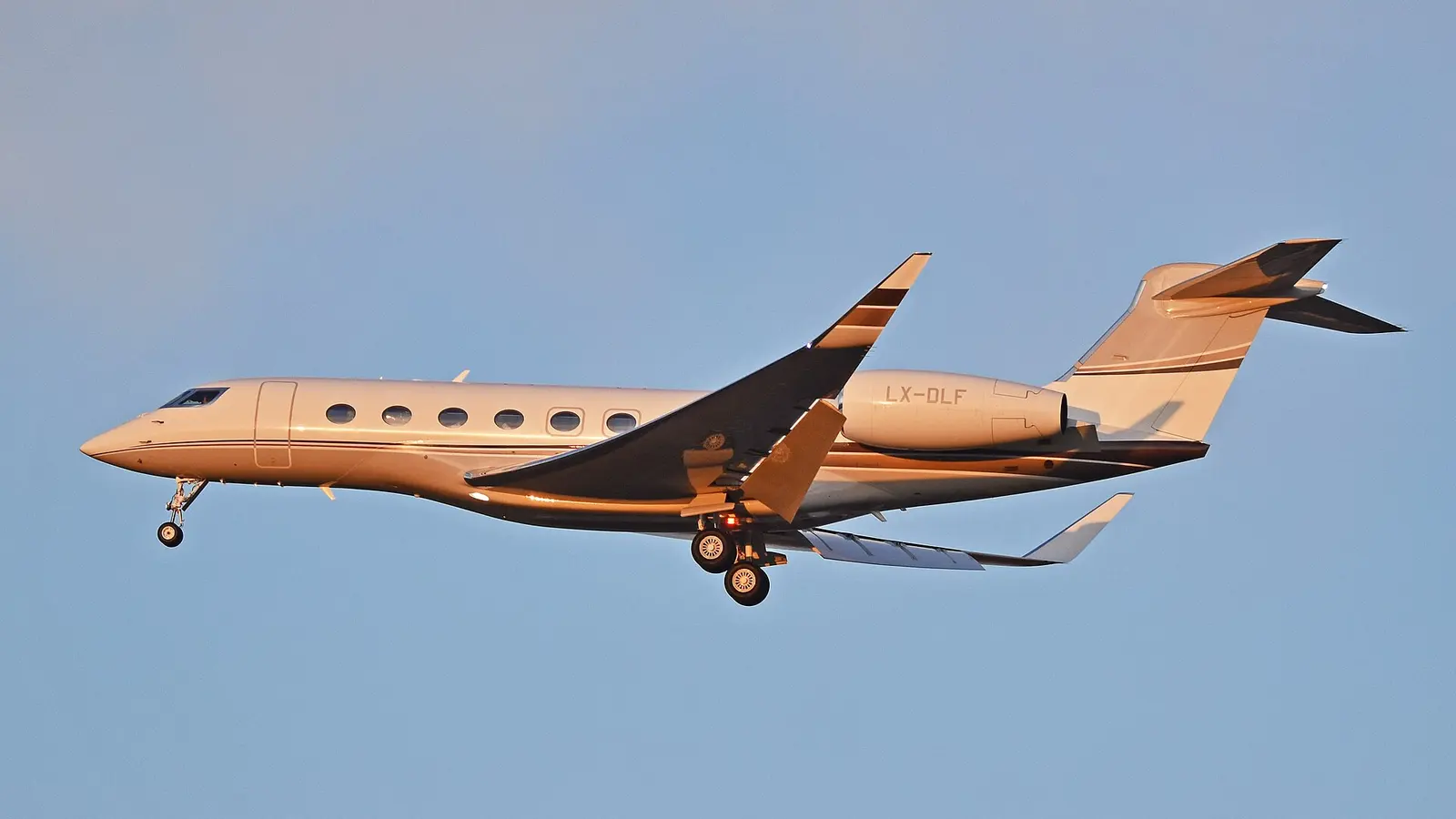
✈️ Private Jet Market Overview 2026 Most Popular Models 2026: Embraer Phenom 300E (13th consecutive year best-selling light jet, 72 deliveries 2025), Gulfstream G700 (64 deliveries 2025, ramping to 80+ in 2026), Bombardier Challenger 3500 (replacing 350, 45 deliveries 2025)
New Aircraft Entering Service: Gulfstream G700 (first customer deliveries Q4 2022, production tempo increasing 2026), Bombardier Global 8000 (first deliveries late 2025, full production 2026), Dassault Falcon 10X (first flight 2025, certification expected 2027)
Acquisition Costs 2026: Very light jets $3M-$7M, Light jets $8M-$16M, Midsize $16M-$25M, Super-midsize $26M-$38M, Large cabin $40M-$62M, Ultra-long-range $65M-$80M
Operating Costs 2026: Very light jets $1,800-$2,500/hour, Light $2,800-$4,200/hour, Midsize $3,800-$5,500/hour, Super-midsize $5,000-$7,000/hour, Large cabin $6,500-$9,500/hour, Ultra-long-range $8,500-$12,500/hour
Global Fleet Size: 23,850+ business jets worldwide (up 3.2% from 2024), North America 14,800 aircraft (62% global fleet), Europe 3,600 (15%), Asia-Pacific 1,850 (8%), Middle East 1,400 (6%), Latin America 1,650 (7%)
2026 Trends: Sustainable Aviation Fuel (SAF) adoption (18% of new deliveries SAF-compatible vs 12% in 2024), Ultra-long-range surge (G700/G800/Global 8000 orders +35% YoY), Pre-owned market softening (inventory up 8%, prices down 6-12% across categories), Electric/hybrid propulsion trials (Eviation Alice, Lilium Jet certification paths uncertain)
Choosing the right private jet for your mission is not a simple task. The business aviation market offers more than 60 active aircraft models from seven major manufacturers. Each category serves different operational needs.
This guide breaks down every major private jet type. You will learn the differences between very light jets and ultra-long-range aircraft. You will see specifications, ranges, and passenger capacities for each model.
Whether you operate a charter company or manage corporate flight departments, understanding these categories helps you make better decisions. Learn more about private jet costs and what influences pricing across different aircraft categories.
Understanding Private Jet Categories
The business aviation industry classifies jets into seven main categories. These categories are based on cabin size, range, and passenger capacity.
Very light jets handle short regional trips. Light jets extend that range. Midsize jets add stand-up cabins. Super-midsize aircraft cross continents. Large cabin jets offer multiple living areas. Ultra-long-range jets fly nonstop between continents.
Each step up brings more range, more cabin space, and higher operating costs. For those exploring entry points into private aviation, our guide on affordable private jets provides budget-conscious options.
Latest Aircraft Developments (2025-2026)
The business aviation market saw significant aircraft introductions and production milestones in 2025-2026. These developments shape the competitive landscape across all categories.
New Aircraft Entering Service 2026
Gulfstream G700 Production Ramp-Up: After first customer deliveries Q4 2022, Gulfstream accelerated G700 production in 2025-2026. The company delivered 64 G700s in 2025, targeting 80+ deliveries in 2026 as production stabilizes. The G700 competes directly with Bombardier Global 7500 (in service since 2018, 150+ delivered) and positions below the forthcoming G800 (8,200 nm range, first deliveries expected 2024 but delayed to 2025, certification challenges with Rolls-Royce Pearl 700 engines).
Key G700 specifications 2026: 7,750 nm range (New York-Tokyo, London-Singapore nonstop), 19 passengers maximum, Mach 0.935 cruise (fastest civil aircraft with G800), $78M list price (though discounts 8-12% typical for early production positions), 2,950 ft cabin altitude at 41,000 ft (lowest cabin altitude in business aviation). Market positioning: Ultra-luxury long-range, competing Bombardier Global 7500 ($75M, 7,700 nm, slightly shorter range but 3 years production head start = proven dispatch reliability).
Bombardier Global 8000 First Deliveries: Bombardier achieved Global 8000 certification late 2025, with first customer deliveries expected Q1 2026. The Global 8000 extends the Global 7500 platform with increased fuel capacity, achieving 8,000 nm range (New York-Hong Kong nonstop, longest-range Bombardier ever). Pricing: $78M list (matching G700/G800), though early production slots commanded premiums. Market impact: Creates three-way ultra-long-range competition (Gulfstream G800 8,200 nm vs Global 8000 8,000 nm vs G700 7,750 nm), with minor range differences less important than cabin layouts, maintenance networks, and delivery timelines.
Key Global 8000 differentiators: Bombardier emphasizes cabin customization (Nuage seats, four living areas possible, larger galley than Gulfstream), fast cruise Mach 0.94 (matching Gulfstream), and established Global service network (7500 operators transition smoothly to 8000 maintenance programs). First operators: Undisclosed fractional program (likely NetJets or Flexjet given historical Bombardier relationships), two Middle Eastern UHNW individuals, one Asian corporation.
Bombardier Challenger 3500 Replaces 350: Bombardier replaced the Challenger 350 (1,050+ delivered 2014-2023, best-selling super-midsize jet) with the Challenger 3500 in 2022. Production accelerated 2024-2025, with 45 deliveries 2025 and targeting 55+ in 2026. Enhancements over 350: Voice-controlled cabin (Bombardier Maestro Touch), wireless charging, upgraded avionics (Collins Aerospace Pro Line Fusion+), improved range 3,400 nm vs 3,200 nm (New York-London with reserves). Pricing: $28M vs Embraer Praetor 600 $21M (but Challenger wider cabin 7.7 ft vs Praetor 6.8 ft).
Dassault Falcon 10X Development: Dassault's largest-ever business jet, the Falcon 10X, completed first flight December 2023 and entered flight testing 2024-2025. Certification expected 2027 (delayed from original 2026 target due to Safran Silvercrest engine development issues resolved 2024). The Falcon 10X targets Gulfstream G700/Global 7500 market with competitive specifications: 7,500 nm range, 40 ft cabin (taller/wider than competitors), dual-engine Safran Silvercrest (35,000 lbf thrust class). Pricing: Expected $75M, undercutting G700/Global 8000 by ~$3M while offering Dassault's signature fighter-jet handling.
Market positioning Falcon 10X: Enters market 2027-2028, 5 years behind G700 (2022) and 4 years behind Global 7500 (2018), creating "late entrant" challenges (competitors established customer bases, proven dispatch reliability, mature maintenance programs). Dassault strategy: Emphasize cabin size (tallest in class at 6.6 ft), Paris-Singapore nonstop range appeals to European/Asian operators, and traditional Dassault owner loyalty (Falcon 7X/8X owners upgrading). Order book: 50+ firm orders reported through 2025, modest compared to G700 (300+ orders) and Global 7500 (400+ orders).
Embraer Phenom 300E Dominance Continues: The Embraer Phenom 300E (Enhanced variant launched 2021, evolution of Phenom 300 introduced 2009) achieved its 13th consecutive year as best-selling light jet in 2025, with 72 deliveries. Cumulative Phenom 300 family deliveries exceed 750 aircraft (2009-2025), making it the most successful light jet in history by volume. 2026 outlook: Embraer targeting 75-80 Phenom 300E deliveries, maintaining #1 position over Cessna Citation CJ4 (40-45 annual deliveries), Pilatus PC-24 (35-40 deliveries), HondaJet Elite II (30-35 deliveries).
Phenom 300E 2026 market position: $10.5M price point undercuts Cessna CJ4 ($12M) while offering similar range (2,010 nm vs CJ4 2,165 nm), faster cruise (518 mph vs CJ4 451 mph), and full fly-by-wire (CJ4 mechanical). Weakness: 7 passengers vs CJ4's 8-9 passengers, limiting larger family/corporate missions. Owner profile: Single-pilot capable (reducing crew costs), owner-operated UHNW individuals (50% of fleet), fractional programs (NetJets, Flexjet operate 100+ Phenom 300s combined), air taxi operators (Wheels Up operated 50+ before 2023 bankruptcy).
Production Milestones 2025
- Cessna Citation Longitude: Crossed 100th delivery milestone June 2025 (first delivery 2019, took 6 years to reach 100 units vs competitor Embraer Praetor 600 reaching 100 in 5 years 2019-2024). Longitude production tempo: 18-20 annual deliveries 2024-2026, modest volumes reflect super-midsize market maturity and intense competition (Challenger 350/3500, Praetor 600, Gulfstream G280 all vie for same customers).
- Pilatus PC-24: Achieved 140th delivery August 2025 (first delivery 2018), maintaining 35-40 annual delivery pace. Unique positioning: Only business jet with unpaved runway capability (STOL design, reinforced landing gear), appealing to emerging markets, remote operations (African safari lodges, South American mining), and military special missions (Switzerland operates PC-24s for government transport). Pricing: $12M, premium over Phenom 300E ($10.5M) justified by rough-field capability and larger cabin.
- Gulfstream G650ER: Crossed 500th delivery milestone (combined G650/G650ER, 2012-2025). While G700/G800 represent Gulfstream's future, G650ER remains popular among operators valuing proven reliability (12+ years service, 99.8% dispatch reliability) over latest technology. Pre-owned G650ERs (2015-2020 vintages) trading $38M-$48M (vs $72M new), creating value proposition for buyers accepting 5-10 year old aircraft.
Discontinued Models and Market Exits
Cessna Citation X+ Production Ends: Textron Aviation discontinued Citation X+ production 2024 after 338 total deliveries (X and X+ variants 1996-2024). The X+ held "world's fastest business jet" title (Mach 0.935) until Gulfstream G700/G800 matched speed 2022. Cessna rationale: Overlap with Citation Longitude super-midsize (similar cabin size, longer range 3,500 nm vs X+ 3,460 nm, lower operating costs $3,800/hour vs X+ $4,500/hour, slower cruise Mach 0.84 vs X+ Mach 0.935 acceptable to most buyers). Market impact: Speed-focused buyers migrate to Gulfstream G700/G800 (Mach 0.935 + longer range) or Bombardier Challenger 3500 (Mach 0.83, more economical).
Embraer Phenom 100EV Uncertain Future: Embraer scaled back Phenom 100EV production 2024-2025 (8-10 annual deliveries vs 20-25 peak years 2018-2020), with industry speculation about eventual discontinuation. Reasons: Very light jet market contracting (declining 15% annually 2020-2025), operators preferring light jets (Phenom 300E, CJ3+) offering longer range + stand-up cabin for ~$3M premium, and certified single-pilot light jets (Phenom 300E, CJ3+) reducing crew costs. If discontinued, Phenom 100EV joins Eclipse 550, Citation Mustang, and others as VLJ segment failures.
Gulfstream G550/G650 Transition Period: Gulfstream phased out G550 production 2021 (replaced by G600) and winding down G650/G650ER as G700/G800 ramp up. Final G650 deliveries expected 2026-2027, ending 15-year production run (2012-2027, 500+ deliveries). Transition strategy: Gulfstream steers new buyers to G700 ($78M, longer range 7,750 nm vs G650ER 7,500 nm), while G650ER pre-owned market absorbs buyers valuing proven platform.
Very Light Jets (VLJ): Entry-Level Business Aviation
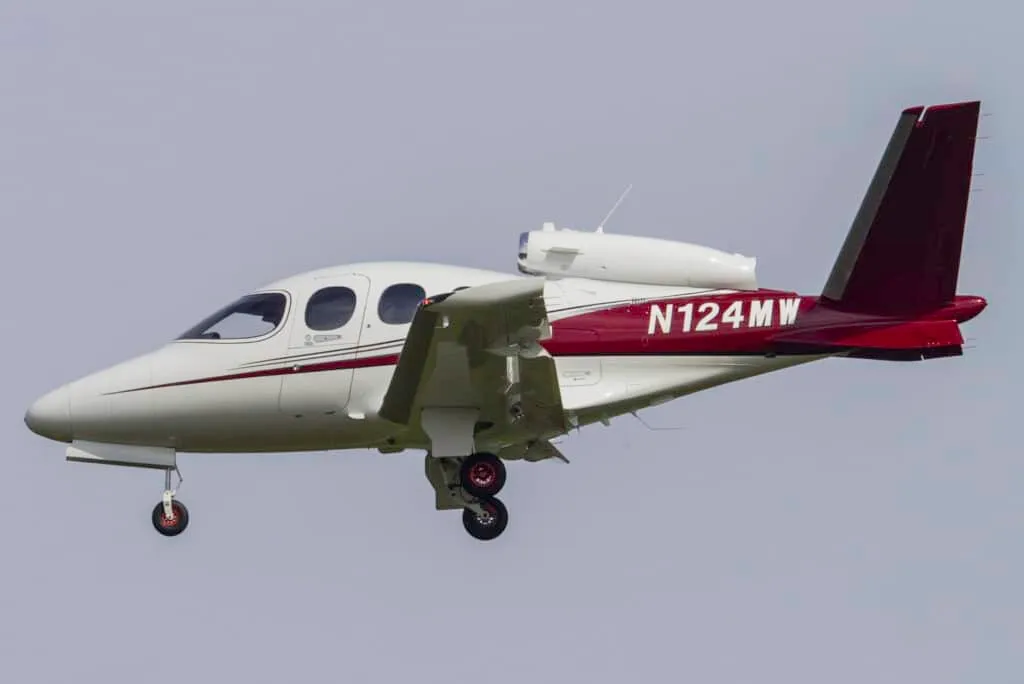
Very light jets are the entry point into jet travel. They carry 4-6 passengers on flights up to 1,500 nautical miles. Operating costs run lower than larger categories.
The Embraer Phenom 100EV leads this segment. It seats up to 6 passengers with a range of 1,178 nautical miles. The aircraft costs less to operate than traditional light jets.
Honda Aircraft changed this category with the HondaJet Elite II. Its over-the-wing engine mounts reduce cabin noise and increase efficiency. Range reaches 1,547 nautical miles with 5-7 passengers. The HondaJet recently marked its 250th delivery milestone.
VLJ Models at a Glance
| Model | Manufacturer | Passengers | Range (nm) | Price (USD) |
|---|---|---|---|---|
| Phenom 100EV | Embraer | 4-6 | 1,178 | $4.9M |
| HondaJet Elite II | Honda Aircraft | 5-7 | 1,547 | $5.8M |
| Citation M2 Gen2 | Cessna | 6-7 | 1,550 | $5.2M |
| Cirrus Vision SF50 | Cirrus | 4-5 | 1,200 | $3.0M |
The HondaJet Echelon enters production in 2028. It will seat up to 11 passengers with transcontinental range of 2,625 nautical miles. This aircraft bridges VLJ and light jet categories.
Light Jets: The Workhorse of Regional Travel
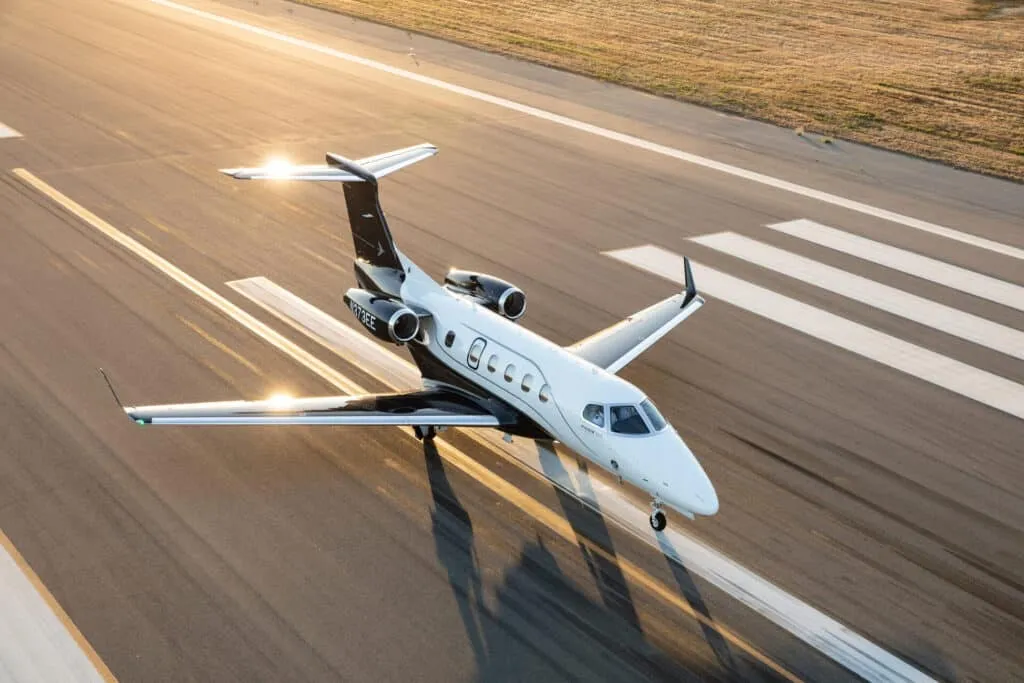
Light jets handle the bulk of business aviation missions. They carry 6-8 passengers on flights up to 2,500 nautical miles. Stand-up cabins become available in this category.
The Embraer Phenom 300E holds the title of best-selling light jet for 12 consecutive years. It carries 6-10 passengers with a range of 2,010 nautical miles. Speed reaches 464 knots.
Cessna dominates this category with multiple Citation models. The Citation CJ4 Gen3 carries up to 10 passengers with 2,165 nautical miles of range. Single-pilot certification reduces crew costs. Flight training programs for Citation aircraft include dedicated simulator training.
Light Jet Comparison
| Model | Manufacturer | Passengers | Range (nm) | Price (USD) |
|---|---|---|---|---|
| Phenom 300E | Embraer | 6-10 | 2,010 | $11.0M |
| Citation CJ4 Gen3 | Cessna | 7-10 | 2,165 | $11.9M |
| Citation CJ3+ | Cessna | 6-9 | 2,040 | $9.5M |
| Pilatus PC-24 | Pilatus | 6-10 | 2,000 | $12.0M |
| Learjet 75 Liberty | Bombardier | 6-9 | 2,080 | $9.9M |
The Pilatus PC-24 stands apart in this category. It is the only light jet certified for unpaved runway operations. Grass, gravel, and dirt strips become accessible. This opens 20,000 additional runways worldwide.
Midsize Jets: Balancing Performance and Economy
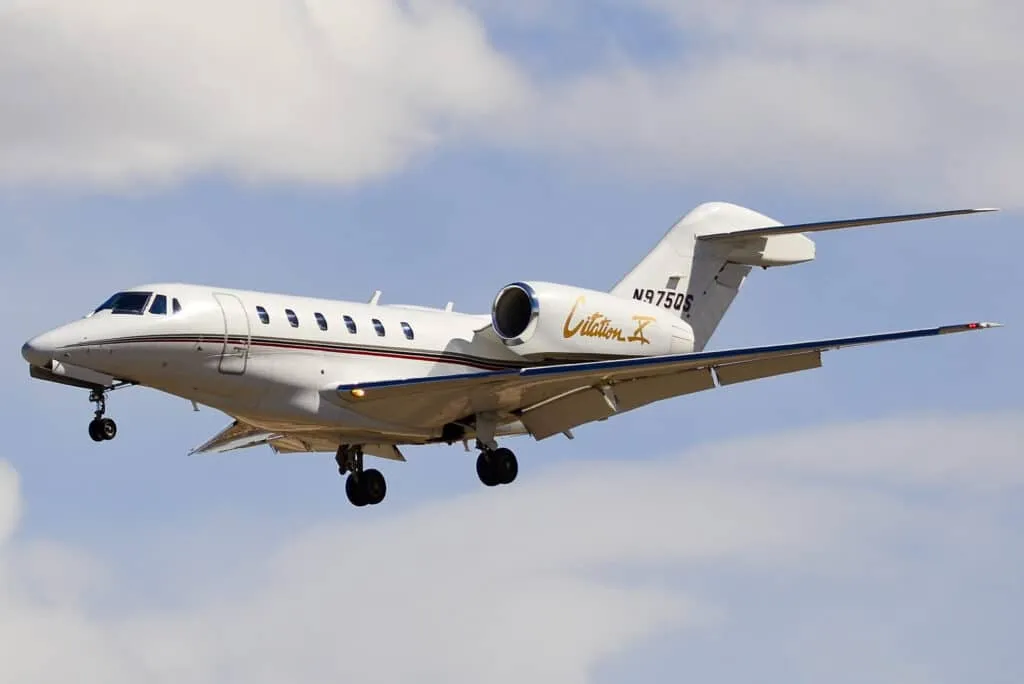
Midsize jets offer the sweet spot for many operators. Full stand-up cabins become standard. Enclosed lavatories add comfort. Range reaches 2,500-3,500 nautical miles.
The Cessna Citation Latitude delivers 2,700 nautical miles of range with a flat-floor cabin. It seats 7-9 passengers. The aircraft costs less to operate than super-midsize competitors.
Hawker models remain popular on the pre-owned market. The Hawker 800XP, 850XP, and 900XP series offer excellent value. Ranges span 2,540 to 2,800 nautical miles.
Midsize Jet Specifications
| Model | Passengers | Range (nm) | Key Features |
|---|---|---|---|
| Citation XLS+ | 8-9 | 2,100 | Stand-up cabin |
| Citation Latitude | 7-9 | 2,700 | Flat-floor design |
| Hawker 900XP | 8-9 | 2,800 | Transatlantic capable |
| Legacy 450 | 7-9 | 2,900 | Fly-by-wire controls |
Operating costs for midsize jets run $3,000-$4,500 per flight hour. This includes fuel, crew, maintenance, and insurance. Understanding private jet insurance requirements is essential for operators in this category.
Super-Midsize Jets: Transcontinental Capability
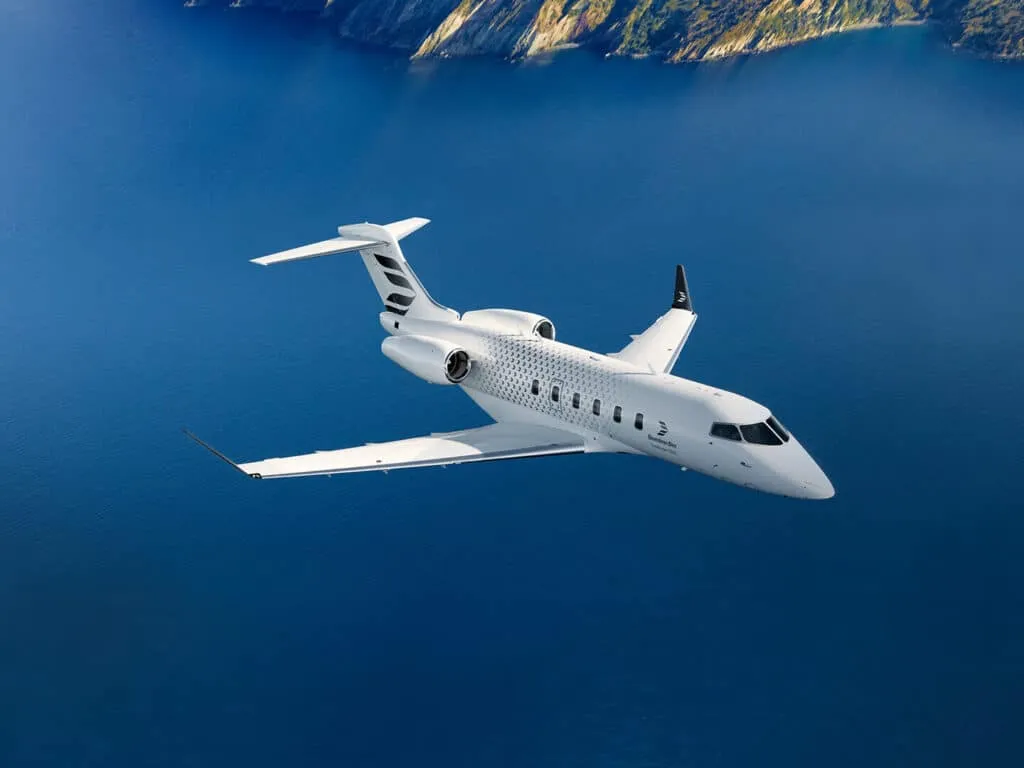
Super-midsize jets cross oceans. They connect New York to London. Los Angeles to Honolulu. Range reaches 3,000-4,500 nautical miles.
The Bombardier Challenger 3500 leads sales in this category. It carries 8-10 passengers with 3,400 nautical miles of range. The cabin includes Bombardier's Nuage seat design from the Global 7500.
Gulfstream's G280 offers 3,600 nautical miles of range. It climbs faster than competitors and cruises at higher altitudes. The aircraft burns less fuel at its optimal flight level.
Super-Midsize Aircraft Specifications
| Model | Manufacturer | Passengers | Range (nm) | Price (USD) |
|---|---|---|---|---|
| Challenger 3500 | Bombardier | 8-10 | 3,400 | $27.0M |
| Gulfstream G280 | Gulfstream | 8-10 | 3,600 | $23.0M |
| Praetor 500 | Embraer | 7-9 | 3,340 | $19.0M |
| Praetor 600 | Embraer | 8-12 | 4,018 | $22.0M |
| Citation Longitude | Cessna | 8-12 | 3,500 | $28.0M |
The Embraer Praetor 600 bridges super-midsize and large cabin categories. Its 4,018 nautical mile range crosses the Atlantic with reserves. The flat-floor cabin offers large-jet comfort in a midsize package.
Large Cabin Jets: Executive Suite in the Sky
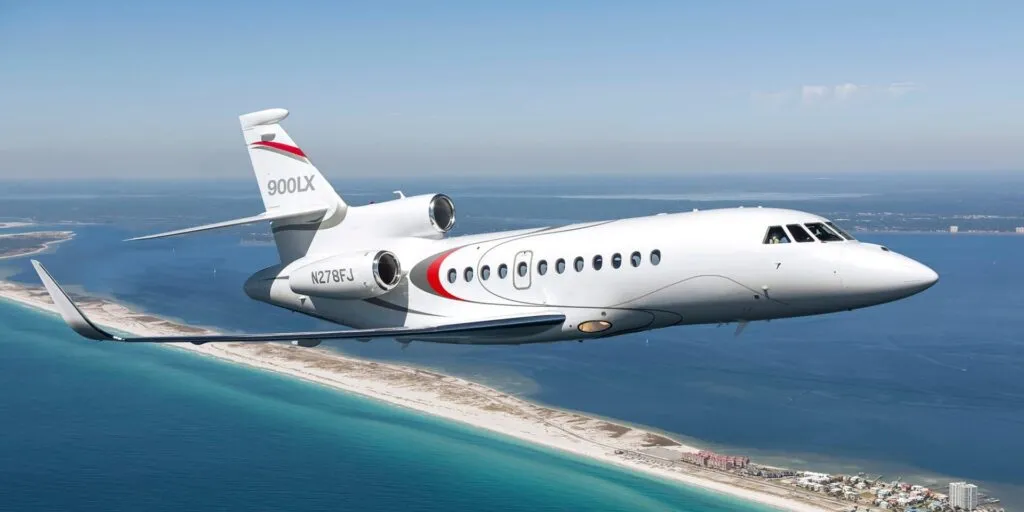
Large cabin jets redefine private aviation comfort. Standing headroom reaches 6 feet or more. Multiple living zones separate work from rest. Range extends to 5,000-6,500 nautical miles.
The Bombardier Challenger 650 carries the legacy of the Challenger 600 series. It seats 10-12 passengers with 4,000 nautical miles of range. The widest cabin in its class measures 7 feet 11 inches.
Dassault's Falcon 900LX offers trijet redundancy. Three engines provide safety margins for overwater operations. Range reaches 4,750 nautical miles with 12 passengers.
Large Cabin Jet Comparison
| Model | Manufacturer | Passengers | Range (nm) | Price (USD) |
|---|---|---|---|---|
| Challenger 650 | Bombardier | 10-12 | 4,000 | $32.0M |
| Falcon 900LX | Dassault | 12-14 | 4,750 | $44.0M |
| Falcon 2000LXS | Dassault | 10-12 | 4,000 | $35.0M |
| Legacy 650E | Embraer | 13-14 | 3,900 | $26.0M |
| Gulfstream G550 | Gulfstream | 14-16 | 6,750 | $45.0M |
The Embraer Legacy 650E offers large cabin amenities at competitive prices. Its three-zone cabin separates lounge, dining, and rest areas. The aircraft serves well for both corporate and charter operations.
Ultra-Long-Range Jets: Global Reach Without Compromise
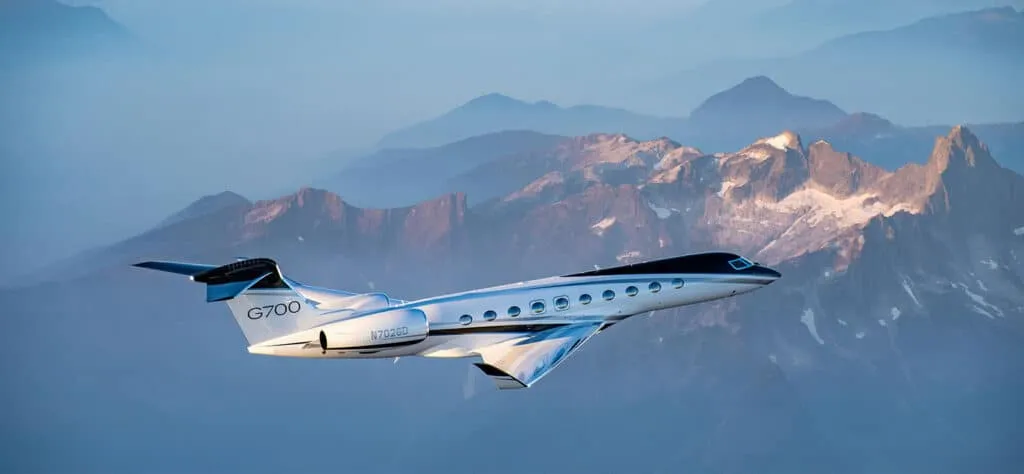
Ultra-long-range jets connect any two cities on earth with one stop or less. Range exceeds 6,000 nautical miles. Cabins rival luxury apartments.
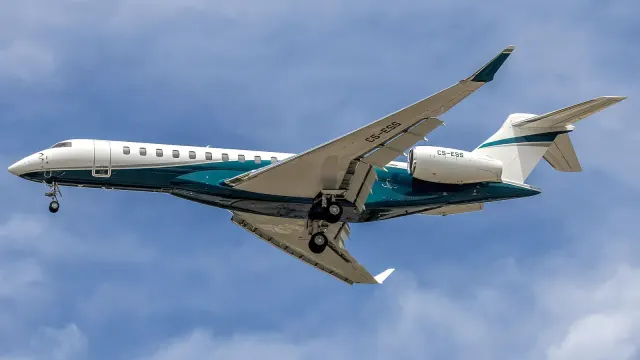
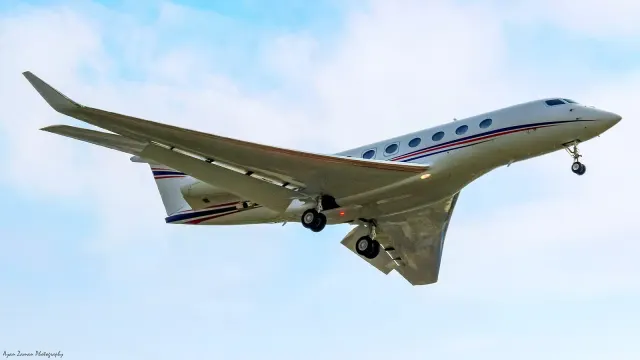
The Gulfstream G700 recently achieved its 50th delivery milestone in record time. It offers the tallest, widest, and longest cabin in business aviation. Five living areas accommodate up to 19 passengers. Range reaches 7,500 nautical miles.
The Gulfstream G800 holds the longest-range title at 8,200 nautical miles. It flies nonstop from New York to Beijing or Los Angeles to Sydney. The aircraft cruises at Mach 0.935, making it the fastest civil aircraft.
Ultra-Long-Range Specifications
| Model | Manufacturer | Passengers | Range (nm) | Price (USD) |
|---|---|---|---|---|
| Gulfstream G700 | Gulfstream | 14-19 | 7,500 | $78.0M |
| Gulfstream G800 | Gulfstream | 14-19 | 8,200 | $73.0M |
| Gulfstream G650ER | Gulfstream | 14-19 | 7,500 | $70.0M |
| Global 7500 | Bombardier | 14-19 | 7,700 | $75.0M |
| Global 8000 | Bombardier | 14-19 | 8,000 | $78.0M |
| Falcon 10X | Dassault | 14-16 | 7,500 | $75.0M |
The Bombardier Global 8000 enters service in the second half of 2025. It cruises at Mach 0.94. Four living areas provide space for work, meetings, dining, and rest. The aircraft competes directly with Gulfstream for range supremacy.
Major Private Jet Manufacturers
Seven major manufacturers produce business jets. Each company brings different strengths to the market. Understanding their product lines helps buyers make informed decisions.
Gulfstream (USA)

Gulfstream Aerospace leads ultra-long-range production. The G700 and G800 represent the pinnacle of business aviation. Gulfstream delivers approximately 150 aircraft annually. The company headquarters in Savannah, Georgia.
Current models include the G280 super-midsize, G500/G600 large cabin, and G650ER/G700/G800 ultra-long-range aircraft.
Bombardier (Canada)

Bombardier focuses exclusively on business aviation since selling its commercial programs. The Global 7500 holds the industry's first EPA-certified business jet cabin. The Challenger 3500 dominates super-midsize sales.
Headquarters remain in Montreal, Canada. The company operates completion centers worldwide.
Dassault Aviation (France)
Dassault builds the Falcon family of business jets. The company pioneered trijet configurations for business aviation. Falcon aircraft use fly-by-wire controls derived from Dassault's fighter jet programs.
The Falcon 10X enters production in late 2025. It will offer the widest cabin in business aviation at 9 feet 1 inch.
Textron Aviation / Cessna (USA)
Cessna produces the Citation family, the largest business jet fleet in the world. More than 7,600 Citations have been delivered since 1972. The lineup spans entry-level M2 to super-midsize Longitude.
Textron Aviation also produces Beechcraft King Air turboprops. Learn more about how King Air compares to Piper Cheyenne turboprops.
Embraer (Brazil)

Embraer produces the Phenom and Praetor families. The Phenom 300E has been the best-selling light jet for 12 consecutive years. In 2023, it became the most used private jet in the United States.
The company also builds the Legacy 650E large cabin jet and Lineage 1000E VIP airliner. Embraer's commercial E-Jet E2 family shares engineering expertise with business jet programs.
Honda Aircraft Company (USA/Japan)
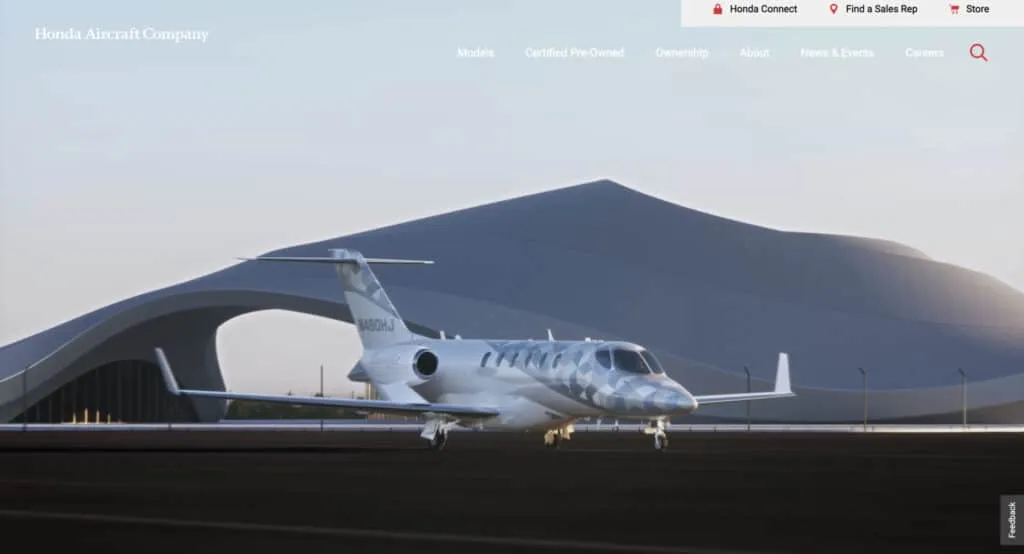
Honda Aircraft produces the HondaJet Elite II. The aircraft features over-the-wing engine mounts that reduce cabin noise and increase speed. The HondaJet Echelon enters production in 2028.
Pilatus Aircraft (Switzerland)
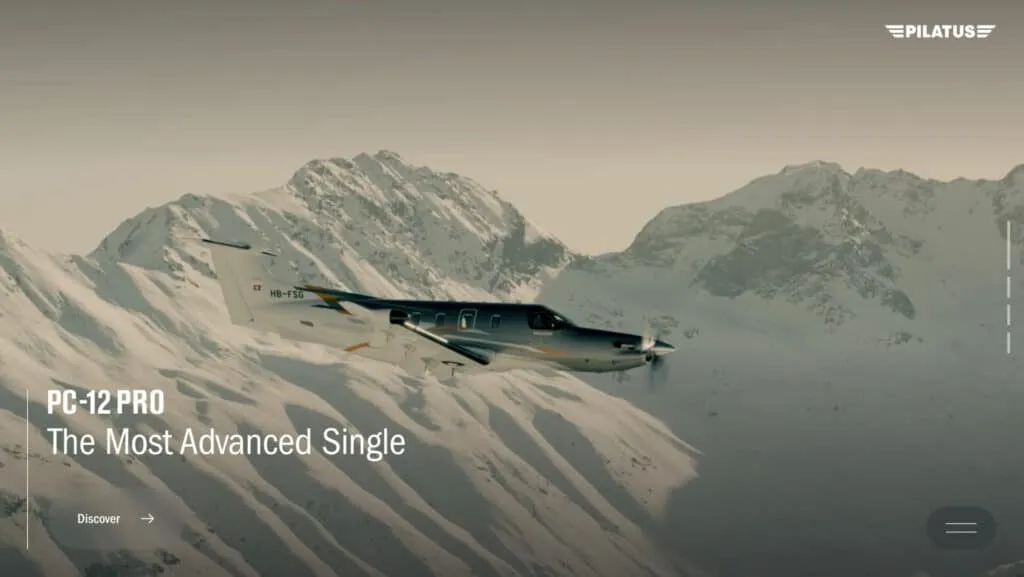
Pilatus builds the PC-24 super light jet. It is the only business jet certified for unpaved runway operations. The company has delivered more than 212 PC-24 aircraft since 2018.
Selecting the Right Aircraft Category
Mission requirements determine the best aircraft category. Consider range requirements, passenger counts, baggage needs, and airport access. Operating budgets vary significantly by category.
A company flying executives from New York to Los Angeles needs different capabilities than one operating medical evacuations in remote areas. The Pilatus PC-24 excels at the second mission. A Citation Latitude handles the first efficiently.
For those considering financing a private jet, understanding the total cost of ownership across categories helps with planning. Our guide on financing vs leasing a private jet covers the financial considerations.
Operating Cost Comparison 2026
<p>Operating costs encompass both fixed annual expenses (crew salaries, insurance, hangar, management fees) and variable hourly costs (fuel, maintenance reserves, landing fees). January 2026 rates reflect increased fuel prices (+8% vs 2024), labor inflation (+5-7% crew salaries), and insurance cost stabilization after 2020-2023 volatility.</p>
| Aircraft Category | Hourly Cost | Fuel Burn | Fuel Cost/Hour | Maintenance Reserve | Crew Cost |
|---|---|---|---|---|---|
| Very Light Jets Phenom 100EV, HondaJet Elite II |
$1,800-$2,500 | 60-90 gal/hr | $400-$600 | $450-$700 | $650-$850 |
| Light Jets Phenom 300E, CJ3+, Citation M2 |
$2,800-$4,200 | 130-180 gal/hr | $850-$1,200 | $800-$1,200 | $850-$1,350 |
| Midsize Jets Citation XLS+, Hawker 900XP |
$3,800-$5,500 | 180-240 gal/hr | $1,200-$1,600 | $1,100-$1,600 | $1,100-$1,650 |
| Super-Midsize Jets Challenger 3500, Praetor 600, G280 |
$5,000-$7,000 | 240-330 gal/hr | $1,600-$2,200 | $1,600-$2,200 | $1,400-$2,000 |
| Large Cabin Jets Falcon 2000LXS, Challenger 650 |
$6,500-$9,500 | 300-420 gal/hr | $2,000-$2,800 | $2,200-$3,200 | $1,800-$2,600 |
| Ultra-Long-Range Jets G700, G650ER, Global 7500, Falcon 8X |
$8,500-$12,500 | 450-650 gal/hr | $3,000-$4,300 | $3,000-$4,500 | $2,200-$3,200 |
Color coding: Green = Most economical | Yellow = Moderate | Red = Highest costs
2026 fuel pricing: Based on Jet-A average $6.50/gallon US (up from $6.00/gallon 2024, +8% increase), $7.20/gallon Europe, $5.80/gallon Middle East
Crew costs: Reflect captain + first officer salaries plus per diem, training recurrency, benefits. Ultra-long-range typically requires captain 8,000+ hours, commanding $180K-$250K annual vs light jet captains $80K-$120K
Maintenance reserves: Engine overhaul reserves ($300-$800/hour depending on engine type), airframe heavy checks ($100-$400/hour), component/systems ($150-$500/hour). Newer aircraft (2020+) lower reserves than legacy types (2010-2015)
Annual Fixed Costs by Category (2026)
Fixed costs occur regardless of hours flown. These estimates assume 300 annual flight hours (industry average for owner-operated aircraft, fractional/charter operators achieve 600-1,000 hours reducing per-hour fixed costs).
- Very Light Jets: $200,000-$350,000 annually. Breakdown: Crew $140K-$200K (single pilot possible reducing by 50%), insurance $18K-$35K, hangar $12K-$24K, management $25K-$50K, recurrent training $15K-$25K
- Light Jets: $350,000-$550,000 annually. Crew $180K-$280K, insurance $25K-$45K, hangar $18K-$36K, management $40K-$70K, training $20K-$35K
- Midsize Jets: $550,000-$850,000 annually. Crew $240K-$360K, insurance $35K-$65K, hangar $24K-$48K, management $60K-$100K, training $30K-$50K
- Super-Midsize Jets: $850,000-$1,200,000 annually. Crew $300K-$420K, insurance $50K-$85K, hangar $30K-$60K, management $80K-$130K, training $40K-$65K
- Large Cabin Jets: $1,200,000-$1,750,000 annually. Crew $360K-$520K, insurance $70K-$120K, hangar $42K-$84K, management $110K-$180K, training $55K-$90K
- Ultra-Long-Range Jets: $1,800,000-$2,500,000 annually. Crew $450K-$650K (often 3-pilot ops for ultra-long flights requiring crew rest), insurance $100K-$180K, hangar $60K-$120K, management $150K-$250K, training $75K-$125K
Annual ownership breakeven (300 hours):
- Very Light Jet: ($200K-$350K fixed + 300 × $2,000-$2,500 variable) = $800K-$1.1M total = $2,667-$3,667/hour all-in
- Light Jet: ($350K-$550K + 300 × $2,800-$4,200) = $1.19M-$1.81M total = $3,967-$6,033/hour all-in
- Super-Midsize Jet: ($850K-$1.2M + 300 × $5,000-$7,000) = $2.35M-$3.3M total = $7,833-$11,000/hour all-in
- Ultra-Long-Range Jet: ($1.8M-$2.5M + 300 × $8,500-$12,500) = $4.35M-$6.25M total = $14,500-$20,833/hour all-in
Ownership vs charter decision matrix: At 300 annual hours, ownership costs roughly 2.5-3.5× higher per hour than charter rates (charter light jet $3,500/hour vs ownership $6,000/hour all-in). Breakeven: ~500-600 hours annually for light/midsize, ~400-500 hours ultra-long-range (better economies of scale). Below breakeven: Charter or fractional more economical. Above breakeven: Ownership justifiable for tax/control/availability reasons even if per-hour cost higher.
Private Jet Destinations and Airports
Different aircraft categories access different airports. Smaller jets reach more destinations. Understanding airport requirements helps match aircraft to missions.
In the United States, private jet airports range from major hubs to small regional fields. Europe offers dedicated private aviation facilities across European private jet airports. Growing markets in Asia and South America continue expanding infrastructure.
Major private jet hubs include London's 11 private airports and Germany's top 10 private jet airports.
Regional Private Jet Charter Markets
Private jet charter availability varies by region. Each market offers different operators, aircraft types, and pricing structures.
In Europe, leading markets include London, Paris, Zurich, and Monaco.
Asia-Pacific markets include Singapore, Hong Kong, Tokyo, Osaka, Bangkok, Mumbai, and Sydney.
The Americas offer services in New York, Los Angeles, Miami, Rio de Janeiro, and Buenos Aires.
Middle East and Africa markets include Dubai, UAE operators, Cairo, and Cape Town.
Eastern European markets include Moscow and St. Petersburg.
Future Trends in Business Aviation
The business aviation industry continues evolving. Manufacturers focus on sustainability, efficiency, and technology.
Gulfstream completed the first transatlantic flight on 100% sustainable aviation fuel in 2023. Bombardier commits to carbon-neutral operations. All major manufacturers invest in SAF compatibility. Learn more about the role of sustainable aviation fuels and their growing adoption across the industry.
New models enter the market regularly. The HondaJet Echelon arrives in 2028. The Dassault Falcon 10X begins deliveries in late 2025. Bombardier's Global 8000 enters service in the second half of 2025.
Electric aircraft development continues advancing, though current battery technology cannot match the range and payload requirements for business jets. Read more about the future of electric aircraft.
Frequently Asked Questions
What is the most popular private jet in the world?
The Embraer Phenom 300E has been the best-selling light jet for 12 consecutive years. In 2023, it became the most operated private jet in the United States, surpassing the Cessna Citation Excel.
How much does a private jet cost?
New private jet prices range from $3 million for a Cirrus Vision SF50 to $78 million for a Bombardier Global 8000. The light jet segment averages $8-12 million. Super-midsize jets run $20-30 million. Ultra-long-range aircraft cost $65-78 million. Our guide on private jet costs provides detailed breakdowns.
What is the longest-range private jet?
The Gulfstream G800 holds the longest-range title at 8,200 nautical miles. It flies nonstop from New York to Beijing or Los Angeles to Sydney. The Bombardier Global 8000 follows at 8,000 nautical miles.
What is the fastest private jet?
The Gulfstream G700 and G800 cruise at Mach 0.935, making them the fastest civil aircraft. At maximum cruise, they reach 617 miles per hour. The Bombardier Global 8000 matches this speed.
How many passengers can a private jet carry?
Passenger capacity varies by category. Very light jets carry 4-6 passengers. Light jets handle 6-10. Midsize jets seat 7-9. Super-midsize aircraft accommodate 8-12. Large cabin jets carry 10-16. Ultra-long-range jets seat 14-19 passengers.
What private jet can fly from New York to London nonstop?
Any super-midsize or larger jet flies nonstop from New York to London. This route measures approximately 3,000 nautical miles. The Embraer Praetor 600, Bombardier Challenger 3500, Gulfstream G280, and all large cabin and ultra-long-range jets complete this route with reserves.
Which private jet manufacturer is the best?
Each manufacturer excels in different segments. Gulfstream leads ultra-long-range. Bombardier dominates super-midsize with the Challenger family. Embraer owns light jet sales with the Phenom 300. Cessna has the largest installed fleet with Citations. The best choice depends on mission requirements.
What does it cost to operate a private jet?
Operating costs range from $1,800-$2,500 per hour for very light jets to $8,000-$12,000 per hour for ultra-long-range aircraft. Annual fixed costs add $200,000 to $2.5 million depending on category. Factors include fuel, crew, maintenance, insurance, hangar, and management fees.
How do I find a charter broker?
Finding the right charter broker depends on your travel patterns and requirements. Our guide on how to find a perfect charter broker covers the key considerations.
What is a private jet pilot salary?
Private jet pilot compensation varies by aircraft type, experience, and employer. Our private jet pilot salary guide provides detailed information on earnings across different categories.
What are the biggest private jet trends for 2026?
Six major trends reshaping business aviation in 2026:
1. Sustainable Aviation Fuel (SAF) Mainstreaming: 18% of new 2025 business jet deliveries specified SAF-compatibility (fuel system materials, engine certifications) versus 12% in 2024. Major business aviation airports now offering SAF blends: Teterboro (15% SAF blend available), Geneva (20% blend), London Luton (10% blend), Paris Le Bourget (15% blend), Dubai (10% blend). Pricing premium: SAF costs 2-3× conventional Jet-A ($15-$20/gallon vs $6.50/gallon), but corporate buyers increasingly willing to pay for carbon footprint reduction. By 2030: Industry targets 30% SAF penetration.
2. Ultra-Long-Range Surge: Orders for Gulfstream G700/G800 and Bombardier Global 7500/8000 up 35% year-over-year 2024-2025, reflecting demand for nonstop intercontinental capability (New York-Singapore, London-Los Angeles, Dubai-São Paulo previously requiring fuel stops). Driver: COVID normalized remote work reducing trip frequency but increasing trip distances (executives visit overseas offices less frequently but when they do, prefer nonstop). Ultra-long-range jets 8% of business jet fleet but 22% of new orders 2025.
3. Pre-Owned Market Softening: Business jet resale inventory up 8% 2024-2025 (3,200 aircraft listed vs 2,950 in 2023), with prices down 6-12% across categories. Hardest hit: Midsize jets 2010-2015 vintages (Hawker 900XP, Citation Excel/XLS+ depreciated 10-15%), light jets same era (CJ2+/CJ3 down 8-12%). Most stable: Ultra-long-range flagship models (G650ER, Global 7500 down only 4-6%, strong demand). Opportunity: Buyers acquire 5-10 year old aircraft significant discounts, though must weigh against higher maintenance costs aging airframes.
4. Single-Pilot Jet Expansion: Regulatory push toward single-pilot operations for light jets (Phenom 300E, CJ3+ currently certified single-pilot) expanding to midsize category. Embraer pursuing single-pilot certification for Praetor 500 (would be first single-pilot super-midsize jet, halving crew costs from $360K to $180K annually). FAA/EASA requirements: Enhanced automation (envelope protection, autoland), advanced pilot training, payload/range restrictions single-pilot vs dual-pilot operations. Economics: Single-pilot ops reduce annual costs $150K-$200K, making jet ownership viable for more buyers, but insurance underwriters charging 15-25% premiums single-pilot (accident rates historically 30% higher).
5. Fractional Ownership Consolidation: Post-COVID fractional market consolidated as Wheels Up filed Chapter 11 bankruptcy December 2023, sold assets to competitor. Three major players dominate 2026: NetJets (largest, Berkshire Hathaway-owned, 6,500+ owners, 750+ aircraft), Flexjet (second-largest, 2,800+ owners, 300+ aircraft), VistaJet (European leader, membership model vs fractional shares). Consolidation benefits: Pricing power improves for survivors (NetJets raised rates 12% 2024-2025), but concerns about reduced competition harming customers. New entrants unlikely given capital intensity ($500M-$1B required to establish fractional program).
6. Electric/Hybrid Propulsion Uncertainty: Despite 2018-2020 hype about electric aircraft (Eviation Alice, Zunum Aero, Wright Electric promising commercial service by 2024-2026), battery technology limitations pushed timelines to 2030s. Only Eviation Alice (all-electric 9-passenger commuter) achieved first flight 2022, but certification uncertain (FAA Part 23 electric propulsion standards still being finalized). Hybrid-electric (Zunum Aero, Ampaire) programs stalled due to weight penalties (batteries + engines heavier than conventional turbofans, reducing payload/range to uncompetitive levels). Realistic outlook: Electric/hybrid business jets unlikely before 2035, evolutionary improvements to turbofan efficiency more impactful near-term.
Should I buy a new or pre-owned private jet in 2026?
The new vs pre-owned decision depends on budget, mission requirements, and risk tolerance. The 2026 market presents opportunities and challenges for both approaches.
Buy new if:
- Latest technology priority: New aircraft feature advanced avionics (Garmin G5000/G6000, Collins Aerospace Pro Line Fusion+), improved cabin systems (wireless connectivity, 5G, lower cabin altitudes), better fuel efficiency (Gulfstream G700 burns 15% less fuel than G650 per mile despite longer range). Technology gap: 2024-2026 deliveries significantly advanced vs 2015-2018 aircraft.
- Warranty coverage essential: New aircraft include 2-year comprehensive warranties covering engines, avionics, airframe (typically $1M-$3M value depending on aircraft size). Pre-owned aircraft: Warranties expired, maintenance buyer's responsibility from day one. Annual maintenance costs new aircraft: $150K-$300K light/midsize, $400K-$800K ultra-long-range. Pre-owned (10+ years old): Add 30-50% for aging systems, corrosion inspections, component replacements.
- Customization desired: New aircraft: Choose cabin configuration, interior materials, avionics packages, entertainment systems. Pre-owned: Accept previous owner's choices or incur $500K-$3M refurbishment costs (full cabin redesign G650: $2M-$4M, light jet $300K-$600K). Most buyers underestimate refurbishment costs, complexity, 4-8 month downtime.
- Long-term ownership planned: New aircraft: Fly 12-15 years before next upgrade, amortizing $50M-$75M purchase cost over 3,000-4,500 flight hours. Pre-owned: Typical ownership 5-8 years before technology obsolescence drives replacement. Total cost of ownership (TCO): New aircraft higher upfront but lower annual maintenance + better resale value = competitive TCO over 12-15 years.
Buy pre-owned if:
- Budget constraints paramount: 2015-2018 vintage jets trading 30-45% below original purchase prices. Example: 2016 Gulfstream G650 (new $65M) sells $38M-$45M (42% depreciation), 2017 Embraer Praetor 600 (new $21M) sells $13M-$15M (33% depreciation). Caveat: Pre-owned savings offset by higher maintenance, no warranty, risk of undisclosed defects.
- Immediate availability needed: New aircraft: 18-36 month delivery lead times (Gulfstream G700 deliveries booked through 2027, Bombardier Global 8000 through 2028). Pre-owned: Close transaction 30-60 days (pre-purchase inspection 7-10 days, paperwork/registration 20-30 days). Time-sensitive scenarios: Company suddenly needs aircraft for new contract, UHNW individual selling commercial airline business + wants private jet immediately.
- Mission requirements proven platform: Pre-owned aircraft: Mature designs with known dispatch reliability, established service networks, abundant spare parts. Example: Gulfstream G550 (production ended 2021, 600+ delivered 2003-2021): 20 years operational history = mechanics familiar, parts readily available, no surprises. New aircraft: Gulfstream G700 (first delivery 2022): Still accumulating service experience, potential early-production teething issues (though rare given Gulfstream quality).
- Short-term ownership intended: If planning 3-5 year ownership before next upgrade, pre-owned makes sense. Reason: Depreciation curve flattens after 8-10 years - buy 2015 G650 for $42M, sell 2029 for $36M (14% depreciation over 5 years) versus buying new 2025 G700 for $78M, sell 2030 for $58M (26% depreciation). Pre-owned insulates from steepest depreciation (first 5 years: 20-30%, next 5 years: 12-18%, 10+ years: 8-12% per 5-year period).
2026 market conditions favor: Pre-owned buyers due to elevated inventory (+8% vs 2023) and price softening (6-12% declines creating negotiating leverage). However, inspect meticulously - economic pressure causes some sellers to defer maintenance, hide problems. Recommend: Buyer pays $50K-$100K pre-purchase inspection by third-party maintenance facility (not seller's shop), walk away if any airworthiness concerns, negotiate price reductions for deferred maintenance (typical deferred items discovered: Corrosion, engine hot-section wear beyond limits, avionics upgrades needed for FANS/ADS-B compliance, interior wear requiring refurbishment).
Conclusion
The private jet market offers aircraft for every mission. Very light jets handle regional trips economically. Ultra-long-range jets connect any two cities on earth.
Understanding these categories helps operators, buyers, and charter clients make informed decisions. Match your typical mission profile to the appropriate aircraft category. Consider operating costs alongside acquisition costs.
The industry continues advancing. New models enter production regularly. Sustainability becomes central to development. The next decade brings more efficient, more capable business aircraft.
For aviation companies looking to increase visibility, The Flying Engineer platform connects you with decision-makers across 56 countries. Explore our aircraft manufacturers directory and complete aircraft database for comprehensive industry information.
About the author
Radu Balas
Founder, Flying Engineer
View author profile Editorial policy and correctionsExplore Aircraft Charter
Browse 1,780 companiesGet private jet charter quotes
Tell us your trip and we will pass it to operators that fly it.