
10 Biggest Helicopters Ever Built - Ranked by Size and Power
 Radu BalasPublished 17 min read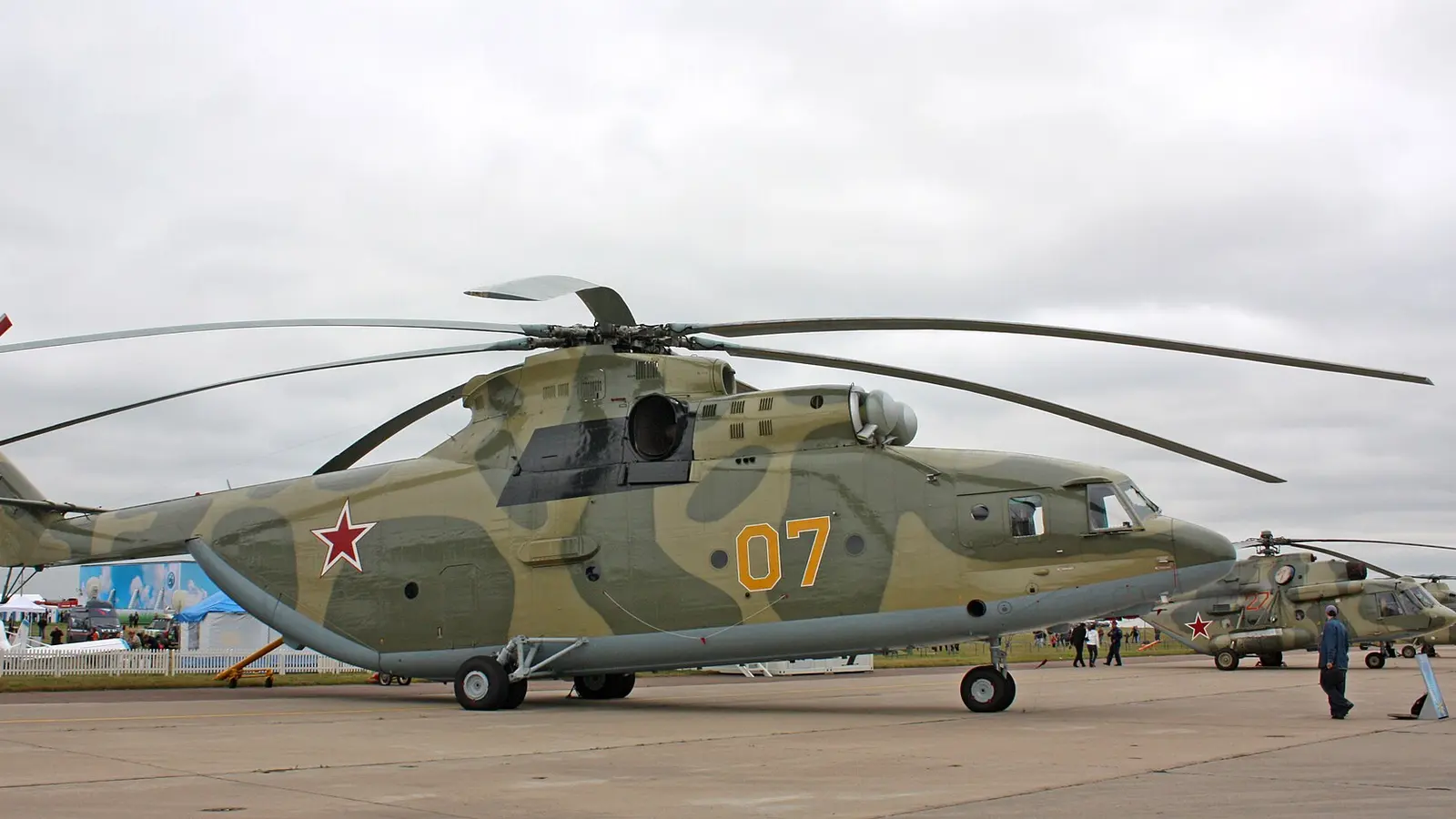
Helicopters are already impressive engineering achievements, but some rotorcraft push the boundaries of what seems physically possible. The biggest helicopters ever built dwarf commercial aircraft, lift tanks and armored vehicles, and showcase engineering ambition that borders on audacious.
These massive rotorcraft emerged from military necessity, industrial requirements, and Cold War technological competition. Soviet engineers particularly embraced gigantism, creating helicopters so enormous they challenged fundamental physics of rotary-wing flight. American manufacturers responded with their own heavy-lifters, though typically favoring practical utility over record-breaking size.
This ranking reveals which helicopters earned the title of largest ever built, their astonishing lifting capabilities, the engineering challenges overcome, and whether these mechanical giants remain relevant in modern aviation.
Why Some Helicopters Need To Be Massive
Massive helicopters exist because certain missions require moving payloads fixed-wing aircraft and trucks simply cannot handle. Vertical lift capability combined with enormous cargo capacity serves critical military, industrial, and humanitarian roles.
Military Heavy Transport: Armed forces need helicopters capable of transporting armored vehicles, artillery pieces, and complete infantry units including equipment. Conventional helicopters can't lift a 10-ton armored personnel carrier or relocate crashed aircraft. Heavy-lift helicopters move combat power rapidly without requiring runways or roads.
Industrial Construction: Building transmission towers, installing HVAC systems on skyscrapers, positioning oil rig components, and assembling wind turbines all benefit from aerial heavy-lift capability. Ground cranes can't always reach remote locations or require weeks to assemble. Helicopters arrive, lift the payload, and depart within hours.
Disaster Relief and Firefighting: Natural disasters create scenarios where massive helicopters prove invaluable. The Mi-26 famously lifted entire concrete-filled containers during Chernobyl cleanup. Wildfires require helicopters dropping thousands of gallons of water repeatedly. Earthquakes and floods trap populations requiring evacuation where runways don't exist.
Remote Location Support: Arctic bases, mountain facilities, offshore platforms, and isolated scientific stations rely on helicopter resupply when other transport methods prove impractical or impossible. The larger the helicopter, the fewer trips required and the more economical the operation.
10 Biggest Helicopters Ever Built (Ranked)
These rotorcraft represent the absolute giants of helicopter aviation, ranked by combination of size, weight, and payload capacity.
1. Mil V-12 (Mi-12) — 231 feet rotor diameter

Country: Soviet Union
Max Takeoff Weight: 231,000 lbs (105 metric tons)
Rotor Diameter: 114 feet each (two side-by-side rotors, 231 feet total span)
Status: Experimental, never entered production
The Mil V-12 remains the largest helicopter ever built, an experimental Soviet giant that flew in the late 1960s but never achieved operational status. This enormous machine featured twin side-by-side rotors mounted on massive wing stubs, essentially combining two Mi-6 rotor systems on a single airframe.
Two prototypes flew successfully, setting multiple payload records including lifting 88,000 pounds to 7,000 feet altitude. The V-12 could theoretically transport 196 soldiers or equivalent cargo. However, its extreme complexity, astronomical operating costs, and questionable practical utility doomed the program despite impressive technical achievements.
The V-12 represented Soviet engineering ambition unconstrained by economic reality. Its cancellation marked the practical limit of conventional helicopter scaling using 1960s technology.
2. Mil Mi-26 — 105 feet rotor diameter
Country: Russia (Soviet Union)
Max Takeoff Weight: 123,500 lbs (56 metric tons)
Rotor Diameter: 105 feet
Status: Active production and operation
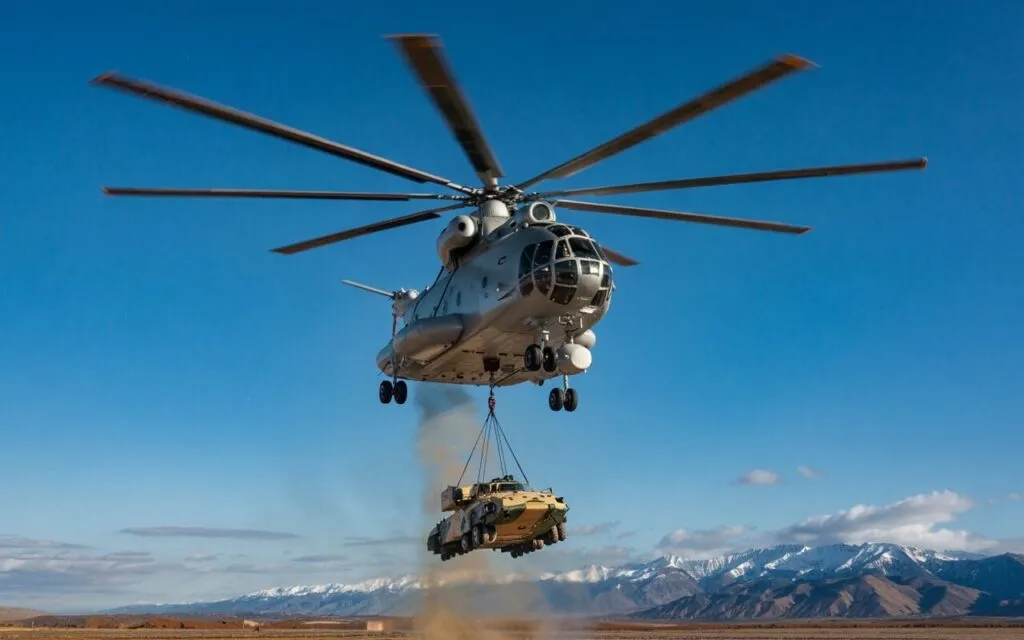
The Mi-26 holds the title of largest operational helicopter in the world, a distinction it has maintained since entering service in 1980. This eight-blade heavy-lifter can carry 44,000 pounds internally or 55,000+ pounds as external sling loads, lifting payloads rivaling C-130 cargo planes.
Twin Lotarev D-136 turboshaft engines generating 22,000+ combined shaft horsepower drive the massive rotor. The cargo bay measures 39 feet long, 10 feet wide, and 10 feet tall, accommodating armored personnel carriers, artillery pieces, or 90 combat-equipped troops.
The Mi-26 famously lifted a 25,000-pound frozen woolly mammoth carcass in Siberia and transported entire smaller helicopters as cargo. During Chernobyl cleanup, Mi-26s moved heavy concrete-filled containers onto the reactor building. Over 300 built, the Mi-26 continues production with military and civilian operators worldwide.
3. Sikorsky CH-53K King Stallion — 79 feet rotor diameter
Country: United States
Max Takeoff Weight: 88,000 lbs (40 metric tons)
Rotor Diameter: 79 feet
Status: Active production for U.S. Marine Corps
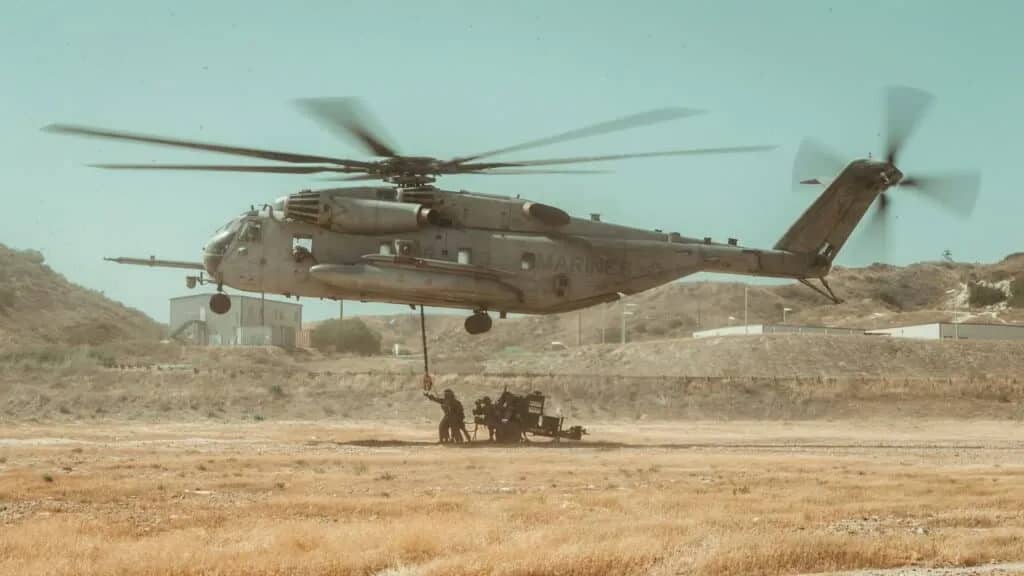
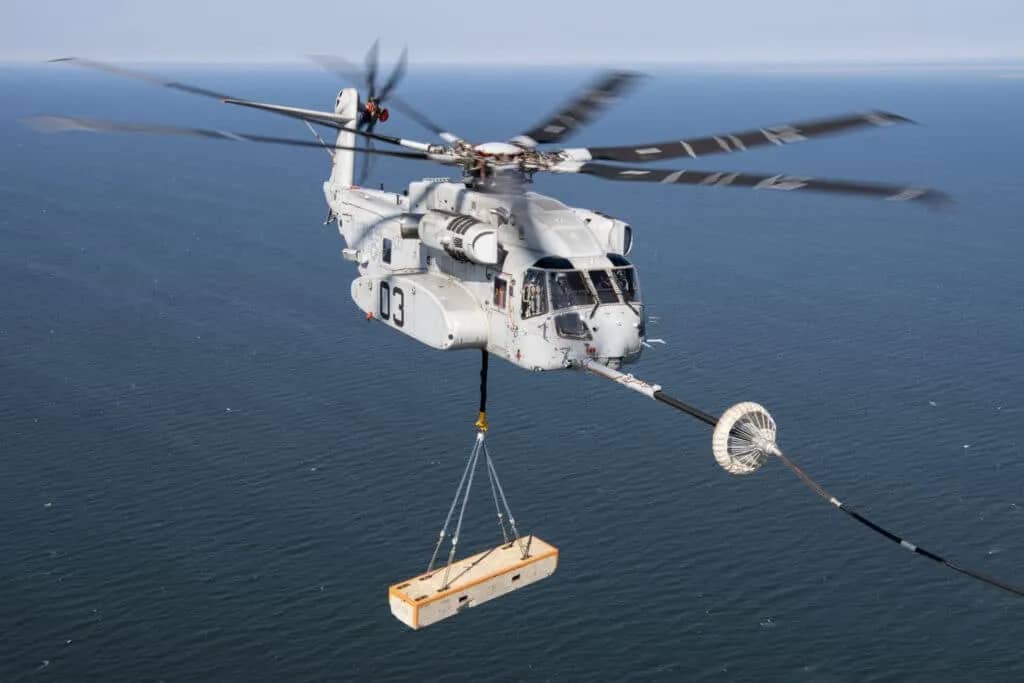
The CH-53K represents America's most capable heavy-lift helicopter, replacing the CH-53E with substantially improved performance. Three General Electric GE38-1B turboshaft engines generating 22,500 combined shaft horsepower enable lifting 36,000 pounds externally, triple the CH-53E's capacity.
Advanced composite rotor blades, modern fly-by-wire flight controls, and digital systems reduce pilot workload while increasing reliability and survivability. The King Stallion lifts more cargo faster, farther, and higher than any previous Western helicopter, finally matching Mi-26 capability decades after its introduction.
The U.S. Marine Corps requires the CH-53K for amphibious assault operations, moving artillery, vehicles, and supplies from ship to shore and forward positions. Its external lift capacity enables relocating Light Armored Vehicles and damaged aircraft.
4. Mil Mi-6 — 114 feet rotor diameter
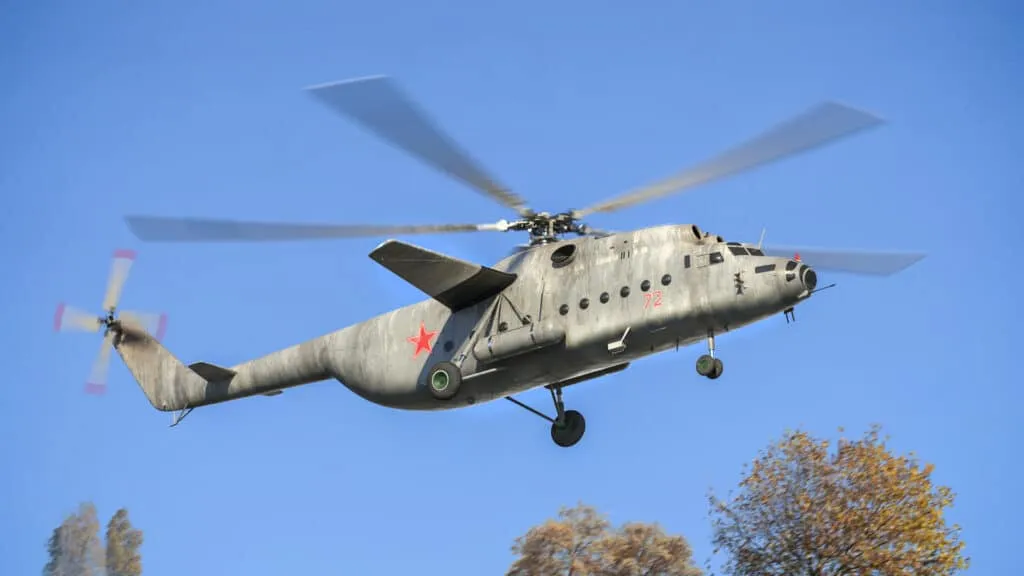
Country: Soviet Union
Max Takeoff Weight: 93,700 lbs (42.5 metric tons)
Rotor Diameter: 114 feet
Status: Retired from service
The Mi-6 served as the world's largest operational helicopter from 1957 until the Mi-26's introduction, a remarkable 23-year reign. This Cold War heavy-lifter could carry 26,000 pounds internally or transport 90 troops, unprecedented capability for its era.
Stub wings provided additional lift at cruise speeds, unloading the main rotor and enabling higher forward speeds and efficiency. Twin Soloviev D-25V turboshaft engines producing 11,000+ combined shaft horsepower drove the massive five-blade rotor.
Over 800 Mi-6 helicopters served military and civilian operators across the Soviet bloc and friendly nations. The type pioneered large-scale helicopter heavy-lift operations, proving helicopters could handle tactical transport missions previously requiring fixed-wing aircraft.
5. Boeing CH-47F Chinook — 60 feet rotor diameter each
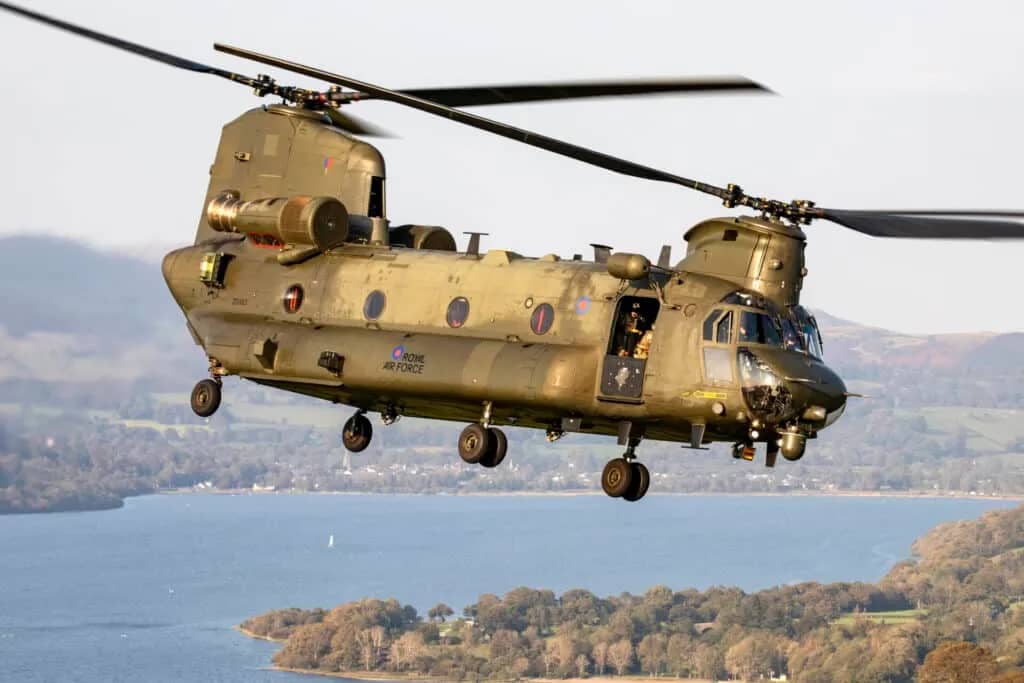
Country: United States
Max Takeoff Weight: 50,000 lbs (22.7 metric tons)
Rotor Diameter: 60 feet per rotor (tandem configuration)
Status: Active production worldwide
The Chinook's distinctive tandem rotor configuration has served U.S. and allied forces since 1962, making it one of aviation's most enduring success stories. While not the absolute largest, the CH-47F's 26,000-pound payload capacity and battlefield versatility make it indispensable.
Twin Honeywell T55-GA-714A turboshaft engines producing 9,000+ combined shaft horsepower drive both three-blade rotors through a complex mechanical transmission. The tandem rotor design eliminates tail rotor power losses while providing exceptional stability when carrying external slings.
The Chinook transports artillery pieces, light vehicles, supplies, and troops across all environments from Arctic to desert. Its ability to recover downed aircraft, including other helicopters, provides critical capability. Over 1,400 built with production continuing for multiple international customers.
6. Sikorsky CH-53E Super Stallion — 79 feet rotor diameter

Country: United States
Max Takeoff Weight: 73,500 lbs (33.3 metric tons)
Rotor Diameter: 79 feet
Status: Active service, being replaced by CH-53K
The CH-53E served as the U.S. Marine Corps' primary heavy-lifter for decades, capable of lifting 32,000 pounds externally or transporting 55 troops internally. Three General Electric T64-GE-416 turboshaft engines generating 13,000+ combined shaft horsepower provided the power for amphibious assault operations.
The seven-blade main rotor and advanced hydraulic systems enabled operations from aircraft carriers and amphibious assault ships in challenging conditions. CH-53E helicopters deployed worldwide, supporting combat operations, humanitarian missions, and disaster relief.
Aging airframes and high operating costs drove development of the CH-53K replacement, though Super Stallions continue service until sufficient King Stallions deploy to replace them completely.
7. Mil Mi-10 — 114 feet rotor diameter
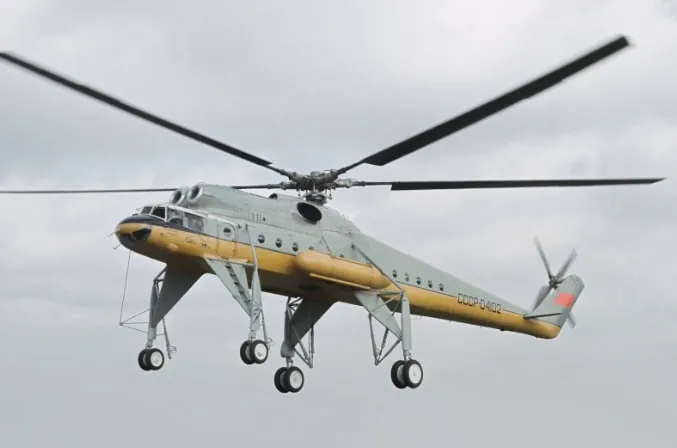
Country: Soviet Union
Max Takeoff Weight: 95,900 lbs (43.5 metric tons)
Rotor Diameter: 114 feet
Status: Retired
The Mi-10 "flying crane" represented a unique specialized variant of the Mi-6, featuring extraordinarily long landing gear creating a 9-foot clearance beneath the fuselage. This design allowed the Mi-10 to straddle and lift pre-assembled cargo modules, prefabricated buildings, and industrial equipment.
Remote-controlled retractable gondola beneath the cockpit housed an operator who could precisely position loads during pickup and delivery. This capability proved valuable for industrial construction and military logistics where standard helicopters couldn't efficiently handle the cargo dimensions.
Only 55 Mi-10 helicopters were built due to the specialized nature of their mission and competition from more versatile Mi-6 and later Mi-26 variants. The type introduced innovative concepts for helicopter cargo handling that influenced later designs.
8. Kamov Ka-32 — 52 feet rotor diameter
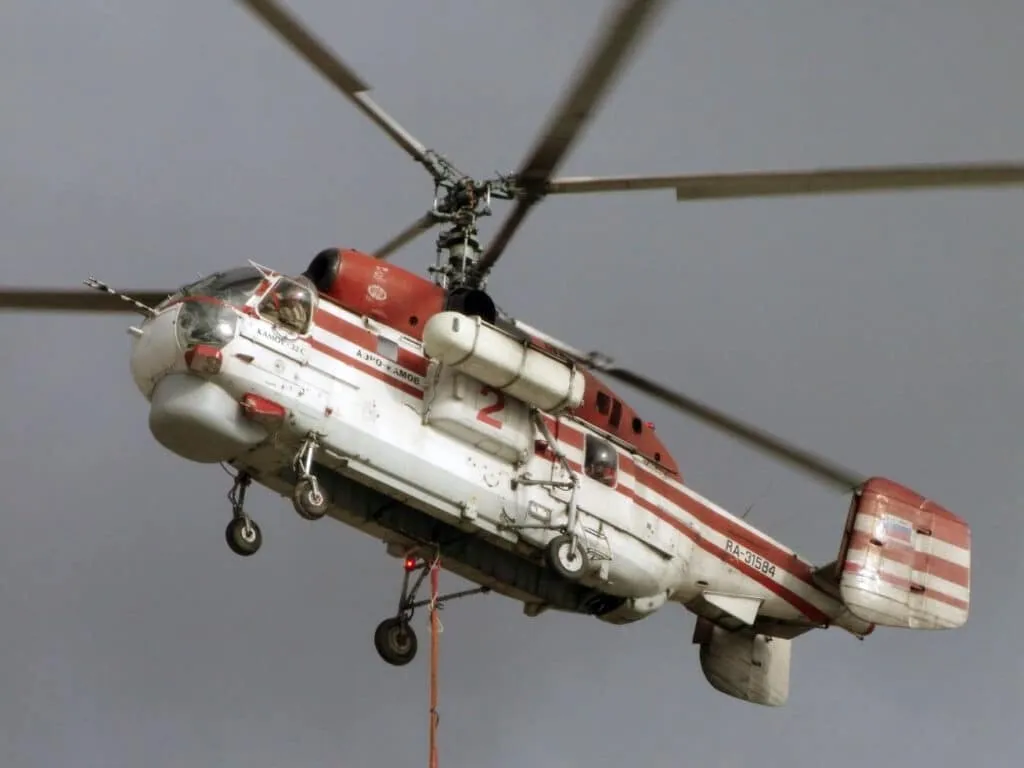
Country: Russia (Soviet Union)
Max Takeoff Weight: 26,500 lbs (12 metric tons)
Rotor Diameter: 52 feet (coaxial)
Status: Active production and service
While smaller than other entries, the Ka-32's coaxial rotor configuration and specialized heavy-lift variants earn it recognition among significant heavy helicopters. The coaxial design eliminates tail rotor power losses, dedicating full engine output to lift generation.
Twin Klimov TV3-117V turboshaft engines provide 4,400+ combined shaft horsepower. The Ka-32 excels in confined space operations including firefighting, construction support, and offshore work where its compact footprint and powerful lifting capability prove advantageous.
The Ka-32 serves civilian and military operators worldwide, particularly popular for logging, construction, and specialized industrial missions requiring precise heavy-lift capability in challenging environments.
9. AgustaWestland AW101 Merlin — 61 feet rotor diameter
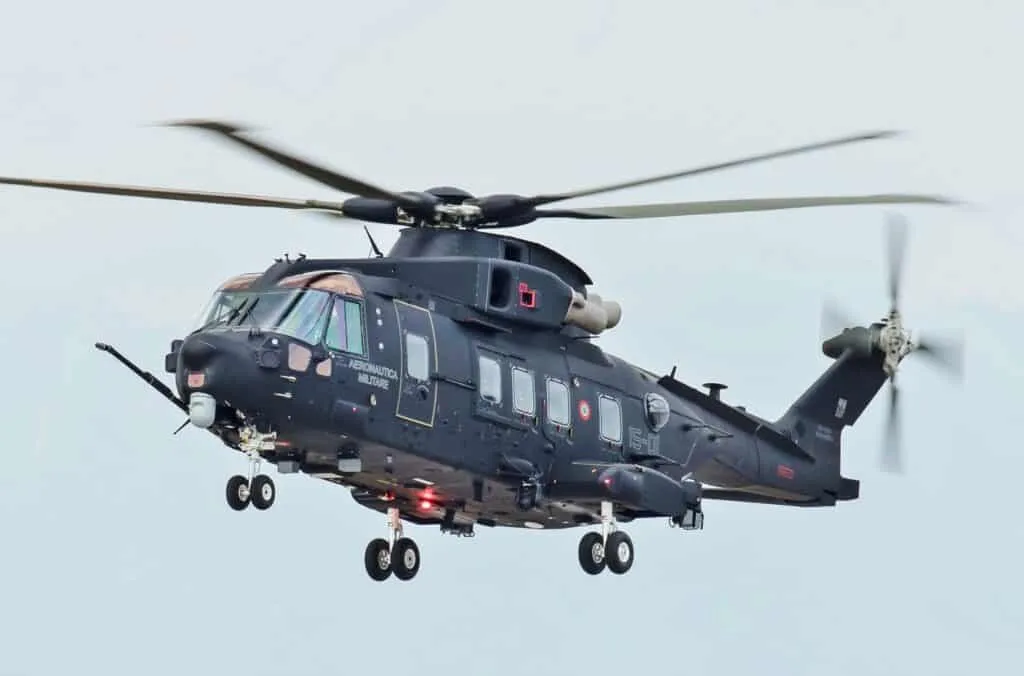
Country: Italy/United Kingdom
Max Takeoff Weight: 34,400 lbs (15.6 metric tons)
Rotor Diameter: 61 feet
Status: Active production and service
The AW101 serves military and civilian operators as a medium-heavy transport, anti-submarine warfare platform, and search-and-rescue helicopter. Three Rolls-Royce Turbomeca RTM322 or General Electric CT7 engines provide 6,500+ combined shaft horsepower.
While not the absolute largest, the Merlin's advanced composite construction, sophisticated avionics, and multi-role flexibility make it significant among modern heavy helicopters. It transports 30 troops or 11,000 pounds of cargo internally.
The type serves the British Royal Navy, Royal Air Force, Italian Navy, and civilian operators including Presidential transport duties. Its combination of size, capability, and modern systems represents current-generation heavy helicopter technology.
10. NHIndustries NH90 — 53 feet rotor diameter
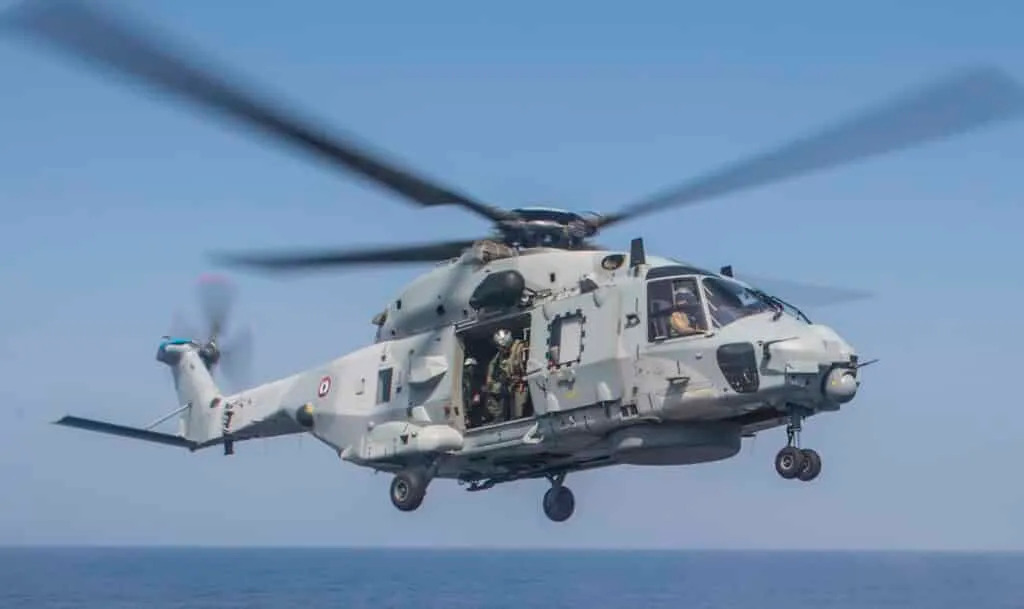
Country: European consortium
Max Takeoff Weight: 23,500 lbs (10.6 metric tons)
Rotor Diameter: 53 feet
Status: Active production and service
The NH90 rounds out the list as Europe's most capable modern medium-heavy helicopter, serving military forces across NATO and allied nations. Twin Rolls-Royce Turbomeca RTM322 engines provide 4,500+ combined shaft horsepower.
Advanced fly-by-wire controls, composite construction, and sophisticated mission systems enable transport, anti-submarine warfare, and special operations roles. The NH90 carries 20 troops or 9,000 pounds of cargo internally.
While smaller than true heavy-lifters, the NH90's modern technology and widespread European adoption make it significant in contemporary military aviation. Over 500 delivered to 15+ countries demonstrate its success filling medium-heavy transport requirements.
Why Giant Helicopters Are So Difficult To Build
Scaling helicopters to massive sizes creates exponential engineering challenges that explain why so few exist and why the Mi-26 remains unmatched nearly 45 years after introduction.
Power Requirements Scale Geometrically: Doubling rotor diameter requires roughly quadrupling engine power to maintain performance. The Mi-26's 22,000+ shaft horsepower represents an enormous powerplant for rotary-wing aircraft. Developing engines providing sufficient power while remaining reliable and fuel-efficient challenges even leading manufacturers.
Rotor System Stress: Larger rotors experience dramatically increased structural loads. Each blade on the Mi-26's 105-foot rotor endures tremendous centrifugal forces while flexing to generate lift. The rotor hub must handle these forces multiplied across eight blades while allowing controlled blade pitch changes. Fatigue failures in such systems prove catastrophic.
Vibration Management: Large helicopters generate intense vibrations from aerodynamic forces, mechanical systems, and rotor blade imbalances. These vibrations fatigue structures, damage components, and make precise control challenging. Advanced damping systems, careful mass balancing, and structural reinforcement add significant weight and complexity.
Transmission Complexity: Helicopter transmissions among the most stressed mechanical components in aviation must handle enormous torque while weighing as little as possible. The Mi-26's transmission alone weighs thousands of pounds, representing critical engineering challenges in gear design, lubrication, and cooling.
Fuel Consumption Economics: Giant helicopters consume fuel at astonishing rates. The Mi-26 burns roughly 1,000 gallons per hour, making operating costs prohibitive except for missions absolutely requiring its capability. This economic reality limits giant helicopter utility to specialized roles where smaller aircraft physically cannot accomplish the mission.
Military vs Civilian Heavy-Lift Helicopters
Heavy-lift helicopters serve both military and civilian operators, though design priorities and operational contexts differ significantly.
Military Heavy-Lifters: Designed for tactical transport, military helicopters prioritize rapid deployment, external sling capability, troop carrying capacity, and survival in hostile environments. The CH-53K, CH-47F, and Mi-26M include armor protection, defensive systems, and ability to operate from unprepared landing zones.
Military helicopters often sacrifice some efficiency for versatility and survivability. External weapons hardpoints, defensive aids suites, and tactical communications add weight but enable mission success. Dual military-civilian capability exists for types like the Mi-26, which serves both markets effectively.
Civilian Heavy-Lifters: Commercial operators prioritize operating economics, reliability, and mission-specific configurations. Civilian Mi-26s, Ka-32s, and CH-47s perform logging, firefighting, construction support, oil industry operations, and cargo transport.
Without military requirements, civilian variants optimize fuel efficiency, reduce maintenance costs, and install mission equipment specific to customer needs. Safety regulations also differ, with civilian operators facing stricter certification requirements than military equivalents.
The Soviet Union's Obsession With Giant Helicopters
Soviet engineers displayed remarkable commitment to gigantic rotorcraft, producing numerous record-breaking designs that Western manufacturers avoided pursuing.
The Cold War drive for technological supremacy motivated Soviet helicopter gigantism. Demonstrating capability to build the world's largest helicopters served propaganda purposes while addressing genuine military requirements. Soviet doctrine emphasized massed ground forces requiring enormous logistics capabilities.
The V-12's development reflected this philosophy taken to extremes. Despite limited practical utility, the project continued for years, producing prototypes that set records but never achieved operational relevance. The Mi-6 and Mi-26 proved more successful, balancing ambitious size with genuine capability.
Soviet geographic challenges also influenced heavy-lift helicopter development. Vast distances, harsh climates, and poor infrastructure made helicopters valuable for reaching remote locations. Siberia, Arctic bases, and Central Asian facilities required supply methods unaffected by weather or terrain.
Russia continues this tradition today, maintaining Mi-26 production while Western manufacturers focus on smaller, more economical designs. The cultural and doctrinal differences persist decades after the Cold War's end.
How Much Weight Can These Helicopters Carry?
Understanding heavy-lift helicopter capability requires concrete comparisons with familiar objects and vehicles.
Main Battle Tanks: The heaviest tanks weigh 60-70 tons, exceeding even the Mi-26's external lift capacity. However, the Mi-26 can lift armored personnel carriers (8-15 tons), infantry fighting vehicles (25-30 tons), and light tanks. The V-12 theoretically could lift some main battle tanks, a capability no operational helicopter possesses.
Vehicles and Equipment: The Mi-26 easily transports multiple Humvees, artillery pieces with ammunition, or entire mobile command posts. The CH-53K lifts Joint Light Tactical Vehicles (15,000+ lbs) and recovered aircraft wreckage. Standard commercial trucks fully loaded fall well within these helicopters' capabilities.
Cargo Equivalents: To visualize capacity, the Mi-26 carries cargo equivalent to roughly: - 15 passenger cars - 90 fully-equipped soldiers - 200+ passengers in pure transport configuration (record) - Three school buses - 40 tons of supplies, equivalent to two fully-loaded 20-foot shipping containers
The CH-47F Chinook lifts payloads equivalent to 10 passenger cars or 55 troops with equipment. Even "smaller" heavy-lifters like the AW101 carry 30 troops or equivalent cargo, matching many tactical transport aircraft.
Are Giant Helicopters Still Relevant Today?
Despite decades since their introduction, heavy-lift helicopters remain indispensable for specific military and civilian missions where no alternative exists.
Modern Military Logistics: Ground forces still require rapid repositioning of artillery, vehicles, and supplies without depending on roads or runways. The CH-53K's development demonstrates continuing military demand for heavy-lift capability. Asymmetric warfare in challenging terrain makes helicopters more valuable than ever.
Disaster Relief Operations: Natural disasters create scenarios where heavy-lift helicopters prove irreplaceable. Earthquakes, floods, and hurricanes destroy infrastructure, leaving helicopters as the only means to deliver heavy equipment, supplies, and evacuate populations. Mi-26s have served in numerous disaster responses worldwide.
Offshore Energy Industry: Oil platforms, wind farm installation, and offshore construction rely heavily on helicopter support. Large helicopters transport crews, supplies, and equipment more economically than multiple trips by smaller aircraft. The North Sea, Gulf of Mexico, and Asian offshore fields all employ heavy helicopters extensively.
Remote Construction and Industrial Support: Building transmission towers, installing telecommunications equipment in mountains, and supporting remote mining operations all benefit from helicopter heavy-lift capability. Ground access may require months and millions of dollars compared to helicopter operations completing work in days.
The limited fleet of giant helicopters worldwide indicates specialized rather than ubiquitous utility, but for missions requiring their unique capabilities, no substitute exists.
Future of Heavy-Lift Rotorcraft
Next-generation heavy-lift requirements may see revolutionary approaches rather than simply building larger conventional helicopters.
Hybrid Rotorcraft Designs: Compound helicopters and tiltrotors offer potential for heavy-lift missions. The V-22 Osprey demonstrates tiltrotor viability for medium-heavy lift. Future derivatives could scale to larger payloads, combining helicopter versatility with near-turboprop speed and efficiency.
Unmanned Heavy-Lift Systems: Autonomous or remotely-piloted heavy-lift helicopters could reduce operating costs and enable operations too dangerous for crewed aircraft. Military applications particularly benefit from unmanned cargo delivery to forward positions under fire.
Advanced Materials and Propulsion: Composite rotor blades, lighter transmissions, and more efficient engines could enable larger helicopters without proportional weight increases. Electric or hybrid-electric powertrains might eventually offer advantages for certain heavy-lift missions, though battery technology currently limits viability.
Specialized Mission Optimization: Rather than building larger general-purpose helicopters, future designs may optimize for specific missions. Aerial firefighting, construction support, and military transport could each see specialized variants maximizing effectiveness for their particular requirements.
The Mi-26's long-standing reign as largest operational helicopter suggests fundamental limits may have been reached with conventional technology. Revolutionary approaches may prove necessary for significantly larger rotorcraft.
Frequently Asked Questions
What Is the Biggest Helicopter Ever Built?
The Mil V-12 (Mi-12) holds the record as the biggest helicopter ever built, with a 231-foot total rotor span and maximum takeoff weight of 231,000 pounds. This experimental Soviet giant featured twin side-by-side rotors mounted on wing stubs, essentially combining two Mi-6 rotor systems. Two prototypes flew successfully in the late 1960s, setting payload records including lifting 88,000 pounds to 7,000 feet. However, extreme complexity and questionable practical utility prevented operational deployment. The V-12 remains the largest helicopter ever to fly, a distinction unlikely to be challenged.
What Is the Largest Helicopter Currently in Operation?
The Mil Mi-26 is the largest helicopter currently in operational service worldwide, maintaining this distinction since entering service in 1980. With a 105-foot main rotor diameter and 123,500-pound maximum takeoff weight, the Mi-26 lifts 44,000 pounds internally or 55,000+ pounds externally. Twin turboshaft engines generating 22,000+ combined shaft horsepower drive the massive eight-blade rotor. Over 300 Mi-26 helicopters serve military and civilian operators across Russia, former Soviet states, and international customers. The type continues production with modern avionics and systems upgrades, ensuring it will remain the largest operational helicopter for the foreseeable future as no larger designs are in development.
Why Are Helicopters Limited in Size?
Helicopters face fundamental engineering constraints limiting maximum practical size. Power requirements scale geometrically with rotor diameter, making massive helicopters require exponentially more engine power. Rotor blades experience tremendous structural loads that increase dramatically with size, creating fatigue and strength challenges. Vibration management becomes extremely difficult in large helicopters, requiring sophisticated damping systems adding weight and complexity. Transmission systems must handle enormous torque while remaining as light as possible, representing critical engineering bottlenecks. Additionally, fuel consumption increases make giant helicopters economically viable only for specialized missions. The Mi-26's size likely represents the practical limit for conventional single-rotor helicopters using current technology. Larger rotorcraft would require revolutionary designs like the V-12's twin-rotor configuration or alternative approaches like tiltrotors.
Can Helicopters Lift Tanks?
Modern main battle tanks weighing 60-70 tons exceed the lift capacity of any operational helicopter, including the Mi-26 which maxes out around 55,000 pounds (27.5 tons) external load. However, helicopters can lift lighter armored vehicles. The Mi-26 transports 8-15 ton armored personnel carriers and 25-30 ton infantry fighting vehicles. The CH-53K King Stallion lifts 36,000 pounds, enabling transport of Light Armored Vehicles and smaller military vehicles. The experimental Mil V-12 theoretically could have lifted some lighter main battle tanks, but never achieved operational status. For practical military operations, heavy-lift helicopters move artillery pieces, light vehicles, supplies, and troops rather than main battle tanks, which require ground transport or heavy transport aircraft like the C-17.
Biggest Helicopters Comparison
| Rank | Helicopter | Country | Max Takeoff Weight | Primary Role |
|---|---|---|---|---|
| 1 | Mil V-12 (Mi-12) | Soviet Union | 231,000 lbs (105 tons) | Experimental Heavy-Lift |
| 2 | Mil Mi-26 | Russia | 123,500 lbs (56 tons) | Heavy-Lift Transport |
| 3 | Mil Mi-10 | Soviet Union | 95,900 lbs (43.5 tons) | Flying Crane |
| 4 | Mil Mi-6 | Soviet Union | 93,700 lbs (42.5 tons) | Heavy-Lift Transport |
| 5 | CH-53K King Stallion | USA | 88,000 lbs (40 tons) | Military Heavy-Lift |
| 6 | CH-53E Super Stallion | USA | 73,500 lbs (33.3 tons) | Military Heavy-Lift |
| 7 | CH-47F Chinook | USA | 50,000 lbs (22.7 tons) | Medium Heavy-Lift |
| 8 | AW101 Merlin | Italy/UK | 34,400 lbs (15.6 tons) | Medium Transport/ASW |
| 9 | Kamov Ka-32 | Russia | 26,500 lbs (12 tons) | Utility/Heavy-Lift |
| 10 | NH90 | European Consortium | 23,500 lbs (10.6 tons) | Medium Transport |
Note: Weights represent maximum takeoff weight. Payload capacity varies by fuel load, mission profile, and altitude. The Mil V-12 flew experimentally but never entered operational service.
Conclusion: Giants of the Sky
The biggest helicopters ever built represent humanity's audacious attempt to conquer vertical flight at massive scale. From the experimental Mil V-12's record-breaking 231-foot rotor span to the operationally proven Mi-26's four decades of heavy-lift service, these mechanical giants showcase engineering at its most ambitious.
Soviet designers particularly embraced helicopter gigantism, creating the V-12, Mi-6, Mi-10, and Mi-26 that still dominate size rankings decades after their introduction. American manufacturers focused on practical utility, producing the CH-53K, CH-47F, and their predecessors that balance capability with operational economics.
The engineering challenges of giant helicopters prove formidable. Power requirements scale geometrically with size, rotor systems endure tremendous structural loads, vibration management demands sophisticated solutions, and fuel consumption limits economic viability to specialized missions. These constraints explain why the Mi-26 remains unchallenged as the largest operational helicopter nearly 45 years after entering service.
Heavy-lift helicopters continue serving critical military and civilian roles where no alternative exists. Tactical transport, disaster relief, offshore operations, and remote construction all rely on capabilities only these giants provide. The CH-53K's recent introduction and continued Mi-26 production demonstrate enduring relevance despite their Cold War origins.
Future heavy-lift requirements may see revolutionary approaches rather than simply larger conventional helicopters. Tiltrotors, compound helicopters, unmanned systems, and advanced materials could enable new capabilities while addressing current limitations. However, the Mi-26's long reign suggests fundamental limits may have been reached with conventional single-rotor technology.
These helicopters represent more than just impressive machines. They embody national technical prowess, military doctrine, and engineering philosophy. The Soviet embrace of gigantism versus Western emphasis on practical utility reflects different approaches to solving similar problems. Both philosophies produced remarkable aircraft pushing helicopter technology to its limits.
For aviation enthusiasts, giant helicopters showcase rotary-wing flight at its most spectacular. The sight of a Mi-26 lifting an armored vehicle or CH-53K recovering a damaged helicopter demonstrates capabilities that seem to defy physics. These machines prove that with sufficient power, clever engineering, and operational necessity, helicopters can accomplish tasks that appear impossible.
Explore Helicopter Services
209 companies in the aviation directory.
Browse companies

