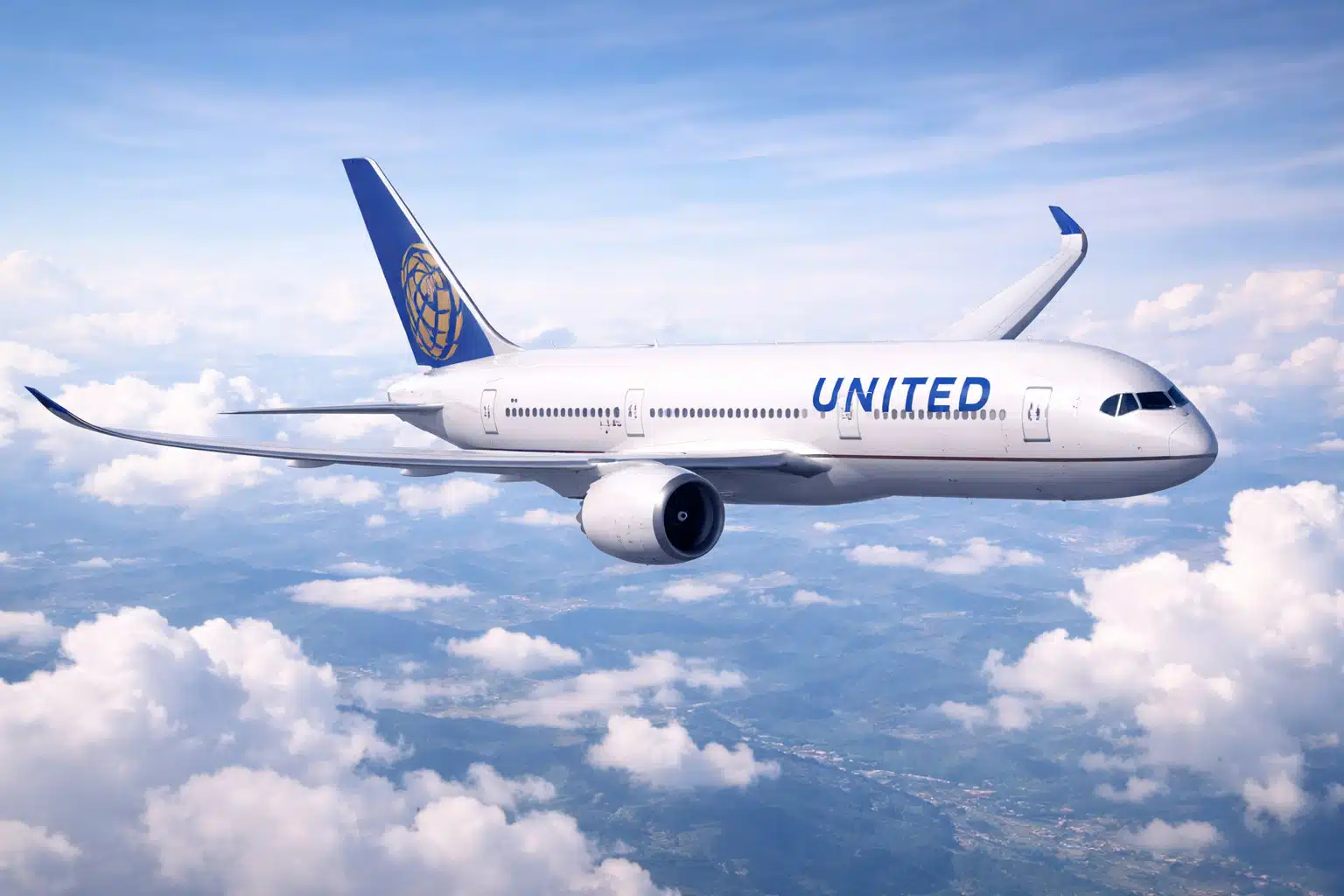
After 17 years on the books, United Airlines’ order for 45 Airbus A350s is effectively dead.
In February 2026, United removed the widebody from its expected aircraft deliveries – the strongest signal yet that the airline will never operate the European aircraft. The cancellation stems from a $175 million legal dispute with Rolls-Royce over engine commitments.
But the Rolls-Royce dispute tells only part of the story. United’s decision reflects deeper strategic choices: fleet simplification, Boeing 787 dominance, and operational efficiency over aircraft diversity.
The airline that once split widebody orders between manufacturers now operates an all-Boeing long-haul fleet – and plans to keep it that way, reshaping United Airlines route networks for decades.
United Airlines’ Original Airbus A350 Order: A 17-Year History

United’s relationship with the A350 began in December 2009. The timing seemed perfect: United operated aging Boeing 747-400s that guzzled fuel, and the 787 Dreamliner faced significant production delays.
The airline ordered 25 Airbus A350-900s with Rolls-Royce Trent XWB engines. The $2 billion engine deal included TotalCare long-term service support. Deliveries were scheduled for 2016-2019.
How the Continental Merger Changed Everything
The 2010 merger between United and Continental Airlines created the world’s largest carrier. But it also created fleet complexity.
Continental operated all-Boeing widebodies. United flew Boeing with some legacy aircraft. The merged airline faced decisions about standardization versus diversity.
Initial plans suggested splitting the widebody fleet between manufacturers. The A350 would serve specific long-haul routes while Boeing aircraft handled others. This strategy provided competitive leverage when negotiating with manufacturers.
Order Modifications: From A350-900 to A350-1000 and Back
In 2013, United modified its order dramatically. The airline converted 25 A350-900s to 35 A350-1000s – the larger variant offering 40 more seats.
The A350-1000’s additional capacity seemed ideal for replacing older Boeing 777-200s. Both aircraft carry similar passenger loads on ultra-long-haul routes.
But in 2017, United reversed course again. The carrier converted back to 45 A350-900s – expanding the order by 10 aircraft while returning to the smaller variant.
At the time, CFO Andrew Levy confirmed United wanted the A350-900. The airline valued its 8,000+ nautical mile range and fuel efficiency improvements over the 747-400.
Perpetual Delays and Deferrals
Deliveries never arrived as scheduled. United pushed the timeline repeatedly: from 2016-2019 to 2022, then to 2027, and eventually “after 2027.”
The order existed in perpetual limbo – real enough to remain contractually binding, distant enough to avoid operational planning. Industry observers questioned whether United truly intended to take delivery.
CEO Scott Kirby acknowledged in 2025 that the airline would decide by year-end 2025. That deadline passed without announcement – until the February 2026 SEC filing revealed the truth.
Why United Airlines Cancelled The Airbus A350
United’s February 2026 SEC 10-K filing dropped two bombshells: removal of the A350 from expected deliveries and disclosure of a legal dispute with Rolls-Royce.
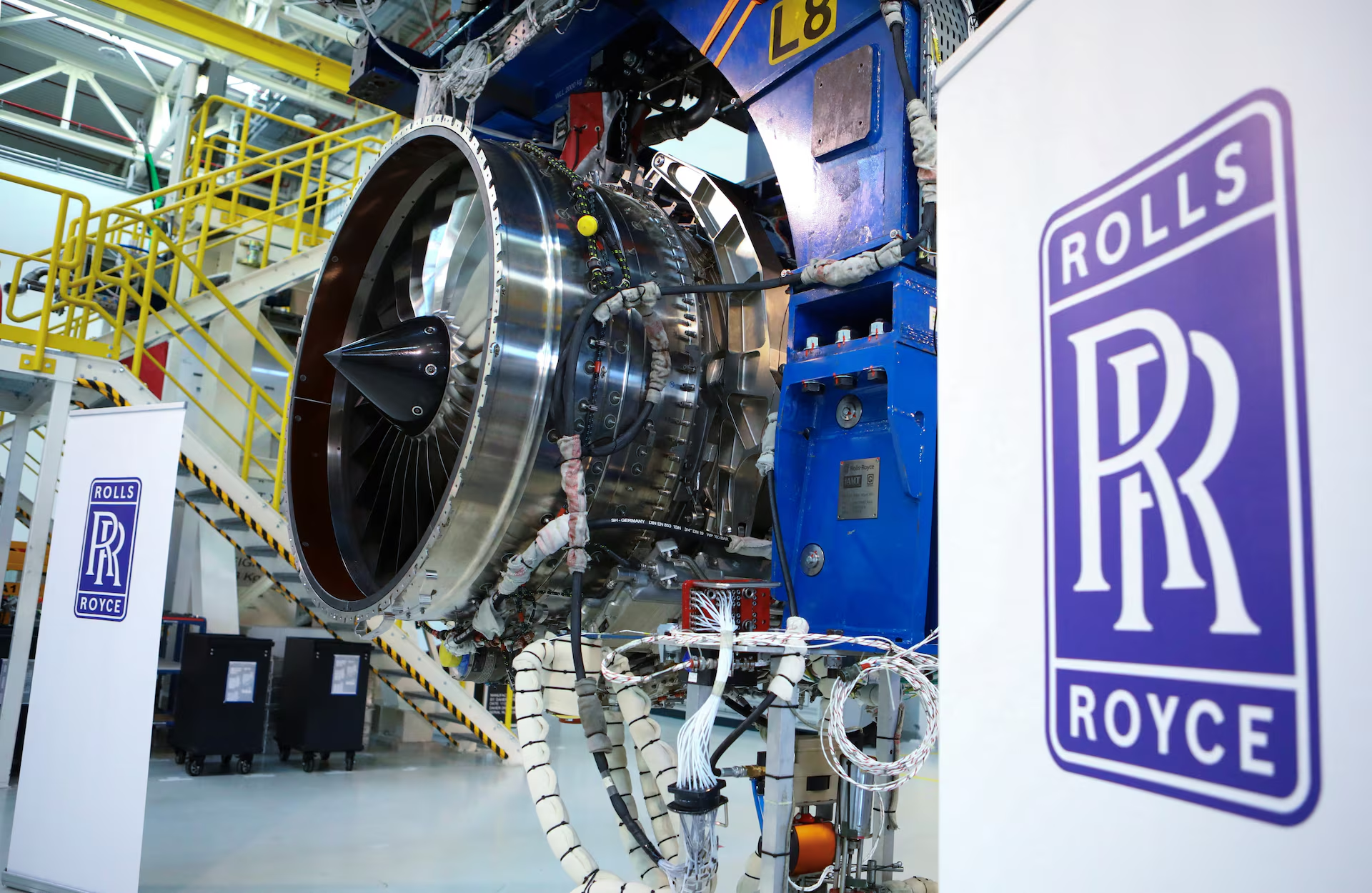
The $175 Million Rolls-Royce Dispute
In 2017, United paid Rolls-Royce $175 million under a 2010 agreement covering engine purchases and maintenance for its widebody fleet.
United alleges Rolls-Royce breached the contract in late 2025. The airline demanded return of the $175 million plus contractual escalations. Rolls-Royce countered, claiming United breached the agreement.
The dispute creates an impossible situation: the A350 uses only Rolls-Royce Trent XWB engines. No alternative exists. Unlike the Boeing 787, where United can choose between General Electric GEnx and Rolls-Royce Trent 1000 engines, the A350 offers zero flexibility.
With engine contracts in legal limbo, operating A350s becomes economically nonviable. Maintenance agreements, spare parts support, and long-term service commitments all hinge on the disputed contract.
Fleet Simplification Strategy
Beyond the legal dispute, United pursues aggressive fleet simplification. The airline operates seven mainline aircraft types: Boeing 737, 757, 767, 777, 787, Airbus A319, and A320-family aircraft.
Adding the A350 would create an eighth type requiring: separate pilot type ratings and training programs, dedicated maintenance crews and equipment, unique spare parts inventory, different operational procedures.
United’s widebody fleet currently uses all-Boeing aircraft: 767-300/400, 777-200/300ER, and three 787 variants. Maintenance facilities, training centers, and spare parts networks are configured for Boeing platforms.
Introducing Airbus widebodies disrupts this efficiency. Understanding fleet management best practices shows why airlines prioritize commonality.
Overlap With Boeing 787 Capacity

The A350-900 seats 300-350 passengers in typical three-class configuration. United’s Boeing 787-10 seats 318 passengers in Polaris business, Premium Plus, and economy.
Mission profiles overlap significantly. Both aircraft fly 8,000+ nautical miles – sufficient for United’s longest routes like San Francisco-Singapore or Newark-Tel Aviv.
With 140 unfilled Boeing 787 orders (84 787-9s and 56 787-10s), United already has capacity covered. The airline recently converted 56 additional 787-9 orders to 787-10s, increasing capacity on existing orders.
The 787-10 handles routes the A350-900 would serve, similar to dynamics seen in Delta route expansions. Adding A350s creates redundancy without strategic benefit.
Operational Efficiency Considerations
Pilots qualified on Boeing 777s can transition to 787s with common type rating (777/787 differences training). Adding A350s requires completely separate type ratings.
United operates 74 Boeing 777-200s that need replacement eventually. Training 777 pilots for 787s preserves workforce flexibility. Training separate A350 crews fragments the pilot base.
Maintenance efficiency matters equally. United’s facilities stock Boeing widebody parts. Technicians know Boeing systems. The 787-9 Dreamliner deployment experience at other airlines demonstrates operational advantages of fleet consistency.
Why United Airlines Chose The Boeing 787 Instead
United’s 2022 order for 100 Boeing 787s (plus 100 options) represents the largest 787 order in history. The airline’s commitment to the Dreamliner reflects strategic calculation, not just manufacturer loyalty.

Lower Trip Costs
The 787-10 offers lower trip cost than the A350-900 for United’s network. Trip cost equals the total cost to operate one flight regardless of passengers carried.
While the A350-900 has lower seat-mile costs (cost per seat per mile), United’s route structure prioritizes frequency over capacity. Operating three daily 787-10 flights generates more revenue than two daily A350-900 flights.
Boeing offered United aggressive pricing on the 787 order. As a blue-chip customer ordering 100+ aircraft, United negotiated rates near production cost – making the 787 economically compelling.
Fleet Commonality Advantages
United operates three 787 variants: 787-8 (36 aircraft), 787-9 (significant fleet), and growing 787-10 fleet. Parts commonality across variants reduces inventory costs.
Pilots type-rated on one 787 variant can fly all three with minimal differences training. Flight attendants work any 787 configuration. Ground crews service all variants with same equipment, minimizing operational disruptions.
This commonality delivers schedule flexibility. Aircraft substitutions happen easily when mechanical issues arise. Load factors fluctuate throughout the year – right-sizing capacity by swapping 787 variants maintains efficiency.
Existing Dreamliner Infrastructure
United invested heavily in 787 support infrastructure: maintenance hangars configured for 787 dimensions, ground support equipment (tugs, cargo loaders, de-icing), specialized tooling for composite repairs, parts distribution networks.
Training facilities include 787 flight simulators, maintenance trainers, and cabin mockups. These investments already made, adding more 787s utilizes existing infrastructure.
Starting A350 operations requires parallel investment: new hangar space, different ground equipment, separate parts inventory, additional simulators. The capital expenditure doesn’t justify the capability gain when 787s serve the same routes.
Boeing 787 vs Airbus A350: Strategic Comparison
Both aircraft represent cutting-edge widebody technology from Boeing and Airbus. The choice isn’t about which aircraft is “better” – it’s about which fits United’s strategy.
| Specification | Airbus A350-900 | Boeing 787-9 | Boeing 787-10 |
|---|---|---|---|
| Typical Seating | 300-350 passengers | 280-296 passengers | 318-330 passengers |
| Range | 8,100 nautical miles | 7,635 nautical miles | 6,430 nautical miles |
| Engines | Rolls-Royce Trent XWB only | GEnx or Trent 1000 | GEnx or Trent 1000 |
| Fuel Burn Advantage | ~5% better per seat | Reference | Reference |
| Trip Cost | Higher (larger aircraft) | Lower | Moderate |
| Entry Into Service | December 2014 | September 2014 | March 2018 |
| United Fleet Status | Cancelled (2026) | Core fleet | Expanding |
Note: A350-900 offers superior range (8,100nm highlighted gold) but Rolls-Royce single-source engine limits flexibility. Boeing 787 variants provide engine choice (highlighted green) – GEnx or Trent 1000 options. 787-10 capacity overlaps A350-900 for United’s network needs. Swipe left to see full table on mobile devices.
Engine Flexibility: Critical Advantage
The 787’s dual-engine option provides enormous strategic value. United can switch between General Electric and Rolls-Royce based on pricing, delivery schedules, and maintenance terms.
If one engine manufacturer faces production issues or disputes arise, United maintains leverage. The A350’s Rolls-Royce exclusivity eliminates this flexibility – as United’s current dispute demonstrates.
Range Considerations
The A350-900’s 8,100 nautical mile range exceeds the 787-10’s 6,430 nautical miles. For ultra-long routes, this matters.
But United’s longest routes rarely exceed 7,500 nautical miles. San Francisco-Singapore (7,339nm), Newark-Hong Kong (7,375nm), and Houston-Sydney (7,470nm) all fit within 787-9 range, representing top ultra-long-haul routes.
The handful of routes exceeding 787-9 range represent minimal network constraints, similar to Qantas ultra-long-haul operational realities. United operates 787-9s with payload restrictions or tech stops when necessary. The complete 787 vs A350 comparison shows detailed performance trade-offs.
United Airlines’ Current Widebody Fleet Strategy
United Airlines operates one of the world’s largest widebody fleets – entirely Boeing aircraft serving its extensive transpacific, transatlantic, and Latin American networks.
| Aircraft Type | Fleet Size | Typical Seats | Primary Routes |
|---|---|---|---|
| Boeing 787-8 | 36 aircraft | 243-252 | Medium long-haul international |
| Boeing 787-9 | Major fleet | 280-296 | Core long-haul workhorse |
| Boeing 787-10 | Growing fleet | 318-330 | High-density long-haul |
| Boeing 767-300ER | ~35 aircraft | 214-242 | Aging – replacement underway |
| Boeing 767-400ER | ~18 aircraft | 242-270 | Aging – replacement underway |
| Boeing 777-200ER | ~74 aircraft | 267-364 | Transpacific, high-demand routes |
| Boeing 777-300ER | ~22 aircraft | 366-402 | Ultra-high-density long-haul |
Note: Green rows indicate 787 variants forming United’s future (growing fleet). Yellow rows show 767s being replaced. White rows show 777s serving until 777X or additional 787s arrive. All Boeing – no Airbus widebodies in United’s fleet. Swipe left to see full table on mobile devices.
787 Family: Core of Future Fleet

United’s 787 fleet expansion continues aggressively. With 140 unfilled orders (84 787-9s and 56 787-10s), deliveries extend well into the 2030s.
The airline takes approximately 16 787s annually. These replace aging 767s while adding capacity for network growth.
The 787-9 serves as United’s workhorse widebody. It flies transatlantic to Europe, transpacific to Asia, and transcon premium routes. The versatility justifies fleet concentration.
The 787-10 offers 20% more seats than the 787-9 with only modest range reduction. For high-demand routes under 6,500 nautical miles, the 787-10 delivers superior economics.
777 Fleet: Aging But Not Retiring Soon
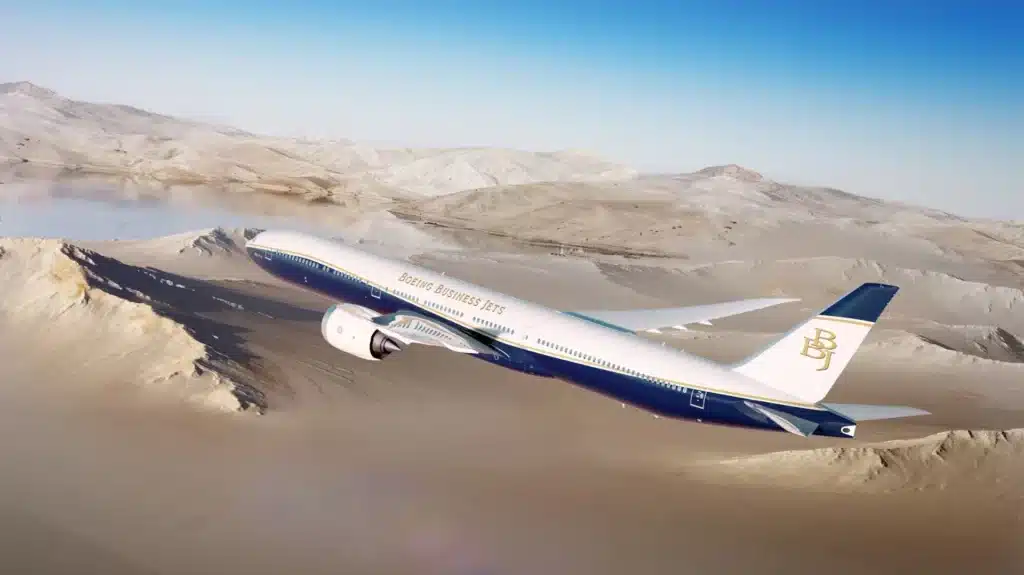
United’s 96 Boeing 777s (74 777-200ERs and 22 777-300ERs) average over 20 years old. Some 777-200s exceed 30 years in service.
Despite age, United announced no 777 retirements planned for 2026, despite some airframes exceeding 30 years in service. The aircraft remain profitable on high-density transpacific routes like San Francisco-Tokyo or Newark-Hong Kong.
Eventually, United needs 777 replacements. Options include more 787-10s, the Boeing 777X (when certified), or theoretically the A350-1000. The canceled A350-900 order occupied this decision space.
767 Fleet: Retirement Accelerating
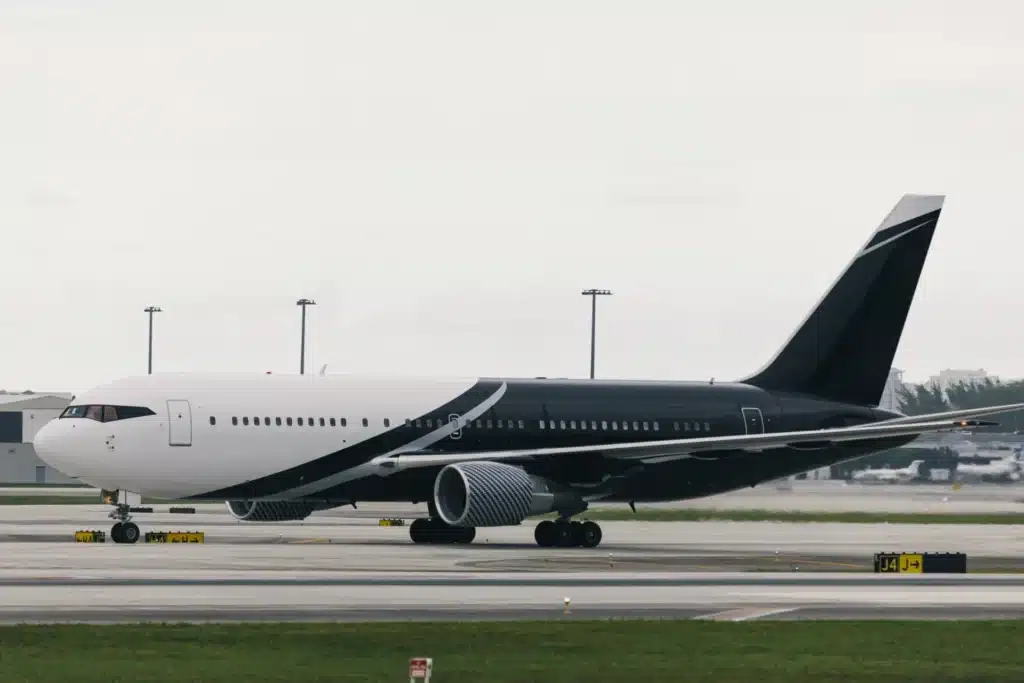
United’s 53 Boeing 767s face retirement by decade’s end. The aircraft served faithfully for 30+ years but lack modern fuel efficiency and passenger amenities.
Incoming 787-9s directly replace 767-300/400ERs. The capacity and range match closely, making transitions smooth for route planning and crew assignments.
How This Decision Affects Airbus
Airbus loses a major US legacy carrier opportunity. The A350 program succeeds globally with over 1,000 orders, but penetration among US mainline carriers remains limited.
US Legacy Carrier Market
Delta Air Lines operates A350-900s successfully. American Airlines flies only Boeing widebodies. United joining Delta would have validated the A350 in the US market.
Instead, United’s cancellation reinforces Boeing’s US legacy carrier dominance. American and United operate all-Boeing long-haul fleets. Only Delta diversifies with Airbus widebodies.
A350 Market Positioning
The A350 thrives in Asia, Middle East, and Europe. Singapore Airlines, Qatar Airways, Cathay Pacific, and numerous European carriers operate large A350 fleets.
But the US market remains Boeing-dominated for widebodies. United’s cancellation doesn’t threaten the A350 program globally, but it limits Airbus’s ability to leverage a major US operator for market positioning.
Airbus Narrowbody Success
United operates significant Airbus A319/A320-family aircraft and ordered 50 A321XLRs. Airbus maintains a narrowbody presence at United even without widebodies.
The A321XLR order remains firm. United views narrowbody and widebody decisions separately – the A321XLR serves transcontinental and thin international routes the 787 cannot economically fly.
What This Means For Boeing
United’s decision represents a massive Boeing victory. The airline committed entirely to the 787 family for long-haul growth through the 2030s.
Strengthened 787 Dominance
The largest 787 order in history (100 aircraft plus 100 options) came from United in 2022. That order, combined with A350 cancellation, cements the 787 as United’s long-haul backbone.
Boeing can point to United as validation of the 787’s operational advantages: fuel efficiency, passenger comfort, operational flexibility, and fleet commonality benefits.
United’s Continued Boeing Partnership
United maintains over 530 total Boeing orders including 430+ 737 MAXs and 140 787s. The relationship extends across narrowbody and widebody fleets.
This partnership provides Boeing pricing leverage when United negotiates with Airbus on narrowbodies. Boeing can offer attractive 737 MAX pricing knowing United’s widebody commitment remains solid. Understanding aircraft leasing and financing shows how multi-type orders provide negotiating power.
777X Opportunity Remains

The Boeing 777X (777-8 and 777-9) eventually receives certification despite delays. United hasn’t ordered the 777X but remains a logical customer.
When United retires its 777-300ERs, the 777-9 offers the most direct replacement. The all-Boeing fleet strategy makes 777X adoption easier than introducing A350-1000s.
Will United Ever Order The Airbus A350 Again?
Never say never in aviation, but the prospects appear extremely unlikely for the foreseeable future.
Rolls-Royce Relationship Damaged
The $175 million legal dispute creates lasting damage. Even if resolved, trust erodes. United remembers Rolls-Royce’s contract breach allegations.
Future A350 orders would require new Rolls-Royce engine agreements. Why would United commit billions to an engine manufacturer it’s currently suing?
787 Investment Already Made
United invested hundreds of millions in 787 infrastructure: maintenance facilities, training equipment, parts networks, operational procedures.
Adding A350s requires parallel investment. The business case weakens when United already possesses capability through 787s.
Fleet Simplification Philosophy
CEO Scott Kirby emphasizes operational efficiency. Fleet complexity costs money through: duplicate training programs, separate parts inventory, divided maintenance expertise, reduced schedule flexibility.
United’s strategy favors fewer aircraft types operated in larger numbers. This philosophy contradicts A350 adoption unless Boeing faces catastrophic production or quality failures.
777X as Alternative
If United needs larger widebodies for 777-300ER replacement, the Boeing 777X offers greater capacity than the A350-1000 while maintaining fleet commonality.
The 777X faces certification delays, but United operates aging 777-300ERs with no immediate retirement pressure. The airline can wait for 777-9 certification rather than introduce Airbus widebodies.
Theoretical Future Scenarios
United might reconsider A350s only if: Boeing faces sustained 787 production or quality crises preventing deliveries, Rolls-Royce resolves the dispute with substantial concessions, 777X certification fails permanently, Airbus offers extraordinary pricing and support terms.
None of these scenarios appears likely. The A350 chapter in United’s history closes definitively.
Strategic Implications for the Industry
United’s decision reflects broader trends reshaping airline fleet strategy in the 2020s.
Fleet Simplification Accelerates
Airlines worldwide pursue fewer aircraft types, as seen in Turkish Airlines fleet expansion strategies. Emirates operates just two types (A380 and 777). Southwest operates only 737s. The efficiency gains from simplification outweigh flexibility benefits from diversity.
United’s all-Boeing widebody fleet exemplifies this trend. The operational cost savings from commonality exceed competitive leverage from splitting orders between manufacturers.
Engine Choice Matters More
The A350’s Rolls-Royce exclusivity represents a strategic liability. Airlines value optionality – the ability to switch engine suppliers for pricing, reliability, or support reasons.
Boeing’s dual-engine options on the 787 and 777X provide competitive advantage. Future aircraft designs may emphasize engine flexibility over single-source optimization.
US Market Remains Boeing Territory
Despite the A350’s global success, US legacy carriers favor Boeing for widebodies. American flies all-Boeing. United flies all-Boeing. Only Delta diversifies with Airbus.
This US market dominance reflects: established Boeing relationships, training and maintenance infrastructure, political considerations (US jobs), operational familiarity.
Airbus succeeds with US narrowbodies (A320 family) but struggles to penetrate legacy carrier widebody fleets. Exploring A330neo vs 787 dynamics shows similar competitive patterns.
Frequently Asked Questions
Why did United Airlines cancel the Airbus A350 order?
United effectively canceled its 45 A350-900 order due to a $175 million legal dispute with Rolls-Royce and strategic fleet simplification. In February 2026, United removed the A350 from expected deliveries after alleging Rolls-Royce breached their 2010 engine agreement. Beyond the legal issues, United pursued all-Boeing widebody fleet strategy emphasizing 787 family expansion. With 140 unfilled 787 orders and recent conversion of 56 additional orders to 787-10s, United determined the A350 created unnecessary fleet complexity without strategic benefit.
Did United Airlines ever operate the Airbus A350?
No, United Airlines never operated or took delivery of any Airbus A350 aircraft. Despite ordering the A350 in 2009 and modifying the order multiple times (25 A350-900s to 35 A350-1000s in 2013, then 45 A350-900s in 2017), United perpetually deferred deliveries. Originally scheduled for 2016-2019, deliveries pushed to 2022, then 2027, and eventually “after 2027.” The aircraft remained contractually on the books but never entered operational planning until United removed them from expected deliveries in February 2026.
Which aircraft replaced the A350 order at United?
The Boeing 787 family, particularly the 787-9 and 787-10, effectively replaced United’s A350 order. United placed a historic order for 100 Boeing 787s in 2022 (plus 100 options), the largest 787 order ever. The airline currently has 140 unfilled 787 orders split between 84 787-9s and 56 787-10s. United recently converted 56 additional 787-9 orders to the larger 787-10 variant, which seats 318 passengers – overlapping with the canceled A350-900’s capacity and mission profile.
Is the Boeing 787 better than the Airbus A350?
Neither aircraft is objectively “better” – the choice depends on airline strategy and network requirements. The A350-900 offers superior range (8,100nm vs 7,635nm for 787-9) and slightly lower fuel burn per seat. However, the 787 provides critical advantages for United: engine flexibility (GEnx or Trent 1000 vs A350’s Rolls-Royce-only), fleet commonality with existing 787s, lower trip costs for frequency-focused networks, and established infrastructure. For United’s specific strategy emphasizing operational efficiency and fleet simplification, the 787 family proved the better choice.
Which airlines operate both the A350 and 787?
Several major airlines operate both aircraft types, most notably Singapore Airlines, All Nippon Airways, and Air India. Singapore Airlines uses A350-900s and 787-10s for different route profiles. ANA operates both extensively across their international network. Air India added A350s while maintaining 787 fleets. Other airlines like Etihad, Avianca, and LATAM also operate both types. These carriers value fleet diversity for route optimization, while airlines like United prioritize simplification through single-manufacturer widebody fleets. Delta operates A350s but not 787s, having chosen Airbus widebodies over additional Dreamliners.
What is United’s current widebody fleet?
United operates an all-Boeing widebody fleet: 787-8, 787-9, 787-10, 767-300/400ER, 777-200ER, and 777-300ER. The 787 family forms the core of United’s future with 140 unfilled orders. The carrier operates approximately 36 787-8s, a major 787-9 fleet, and growing 787-10 numbers. United maintains 96 777s (74 777-200ERs and 22 777-300ERs) for high-density routes despite aging airframes. The 767 fleet (~53 aircraft) faces retirement as 787s arrive. All aircraft are Boeing-manufactured with no Airbus widebodies in service.
Will United order the Boeing 777X?
United has not ordered the 777X but remains a logical future customer for 777-300ER replacement. The airline operates 22 777-300ERs serving ultra-high-density transpacific routes. The Boeing 777-9 offers the most direct replacement with similar capacity while maintaining fleet commonality. United’s all-Boeing widebody strategy makes 777X adoption easier than introducing Airbus alternatives. However, certification delays for the 777X push any decision into the late 2020s. United may expand 787-10 orders instead, or wait for 777-9 certification given its 777-300ERs show no immediate retirement pressure.
Does United use Rolls-Royce engines on other aircraft?
Yes, United operates Rolls-Royce Trent 1000 engines on some Boeing 787s. The 787 offers dual-engine options: General Electric GEnx or Rolls-Royce Trent 1000. United selected Rolls-Royce engines for portions of its 787 fleet, providing operational experience with Rolls-Royce widebody powerplants. This existing relationship makes the A350 dispute more complex – United maintains Trent 1000 agreements while disputing Trent XWB terms. The 787’s engine flexibility allows United to choose GEnx for future orders if the Rolls-Royce relationship deteriorates further.
Conclusion
After 17 years and multiple modifications, United Airlines’ Airbus A350 order is dead. The February 2026 removal from expected deliveries ends the longest-running fleet decision in modern aviation.
The immediate trigger – a $175 million Rolls-Royce dispute – created legal obstacles preventing A350 operations under current terms. But deeper strategic factors sealed the decision.
United pursues aggressive fleet simplification. Operating an all-Boeing widebody fleet delivers operational efficiency through: common pilot training, shared maintenance infrastructure, unified parts inventory, maximum schedule flexibility.
With 140 unfilled Boeing 787 orders, United already possesses long-haul capacity through the 2030s. The recent conversion of 56 orders to larger 787-10s addresses capacity needs the A350-900 would serve.
The 787-10’s 318-seat configuration overlaps with the A350-900’s typical layout. Mission profiles align closely. For United’s network emphasizing frequency over capacity, multiple 787 flights beat fewer A350 flights economically.
Engine flexibility represents a critical 787 advantage. United chooses between GE and Rolls-Royce engines, maintaining leverage. The A350’s Rolls-Royce exclusivity eliminates optionality – a fatal flaw when disputes arise.
For Airbus, losing United eliminates a major US legacy carrier opportunity. The A350 succeeds globally but penetration among US mainline carriers remains limited to Delta. American and United operate all-Boeing long-haul fleets.
For Boeing, United’s commitment validates the 787’s operational advantages. The largest 787 order in history came from United, cementing decades of Boeing widebody dominance at the carrier.
Will United ever reconsider the A350? Extremely unlikely. The Rolls-Royce relationship damaged. The 787 infrastructure investments made. The fleet simplification philosophy established.
Future 777 replacements more likely involve Boeing 777X than Airbus alternatives. United’s all-Boeing widebody strategy appears permanent barring catastrophic Boeing failures.
The decision reflects broader industry trends: fleet simplification accelerates, engine choice matters increasingly, US legacy carriers favor Boeing widebodies overwhelmingly.
United’s message to the industry: operational efficiency beats aircraft diversity. The benefits of fleet commonality outweigh competitive leverage from splitting orders between manufacturers.
For Boeing, this represents more than an order win. It validates that airlines value ecosystem advantages – training, maintenance, parts, flexibility – over marginal fuel burn improvements.
The A350 remains an outstanding aircraft. Singapore Airlines, Qatar Airways, Cathay Pacific, and dozens of carriers operate it successfully. But United’s network, strategy, and Boeing commitment made the A350 strategically redundant.
After 17 years in limbo, the answer finally arrived: United chooses Boeing 787 dominance over Airbus diversity. The A350 order, once valued at over $15 billion, becomes a footnote in United’s fleet history.
The airline industry moves forward with clarity: United flies Boeing widebodies. That won’t change anytime soon. Understanding best long-haul airline strategies shows how fleet decisions shape competitive positioning for decades.