How to Book a Private Jet: First-Timer's Complete Guide
 Radu BalasFounder, The Flying EngineerPublished Updated 9 min read
The first time I arranged a private jet flight for someone other than myself, it was a complete mess. A friend asked me to help him book a charter from London to Mykonos for his wife’s birthday — he assumed that because I write about aviation, I would know the process inside out. I did, at least from the technical side. But translating that into actually getting a quote, comparing operators, understanding what was included in the price, and making sure the right aircraft showed up at the right FBO? That took more phone calls than either of us expected.
Since then, I have walked dozens of first-time flyers through the booking process. The good news: it is far simpler than most people think, and it has become even easier with modern platforms. The bad news: there are traps that catch newcomers every time — hidden fees, the wrong aircraft category, and last-minute surprises. This guide covers everything you need to know to book with confidence, from your first quote request to stepping off the aircraft at your destination.
Key Facts
- You can book a private jet in as little as 4-6 hours, though 2-4 weeks of lead time gets better pricing
- Light jets start around $2,500-$4,000 per flight hour; heavy jets run $8,000-$14,000+ per hour
- Arrive at the FBO (private terminal) just 15-30 minutes before departure — no queues, no boarding groups
- Brokers compare multiple operators for you; direct operators offer simpler pricing with no middleman
- Always request an all-inclusive quote — base rate, fuel surcharges, landing fees, crew costs, and taxes
Step 1: Define What You Actually Need
Before you call anyone or fill out a quote form, get clear on the basics. Every charter quote starts with the same information, and having it ready saves time and avoids back-and-forth.
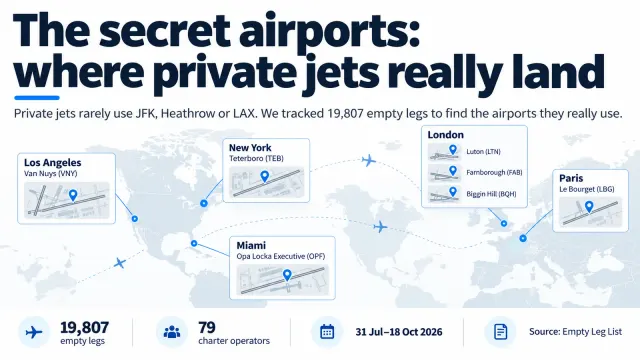
Route. Where are you departing from, and where are you going? Be specific about airports if you have a preference — many cities have multiple options, and the FBO you use can affect pricing. London alone has Luton, Farnborough, Biggin Hill, Stansted, and Northolt for private aviation.
Dates and flexibility. Fixed dates cost more. If you can shift by a day or two, operators may offer better rates or match you with a repositioning aircraft at a discount.
Passenger count and luggage. This determines the aircraft category. Four passengers with carry-on bags? A light jet works. Eight passengers with golf bags and heavy luggage? You are looking at a midsize or super-midsize jet, which costs considerably more per hour.
One-way or return. Round trips are generally more cost-effective because the operator does not need to reposition the aircraft. One-way flights often include a repositioning fee unless the operator can sell the return leg separately.
Step 2: Choose Your Booking Route
There are three main ways to book a private jet, and each suits different situations.
Charter Brokers
A broker acts as your intermediary. They contact multiple operators, compare availability and pricing, and present you with options. This is ideal for first-timers because a good broker handles the complexity for you — vetting operators, checking safety records, negotiating pricing, and managing logistics.
The downside: brokers add a margin (typically 5-15% on top of the operator’s price), and you are one step removed from the team actually flying your aircraft. I have written a detailed guide on how to find the right charter broker if you want to go this route.
Direct Operators
Companies like VistaJet, NetJets, and regional operators fly their own aircraft. Booking directly means transparent pricing with no broker commission, and you deal with the same company from quote to landing. The trade-off is limited fleet selection — you are restricted to what that operator has available.
Online Platforms and Apps
Platforms like Victor, XO, and Jettly aggregate availability from multiple operators and let you compare, book, and pay online. Think of them as the booking.com of private aviation. They work well for straightforward trips and offer speed, but for complex itineraries (multi-leg, international, large groups), a human broker still tends to deliver better results.
Step 3: Request and Compare Quotes
Once you have chosen your booking route, submit your trip details and request quotes. Here is what to look for when comparing them.
Watch for hidden costs: The base hourly rate is never the full price. A complete quote should include the aircraft hourly rate, fuel surcharges, landing and handling fees at both airports, crew overnight costs (if applicable), Federal Excise Tax or VAT, catering, and any repositioning charges. If a quote looks suspiciously cheap, it is probably missing several of these line items.
Aircraft age and condition. A 2022 Phenom 300E and a 2008 Phenom 300 are technically the same type, but the cabin experience is dramatically different. Ask about the aircraft’s year of manufacture and last refurbishment date.
Safety credentials. Look for operators certified by ARG/US (Platinum or Gold rating), Wyvern Wingman, or IS-BAO. These are independent safety audits that matter. Any reputable broker or platform will only list operators that meet at least one of these standards.
Cancellation terms. Every charter contract has a cancellation policy. Some offer full refunds up to 72 hours before departure; others lock you in the moment you sign. Read this section carefully before committing.
Step 4: Understand What Different Jets Cost
Aircraft pricing varies enormously based on category. Here is a realistic breakdown of what to expect in 2026:
| Jet Category | Passengers | Range | Hourly Rate (2026) | Example Aircraft |
|---|---|---|---|---|
| Very Light Jet | 4-5 | 1,000-1,500 nm | $2,000-$3,000 | Citation Mustang, Phenom 100 |
| Light Jet | 6-8 | 1,500-2,200 nm | $2,500-$4,500 | Phenom 300E, Citation CJ3+ |
| Midsize Jet | 7-9 | 2,500-3,500 nm | $4,000-$6,500 | Citation Latitude, Hawker 800XP |
| Super-Midsize Jet | 8-10 | 3,500-4,500 nm | $5,500-$8,000 | Citation Sovereign, Challenger 350 |
| Heavy Jet | 10-16 | 4,500-6,500 nm | $8,000-$14,000 | Global 7500, Falcon 7X, G650 |
| VIP Airliner | 16-50+ | 6,000+ nm | $15,000+ | BBJ, ACJ320 |
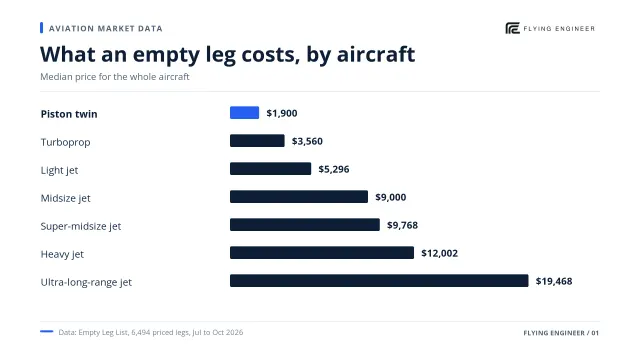
These are hourly rates — your total cost depends on flight time, fuel surcharges, and ground fees. A light jet from London to Nice (roughly 2 hours) might total $7,000-$12,000 all-in. A heavy jet from New York to London (7+ hours) could run $70,000-$100,000 depending on the aircraft. For a full breakdown, see my complete private jet costs guide.
Insider tip: If your trip is flexible, ask your broker or platform about positioning flights. When an aircraft needs to reposition from one city to another anyway, operators sometimes offer that leg at a heavy discount. I cover this in detail in my guide to empty leg flights.
Step 5: Sign the Contract and Pay
Once you have chosen your aircraft and operator, you will receive a charter agreement. This is a legally binding contract — treat it like one.
Review the fine print. Pay particular attention to cancellation clauses, liability limitations, and what happens if the operator needs to substitute a different aircraft. Substitution clauses are common in the industry, and you should know whether you will be notified in advance and whether you can refuse.
Payment. Most charter operators require full payment in advance, typically via wire transfer for amounts over $25,000. Some accept credit cards, though many add a 3% processing surcharge. Jet cards and membership accounts work on pre-loaded balances.
Provide passenger details. You will need to supply full legal names, dates of birth, and government-issued ID numbers for all passengers. For international flights, passport details and visa documentation must be submitted in advance — allow at least 48 hours for the operator to process customs paperwork.
Step 6: What Happens on the Day
This is the part that surprises every first-timer: how absurdly simple it is compared to commercial flying.
Arrive at the FBO. FBO stands for Fixed Base Operator — it is the private terminal at the airport. Most FBOs have their own entrance, parking, and lounge separate from the main commercial terminal. Arrive 15-30 minutes before your departure time. That is not a suggestion — it is genuinely all the time you need.
Check-in. Walk in, give your name, show your ID. The staff will confirm your passenger manifest and handle your luggage. There are no metal detectors or security lines in most cases (though some airports, particularly in the US, have brief TSA screenings for certain routes). Your bags go straight from the car to the aircraft — no carousel, no waiting.
Board the aircraft. Your car can often pull up directly to the aircraft on the ramp. The crew will greet you, walk you through the cabin, and brief you on safety features. For first-timers, do not hesitate to ask the pilots questions — they are generally happy to chat about the aircraft and the route.
In-flight. Depending on the aircraft, you will have Wi-Fi, a refreshment centre, and possibly a full galley for hot meals on larger jets. Cabin temperature, lighting, and entertainment are under your control. If you requested specific catering — champagne, a particular meal, dietary requirements — it will be waiting for you.
Arrival. At your destination, you taxi to the FBO, step off the aircraft, and your ground transportation is typically waiting on the ramp. Luggage is transferred directly. The entire arrival process, from wheels down to sitting in your car, takes five to ten minutes.
What to Bring on Your First Flight
- Government-issued photo ID (passport for international flights)
- Your booking confirmation or charter agreement reference
- Any specific items for customs declaration (international only)
- A sense of relaxation — the crew handles everything else
Common Mistakes First-Timers Make
Choosing the wrong aircraft size. Undersizing is the most common error. Four passengers with heavy luggage in a very light jet means a cramped cabin and possibly payload restrictions that reduce your range. It is better to go one category up than to squeeze into something too small.
Booking too late. While you can book a charter in hours, last-minute bookings are always more expensive. Aircraft availability drops, positioning fees increase, and you lose negotiating leverage. Two to four weeks of lead time gives you the best combination of availability and pricing.
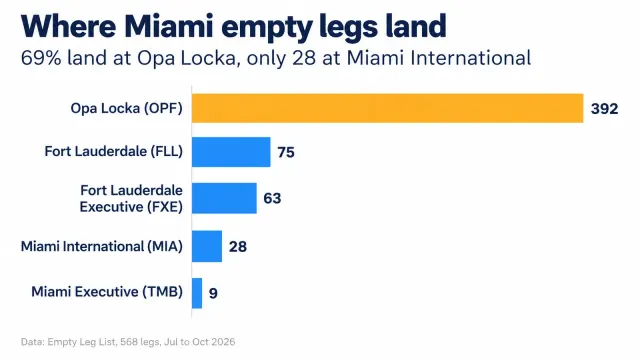
Ignoring repositioning costs. If you are flying one-way and the aircraft has to reposition (fly empty) back to its base, you may be charged for that return leg. Ask upfront whether repositioning is included in your quote.
Not asking about the specific aircraft. "A light jet" is not good enough. Ask for the tail number, the year, and photos of the actual cabin. The difference between a well-maintained recent aircraft and an older one can be significant.
Skipping travel insurance. Charter cancellation insurance exists and is worth considering, especially for high-value bookings. If weather, mechanical issues, or personal emergencies force a cancellation, you want to know you are covered.
How Far in Advance Should You Book?
There is no hard rule, but here is what I have seen work best across different scenarios:
Peak season travel (Christmas/New Year, summer Mediterranean, ski season, major events like the Monaco Grand Prix or Dubai Airshow): book 4-8 weeks ahead. Aircraft availability gets tight and prices spike.
Regular business or leisure travel: 2-4 weeks gives you solid aircraft selection and competitive pricing.
Urgent or last-minute: Same-day or next-day bookings are possible but expect premium pricing and limited aircraft choices. This is where broker relationships pay off — a good broker can source aircraft faster than you can on your own.
The Bottom Line
Booking a private jet for the first time is less complicated than it looks. The process boils down to six steps: define your needs, choose how to book, compare quotes, pick your aircraft, sign and pay, and show up at the FBO. The hardest part for most people is simply getting accurate, comparable quotes — and that is exactly what a good broker or modern platform solves for you.
Start with your trip details, request quotes from at least two or three sources, and do not be afraid to ask questions. The best operators and brokers expect first-timers to need guidance, and the good ones will walk you through every detail without pressure.
For more on what private flying actually costs, read my full pricing guide. If you are looking for an operator, my guide to the best charter companies worldwide is a good starting point. And if you want to experience private aviation at a fraction of the cost, take a look at how empty leg flights work.
About the author
Radu Balas
Founder, Flying Engineer
View author profile Editorial policy and correctionsExplore Aircraft Charter
Browse 1,780 companiesGet private jet charter quotes
Tell us your trip and we will pass it to operators that fly it.