
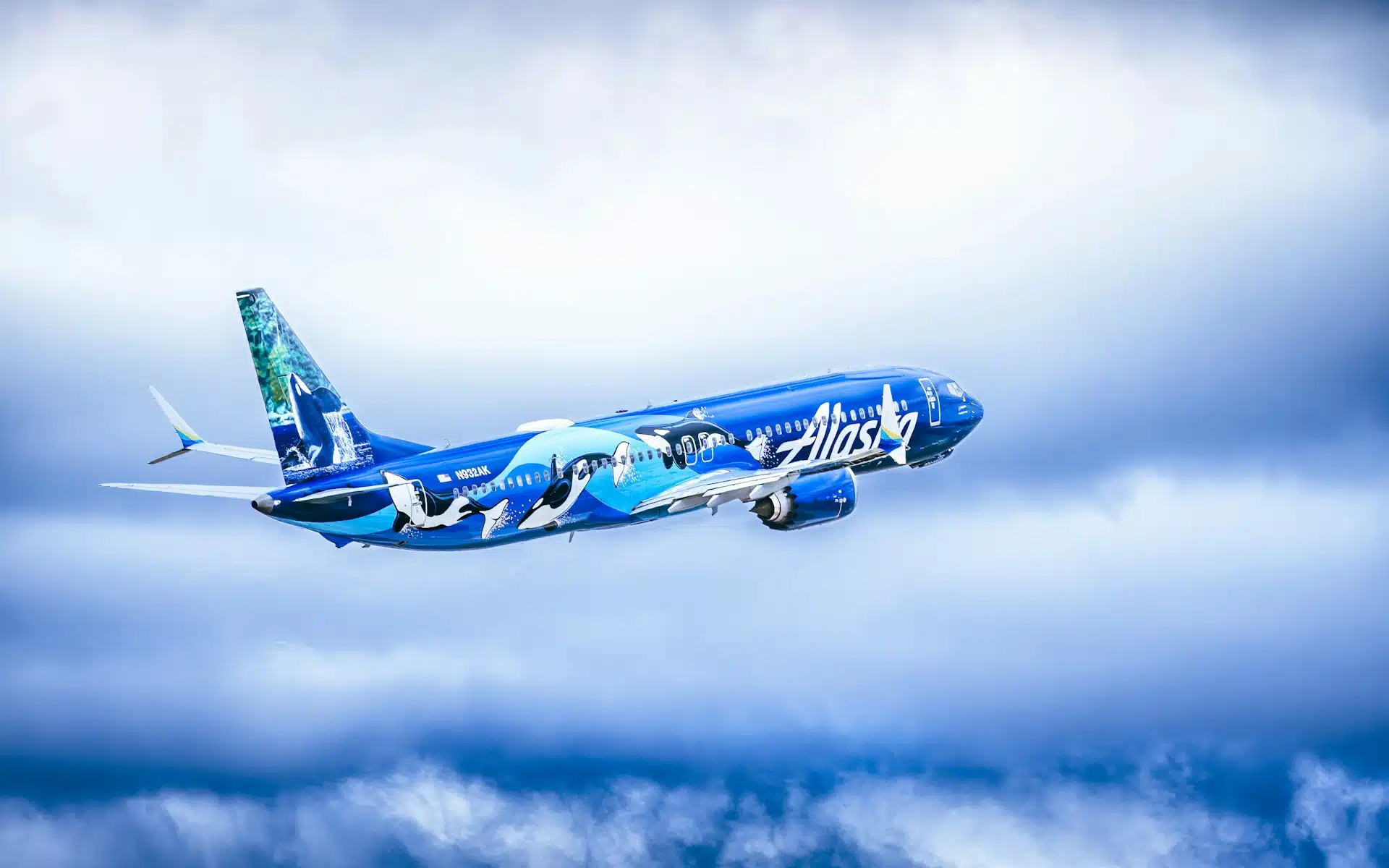
Alaska Airlines has permanently banned a passenger following a vaping incident aboard a Boeing 737 MAX 9 operating a domestic flight from Seattle to Sacramento. The passenger triggered a lavatory smoke detector at cruising altitude, prompting the flight crew to request law enforcement intervention upon landing.
The incident occurred April 3, 2026, on a morning departure from Seattle-Tacoma International Airport bound for Sacramento International Airport. Alaska Airlines confirmed the passenger was removed from the aircraft upon arrival and has been placed on the carrier’s no-fly list for violating federal aviation safety regulations.

The Incident
Electronic smoking devices remain strictly prohibited on all commercial flights operating in United States airspace under Federal Aviation Administration regulations. The Alaska Airlines vaping incident highlights ongoing enforcement challenges as airlines work to prevent fire hazards associated with lithium battery-powered devices in confined aircraft environments.
Flight crews are trained to treat any smoke detector activation as a serious safety event requiring immediate assessment and response protocols. The incident underscores the aviation industry’s zero-tolerance approach to activities that could compromise passenger safety or trigger emergency procedures during flight operations.
Alaska Airlines Flight AS-[number] departed Seattle-Tacoma International Airport at approximately 9:20 a.m. Pacific Time for the routine 90-minute flight to California’s capital region. The Boeing 737 MAX 9 carried passengers on the short-haul route that Alaska Airlines operates multiple times daily between the Pacific Northwest and Northern California.
The situation developed when a passenger entered one of the aircraft’s lavatories and used an electronic vaping device while the aircraft cruised at altitude. The action immediately triggered the lavatory’s smoke detection system, which alerted the cabin crew to a potential fire emergency.
Air traffic control audio recordings captured the flight deck crew reporting the incident to ground controllers while the aircraft remained en route. The captain requested that law enforcement personnel meet the aircraft upon arrival in Sacramento to address the passenger who violated federal regulations.
Flight attendants followed standard operating procedures for smoke detector activations, which include visual inspection of the affected area, crew coordination, and passenger identification. The crew determined the alarm resulted from vaping rather than an actual fire or other emergency condition.
The aircraft continued to Sacramento without diversion or emergency declaration. Flight operations remained normal throughout the incident, with the crew maintaining regular communication with air traffic control regarding the enforcement matter awaiting ground handling.

Alaska Airlines Response
The flight landed safely at Sacramento International Airport shortly after 11:00 a.m. local time, according to reports. Sacramento County Sheriff’s deputies and airport security personnel were positioned at the arrival gate to meet the aircraft as requested by the flight crew.
Law enforcement officers boarded the aircraft following passenger deplaning procedures. The individual responsible for triggering the smoke alarm was identified, removed from the terminal area, and questioned regarding the violation of federal aviation regulations.
Alaska Airlines issued a statement confirming the incident and the carrier’s response. The airline stated that the passenger involved has been permanently banned from traveling on Alaska Airlines and its regional partners, effective immediately.
The carrier commended its flight crew for professional handling of the situation and adherence to safety protocols. Alaska Airlines apologized to other passengers aboard the flight for any inconvenience or concern the incident may have caused during their travel.
An Alaska Airlines spokesperson emphasized the carrier’s commitment to passenger safety and compliance with all federal aviation regulations. The airline reiterated that electronic smoking devices, including e-cigarettes and vaping equipment, are strictly prohibited from use on all flights regardless of duration or destination.
Why Vaping Is Prohibited on Aircraft
Federal Aviation Administration regulations classify the use of electronic smoking devices aboard aircraft as a federal offense subject to civil penalties. The FAA maintains that vaping on airplane rules apply universally to all passengers without exception, treating violations with the same seriousness as traditional smoking infractions.
Electronic cigarettes and vaping devices contain lithium-ion batteries capable of thermal runaway if damaged, defective, or improperly handled. These batteries can ignite spontaneously, creating fire hazards particularly dangerous in the confined environment of an aircraft cabin at altitude.
Aircraft smoke detection systems are calibrated to extreme sensitivity, designed to alert crews to even trace amounts of smoke or vapor. The systems cannot distinguish between vapor from electronic devices and smoke from actual fires, requiring crews to investigate every activation as a potential emergency.
Passengers are permitted to transport electronic smoking devices and spare lithium batteries in carry-on baggage only. Devices must remain powered off and protected from accidental activation throughout the flight. Use of these devices is prohibited from the moment passengers board until they fully deplane at their destination.
The regulations extend beyond takeoff and landing phases, applying throughout the entire flight including time spent at the gate with doors closed. Airlines enforce these rules consistently across all aircraft types and route networks, with violation consequences ranging from warnings to permanent travel bans and federal fines.
Civil penalties for vaping on commercial flights can reach tens of thousands of dollars per violation. The FAA pursues enforcement action against passengers who interfere with flight crew duties or violate safety regulations, with vaping incidents meeting both criteria when smoke detectors are triggered.
Crew Response and Safety Procedures
Cabin crew members receive comprehensive training on handling prohibited device usage and smoke detector activations. Initial response protocols require immediate visual inspection of the affected area to determine whether an actual fire exists or if the activation resulted from vapor or other non-emergency causes.
Flight attendants are authorized to confiscate electronic smoking devices used in violation of regulations. Crews document incidents through detailed written reports submitted to airline safety departments and, when necessary, federal authorities for enforcement consideration.
When smoke detectors activate, cabin crew must verify the source, ensure no fire hazard exists, and identify responsible passengers. The process involves crew coordination, passenger interviews, and communication with the flight deck regarding the nature and resolution of the event.
Captains hold ultimate authority over aircraft operations and passenger conduct. Flight commanders can direct crew to move passengers to different seats, restrict lavatory access, or request law enforcement intervention upon landing for serious violations including vaping incidents that trigger detection systems.

Similar Incidents Across the Industry
The Alaska Airlines incident follows a pattern of increased vaping-related events aboard commercial flights globally. Aviation authorities report rising numbers of passengers attempting to use electronic smoking devices in lavatories, apparently believing the confined spaces will prevent detection.
A Virgin Australia flight recently experienced a more serious vaping-related emergency when an electronic device ignited during descent. Emergency response crews were placed on standby as the aircraft approached its destination, though the flight landed safely without fire spreading beyond the initial device.
Multiple carriers have reported passengers caught vaping in lavatories during flights, with some incidents resulting in emergency landings when crews could not immediately determine whether actual fires existed. These diversions cost airlines tens of thousands of dollars in fuel, crew scheduling, and passenger accommodation expenses.
European and Asian carriers have implemented similar strict enforcement policies, with several airlines maintaining permanent ban lists for passengers caught vaping aboard aircraft. The global aviation industry has adopted unified approaches to electronic smoking device violations, recognizing the universal fire safety concerns these incidents create.
Airlines regularly remind passengers through pre-flight announcements, safety cards, and in-flight entertainment systems that smoking and vaping remain prohibited throughout flights. Despite these notifications, enforcement actions continue as some passengers either ignore regulations or remain unaware of the prohibition’s scope.
Passenger Responsibilities and Compliance
Passengers boarding commercial flights accept responsibility for compliance with all safety regulations as a condition of transportation. Airline contracts of carriage explicitly prohibit smoking and vaping, granting carriers authority to refuse future travel to violators.
Travelers must familiarize themselves with regulations before flying, including restrictions on electronic devices, lithium batteries, and prohibited activities. Ignorance of rules does not exempt passengers from enforcement consequences when violations occur.
The no-smoking and no-vaping rules exist to protect all passengers and crew from fire hazards that could prove catastrophic in flight. Lithium battery fires are extremely difficult to extinguish and can release toxic gases in enclosed spaces, creating life-threatening conditions at altitude where emergency landing options may be limited.
Airlines provide designated areas at airports where passengers can use electronic smoking devices before boarding and after deplaning. Some carriers offer nicotine replacement products for passengers on long-haul flights, though availability varies by airline and route.
Passengers planning air travel should ensure all electronic smoking devices are powered off, batteries are protected from short circuits, and devices are stored in carry-on baggage only. Spare lithium batteries must be individually protected to prevent terminal contact that could cause fires.
The aviation industry continues emphasizing safety compliance as passenger volumes recover to pre-pandemic levels. Airlines, regulators, and safety organizations maintain that even minor rule violations can cascade into serious incidents when they involve fire risks or smoke detection system activations.
Alaska Airlines joins numerous carriers enforcing strict consequences for vaping violations, reflecting industry-wide commitment to maintaining safe cabin environments. The permanent ban issued to the passenger involved in the Seattle-Sacramento incident sends clear signals that airlines will not tolerate activities threatening flight safety.
Federal authorities may pursue additional penalties against the passenger beyond the airline ban, though no charges have been publicly announced. The FAA typically reviews crew reports and may initiate civil penalty proceedings against passengers whose actions violated federal aviation regulations.
As airlines work to prevent similar incidents, passenger education remains a primary focus alongside enforcement measures. Carriers continue refining communication strategies to ensure travelers understand that electronic smoking device regulations apply throughout entire flight operations without exceptions for aircraft type, flight duration, or passenger status.