Top Defense Aircraft Manufacturers in the World (2026 Edition)
 Radu BalasPublished 17 min read
Global military aviation power rests in the hands of a select group of defense aircraft manufacturers capable of designing, producing, and supporting advanced combat and transport aircraft for armed forces worldwide. These military aircraft manufacturers shape geopolitical influence, enable national defense strategies, and drive technological innovation that often filters into commercial aviation.
Understanding the top fighter jet manufacturers and aerospace defense companies requires examining production capabilities, technological leadership, export success, and strategic importance to their home nations and allied countries. The top aircraft manufacturers in the defense sector operate on scales rivaling entire national economies, employing hundreds of thousands of engineers, technicians, and support staff while managing billion-dollar development programs spanning decades.
This comprehensive 2026 ranking analyzes the world's leading defense aviation companies, examining their signature aircraft programs, technological capabilities, market positions, and influence on global military balance. From American giants dominating fifth-generation fighter production to emerging Asian manufacturers challenging established hierarchies, the defense aircraft industry landscape continues evolving amid shifting geopolitical realities and accelerating technological change.
What Defines a Top Defense Aircraft Manufacturer?
Leading defense aircraft manufacturers distinguish themselves through multiple factors beyond simple production volume.
Production scale and capability represent fundamental requirements. Top manufacturers operate advanced production facilities capable of building complex aircraft incorporating stealth technology, advanced avionics, and sophisticated weapons systems. These facilities require billions in capital investment and decades of accumulated engineering expertise.
Technological leadership separates elite manufacturers from followers. Companies developing fifth-generation stealth fighters, hypersonic platforms, or autonomous combat systems demonstrate innovation capabilities that most competitors cannot match. Technology advantages translate to superior combat effectiveness and strong export demand from allied nations.
Global export success validates manufacturing excellence and political influence. Countries purchasing foreign military aircraft make strategic decisions affecting national security for decades. Manufacturers securing major international contracts demonstrate superior products, competitive pricing, and strong government support backing sales efforts.
Military contracts and program stability provide the revenue foundation supporting long-term operations. Defense manufacturers require steady contract flow from domestic military customers to maintain engineering teams, production facilities, and supply chains. Multi-decade fighter programs like the F-35 create sustained business bases supporting company operations through economic cycles.
Top Defense Aircraft Manufacturers in 2026
The following companies represent the world's most capable and influential defense aircraft manufacturers based on technology, production, and market position.
Lockheed Martin (United States)
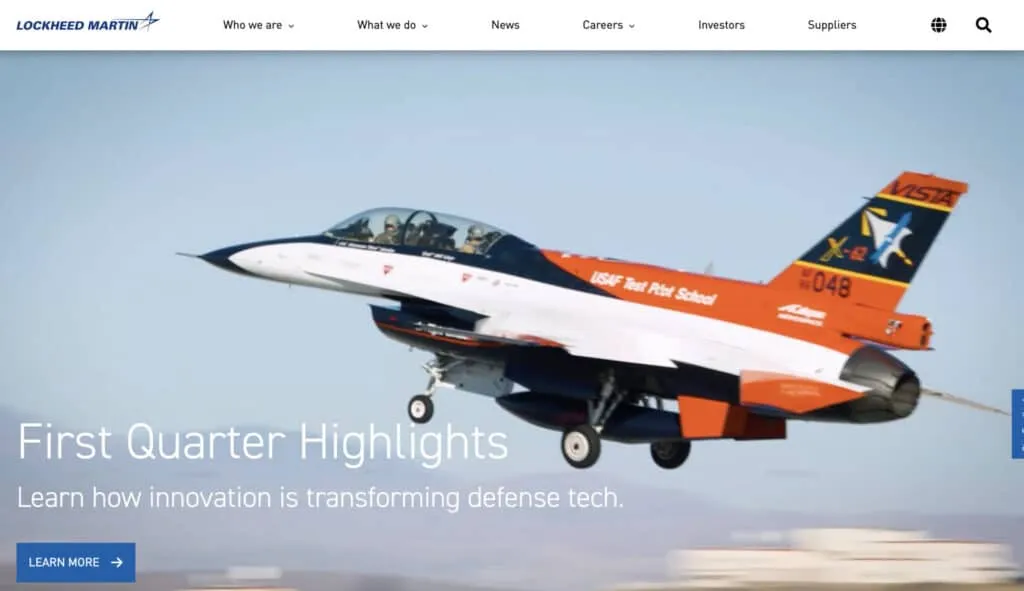
Lockheed Martin leads global fighter jet manufacturers by revenue, technology, and production volume, operating as the world's largest defense contractor with aerospace representing its core business.
Key aircraft programs include:
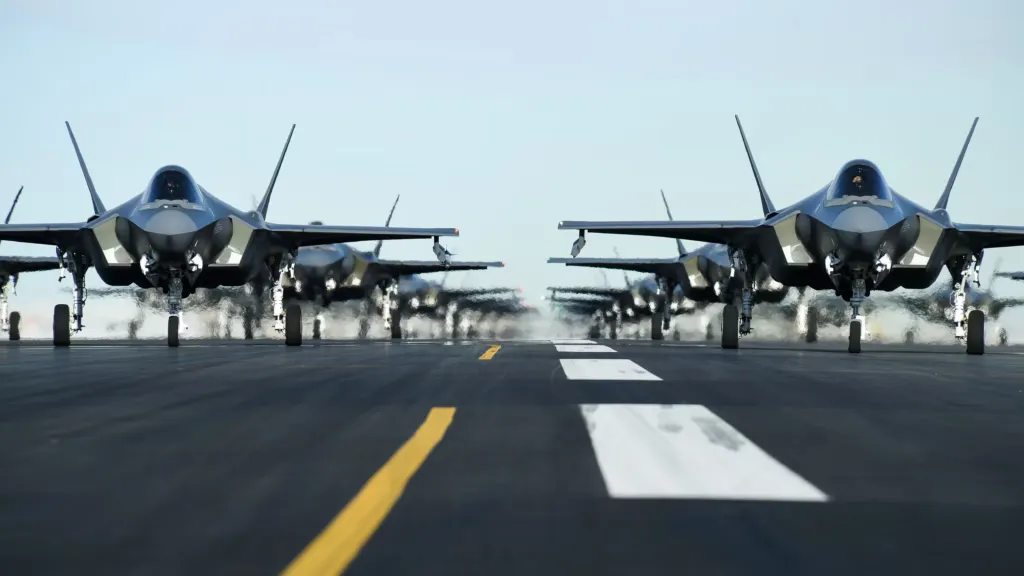
- F-35 Lightning II: Fifth-generation stealth multirole fighter deployed by U.S. and nine allied nations, with over 1,000 aircraft delivered and production continuing through the 2040s
- F-22 Raptor: Air superiority stealth fighter operated exclusively by the U.S. Air Force
- C-130 Hercules: Tactical transport aircraft with variants serving military and civilian operators globally
- F-16 Fighting Falcon: Multirole fighter with over 4,600 built, remaining in production for export customers
Lockheed Martin's dominance stems from its F-35 program, representing the largest fighter production run in modern history and securing the company's position through mid-century. The F-35's export success with countries including UK, Japan, Israel, and Australia creates decades of support revenue beyond initial aircraft sales.
The company maintains advanced manufacturing facilities in Fort Worth, Texas (F-35, F-16) and Marietta, Georgia (C-130), employing roughly 120,000 people globally with aerospace representing approximately 40% of total company revenue exceeding $60 billion annually.
Boeing Defense, Space & Security (United States)
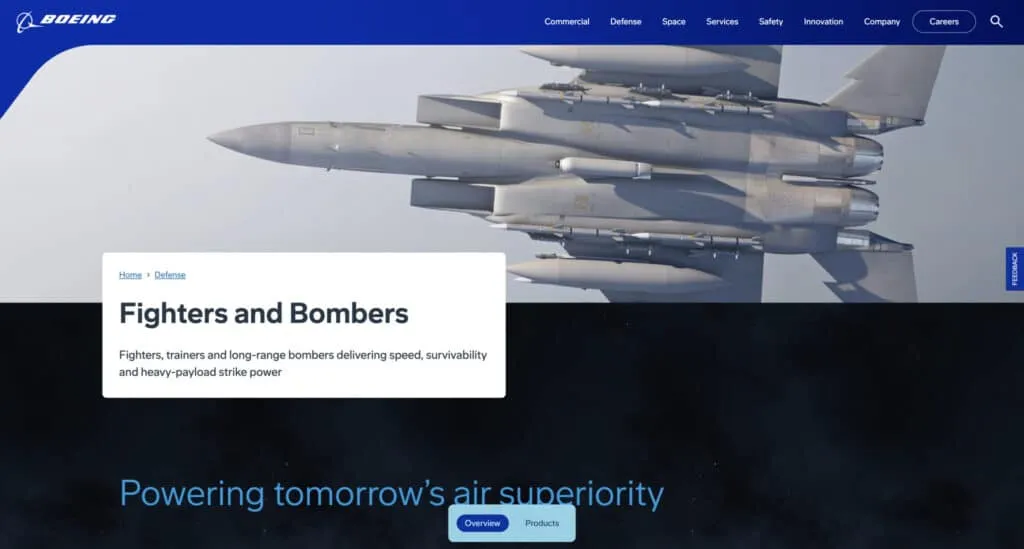
Boeing's defense division operates as the second-largest U.S. defense contractor, leveraging commercial aviation expertise for military applications while maintaining distinct combat aircraft programs.
Key military aircraft programs include:
- F-15EX Eagle II: Advanced fourth-generation fighter variant ordered by U.S. Air Force as F-15C/D replacement
- F/A-18 Super Hornet: Carrier-based multirole fighter serving U.S. Navy and select export customers
- KC-46 Pegasus: Aerial refueling tanker based on 767 commercial airframe
- P-8 Poseidon: Maritime patrol aircraft based on 737 platform
- AH-64 Apache: Attack helicopter operated by U.S. Army and 18 international customers
Boeing Defense generates roughly $25-30 billion annual revenue, though profitability has suffered from development issues on programs including KC-46 and MQ-25 unmanned tanker. The company's F-15EX and F/A-18 Block III programs provide steady production through the 2030s, while commercial derivative military aircraft leverage existing platforms reducing development costs.
The defense division employs approximately 50,000 people, operating major facilities in St. Louis, Missouri (fighters) and facilities across the United States supporting rotorcraft, space, and intelligence programs.
Northrop Grumman (United States)
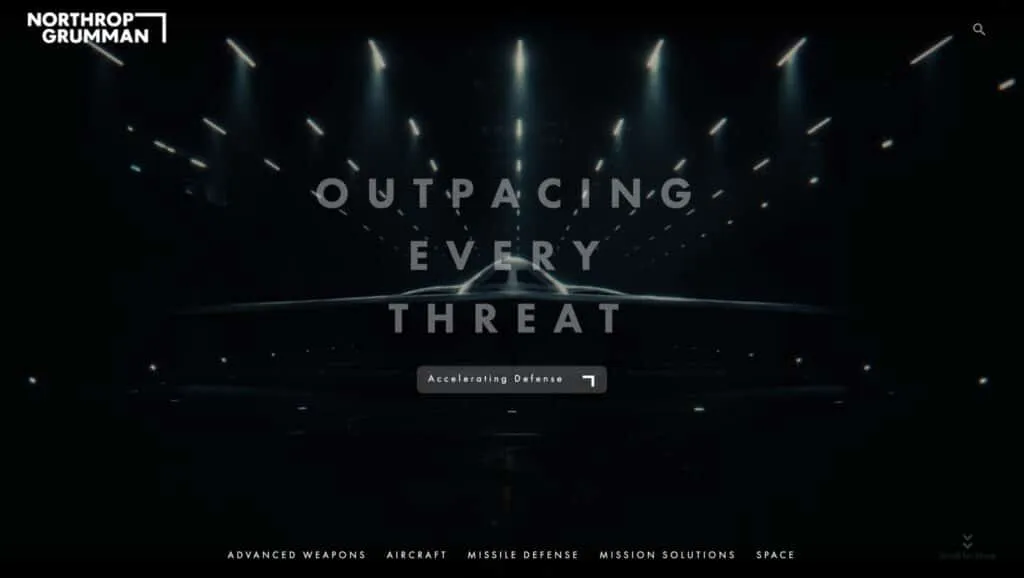
Northrop Grumman specializes in advanced aircraft including stealth bombers, unmanned systems, and specialized reconnaissance platforms, differentiating from traditional fighter-focused competitors.
Key aircraft programs include:
- B-21 Raider: Next-generation stealth bomber under development with first flight completed, planned production of at least 100 aircraft
- B-2 Spirit: Stealth strategic bomber with 20 aircraft operational, representing most advanced bomber technology until B-21 entry
- RQ-4 Global Hawk: High-altitude long-endurance unmanned reconnaissance aircraft
- E-2 Hawkeye: Carrier-based airborne early warning aircraft
Northrop Grumman's expertise in low-observable (stealth) technology positions the company uniquely among defense manufacturers. The B-21 program represents the company's largest aircraft production commitment in decades, with estimated program value exceeding $200 billion including development and production.
The aerospace division generates approximately $15-18 billion annual revenue, with the company maintaining specialized facilities in Palmdale, California for bomber production and Melbourne, Florida for unmanned systems.
Airbus Defence and Space (Europe)
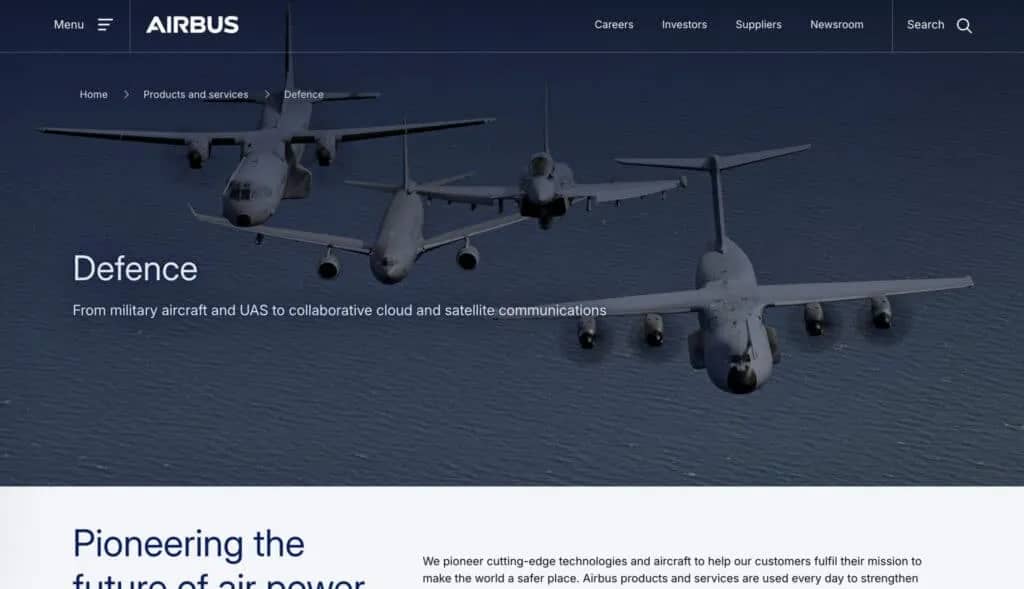
Airbus Defence and Space operates as Europe's largest defense aerospace manufacturer, combining French, German, Spanish, and British capabilities in a multinational structure supporting European defense integration.
Key military aircraft programs include:
- A400M Atlas: Tactical transport aircraft serving European NATO members and select export customers
- Eurofighter Typhoon: Multirole fighter produced in consortium with BAE Systems and Leonardo, serving UK, Germany, Italy, Spain, and export customers
- A330 MRTT: Multirole tanker transport based on commercial A330 platform, selected by numerous international customers
Airbus Defence generates roughly 11-13 billion euros annual revenue, though profitability varies significantly due to development challenges on programs including A400M. The division's strength lies in transport and tanker aircraft where commercial aviation heritage provides competitive advantages through platform commonality and lower development costs.
The multinational structure allows Airbus Defence to compete for contracts across European nations, though national champion dynamics sometimes favor country-specific manufacturers for fighter programs. The company employs approximately 35,000 people across European facilities.
BAE Systems (United Kingdom)
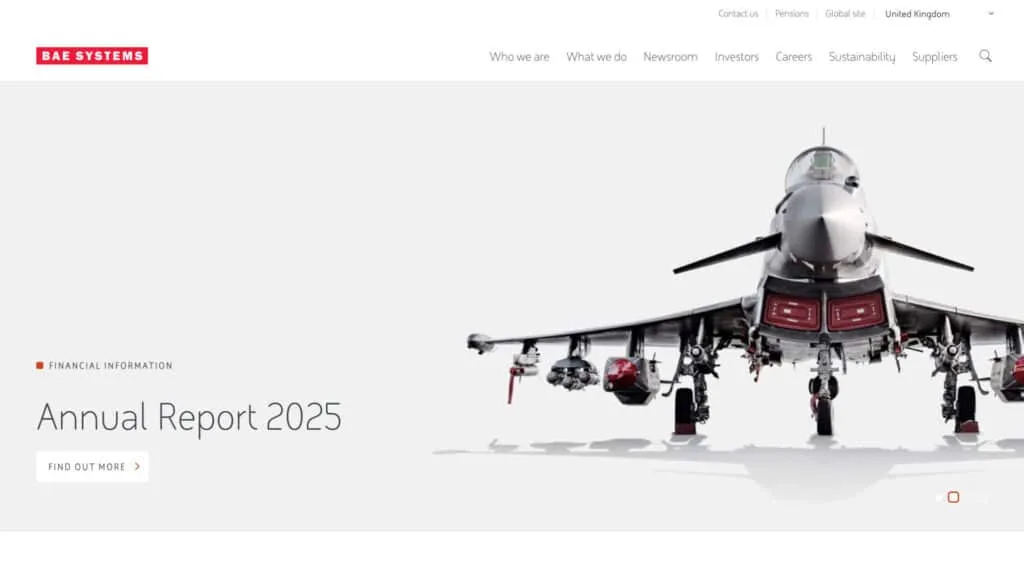
BAE Systems operates as the UK's largest defense contractor and a major combat aircraft manufacturer, maintaining unique capabilities in naval aviation and advanced fighter development.
Key aircraft programs include:
- Eurofighter Typhoon: Produced in consortium arrangement, BAE serves as prime contractor for UK production
- F-35 Lightning II: BAE produces significant aircraft components including aft fuselage and tail assemblies
- Hawk: Advanced jet trainer exported globally for pilot training
- Tempest: Sixth-generation fighter under development in partnership with Italy and Japan, targeting 2030s entry
BAE's aircraft division generates approximately 8-10 billion pounds annual revenue, with the company maintaining major production facilities in Warton and Samlesbury, England. The Tempest program represents the company's most significant development commitment, aiming to s쳮d Typhoon in UK service.
International partnerships characterize BAE's strategy, with the company participating in U.S. programs including F-35 while leading European collaborative efforts. This dual-hemisphere approach provides revenue diversification and technology access unavailable to purely national champions.
Dassault Aviation (France)
Dassault Aviation operates as France's national fighter manufacturer, maintaining independent development capabilities unique among European aerospace companies.
Key aircraft programs include:
- Rafale: Multirole fighter serving French military and export customers including Egypt, Qatar, India, UAE, and others
- Mirage 2000: Legacy fighter remaining in service with several operators
- Falcon business jets: Military variants provide transport and reconnaissance platforms
Dassault's Rafale program has achieved significant export success in recent years, with orders from Middle Eastern and Asian customers validating French independent fighter development. The company generates roughly 5-7 billion euros annual revenue from defense and civil aviation combined.
France's commitment to independent military capability ensures steady domestic orders supporting Dassault operations, while export success demonstrates the Rafale's competitiveness against American and Russian alternatives. The company employs approximately 12,000 people with production centered in France.
United Aircraft Corporation / Sukhoi (Russia)
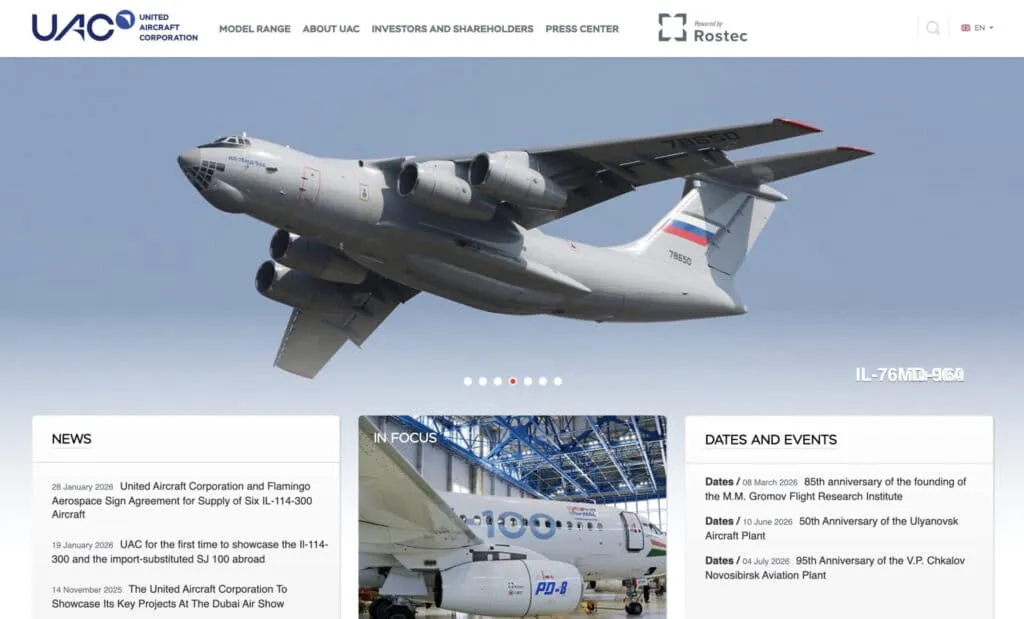
United Aircraft Corporation (UAC) consolidates Russian aircraft manufacturing including the Sukhoi and MiG fighter brands, operating as Russia's primary military aviation industrial base.
Key aircraft programs include:
- Su-35: Advanced fourth-generation fighter exported to China, Indonesia, and others
- Su-57: Fifth-generation stealth fighter in limited production for Russian Air Force
- Su-30/Su-34: Multirole fighter variants serving Russian forces and export customers
- Il-76: Strategic transport aircraft
Russian defense aircraft manufacturing faces significant challenges following 2022 international sanctions limiting access to Western components and technology. Production rates have declined for some programs, though domestic Russian military demand continues supporting operations.
UAC employs roughly 100,000 people across consolidated entities, generating revenue difficult to assess accurately due to limited financial transparency. Export markets traditionally included India, China, Vietnam, and Algeria, though some relationships have evolved as customers pursue alternatives or develop indigenous capabilities.
Aviation Industry Corporation of China (AVIC)
AVIC operates as China's primary military and commercial aircraft manufacturer, consolidating numerous previously independent entities into a state-owned conglomerate pursuing advanced aviation capabilities.
Key military aircraft programs include:
- J-20: Fifth-generation stealth fighter entering Chinese Air Force service in growing numbers
- J-10: Indigenous multirole fighter
- J-16: Multirole fighter derivative of Su-27 platform
- Y-20: Strategic transport aircraft
AVIC's capabilities have advanced dramatically over recent decades, progressing from license-producing Soviet designs to developing indigenous stealth fighters and transport aircraft. The company employs approximately 400,000 people across consolidated entities, representing China's massive investment in aerospace independence.
Chinese defense aircraft primarily serve domestic military requirements, with limited export success compared to Western or even Russian manufacturers. Technology transfer restrictions and customer preference for proven platforms limit AVIC's international market penetration despite competitive pricing.
Hindustan Aeronautics Limited (India)
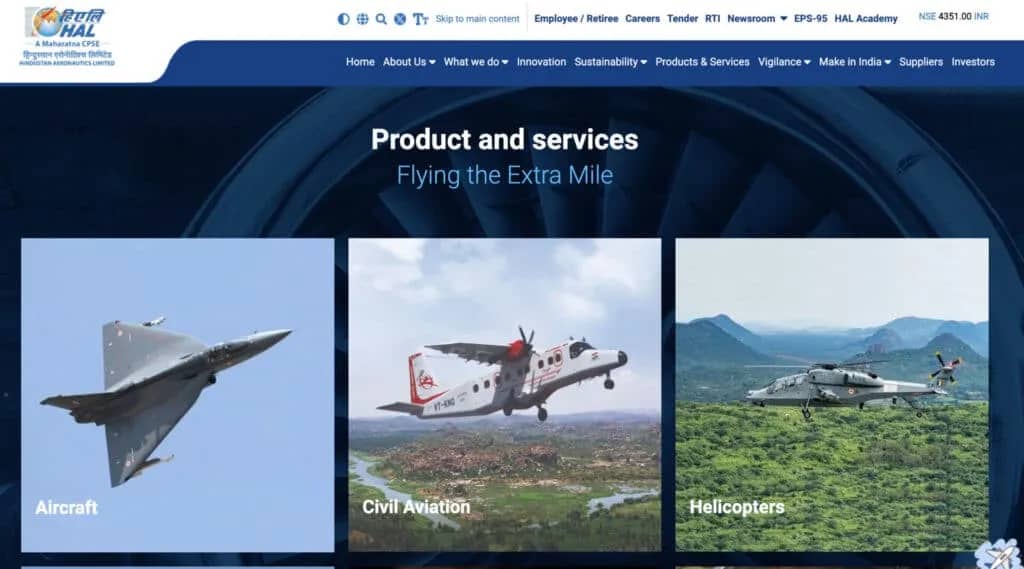
HAL serves as India's primary defense aircraft manufacturer, producing licensed designs while developing indigenous capabilities through programs including the Tejas light fighter.
Key aircraft programs include:
- Tejas: Indigenous light fighter entering Indian Air Force service after extended development
- Su-30MKI: Licensed production of Russian Sukhoi fighter variant
- Hawk: Licensed production of BAE advanced trainer
HAL generates roughly $3-4 billion annual revenue, employing approximately 30,000 people. The company's production capabilities support India's military aviation needs while indigenous development programs aim to reduce dependence on foreign suppliers.
Development challenges including extended timelines and capability shortfalls have affected programs like Tejas, though the aircraft now enters service providing HAL with production experience supporting future indigenous fighter development including the Advanced Medium Combat Aircraft (AMCA) stealth fighter program.
Embraer Defense & Security (Brazil)
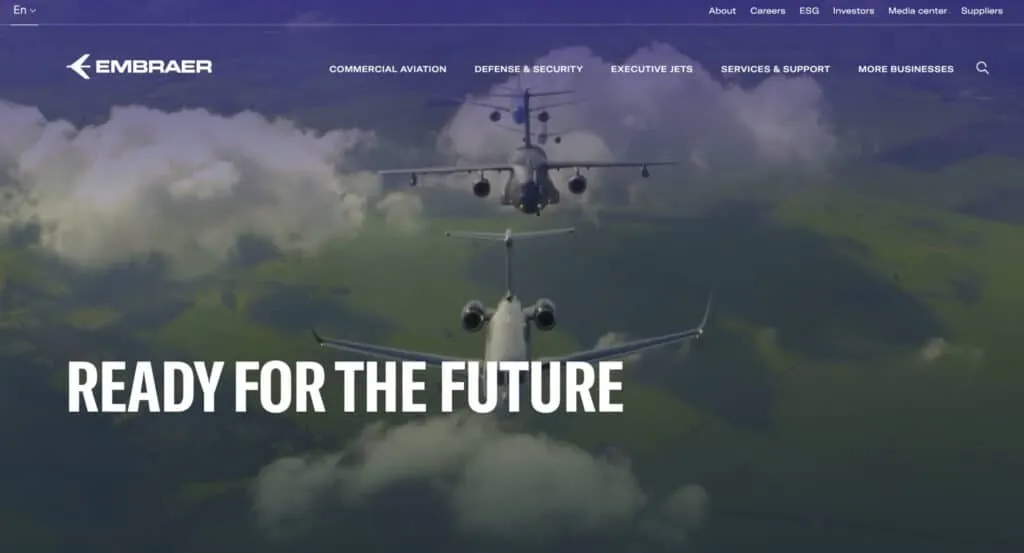
Embraer's defense division leverages commercial regional jet expertise for military applications, focusing on transport, surveillance, and light combat aircraft rather than competing in advanced fighter markets.
Key military aircraft programs include:
- KC-390: Tactical transport and tanker aircraft competing with C-130 in select markets
- A-29 Super Tucano: Turboprop light attack and training aircraft exported to numerous countries
- E-99/R-99: Surveillance and reconnaissance platforms based on commercial ERJ-145 regional jet
Embraer Defense generates approximately $300-600 million annual revenue, representing a smaller portion of total company operations compared to commercial aviation. The KC-390 program aims to establish Embraer as a credible alternative to established transport aircraft manufacturers, with Portugal, Hungary, and others ordering the type alongside Brazilian military forces.
Defense Aircraft Manufacturer Comparison Table
| Manufacturer | Country/Region | Key Aircraft | Primary Specialty |
|---|---|---|---|
| Lockheed Martin | United States | F-35, F-22, F-16, C-130 | Fifth-gen fighters, tactical transport |
| Boeing Defense | United States | F-15EX, F/A-18, KC-46, AH-64 | Advanced fighters, tankers, rotorcraft |
| Northrop Grumman | United States | B-21, B-2, RQ-4, E-2 | Stealth bombers, unmanned systems |
| Airbus Defence | Europe (Multi-national) | A400M, Eurofighter, A330 MRTT | Transport aircraft, tankers |
| BAE Systems | United Kingdom | Eurofighter, F-35 components, Tempest | Fighter development, next-gen programs |
| Dassault Aviation | France | Rafale, Mirage 2000 | Multirole fighters, independent development |
| UAC/Sukhoi | Russia | Su-35, Su-57, Su-30, Il-76 | Fighter aircraft, strategic transport |
| AVIC | China | J-20, J-10, J-16, Y-20 | Indigenous fighters, strategic lift |
| HAL | India | Tejas, Su-30MKI (licensed) | Licensed production, indigenous development |
| Embraer Defense | Brazil | KC-390, A-29 Super Tucano | Tactical transport, light attack aircraft |
Who Leads the Global Market?
The United States maintains overwhelming dominance in global defense aircraft manufacturing through technology leadership, production scale, and export success.
American manufacturers collectively control approximately 50-60% of global military aircraft market share by revenue, led by Lockheed Martin's F-35 program representing the largest single fighter production effort in history. The U.S. defense industrial base benefits from massive Pentagon procurement budgets exceeding $800 billion annually, ensuring steady domestic demand supporting manufacturers through development risks.
U.S. manufacturers also dominate global fighter exports, with F-35, F-16, and F-15 variants serving dozens of allied nations. This export success creates decades of support revenue, spare parts sales, and upgrade programs extending well beyond initial aircraft deliveries.
European manufacturers collectively represent roughly 15-20% of global market share, led by Airbus Defence and Space. European defense manufacturing faces challenges from fragmented national markets, limited integration despite multinational programs, and relatively smaller defense budgets compared to the United States.
China emerges as a growing force in defense aviation, though primarily serving domestic requirements. AVIC's production volumes for aircraft including J-20 and J-10 likely exceed many Western programs, but limited export success and technology transfer restrictions prevent Chinese manufacturers from achieving market share commensurate with production volumes.
Russia's market position has declined from Cold War peaks, with international sanctions, production challenges, and customers seeking alternatives reducing UAC's global influence. Traditional export markets including India increasingly pursue domestic development or Western alternatives, though cost-conscious customers still purchase Russian designs.
Fighter Jets vs Transport Aircraft Makers
Defense aircraft manufacturers typically specialize in either combat aircraft (fighters, bombers, attack platforms) or support aircraft (transports, tankers, reconnaissance), with few maintaining world-class capabilities across both categories.
Fighter-focused manufacturers including Lockheed Martin (F-35, F-22, F-16), Dassault (Rafale), and Sukhoi (Su-35, Su-57) concentrate on combat capabilities requiring advanced aerodynamics, weapons integration, sensor fusion, and stealth technology. Fighter development demands cutting-edge technology and represents the highest-value segment of defense aviation.
Transport aircraft specialists including Airbus Defence (A400M, A330 MRTT) and Embraer Defense (KC-390) leverage commercial aviation heritage, applying civilian transport technology to military requirements. Transport aircraft emphasize reliability, cargo capacity, and operational economics rather than combat performance.
Some manufacturers maintain capabilities across both segments. Boeing Defense produces fighters (F-15, F/A-18) and support aircraft (KC-46, P-8), though often struggles maintaining excellence in both areas simultaneously as development resources and engineering talent compete between programs.
The fighter versus transport specialization reflects fundamental differences in required capabilities, development approaches, and customer requirements. Countries seeking combat capability typically purchase fighters from specialized manufacturers rather than transport specialists attempting fighter development.
Military Aircraft Technology Race
Defense aircraft manufacturers compete intensely in several key technology areas determining future combat effectiveness.
Stealth and Low-Observable Technology
Only a handful of manufacturers have demonstrated production stealth aircraft capability. Lockheed Martin (F-22, F-35), Northrop Grumman (B-2, B-21), Chinese AVIC (J-20), and Russian UAC (Su-57) possess operational stealth platforms, though capability levels vary significantly.
Stealth technology encompasses airframe shaping, materials science, engine integration, and weapons carriage, requiring sophisticated manufacturing processes and quality control. The technology barrier prevents most manufacturers from fielding competitive fifth-generation fighters despite investment in development programs.
Artificial Intelligence and Autonomous Systems
AI integration represents the next major capability frontier, with manufacturers developing systems enabling autonomous flight, sensor fusion, threat assessment, and weapons employment. The U.S. Air Force's Collaborative Combat Aircraft program exemplifies this trend, pairing manned fighters with AI-controlled unmanned wingmen.
Boeing, Northrop Grumman, and General Atomics lead unmanned combat aircraft development in the United States, while Chinese manufacturers pursue similar capabilities. AI systems promise force multiplication allowing fewer platforms to achieve greater combat effects, potentially revolutionizing air warfare doctrine.
Hypersonic Platforms
Hypersonic aircraft and weapons development attracts significant investment from major manufacturers and governments. Platforms capable of sustained hypersonic flight (Mach 5+) would revolutionize strike capabilities, reconnaissance, and potentially air superiority, according to advanced defense research programs.
Lockheed Martin's SR-72 concept, various Chinese programs, and Russian development efforts represent attempts to field operational hypersonic aircraft. However, enormous technical challenges including thermal management, materials science, and propulsion integration mean operational systems remain years or potentially decades away.
Export Power and Global Influence
Defense aircraft exports represent geopolitical tools extending beyond commercial transactions, creating dependencies, enabling interoperability, and cementing alliances.
The United States leads global fighter exports by value and influence, with F-35 sales to countries including Japan, Australia, and European NATO members ensuring decades of military cooperation and interoperability. American export policies use fighter sales to reward allies, strengthen partnerships, and extend U.S. influence.
France's Dassault Aviation has achieved notable export success with Rafale sales to Middle Eastern and Asian customers seeking alternatives to American platforms. These sales demonstrate willingness to export advanced capabilities without the political conditions sometimes accompanying U.S. transfers.
Russian manufacturers historically competed on price and willingness to export to customers rejected by Western suppliers, though this market niche has eroded as customers pursue quality over cost and sanctions complicate transactions. Chinese manufacturers aspire to export markets but face technology transfer restrictions and customer skepticism about capabilities and support.
Export success requires not just capable aircraft but also government support, financing packages, technology transfer agreements, and long-term support commitments. Manufacturers lacking home government backing struggle competing against state-supported rivals even with superior products.
Future of Defense Aircraft Manufacturing
The defense aircraft industry faces transformative changes over the next decade as technology, budgets, and strategic priorities evolve.
Next-Generation Fighter Programs
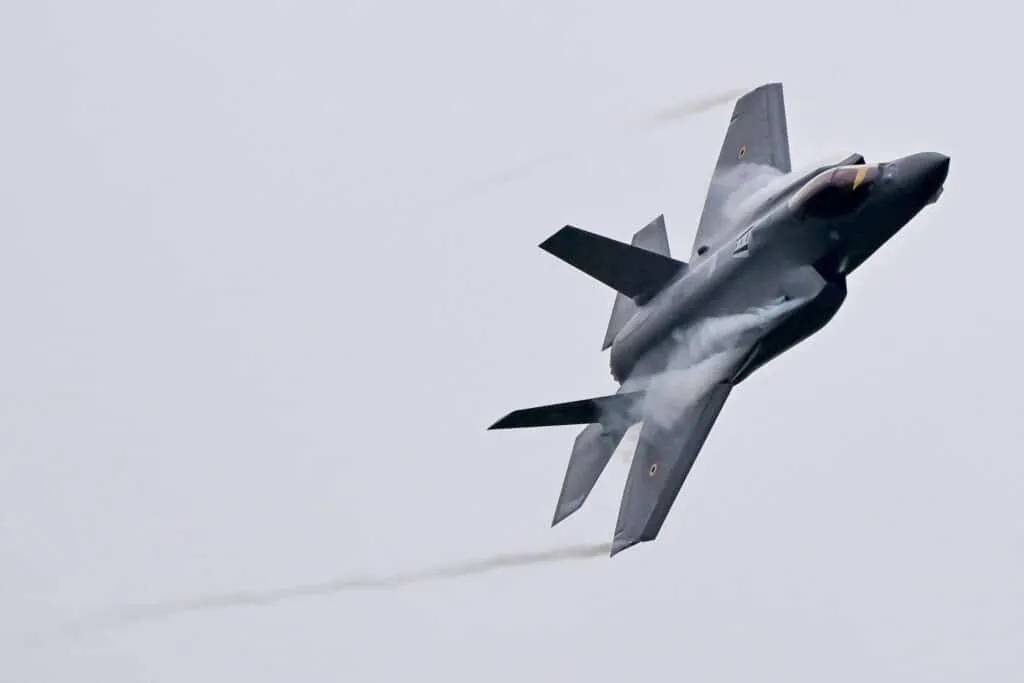
Multiple sixth-generation fighter programs aim to s쳮d current fifth-generation platforms. The U.S. Air Force's Next Generation Air Dominance (NGAD) program, UK/Italy/Japan Tempest, and France/Germany/Spain Future Combat Air System (FCAS) represent billions in development investment targeting 2030s operational capability.
These programs emphasize open architecture, rapid technology insertion, and shorter service lives compared to legacy programs like F-22 or Typhoon that remain in service for decades. The shift toward more frequent platform updates may fundamentally change defense aircraft development economics and manufacturer business models.
Unmanned Combat Aircraft
Unmanned platforms increasingly complement or replace traditional manned fighters for specific missions. Loyal wingman concepts pair AI-controlled unmanned aircraft with manned platforms, while specialized unmanned systems perform reconnaissance, electronic warfare, or strike missions independently.
Boeing's MQ-28 Ghost Bat, Kratos Defense XQ-58 Valkyrie, and various Chinese unmanned combat aircraft represent this trend. These platforms cost significantly less than manned fighters while accepting higher attrition risks, potentially changing force structure economics favoring quantity over individual platform capability.
Directed Energy and Advanced Weapons
High-energy lasers and microwave weapons promise revolutionary defensive capabilities against missiles, drones, and potentially aircraft. Manufacturers integrate these systems onto aircraft platforms, though significant power generation and thermal management challenges remain before widespread deployment.
Lockheed Martin, Boeing, and Northrop Grumman lead U.S. directed energy development, with testing progressing on ground and airborne platforms. Successful integration could fundamentally change air combat dynamics, providing near-unlimited magazines replacing expendable missiles.
Industry Consolidation Pressures
Rising development costs and declining procurement quantities create consolidation pressure, potentially reducing the number of viable manufacturers globally. Programs like F-35 or B-21 require such massive investment that few companies can compete independently, forcing partnerships or consolidation.
Smaller manufacturers may struggle sustaining independent development capabilities, potentially forcing exits from combat aircraft markets or consolidation into larger entities. European manufacturers face particular pressure given fragmented markets and limited individual country procurement volumes, though specialized aerospace suppliers continue supporting multiple prime contractors, as reported by international defense analysis organizations.
Frequently Asked Questions
Who are the top defense aircraft manufacturers in the world?
The top defense aircraft manufacturers are Lockheed Martin (USA), Boeing Defense (USA), Northrop Grumman (USA), Airbus Defence & Space (Europe), BAE Systems (UK), Dassault Aviation (France), United Aircraft Corporation/Sukhoi (Russia), AVIC (China), Hindustan Aeronautics Limited (India), and Embraer Defense (Brazil). Lockheed Martin leads globally by revenue and technology, particularly through its F-35 Lightning II program representing the largest fighter production in modern history. American manufacturers collectively control approximately 50-60% of the global military aircraft market.
Which countries make their own fighter jets?
Countries with indigenous fighter jet development and production capability include the United States (Lockheed Martin F-35, Boeing F-15/F-18), France (Dassault Rafale), UK (BAE Systems Typhoon), Russia (Sukhoi Su-35/Su-57), China (AVIC J-20/J-10), Sweden (Saab Gripen), and India (HAL Tejas). Several European nations collaborate on the Eurofighter Typhoon program through multinational partnerships. Most countries purchase fighters from these manufacturers rather than developing indigenous capabilities due to the enormous cost and technical complexity of modern fighter development.
What is the most advanced military aircraft manufacturer?
Lockheed Martin holds the strongest claim to most advanced military aircraft manufacturer based on its operational fifth-generation stealth fighters (F-22 and F-35) deployed in larger numbers than any competitor. Northrop Grumman demonstrates comparable advanced capabilities through its B-2 Spirit and next-generation B-21 Raider stealth bomber programs. Chinese manufacturer AVIC has fielded the J-20 stealth fighter demonstrating significant technological advancement, though assessment of true capabilities remains difficult given limited public information. Technology leadership spans multiple domains including stealth, sensors, AI integration, and weapons systems rather than any single manufacturer dominating all areas.
How much does it cost to develop a new fighter jet?
Modern fighter jet development costs typically range from $10-40 billion depending on program scope, technology requirements, and production quantities. The F-35 program's total development cost exceeded $55 billion, while more modest programs like Sweden's Gripen required roughly $2-4 billion in development funding. Fifth-generation stealth fighters cost significantly more to develop than conventional fourth-generation designs due to low-observable technology, advanced sensors, and software integration complexity. These enormous costs explain why most countries purchase existing designs rather than developing indigenous fighters, and why manufacturers require domestic military orders supporting development before aircraft reaches export markets.
Will fighter jets be replaced by drones?
Fighter jets will likely operate alongside unmanned combat aircraft rather than being completely replaced in the foreseeable future. Manned fighters provide flexibility, judgment, and capabilities that autonomous systems cannot yet match, particularly in complex air-to-air combat requiring split-second decisions. However, unmanned platforms will increasingly perform specific missions including reconnaissance, strike against heavily defended targets, and loyal wingman operations supporting manned aircraft. The U.S. Air Force and other militaries plan mixed manned-unmanned forces rather than complete replacement, with unmanned aircraft handling higher-risk missions while manned platforms provide command, complex decision-making, and oversight of autonomous systems.
Which defense aircraft manufacturer exports the most globally?
Lockheed Martin leads global defense aircraft exports by value through F-35 sales to nine partner nations plus additional foreign military sales customers, with over 1,000 aircraft delivered and hundreds more on order. The F-16 program adds additional export success with over 4,600 built and production continuing for customers including Taiwan, Slovakia, and Bulgaria. Boeing Defense also maintains strong export presence through F-15 and F/A-18 sales to countries including Saudi Arabia, Qatar, and Kuwait. European manufacturers including Dassault (Rafale) and Airbus Defence (Typhoon, A400M) maintain significant but smaller export market shares, according to international arms transfer databases.
Conclusion
The defense aircraft manufacturing industry concentrates among a select group of companies possessing the technology, scale, and government support necessary to develop and produce modern military aviation platforms. American manufacturers dominate through technological leadership, production volume, and export success, while European, Russian, and emerging Asian manufacturers maintain regional influence and specialized capabilities.
Technology evolution toward stealth, AI integration, unmanned platforms, and potentially hypersonic flight creates both opportunities and challenges for manufacturers investing billions in next-generation capabilities. The industry faces consolidation pressure as development costs escalate and procurement quantities decline, potentially reducing the number of viable independent manufacturers globally.
Geopolitical competition ensures continued investment in military aviation despite costs, as nations recognize air superiority as fundamental to modern warfare. The manufacturers successfully navigating technological change, managing program costs, and securing domestic and export orders will shape global military balance for decades to come.