
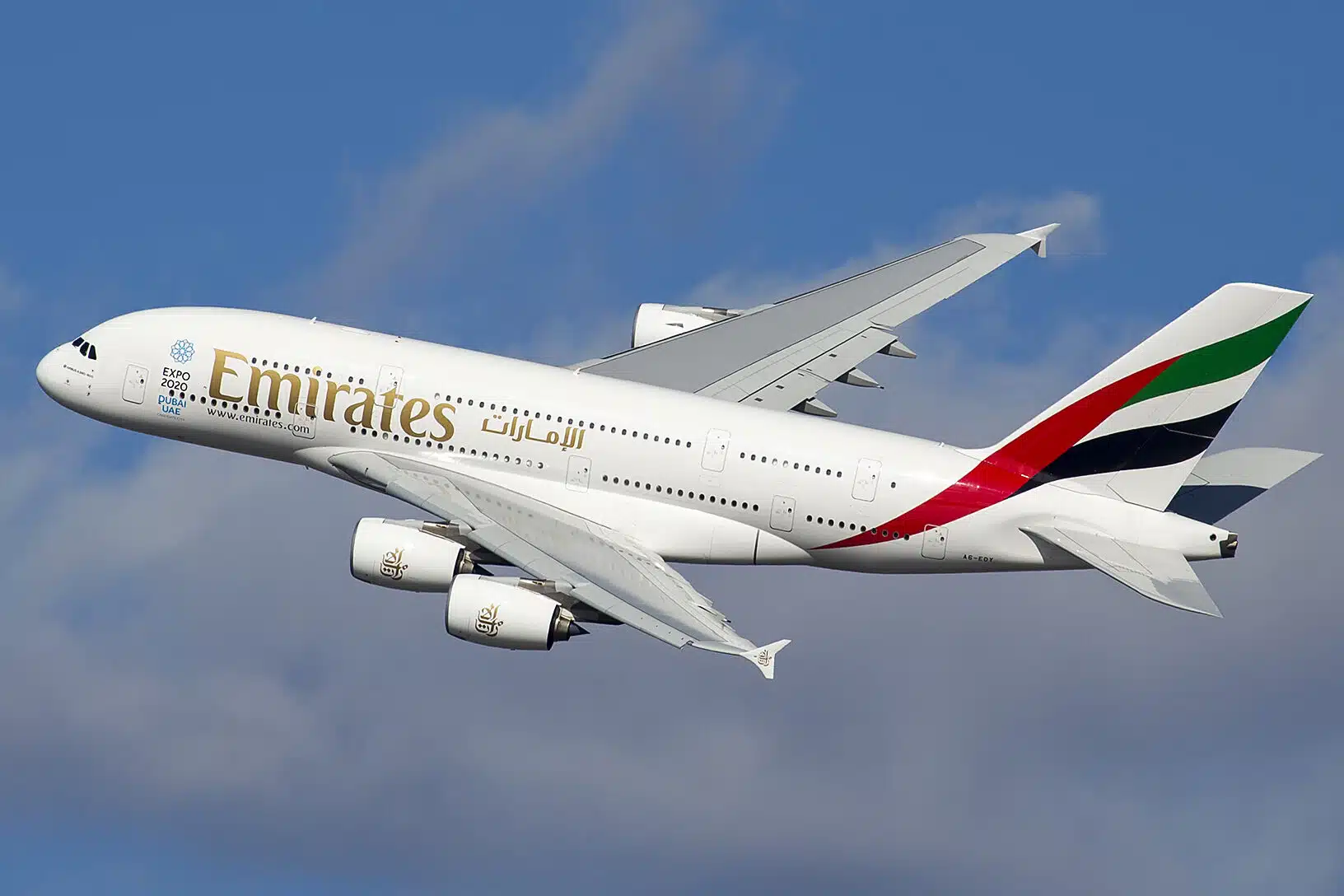
Despite the aviation industry’s shift toward smaller, more fuel-efficient twin-engine aircraft, the Airbus A380 is experiencing a remarkable resurgence this winter.
Schedule data from Cirium for November 2025 through February 2026 reveals how heavily a handful of trunk routes still depend on the double-decker aircraft.
Emirates and Qatar Airways continue to operate the world’s densest A380 networks, concentrating massive volumes of capacity into their main hubs.
These seven city pairs alone account for thousands of A380 movements and many billions of available seat miles over four months.
Understanding the Rankings
This analysis focuses on total flight frequency during the winter 2025–26 season (November 2025 through February 2026).
Each route’s importance is measured by flights operated, seats offered, and Available Seat Miles (ASMs) generated.
ASMs represent the total passenger-carrying capacity, calculated by multiplying seats by distance flown.
Unsurprisingly, Dubai dominates the rankings—six of the seven busiest A380 routes connect through Emirates’ home base at Dubai International Airport (DXB).
1. Dubai → London Heathrow (DXB–LHR)

Emirates
| Metric | Value |
|---|---|
| Total Flights | 720 (1,440 movements including returns) |
| Seats | ~714,000 |
| ASMs | ~2.44 billion |
| Distance | 3,420 miles (5,504 km) |
| Airline | Emirates |
Why It Works
Dubai-London Heathrow reigns as the world’s busiest A380 route by a significant margin.
Both airports rank among the globe’s most important aviation hubs, connecting two of the strongest premium travel markets worldwide.
Extreme slot scarcity at London Heathrow (LHR) makes the A380 essential—maximizing passenger capacity within limited takeoff and landing windows.
Massive connecting flows link Europe, Asia, Africa, and Australia through Dubai’s hub-and-spoke network.
High First Class and Business Class demand drives revenue, with corporate travel, luxury tourism, and premium leisure creating consistent yield.
Emirates operates approximately six daily A380 services on this route, supplemented by additional Boeing 777 flights.
British Airways also competes with three daily flights, occasionally deploying its own A380s.
For travelers seeking seamless ground connections, premium chauffeur services at London airports complement the luxury A380 experience.
2. Dubai → Bangkok (DXB–BKK)

Emirates
| Metric | Value |
|---|---|
| Total Flights | 480 (one direction) |
| Seats | ~535,600 |
| ASMs | ~1.63 billion |
| Distance | 3,050 miles (4,904 km) |
| Airline | Emirates |
Why It Works
Dubai-Bangkok ranks as one of Emirates’ highest-volume routes, combining massive origin-destination demand with strong connecting traffic.
Peak seasonal flows during winter, Thai festivals, and honeymoon travel create consistently high load factors.
The high-density A380 configuration allows Emirates to offer competitive fares while maintaining profitability on this price-sensitive route.
Bangkok serves as a major connecting point for travelers from Europe and the Middle East heading to secondary Thai cities, Vietnam, Cambodia, and other Southeast Asian destinations.
Premium tourism demand remains strong, with Dubai and Bangkok both ranking as top global luxury travel destinations.
Business travelers appreciate private jet options in Bangkok for regional connectivity beyond commercial schedules.
3. Doha → Bangkok (DOH–BKK)

Qatar Airways
| Metric | Value |
|---|---|
| Total Flights | 380 (one direction) |
| Seats | ~390,000 |
| ASMs | ~1.28 billion |
| Distance | 3,284 miles (5,285 km) |
| Airline | Qatar Airways |
Why It Works
This route represents Qatar Airways’ strategic deployment of the A380 to one of Asia’s most important tourism and business hubs.
Bangkok Suvarnabhumi International Airport (BKK) generates extremely high two-way tourism demand, particularly during winter months.
The route is notably premium-heavy, with strong Business Class and First Class uptake from both leisure and corporate travelers.
Qatar Airways’ hub bank timings at Doha Hamad International Airport (DOH) create ideal connections to Europe, Africa, and the Americas.
The A380’s capacity perfectly matches demand patterns while maintaining Qatar Airways’ premium service standards.
Ground connections at both ends are seamless, with chauffeur services in Doha providing door-to-door luxury for premium passengers.
4. Dubai → Manchester (DXB–MAN)
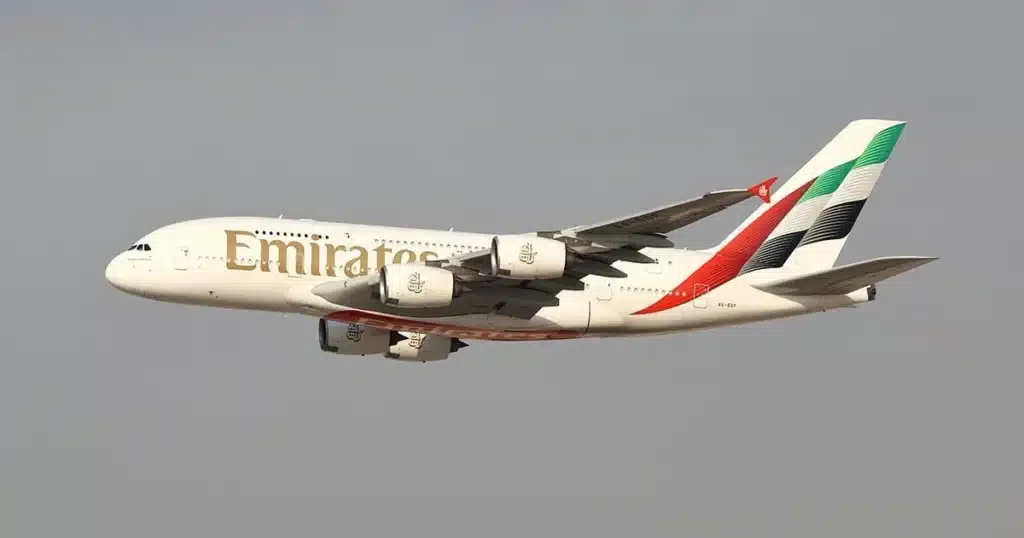
Emirates
| Metric | Value |
|---|---|
| Total Flights | 360 (one direction) |
| Seats | ~408,600 |
| ASMs | ~1.44 billion |
| Distance | 3,518 miles (5,662 km) |
| Airline | Emirates |
Why It Works
Manchester Airport (MAN) serves a massive catchment area across northern England and Wales, with approximately 20 million people in its region.
London Heathrow’s slot constraints limit intercontinental capacity, creating strong demand for Manchester as an alternative gateway.
Emirates operates the A380 to fill capacity without increasing frequencies, maximizing slot efficiency.
The route attracts a diverse mix of VFR traffic, leisure travelers, and business passengers connecting through Dubai to South Asia, Southeast Asia, and the Middle East.
Using the A380 as a flagship product strengthens Emirates’ brand presence in a critical UK regional market.
For corporate travelers, understanding commercial aviation insurance becomes crucial when managing large fleets like Emirates’ A380 operations.
5. Dubai → Paris (DXB–CDG)

Emirates
| Metric | Value |
|---|---|
| Total Flights | 360 (one direction) |
| Seats | ~372,000 |
| ASMs | ~1.21 billion |
| Distance | 3,259 miles (5,245 km) |
| Airline | Emirates |
Why It Works
Dubai-Paris ranks among Emirates’ most premium-heavy routes, attracting strong corporate, leisure, and luxury tourism demand.
Paris Charles de Gaulle Airport (CDG) serves as a major European gateway with significant connecting traffic flows.
Strong east-west connecting passengers travel via Dubai to destinations in India, Sri Lanka, the Maldives, Southeast Asia, and East Africa.
First Class and Business Class uptake remains high, justifying the A380’s premium cabin capacity.
The aircraft’s onboard amenities—including showers and lounges—reinforce Emirates’ luxury positioning in the competitive Paris market.
High-net-worth travelers often combine commercial A380 flights with private jet services in Paris for regional European travel.
Premium ground transport via chauffeur services at Paris airports completes the luxury travel experience.
6. Dubai → Cairo (DXB–CAI)

Emirates
| Metric | Value |
|---|---|
| Total Flights | 720 (360 each direction) |
| Seats | ~360,000 |
| ASMs | ~540 million |
| Distance | 1,503 miles (2,419 km) |
| Airline | Emirates |
Why It Works
Egypt and the UAE maintain very large bilateral traffic flows driven by business, government relations, and diaspora travel.
Cairo serves as a critical connecting point for Egyptian travelers heading to Gulf destinations, India, Southeast Asia, and Australasia.
The route attracts strong two-way tourism, with Dubai’s shopping and luxury offerings appealing to Egyptian visitors.
Cairo International Airport (CAI) benefits from Emirates’ connectivity, linking Egyptian tourists to European and African destinations via Dubai.
The A380’s high-density configuration makes this service cost-efficient on the relatively short stage length while maintaining premium cabin offerings.
For business aviation needs in the region, private jet charter companies in Cairo provide alternatives for executive travel.
7. Dubai → Jeddah (DXB–JED)

Emirates
| Metric | Value |
|---|---|
| Total Flights | 360 (one direction) |
| Seats | ~368,000 |
| ASMs | ~390 million |
| Distance | 1,057 miles (1,701 km) |
| Airline | Emirates |
Why It’s Busy
This short but intense connection primarily serves religious pilgrimage demand—particularly Hajj, Umrah, and Ramadan travel.
King Abdulaziz International Airport in Jeddah serves as the main gateway to Mecca, driving massive seasonal peaks.
High VFR (Visiting Friends & Relatives) traffic and business flows between the UAE and Saudi Arabia’s western region create consistent year-round demand.
Limited daily slots at Jeddah make the A380 ideal for volume consolidation without increasing frequency.
The route also serves passengers connecting through Dubai to destinations across Europe, Asia, and the Americas.
Premium travelers benefit from chauffeur services at Jeddah Airport for seamless ground transport connections.
Why These Routes Still Depend on the A380
Slot-Constrained Airports
Airports like London Heathrow, Paris CDG, and Bangkok face severe capacity limitations.
The A380 allows airlines to maximize passengers per departure without increasing frequency, making optimal use of scarce slots.
This becomes particularly important as airport expansion projects face regulatory and environmental challenges worldwide.
Large Premium-Cabin Uptake
Routes with strong Business Class and First Class demand benefit from the A380’s extensive premium seating.
Emirates’ A380 configurations offer private First Class suites and spacious Business Class cabins that command premium pricing.
Airlines understand the importance of aircraft liability insurance when operating these high-value assets.
Dense Trunk Routes Where Frequency Is Already Maxed
On routes like Dubai-London and Dubai-Bangkok, airlines have already reached maximum practical frequency.
Adding capacity through larger aircraft becomes the only viable growth strategy.
Understanding aircraft depreciation helps airlines justify the continued operation of these capital-intensive aircraft.
Hub-and-Spoke Maximization
The A380 excels at consolidating connecting traffic through major hubs.
Emirates and Qatar Airways use the aircraft to channel passengers from dozens of destinations through Dubai and Doha respectively.
This mirrors strategies employed by the world’s largest airlines in optimizing their network connectivity.
The A380’s Future Role
The Airbus A380 remains vital on thick, slot-constrained corridors where capacity and premium demand intersect.
Emirates continues positioning the aircraft as central to its long-term strategy, maintaining the world’s largest A380 fleet with over 116 aircraft.
While new operators remain limited, existing carriers are experiencing a strong resurgence in A380 utilization post-pandemic.
The aircraft’s economics work best on high-load, premium-heavy routes—exactly the profile of these seven winter corridors.
As twin-engine aircraft like the Boeing 787 and Airbus A350 gradually enter service, the A380 will likely concentrate further on these highest-demand routes.
Industry shifts toward sustainable aviation fuel may challenge four-engine economics, but the A380’s capacity advantage persists on these mega-routes.
Conclusion
The A380 remains a cornerstone of Gulf carrier networks, particularly for Emirates and Qatar Airways.
Winter 2025–26 demonstrates concentrated, strategic deployment on routes where the aircraft’s capacity and premium offerings align perfectly with market demand.
High-load markets connecting major global hubs continue to justify the A380’s economics despite the industry’s broader shift toward smaller twin-engine jets.
These seven routes prove the superjumbo still has a vital role in modern aviation—especially where slot constraints, premium demand, and massive passenger volumes converge.
For aviation professionals seeking deeper insights, understanding commercial aviation insurance and aircraft leasing structures helps contextualize these operational decisions.
For travelers seeking premium ground transport at these major hubs, services like luxury chauffeur transfers complement the A380 experience.
The A380’s presence on these corridors represents the continued importance of hub connectivity and the enduring appeal of the world’s largest passenger aircraft.