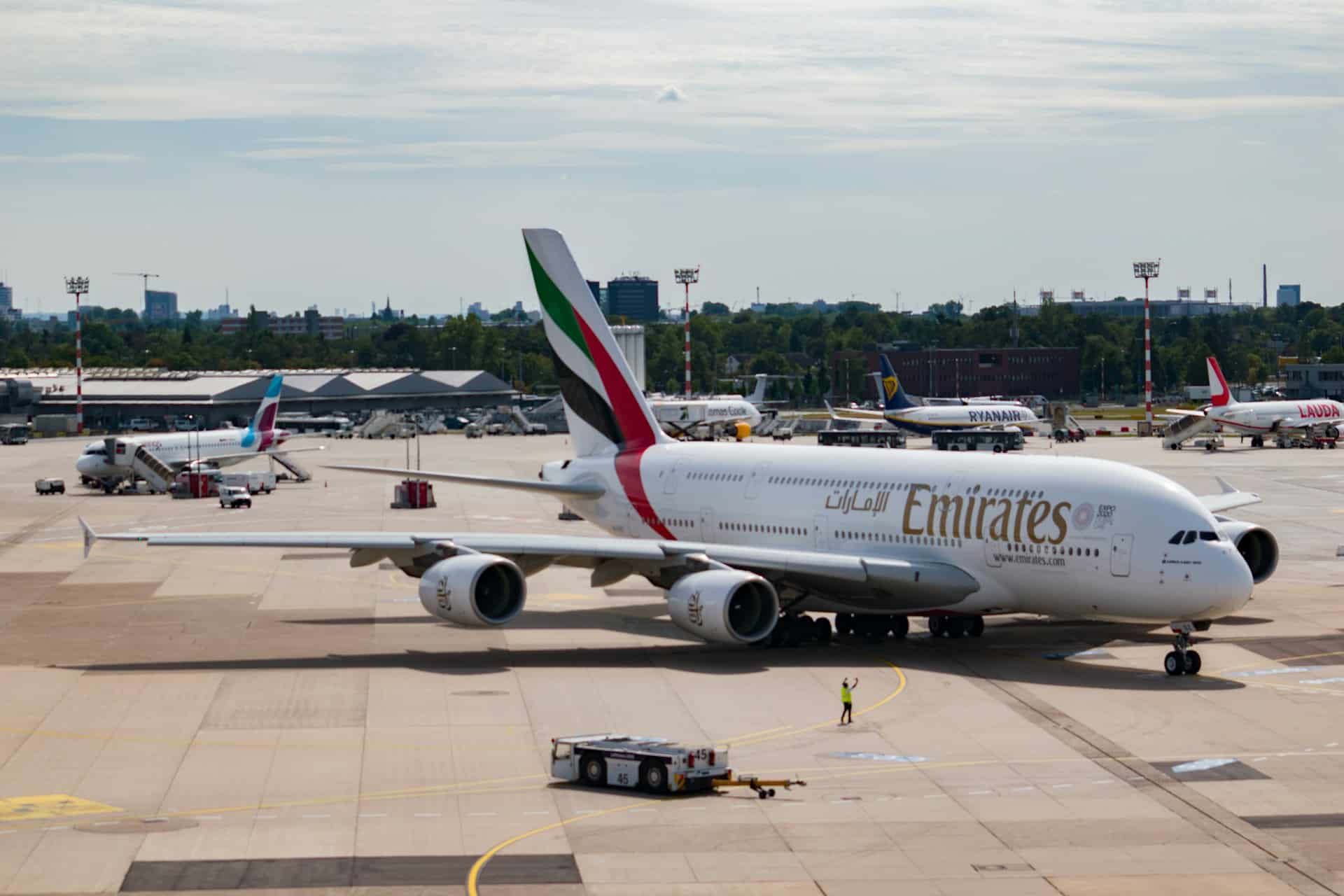
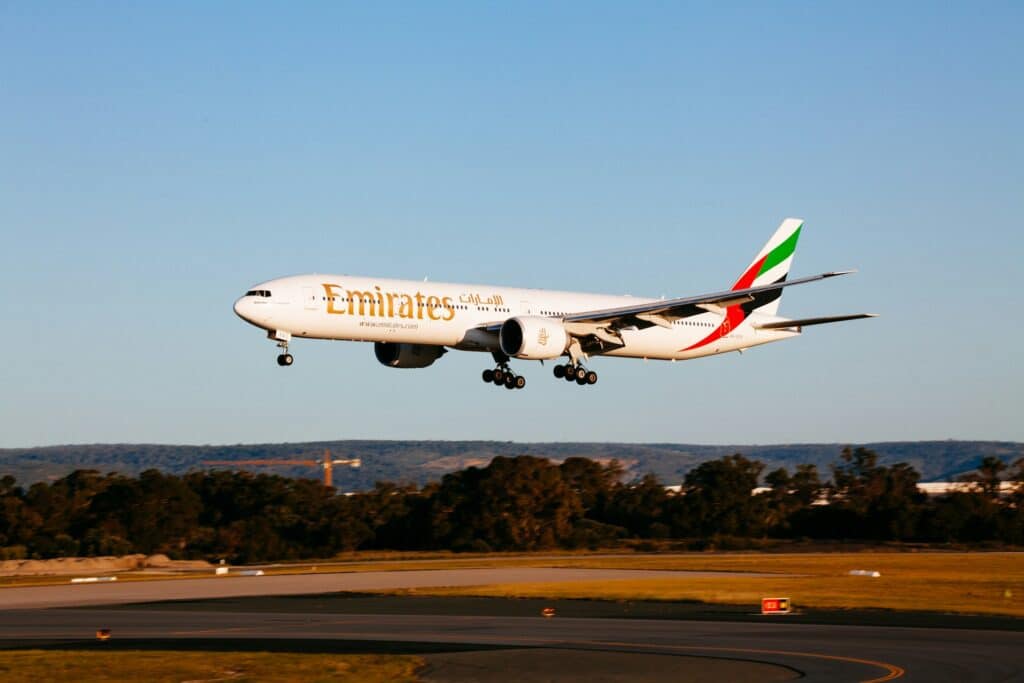
Emirates recently ended Airbus A380 service on its Dubai-Copenhagen route, replacing the 489-seat superjumbo with smaller Boeing 777 aircraft carrying approximately 354 passengers. The route change reflects fundamental economics of modern airline operations where matching aircraft capacity to actual passenger demand delivers better profitability than deploying prestige aircraft.
Copenhagen joins a growing list of European cities losing A380 service as Emirates optimizes its fleet deployment toward routes generating sufficient traffic to fill the world’s largest passenger aircraft. The airline still operates over 120 A380s but concentrates them on ultra-high-demand routes to London, Paris, and other major hubs rather than secondary European markets.
Understanding why Emirates made this change reveals broader lessons about aircraft economics, route planning, and the challenges facing superjumbo operations in an industry increasingly favoring flexible, fuel-efficient widebody aircraft over maximum capacity.
Emirates’ Airbus A380 Service To Copenhagen

Emirates launched Dubai-Copenhagen service with Boeing 777 aircraft before upgrading to the A380 superjumbo to capitalize on growing demand and provide premium capacity. The route connected Scandinavian passengers to Emirates’ global network through Dubai, offering connections to Asia, Africa, Australia, and the Middle East.
The A380 deployment signaled Emirates’ confidence in Copenhagen market growth and desire to establish the airline as the premium carrier on the route. The superjumbo’s onboard bar, shower suites in first class, and spacious cabin created differentiation against competing carriers offering standard widebody service.
Copenhagen Airport welcomed the A380 operations, investing in infrastructure to handle the aircraft’s size and passenger volumes. The airport modified gates, jetways, and ground handling equipment to accommodate the superjumbo’s 262-foot wingspan and two-deck configuration.
However, actual passenger demand never consistently justified the A380’s 489-seat capacity on the route. Load factors fluctuated seasonally, with summer leisure travel filling the aircraft while winter business demand left hundreds of empty seats. This capacity mismatch created profitability challenges that ultimately led to the aircraft swap.
Why Emirates Is Replacing The Airbus A380
The decision to replace the A380 with Boeing 777 aircraft stems from multiple economic and operational factors that make smaller aircraft more profitable on routes with moderate traffic levels.
Lower Passenger Demand
Copenhagen generates approximately 250,000-300,000 annual passengers traveling between Scandinavia and Dubai-connected destinations. This traffic level fills a daily Boeing 777 flight at healthy load factors around 80-85%, but struggles to consistently fill an A380’s 489 seats.
The math becomes clear: a 354-seat Boeing 777 at 85% load factor carries 301 passengers per flight. An A380 needs 415+ passengers just to match that same 85% load factor. Copenhagen simply doesn’t generate sufficient daily traffic to sustain those passenger volumes year-round.
Seasonal variations compound the challenge. Summer leisure demand might fill the A380 during July and August peak vacation periods, but winter business travel leaves 150-200 empty seats when corporate travel dominates. Airlines cannot sustain profitability with such dramatic capacity swings.
Emirates faced a choice: operate the A380 with poor load factors and lose money, or reduce frequencies to maintain fuller aircraft. Either option weakened competitive position, making the 777 swap the logical solution to better match capacity with actual demand.
Aircraft Capacity Optimization
Modern airline economics favor right-sizing aircraft to route demand rather than deploying maximum capacity and hoping to fill seats. The A380 burns approximately 12,000-14,000 liters of fuel per hour regardless of how many passengers occupy seats.
On a Dubai-Copenhagen flight lasting 6-7 hours, the A380 consumes 72,000-98,000 liters of fuel. At $0.65 per liter, this represents $46,800-63,700 in fuel costs alone. The Boeing 777 burns roughly 8,000-9,000 liters per hour, totaling 48,000-63,000 liters for the same flight at $31,200-40,950 in fuel costs.
The fuel savings of $15,600-22,750 per flight accumulate to $5.7-8.3 million annually on daily service. However, the true economic advantage comes from matching revenue-generating seats to available passengers. A 777 with 300 paid passengers at 85% load factor generates higher yield per seat than an A380 with 350 passengers at 72% load factor.
Crew costs also favor smaller aircraft. The A380 requires augmented cockpit and cabin crews totaling 20-25 personnel, while the 777 operates with 15-18 crew members. This staffing difference adds thousands of dollars per flight in salary and positioning expenses. Professional aircraft maintenance teams ensure both aircraft types operate reliably despite complexity differences.
Ground handling complexity increases with the A380’s size. Special equipment, extended turnaround times, and gate restrictions at some airports create operational inefficiencies. The 777’s standard widebody footprint eliminates these constraints.
The Boeing 777 Will Replace The A380
Emirates operates one of the world’s largest Boeing 777 fleets with over 130 aircraft across -200LR, -300ER, and future -8/-9 variants. The 777 provides operational flexibility and economic efficiency that the A380 cannot match on moderate-demand routes.
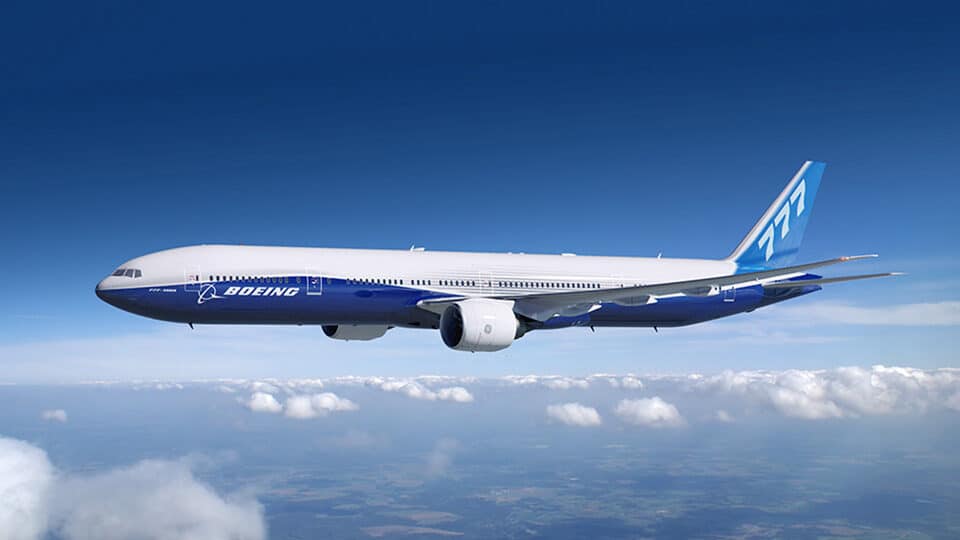
The airline’s 777-300ER configured for the Copenhagen route seats approximately 354 passengers across three cabins: 8 first class suites, 42 business class seats, and 304 economy seats. This capacity matches Copenhagen market demand while maintaining Emirates’ premium service standards.
Range capability allows the 777-300ER to operate Dubai-Copenhagen nonstop with full payload and passenger capacity. The 7,370-nautical-mile range provides substantial reserves beyond the route’s 2,684-nautical-mile distance, enabling operations in all weather conditions and headwinds. Dubai’s aviation infrastructure serves both commercial and private aviation with world-class facilities.
Frequency flexibility improves with 777 operations. If demand grows, Emirates can add a second daily 777 flight providing 700+ daily seats and better schedule options. This approach serves passengers better than a single A380 flight forcing everyone into one departure time.
The 777 also redeploys more easily across Emirates’ network. During seasonal demand fluctuations, the aircraft can shift to other routes requiring capacity adjustments. The A380’s size limits deployment options to only the highest-demand city pairs.
| Specification | Airbus A380 | Boeing 777-300ER |
|---|---|---|
| Total Seats (Emirates config) | 489 (14F, 76J, 399Y) | 354 (8F, 42J, 304Y) |
| Range | 8,000 nautical miles | 7,370 nautical miles |
| Fuel Burn Per Hour | 12,000-14,000 liters | 8,000-9,000 liters |
| Flight Time Dubai-Copenhagen | 6-7 hours | 6-7 hours |
| Total Fuel Cost Per Flight | $46,800-63,700 | $31,200-40,950 |
| Crew Requirements | 20-25 personnel | 15-18 personnel |
| Load Factor Needed (300 pax) | 61% | 85% |
| Network Flexibility | Limited (ultra-high demand only) | High (most international routes) |
Why Airlines Are Moving Away From Very Large Aircraft
The Emirates Copenhagen route change reflects broader industry movement away from very large aircraft toward smaller, more flexible widebodies that better match modern traffic patterns and airline economics.
Airbus ended A380 production in 2021 after delivering just 251 aircraft over the program’s lifetime. The manufacturer could not secure sufficient orders to justify continued production as airlines overwhelmingly chose Boeing 787s, Airbus A350s, and 777s over the superjumbo.
The industry’s hub-and-spoke model evolved toward point-to-point service on many routes. Passengers increasingly prefer nonstop flights over connecting through hubs, even when nonstops require smaller aircraft. This shift reduces demand for hub concentration that justified A380 capacity, as industry data from the International Air Transport Association confirms.
Fuel efficiency per seat favors the A380 in theory – the aircraft achieves excellent efficiency when fully loaded. However, airlines rarely achieve consistent high load factors, making the 777’s lower absolute fuel burn more economical in practice despite slightly higher per-seat consumption. The industry’s shift toward sustainable aviation fuel further incentivizes operational efficiency.
Operational flexibility becomes critical in volatile markets. When geopolitical events disrupt routes, airlines need to quickly redeploy aircraft. The A380’s limited deployment options leave airlines stuck with stranded assets, while 777s and A350s shift to alternative routes easily.
Airport infrastructure constraints limit A380 operations. Many airports lack gates, jetways, or apron space to handle the superjumbo, restricting route options. The 777 operates at virtually any airport with international widebody service, expanding network possibilities.
Maintenance costs increase with aircraft complexity. The A380’s four-engine configuration requires more inspection, repair, and parts inventory than twin-engine 777s. While quad engines provide redundancy, modern twin-engine reliability eliminates this advantage while twin operations cost substantially less. Understanding aircraft depreciation and operational costs becomes critical for long-term fleet planning.
What This Means For Emirates’ European Network
The Copenhagen downgrade signals Emirates’ broader European network optimization strategy concentrating A380 operations on only the highest-demand city pairs while using 777s for secondary markets.
London Heathrow receives multiple daily A380 flights capitalizing on the route’s exceptional traffic density. Dubai-London generates over 1 million annual passengers, easily filling multiple superjumbos daily. Similarly, Paris Charles de Gaulle, Frankfurt, and Amsterdam maintain A380 service due to robust demand. Emirates’ consistent performance on these routes positions it among the world’s best long-haul carriers.
However, cities like Copenhagen, Munich, Manchester, and others that previously received A380 service now operate with 777 equipment. This right-sizing improves route profitability while maintaining service frequency and connectivity.
The strategy allows Emirates to maintain its European network breadth without the economic burden of operating underutilized superjumbos. Revenue optimization beats prestige aircraft deployment when profitability determines long-term sustainability.
Some European routes may receive increased 777 frequencies rather than single A380 service. Two daily 777 flights provide 700+ seats with better schedule distribution than one A380 departure, improving passenger convenience and corporate travel appeal.
Emirates continues evaluating each route based on traffic trends, competitive dynamics, and aircraft availability. Routes showing sustained growth might regain A380 service, while others facing demand declines could see frequency reductions or aircraft downgauges.
Passenger Experience Changes
Passengers traveling Emirates Copenhagen route notice significant differences between A380 and 777 cabin experiences, though the airline maintains consistent service standards across aircraft types.
The A380’s iconic onboard bar disappears with the 777 transition. Business class passengers particularly appreciated this social space for networking and relaxation during long flights. The 777 lacks dedicated lounge areas, focusing cabin space on seating capacity.
First class shower suites represented the A380’s signature luxury feature unavailable on any other aircraft. The 777 offers fully-flat first class suites with extensive amenities, but cannot accommodate shower facilities within its narrower fuselage.
Cabin width favors the A380 with 21.7-foot fuselage diameter versus the 777’s 20.3 feet. This translates to slightly wider seats and aisles in business and economy classes. However, most passengers notice minimal practical difference during flight.
The 777’s single-deck configuration creates more consistent cabin environment with all passengers on one level. Some travelers prefer this over the A380’s separate upper and lower deck experience, particularly for family groups wanting to sit together.
Entertainment systems and connectivity remain equivalent across both aircraft types. Emirates equips 777s with the same ICE entertainment system, Wi-Fi, and power outlets as A380s, ensuring consistent passenger experience regardless of equipment. The airline maintains award-winning service standards across its entire fleet.
Economy class passengers see little meaningful difference between aircraft types. Both offer the same seat pitch, width, and amenities. The primary change is simply flying on a different airplane rather than degraded service quality.
Is This The End Of The A380 In Europe?
The A380 remains viable on ultra-high-demand European routes but faces continued retrenchment on secondary markets as Emirates and other operators optimize capacity deployment.
Emirates still operates daily multiple A380 services to London Heathrow, the airline’s largest European destination. The route generates exceptional traffic volumes justifying up to 5 daily superjumbo flights during peak seasons. This demonstrates the A380 succeeds where demand matches capacity.
Paris Charles de Gaulle, Frankfurt, Amsterdam, and Munich continue receiving regular A380 service on routes generating 400+ daily passengers. These major European hubs connect substantial catchment populations to Emirates’ global network through Dubai.
However, smaller European cities that once received prestige A380 service increasingly operate with 777 equipment. Nice, Barcelona, Manchester, and others joined Copenhagen in losing superjumbo operations as Emirates recognized capacity exceeded sustainable demand.
British Airways retired its entire A380 fleet during COVID-19, eliminating the type from European carriers. Lufthansa brought A380s back for select routes but operates far fewer than pre-pandemic. Only Emirates maintains substantial European A380 operations, and even this concentrates on fewer destinations.
The aircraft’s future in Europe depends entirely on traffic recovery and growth on remaining routes. If London, Paris, and Frankfurt sustain or grow current demand levels, the A380 continues flying these sectors. Declining traffic would trigger further fleet rationalization.
New aircraft deliveries shifting toward 777X and A350 variants suggest long-term replacement of A380 capacity with more flexible twin-engine widebodies. Emirates has 777-8 and 777-9 aircraft on order that will eventually replace aging 777-300ERs and potentially some A380 routes.
The Economic Reality Of Superjumbo Operations
The Copenhagen route change illustrates fundamental economic challenges facing superjumbo aircraft in the modern aviation environment characterized by yield management and route optimization over capacity maximization.
Airlines generate profit by filling seats at prices exceeding per-passenger costs, not by operating the largest possible aircraft. A 300-seat aircraft at 90% load factor earning $500 per passenger generates $135,000 in revenue. A 500-seat aircraft at 70% load factor earning $450 per passenger generates $157,500 – higher revenue but at what cost?
If the larger aircraft costs $40,000 more to operate per flight in fuel, crew, handling, and maintenance, the apparent revenue advantage evaporates. The smaller aircraft produces $95,000 in profit versus $117,500 for the larger aircraft – but the smaller aircraft achieves this with less risk, better load factors, and greater deployment flexibility.
This economic reality explains why airlines increasingly favor right-sized aircraft over maximum capacity. The A380 works beautifully when route demand exceeds 400 daily passengers consistently. Below this threshold, smaller aircraft deliver better returns even with slightly lower total revenue.
Emirates learned this lesson across its network, concentrating A380s on routes where economics justify the aircraft while deploying 777s on routes where capacity matches demand more precisely. The strategy maximizes network profitability rather than prestige aircraft deployment.
Understanding fleet management economics becomes essential for airlines navigating post-pandemic demand patterns that differ substantially from pre-2020 traffic levels. Flexibility trumps scale in uncertain markets.
Frequently Asked Questions
Why did Emirates stop flying the A380 to Copenhagen?
Emirates stopped A380 service to Copenhagen because passenger demand averaging 250,000-300,000 annually does not justify the aircraft’s 489-seat capacity. Load factors fluctuated seasonally, with the superjumbo achieving healthy occupancy during summer peak but flying with 150-200 empty seats during winter. The Boeing 777’s 354-seat capacity better matches actual traffic levels while reducing fuel costs by $15,600-22,750 per flight. This capacity optimization improves route profitability while maintaining daily service frequency.
Which aircraft replaced the Emirates A380 on the Copenhagen route?
The Boeing 777-300ER replaced the A380 on Emirates’ Dubai-Copenhagen route. The 777-300ER carries 354 passengers across three cabins (8 first class, 42 business class, 304 economy) versus the A380’s 489 seats. The aircraft provides 7,370 nautical miles range, far exceeding the route’s 2,684-mile requirement. The 777 burns 8,000-9,000 liters of fuel per hour compared to the A380’s 12,000-14,000 liters, generating $5.7-8.3 million in annual fuel savings on daily service.
Does Emirates still fly the Airbus A380?
Yes, Emirates continues operating over 120 Airbus A380 aircraft, maintaining the world’s largest superjumbo fleet. The airline concentrates A380 operations on ultra-high-demand routes to London Heathrow, Paris Charles de Gaulle, Frankfurt, Amsterdam, New York JFK, Sydney, Bangkok, and other major destinations generating 400+ daily passengers. Emirates has 777-8 and 777-9 aircraft on order but has not announced A380 retirement plans. The carrier strategically deploys the A380 where traffic justifies capacity while using 777s on secondary routes.
Which European cities still get Emirates A380 flights?
Emirates continues A380 service to major European hubs including London Heathrow (up to 5 daily flights), Paris Charles de Gaulle, Frankfurt, Amsterdam, Munich, Barcelona, and Manchester on select routes. London Heathrow receives the most A380 capacity as Emirates’ largest European destination. However, secondary cities including Copenhagen, Nice, and others that previously received A380 service now operate with Boeing 777 equipment as Emirates optimizes capacity deployment based on actual passenger demand rather than prestige aircraft operations.
How does the passenger experience differ between the A380 and 777?
The A380 offers unique features unavailable on the 777 including an onboard business class bar and first class shower suites. The A380’s 21.7-foot fuselage width provides slightly more spacious cabins than the 777’s 20.3 feet. However, Emirates maintains consistent service standards across both aircraft types with identical ICE entertainment systems, Wi-Fi, and amenities. Economy passengers notice minimal practical difference. The 777’s single-deck configuration keeps all passengers on one level versus the A380’s two-deck separation. Most travelers find both aircraft comfortable for long-haul flights.
Why are airlines moving away from very large aircraft like the A380?
Airlines favor smaller, more flexible widebody aircraft because modern traffic patterns rarely sustain consistent ultra-high load factors required to justify superjumbo operations. The A380 achieves excellent per-seat fuel efficiency when full, but airlines struggle to maintain 400+ daily passengers year-round on most routes. Twin-engine 777s and A350s offer lower absolute fuel costs, reduced crew requirements, airport flexibility, and easy network redeployment. Airbus ended A380 production in 2021 after just 251 deliveries because carriers overwhelmingly chose smaller widebodies for better economic returns and operational flexibility.
Will the A380 ever return to Copenhagen?
A380 service could return to Copenhagen if passenger demand grows substantially above current 250,000-300,000 annual levels and sustains high load factors year-round. However, this seems unlikely given market size and competitive environment. Emirates would need to see consistent traffic exceeding 400 daily passengers to justify redeploying the superjumbo. Current Boeing 777 operations match demand effectively while delivering better profitability. Unless Copenhagen experiences dramatic traffic growth or Emirates reduces service frequency to consolidate passengers onto fewer flights, the 777 remains the logical aircraft choice.
How much does it cost Emirates to operate an A380 versus a 777?
The A380 costs approximately $15,600-22,750 more per Dubai-Copenhagen flight than the 777-300ER in direct operating expenses. Fuel represents the largest cost difference at $46,800-63,700 for the A380 versus $31,200-40,950 for the 777. Crew costs add thousands more per flight with the A380 requiring 20-25 personnel versus 15-18 for the 777. Ground handling, maintenance, airport fees, and insurance further increase A380 costs. On daily service, these differences accumulate to $5.7-8.3 million annually in savings for 777 operations, making capacity optimization critical to route profitability.
Conclusion
Emirates’ decision to replace A380 service on the Copenhagen route with Boeing 777 aircraft demonstrates how modern airline economics favor matching aircraft capacity to actual passenger demand over deploying prestige superjumbos. With Copenhagen generating 250,000-300,000 annual passengers, the 777’s 354 seats achieve healthy 80-85% load factors while the A380’s 489 seats struggle to maintain profitability year-round. Fuel savings of $15,600-22,750 per flight accumulate to $5.7-8.3 million annually, making the capacity optimization financially compelling.
The route change reflects broader industry movement away from very large aircraft toward flexible twin-engine widebodies like the 777 and A350 that better serve modern traffic patterns. Airbus ended A380 production in 2021 after just 251 deliveries as airlines overwhelmingly chose smaller aircraft offering operational flexibility and lower costs. Emirates concentrates remaining A380 operations on ultra-high-demand routes to London, Paris, and major hubs while deploying 777s on secondary European markets where demand matches the aircraft’s capacity more precisely.
The superjumbo’s future in Europe depends entirely on sustaining traffic volumes exceeding 400 daily passengers on routes where the A380 still operates. As geopolitical disruptions and evolving travel patterns reshape aviation markets, airlines prioritize profitability over maximum capacity, making right-sized aircraft deployment the key to competitive success in international long-haul operations. Copenhagen’s transition from A380 to 777 service illustrates this strategic evolution in action.