Qatar Airways transformed from a regional carrier with minimal international presence in 1997 to one of the world’s most awarded airlines within just two decades. The Doha-based carrier now operates over 170 destinations across six continents with a modern fleet exceeding 240 aircraft, consistently ranking among the top three airlines globally.
The airline’s success stems from a calculated strategy combining geographic advantage, fleet modernization, premium passenger experience, and aggressive network expansion. While competitors struggled through economic downturns and industry disruptions, Qatar Airways invested billions in next-generation aircraft and terminal infrastructure that established Doha as a premier global aviation hub.
Understanding how Qatar Airways executed this transformation reveals fundamental lessons about airline strategy, hub economics, and the importance of fleet modernization in competitive international aviation markets.
The Rise Of Qatar Airways

Qatar Airways launched operations in 1993 as a small regional carrier with limited route network and aging aircraft. The airline struggled financially and operationally during its early years, carrying fewer than 100,000 passengers annually with a fleet of hand-me-down aircraft.
The transformation began in 1997 when the Qatari government restructured the airline under new leadership with a mandate to build a world-class carrier. The airline immediately embarked on aggressive fleet renewal, replacing old Boeing 727s and Airbus A300s with modern Boeing 777s and Airbus A330s from leading aircraft manufacturers.
From 1997 to 2010, Qatar Airways expanded from 4 destinations to over 100, growing passenger traffic from 300,000 to nearly 16 million annually. The airline ordered hundreds of new aircraft, invested in crew training programs, and developed service standards that would become industry benchmarks.
By 2015, Qatar Airways operated one of the youngest and most modern fleets in the world, with an average aircraft age under 5 years compared to industry averages of 10-15 years. This fleet advantage provided fuel efficiency, reliability, and passenger appeal that legacy carriers with older fleets could not match.
The airline’s growth accelerated through the 2010s despite regional challenges. When Saudi Arabia, UAE, Bahrain, and Egypt imposed a diplomatic blockade on Qatar from 2017-2021, the airline rerouted around closed airspace and actually expanded operations, adding new destinations and frequencies while competitors expected decline.
How Doha Became A Global Aviation Hub
Doha’s geographic position provides unique advantages for connecting traffic between Europe, Asia, Africa, and the Americas. The city sits at the crossroads of major global routes, with flight times to most major world cities falling within an 8-hour radius.
London to Bangkok requires approximately 11 hours direct, or can split into two 6-7 hour segments via Doha. New York to Mumbai becomes two manageable 12-13 hour flights rather than an ultra-long 14+ hour nonstop. This breaking point creates competitive connection opportunities against both nonstop flights and alternative hubs.
Hamad International Airport opened in 2014 with capacity for 30 million annual passengers, later expanded to handle 58 million by 2022 and targeting 60+ million with ongoing terminal expansion. The airport features parallel runways enabling simultaneous takeoffs and landings, reducing delays during peak connection banks.
The terminal design optimizes connection times with a compact layout allowing 45-60 minute minimum connection times versus 90-120 minutes at larger, more spread-out hubs. Passengers appreciate shorter walking distances and faster immigration processing compared to congested mega-hubs. Doha’s aviation infrastructure serves both commercial airlines and private aviation operators throughout the Gulf region.
Qatar’s political neutrality relative to regional powers allows the airline to serve destinations across the Middle East, Africa, and Asia that competing Gulf carriers cannot easily access due to geopolitical tensions. While regional conflicts disrupt some competitors, Qatar Airways maintains broader network flexibility.
Qatar Airways’ Fleet Strategy
Qatar Airways operates one of the most sophisticated fleet strategies in global aviation, focusing exclusively on modern widebody and select narrowbody aircraft optimized for its hub-and-spoke network model.
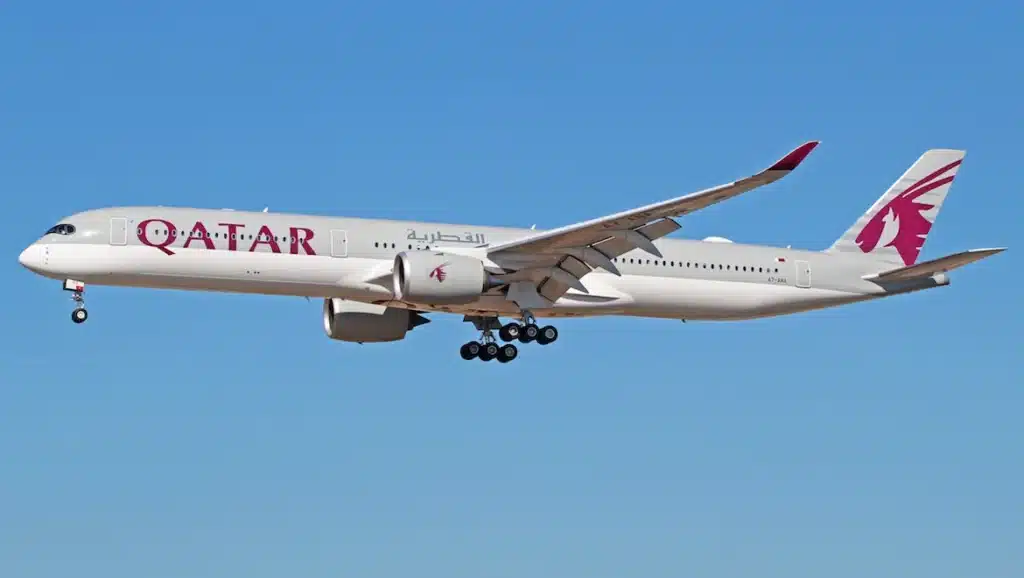
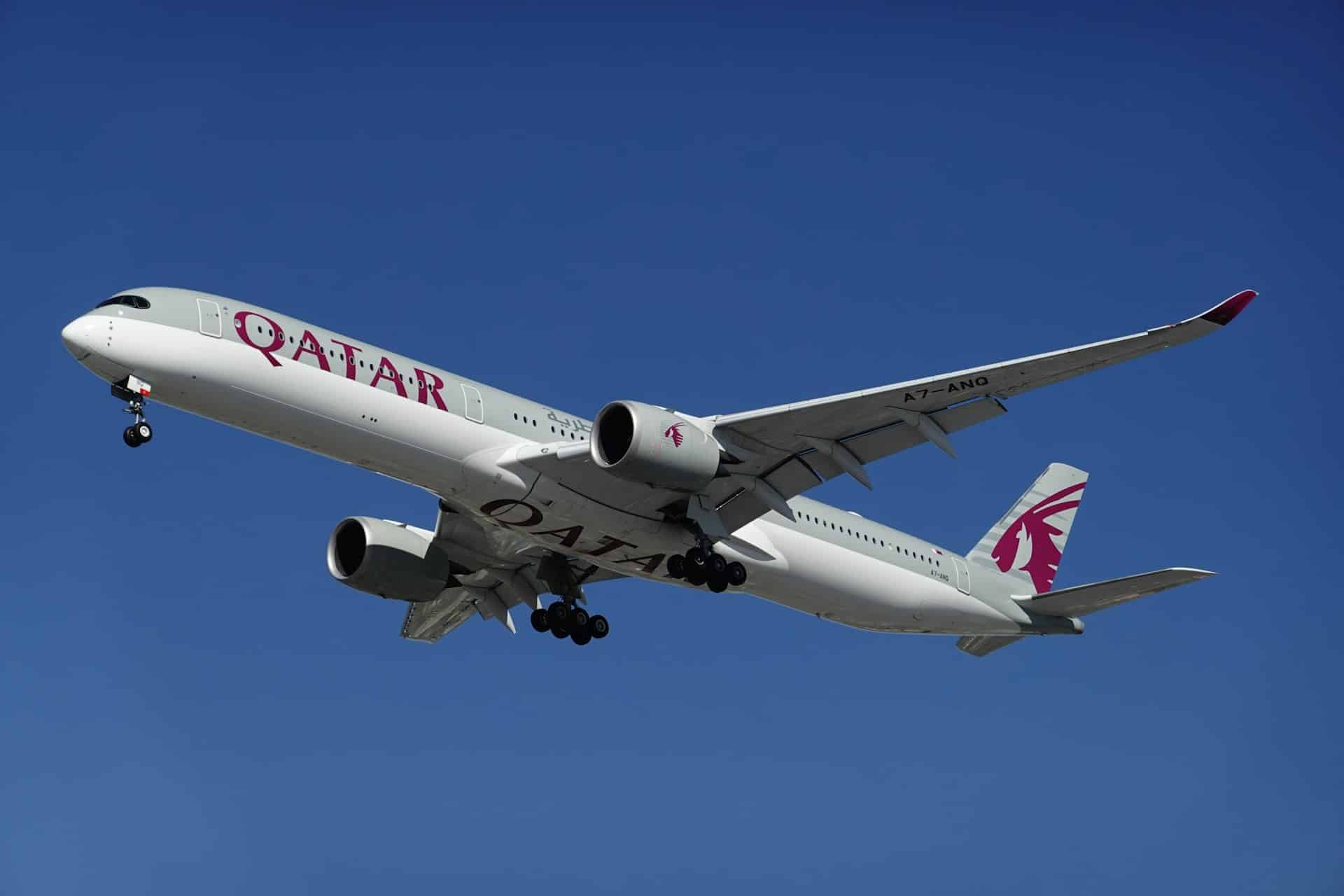
The airline became the global launch customer for the Airbus A350-1000, the world’s largest A350 variant. Qatar Airways operates over 50 A350 aircraft across the -900 and -1000 models, leveraging the type’s exceptional fuel efficiency and range capabilities for long-haul routes.
The Boeing 777 fleet includes -200LR, -300ER, and -8/-9 variants, providing high-capacity service on ultra-long routes like Doha-Auckland (9,032 miles) and Doha-Houston. The airline’s recent Boeing orders demonstrate continued commitment to the 777X program despite delivery delays.
Boeing 787 Dreamliners handle medium-long haul routes where A350s would provide excess capacity. The type’s efficiency makes it ideal for developing routes to secondary cities where larger aircraft cannot justify economics.
The Airbus A380 briefly operated in the fleet on ultra-high-capacity routes, though the airline retired the type in 2021 due to operational complexity and poor economics during the pandemic. This decision reflected pragmatic fleet management rather than emotional attachment to prestige aircraft.
| Aircraft Type | Quantity | Primary Role | Key Routes |
|---|---|---|---|
| Airbus A350-1000 | 24+ | Ultra-long-haul flagship | Doha-New York, Doha-Los Angeles, Doha-Melbourne |
| Airbus A350-900 | 34+ | Long-haul workhorse | Doha-London, Doha-Singapore, Doha-Tokyo |
| Boeing 777-300ER | 40+ | High-capacity long-haul | Doha-Sydney, Doha-Paris, Doha-Bangkok |
| Boeing 777-8/-9 | On order | Next-generation flagship | Ultra-long routes, 777-300ER replacement |
| Boeing 787-9 | 30+ | Medium-long-haul efficiency | Doha-Manchester, Doha-Cape Town, secondary routes |
| Airbus A321neo LR | 20+ | Regional and medium-haul | Doha-Cairo, Doha-Beirut, European destinations |
Why Qatar Airways Invested In Modern Aircraft
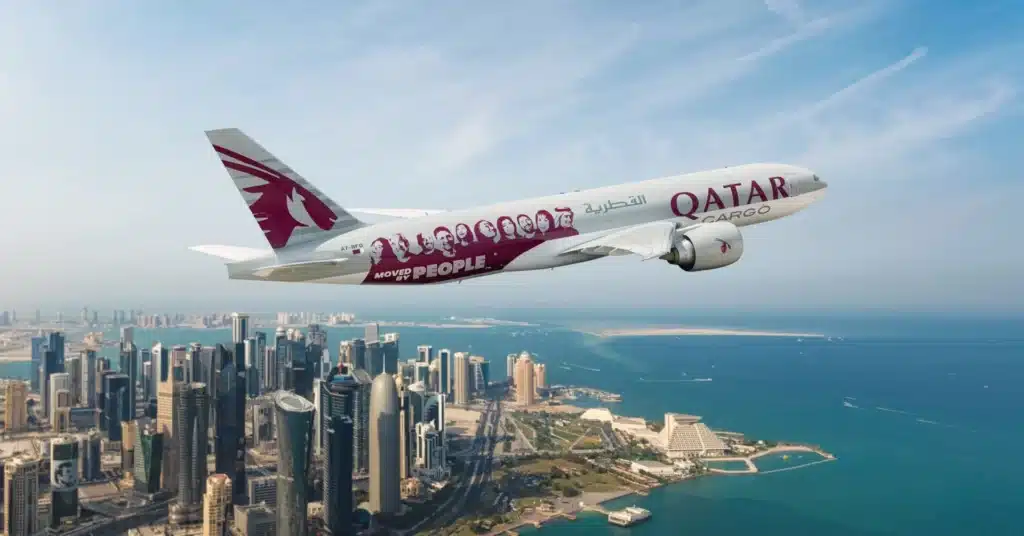
The airline’s commitment to fleet modernization delivers multiple competitive advantages that directly impact profitability and passenger experience.
Fuel efficiency represents the primary economic benefit. The A350 and 787 consume 20-25% less fuel per seat than previous generation aircraft like the A340 or 777-200ER. With fuel representing 25-35% of airline operating costs, this efficiency translates to millions in annual savings per aircraft. The industry’s shift toward advanced aviation fuel technologies further enhances operational economics.
On a Doha-London route, an A350 might burn 45,000 liters versus 60,000 liters for an older widebody. At $0.65 per liter, this $9,750 per-flight savings accumulates to $3.6 million annually on daily service. Across a fleet of 50+ A350s, fuel savings reach hundreds of millions annually.
Reliability improves with newer aircraft featuring advanced systems with lower failure rates. Modern aircraft average dispatch reliability above 99%, versus 95-97% for older types. Higher reliability reduces cancellations, delays, and passenger compensation costs while improving schedule integrity. Professional aircraft maintenance engineers ensure these complex systems operate flawlessly.
Passenger appeal favors modern aircraft with larger windows, higher humidity, lower cabin altitude, and quieter cabins. Business travelers preferentially book airlines operating 787s and A350s over older 777s or A330s when given choice on similar routes and schedules.
Environmental performance matters increasingly as aviation faces carbon reduction mandates. Modern aircraft produce 20-25% less CO2 per passenger-mile, helping Qatar Airways meet emerging sustainability requirements while appealing to environmentally-conscious travelers. The International Air Transport Association tracks industry-wide environmental progress.
Range capability enables new ultra-long routes uneconomical with older aircraft. The A350-1000 range of 8,700+ nautical miles allows nonstop Doha-Auckland service (9,032 miles), creating competitive advantage through unique route offerings competitors cannot match without similar aircraft.
The Airline’s Premium Passenger Experience

Qatar Airways differentiated itself through exceptional business class products and service standards that exceed most competitors, particularly on long-haul routes where premium cabin revenue drives profitability. The airline consistently ranks among the world’s best airlines for business class travel.
The Qsuite business class launched in 2017 revolutionized premium air travel with the industry’s first fully-closing door business class suites on widebody aircraft. The product features lie-flat beds, privacy doors, and configurable quad seating allowing families or colleagues to create shared spaces.
Qsuite won numerous industry awards and generated substantial passenger preference, with business travelers actively choosing Qatar Airways over competitors on routes where Qsuite operates. The airline retrofitted existing aircraft to maintain product consistency across the fleet.
First class operates on select routes with ultra-premium suites featuring sliding doors, personal mini-bars, and luxury amenities. While most airlines reduced or eliminated first class, Qatar Airways maintained the cabin on flagship routes to differentiate against premium competitors.
In-flight service emphasizes attention to detail, with cabin crew trained to anticipate passenger needs and provide personalized service. The airline consistently ranks among the top carriers for service quality in passenger surveys and industry awards.
Lounge access provides premium passengers with exceptional ground experiences. The Al Mourjan Business Lounge at Doha spans 10,000 square meters with à la carte dining, shower facilities, and quiet zones. This creates a complete premium travel experience beyond just the flight.
The investment in premium products targets high-yield business travelers who generate disproportionate revenue. A business class passenger on a long-haul route might pay 3-5x the economy fare while consuming only 2-3x the seat space, creating superior unit economics that justify the investment.
How Qatar Airways Built A Global Network

Network expansion followed a methodical strategy of identifying underserved city pairs where Doha connections provided competitive advantages over existing options.
Primary markets connect major European cities with Asian destinations. London-Bangkok via Doha competes against nonstop options by offering lower fares, convenient connection times, and superior onboard product. Paris-Singapore, Frankfurt-Mumbai, and dozens of similar routes leverage Doha’s geographic midpoint position.
Secondary cities receive service where traffic volumes don’t justify nonstop operations by legacy carriers. Destinations like Phuket, Male (Maldives), Seychelles, and Cape Town connect to global networks through Doha, creating Qatar Airways monopoly or duopoly positions on many routes.
Americas connectivity expanded aggressively with routes to New York, Washington, Los Angeles, San Francisco, Boston, Houston, Dallas, Chicago, Atlanta, and South American cities. These routes connect Asian and African passengers to American destinations via Doha rather than European hubs.
African expansion made Qatar Airways the largest foreign carrier serving Africa, with routes to over 25 African cities. The network connects Africa to Asia, Americas, and Europe, providing connectivity African carriers cannot offer due to fleet, finance, and operational limitations.
Frequency increases on successful routes strengthen competitive position. Doha-London operates 5+ daily flights, giving passengers flexibility to choose convenient departure times. High frequency attracts business travelers valuing schedule flexibility over lowest fares.
| Region | Destinations | Strategy |
|---|---|---|
| Europe | 40+ cities | High frequency to major hubs, premium product focus |
| Asia-Pacific | 50+ cities | Mix of major cities and leisure destinations |
| Middle East/Africa | 45+ cities | Monopoly on many routes, connecting underserved markets |
| Americas | 15+ cities | Ultra-long-haul routes, premium traffic focus |
The Role Of Airline Alliances
Qatar Airways joined the Oneworld Alliance in 2013, providing access to a global network of partner airlines including American Airlines, British Airways, Cathay Pacific, and Japan Airlines.
Alliance membership creates multiple benefits that strengthen competitive position:
Code-sharing agreements allow Qatar Airways to sell tickets on partner airlines’ flights, extending its network beyond destinations it physically serves. A passenger can book a single ticket from a U.S. city not served by Qatar Airways through Doha to an Asian destination, with the U.S. segment operated by American Airlines.
Frequent flyer reciprocity lets passengers earn and redeem miles across all Oneworld carriers. Business travelers based in New York can fly American Airlines domestically while earning miles crediting to Qatar Airways Privilege Club, then redeeming for Qatar Airways international flights.
Lounge access extends to all Oneworld premium passengers regardless of operating carrier. Qatar Airways elite members access American Airlines lounges, British Airways lounges, and other partner facilities when traveling on alliance carriers.
Coordinated schedules optimize connection times at key hubs. Qatar Airways times Doha arrivals and departures to connect efficiently with partner flights, creating competitive itineraries against competing alliances or individual carriers.
However, alliance relationships create tensions when partners compete directly. American Airlines and Qatar Airways disagreed over Gulf carrier subsidies, with American arguing Qatar Airways received unfair government support. These disputes reflect inherent conflicts when alliance partners also compete for the same premium passengers on overlapping routes.
Why Qatar Airways Wins So Many Airline Awards

Qatar Airways consistently ranks among the top 3 airlines globally in Skytrax World Airline Awards, winning “World’s Best Airline” seven times between 2011 and 2022. These awards reflect passenger voting across multiple categories.
The airline excels in categories directly related to its competitive strategy:
Best Business Class: Qsuite wins repeatedly, validating the investment in premium hard product that competitors struggle to match without similar capital expenditure on cabin retrofits.
Best Business Class Seat: The Qsuite seat design with closing doors and convertible configurations sets industry standards that competitors reference when developing their own products.
Best Airline in the Middle East: Dominance in the regional category reflects superior product and service versus Middle Eastern competitors including Emirates, Etihad, and others.
Best Long-Haul Airline: Recognition for ultra-long routes like Doha-Auckland validates the airline’s range capabilities and service quality on 15+ hour flights, positioning it among the world’s best long-haul carriers.
Awards provide marketing value by validating quality claims to prospective passengers. Business travelers researching which carrier to choose see Skytrax rankings as third-party verification of service standards, influencing booking decisions worth millions in annual revenue.
However, industry observers note Skytrax methodology limitations. The awards rely on self-selected voter participation rather than representative sampling, and questions exist about potential for airlines to encourage supporters to vote. Regardless, the awards influence passenger perceptions and provide Qatar Airways with marketing advantages.
Financial Performance And Profitability
Qatar Airways remains government-owned, operating as part of Qatar’s broader economic development strategy. The airline does not publish detailed financial results to the same standards as publicly-traded carriers, making profitability assessment difficult.
The airline reported profits in multiple years but also substantial losses during industry downturns. The COVID-19 pandemic created estimated losses exceeding $4 billion over 2020-2021 as traffic collapsed and the airline maintained operations despite minimal revenue.
Government ownership provides capital access unavailable to competitors. The airline can invest in fleet expansion, hub infrastructure, and market development without the same return-on-investment pressures facing publicly-traded carriers. This creates competitive advantages but also raises subsidy concerns from competitors.
Critics argue government backing allows Qatar Airways to undercut competitors with below-market fares that would be unsustainable without state support. The airline disputes these claims, asserting commercial viability independent of government assistance beyond normal shareholder capital injection.
The economic model prioritizes market share, premium passenger capture, and hub development over short-term profitability. Qatar benefits economically from Doha’s hub status through tourism, business development, and international visibility beyond just airline profits.
Challenges Facing Qatar Airways
Despite success, Qatar Airways faces ongoing challenges that threaten continued growth and profitability.
Intensifying competition from Emirates and Etihad creates capacity oversupply on key routes. All three Gulf carriers pursue similar hub-and-spoke strategies, competing for the same connecting passengers. Price competition erodes yields, while product arms races require continuous investment.
Geopolitical tensions in the Middle East create operational uncertainty. The 2017-2021 blockade forced expensive rerouting around Saudi and UAE airspace. Future conflicts could similarly disrupt operations, as seen with recent Iran-related airspace closures.
U.S. carrier opposition to Gulf carriers persists, with American Airlines and others lobbying for restrictions on Qatar Airways’ access to U.S. markets. Trade disputes or regulatory changes could limit growth in this critical market.
Rising costs from fuel prices, labor expenses, and aircraft acquisition strain margins. While modern aircraft provide efficiency gains, purchasing or leasing 50+ widebodies requires billions in capital that must generate returns through revenue growth.
Sustainability pressure mounts as aviation faces carbon reduction mandates. Qatar Airways invested in sustainable aviation fuel and more efficient aircraft, but industry-wide pressure for emission reductions may require additional costly investments.
Direct long-haul growth by airlines with modern ultra-long-range aircraft threatens hub traffic. Singapore Airlines, United, and others operate nonstop flights on routes previously requiring Middle East connections, recapturing passengers from Qatar Airways and other hub carriers.
Frequently Asked Questions
Why is Qatar Airways considered one of the best airlines?
Qatar Airways is considered one of the best airlines due to its modern fleet averaging under 5 years old, award-winning Qsuite business class with closing doors, superior in-flight service, extensive global network of 170+ destinations, and consistent top-3 Skytrax rankings. The airline invested billions in premium products and fleet modernization while competitors operated older aircraft, creating differentiation that business travelers value. Seven Skytrax “World’s Best Airline” awards between 2011-2022 validate passenger preference.
What aircraft does Qatar Airways use?
Qatar Airways operates a modern fleet of over 240 aircraft including Airbus A350-900 and A350-1000 (50+ aircraft), Boeing 777-300ER (40+ aircraft), Boeing 787-9 Dreamliners (30+ aircraft), and Airbus A321neo LR for regional routes. The airline has Boeing 777X on order to replace older 777-300ERs. The fleet focuses on fuel-efficient widebody aircraft optimized for long-haul hub operations through Doha, with average fleet age under 5 years versus industry average of 10-15 years.
Where does Qatar Airways fly from?
Qatar Airways operates from its Doha hub at Hamad International Airport, connecting over 170 destinations across six continents. The network includes 40+ European cities, 50+ Asia-Pacific destinations, 45+ Middle East and African cities, and 15+ Americas destinations. Major routes include Doha-London (5+ daily), Doha-New York, Doha-Singapore, Doha-Sydney, and Doha-Auckland. Doha’s geographic position allows 45-60 minute connection times between flights, making it competitive against alternative hubs despite adding a connection versus nonstop options.
Is Qatar Airways profitable?
Qatar Airways profitability varies by year and remains difficult to assess as the government-owned airline doesn’t publish detailed financial results like publicly-traded carriers. The airline reported profits in some years but also substantial losses including $4+ billion during COVID-19 pandemic. Government ownership provides capital access and allows the airline to prioritize market share and hub development over short-term profitability. Critics argue government support creates unfair competitive advantages, while Qatar Airways asserts commercial viability independent of state assistance beyond normal shareholder capital.
How does Doha compare to Dubai as an aviation hub?
Doha handles 58-60 million annual passengers versus Dubai’s 90 million, making it smaller but still globally significant. Hamad International Airport offers more compact terminal layout with 45-60 minute minimum connections versus 90-120 minutes at Dubai. Qatar Airways operates a more premium-focused network versus Emirates’ capacity-driven approach. Both hubs face similar geopolitical challenges, though Qatar’s political neutrality provides some routing flexibility. Dubai’s larger scale and Emirates’ A380 fleet create capacity advantages, while Doha’s efficiency and Qatar Airways’ Qsuite product differentiate on premium service.
What is Qatar Airways Qsuite?
Qsuite is Qatar Airways’ business class product featuring the industry’s first fully-closing door business class suites on widebody aircraft. Launched in 2017, Qsuite offers lie-flat beds, personal privacy doors, and configurable quad seating allowing families or colleagues to create shared spaces by lowering center dividers. The product won multiple awards including Best Business Class and Best Business Class Seat, generating strong passenger preference and driving business travelers to actively choose Qatar Airways over competitors on routes where Qsuite operates. The airline retrofitted existing aircraft to maintain product consistency.
Which airline alliance does Qatar Airways belong to?
Qatar Airways joined Oneworld Alliance in 2013, partnering with airlines including American Airlines, British Airways, Cathay Pacific, Japan Airlines, Qantas, and others. Alliance membership provides code-sharing access to partner networks, frequent flyer reciprocity allowing passengers to earn and redeem miles across all Oneworld carriers, lounge access at partner facilities worldwide, and coordinated schedules optimizing connections. However, alliance relationships create tensions when partners compete directly, such as disagreements between Qatar Airways and American Airlines over Gulf carrier subsidies and market access.
How did Qatar Airways handle the 2017-2021 blockade?
Qatar Airways navigated the 2017-2021 blockade by Saudi Arabia, UAE, Bahrain, and Egypt by rerouting flights around closed airspace, adding flight time and fuel costs. Rather than contracting, the airline expanded operations during the blockade, adding new destinations and frequencies while demonstrating operational resilience. The carrier utilized alternative routes through Iranian, Omani, and international airspace to maintain global connectivity. When the blockade ended in 2021, Qatar Airways restored previous routing efficiency while retaining expanded network developed during the disruption, emerging stronger despite the challenge.
Conclusion
Qatar Airways transformed from a struggling regional carrier in 1997 to a globally recognized premium airline through strategic investments in modern aircraft, hub infrastructure, and passenger experience. The Doha hub’s geographic advantage combined with fleet averaging under 5 years old created competitive positioning that attracted premium travelers willing to pay for superior product. Seven Skytrax “World’s Best Airline” awards validated a strategy emphasizing quality over pure capacity.
The airline’s success demonstrates how focused strategy execution can overcome geographic and scale disadvantages against larger competitors. While Emirates operates more aircraft and serves higher passenger volumes, Qatar Airways differentiated through Qsuite business class innovation and premium service standards that generated passenger preference worth billions in revenue. Investment in A350s and 787s provided fuel efficiency and range enabling ultra-long routes like Doha-Auckland that create network competitive advantages.
Future challenges from intensifying Gulf carrier competition, geopolitical tensions, and direct long-haul route growth by competitors threaten continued dominance. Qatar Airways must balance premium positioning against cost pressures while navigating regional instability and regulatory opposition. The airline’s government ownership provides capital flexibility but also attracts subsidy criticism that could limit market access. Success requires maintaining service differentiation while adapting to an industry where geopolitical fragmentation and economic pressures reshape competitive dynamics faster than at any time in aviation history.