

Engine failure during flight ranks among passengers’ most common aviation fears. The thought of an engine shutting down at 35,000 feet understandably creates anxiety for travelers unfamiliar with aircraft engineering and safety systems. Understanding can planes fly with one engine requires examining the physics of flight, aircraft design philosophy, and the rigorous certification standards governing modern commercial aviation.
The short answer reassures nervous flyers: yes, twin-engine commercial aircraft can safely fly, navigate, and land with only one operating engine. This capability isn’t luck or pilot heroics, but fundamental design requirements built into every airliner before certification. Aircraft engine failure safety protocols ensure that losing one engine represents a manageable emergency rather than a catastrophic event.
Modern wide-body jets routinely fly transoceanic routes thousands of miles from the nearest airport using just two engines, a practice inconceivable during aviation’s early decades. ETOPS explained simply means Extended-range Twin-engine Operational Performance Standards, regulations allowing twin-engine aircraft to operate far from alternate airports based on their demonstrated reliability and single-engine performance capabilities.
This comprehensive safety guide examines what happens during airplane engine failure, how pilots train for these scenarios, the engineering redundancy protecting passengers, and why modern aviation’s safety record makes engine-related accidents extraordinarily rare.
Can Planes Really Fly With One Engine?
Yes, all commercial twin-engine aircraft must demonstrate the ability to fly safely on one engine to receive certification from aviation regulators. This requirement isn’t optional or theoretical – it’s tested extensively before any aircraft enters passenger service.
Commercial jets generate far more thrust than needed for normal cruise flight. The engines provide substantial excess power allowing aircraft to climb, maintain altitude, and maneuver with only one engine operating. This design philosophy prioritizes safety through redundancy rather than minimal-margin engineering.
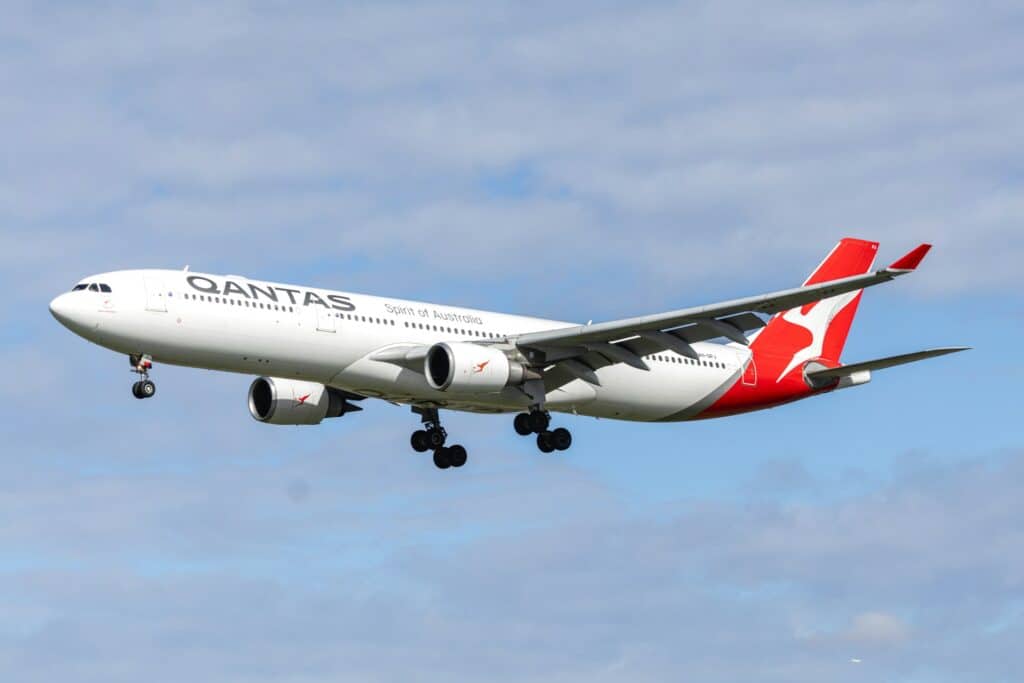
Four-engine aircraft like the Airbus A380 and Boeing 747 can lose two engines and continue flying safely. Twin-engine jets including the 787, A350, 777, and A330 must meet even stricter single-engine performance standards precisely because they lack the additional backup engines.
The key distinction involves understanding that engines provide thrust to overcome drag and maintain forward speed, while wings generate lift from that forward motion. An engine failure reduces available thrust but doesn’t eliminate the wings’ ability to create lift as long as the aircraft maintains sufficient airspeed.
How Aircraft Stay in the Air With One Engine
Understanding single-engine flight requires separating the distinct roles of thrust and lift in keeping aircraft airborne.
Lift vs. Thrust
Wings generate lift through airflow over their curved surfaces, creating pressure differences that support the aircraft’s weight. This lift depends on airspeed, wing design, and air density, not directly on engine power. Engines produce thrust that overcomes drag and maintains the forward speed necessary for wings to generate lift.
With one engine operating, the aircraft retains plenty of thrust to maintain cruise speeds above the minimum required for adequate lift. The remaining engine can sustain level flight, though typically at slightly reduced altitude and speed compared to normal two-engine operations.
Excess Thrust Design
Commercial jets cruise using only 70-80% of available engine power during normal operations. This substantial power reserve allows single-engine flight without immediately losing altitude. The remaining engine operates at higher power settings to compensate for the failed engine, but stays well within certified performance limits.
Modern twin-engine wide-body aircraft demonstrate remarkable single-engine capabilities. A Boeing 787 or Airbus A350 can climb to safe altitudes, cruise hundreds of miles, and land normally on one engine with full passenger and cargo loads.
Redundancy by Design
Aircraft incorporate multiple redundant systems ensuring that engine failure doesn’t cascade into other critical system failures. Each engine drives independent hydraulic systems, electrical generators, and pneumatic systems. If one engine fails, the remaining engine continues powering essential systems while backup batteries and auxiliary power units provide additional redundancy.
What Happens When an Engine Fails
Engine failures follow predictable sequences that pilots train extensively to handle through standard procedures practiced repeatedly in simulators.
Step 1: Detection and Alerts
Modern aircraft detect engine problems through dozens of sensors monitoring temperature, vibration, pressure, and performance parameters. Warning systems immediately alert pilots to anomalies through cockpit displays, warning lights, and audio alerts calibrated to urgency levels.
Pilots receive clear indications identifying which engine experienced problems and the nature of the malfunction. This information guides their response procedures and helps determine whether the situation requires immediate action or allows time for systematic troubleshooting.
Step 2: Pilot Response
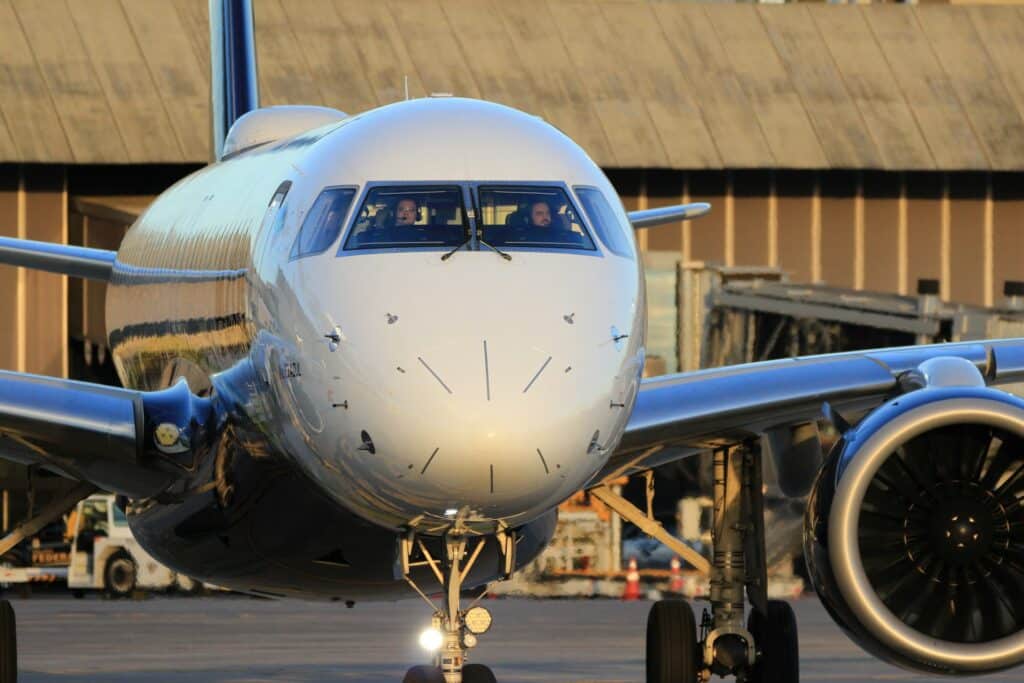
Pilots follow memorized immediate action items for engine failures, then reference detailed checklists ensuring they address every system affected by the engine loss. The pilot flying maintains aircraft control while the pilot monitoring works through procedures and communicates with air traffic control.
The first priority involves maintaining aircraft control and stable flight. Pilots adjust power on the operating engine, make small control inputs to counteract asymmetric thrust, and ensure the aircraft maintains safe airspeed and altitude.
Step 3: Engine Shutdown Procedures
If the engine cannot be restarted or shows signs of damage, pilots systematically shut it down following detailed procedures. This involves closing fuel valves, disconnecting electrical systems, and securing the engine to prevent further damage or fire risk.
The shutdown process takes several minutes as pilots methodically work through checklists. Throughout this time, the aircraft continues flying normally on the remaining engine while pilots prepare for single-engine operations.
Step 4: Route Assessment and Diversion
With the engine secured, pilots evaluate whether to continue to their original destination or divert to a closer alternate airport. This decision considers remaining flight time, weather conditions, airport facilities, passenger needs, and company procedures.
For flights over oceans or remote areas, pilots may continue hundreds of miles on one engine to reach suitable airports rather than attempting emergency landings at marginal facilities. The aircraft’s demonstrated single-engine range and reliability makes this approach safer than rushing to the nearest runway.
How Pilots Are Trained for Engine Failure
Every commercial pilot undergoes extensive engine failure training throughout their career, making these scenarios routine procedures rather than panic-inducing emergencies.
Simulator Training Requirements
Airlines use full-motion flight simulators recreating realistic engine failure scenarios during initial training and recurrent checks every 6-12 months. These sophisticated devices exactly replicate aircraft handling, systems behavior, and environmental conditions pilots encounter during actual engine failures.
Simulator sessions include engine failures during various flight phases including takeoff, climb, cruise, descent, and approach. Pilots practice both single-engine operations and failures of multiple systems simultaneously, building skills handling complex emergencies under realistic stress.
Emergency Procedures Mastery
Pilots memorize critical immediate action items for engine failures, allowing instant response without referencing written procedures. These memory items cover the first 30-60 seconds of an emergency when quick action prevents problems from escalating.
After completing immediate actions, pilots follow detailed checklists printed in quick reference handbooks or displayed on electronic flight bag tablets. This systematic approach ensures they address every affected system methodically rather than relying on memory alone during high-stress situations.
Takeoff Scenarios
Engine failure during takeoff represents the most critical phase because aircraft operate near minimum safe speeds and maximum weights. Pilots receive intense training on V1 decision speed (explained below) and the split-second choices required when engines fail during takeoff rolls.
Training emphasizes that the correct decision depends entirely on when the failure occurs relative to V1. Pilots practice these scenarios repeatedly until responses become automatic, eliminating hesitation that could prove dangerous during actual emergencies.
ETOPS Explained (Extended-Range Twin-Engine Operations)
ETOPS certification revolutionized commercial aviation by allowing twin-engine aircraft to fly routes previously requiring three or four engines for safety.
What ETOPS Means
Extended-range Twin-engine Operational Performance Standards (ETOPS) specify requirements for twin-engine aircraft operating on routes where diversions to alternate airports could take 60+ minutes with one engine inoperative. These stringent standards address aircraft reliability, maintenance programs, pilot training, and operational procedures.
ETOPS ratings indicate how far aircraft can fly from suitable alternate airports, expressed in minutes at single-engine cruise speed. Common ratings include ETOPS-120, ETOPS-180, ETOPS-240, and beyond, with higher numbers permitting operations further from diversionary airfields.
Why Twin-Engine Aircraft Qualify
Modern turbofan engines demonstrate extraordinary reliability, with in-flight shutdown rates below one failure per 100,000 flight hours for leading engines. This exceptional performance, combined with rigorous maintenance and monitoring, makes twin-engine aircraft statistically safer than older four-engine designs despite fewer backup engines.
Twin-engine jets also offer superior fuel efficiency compared to four-engine aircraft, reducing operating costs by 20-30% while maintaining equivalent or better safety margins. These economics drove the industry transition from 747s and A340s to 787s, A350s, and 777s on long-haul routes.
Safety Margins Built In
ETOPS certification requires aircraft to demonstrate single-engine climb performance, systems redundancy, and reliability far exceeding minimum standards. Airlines must implement enhanced maintenance programs with more frequent inspections and stricter component replacement schedules than standard operations.
The regulations also require crew training specific to extended-range operations, detailed diversion planning for every route segment, and real-time engine health monitoring that alerts maintenance personnel to developing problems before they cause in-flight failures.

Real-Life Examples of Safe Single-Engine Operations
Numerous incidents demonstrate how aircraft design, pilot training, and procedures ensure safe outcomes despite engine failures.
Notable Safe Landings
In 2010, a Qantas A380 suffered an uncontained engine failure over Indonesia, with shrapnel damaging multiple aircraft systems. Despite losing significant hydraulic and flight control capability beyond just the failed engine, the crew safely landed at Singapore after carefully assessing the aircraft’s degraded handling.
British Airways Flight 2276 experienced catastrophic engine failure during takeoff from Las Vegas in 2015. The crew immediately rejected the takeoff, stopped the aircraft on the runway, and evacuated all passengers safely before fire consumed the failed engine. The incident showcased how proper training and quick decisions prevent casualties even during dramatic emergencies.
Routine Single-Engine Diversions
Beyond headline-making incidents, commercial aviation experiences occasional engine shutdowns that passengers never hear about because pilots handle them as routine procedures. Aircraft divert to alternate airports, passengers transfer to other flights, and airlines dispatch maintenance teams to repair or replace engines.
These events rarely generate news coverage precisely because the systems work as designed. The lack of drama reinforces that engine failures, while requiring crew attention, don’t automatically create dangerous situations for properly trained pilots flying well-maintained aircraft.
How Aircraft Are Designed for Engine Failure
Aircraft engineers build extensive redundancy into every system knowing that components will eventually fail.
Redundant Systems Architecture
Critical systems including hydraulics, electrics, and flight controls feature multiple independent channels. If one engine fails, the remaining engine continues powering its associated systems while battery backups and auxiliary power units provide additional insurance against total system failures.
Modern fly-by-wire aircraft use multiple flight control computers with different software versions written by separate teams, preventing single software bugs from compromising controllability. Even if multiple computers fail, mechanical backup systems allow pilots to maintain basic control.
Power Backup Systems
Ram Air Turbines (RAT) deploy automatically if both engines fail, providing emergency hydraulic and electrical power by extracting energy from airflow during descent. While extremely rare, dual-engine failures have occurred, and aircraft designs account for even these worst-case scenarios.
The Auxiliary Power Unit (APU) can start during flight, providing another generator independent of main engines. Batteries supply power for critical systems including flight instruments, radios, and emergency lighting for extended periods.
Flight Control Design
Aircraft trim systems and flight controls account for asymmetric thrust from single-engine operations. Pilots make small rudder inputs to counteract yaw from the off-center engine thrust, but modern aircraft assist through automatic rudder trim that maintains coordinated flight without constant manual correction.
Can a Plane Take Off With One Engine?
Takeoff represents a special case where engine failure timing determines whether pilots continue flying or stop on the runway.
V1 Decision Speed
V1 (decision speed) represents the critical point during takeoff acceleration where pilots commit to flying even if an engine fails. Below V1, pilots abort takeoffs and stop on the remaining runway. Above V1, pilots continue takeoffs because insufficient runway remains for safe stops.
Aircraft performance engineers calculate V1 for every takeoff considering weight, runway length, obstacles, weather, and runway conditions. This ensures that if engines fail at or after V1, the aircraft can safely take off and climb on remaining engine(s).
Balanced Field Length
Airport runway requirements account for both accelerating to flying speed and stopping after rejected takeoffs. The balanced field length represents the point where the accelerate-go distance equals the accelerate-stop distance, ensuring adequate runway for either decision.
Pilots receive detailed performance data for each takeoff specifying V1, rotation speed (Vr), and single-engine climb speeds. These calculations include safety margins ensuring the aircraft can clear obstacles and climb to safe altitudes even with engine failures.
Takeoff Decision Rules
Regulations and airline procedures strictly govern takeoff decisions. Below V1, pilots abort for any serious malfunction. At or above V1, pilots continue takeoffs unless the aircraft is clearly unable to fly, such as uncontrollable fires or structural failures.
This standardization eliminates confusion during critical seconds when hesitation or wrong decisions create accidents. Pilots practice V1 cuts (simulated engine failures at V1) repeatedly, building muscle memory that guides correct responses during actual emergencies.
How Safe Is Flying on One Engine Really?
Statistical evidence overwhelmingly demonstrates that engine failures pose minimal risk to properly operated commercial aircraft.
Extremely Rare Failures
Modern turbofan engines fail catastrophically less than once per million flight hours. An individual passenger would need to fly continuously for thousands of years before statistically experiencing an engine failure. Even when failures occur, the vast majority result in safe landings without injuries.
Total engine failure rates (including minor issues requiring precautionary shutdowns) occur roughly once per 100,000 flight hours. Given that commercial aircraft typically accumulate 3,000-5,000 flight hours annually, individual aircraft might experience one engine event every 20-30 years of service.
Aviation Safety Standards
Commercial aviation maintains accident rates below one fatal accident per 10 million flights globally according to international aviation safety data. Engine-related accidents represent a small fraction of that already minuscule total, with most aviation accidents involving weather, pilot error, or maintenance issues unrelated to engine reliability.
The industry’s safety record improves continuously through rigorous accident investigation, mandatory reporting of even minor incidents, and constant refinement of training, maintenance, and operational procedures. Every engine failure gets analyzed to prevent similar occurrences.
Comparing Transportation Safety
Flying remains statistically safer than virtually every alternative transportation mode including driving, trains, or buses. The risk of dying in a car accident during the drive to the airport exceeds the risk of dying in a plane crash by orders of magnitude, yet most people fear flying more than driving.
Understanding actual risk versus perceived risk helps anxious passengers appreciate that commercial aviation represents the safest form of mass transportation ever developed, with redundancy and fail-safe design preventing equipment failures from causing accidents.
What Passengers Should Know
Travelers can fly confidently knowing that aviation’s safety culture prioritizes their protection through multiple layers of redundancy.
Key reassurance points for nervous flyers:
- No Panic Needed – Engine failures do not mean imminent crashes. Aircraft safely fly, maneuver, and land on remaining engines as a standard capability, not emergency heroics.
- Pilots Are Prepared – Every commercial pilot practices engine failures regularly in simulators, making these procedures routine. Pilots can handle single-engine operations in their sleep.
- Aircraft Are Designed For This – Engineers specifically design twin-engine aircraft to fly safely on one engine. This isn’t luck or backup planning, but fundamental certification requirements.
- Failures Are Rare – Modern engines are extraordinarily reliable. Most pilots complete entire careers without experiencing actual engine failures outside simulator training.
- Multiple Backups Exist – Even if an engine fails, redundant electrical, hydraulic, and control systems ensure the aircraft remains fully controllable and safely operable.
- Regulations Require Safety Margins – ETOPS and other certification standards mandate performance capabilities far exceeding minimum requirements, providing substantial safety buffers.
- Maintenance Is Rigorous – Airlines follow strict maintenance schedules with frequent inspections, component replacements, and monitoring systems that catch problems before they cause in-flight failures.
If you ever experience an engine issue during flight, trust that the crew has trained for exactly this scenario and the aircraft has been designed and maintained to handle it safely.
Frequently Asked Questions
Can planes fly with one engine?
Yes, all commercial twin-engine aircraft can safely fly on one engine. This capability is a fundamental certification requirement, not an emergency backup. Modern twin-engine jets like the Boeing 787, 777, and Airbus A350 routinely operate on routes thousands of miles from alternate airports because regulators verified their single-engine performance capabilities. The aircraft can maintain altitude, navigate, and land normally with only one operating engine.
What happens if both engines fail on a plane?
While extraordinarily rare (occurring less than once per 10 million flights), aircraft can glide considerable distances if both engines fail. A Boeing 737 at cruise altitude can glide approximately 60-100 miles, giving pilots substantial time to restart engines or prepare for emergency landings. Aircraft carry backup power systems including Ram Air Turbines and batteries that power flight controls and instruments during glides. Most dual-engine failure incidents result from fuel exhaustion or volcanic ash, both largely preventable through proper planning and weather avoidance.
Is it safe to fly over oceans on a twin-engine plane?
Yes, transoceanic twin-engine operations are extremely safe thanks to ETOPS certification requirements. Modern engines demonstrate in-flight shutdown rates below one failure per 100,000 flight hours, making dual-engine failures statistically negligible. ETOPS-rated aircraft meet stringent reliability standards, undergo enhanced maintenance, and can safely fly for hours on one engine if needed. Airlines also plan routes ensuring suitable alternate airports remain within single-engine range throughout oceanic crossings. The safety record of twin-engine transoceanic flights equals or exceeds four-engine aircraft operations.
What does ETOPS mean?
ETOPS stands for Extended-range Twin-engine Operational Performance Standards. These regulations specify requirements for twin-engine aircraft operating routes where diversions to alternate airports could exceed 60 minutes with one engine inoperative. ETOPS certification requires demonstrated aircraft reliability, enhanced maintenance programs, specialized crew training, and proven single-engine performance. ETOPS ratings (120, 180, 240, 330 minutes) indicate maximum diversion times permitted, with higher ratings allowing operations further from alternate airports. This certification enables efficient twin-engine jets to safely operate routes previously requiring three or four engines.
How do pilots train for engine failure?
Commercial pilots undergo extensive engine failure training in full-motion flight simulators during initial qualification and recurrent training every 6-12 months. Simulator sessions replicate engine failures during all flight phases including takeoff, climb, cruise, and approach. Pilots practice immediate action items from memory, then work through detailed checklists addressing affected systems. Training emphasizes V1 decision-making during takeoff, single-engine handling characteristics, emergency descent procedures, and single-engine approaches and landings. This repetitive practice makes engine failures routine procedures rather than panic-inducing emergencies.
Can a plane take off with one engine?
Yes, twin-engine aircraft can take off and climb safely on one engine if the failure occurs at or after V1 decision speed. V1 represents the point where pilots commit to flying because insufficient runway remains for safe stops. Aircraft performance calculations ensure that if engines fail at or after V1, the aircraft has adequate runway, thrust, and climb performance to take off safely on the remaining engine. Pilots receive specific V1 speeds for each takeoff based on weight, runway length, obstacles, and environmental conditions, ensuring single-engine takeoff capability always exists beyond V1.
Conclusion
Modern commercial aircraft can not only fly with one engine, but do so safely as a fundamental design capability tested extensively before certification. The physics of flight, combined with engineering redundancy and rigorous pilot training, ensures that engine failures represent manageable situations rather than catastrophic emergencies.
ETOPS certification transformed aviation by demonstrating that twin-engine reliability equals or exceeds four-engine operations while delivering superior fuel efficiency. Today’s passengers routinely cross oceans on twin-engine jets that can safely reach alternate airports hundreds of miles away on single engines if needed.
Understanding these safety systems helps nervous flyers appreciate why commercial aviation maintains its extraordinary safety record. The next time you hear an engine’s reassuring roar during flight, remember that even if one went silent, the aircraft, pilots, and systems would safely continue your journey – just as they’re designed, certified, and proven to do.