
Dassault Aviation introduced the Falcon 10X to compete directly with the world’s most advanced ultra-long-range business jets. The French aerospace manufacturer designed this flagship aircraft to challenge established dominance from Gulfstream and Bombardier in the premium private aviation market.
The Falcon 10X targets clients demanding the ultimate in luxury travel capability, with the widest cabin in business aviation, cutting-edge technology, and 7,500 nautical mile range powered by Rolls-Royce Pearl 10X engines. This aircraft represents Dassault’s most ambitious entry into the ultra-long-range category.
At $75 million, the Falcon 10X positions itself as a direct competitor to the Gulfstream G700 while offering distinct advantages in cabin width and advanced automation systems.
What Is The Dassault Falcon 10X?
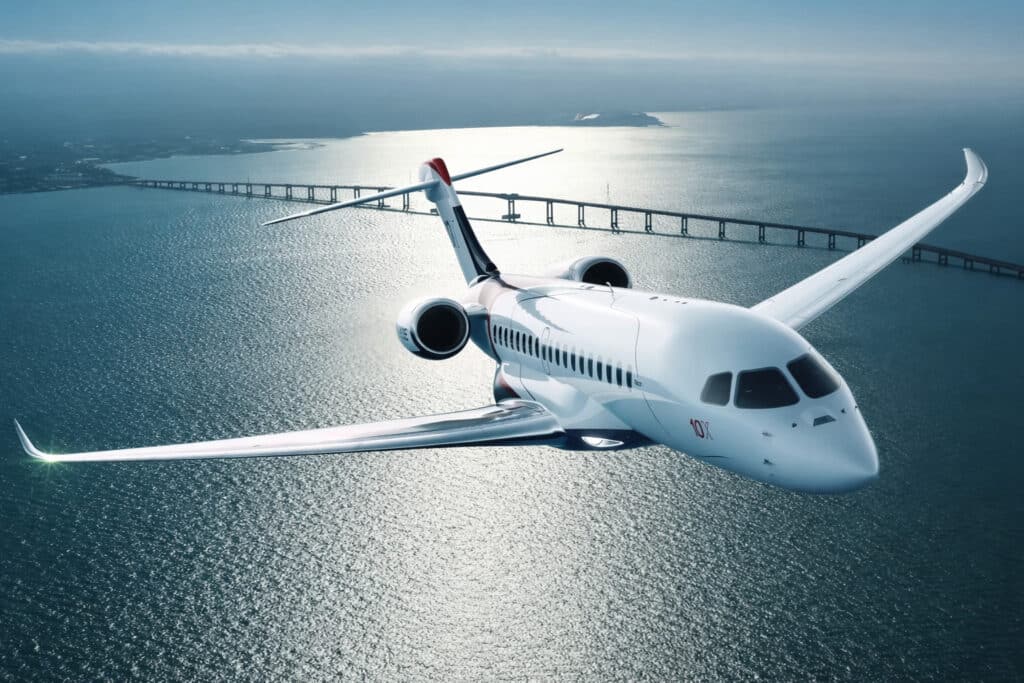
Image credit: World of Luxury (YouTube)
The Falcon 10X represents Dassault Aviation’s newest flagship business jet, designed for the ultra-long-range category where aircraft routinely cross oceans and continents nonstop. Dassault unveiled the aircraft with ambitions to reshape expectations for cabin space, passenger comfort, and technological sophistication in private aviation.
According to the official Dassault Aviation press announcement, the Falcon 10X establishes new benchmarks for cabin cross-section, environmental control systems, and pilot-aircraft interface technology.
The aircraft builds on Dassault’s heritage of fighter jet-derived technology, digital flight controls, and efficiency-focused design philosophy. Unlike competitors that evolved from earlier platforms, Dassault designed the 10X as a clean-sheet aircraft optimized specifically for ultra-long-range luxury missions.
First flight is scheduled for 2025, with entry into service planned for 2027. The development timeline positions the Falcon 10X to compete against the already-operational G700 and Global 7500, requiring Dassault to deliver exceptional performance to capture market share from established competitors.
Falcon 10X Cabin: The Largest In Business Aviation
The Falcon 10X cabin sets new industry standards with dimensions that surpass all current competitors in the ultra-long-range category.
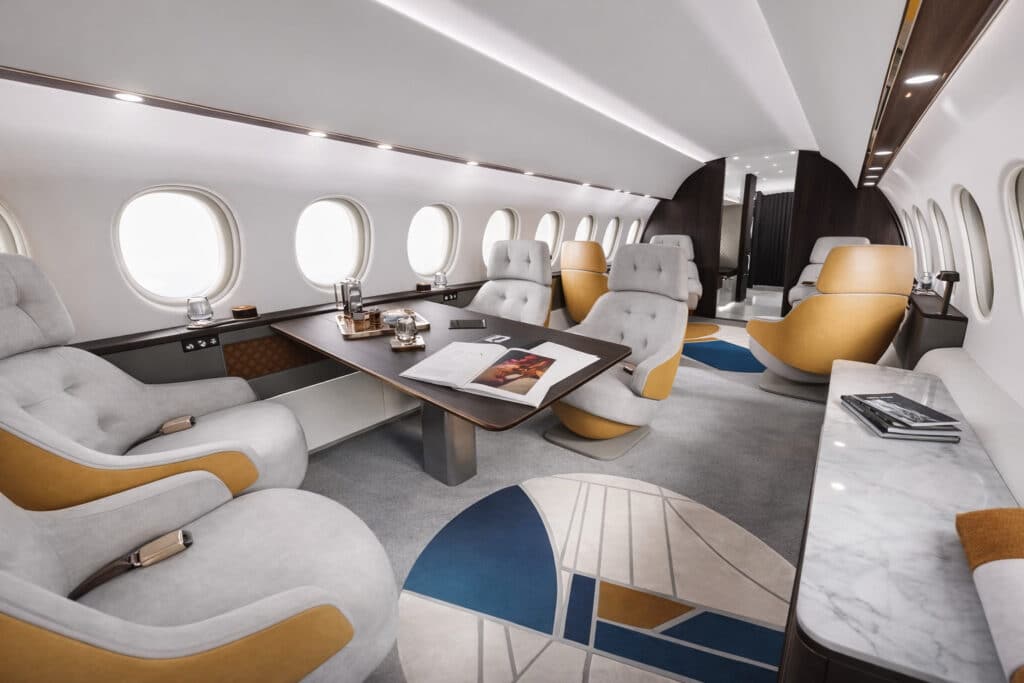
Image credit: World of Luxury (YouTube)
Cabin width: 9 feet 1 inch (2.77 meters) – the widest of any purpose-built business jet. This extra width allows four-across seating configurations in comfort areas and creates genuine walk-around space in the cabin.
Cabin height: 6 feet 8 inches (2.03 meters) – matching the tallest passengers without requiring ducking or stooping throughout the 53-foot cabin length. This ceiling height enables true standing comfort for the entire journey.
Cabin length: 53 feet (16.15 meters) – providing space for multiple distinct zones including a master suite, conference area, dining section, and crew rest area without compromise.
The cabin offers complete customization through Dassault’s design process. Owners can configure the space with a full master suite featuring a permanent bed, ensuite facilities, and privacy walls. Office configurations support multiple workstations with video conferencing capability and high-bandwidth connectivity.
Typical layouts accommodate 16-19 passengers in day configuration, converting to sleeping arrangements for 8 passengers on ultra-long intercontinental flights. The cabin volume exceeds 3,000 cubic feet, creating residential-level spaciousness rather than the cramped feeling common in narrower business jets.
Smart Cabin Technology
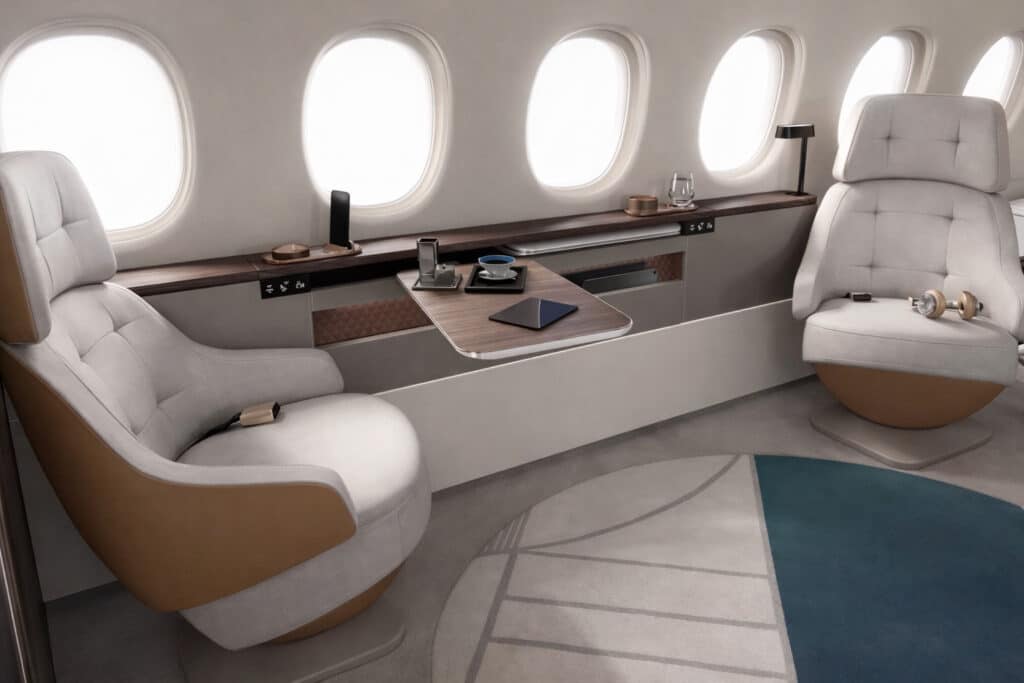
Image credit: World of Luxury (YouTube)
Dassault developed the Falcon Cabin Experience system specifically for the 10X, integrating artificial intelligence environmental control with passenger personalization features that adapt to individual preferences and route requirements.
The environmental control system uses AI algorithms to optimize cabin pressure, temperature, humidity, and air circulation based on flight duration, number of passengers, and outside conditions. The system maintains sea-level cabin pressure up to much higher altitudes than competitors, reducing passenger fatigue on long flights.
Circadian lighting technology adjusts cabin illumination throughout the flight to minimize jet lag. The system simulates natural daylight progression, gradually shifting color temperature and intensity to help passengers adjust to destination time zones before landing. Research shows this reduces jet lag symptoms by up to 40% on transoceanic flights.
Humidity control maintains comfortable moisture levels throughout the cabin rather than the dry air typical of high-altitude flight. The system adds and removes humidity dynamically, preventing the dehydration and discomfort passengers experience on conventional aircraft during multi-hour journeys.
Passenger personalization allows individual control of lighting, temperature, window shading, and entertainment systems through smartphone apps or seatback controls. The system remembers preferences for frequent passengers, automatically configuring their preferred environment when they board.
Luxury Features Inside The Falcon 10X
The Falcon 10X interior emphasizes residential luxury rather than traditional business jet aesthetics. Dassault partnered with premium designers to create spaces that feel more like luxury apartments than aircraft cabins.
The full galley kitchen includes convection oven, espresso machine, wine chiller, and full-size refrigerator. Professional chefs can prepare multi-course meals in flight, supporting the extended journey times this aircraft enables. Counter space and storage exceed what competing aircraft offer.
Entertainment systems throughout the cabin feature 4K displays, surround sound audio, satellite connectivity for live streaming, and wireless content sharing. Theater room configurations offer cinema-quality viewing for movies, presentations, or video conferences with ground teams.
High-speed internet connectivity supports multiple simultaneous users streaming video, conducting video calls, and accessing cloud-based applications. Bandwidth approaches ground-based business connections rather than the limited satellite connectivity typical of earlier business aircraft.
Custom materials include exotic woods, premium leathers, precious metal accents, and bespoke fabrics selected by owners during the design process. Soundproofing creates one of the quietest cabins in business aviation, with noise levels measured at conversation-appropriate volumes even during cruise.
These luxury features position the Falcon 10X for clients who view private aviation as an extension of their lifestyle rather than merely transportation, similar to the approach seen in celebrity-owned luxury aircraft.
Falcon 10X Flight Deck Technology
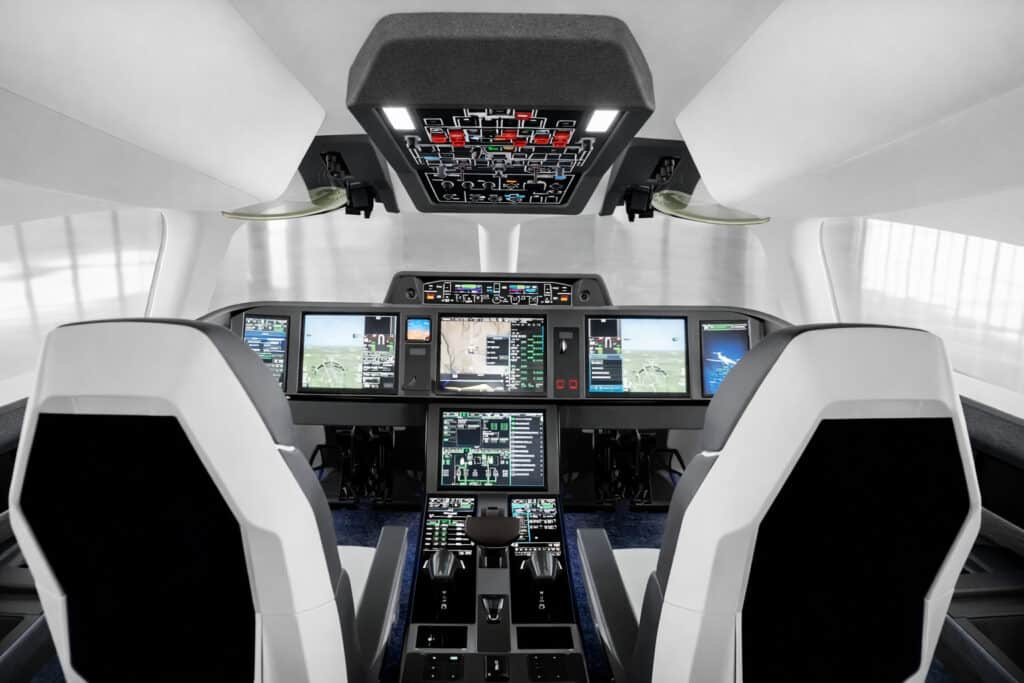
Image credit: World of Luxury (YouTube)
The Falcon 10X cockpit represents the most advanced avionics package Dassault has ever installed, combining fighter jet technology with artificial intelligence and automation designed to reduce pilot workload on ultra-long missions.
Active sidestick controllers provide haptic feedback to pilots, allowing both pilots to feel control inputs from either position. This technology, derived from military fighters, improves coordination and situational awareness during critical phases of flight.
The digital flight control system manages all control surfaces electronically rather than through mechanical linkages. Fly-by-wire technology enables envelope protection, automatically preventing pilots from exceeding aircraft limitations while maintaining full control authority during normal operations.
FalconEye combined vision system merges infrared imaging, synthetic vision, and enhanced vision systems into a single head-up display. This allows operations in low visibility conditions that would ground competitors, providing runway approach capability in fog, snow, or darkness.
Dual head-up displays project flight information directly onto the windscreen for both pilots, eliminating the need to look down at instruments during critical approach and landing phases. The system displays terrain awareness, traffic alerts, runway information, and navigation guidance in the pilot’s natural line of sight.
Performance And Range
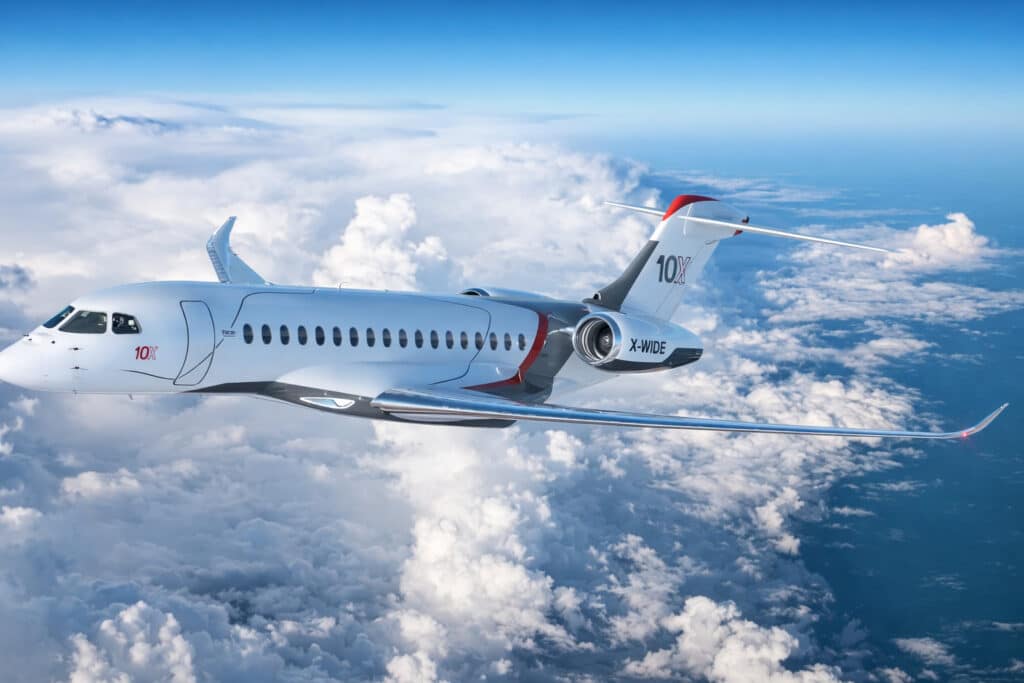
Image credit: World of Luxury (YouTube)
The Falcon 10X achieves its performance specifications through Rolls-Royce Pearl 10X engines specifically developed for this aircraft. Each engine produces 18,000 pounds of thrust while delivering 20% better fuel efficiency than previous-generation business jet engines.
The Pearl 10X engine family builds on technology from Rolls-Royce commercial aviation programs, incorporating advanced materials, improved thermal management, and optimized aerodynamics. The engines meet current and projected future emissions standards while providing the power needed for transcontinental operations.
Range: 7,500 nautical miles (8,631 statute miles / 13,890 kilometers) with eight passengers and NBAA IFR reserves. This range enables nonstop flights connecting virtually any two business destinations globally.
Cruise speed: 685 mph (Mach 0.90) at typical cruise altitudes, providing competitive speed for time-sensitive business travel.
Maximum speed: 710 mph (Mach 0.925) when conditions require faster routing or when schedule demands justify higher fuel consumption.
Example nonstop routes the Falcon 10X can operate:
New York to Shanghai: 6,817 nautical miles – connecting major financial centers with range to spare for weather routing or traffic delays. This route serves clients using New York’s private jet services.
Los Angeles to Sydney: 6,509 nautical miles – enabling Pacific crossings without refueling stops that add 2-3 hours to journey time for Los Angeles-based operators.
London to Singapore: 6,756 nautical miles – serving key business corridors between Europe and Southeast Asia nonstop for London’s ultra-high-net-worth clients.
The 7,500 nautical mile range exceeds most competing aircraft, providing operational flexibility that translates to time savings and passenger convenience on global missions.
Falcon 10X Wing Design
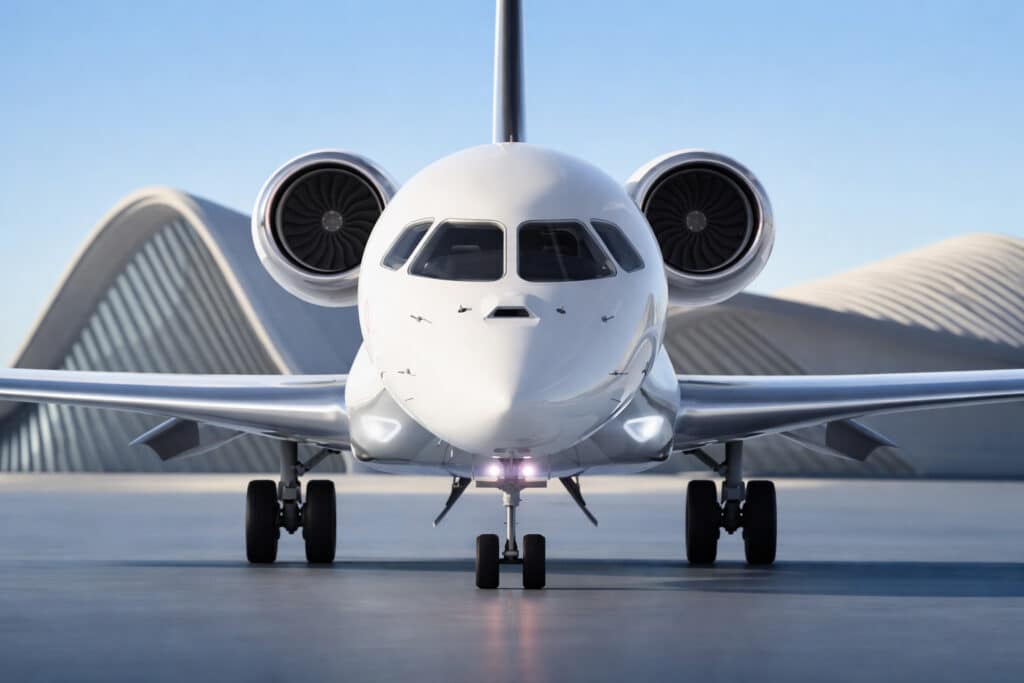
Image credit: World of Luxury (YouTube)
Dassault designed a new high aspect ratio wing specifically for the Falcon 10X rather than adapting wings from smaller Falcon models. The wing features a slender, elongated profile that reduces induced drag during cruise flight.
High aspect ratio wings generate lift more efficiently than shorter, wider wings by minimizing vortex formation at wing tips. This translates directly to improved fuel economy on long-range missions where small efficiency gains accumulate to significant fuel savings.
The wing design enables high-speed performance unusual for aircraft with such impressive range. Most long-range business jets sacrifice speed for fuel efficiency, but the Falcon 10X maintains Mach 0.90 cruise speed while achieving 7,500 nautical mile range.
Better fuel economy from the wing design reduces operating costs while extending range. The combination of efficient engines and optimized wing aerodynamics allows the Falcon 10X to burn approximately 20% less fuel than comparable aircraft on identical missions.
Advanced manufacturing techniques enable complex wing contours and precise tolerances that would be impossible with traditional construction methods. Dassault uses computer modeling to optimize every surface for minimum drag across the flight envelope.
Operating Costs And Price
The Falcon 10X carries a purchase price of $75 million, positioning it competitively within the ultra-long-range business jet market. This price point reflects the aircraft’s advanced technology, spacious cabin, and premium positioning.
Competing aircraft pricing:
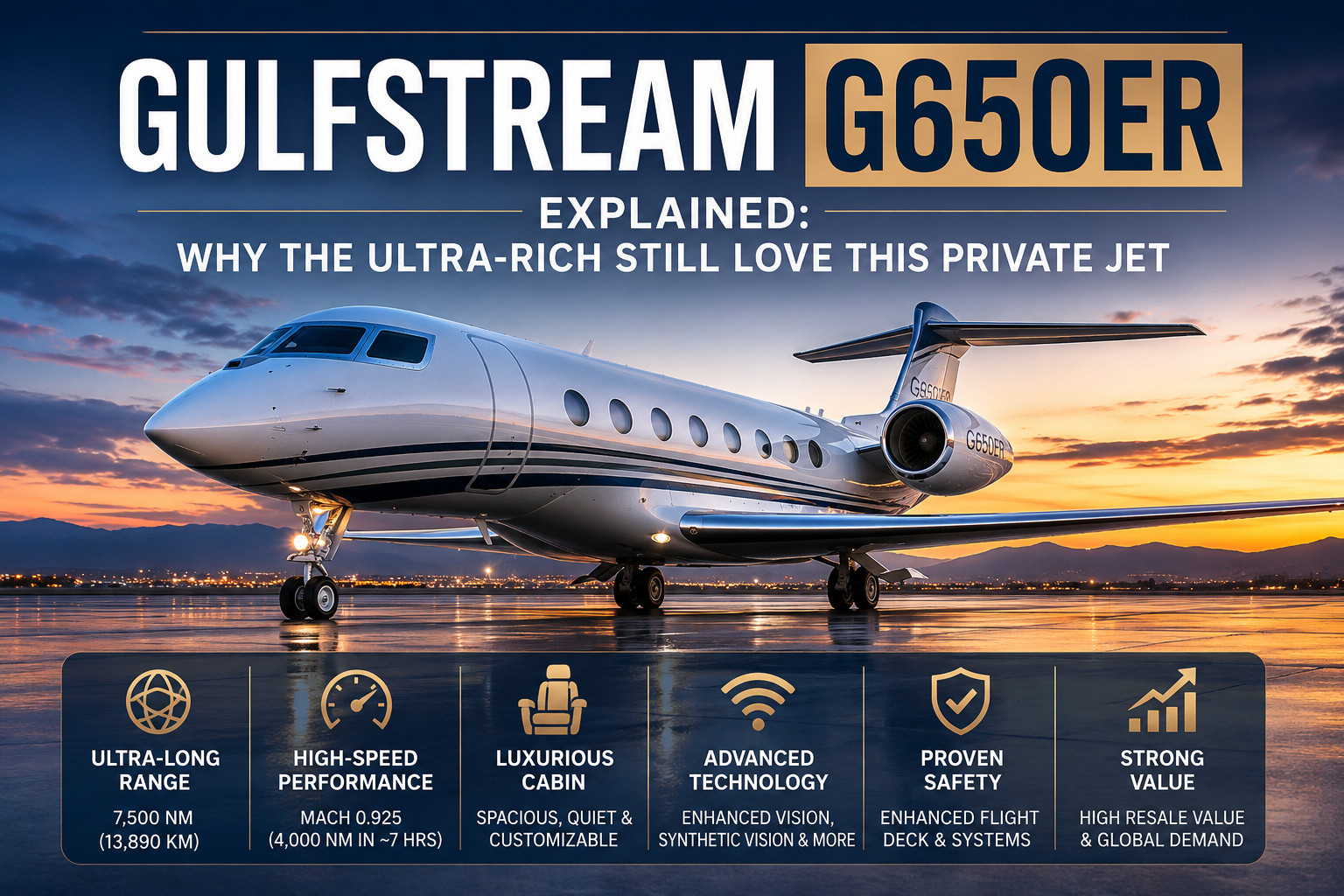
Gulfstream G700: $78 million – slightly higher than the Falcon 10X while offering comparable range and a proven track record with deliveries already underway.
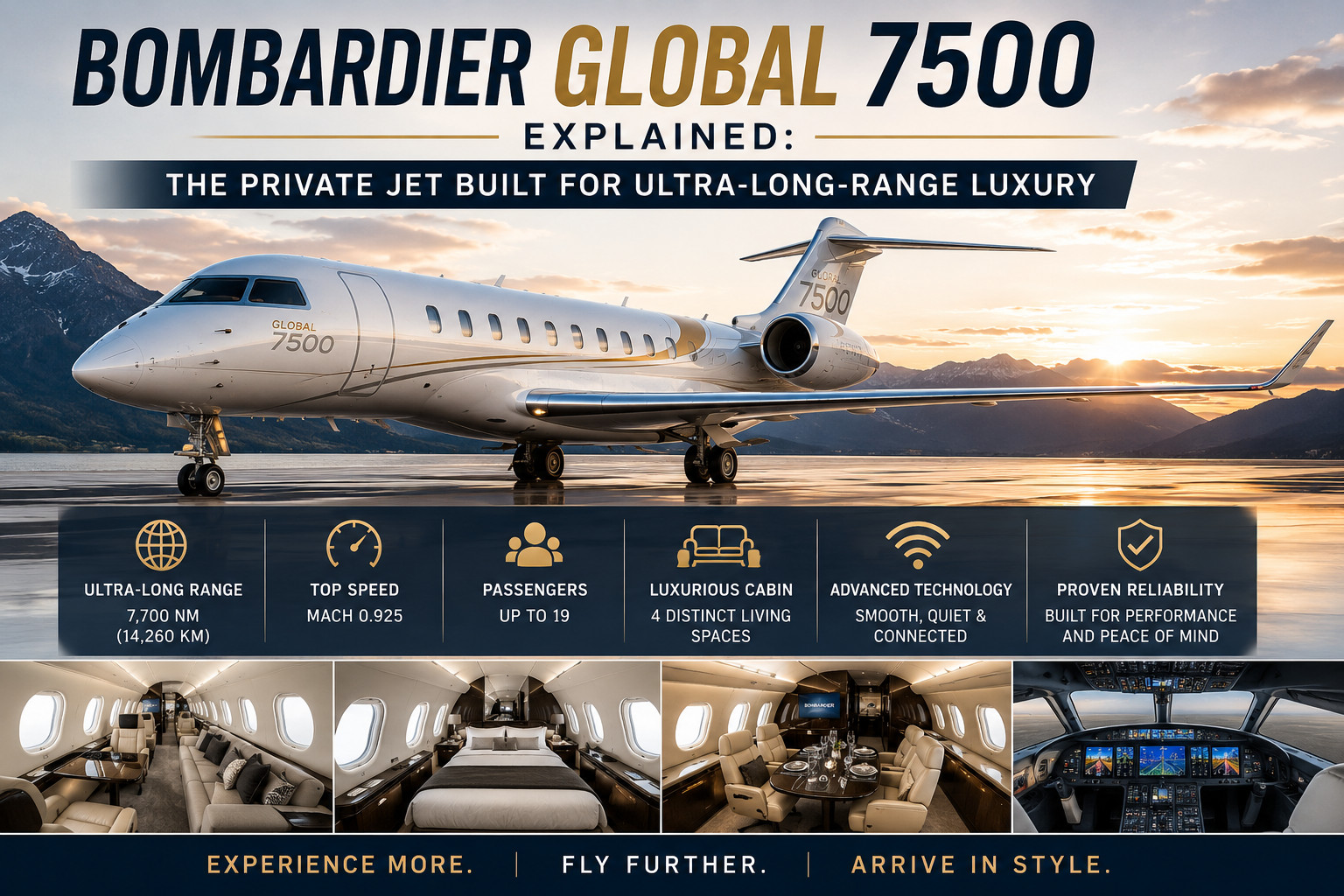
Bombardier Global 7500: $75 million – matching the Falcon 10X price point with established market presence and operational history since 2018.
These similar price points indicate intense competition in the ultra-long-range segment, where manufacturers differentiate on cabin design, technology, and performance rather than undercutting on price. Buyers at this level prioritize capability and luxury over initial acquisition cost.
Charter operators estimate $15,000-18,000 per flight hour for Falcon 10X operations. This rate includes crew, fuel, maintenance, insurance, and positioning costs. Actual charter rates vary based on route, season, and market demand.
For those considering ownership versus charter, understanding financing vs leasing options becomes critical. The $75 million purchase price represents significant capital commitment even for ultra-high-net-worth individuals and corporations.
Annual operating costs for the Falcon 10X are projected at $3.5-4 million for 400 flight hours, including crew salaries, hangar, aircraft insurance, scheduled maintenance, and fuel. Variable costs run approximately $5,500-6,500 per flight hour, while fixed costs account for $1.8-2 million annually regardless of utilization.
Owners can potentially offset some costs through tax benefits of aircraft ownership, depending on jurisdiction and business use percentage. Understanding aircraft depreciation schedules also helps with financial planning for this asset class.
Falcon 10X vs Gulfstream G700 vs Global 7500
| Specification | Falcon 10X | Gulfstream G700 | Bombardier Global 7500 |
|---|---|---|---|
| Range | 7,500 NM | 7,500 NM | 7,700 NM |
| Cabin Width | 9 ft 1 in | 8 ft 2 in | 8 ft 0 in |
| Cabin Height | 6 ft 8 in | 6 ft 3 in | 6 ft 2 in |
| Cabin Length | 53 ft | 56 ft 11 in | 54 ft 5 in |
| Max Speed | 710 mph (M 0.925) | 710 mph (M 0.925) | 721 mph (M 0.925) |
| Cruise Speed | 685 mph (M 0.90) | 685 mph (M 0.90) | 690 mph (M 0.90) |
| Price | $75M | $78M | $75M |
| Engines | Rolls-Royce Pearl 10X | Rolls-Royce Pearl 700 | GE Passport |
| Entry Into Service | 2027 (planned) | 2022 | 2018 |
| Passengers | 16-19 | 19 | 19 |
The comparison reveals the Falcon 10X’s competitive positioning. While it matches or slightly trails competitors in range and speed, the aircraft excels in cabin width and height – dimensions that significantly impact passenger comfort on ultra-long flights.
The widest cabin advantage (9 ft 1 in vs 8 ft 2 in for G700) creates noticeably more space for movement, furniture placement, and that indefinable sense of spaciousness that luxury buyers value. The extra 11 inches of width translates to approximately 15% more cabin cross-sectional area.
Why The Falcon 10X Could Change Business Aviation
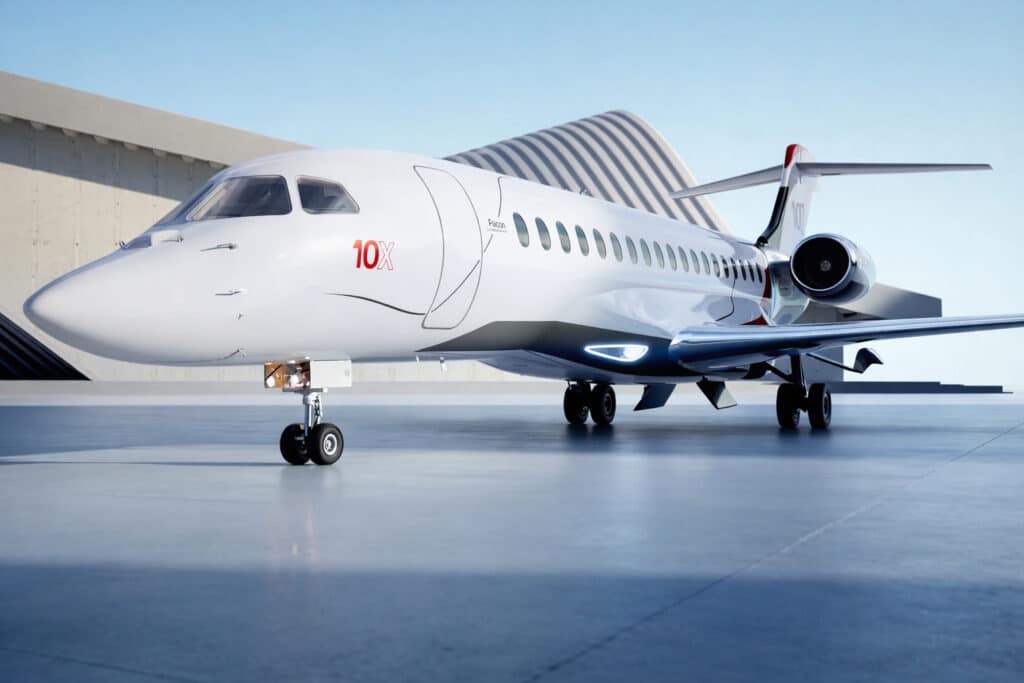
Image credit: World of Luxury (YouTube)
The Falcon 10X establishes a new luxury benchmark in business aviation by prioritizing cabin dimensions and passenger experience over pure performance metrics. While competitors emphasize range or speed advantages, Dassault focused on creating the most comfortable environment for ultra-long-haul private travel.
Advanced automation throughout the aircraft reduces pilot workload and operational complexity. The digital flight control system, combined with AI-powered environmental management, represents the most automated business jet to date. This technology evolution follows trends in commercial aviation toward highly automated aircraft systems.
Passenger comfort innovations like circadian lighting, humidity control, and AI environmental management address the physiological challenges of extended flight. These features move beyond traditional luxury to genuinely improve the travel experience through science-based solutions to jet lag and fatigue.
The Falcon 10X could reshape business jet market dynamics by forcing competitors to prioritize cabin dimensions in future designs. If Dassault successfully demonstrates that buyers value space over incremental range improvements, the industry may shift toward wider fuselages even at the cost of slightly reduced performance.
For charter operators and those evaluating private jet charter options, the Falcon 10X represents a new category of ultra-luxury aircraft that commands premium rates while potentially justifying those rates through superior passenger experience.
Frequently Asked Questions
What is the Falcon 10X range?
The Dassault Falcon 10X offers a range of 7,500 nautical miles (8,631 statute miles) with eight passengers and NBAA IFR reserves. This range enables nonstop flights from New York to Shanghai (6,817 NM), Los Angeles to Sydney (6,509 NM), and London to Singapore (6,756 NM) without refueling. The range matches the Gulfstream G700 and trails the Bombardier Global 7500 by 200 nautical miles.
How much does the Falcon 10X cost?
The Falcon 10X purchase price is $75 million, matching the Bombardier Global 7500 and coming in $3 million less than the $78 million Gulfstream G700. Annual operating costs are projected at $3.5-4 million for 400 flight hours, including crew, hangar, insurance, maintenance, and fuel. Charter rates are estimated at $15,000-18,000 per flight hour depending on route and season.
Which engines power the Falcon 10X?
The Falcon 10X is powered by two Rolls-Royce Pearl 10X engines, each producing 18,000 pounds of thrust. These engines were specifically developed for the Falcon 10X and deliver 20% better fuel efficiency than previous-generation business jet engines while meeting current and future emissions standards. The Pearl 10X incorporates advanced materials, improved thermal management, and optimized aerodynamics from Rolls-Royce commercial aviation programs.
Is the Falcon 10X cabin bigger than the Global 7500?
Yes, the Falcon 10X has a wider and taller cabin than the Bombardier Global 7500. The Falcon 10X cabin measures 9 feet 1 inch wide and 6 feet 8 inches tall, compared to the Global 7500’s 8 feet 0 inches wide and 6 feet 2 inches tall. This makes the Falcon 10X the widest cabin in business aviation. However, the Global 7500 cabin is slightly longer at 54 feet 5 inches versus the Falcon 10X’s 53 feet.
When will the Falcon 10X enter service?
Dassault Aviation plans first flight of the Falcon 10X for 2025, with entry into service scheduled for 2027. This timeline means the aircraft will enter the market 5 years after the Gulfstream G700 (2022 entry) and 9 years after the Bombardier Global 7500 (2018 entry). The later entry allows Dassault to incorporate newer technology but requires overcoming competitors’ established market presence and operational track records.
How does the Falcon 10X cabin width compare to competitors?
The Falcon 10X cabin width of 9 feet 1 inch exceeds all competitors in the ultra-long-range category. The Gulfstream G700 measures 8 feet 2 inches wide, while the Bombardier Global 7500 is 8 feet 0 inches wide. This 11-inch advantage over the G700 translates to approximately 15% more cabin cross-sectional area, creating noticeably more spaciousness for furniture placement, movement, and overall passenger comfort on ultra-long flights.
What makes the Falcon 10X cabin technology unique?
The Falcon 10X features the proprietary Falcon Cabin Experience system, which uses artificial intelligence to manage environmental controls including cabin pressure, temperature, humidity, and air circulation. The system includes circadian lighting technology that adjusts throughout the flight to minimize jet lag by simulating natural daylight progression. Active humidity control maintains comfortable moisture levels rather than the dry air typical of high-altitude flight. These technologies work together to reduce passenger fatigue by up to 40% on transoceanic flights.
Can the Falcon 10X operate from shorter runways?
While Dassault has not released final takeoff and landing performance data, the Falcon family traditionally excels at operating from shorter runways than competitors. The 10X is expected to maintain this capability through advanced wing design and digital flight controls, though specific runway length requirements await certification testing. This operational flexibility allows access to airports unavailable to some competing ultra-long-range aircraft, providing routing options beyond major international airports.
Conclusion
The Dassault Falcon 10X enters the ultra-long-range business jet market with the widest cabin in business aviation, advanced AI environmental controls, and competitive pricing at $75 million. Its 7,500 nautical mile range powered by Rolls-Royce Pearl 10X engines enables nonstop global missions while the 9-foot-1-inch cabin width creates unprecedented spaciousness for private aviation.
Competing against the established Gulfstream G700 and Bombardier Global 7500 requires more than matching specifications. Dassault differentiated through cabin dimensions, passenger comfort technology, and advanced automation rather than pursuing incremental range or speed improvements. The strategy positions the Falcon 10X for buyers prioritizing travel experience over pure performance metrics.
Entry into service in 2027 arrives years after competitors established market presence, but allows Dassault to incorporate the newest technology and learn from competitor operational experience. Whether the Falcon 10X reshapes the ultra-long-range segment depends on demonstrating that cabin width and comfort technology justify choosing an unproven aircraft over established alternatives with track records spanning thousands of flight hours.