Why Airfares Are Rising Worldwide As Airlines Avoid Iran's Airspace
 Radu BalasPublished 14 min read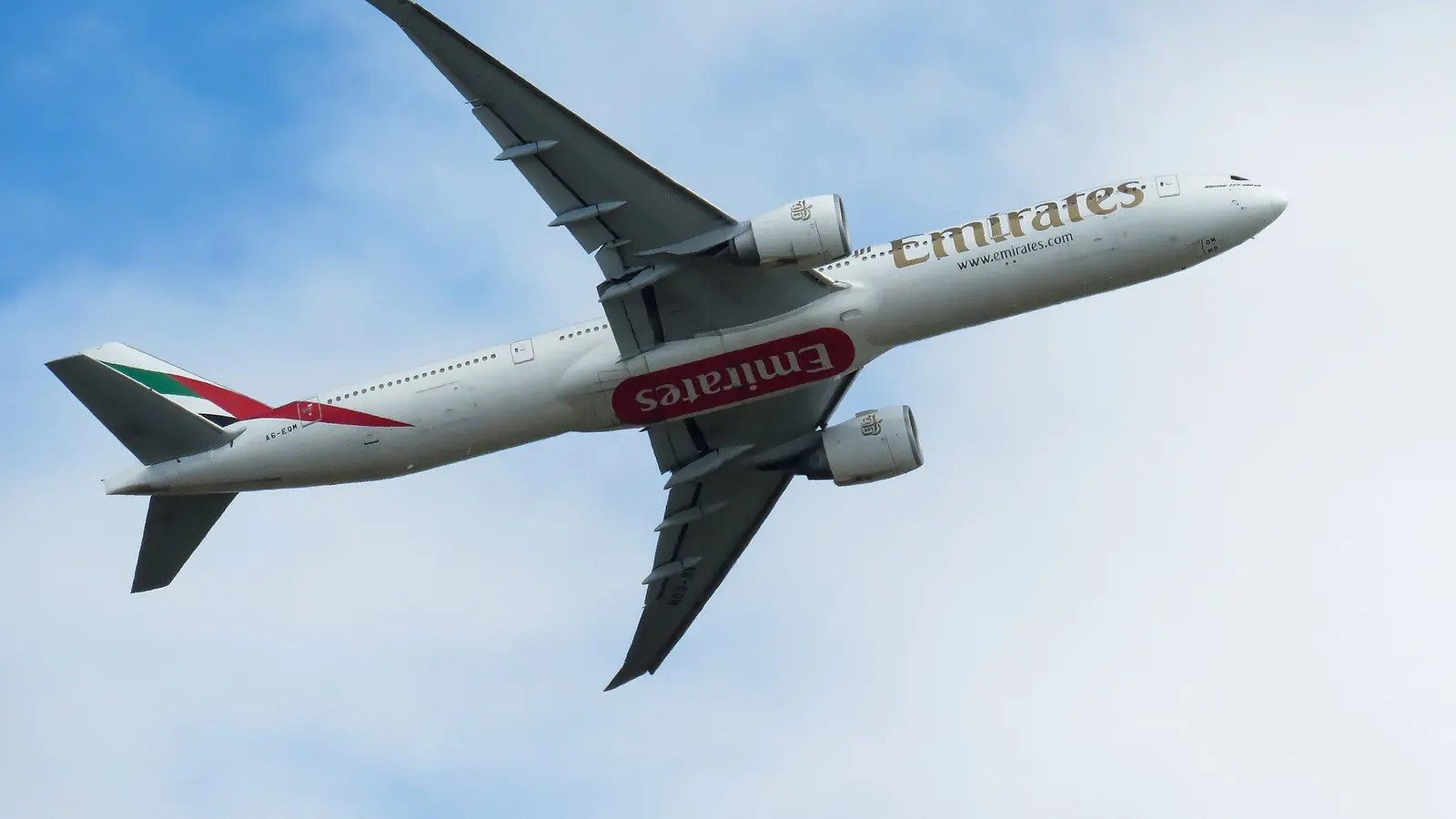
Global airfares are rising as airlines reroute flights around Iran's airspace following escalating conflict in the Middle East. The operational impact extends far beyond the immediate region, affecting routes between Europe and Asia while simultaneously driving jet fuel costs to multi-month highs.
Airlines cancelled over 9,500 flights in the first four days of heightened tensions, stranding hundreds of thousands of passengers across major Gulf hubs. The combination of airspace restrictions, longer flight paths, and rising fuel prices creates a perfect storm of cost increases that carriers are passing directly to travelers through higher ticket prices.
Understanding how conflicts reshape global flight paths reveals the complex economics forcing airlines to increase fares while simultaneously reducing service quality through extended journey times and reduced frequencies.
How The Iran Conflict Is Disrupting Global Aviation
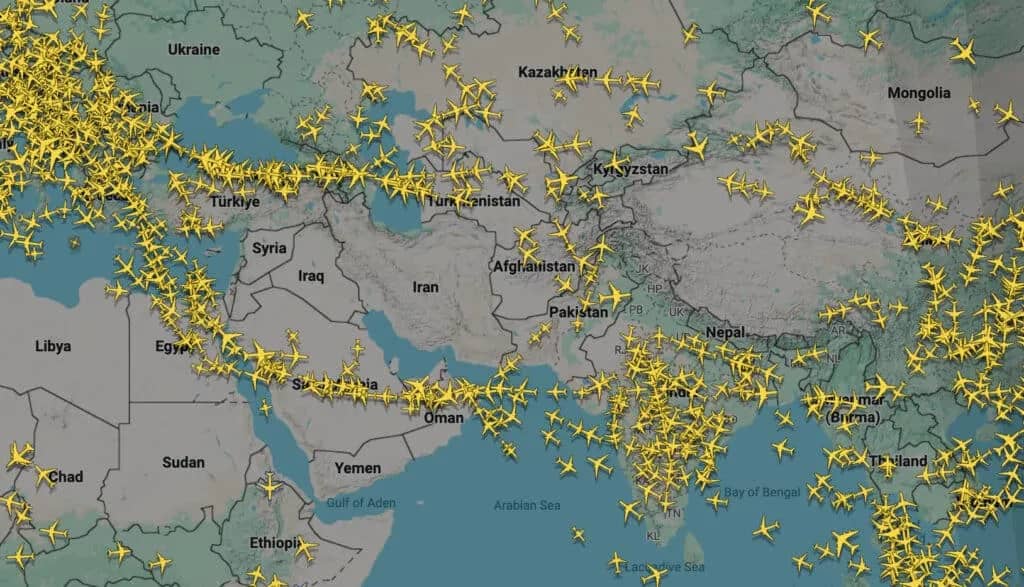
The escalation of tensions involving Iran triggered immediate aviation safety responses across the region. Airlines face threats from military activity including missiles, drones, and air defense systems that can reach commercial cruise altitudes.
Major carriers suspended or rerouted operations through Iranian airspace as aviation authorities issued safety warnings. The International Civil Aviation Organization (ICAO) coordinated with national regulators to assess risks and establish safe corridors for commercial traffic.
Flight cancellations reached approximately 9,500 in the first four days of heightened activity, according to aviation tracking data. This disruption affected not only flights to and from the region but also critical Europe-Asia routes that previously transited Iranian airspace.
Dubai International Airport, the world's busiest international airport by passenger volume, experienced significant capacity reductions. Delayed departures, canceled arrivals, and stranded passengers overwhelmed Gulf hub operations designed for smooth connections between continents.
Why Airlines Are Avoiding Iran's Airspace
Commercial aviation faces multiple safety concerns when military conflicts escalate near or within regularly-used flight corridors. Airlines make avoidance decisions based on threat assessments, regulatory guidance from authorities like the FAA, and insurance requirements.
Risk Of Missiles And Drones
Modern surface-to-air missiles can reach altitudes exceeding 50,000 feet, well above typical commercial cruise levels of 35,000-43,000 feet. Military drones operate at various altitudes, creating unpredictable hazards for civilian aircraft.
The 2014 downing of Malaysia Airlines Flight MH17 over Ukraine demonstrated catastrophic consequences when commercial aircraft operate near conflict zones. All 298 people aboard died when the Boeing 777 was struck by a surface-to-air missile while cruising at 33,000 feet.
Airlines cannot risk similar incidents. When military activity escalates, carriers immediately reroute around affected areas regardless of cost implications or operational complexity.
Air Defense Systems And Aviation Safety
Active air defense systems present additional risks beyond direct missile threats. Electronic warfare, GPS jamming, and communication interference can compromise aircraft navigation and safety systems.
Iran operates sophisticated air defense networks including radar systems, surface-to-air missiles, and fighter aircraft. When these systems activate during military operations, the airspace becomes unsuitable for commercial aviation even if no direct threat targets civilian aircraft.
Insurance underwriters also refuse coverage or demand prohibitive premiums for flights through or near active conflict zones. Airlines face potential total loss exposure without insurance, making commercial operations financially impossible regardless of physical safety assessments.
How Flight Routes Are Changing
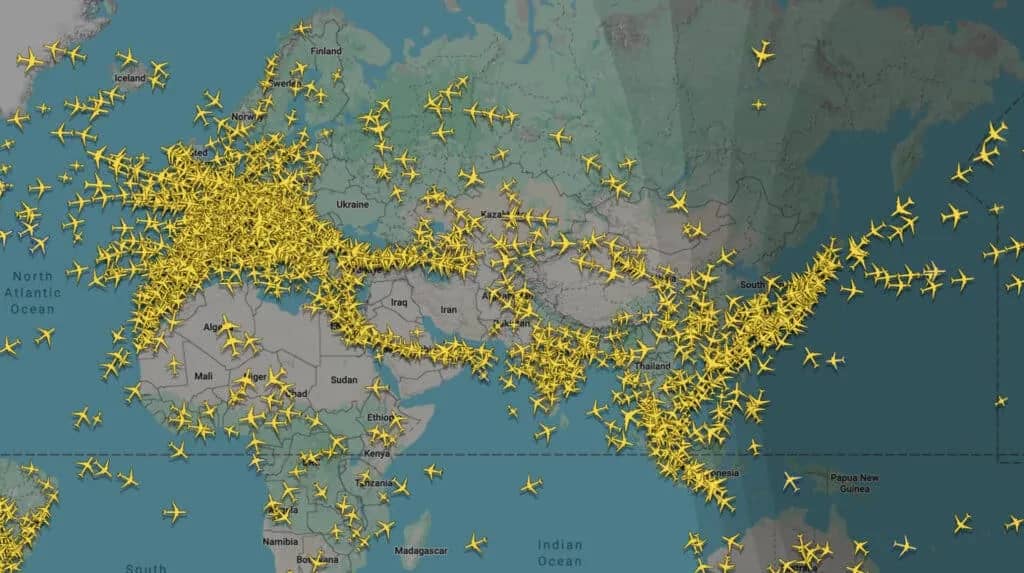
Avoiding Iranian airspace forces airlines to adopt significantly longer routing strategies for Europe-Asia flights that previously transited through or near Iran.
European carriers now route south through Saudi Arabian airspace or north through Turkish and Central Asian corridors. Both alternatives add substantial distance compared to direct paths over Iran.
Example route changes:
London to Dubai flights that previously flew directly across Iran now route around the Arabian Peninsula, adding approximately 45-60 minutes to flight time. Paris to Singapore operations detour through southern corridors, extending journeys by 1-2 hours.
Gulf carriers face particularly severe impacts. Emirates, Qatar Airways, and Etihad operate massive hub-and-spoke networks connecting Europe with Asia through Dubai, Doha, and Abu Dhabi. When conflict restricts airspace around these hubs, the entire network efficiency collapses.
Routes from India to Europe experience similar disruptions. Flights from Delhi, Mumbai, and Bangalore to London, Paris, or Frankfurt must now avoid Iranian airspace, requiring southern routing through the Arabian Sea or northern paths through Central Asia.
Airlines coordinate with air traffic control authorities across multiple countries to establish safe corridors. This coordination becomes complex when multiple nations impose restrictions simultaneously, forcing dynamic rerouting as situations evolve.
Why Longer Routes Increase Airline Costs
Extended flight paths trigger multiple cost categories that severely impact airline economics and force fare increases to maintain profitability.
| Cost Factor | Impact Level | Explanation |
|---|---|---|
| Fuel Consumption | VERY HIGH | Extra 500-1,000 NM adds $8,000-15,000 fuel per widebody flight |
| Crew Duty Time | HIGH | Extended flights require augmented crews or exceed duty limits |
| Aircraft Utilization | HIGH | Longer flights reduce daily rotations, requiring more aircraft |
| Maintenance Intervals | MODERATE | Additional flight hours accelerate scheduled maintenance checks |
| Landing Fees | MODERATE | Diversions to alternate airports increase fees and handling costs |
Fuel consumption represents the largest cost increase. A typical widebody flight avoiding Iranian airspace burns an additional 8,000-15,000 liters of jet fuel depending on route and aircraft type. At current fuel prices around $92 per barrel (approximately $0.65 per liter), this adds $5,200-9,750 in direct fuel costs per flight.
For airlines operating daily frequencies on affected routes, annual additional fuel expense per route exceeds $1.9-3.5 million. Major carriers with 15-25 affected routes face $28-88 million in extra annual fuel costs from conflict-related rerouting alone.
Crew duty time limits create operational complications beyond just cost. Extended flight times push routes closer to or beyond maximum duty periods, requiring augmented crews (additional pilots) or forcing overnight crew positioning that adds hotel and per diem expenses.
Aircraft utilization declines when flights take longer. An aircraft that previously completed two round trips daily may only manage one round trip when detours add 2-3 hours each direction. This requires airlines to deploy additional aircraft to maintain schedule frequency, increasing capital costs through leasing or ownership expenses.
Jet Fuel Prices Are Also Rising
The timing of airspace restrictions coincides with jet fuel price increases driven by broader crude oil market dynamics and Middle East supply concerns.
According to IATA's Jet Fuel Price Monitor, jet fuel prices reached approximately $92.17 per barrel in early March 2026, representing increases from previous months. The monitor tracks global jet fuel prices across major trading hubs including Singapore, U.S. Gulf Coast, Northwest Europe, and the Middle East.
Jet fuel already represents 25-35% of total airline operating costs under normal conditions. When fuel prices rise even modestly, the impact on profitability becomes severe. A $10 per barrel increase in jet fuel costs a major international carrier approximately $300-500 million annually.
Current price levels reflect multiple factors:
Crude oil market volatility: Middle East tensions create supply uncertainty, pushing crude prices higher. Jet fuel derives from crude oil refining, so crude price increases flow directly to aviation fuel costs.
Refinery capacity constraints: Global refinery capacity remains tight following pandemic-era closures and reduced investment. Limited capacity to convert crude to jet fuel maintains upward price pressure even when crude supplies stabilize.
Regional price disparities: Fuel prices vary by location, with Middle East markets typically offering lower costs than Europe or U.S. markets. Airlines avoiding the region lose access to lower-cost fuel sources, further increasing expenses.
The combination of higher fuel prices and increased fuel consumption from longer routes creates a multiplicative cost impact. Airlines face not just 15% more fuel burn from detours, but also 10-15% higher fuel prices, resulting in a 26-32% total fuel cost increase on affected routes.
Why Ticket Prices Are Increasing
Airlines pass increased operating costs to passengers through fare increases, though competitive dynamics and market conditions limit how much carriers can raise prices.
Fare increases vary by route, carrier, and booking class. Economy tickets on Middle East-affected routes increased approximately 8-18% in the weeks following airspace restrictions. Business and first-class fares saw larger percentage increases of 12-25% as airlines try to maintain margins on premium products.
The economics behind fare increases:
Cost recovery: Airlines must recover the $8,000-15,000 additional fuel cost per flight plus crew, maintenance, and utilization impacts. On a widebody aircraft carrying 250-350 passengers, this translates to $30-60 per passenger in extra costs that must be recouped through higher fares.
Reduced capacity: Flight cancellations and reduced frequencies decrease available seats on affected routes. Lower supply combined with steady demand allows airlines to increase prices beyond just cost recovery, capturing some revenue optimization.
Yield management: Airlines use sophisticated pricing algorithms to maximize revenue per available seat. When costs rise, the algorithms automatically increase fare levels across all booking classes to maintain target profit margins.
However, airlines cannot increase fares indefinitely. Price elasticity limits how much passengers will pay before switching to alternative transportation, changing travel dates, or canceling trips entirely. Routes with strong competition face greater pressure to limit fare increases.
Budget and leisure travelers face the hardest impact. Business travelers with company-paid tickets absorb increases more easily, but price-sensitive customers find previously affordable routes becoming unattainable as fares rise 10-20% virtually overnight.
How Gulf Airports Are Being Affected
Dubai, Doha, and Abu Dhabi function as global aviation super-connectors, funneling traffic between Europe, Asia, Africa, and the Americas through Gulf hubs. Conflict disruption strikes at the core of their business models.
Dubai International Airport handles over 90 million annual passengers, making it the world's busiest international airport. Emirates operates a massive hub-and-spoke network through Dubai, with waves of arriving and departing flights connecting passengers across six continents.
When Iranian airspace closes and military activity threatens the Gulf region, this carefully choreographed operation faces immediate disruption. Flight delays cascade through the system, missed connections multiply, and passenger rebooking overwhelms ground staff.
The first four days of conflict saw thousands of passengers stranded in Dubai's terminals, waiting for rebooked flights or alternative routing. Hotels filled beyond capacity, and airlines struggled to accommodate passengers on already-full flights.
Hamad International Airport in Doha and Abu Dhabi International Airport experienced similar challenges. Qatar Airways and Etihad Airways both suspended or rerouted multiple services, creating knock-on effects throughout their global networks.
Economic impact extends beyond immediate passenger inconvenience. Gulf airports and airlines employ hundreds of thousands of people and generate billions in economic activity. Extended disruptions threaten jobs, tourism revenue, and the broader economic diversification strategies these nations pursue.
Why Muscat Has Become A Key Escape Hub
Muscat International Airport in Oman emerged as an unexpected beneficiary of the crisis. Its geographic position outside the immediate conflict zone while remaining accessible from Gulf states made it a critical evacuation and alternative routing hub.
Passengers stranded in Dubai, Doha, or Abu Dhabi traveled overland to Oman to catch flights from Muscat. This created unusual demand spikes on routes from Muscat to Europe, Asia, and other destinations as travelers sought any available path out of the region.
Airlines increased Muscat capacity temporarily to accommodate diverted demand. European carriers that previously operated limited Oman service added frequencies, while Asian carriers used Muscat as an alternative to Gulf connections.
The phenomenon demonstrates how aviation networks adapt dynamically to disruptions. Secondary airports can absorb some displaced traffic when primary hubs become unusable, though capacity constraints limit how much demand can shift before the entire system becomes overwhelmed.
Long-Term Impact On Airline Route Planning
Airlines increasingly plan networks assuming geopolitical instability rather than the stable operating environment that characterized previous decades of aviation growth.
Route planners now incorporate conflict contingencies into network design. Airlines maintain backup routings, train crews on alternate procedures, and negotiate contingency agreements with airports outside primary operating areas.
Aircraft selection reflects these new realities. Airlines prioritize ultra-long-range widebodies capable of operating extended routings without technical stops. The Boeing 787 and Airbus A350 offer range and efficiency that enable alternative flight paths when conflicts close preferred corridors.
Insurance costs also reflect heightened risks. War risk insurance for Middle East operations increased substantially, with underwriters demanding higher premiums or refusing coverage entirely for routes through or near conflict zones. These insurance costs flow through to ticket prices as another component of increased operating expenses.
The industry recognizes that airspace closures represent permanent features of the operating environment rather than temporary disruptions. Airlines that built business models assuming unrestricted global airspace access must restructure strategies for a fragmented geopolitical landscape.
What This Means For Passengers
Travelers face multiple impacts from conflict-related aviation disruptions beyond just higher ticket prices.
Journey times increase: Routes avoiding Iranian airspace add 1-3 hours to many Europe-Asia and Gulf connections. A London to Singapore flight previously taking 13 hours might now require 14.5-15 hours, with longer layovers if connections require rerouting.
Flight cancellations rise: Airlines cancel services when rerouting becomes uneconomical or when conflict prevents safe operations. Passengers face rebooking onto alternative flights often days later, disrupting travel plans and forcing unplanned accommodation expenses.
Connection complexity increases: Direct flights become connections, and single-connection itineraries become two-connection journeys as airlines avoid conflict zones. Each additional connection increases risk of delays, missed connections, and lost luggage.
Fewer available seats: Capacity reductions from cancellations and reduced frequencies mean fewer seats available on popular routes. This makes last-minute travel difficult and increases prices further as remaining seats fill rapidly.
Refund and rebooking challenges: Airlines overwhelmed by mass disruptions struggle to process refunds and rebookings quickly. Passengers wait weeks for refunds or spend hours on hold trying to reach customer service for alternative arrangements.
Flexible travelers can mitigate some impacts by avoiding peak periods, booking well in advance, and purchasing travel insurance that covers conflict-related disruptions. However, the fundamental reality remains that conflict makes travel more expensive, more time-consuming, and less reliable.
| Impact Category | Typical Change | Passenger Effect |
|---|---|---|
| Ticket Prices | +8-18% economy, +12-25% premium | Higher travel costs, budget constraints |
| Journey Time | +1-3 hours on affected routes | Extended travel time, increased fatigue |
| Flight Availability | 15-30% capacity reduction | Fewer seat options, limited flexibility |
| Connection Complexity | Extra 1-2 connections added | Higher delay risk, longer total travel time |
| Cancellation Risk | 3-5x higher than normal | Disrupted plans, rebooking hassles |
Frequently Asked Questions
Why are airline ticket prices rising in 2026?
Airline ticket prices are rising due to a combination of Iranian airspace closures forcing longer flight routes and simultaneously rising jet fuel prices around $92 per barrel. Longer routes require 15-25% more fuel per flight, while fuel prices increased 10-15%, creating a multiplicative cost impact. Airlines add $30-60 per passenger to recover the $8,000-15,000 additional cost per widebody flight. Reduced capacity from cancellations allows airlines to increase prices further as fewer seats become available on affected routes.
Why are flights avoiding Iran airspace?
Airlines avoid Iranian airspace due to military conflict creating safety risks from surface-to-air missiles reaching above 50,000 feet, drone operations at various altitudes, and active air defense systems. Insurance underwriters refuse coverage or demand prohibitive premiums for flights through conflict zones. Aviation authorities including ICAO issue safety warnings prohibiting operations when military activity threatens commercial aircraft, making it both unsafe and financially impossible to operate through Iranian airspace during heightened tensions.
How do wars affect airline ticket prices?
Wars affect ticket prices by forcing longer flight routes that consume 15-30% more fuel, requiring additional crew, reducing aircraft utilization, and accelerating maintenance schedules. A typical Europe-Asia detour adds $8,000-15,000 fuel cost per flight. Airlines must recover these costs through higher fares, typically increasing economy tickets 8-18% and premium tickets 12-25%. Flight cancellations reduce capacity while demand remains steady, allowing further price increases through supply-demand dynamics beyond just cost recovery.
Why do longer routes increase airline costs?
Longer routes increase costs through multiple factors: fuel consumption rises 15-30% as aircraft fly additional 500-1,000 nautical miles per flight; crew duty time limits require augmented crews or overnight positioning adding hotel and salary expenses; aircraft utilization declines as fewer daily rotations are possible, requiring more aircraft to maintain schedules; maintenance intervals compress as aircraft accumulate flight hours faster, increasing annual maintenance budgets. The combination creates 25-40% higher operating costs on rerouted flights compared to direct routings.
How much does jet fuel cost airlines?
Jet fuel represents 25-35% of total airline operating costs. At current prices around $92 per barrel ($0.65 per liter), a typical widebody aircraft burns approximately 10,000-15,000 liters per flight hour, costing $6,500-9,750 hourly. A long-haul flight from London to Singapore consuming 80,000 liters costs approximately $52,000 in fuel alone. When fuel prices increase $10 per barrel, major international carriers face $300-500 million in additional annual fuel expenses across their fleet operations.
Which airlines are most affected by Middle East airspace closures?
Gulf carriers Emirates, Qatar Airways, and Etihad face the most severe impacts as their entire hub-and-spoke networks through Dubai, Doha, and Abu Dhabi depend on stable regional operations. European carriers including Lufthansa, British Airways, and Air France face major route disruptions on Asia services. Asian carriers like Singapore Airlines and Cathay Pacific must reroute Europe-bound flights. Airlines lose both their shortest routing advantages and access to lower-cost regional fuel sources when avoiding Iranian and Middle Eastern airspace.
How long will higher airfares last?
Higher airfares will persist as long as Iranian airspace remains closed and jet fuel prices stay elevated. Airlines require stable operating conditions for 3-6 months before reducing fares, as they must recoup accumulated losses from disruptions. Even if conflicts resolve quickly, fare normalization takes months as airlines rebuild schedules, reposition aircraft, and restore capacity. If airspace closures become long-term like the Russia-Ukraine situation, higher fares on affected routes may become permanent as airlines accept longer routings as the new baseline cost structure.
Can passengers get refunds for conflict-related flight cancellations?
Passengers are entitled to full refunds for airline-initiated cancellations regardless of cause, including conflict-related disruptions. However, processing times extend to weeks or months during mass disruption events as airlines handle thousands of refund requests simultaneously. Airlines may offer rebooking on alternative flights or travel vouchers instead of cash refunds, though passengers can insist on cash refunds for cancelled flights. Travel insurance covering conflict-related disruptions can provide faster reimbursement for additional expenses like hotels and alternative transportation when flights are cancelled.
Conclusion
Iranian airspace closures combined with rising jet fuel prices create substantial cost increases forcing airlines to raise fares worldwide. The $8,000-15,000 additional fuel expense per rerouted widebody flight, multiplied across hundreds of daily operations, translates to billions in industry-wide costs that inevitably flow through to passenger ticket prices. Economy fares increased 8-18% on affected routes, with premium cabin prices rising even more sharply.
Beyond immediate fare increases, passengers face extended journey times of 1-3 hours on many routes, reduced flight availability from cancellations, and increased connection complexity as direct services become multi-stop itineraries. Gulf hubs in Dubai, Doha, and Abu Dhabi experienced severe operational disruptions with over 9,500 flights cancelled in the conflict's first four days, stranding hundreds of thousands of passengers across the region.
Airlines adapt by planning networks that assume geopolitical instability rather than stable operating conditions. Investment in fuel-efficient ultra-long-range aircraft accelerates as carriers prepare for permanent airspace fragmentation. Higher insurance costs, reduced route efficiency, and volatile fuel markets establish a new cost baseline that keeps airfares elevated long after immediate conflicts resolve. The aviation industry's global connectivity depends on open skies that geopolitical realities can no longer guarantee.