

Every commercial aircraft carries two devices that investigators rush to find after accidents. These recorders preserve flight data and cockpit conversations through impacts that destroy everything else. They survive fires reaching 1,100°C, ocean depths exceeding 6,000 meters, and forces that crumple aluminum fuselages into unrecognizable wreckage.
Understanding how black boxes work reveals the remarkable engineering protecting crucial accident information. These systems don’t prevent crashes, but they explain what happened – helping prevent future accidents. Their evolution from simple magnetic tape to solid-state memory with satellite connectivity shows aviation’s commitment to learning from every accident.
What Is an Aircraft Black Box?
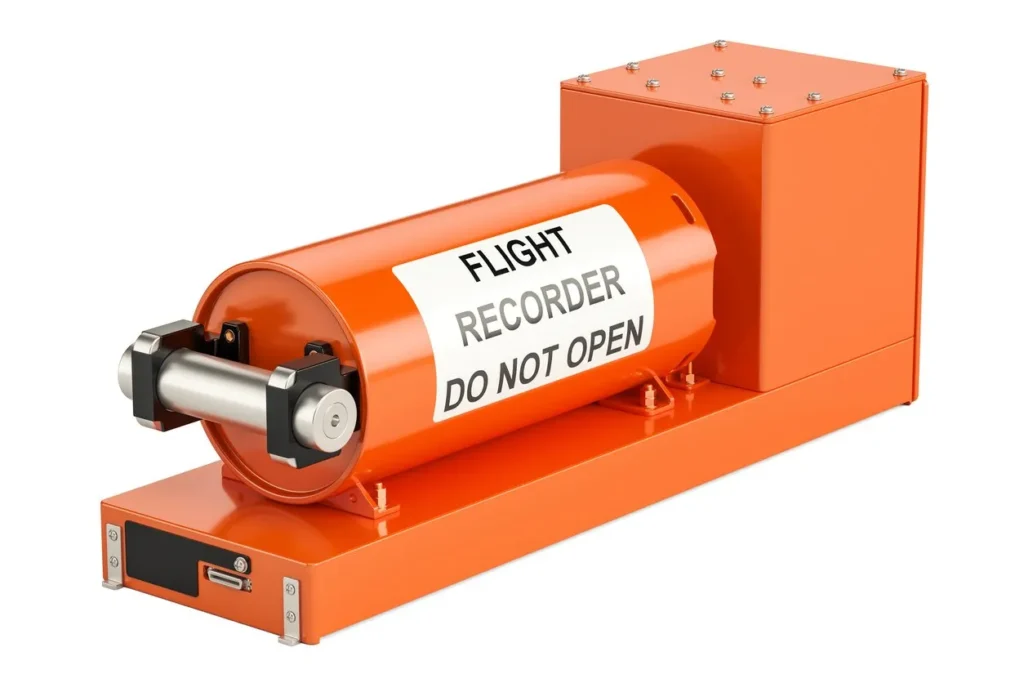
The term “black box” refers to two separate recording systems required on commercial aircraft. The Flight Data Recorder (FDR) captures aircraft performance parameters. The Cockpit Voice Recorder (CVR) preserves flight crew conversations and cockpit sounds. Together, they provide investigators with objective evidence about aircraft behavior and crew actions.
These devices protect data in a Crash Survivable Memory Unit (CSMU) – a heavily armored container housing memory chips or modules. The CSMU withstands conditions that would destroy regular electronic equipment. Everything else on the aircraft can burn or shatter, but the memory unit preserves its data.
Modern aircraft often combine both recorders into a single unit called a Cockpit Voice and Data Recorder (CVDR). This integration reduces weight and installation complexity while maintaining the same protective standards for both data types.
Why Is It Called a Black Box? (It’s Not Black)
Despite the name, aviation black boxes are bright international orange. This high-visibility color helps searchers locate them in wreckage or debris fields. The fluorescent coating reflects light, making the units easier to spot in difficult conditions.
The “black box” term likely originated from early electronic equipment housed in dark-colored cases. Some aviation historians trace it to World War II when military equipment used black cases for night operations. Others suggest it references the mysterious nature of sealed electronic systems.
The aviation industry officially uses “flight recorder” rather than “black box.” Regulations and technical documents refer to FDRs and CVRs. But “black box” persists in popular usage because it’s memorable and universally understood.
Types of Black Boxes: FDR vs CVR

Aircraft carry two distinct recording systems serving different investigative purposes. Understanding their differences clarifies why both are necessary for accident investigation.
| Feature | Flight Data Recorder (FDR) | Cockpit Voice Recorder (CVR) |
|---|---|---|
| Primary Purpose | Records aircraft performance and system parameters | Records audio from cockpit microphones and communications |
| Data Recorded | 1,000+ parameters (altitude, speed, heading, controls, engine thrust) | 4 audio channels (pilot, co-pilot, area mic, radio) |
| Recording Duration | Minimum 25 hours (modern aircraft) | Minimum 2 hours (25 hours for aircraft manufactured from 2026 onward) |
| Recording Method | Digital sampling at intervals (1-8 times per second per parameter) | Continuous audio recording in 2-hour loops |
| Data Source | Aircraft sensors, computers, and systems | Cockpit microphones and radio communications |
| Investigation Use | Shows what the aircraft did (altitude changes, control movements) | Shows what crew said and heard (decisions, warnings, alarms) |
| Overwrite Cycle | Continuously overwrites oldest data after 25 hours | Continuously overwrites oldest audio after 2 hours |
| Typical Weight | 10-15 pounds (4.5-7 kg) | 10-15 pounds (4.5-7 kg) |
Note: Modern combined recorders (CVDR) integrate both functions in a single unit. Requirements vary by aircraft type and certification date. Swipe left to see full table on mobile devices.
Note: Modern combined recorders (CVDR) integrate both functions in a single unit. Requirements vary by aircraft type and certification date. Swipe left to see full table on mobile devices.
How a Flight Data Recorder Works
The FDR connects to hundreds of aircraft sensors monitoring every system. These sensors measure physical conditions like altitude, speed, and temperature, plus electronic signals from flight computers, autopilots, and engine controls. The recorder samples each parameter at predetermined intervals.
Critical flight parameters record multiple times per second. Altitude, airspeed, and heading update 4-8 times per second. Less critical data like cabin temperature might record once every few seconds. This selective sampling balances data resolution against storage capacity.
Modern FDRs use solid-state memory storing data digitally. No moving parts means greater reliability and crash survivability. The system continuously writes data in a loop, overwriting the oldest information once memory fills. This ensures the recorder always contains the most recent 25 hours. Advanced aircraft like the Boeing 787 and Airbus A350 record over 1,500 parameters using these systems.
The Flight Data Acquisition Unit (FDAU) collects signals from aircraft sensors and systems. It converts analog signals to digital format, compresses data, and sends it to the FDR. This preprocessing reduces the data volume the recorder must handle while maintaining necessary detail.
How a Cockpit Voice Recorder Works
The CVR records audio from four independent channels capturing different sound sources. The captain’s and first officer’s headset microphones record their voices and radio communications. An area microphone in the cockpit ceiling captures ambient sounds. A fourth channel records sounds from additional crew positions or systems.
These microphones detect everything in the cockpit: conversations between crew, radio transmissions from air traffic control, warning alarms, switch clicks, engine noise changes, and even unusual sounds that might indicate mechanical problems. This complete audio picture helps investigators understand the crew’s awareness and decision-making.
The CVR continuously records in a 2-hour loop. After two hours, the system begins overwriting the oldest audio. This limited duration reflects privacy concerns and data storage limitations when regulations were established. Current regulations require 25-hour recording for aircraft manufactured from 2026 onward.
Recording starts automatically when electrical power reaches the recorder. It continues until power loss or intentional shutdown. The system includes safeguards preventing accidental erasure. Data remains preserved even if electrical power fails during an accident sequence.
What Data Does a Black Box Record?
Modern Flight Data Recorders capture over 1,000 parameters on advanced aircraft. Regulations mandate minimum parameters, but manufacturers often exceed requirements. More data provides investigators with clearer accident understanding.
Essential Flight Parameters
Every FDR must record these fundamental parameters:
- Time: Accurate timestamps for all data
- Altitude: Pressure altitude and radio altitude
- Airspeed: Indicated and true airspeed
- Heading: Magnetic compass and GPS heading
- Vertical Acceleration: G-forces experienced
- Pitch and Roll: Aircraft attitude angles
- Engine Parameters: Thrust, temperature, fuel flow
- Control Positions: Yoke, rudder, throttle positions
Advanced System Parameters
Modern aircraft also record extensive system data:
- Autopilot Status: Modes engaged, target settings
- Flight Control Surfaces: Aileron, elevator, rudder, spoiler positions
- Landing Gear: Position and weight-on-wheels sensors
- Flaps and Slats: Configuration settings
- Cabin Pressure: Pressurization and warning status
- Navigation: GPS position, radio navigation inputs
- Warnings and Alarms: System alerts and crew responses
- Angle of Attack: Wing stall protection data
This complete data set allows investigators to reconstruct flight paths minute-by-minute. They can determine exact aircraft configuration, control inputs, and system states throughout the flight. Combined with CVR audio, this creates complete pictures of accident sequences.
Where Is the Black Box Located in an Aircraft?

Flight recorders mount in the rear fuselage near the tail section. This location provides the highest survival probability during accidents. Crash statistics show rear sections often sustain less damage than forward fuselage areas.
The tail typically separates from the main fuselage during severe impacts. This separation actually protects the recorders from fire spreading from fuel tanks and engines located forward. The tail section may slide or tumble away from the main wreckage and its intense fires.
Mounting locations vary by aircraft model. Large jets typically install recorders in the ceiling or walls of the rear pressure bulkhead area. Smaller aircraft might mount them under cabin floors or in tail cone sections. Installation requires secure attachment withstanding crash forces. Aircraft maintenance engineers perform routine inspections ensuring recorder systems function properly.
External markings indicate recorder locations. Orange reflective strips on the aircraft exterior near recorder compartments help searchers. These markings become crucial when wreckage scatters across large areas.
How Black Boxes Survive Crashes
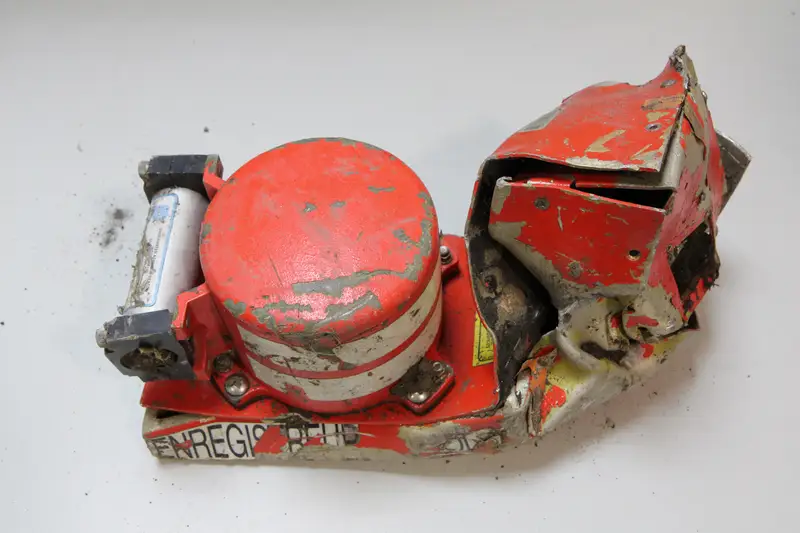
The Crash Survivable Memory Unit uses multiple protection layers ensuring data survival under extreme conditions. Each layer addresses specific threats from impacts, fires, and water immersion.
Impact Protection
The CSMU withstands 3,400 G deceleration for 6.5 milliseconds. This equals hitting a solid barrier at over 300 mph. Titanium or stainless steel housing several inches thick protects the internal memory. The housing deforms under extreme force but maintains internal space for memory chips. Organizations like EUROCAE establish international standards for these crash survivability requirements.
Fire Resistance
Fire protection requires surviving 1,100°C flames for 60 minutes. Multiple insulation layers surround the memory unit. Some designs use high-temperature ceramics and ablative materials that absorb heat. The housing’s thermal mass also delays heat penetration to internal components.
Water Immersion
Recorders must function after immersion at 6,000 meters depth (20,000 feet). At this depth, water pressure exceeds 600 atmospheres. Sealed housings prevent water ingress that would corrupt memory chips. Pressure vessels distribute forces evenly across surfaces.
Penetration Resistance
The housing resists penetration from sharp wreckage debris. Aircraft structure fragments traveling at high velocity could puncture less protected equipment. The armored casing deflects or absorbs impacts that would penetrate standard equipment.
Underwater Locator Beacon Explained
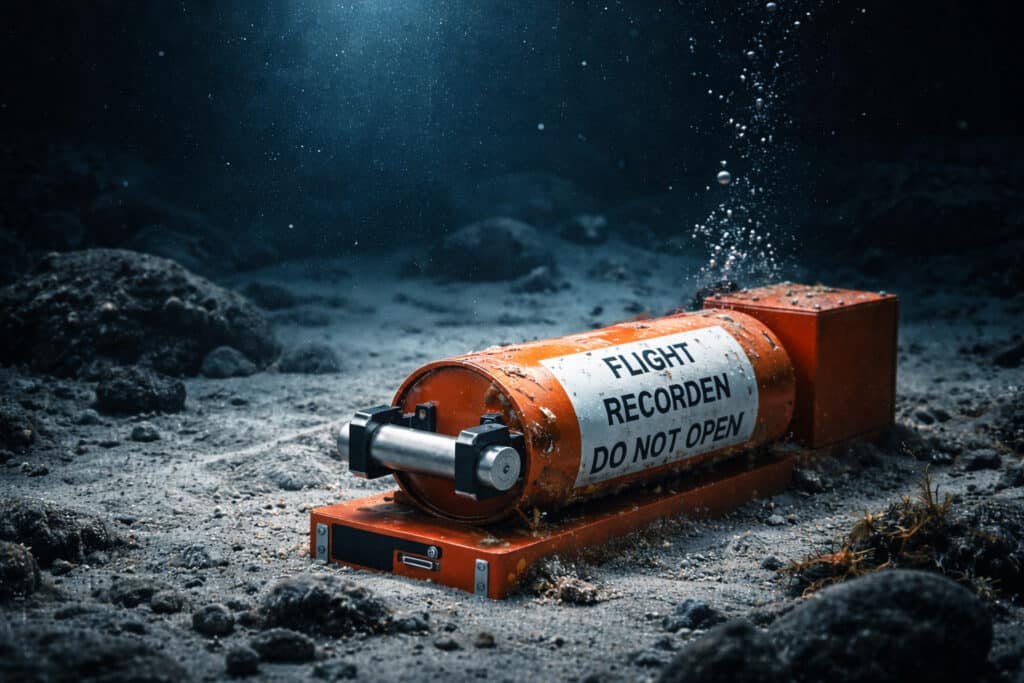
Every flight recorder includes an Underwater Locator Beacon (ULB) activating automatically when submerged. This device emits ultrasonic pings at 37.5 kHz – a frequency that travels well through water but doesn’t propagate through air or ground. Recorders undergo rigorous certification testing before installation approval.
The ULB battery provides 30 days of operation. Search teams must locate the beacon within this window before the signal stops. The 30-day requirement balances battery size, weight, and realistic search timeframes.
Detection range depends on water conditions and depth. In shallow water with minimal current, searchers might detect signals from several nautical miles away. Deep ocean or strong currents reduce range to hundreds of meters. Specialized listening equipment towed behind search vessels locates signals.
The beacon attaches to the exterior housing with breakaway mechanisms. Severe impacts might separate the beacon from the recorder, but it continues transmitting. Searchers finding the beacon know the recorder lies nearby.
After locating the general area, search teams deploy underwater vehicles with cameras and manipulator arms. These remotely operated vehicles (ROVs) or autonomous underwater vehicles (AUVs) visually identify and recover recorders from ocean depths. Historical accidents like Air India Flight 171 demonstrate the critical importance of rapid recorder recovery.
How Investigators Use Black Box Data
Accident investigation begins with locating and recovering both recorders. Search teams prioritize this task because data deteriorates if exposure continues. Once recovered, laboratories begin careful data extraction. Organizations like the NTSB (US), BEA (France), and AAIB (UK) maintain specialized facilities for this work.
Data Extraction
Specialists carefully open the CSMU housing in controlled laboratory conditions. Damaged recorders require extremely delicate handling. Sometimes housing damage requires cutting the armor without disturbing internal memory modules.
Memory chips connect to specialized reading equipment. Technicians download raw data files containing thousands of parameter values. This process can take hours or days depending on damage severity.
Data Decoding
Raw data requires translation using aircraft-specific parameters. Each aircraft type records data differently. Investigators need documentation explaining what each parameter means and how to convert raw values into meaningful measurements.
Specialized software processes the data creating readable formats. Investigators generate graphs showing altitude profiles, speed changes, control inputs, and system states. These visualizations reveal patterns difficult to spot in numerical data.
Timeline Reconstruction
Investigators synchronize FDR and CVR data creating minute-by-minute timelines. They align cockpit conversations with aircraft actions. This shows whether crew decisions matched aircraft responses or if unexpected system behaviors occurred. Coordination with air traffic control provides additional context about communications and clearances.
The analysis identifies anomalies and deviations from normal flight. Sudden altitude changes, unexpected control movements, or unusual engine parameters become investigation focal points. Combined with CVR audio, these anomalies help explain accident sequences.
Flight Replay Simulation
Investigators create animated flight replays using recorder data. These simulations show the aircraft’s exact path, attitudes, and configurations. Seeing the flight visually helps investigators understand spatial relationships and sequence of events more clearly than numerical data alone.
Do Black Boxes Transmit Data in Real Time?
Traditional black boxes do not transmit data during flight. They only record information locally, requiring physical recovery for data access. This limitation became painfully apparent when Malaysia Airlines Flight MH370 disappeared in 2014 with recorders never found.
However, modern aircraft can transmit limited data via satellite during normal operations. ACARS (Aircraft Communications Addressing and Reporting System) sends routine status messages. This system handles routine communications, not complete flight data recording. Modern aircraft communication systems continuously evolve to support more data transmission.
New requirements mandate Autonomous Distress Tracking (ADT) for aircraft certified after 2020. This system automatically transmits position data every minute when aircraft experience abnormal conditions. It provides searchers with better location information without requiring full data streaming.
Some airlines now deploy triggered data streaming systems. These monitor flight parameters detecting abnormal conditions. When triggers activate, the system begins streaming more detailed data via satellite. This approach balances bandwidth costs against safety benefits.
Full real-time streaming remains economically impractical for routine operations. Satellite bandwidth costs and infrastructure requirements make continuous streaming of 1,000+ parameters prohibitively expensive. Storage on the aircraft remains more practical for routine recording.
How Black Boxes Have Evolved Over Time
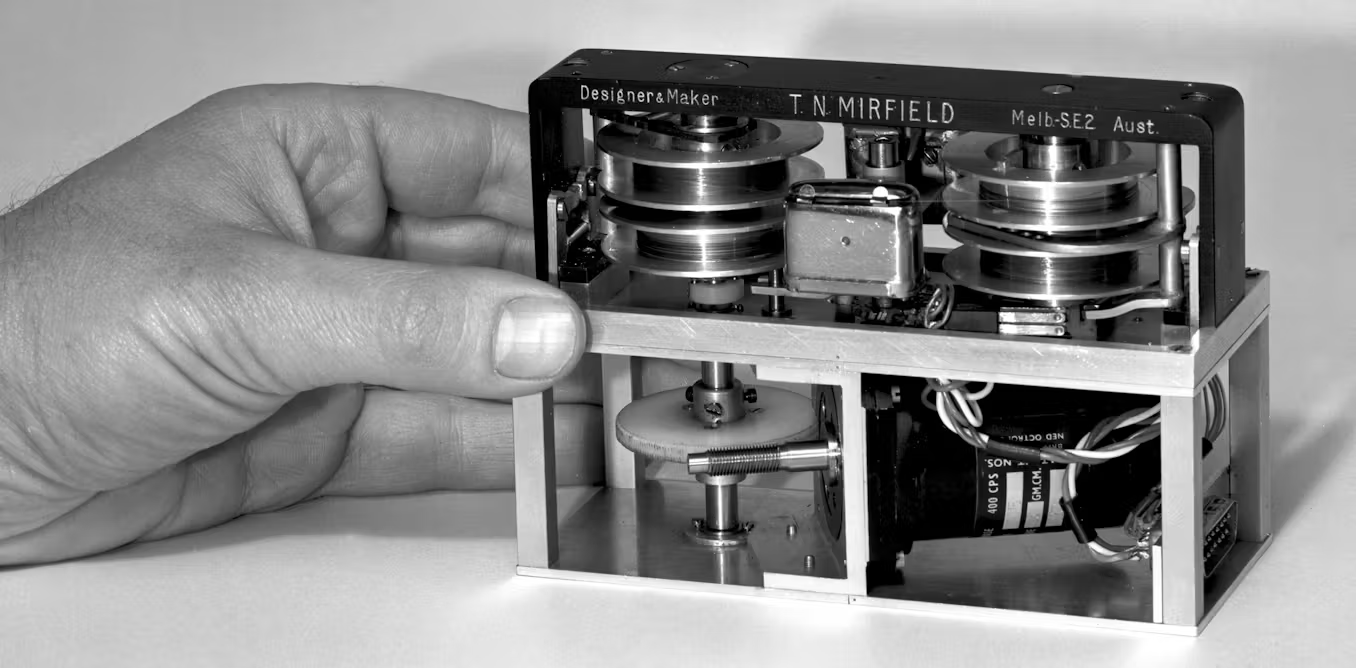
Early flight recorders used metal foil scratched by styluses marking flight parameters. These primitive devices recorded just five parameters: altitude, airspeed, heading, vertical acceleration, and time. Data recovery required photographing the foil and manual analysis.
Magnetic tape recorders dominated from the 1960s through 1990s. These systems recorded dozens of parameters on continuous tape loops. Tape proved more reliable than foil but still suffered degradation from heat, water, and physical damage. Modern aircraft parts suppliers still support legacy recorder systems for older aircraft.
The transition to solid-state memory in the 1990s revolutionized flight recorders. Digital memory chips eliminated moving parts, increased capacity, and improved crash survivability. Modern recorders store gigabytes of data in microscopic circuits. Major manufacturers like Honeywell Aerospace continue advancing recorder technology with each generation.
Parameter requirements steadily increased. Early regulations mandated just 5-11 parameters. Today’s aircraft record over 1,000 parameters. This expansion reflects both technology improvements and understanding that more data enables better accident analysis.
CVR duration extended from 30 minutes to 2 hours in the 1990s. Current regulations require 25-hour recording for aircraft manufactured from 2026 onward. Extended duration captures more context about flight conditions and crew actions before accidents.
Do Helicopters Have Black Boxes?
Most commercial helicopters operating passenger transport require flight recorders. Requirements depend on helicopter size, passenger capacity, and certification date. Large helicopters flying scheduled passenger service typically need both FDR and CVR meeting similar standards as fixed-wing aircraft.
Smaller helicopters have different requirements. Private helicopters and those under certain weight limits may not need full flight recorders. However, many operators voluntarily install recorders for safety analysis and liability protection.
Helicopter recorders face unique challenges. Mounting locations differ from fixed-wing aircraft. Helicopters lack the rear fuselage separation characteristics that protect fixed-wing recorders. Crash dynamics involve different forces and fire patterns.
Military helicopters often use enhanced recording systems capturing additional tactical information. These might record weapons systems, radar data, and mission-specific parameters beyond civilian requirements. Military standards sometimes exceed civilian crash protection specifications.
The Future of Aircraft Recorders
The industry moves toward “deployable” recorders automatically ejecting during crashes. These systems would deploy before impact, potentially floating on water surfaces with integrated beacons. Automatic deployment could prevent recorders from becoming trapped in inaccessible wreckage. Aviation safety professionals continue developing these advanced technologies.
Cloud-based recording represents another future direction. Aircraft could continuously stream flight data to ground-based servers during normal operations. This creates redundant copies accessible even if physical recorders are destroyed or never recovered.
Extended CVR duration is now mandatory for aircraft manufactured in 2026 and beyond. The 25-hour requirement addresses concerns that critical conversations might occur more than 2 hours before accidents. This particularly matters for slow-developing mechanical failures or crew fatigue issues. ICAO and FAA regulations drive these improvements globally.
Artificial intelligence may analyze streaming data in real-time. AI systems could identify developing problems before they become critical, alerting maintenance teams or even pilots. This proactive approach prevents accidents rather than just explaining them afterward.
Image recording from cockpits generates ongoing debate. Some safety advocates want cameras recording pilot actions and instrument displays. Pilot unions strongly oppose this citing privacy concerns and potential misuse. The debate continues balancing safety benefits against privacy rights.
Frequently Asked Questions
Why are black boxes called black when they’re actually orange?
Black boxes are bright orange for visibility during search and recovery operations. The term “black box” likely originated from early electronics housed in dark cases or possibly from wartime equipment. The aviation industry officially calls them “flight recorders,” but “black box” stuck in popular usage despite the misleading color reference.
Can black boxes survive any crash?
Black boxes survive most crashes but not absolutely every scenario. They withstand 3,400 G impacts, 1,100°C fires for 60 minutes, and 6,000-meter ocean depths. However, extreme crashes involving direct high-speed impacts into mountains or prolonged high-temperature fires exceeding an hour can destroy them. The vast majority of accidents allow successful data recovery.
How long does a cockpit voice recorder record?
Current CVRs record 2 hours of audio continuously in a loop, overwriting the oldest recordings. Regulations effective in 2026 require 25-hour recording capability for newly manufactured aircraft. This extended duration ensures investigators capture more context about flight conditions and crew discussions before accidents occur.
What happens if black box batteries die underwater?
The underwater locator beacon operates for 30 days before battery exhaustion. After the signal stops, finding the recorder becomes extremely difficult without knowing its precise location. The recorder’s data remains intact indefinitely even after battery failure – the challenge is locating it in deep ocean environments without an active beacon.
Do black boxes transmit location data automatically?
Traditional black boxes do not transmit location during flight. However, new Autonomous Distress Tracking (ADT) systems required on modern aircraft automatically transmit position every minute when abnormal conditions occur. The underwater locator beacon only activates when submerged, not during flight. Full real-time streaming remains economically impractical for routine operations.
Can investigators listen to cockpit voice recordings?
Yes, but with strict controls. Only authorized accident investigation personnel access CVR audio. Recordings are protected from public release in most jurisdictions to encourage honest cockpit communication. Investigators may release transcripts but rarely actual audio. This privacy protection balances safety investigation needs against crew privacy rights.
How many parameters does a modern flight data recorder capture?
Modern FDRs record over 1,000 parameters on advanced commercial jets like the Boeing 787 or Airbus A350. Regulations mandate minimum parameter counts varying by aircraft type and certification date. Older aircraft might record 50-100 parameters while new designs exceed 1,500. More data provides investigators with clearer accident understanding.
Are black boxes indestructible?
No device is truly indestructible. Black boxes are crash survivable, not crash proof. They withstand enormous forces, heat, and pressure but can fail under extreme conditions. Certification standards ensure survival in the vast majority of accidents. Design improvements continue addressing scenarios where previous recorders failed, but absolute indestructibility remains physically impossible.
Why don’t aircraft stream all data in real-time to prevent crashes?
Real-time streaming faces practical limitations. Satellite bandwidth costs and infrastructure requirements make continuous streaming economically impractical for routine operations. A single aircraft streaming 1,000+ parameters would require substantial bandwidth. Airlines fly tens of thousands of daily flights. New triggered streaming systems activate during abnormal conditions, balancing costs against safety benefits.
Do private jets have black boxes?
Requirements vary by jurisdiction and aircraft specifications. In the US, aircraft over 12,500 pounds operating for hire typically need flight recorders. Smaller private jets may not require full FDR/CVR systems. However, many private aircraft voluntarily install recorders for safety analysis and liability protection. Understanding private jet maintenance requirements helps operators ensure compliance. Business jets meeting commercial certification standards require recorders regardless of private operation.
Conclusion
Black boxes represent aviation’s commitment to learning from accidents. Their evolution from simple foil recorders to solid-state systems capturing thousands of parameters shows how seriously the industry treats safety improvement. Every design advancement – extended recording duration, better crash protection, underwater beacons – stems from lessons learned in previous investigations.
These devices don’t prevent accidents. They explain what happened so similar accidents don’t occur again. The requirement that every commercial flight carry these recorders acknowledges that despite aviation’s excellent safety record, accidents will happen. When they do, investigators need objective evidence about aircraft behavior and crew actions.
Future developments will likely include cloud-based recording, extended CVR duration, and triggered real-time streaming. These improvements address limitations revealed by accidents where recorders were never found or contained insufficient data. The goal remains constant: preserve enough information to understand and prevent future accidents.
For passengers, black boxes provide reassurance that even in worst-case scenarios, the truth emerges. Accident investigation agencies worldwide maintain independence specifically to ensure thorough, unbiased analysis. The black boxes give them the objective data needed for that analysis.
The next time you fly, those orange boxes in the tail section are working silently. They capture every aspect of your flight, creating a detailed record that will hopefully never need review. But if something does go wrong, those recorders ensure the aviation industry learns, adapts, and becomes even safer.