Why the GE9X Engine Has No Chevrons: The Real Engineering Reasons Explained
 Radu BalasPublished 9 min read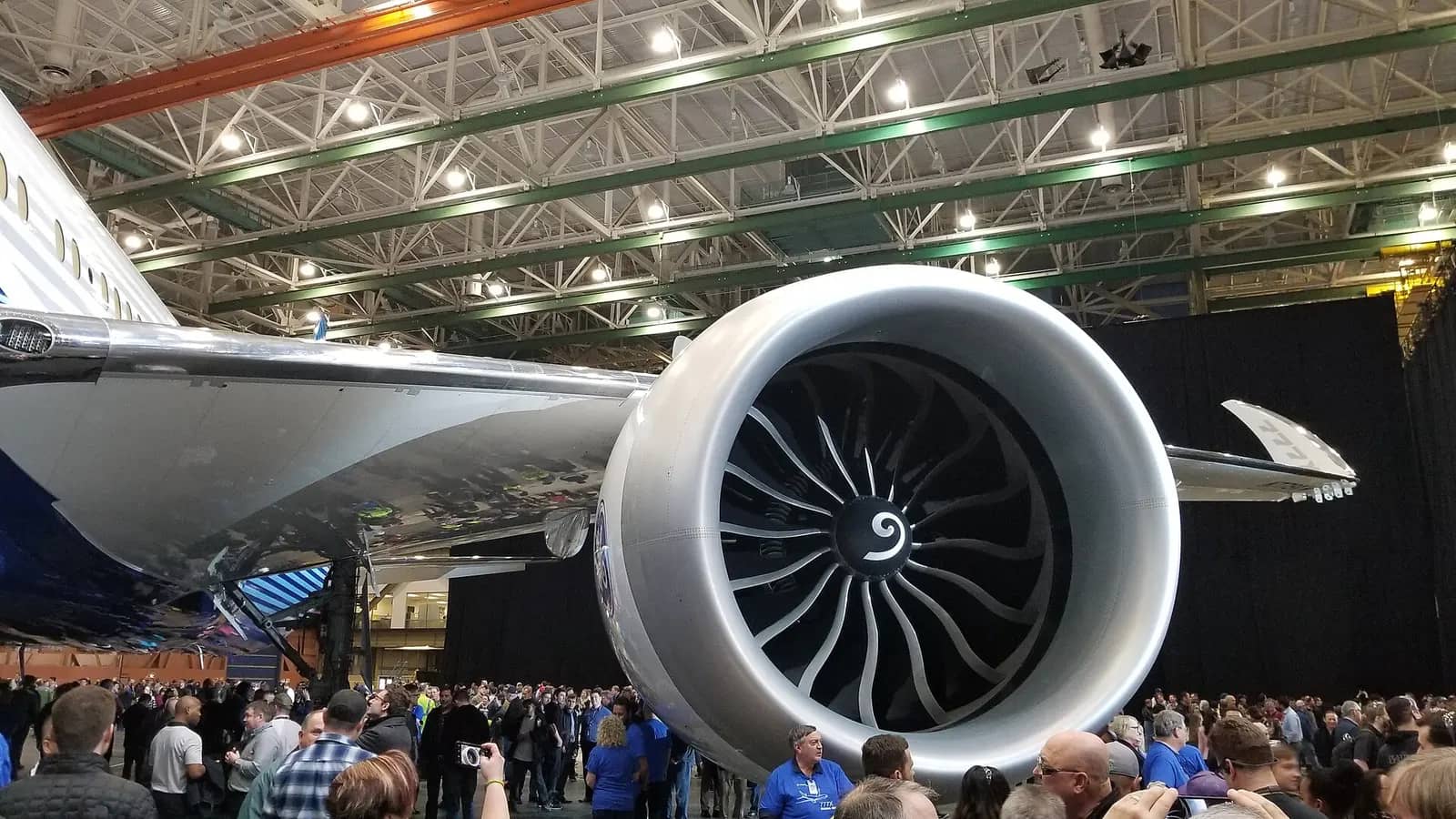
Look at a Boeing 787 Dreamliner engine and you'll see jagged, saw-tooth edges on the back. These are chevrons. Now look at the Boeing 777X with its massive GE9X engines. No chevrons. Just smooth, clean edges.
Why would the world's largest commercial jet engine skip a noise-reduction feature used on smaller engines? The answer reveals how modern engine design has evolved beyond needing these distinctive serrations.
What Are Chevrons on Jet Engines?
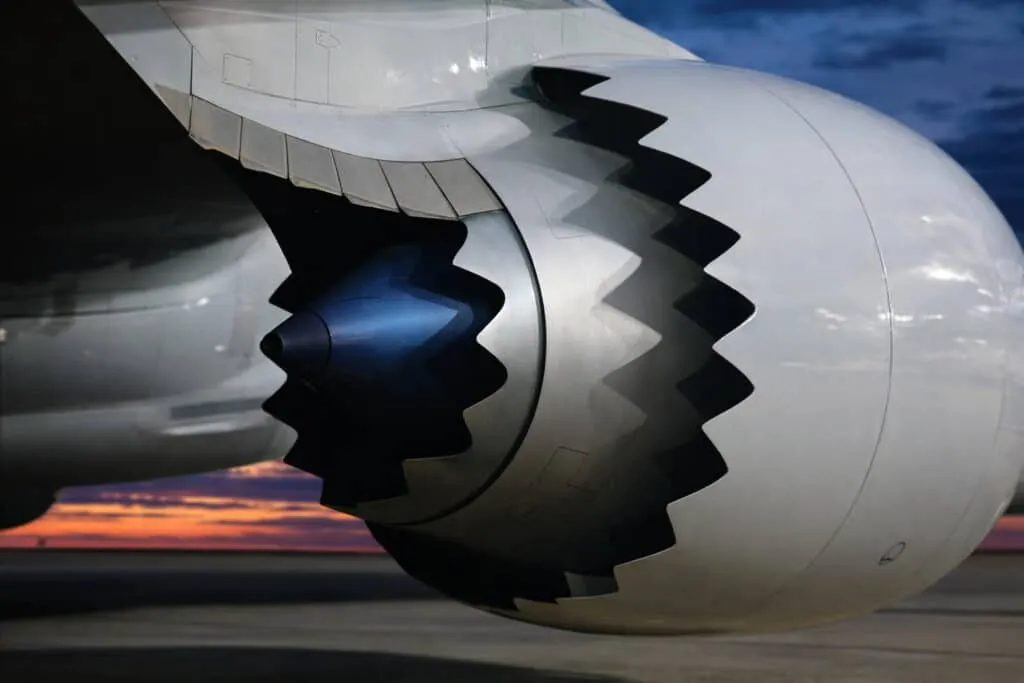
Chevrons are the triangular, serrated edges you see on the back of some jet engine nacelles. They look like a row of teeth pointing outward from the exhaust nozzle.
Boeing introduced them prominently on the 787 Dreamliner and 747-8. The GEnx engines on these aircraft feature clearly visible chevrons designed to reduce noise during takeoff and landing. Airlines like American Airlines operating the 787 benefit from this noise reduction technology.
These aren't decorative. Chevrons serve a specific engineering purpose related to how jet exhaust mixes with surrounding air. But understanding why requires knowing how jet engines make noise in the first place.
How Chevrons Reduce Engine Noise
Jet engines create noise when fast-moving exhaust meets slower-moving outside air. This turbulent mixing generates loud roaring sounds that communities near airports don't appreciate.
Chevrons break up this mixing process. Instead of a smooth edge creating large turbulent eddies, the serrated pattern creates smaller, more frequent mixing zones. Smaller turbulence means less low-frequency noise.
Think of it like this: pouring water from a smooth pipe creates big splashes. Pouring through a sprinkler head creates many small splashes. The chevron effect is similar - many small disturbances instead of fewer large ones.
The trade-off? Chevrons create slightly more aerodynamic drag. More drag means burning more fuel. Engineers only add chevrons when the noise reduction benefit outweighs the fuel efficiency penalty.
Why Earlier Boeing Aircraft Used Chevrons
The Boeing 787 needed chevrons because its GEnx engines face tough noise requirements. Airport communities demand quieter aircraft, and regulations keep getting stricter.

The 747-8 uses similar GEnx engines with chevrons for the same reason. These engines have moderate bypass ratios compared to the GE9X. Their exhaust velocity is higher, creating more mixing noise.
When Boeing developed these aircraft in the 2000s, chevrons represented the best available technology for meeting noise standards without destroying fuel efficiency. They worked well enough that Boeing made them a visible design feature.
The GE9X: World's Largest Commercial Jet Engine
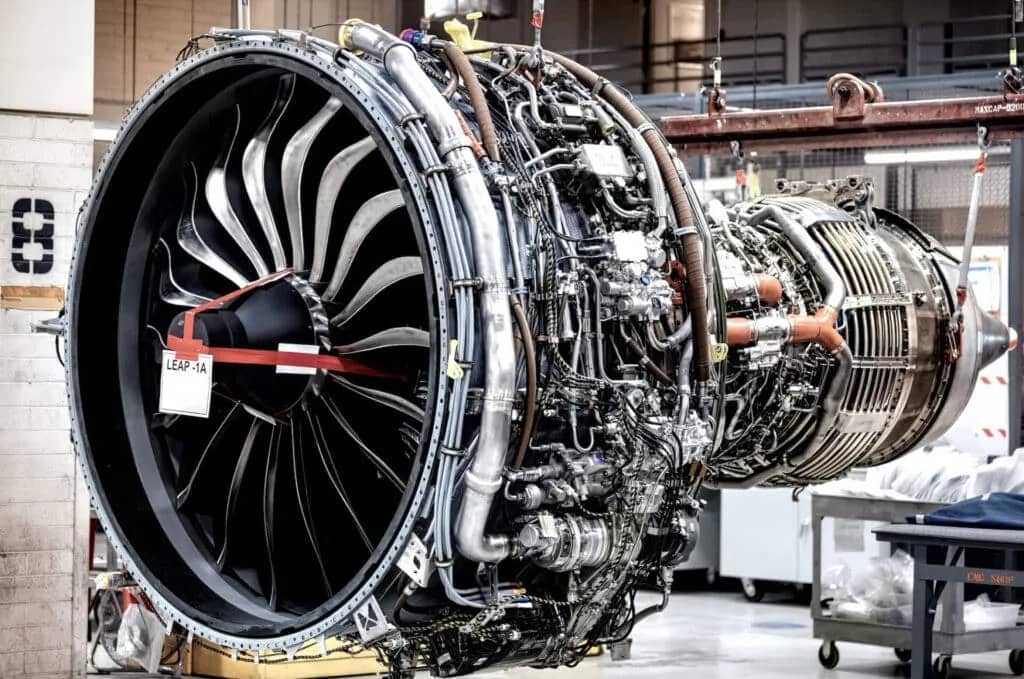
The GE9X powers the Boeing 777X. Numbers tell the story of its massive size:
- Fan diameter: 134 inches (11 feet) - larger than a Boeing 737 fuselage
- Thrust: 105,000 pounds - most powerful commercial engine ever
- Bypass ratio: Approximately 10:1 - exceptionally high
- Weight: About 20,000 pounds complete
That 134-inch fan is critical to understanding why chevrons aren't needed. The bigger the fan, the more air it moves. Moving more air at lower speeds fundamentally changes engine noise characteristics.
GE spent over $4 billion developing the GE9X. The design incorporates composite fan blades, ceramic matrix composite parts in the hot section, and advanced acoustic treatments throughout. GE Aviation's development program wasn't just creating a bigger engine - it's a completely different approach.
Why the GE9X Doesn't Need Chevrons
The simple answer: the GE9X is already quiet enough without chevrons. Several engineering factors make this possible.
Massive Fan = Lower Exhaust Velocity
The 134-inch fan moves enormous amounts of air. About 90% of the air entering the engine bypasses the core completely. This bypass air exits at relatively low velocity.
Lower velocity means less violent mixing with outside air. Less violent mixing means less noise. The GE9X achieves through sheer size what smaller engines need chevrons to accomplish.
Very High Bypass Ratio
The GE9X's 10:1 bypass ratio means for every pound of air going through the core, ten pounds go around it. This dilutes the hot, fast core exhaust with massive amounts of slower bypass air.
The mixing happens more gradually and quietly. High bypass engines are inherently quieter than low bypass designs, regardless of chevrons.
Advanced Acoustic Liners
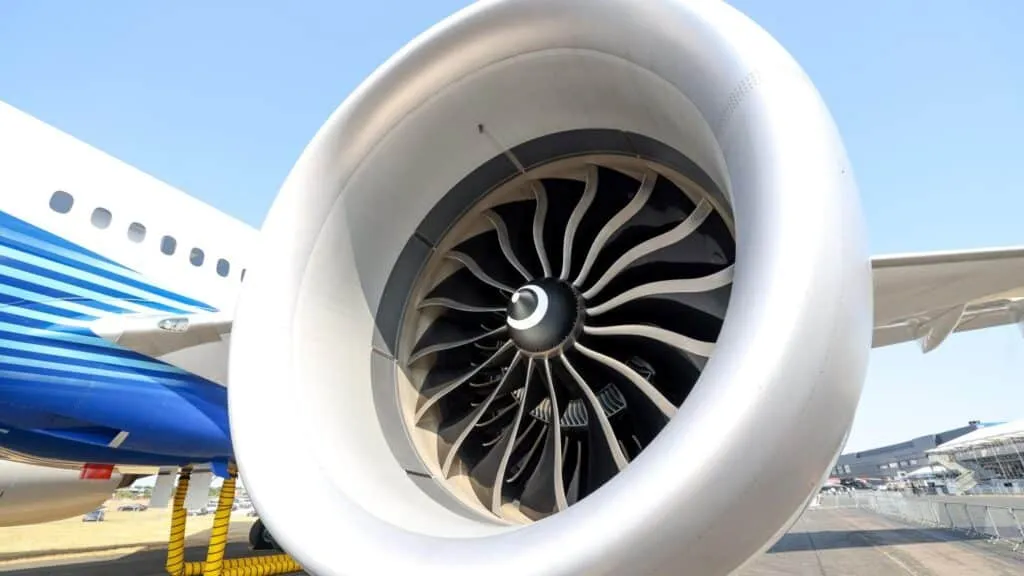
The GE9X nacelle includes sophisticated sound-absorbing materials. These acoustic liners trap and dampen noise inside the engine housing before it escapes.
Modern liner technology has improved dramatically. Materials that couldn't handle the temperatures and pressures ten years ago now work reliably. The GE9X takes full advantage of these material advances. Specialized aircraft component suppliers develop these advanced acoustic materials.
Engineered Nacelle Design
GE engineered the GE9X nacelle for smooth airflow without requiring chevrons. The shape itself reduces turbulence and noise while maintaining excellent aerodynamic efficiency.
Every curve and contour serves a purpose. This clean-sheet design approach allowed engineers to eliminate chevrons while meeting noise targets.
Fuel Efficiency Priority
Chevrons create drag. Drag burns fuel. On an engine this large, even small drag increases cost airlines significant money over the aircraft's lifetime.
Boeing and GE decided that avoiding the chevron fuel penalty made more sense than adding a noise reduction feature the engine doesn't actually need. Pure economics drove this choice.
The Engineering Trade-Off: Noise vs Efficiency
Engine design always involves balancing competing priorities. You can't maximize everything simultaneously. Chevrons represent one specific trade-off point.
For the GEnx on the 787, chevrons made sense. The noise reduction benefit outweighed the small fuel efficiency loss. Airports accepted the aircraft, passengers got quieter cabins, and the fuel penalty stayed manageable.
For the GE9X, the calculation changed. The engine's fundamental design already delivers excellent noise performance. Adding chevrons would reduce efficiency without providing meaningful noise benefits.
This isn't about chevrons being bad. It's about using the right solution for each specific engine design. Modern ultra-high bypass engines simply don't need them anymore.
How the GE9X Meets Noise Standards Without Chevrons

Aviation noise standards keep getting stricter. The ICAO Chapter 14 standards and FAA Stage 5 requirements demand quieter aircraft than previous generations.
The GE9X easily meets these requirements. Testing shows it operates significantly quieter than regulations require. The margin provides room for future standard increases without redesign.
Key noise reduction features include:
- Low-pressure turbine design minimizing turbulence
- Fan blade optimization reducing tip vortex noise
- Exhaust mixer geometry smoothing airflow
- Nacelle acoustic treatment absorbing internal sound
Airlines operating the 777X won't face noise curfew restrictions at major airports. The GE9X delivers community-friendly noise levels that satisfy even strict European airports.
Are Chevrons Becoming Obsolete?

Not obsolete, but less necessary for modern large turbofans. The trend toward higher bypass ratios makes chevrons redundant on many new engine designs.
Smaller engines still benefit from chevrons. Business jets and regional aircraft with lower bypass ratios continue using them effectively. The physics hasn't changed - smaller engines still generate more mixing noise.
But for the next generation of large commercial engines? Probably chevron-free. CFM's RISE engine program and other ultra-high bypass concepts achieve noise targets through fundamental design rather than add-on features.
Chevrons served their purpose brilliantly. They enabled the 787 and 747-8 to meet noise standards during a transitional period. Now engine technology has progressed beyond needing them.
Will Future Engines Use Chevrons?
Future large commercial engines will likely skip chevrons for the same reasons the GE9X does. Ultra-high bypass ratios inherently solve the noise problem chevrons were designed to address.
The next frontier involves even more radical designs. Open rotor engines expose fan blades directly to airflow without nacelles. These require completely different noise management approaches that make chevrons irrelevant.
Geared turbofan engines like Pratt & Whitney's PW1000G achieve high bypass ratios through gearing mechanisms. They also tend to skip chevrons because the fundamental design already runs quietly.
Expect future engine evolution to focus on:
- Even higher bypass ratios (12:1 or greater)
- Advanced materials enabling lighter, more efficient designs
- Active noise cancellation using counter-phase sound waves
- Distributed propulsion spreading thrust across multiple smaller fans
Chevrons solved a specific problem at a specific time. Modern engines solve that problem through better fundamental design.
Frequently Asked Questions
Why do some jet engines have jagged edges on the back?
Those jagged edges are chevrons designed to reduce jet noise. They work by breaking up the turbulent mixing between hot engine exhaust and cooler outside air. Smaller engines with moderate bypass ratios benefit from chevrons because they help meet airport noise regulations without major fuel penalties.
Is the GE9X quieter than the GEnx engine with chevrons?
Yes, significantly quieter. The GE9X's massive size and 10:1 bypass ratio create fundamentally lower noise levels than the GEnx despite lacking chevrons. Testing shows the GE9X operates well below current noise certification limits. Its larger fan diameter and lower exhaust velocity generate less mixing turbulence naturally.
Do chevrons reduce fuel efficiency?
Yes, slightly. Chevrons create additional aerodynamic drag that increases fuel consumption by a small percentage. For engines needing chevrons to meet noise standards, this penalty is acceptable. But for engines like the GE9X that meet noise requirements without chevrons, adding them would waste fuel for no meaningful benefit.
Are chevrons necessary on modern jet engines?
Not on large ultra-high bypass engines. The GE9X proves that proper fundamental design - huge fan diameter, high bypass ratio, advanced acoustics - eliminates the need for chevrons. Smaller engines with lower bypass ratios still benefit from chevrons. The necessity depends entirely on the specific engine architecture.
Why don't Airbus A350 engines have large chevrons?
The A350's Rolls-Royce Trent XWB engines use subtle chevrons rather than the dramatic serrations on the 787. Rolls-Royce refined the Trent XWB's nacelle design and acoustic treatment to need less aggressive chevrons. The result is similar noise performance with less drag penalty.
Could GE add chevrons to the GE9X later if noise rules get stricter?
Technically possible but unlikely needed. The GE9X already operates significantly below current noise limits with comfortable margin for future regulation increases. If somehow necessary, GE could retrofit chevrons, but the engine's fundamental design provides enough noise reduction capacity that chevrons would remain unnecessary even with stricter standards.
Do military engines use chevrons?
Some do, especially on stealth aircraft. The F-22 Raptor uses chevrons to reduce both noise and infrared signature. However, military engines prioritize thrust and maneuverability over fuel efficiency, so the drag penalty matters less. Fighter jets and military transports use chevrons when operational benefits outweigh performance costs.
Will the next generation of engines after GE9X need chevrons?
Probably not. The industry trend toward ultra-high bypass ratios (12:1 or higher) will likely make future large commercial engines even quieter than the GE9X. Next-generation designs like CFM's RISE program and advanced turbofans focus on fundamental noise reduction rather than add-on features. Chevrons solved yesterday's problems; tomorrow's engines prevent those problems entirely.
Conclusion
The GE9X doesn't need chevrons because it's already quiet enough. Simple as that.
Boeing's 787 and 747-8 used chevrons because their GEnx engines needed help meeting noise standards. The serrated edges provided that help at an acceptable fuel cost. Smart engineering for that specific challenge.
The GE9X represents the next step in engine evolution. Its 134-inch fan and 10:1 bypass ratio deliver inherently low noise. Advanced materials, sophisticated acoustic liners, and refined nacelle geometry finish the job. No chevrons required.
This isn't about chevrons being outdated technology. They remain valuable tools for certain engine designs. But modern ultra-high bypass turbofans solve the noise problem through fundamental design excellence rather than add-on corrections.
Future engines will likely continue this trend. As bypass ratios increase and materials improve, expect clean, smooth nacelles to become standard. The chevron era served its purpose beautifully. Now we've moved beyond needing them.
When you see the 777X fly with its massive GE9X engines, those smooth nacelle edges represent engineering progress. Sometimes the best solution isn't adding something new - it's designing so well you don't need the old fix anymore.