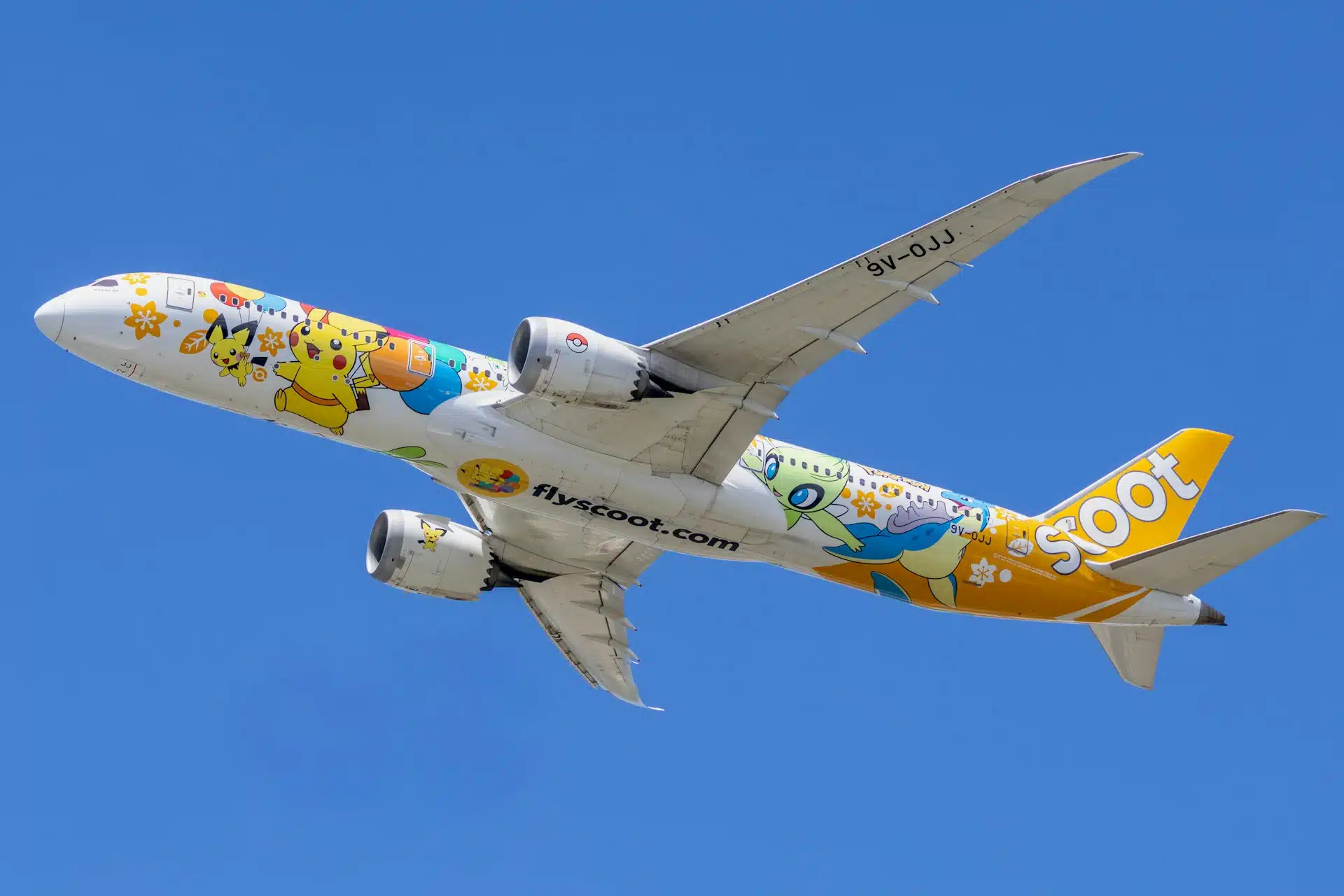
Singapore Airlines has once again secured its position among the world’s top airlines, ranking third globally in the 2026 Skytrax World Airline Awards while its low-cost subsidiary Scoot also delivered a strong performance, placing fifth among budget carriers worldwide.
The rankings reflect consistent excellence in passenger experience, premium cabin quality, and operational reliability that have defined Singapore Airlines’ reputation for decades. The carrier maintained its position among aviation’s elite despite intensifying competition from Gulf carriers and Asian rivals investing billions in product upgrades.
Scoot’s fifth-place finish in the low-cost category demonstrates that budget operations can achieve high service standards when properly managed, validating Singapore Airlines Group’s dual-brand strategy of serving both premium and price-conscious markets through distinct airline operations.
Singapore Airlines Maintains Strong Global Ranking
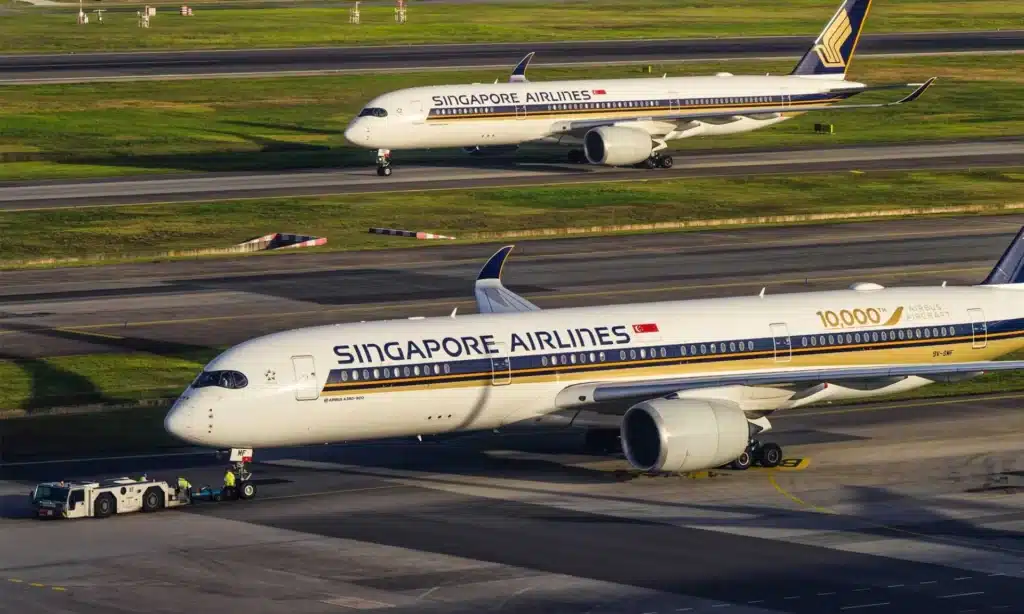
Singapore Airlines’ third-place global ranking continues a decades-long tradition of excellence that consistently places the carrier among the world’s top five airlines. The 2026 result matches the airline’s 2024-2025 performance, demonstrating sustained quality across operations.
The airline operates one of the youngest and most modern fleets in global aviation, with an average aircraft age under 7 years compared to industry averages of 10-15 years. This fleet advantage provides fuel efficiency, reliability, and passenger appeal that older competitors struggle to match. Professional aircraft maintenance ensures these modern aircraft operate at peak performance.
Singapore Airlines’ business class product consistently ranks among the industry’s best, featuring fully-flat beds, direct aisle access in many configurations, and exceptional in-flight service. The airline’s Suites product on Airbus A380 and selected Boeing 777 aircraft offers enclosed first class cabins that set luxury standards competitors reference.
Service quality remains a defining characteristic with cabin crew trained to anticipate passenger needs and provide personalized attention throughout flights. Singapore Airlines invests heavily in crew training programs that emphasize cultural sensitivity, language skills, and service excellence.
The carrier’s global network connects Singapore with over 130 destinations across six continents, providing comprehensive coverage that serves both business and leisure travelers. Strategic partnerships through Star Alliance extend the network further, offering connections to destinations Singapore Airlines doesn’t serve directly.
Changi Airport’s exceptional facilities enhance the overall passenger experience. The airport consistently ranks among the world’s best for layovers, providing seamless connections, extensive shopping and dining, and comfortable transit amenities that complement Singapore Airlines’ onboard service.
Scoot Among Top Low-Cost Airlines

Scoot’s fifth-place ranking among low-cost carriers represents strong performance in a competitive budget airline category where price pressures often compromise service quality. The airline demonstrates that low fares need not mean poor passenger experience when operations prioritize efficiency and reliability.
The carrier operates a modern fleet of Boeing 787 Dreamliners and Airbus A320neo family aircraft, providing fuel efficiency and passenger comfort that exceed older narrowbody aircraft many budget carriers still operate. This fleet modernity keeps operating costs competitive while delivering better passenger appeal. Understanding fleet management strategies helps airlines like Scoot maintain modern aircraft without massive capital outlays.
Scoot serves over 60 destinations across Asia, Australia, and beyond, focusing on price-sensitive leisure markets where low fares drive demand. The network complements Singapore Airlines’ premium positioning by capturing passengers unwilling to pay full-service fares but still choosing Singapore as their connecting hub.
While budget carriers typically minimize amenities, Scoot maintains reasonable standards for legroom, baggage handling, and customer service that exceed some ultra-low-cost competitors. This balanced approach attracts passengers seeking value rather than absolute minimum fares.
The airline benefits from Singapore Airlines Group’s operational expertise, leveraging shared infrastructure, maintenance facilities, and management systems that improve efficiency. This corporate backing provides advantages independent budget carriers lack, including access to better fleet management and financing options.
Top Airlines In The World For 2026
The 2026 Skytrax rankings reflect evolving competitive dynamics as airlines recover from pandemic disruptions and invest in product improvements to capture premium passengers generating disproportionate revenue.
| Rank | Airline | Country | Key Strength |
|---|---|---|---|
| 1 | Qatar Airways | Qatar | Qsuite business class, premium service |
| 2 | Emirates | UAE | Extensive network, A380 operations |
| 3 | Singapore Airlines | Singapore | Consistent service excellence, modern fleet |
| 4 | ANA All Nippon Airways | Japan | Japanese hospitality, reliability |
| 5 | Cathay Pacific | Hong Kong | Premium lounges, business class |
| 6 | Japan Airlines | Japan | Service quality, modern fleet |
| 7 | Turkish Airlines | Turkey | Global connectivity, value |
| 8 | EVA Air | Taiwan | Product consistency, safety record |
| 9 | Swiss International | Switzerland | Punctuality, European connectivity |
| 10 | Air France | France | Premium cabins, Paris hub |
Top Low-Cost Airlines In 2026
The budget carrier category demonstrates that cost-conscious operations can still deliver positive passenger experiences when airlines prioritize operational efficiency and basic service standards over absolute minimum pricing.
| Rank | Airline | Country/Region | Key Strength |
|---|---|---|---|
| 1 | AirAsia | Malaysia | Extensive Asian network, value pricing |
| 2 | easyJet | United Kingdom | European coverage, reliability |
| 3 | Southwest Airlines | United States | Domestic US network, customer service |
| 4 | Jetstar | Australia | Asia-Pacific routes, Qantas backing |
| 5 | Scoot | Singapore | Modern fleet, Singapore Airlines backing |
| 6 | IndiGo | India | Punctuality, domestic Indian market |
| 7 | Ryanair | Ireland | Low fares, extensive European network |
| 8 | JetBlue | United States | Premium economy experience, US routes |
| 9 | VietJet Air | Vietnam | Southeast Asian connectivity |
| 10 | Vueling | Spain | Mediterranean routes, IAG network |
Why Singapore Airlines Continues To Rank Highly

Singapore Airlines’ consistent top-tier rankings reflect deliberate strategic choices prioritizing service excellence and operational quality over short-term profit maximization.
Fleet modernization remains a cornerstone of the airline’s competitive advantage. The carrier operates cutting-edge aircraft including Airbus A350s, Boeing 787s, and Boeing 777-9s as deliveries commence. This modern fleet delivers fuel efficiency, passenger comfort, and reliability that older aircraft cannot match.
The airline pioneered several industry firsts including the world’s first Airbus A380 operations and the longest commercial flights globally on ultra-long-range A350 variants. Routes like Singapore-New York operating nonstop for 18+ hours demonstrate technical capabilities few competitors can replicate.
Premium cabin investment differentiates Singapore Airlines from competitors cutting costs through product degradation. The Suites first class offers fully enclosed private cabins with sliding doors, double beds, and luxury amenities that justify premium fares business travelers and affluent leisure passengers willingly pay.
Business class configurations emphasize direct aisle access and spacious seating that converts to comfortable flat beds. The airline refuses to maximize seat density at the expense of passenger comfort, maintaining generous pitch and width that competitors compress to fit more seats.
Service excellence defines the Singapore Airlines brand more than any physical product feature. Cabin crew receive extensive training in hospitality, cultural awareness, and service delivery that creates consistently positive passenger experiences. The carrier invests in world-class training programs ensuring service standards remain consistently high.
The airline’s “Singapore Girl” branding became iconic in global aviation, though the carrier evolved this image to reflect modern workforce diversity while maintaining service quality standards. Crew members demonstrate genuine care for passenger comfort rather than mechanical execution of service routines.
Changi Airport integration provides operational advantages competitors based at congested hubs cannot match. The airport’s efficiency, connectivity, and passenger amenities complement the airline’s service proposition, creating a seamless travel experience from check-in through arrival. Singapore’s broader aviation infrastructure serves both commercial and private operators.
Singapore’s geographic position provides natural connectivity between Europe, Asia, and Oceania. The airline leverages this advantage by developing routes that use Singapore as an efficient connection point, though point-to-point ultra-long-haul growth by competitors threatens this hub model. The broader Asian aviation infrastructure supports both commercial and private operations.
How Airline Rankings Are Determined

Skytrax determines airline rankings through passenger surveys collecting millions of responses across multiple service categories, though methodology limitations mean rankings should be considered alongside other performance indicators.
The survey covers cabin comfort, staff service, food and beverage quality, in-flight entertainment, cleanliness, and value for money. Passengers rate their actual travel experiences rather than theoretical service standards, providing real-world feedback on airline performance.
Participation relies on self-selection where motivated passengers choose to complete surveys. This creates potential bias toward airlines with passionate fan bases or passengers with particularly positive or negative experiences prompting them to respond.
The awards recognize both full-service and low-cost carriers in separate categories, acknowledging that budget airlines serve different market segments with distinct expectations. Comparing Singapore Airlines directly to Ryanair would be meaningless given their completely different business models and target passengers.
Regional variations affect rankings as Asian carriers dominate top positions partly due to cultural service standards and investment levels that European and North American carriers increasingly struggle to match. Labor costs, union constraints, and legacy systems create disadvantages for older Western carriers. Meanwhile, geopolitical challenges affect carriers differently based on their geographic positioning.
Industry observers note that rankings provide marketing value regardless of methodology debates. Airlines winning Skytrax awards promote results extensively, influencing passenger booking decisions worth millions in annual revenue even if ranking methodologies have limitations.
What This Means For The Airline Industry
The 2026 rankings reflect ongoing competitive dynamics favoring airlines willing to invest in premium products and service quality while managing costs through operational efficiency rather than service degradation. Understanding how Qatar Airways built its success and Emirates’ fleet deployment strategies reveals different approaches to global aviation excellence.
Asian carriers’ continued dominance challenges European and North American airlines to either match investment levels or accept secondary competitive positions. Gulf carriers like Emirates and Qatar Airways demonstrate that newer airlines unencumbered by legacy systems can quickly establish global recognition through quality focus. Meanwhile, carriers like Turkish Airlines expand their fleets and networks aggressively.
The low-cost category’s maturation shows budget airlines can build strong reputations without matching full-service amenities. Scoot’s success validates dual-brand strategies where airline groups operate both premium and budget subsidiaries serving distinct market segments.
Rankings influence corporate travel policies as companies increasingly specify preferred carriers based on service quality rather than just fare levels. Business travelers value comfort and reliability, making Skytrax rankings relevant to procurement decisions controlling millions in annual travel spending. Recent operational disruptions demonstrate how reliability affects corporate travel decisions.
The industry faces ongoing tension between service quality and profitability. Airlines investing heavily in premium products must generate sufficient revenue to justify costs, while competitors cutting services to boost margins risk passenger defections to higher-ranked carriers. Investment in sustainable aviation fuel adds another cost dimension carriers must manage.
Emerging challenges including environmental sustainability, labor relations, and geopolitical disruptions will test whether top-ranked carriers maintain excellence while navigating industry pressures. Singapore Airlines’ multi-decade consistency suggests deliberate strategy execution can sustain competitive advantages despite evolving challenges.
Frequently Asked Questions
Which is the best airline in the world 2026?
Qatar Airways ranked first in the 2026 Skytrax World Airline Awards, followed by Emirates in second place and Singapore Airlines in third. Qatar Airways’ Qsuite business class product, extensive global network through Doha, and consistent service quality drove its top ranking. The airline won multiple category awards including Best Business Class and Best Airline in the Middle East. However, “best” depends on individual priorities – Singapore Airlines excels in consistent service, Emirates offers extensive network reach, while Japanese carriers like ANA rank highly for reliability and hospitality.
What rank is Singapore Airlines?
Singapore Airlines ranked third globally in the 2026 Skytrax World Airline Awards, maintaining its position among the world’s top airlines. The carrier consistently places in the top 3-5 positions, reflecting sustained service excellence, modern fleet operations, and premium cabin quality. Singapore Airlines also ranks highly in specific categories including best first class, best business class, and best cabin crew. The airline’s Changi Airport hub enhances the overall passenger experience, contributing to strong rankings despite competition from Gulf and Asian rivals.
What is Scoot airline ranking?
Scoot ranked fifth among low-cost carriers in the 2026 Skytrax rankings, placing behind AirAsia, easyJet, Southwest, and Jetstar. This represents strong performance in the budget airline category where price pressures often compromise service quality. Scoot operates modern Boeing 787 and Airbus A320neo aircraft, providing better passenger comfort than many budget competitors flying older equipment. The airline benefits from Singapore Airlines Group backing, leveraging shared infrastructure and operational expertise while maintaining low-cost positioning. The fifth-place finish validates the dual-brand strategy of serving premium and budget markets.
How are airline rankings decided?
Skytrax determines airline rankings through passenger surveys collecting millions of responses globally across categories including cabin comfort, staff service, food quality, entertainment, cleanliness, and value. Passengers rate actual travel experiences from the previous year. The methodology relies on self-selected survey participation, creating potential bias toward airlines with passionate supporters or passengers motivated to respond after exceptional experiences. Rankings separate full-service and low-cost carriers into different categories recognizing distinct business models and passenger expectations. Regional factors, cultural service standards, and investment levels influence results, partly explaining Asian carriers’ dominance in top positions.
Why do Asian airlines rank higher than Western carriers?
Asian carriers consistently outrank Western airlines due to several factors including cultural service standards emphasizing hospitality, newer fleets with modern aircraft, significant capital investment in premium products, and competitive labor costs allowing better crew ratios. Airlines like Singapore Airlines, ANA, and Japan Airlines invest heavily in training, cabin products, and passenger experience while Western carriers face union constraints, legacy cost structures, and pressure to maximize short-term profits. Asian governments sometimes provide capital access unavailable to publicly-traded Western carriers. Changi, Incheon, and other Asian hubs offer superior facilities compared to congested European and North American airports, enhancing overall travel experience.
Does airline ranking affect ticket sales?
Yes, airline rankings significantly influence booking decisions, particularly for business travelers and premium cabin passengers. Corporate travel managers increasingly specify preferred carriers based on service quality rankings when negotiating contracts worth millions annually. Individual travelers researching airlines see Skytrax rankings as independent verification of quality claims, influencing choice between similar-priced options. However, price remains the primary driver for economy passengers where even top-ranked airlines lose bookings to cheaper competitors. Rankings provide marketing value that airlines promote extensively through advertising, generating indirect sales impact beyond direct booking influence. Studies show awareness of awards correlates with willingness to pay premium fares.
What is Singapore Airlines’ competitive advantage?
Singapore Airlines’ competitive advantages include modern fleet averaging under 7 years old, premium cabin products like Suites first class, consistent service excellence from well-trained crew, Changi Airport’s operational efficiency, and strategic geographic positioning for Europe-Asia-Oceania connectivity. The carrier maintains service standards competitors cut during cost pressures, justifying premium fares business travelers willingly pay. Government backing through Temasek Holdings provides capital access for fleet investments and network development. The airline pioneered ultra-long-haul nonstop flights on A350-900ULR aircraft, creating unique route offerings. Partnership with SIA Engineering ensures reliable maintenance operations.
How does Scoot maintain quality as a low-cost carrier?
Scoot maintains quality through modern aircraft (Boeing 787, Airbus A320neo), operational efficiency from Singapore Airlines Group backing, reasonable service standards exceeding ultra-low-cost competitors, and focus on value rather than absolute minimum pricing. The airline operates from Singapore’s efficient Changi Airport, reducing operational complexity versus congested hubs. Fleet modernity provides fuel efficiency keeping costs competitive while delivering better passenger experience than older aircraft. Scoot leverages shared maintenance facilities, training programs, and management expertise with parent Singapore Airlines while maintaining separate cost structure and brand positioning. This combination allows competitive fares without compromising basic service quality that drives customer satisfaction and repeat bookings.
Conclusion
Singapore Airlines’ third-place global ranking and Scoot’s fifth-place finish among low-cost carriers demonstrate that sustained service excellence and strategic fleet investment deliver competitive advantages in increasingly competitive global aviation markets. The rankings validate Singapore Airlines Group’s dual-brand strategy of serving premium passengers through Singapore Airlines while capturing budget travelers via Scoot, maximizing market coverage across passenger segments.
The carrier’s consistent top-tier performance reflects deliberate choices prioritizing passenger experience and operational quality over short-term cost cutting. Fleet modernization with Airbus A350s and Boeing 787s provides efficiency and passenger comfort, while premium cabin products like Suites first class justify fares business travelers willingly pay. Service excellence from well-trained crew creates positive experiences that generate repeat bookings and corporate travel contracts worth millions annually.
Asian carriers’ continued dominance in Skytrax rankings challenges Western airlines to either match investment levels or accept secondary competitive positions. As industry pressures including environmental mandates, labor costs, and geopolitical disruptions intensify, airlines maintaining service differentiation while managing operational efficiency will sustain competitive advantages. Singapore Airlines’ multi-decade consistency among aviation’s elite demonstrates that strategic focus on quality over decades builds enduring brand strength that survives industry cycles and competitive challenges.