
Largest Aircraft Engine Manufacturers (2026 Update)
Radu BalasPublished Updated 8 min read
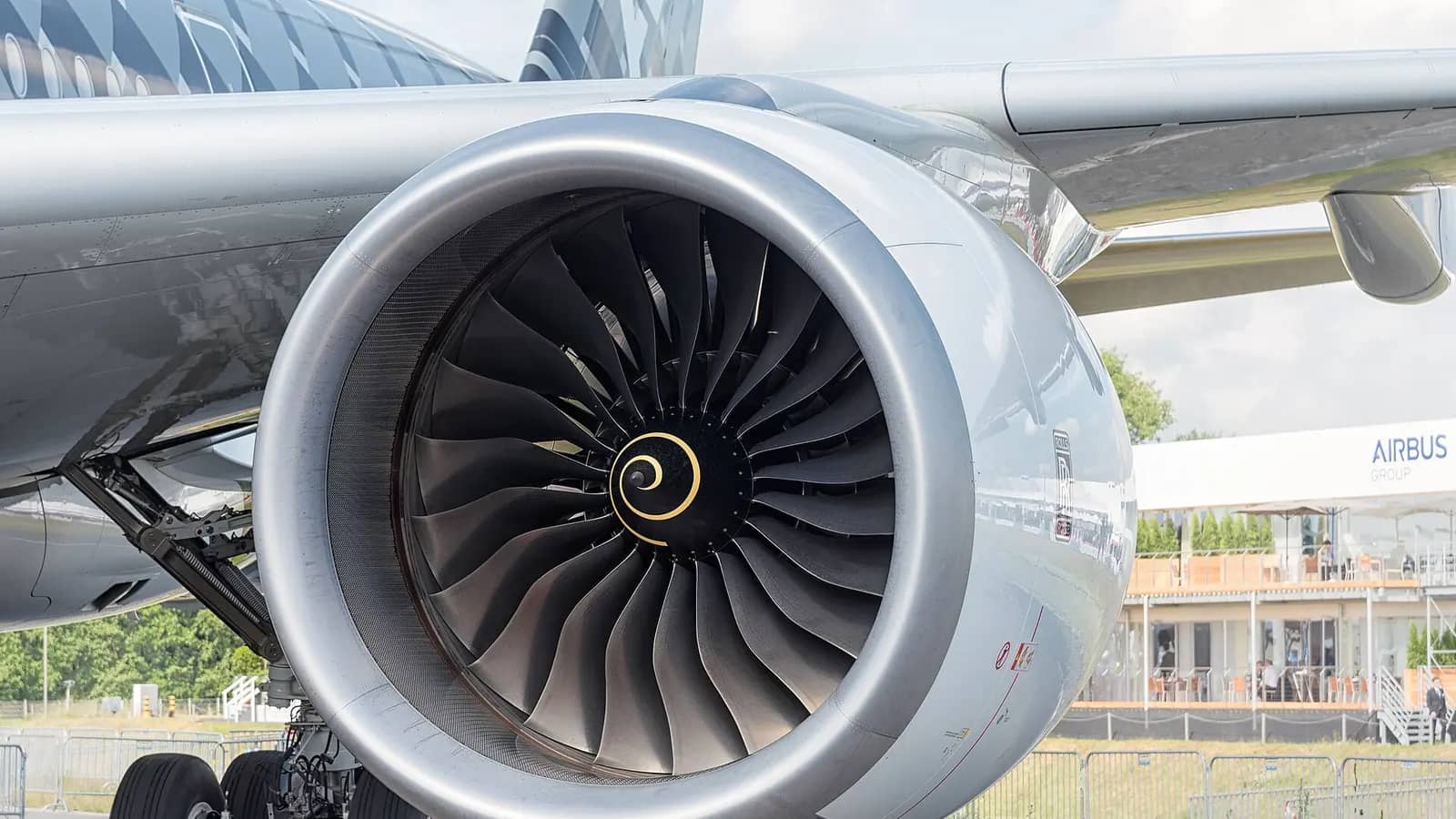
Updated on March 2026.
The aircraft engine industry powers global aviation. Without reliable propulsion, the 100,000+ daily commercial flights would not exist.
From the Wright Brothers’ 12-horsepower engine to today’s 100,000-pound-thrust turbofans, engine technology has transformed aviation. Modern jet engines deliver fuel efficiency improvements of 15-20% per generation while meeting strict emissions standards.
Six companies dominate the aircraft engine manufacturing sector in 2026. These aerospace propulsion companies supply engines for the world’s largest airlines, military forces, and business aviation operators worldwide.
This guide examines who makes the biggest aircraft engines, their flagship products, and the technology driving the next generation of propulsion systems.
How Aircraft Engine Manufacturers Are Ranked
Several factors determine leadership in the jet engine industry.
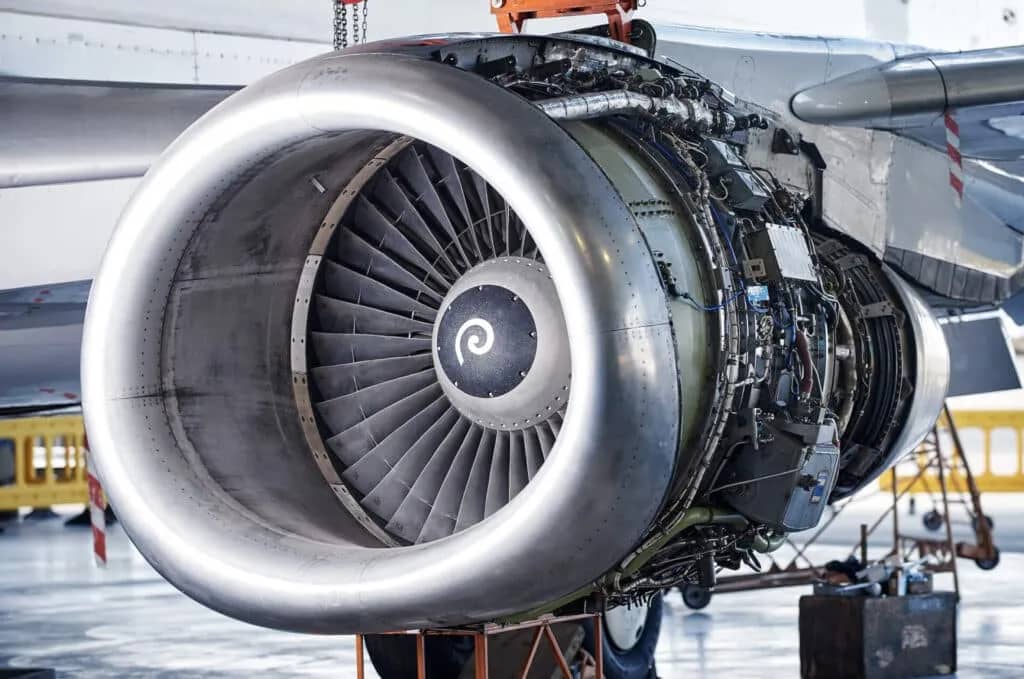
Market Share in Commercial Aviation
Engine selection on narrow-body and wide-body aircraft determines market position. The Airbus A320neo family and Boeing 737 MAX represent the largest commercial programs by volume.
CFM International supplies over 60% of narrow-body engines. GE Aviation and Rolls-Royce split the wide-body market.
Military Engine Programs
Defense contracts provide stable revenue and fund technology development. The F135 engine for the F-35 Lightning II represents the largest military engine program in history.
Military engine development often transfers to commercial applications. Composite fan blade technology and digital engine controls originated in defense programs.
Revenue and Global Fleet Support
Annual revenue indicates manufacturing scale. GE Aerospace reported $32 billion in revenue for 2024. Rolls-Royce aerospace division generated £13.5 billion.
Fleet support networks matter for operators. Engine maintenance intervals, parts availability, and overhaul capacity affect total cost of ownership.
Technological Innovation
Patents, research investment, and new product development signal future competitiveness. Geared turbofan technology, composite materials, and digital analytics separate leaders from followers.
1. General Electric (GE) Aviation: Global Leader in Widebody Engines

GE Aviation, now operating as GE Aerospace, holds the largest market share among aircraft engine makers globally.
The company’s widebody engine portfolio includes the GE90, GE9X, and GEnx families. The GE90-115B holds the world record for thrust at 127,900 pounds.
Commercial Engine Programs
The GE9X powers the Boeing 777X. This turbofan engine features a 134-inch fan diameter, the largest in commercial aviation. Fuel consumption improves 10% compared to the GE90.
The GEnx serves the Boeing 787 Dreamliner and Boeing 747-8. Composite fan blades and a composite fan case reduce weight by 350 pounds per engine.
Through CFM International, GE co-produces the LEAP engine family for narrow-body aircraft.
Military Engine Portfolio
GE supplies the F110 engine for F-16 and F-15 fighters. The F414 powers the F/A-18 Super Hornet. The T700 turboshaft serves military helicopter programs.
Technology Leadership
GE pioneered composite fan blade technology in commercial aviation. The company’s digital engine analytics platform monitors over 40,000 engines in service.
Additive manufacturing produces fuel nozzles for LEAP engines. This 3D printing approach reduces part count from 18 pieces to one.
Learn more about GE Aerospace.
2. Rolls-Royce: Masters of Widebody and Long-Haul Propulsion
Rolls-Royce leads the exclusive widebody engine market segment. The British manufacturer powers most three-engine configurations and maintains strong positions on twin-aisle aircraft.
The Trent Engine Family
The Trent series represents five decades of widebody engine evolution.
Trent 700 powers the Airbus A330. Over 1,900 engines have been delivered.
Trent XWB exclusively powers the Airbus A350. The XWB-97 variant generates 97,000 pounds of thrust for the A350-1000.
Trent 1000 serves the Boeing 787 alongside the GEnx.
Trent 7000 powers the Airbus A330neo, delivering 68,000-72,000 pounds of thrust.
Military Programs
The Adour engine powers training aircraft and light combat jets. The AE 2100 turboprop serves the C-130J Super Hercules.
Sustainability Initiatives
Rolls-Royce leads sustainable aviation fuel testing. All Trent engines are certified for 50% SAF blends.
The UltraFan demonstrator program targets 25% fuel efficiency improvement over first-generation Trent engines.
Visit Rolls-Royce Aerospace.
3. Pratt & Whitney: Innovators of the Geared Turbofan
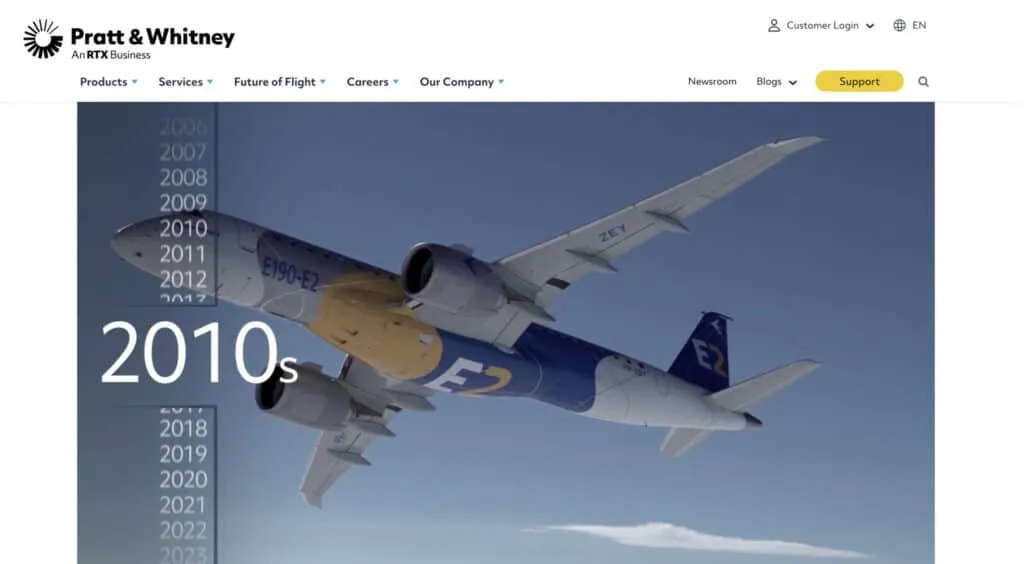
Pratt & Whitney transformed narrow-body propulsion with the geared turbofan concept. The PW1000G engine family represents the largest commercial aircraft engine program in company history.
The Geared Turbofan Revolution
Traditional turbofan engines connect the fan and low-pressure turbine on a single shaft. This forces design compromises.
The PW1100G geared turbofan uses a planetary gearbox to allow each component to spin at optimal speed. The fan operates at 3,000 RPM while the low-pressure turbine runs at 10,000 RPM.
Results: 16% fuel burn reduction, 75% noise reduction, and 50% lower regulated emissions compared to previous-generation engines.
Aircraft Applications
The PW1100G powers the Airbus A320neo family. Over 3,000 engines have entered service.
The PW1500G serves the Airbus A220 (formerly Bombardier CSeries).
The PW1900G powers Embraer E-Jet E2 aircraft.
Military Dominance
The F135 engine powers the F-35 Lightning II across all variants. This represents the largest defense engine program in history with over 1,000 engines delivered.
Learn more at Pratt & Whitney.
4. CFM International: Kings of the Narrowbody Market

CFM International operates as a 50/50 joint venture between GE Aviation and Safran Aircraft Engines.
The partnership has delivered over 35,000 engines since 1974. CFM holds over 60% of the narrow-body engine market.
The CFM56 Legacy
The CFM56 remains the most produced turbofan engine in aviation history. Over 33,000 engines have been delivered.
Applications include the Boeing 737 Classic and NG families, Airbus A320ceo family, and military tanker aircraft.
LEAP Engine Family
The LEAP (Leading Edge Aviation Propulsion) engine series replaced the CFM56 for new-production aircraft.
LEAP-1A powers the Airbus A320neo family. Airbus has selected LEAP as the baseline engine option.
LEAP-1B exclusively powers the Boeing 737 MAX family.
LEAP-1C powers the COMAC C919, China’s first domestically developed narrow-body aircraft.
Performance Improvements
LEAP engines deliver 15% better fuel consumption than CFM56 engines. Carbon composite fan blades and 3D-printed fuel nozzles enable these improvements.
The global MRO network supports over 3,500 LEAP engines in service across 200 operators.
Learn More at: CFM Aeroengines
5. Safran Aircraft Engines: European Military and Commercial Power
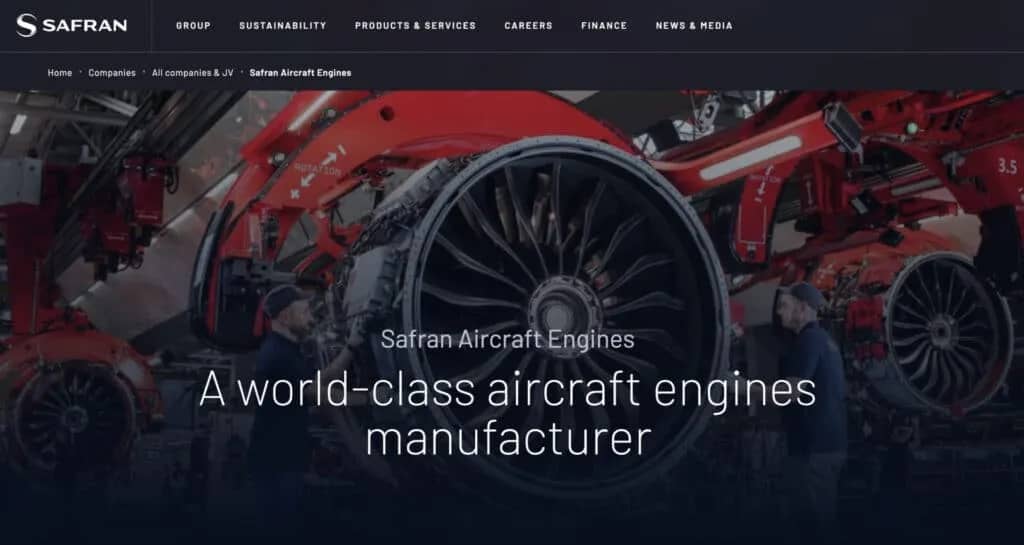
Safran operates as France’s primary aerospace propulsion company. The firm contributes 50% of CFM International and develops military engines independently.
Military Engine Programs
The M88 turbofan powers the Dassault Rafale fighter. This twin-spool engine produces 22,000 pounds of thrust with afterburner.
The TP400-D6 turboprop powers the Airbus A400M military transport. This represents the most powerful turboprop engine in Western production.
The Ardiden helicopter engine family serves French and international military programs.
Commercial Contributions
Safran provides the core and low-pressure turbine for all CFM engines. The company manufactures CFM engine components at facilities in France and Mexico.
Safran’s helicopter engine division produces the Arrius and Arriel families for civil and military rotorcraft.
Technology Development
Safran leads European research into next-generation propulsion. The RISE program with GE targets open-fan architecture for 20% fuel reduction.
Visit Safran Group.
6. Honeywell Aerospace: Business Aviation and Regional Aircraft Specialists

Honeywell Aerospace dominates the business jet engine market. The company also provides auxiliary power units, avionics, and connected aircraft systems.
Business Jet Engine Portfolio
The TFE731 turbofan series has accumulated over 100 million flight hours. Applications include Dassault Falcon, Learjet, and Hawker aircraft.
The HTF7000 powers large-cabin business jets including the Gulfstream G280 and Bombardier Challenger 350.
The HTF10000 serves ultra-long-range business jets like the Gulfstream G700.
Regional Aircraft Engines
Honeywell’s TPE331 turboprop powers regional aircraft and military trainers. Over 14,000 engines have been delivered.
The ALF502 and LF507 turbofans serve regional jets including the BAe 146 and Avro RJ.
Auxiliary Power Units
Honeywell supplies auxiliary power units for most commercial aircraft programs. APUs provide ground power and emergency backup.
Learn more at Honeywell Aerospace.
Comparison Table: Largest Aircraft Engine Manufacturers
| Manufacturer | Notable Engines | Key Aircraft | Primary Market | 2024 Revenue |
|---|---|---|---|---|
| GE Aviation | GE90, GE9X, GEnx | Boeing 777, 787, 777X | Widebody Commercial | $32B |
| Rolls-Royce | Trent XWB, Trent 7000 | Airbus A350, A330neo | Widebody Commercial | £13.5B |
| Pratt & Whitney | PW1000G GTF, F135 | A320neo, F-35 | Narrowbody, Military | Part of RTX |
| CFM International | CFM56, LEAP | A320neo, 737 MAX | Narrowbody Commercial | $15B+ |
| Safran | M88, TP400 | Rafale, A400M | Military, CFM Partner | €27B (Group) |
| Honeywell | HTF7000, TFE731 | Gulfstream, Falcon | Business Aviation | $14B (Aero) |
Trends Shaping the Future of Aircraft Engines
The aircraft engine industry faces pressure to reduce environmental impact while maintaining reliability and economics.
Sustainable Aviation Fuel Compatibility
All major engine manufacturers have certified their products for SAF blends up to 50%. The industry targets 100% SAF compatibility by 2030.
SAF reduces lifecycle carbon emissions by up to 80% compared to conventional jet fuel. Production scaling remains the primary constraint.
Hybrid-Electric Propulsion
Regional aircraft represent the first commercial application for hybrid-electric systems. Electric motors supplement gas turbines during takeoff and climb.
Pratt & Whitney and Collins Aerospace are developing hybrid systems for 30-50 seat aircraft. Entry into service is expected by 2030.
Ultra-High Bypass Ratio Engines
The RISE (Revolutionary Innovation for Sustainable Engines) program targets 20% fuel reduction through open-fan architecture. GE and Safran are developing this technology jointly.
Rolls-Royce’s UltraFan demonstrator achieved 25% efficiency improvement in testing.
Advanced Lightweight Materials
Ceramic matrix composites operate at higher temperatures than metal alloys. This enables smaller, lighter engines with better thermal efficiency.
Carbon fiber fan blades reduce weight while improving damage resistance. All new-production engines feature composite fan blades.
Digital Engine Health Monitoring
Full Authority Digital Engine Control (FADEC) systems optimize performance in real-time. Predictive analytics identify maintenance needs before failures occur.
Digital twins model individual engine behavior based on operating history. Airlines use this data to optimize maintenance scheduling.
FAQs About Aircraft Engine Manufacturers
Which company makes the biggest aircraft engines?
GE Aviation produces the largest commercial aircraft engines. The GE9X has a 134-inch fan diameter and generates 110,000 pounds of thrust for the Boeing 777X.
What engines power the Airbus A350?
The Airbus A350 exclusively uses Rolls-Royce Trent XWB engines. The A350-900 uses the Trent XWB-84, while the A350-1000 uses the larger Trent XWB-97.
GE vs Rolls-Royce vs Pratt & Whitney: Who leads?
Market leadership varies by segment. GE leads widebody engines overall. CFM (GE/Safran) and Pratt & Whitney split the narrowbody market. Rolls-Royce dominates exclusive wide-body applications.
What is a geared turbofan engine?
A geared turbofan uses a planetary gearbox between the fan and low-pressure turbine. This allows each component to operate at optimal speed. Pratt & Whitney’s PW1000G is the primary example in commercial service.
Are aircraft engines certified for sustainable aviation fuel?
All major engine manufacturers have certified their engines for 50% SAF blends. The industry is working toward 100% SAF approval by 2030.
Who makes engines for the Boeing 787?
The Boeing 787 Dreamliner offers two engine options. GE Aviation supplies the GEnx-1B. Rolls-Royce supplies the Trent 1000.
What company makes F-35 engines?
Pratt & Whitney produces the F135 engine exclusively for the F-35 Lightning II program. Over 1,000 engines have been delivered across U.S. and allied military forces.
The Road Ahead for Aircraft Propulsion
The six largest aircraft engine manufacturers continue investing in efficiency and sustainability. GE and Safran’s RISE program targets open-fan architecture. Rolls-Royce pursues UltraFan technology. Pratt & Whitney expands geared turbofan applications.
Environmental regulations will shape product development through 2050. SAF compatibility, hybrid-electric systems, and hydrogen propulsion represent potential paths forward.
For aviation supply chain participants, these developments create both challenges and opportunities. Engine technology choices affect aircraft operators, MRO providers, and parts suppliers.
The competition between turbofan engine manufacturers drives innovation. Airlines and passengers benefit through lower fuel costs, reduced emissions, and improved reliability.
Explore aircraft manufacturers and propulsion companies on The Flying Engineer network.