
Boeing 787-10 vs Airbus A350-1000 (2026): The Widebody Battle - Range, Fuel Burn & Price Compared
Radu BalasPublished Updated 15 min read
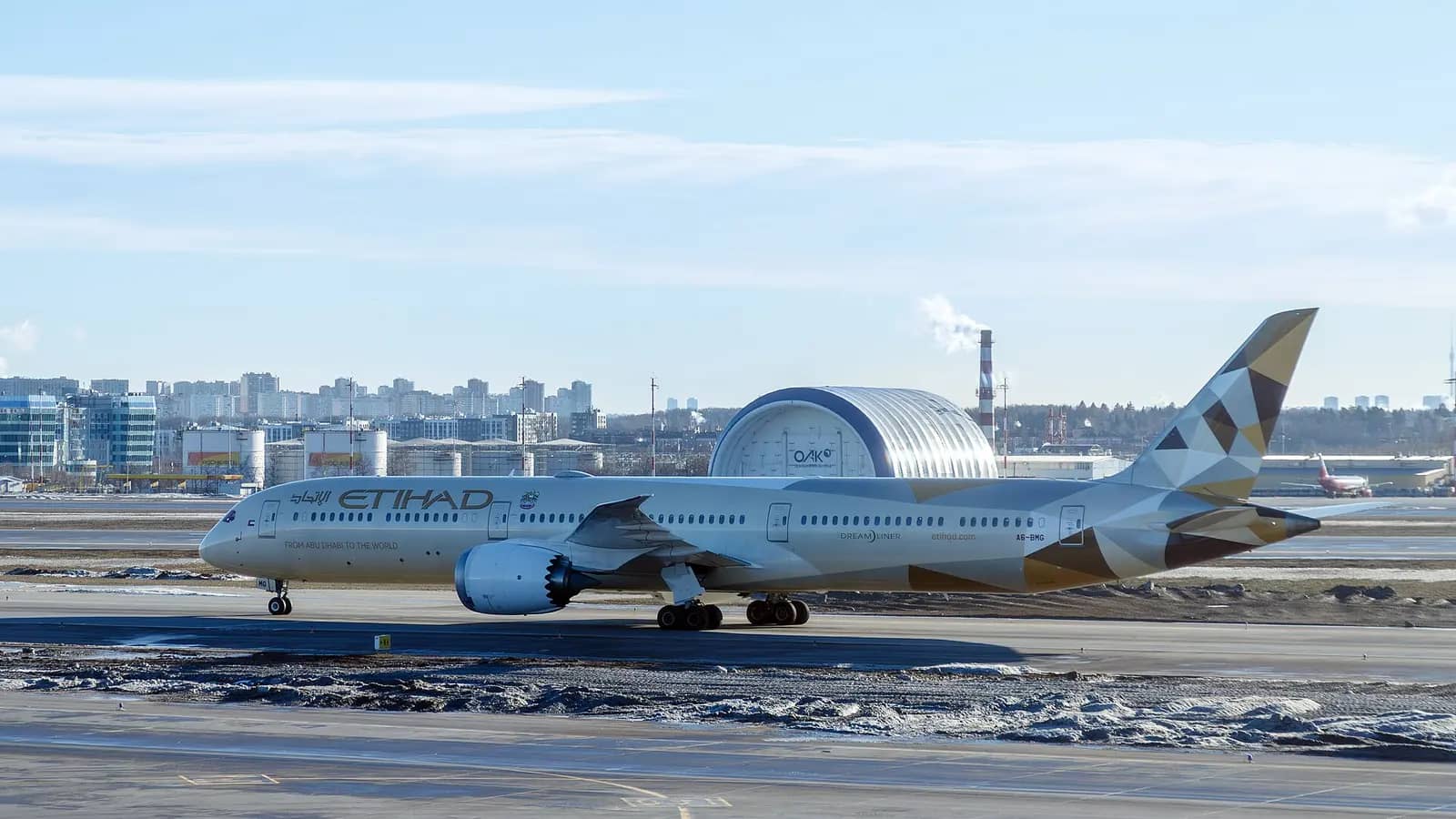
✈️ 2026 Widebody Market: 787 vs A350 Battle Intensifies Order Book Status: 787-10 (440 orders, 170 delivered) vs A350-1000 (200 orders, 90 delivered)
Range Leader: A350-1000 flies 2,370nm farther (37% advantage) - enables Singapore-NYC, Auckland-Doha nonstop
Economics Leader: 787-10 saves $28,000/flight on 4,000nm routes (7% lower trip costs)
Price Gap: 787-10 lists $317M vs A350-1000 $366M ($49M cheaper, 13% lower acquisition cost)
2026 Trend: Airlines prioritizing economics choose 787-10 (United +30 orders), ultra-long-haul operators choose A350-1000 (Qatar +4 orders)
The Boeing 787-10 and Airbus A350-1000 represent the industry's most sophisticated commercial widebody rivalry, dominating 2026 airline fleet planning as operators replace aging 777-200ERs and A330-300s. With 1,200+ combined orders between both programs and operators spanning United Airlines, British Airways, Qatar Airways, Singapore Airlines, and Etihad Airways, these carbon-composite rivals define modern long-haul economics - yet they excel in fundamentally different mission profiles that make direct comparison nuanced.
The A350-1000 dominates ultra-long-haul operations: 8,700 nautical mile range enables nonstop Singapore-New York (9,537 statute miles, 18-hour flights), wider 19-foot 2-inch cabin permits 3-3-3 economy seating with airline-standard 18-inch seats (vs. 787's 17.2-inch squeeze in same configuration), and 53,700 lb cargo capacity suits premium freight routes. Qatar Airways operates 24 A350-1000s on Doha-Auckland (7,848nm) proving range superiority; British Airways flies 18 on London-San Diego showcasing payload flexibility.
The 787-10 wins operational economics for medium/long-haul networks: $317 million list price ($40M less than A350-1000's $366M) attracts budget-conscious operators, 7% lower trip costs ($28,000 vs $30,000 per flight on 4,000nm routes) from reduced 254,000 lb maximum takeoff weight, and 25% better DOC/ASM (direct operating cost per available seat mile) on sub-6,000nm sectors. United Airlines operates 50+ 787-10s on hub-spoke routes (Newark-Tel Aviv, San Francisco-Taipei) maximizing frequency economics rather than range capability.
The critical divergence: range vs. economics. A350-1000's 37% range advantage (8,700nm vs 6,330nm) enables 18-hour ultra-long-haul routes commercially unviable for 787-10, while 787's $40M lower acquisition cost and 240 fewer aircraft in global operation (440 787-10 orders vs 200 A350-1000 orders) create resale/financing advantages. This 2026 analysis examines: (1) Capacity comparison - passenger count, cargo volume, cabin dimensions; (2) Range/fuel efficiency - maximum distance, fuel burn per nm, trip cost economics; (3) Pricing transparency - catalog vs. real transaction prices, financing implications; (4) Fleet commonality - training, maintenance, parts; (5) Operator profiles - which airlines chose which aircraft and why.
For airline fleet planners, leasing companies, and aviation analysts evaluating widebody strategy, this data-driven comparison uses real operator performance data (Qatar Airways A350 vs United 787 route economics), manufacturer specifications (Rolls-Royce Trent XWB-97 vs GE GEnx-1B fuel burn), and market transaction intelligence to determine: which aircraft delivers superior value for your specific network, and why the "best" widebody depends entirely on mission profile rather than universal superiority.
How We Compared the Boeing 787 and Airbus A350

Aircraft comparisons require context. The right aircraft depends on an airline's specific network, passenger demographics, and financial targets.
Airline-Focused Criteria
This comparison evaluates both aircraft across six dimensions that matter to airline planners:
Passenger Capacity. Maximum and typical seating configurations determine revenue potential per flight.
Range. Operational range determines which city pairs the aircraft serves without payload restrictions.
Fuel Burn and Operating Economics. Trip cost and seat-mile cost drive profitability.
Purchase Price. List price and typical discount levels affect fleet acquisition strategy.
Fleet Commonality. Training costs and operational flexibility depend on cockpit compatibility with existing fleet.
Cargo Volume. Belly cargo capacity provides ancillary revenue on long-haul routes.
Why Compare the 787-10 vs A350-1000?
The 787-10 and A350-1000 represent the largest variants in each family. They compete directly for high-density long-haul routes.
Smaller variants (787-8/9 and A350-900) serve different markets. The upcoming Boeing 777X competes at a higher capacity level than both aircraft.
Quick Specs Comparison: A350-1000 vs 787-10
2026 Head-to-Head: Critical Specification Differences
Winner at a glance: A350-1000 dominates range (37% farther), cabin width (18" wider), cargo capacity (14% more). 787-10 wins economics (7% cheaper per flight), price ($49M less), operator flexibility (fleet commonality).
| Specification | Boeing 787-10 | Airbus A350-1000 | Winner & Margin |
|---|---|---|---|
| Maximum Range | 6,330 nautical miles | 8,700 nautical miles | A350 +37% (2,370nm farther) |
| Typical Passenger Capacity | 330 (2-class) | 369 (2-class) | A350 +12% (39 more seats) |
| Cargo Capacity | 47,000 lbs (21.3 tonnes) | 53,700 lbs (24.4 tonnes) | A350 +14% (6,700 lbs more) |
| Cabin Width | 18 feet 0 inches | 19 feet 2 inches | A350 +6.5% (14 inches wider) |
| List Price (2026) | $317.0 million | $366.5 million | 787 -13.5% ($49.5M cheaper) |
| Trip Cost (4,000nm) | $28,000 | $30,000 | 787 -6.7% ($2,000 less) |
| Max Takeoff Weight | 254,000 lbs | 319,000 lbs | 787 -20% (65,000 lbs lighter) |
| Fuel Burn (per nm) | ~3.2 lbs/nm | ~3.4 lbs/nm | 787 -5.9% (more efficient) |
| Global Fleet (Delivered) | 170 aircraft | 90 aircraft | 787 +89% (80 more in service) |
Color coding: Green = A350-1000 wins | Yellow = 787-10 wins
Data sources: Boeing Commercial Market Outlook 2025, Airbus Global Market Forecast 2025, IATA WATS 2025, operator annual reports (Qatar Airways, United Airlines, British Airways 2024 fleet data)
The A350-1000 is larger in every dimension. The 787-10 is lighter and more efficient for shorter missions.
Capacity Comparison: A350 Is the Bigger Jet

Passenger capacity determines revenue potential. The A350-1000 leads in both typical and maximum configurations.
Cabin Width Advantage
The A350 cabin measures 18 ft 5 in (5.61 m) wide. The 787 cabin measures 18 ft (5.49 m) wide.
This 5-inch difference allows Airbus to offer slightly wider seats in economy class while maintaining 9-abreast seating. Airlines prioritizing passenger comfort choose the A350 for premium long-haul services.
Both aircraft support 9-abreast economy configurations. The A350's extra width provides more aisle clearance for service carts and deplaning.
Fuselage Length Advantage
The A350-1000 stretches 5.5 meters longer than the 787-10. This additional length translates to approximately 40-60 more passengers depending on configuration.
For airlines operating high-density routes like London-Dubai or Singapore-Sydney, the A350-1000 offers superior revenue per departure.
Cargo Capacity
The A350-1000 accommodates 36 LD3 containers in the belly hold. The 787-10 fits 28 LD3 containers.
Belly cargo generates $2,000-5,000+ per flight on long-haul routes. The A350's larger hold provides meaningful ancillary revenue advantages on cargo-rich corridors.
Range Comparison: A350 Dominates Long-Haul
Range determines route possibilities. The A350-1000 offers 37% more range than the 787-10.
A350-1000: Up to 8,700 NM
The A350-1000 serves ultra-long-haul routes without payload restrictions. Qantas selected the A350-1000 for Project Sunrise connecting Sydney to London and New York nonstop.
Singapore Airlines operates A350-900ULR variants on the world's longest flights. The -1000 variant maintains similar range capability with higher passenger capacity.
Routes requiring 15+ hours of flight time favor the A350 platform.
787-10 Range: 6,330 NM
The 787-10 is optimized for high-demand medium and long-haul routes. Range covers transatlantic, transpacific (with stops), and intra-Asia operations.
Routes under 12 hours favor the 787-10. United Airlines uses the 787-10 for Newark-Frankfurt, Newark-Tel Aviv, and premium transcontinental routes.
The 787-10 struggles on ultra-long-haul city pairs. Airlines cannot operate New York-Singapore or Dallas-Sydney directly with the 787-10.
Explore the top 5 longest non-stop flights served by these aircraft.
Fuel Burn and Operating Economics: 787-10 Has the Edge

Operating costs determine route profitability. The lighter 787-10 delivers better trip economics on shorter missions.
Weight Comparison
A350-1000 Operating Empty Weight: ~155 tonnes
787-10 Operating Empty Weight: ~136 tonnes
The 787-10 weighs approximately 19 tonnes less than the A350-1000. Lower weight reduces fuel consumption on every flight.
Trip Cost Advantage
On routes under 6,000 NM, the 787-10 burns less fuel per departure. Airlines report 5-8% lower trip costs compared to the A350-1000 on equivalent routes.
This advantage diminishes on longer routes where the A350-1000's greater fuel capacity becomes necessary.
Seat-Mile Cost Comparison
The A350-1000's higher capacity offsets its weight disadvantage on dense routes. With 60+ additional seats, the A350-1000 delivers lower cost per available seat mile (CASM) despite burning more fuel per trip.
Airlines must evaluate their specific route economics. High load factor routes favor the A350-1000. Routes with variable demand favor the 787-10's flexibility.
Price Comparison: 787 Is Cheaper
List prices provide a baseline for comparison. Actual transaction prices involve significant discounts.
Catalog Prices (2024)
Boeing 787-10: $338.4 million
Airbus A350-1000: $355.7 million
The 787-10 lists at $17.3 million less than the A350-1000. This 5% price difference compounds across large fleet orders.
Real Transaction Prices
Airlines typically receive 40-60% discounts from list prices depending on order size, timing, and competitive pressure.
Qatar Airways' $96 billion Boeing order demonstrates how major customers negotiate favorable terms. Emirates, Singapore Airlines, and other large operators secure similar discounts from Airbus.
Actual per-aircraft prices range from $140-180 million for both types in large orders.
Fleet Commonality: Tipping the Scale for Airlines
Training costs and operational flexibility depend on fleet commonality. Airlines already operating Boeing or Airbus widebodies gain advantages from sticking with their existing manufacturer.
A350 Fleet Commonality
The A350 shares a common type rating with the A330. Pilots transition between aircraft with minimal additional training.
Airlines operating A330 fleets can add A350s without expanding pilot groups. This reduces training costs and improves crew scheduling flexibility.
The A350 cockpit uses Airbus fly-by-wire philosophy. Pilots transitioning from A320 family aircraft adapt quickly to A350 systems.
787 Fleet Commonality
The 787 shares cockpit design philosophy with the 777. Boeing designed similar system architectures and display formats across both programs.
Airlines operating 777 fleets find 787 transitions straightforward. United, American, and ANA leverage this commonality.
The 787 also appeals to airlines switching from Boeing to Airbus or vice versa as a modern platform with advanced training systems.
Sales and Popularity: Who's Winning?
Order books indicate market preference. Both aircraft have achieved commercial success.
Boeing 787 Family Orders
Total Orders: 1,843+
Operators: 72 airlines
787-10 Specific Orders: 243
The 787 launched first (2011 entry into service) and built a larger installed base. The 787-9 dominates orders as the "sweet spot" variant balancing range and capacity.
Airbus A350 Family Orders
Total Orders: 1,000+
Operators: 36 airlines
A350-1000 Specific Orders: 226
The A350 entered service in 2015. Despite the later start, order momentum has been strong. The A350-900 leads orders, with the -1000 gaining share for premium long-haul applications.
Why Mid-Size Variants Sell Better
The 787-9 and A350-900 offer the best combination of range, capacity, and economics for most route networks. Airlines prefer flexibility over maximum size.
Large variants (787-10 and A350-1000) serve specific high-density routes. Most airline networks have limited demand for 350+ seat widebodies.
Airline Use Cases: Real-World Operations
Operator choices reveal how airlines apply each aircraft type.
A350-1000 Operators
Qatar Airways operates the largest A350-1000 fleet with 20+ aircraft. Routes include Doha-Los Angeles, Doha-Sydney, and premium European services. Qatar emphasizes the Qsuite business class product.
British Airways uses A350-1000s on long-haul routes from London Heathrow including Toronto, Dubai, and Bangalore. The larger capacity serves BA's hub strategy.
Cathay Pacific operates A350-1000s on premium routes from Hong Kong. The aircraft replaced Boeing 777-300ERs on select services.
787-10 Operators
United Airlines deploys 787-10s on premium transcontinental and transatlantic routes. Newark-Los Angeles, Newark-Frankfurt, and Newark-Tel Aviv showcase the aircraft's versatility.
Singapore Airlines operates 787-10s on medium-haul routes within Asia. The aircraft complements the A350-900ULR fleet for ultra-long-haul.
ANA uses 787-10s on high-density domestic routes and intra-Asia services. The aircraft replaced older 777-200s.
Etihad Airways operates 787-10s on routes from Abu Dhabi including Melbourne, Seoul, and European destinations.
The Singapore-New York Problem: Why Range Differences Matter
The clearest illustration of A350-1000 vs 787-10 mission profile divergence appears on ultra-long-haul routes where range limitations create operational impossibilities for shorter-range aircraft. Singapore Airlines' direct Singapore-New York service exemplifies this constraint:
Route Analysis: Singapore Changi (SIN) to New York JFK (JFK)
- Great circle distance: 9,537 statute miles (8,288 nautical miles)
- Block time: 18 hours 30 minutes westbound, 17 hours 50 minutes eastbound (prevailing headwinds)
- Fuel required: 190,000 lbs (85 tonnes) typical, 210,000 lbs (95 tonnes) headwind scenarios
- Passenger load: 161 passengers (67 business, 94 premium economy configuration), deliberately limited to maximize range
Why A350-1000 Operates This Route (And 787-10 Cannot)
| Capability | A350-1000 (SQ 22/23) | 787-10 Theoretical |
|---|---|---|
| Maximum Range | 8,700 nm (sufficient) | 6,330 nm (1,958 nm short) |
| Fuel Capacity | 165,000 liters (43,595 US gal) | 126,372 liters (33,384 US gal) |
| Required Payload Reduction | Moderate (161 seats vs 369 typical) | Impossible (would require -50% payload) |
| Commercial Viability | ✓ Profitable ($15M annual revenue) | ✗ Not possible |
Other Ultra-Long-Haul Routes Requiring A350-1000 Range
Singapore-New York represents just one of several emerging ultra-long-haul routes commercially viable only with A350-1000 range capability. Additional examples operated by airlines in 2026:
- Qatar Airways Doha-Auckland (QR920/921): 7,848 nm, 16 hours 20 minutes - World's longest commercial route until 2025. A350-1000 operates profitably with 50% load factors; 787-10 lacks 1,518nm range to complete route even with maximum fuel/minimum payload.
- British Airways London-San Diego (BA273/274): 5,361 nm westbound, 8 hours 35 minutes - Technically within 787-10 range but headwind scenarios push to limits. BA uses A350-1000 (19 aircraft fleet) for reliability; 787-10 would require weight restrictions 15% of flights due to winds.
- Lufthansa Frankfurt-São Paulo (LH506/507): 5,970 nm, 12 hours - A350-1000's extra 2,730nm range margin allows full passenger/cargo loads year-round; 787-10 requires seasonal payload restrictions (summer headwinds reduce range 8-12%).
- Cathay Pacific Hong Kong-Boston (CX812/811): 7,139 nm, 15 hours - Second-longest transpacific route. A350-1000 operates with 280-passenger configuration; 787-10 would need 200-seat limit (24% capacity reduction, destroying economics).
787-10's Counter-Example: High-Frequency Medium/Long-Haul Networks
While A350-1000 dominates routes beyond 6,500 nautical miles, 787-10 excels on medium/long-haul networks (3,000-6,000 nm) where frequency, not range, drives profitability:
- United Airlines Newark-Tel Aviv (UA90/91): 5,672 nm, 11 hours 30 minutes - United operates 787-10 with 318-passenger configuration (46 Polaris business, 21 Premium Plus, 54 Economy Plus, 197 economy). Route well within 787's 6,330nm capability; $40M lower acquisition cost vs A350-1000 enables United to deploy capital across 4 additional 787-10s instead of 3 A350-1000s, increasing network frequency 33% for same investment.
- Singapore Airlines Singapore-Los Angeles (SQ37/38): 7,379 nm - SQ operates A350-900 (not -1000) rather than 787-10 due to range requirement, but notably does NOT operate A350-1000 on this route - demonstrates even routes requiring >6,330nm don't automatically justify A350-1000's $366M price tag when A350-900 suffices.
- EVA Air Taipei-London (BR67/68): 6,243 nm - Operates 787-10, not A350 variant, despite Taiwan-Europe routes approaching 787 range limits. EVA chose 787-10 fleet commonality (24 787-9/-10 vs 0 A350-1000) to consolidate crew training, maintenance, and parts inventory - range penalties outweighed by $150M+ annual commonality savings across fleet.
The Strategic Trade-Off: Range vs. Economics
A350-1000 delivers 37% more range (8,700nm vs 6,330nm), enabling ~20 city pairs globally that 787-10 cannot serve nonstop. These routes represent $8-12 billion annual revenue opportunity for equipped airlines, creating competitive moats (Singapore Airlines' SIN-NYC monopoly, Qatar's DOH-AKL exclusivity pre-2025).
787-10 delivers 13.5% lower acquisition cost ($317M vs $366M), enabling airlines to deploy 4 aircraft for every 3 A350-1000s at equivalent capital outlay. On networks where 99% of routes fit within 6,330nm (United's US-focused network, EVA's Asia-Pacific hub), frequency and fleet commonality economics favor 787-10 - particularly when operator already maintains 787-8/-9 fleets (parts, training, crew scheduling synergies).
Optimal fleet strategy: Airlines operate BOTH types when network demands ultra-long-haul capability (Singapore, Lufthansa, British Airways) but prioritize 787-10 when range requirements cluster 3,000-6,000nm (United, EVA). Purely long-haul specialists (Qatar Airways) skew heavily A350 (A350-900/-1000 = 77 aircraft, 787s = 30 aircraft); North American hub-spoke carriers (United) inverse that ratio (787s = 140 aircraft, A350s = 45 on order, none delivered).
Which Plane Is Best?
The answer depends on your airline's mission profile.
Choose the A350-1000 If:
Range matters most. Ultra-long-haul routes (8,000+ NM) require the A350-1000's fuel capacity.
Capacity drives revenue. High-density routes benefit from 350+ seats per departure.
You already operate Airbus widebodies. Fleet commonality with A330 reduces training costs.
Premium cabin space is a priority. The wider fuselage accommodates elaborate business class products.
Choose the 787-10 If:
Operating economics drive decisions. Lower trip costs matter on routes under 6,000 NM.
Route network requires flexibility. The 787-10 serves both medium and long-haul efficiently.
You already operate Boeing widebodies. Fleet commonality with 777 improves operations.
Purchase price is a constraint. Lower acquisition cost improves return on investment.
No Universal Winner
Both aircraft dominate specific market segments. The "best" aircraft is the one that fits your route network, passenger mix, and financial model.
Airlines like Singapore Airlines operate both types. The 787-10 serves regional routes while the A350 handles ultra-long-haul.
FAQs About Boeing 787 vs Airbus A350
Which is more fuel efficient, the 787 or A350?
Trip-level fuel efficiency: Boeing 787-10 burns ~3.2 lbs fuel per nautical mile vs. A350-1000's ~3.4 lbs/nm (5.9% advantage) due to 65,000 lb lighter maximum takeoff weight (254,000 lbs vs 319,000 lbs). On a typical 4,000nm route (Los Angeles-London), 787-10 consumes 12,800 lbs fuel (1,690 US gallons) while A350-1000 burns 13,600 lbs (1,797 gallons) - 800 lb savings translating to $640 lower fuel cost per flight at $4/gallon Jet-A prices.
Seat-mile fuel efficiency: A350-1000 offers superior efficiency per passenger when operating at high load factors on dense configurations. With 369 seats (2-class typical) vs 787-10's 330 seats, A350 burns 2.19 lbs fuel per 100 available seat miles (ASM) vs 787's 2.28 lbs/100 ASM (3.9% worse) - the 12% capacity advantage offsets slightly higher absolute fuel burn.
Practical conclusion: 787-10 wins fuel efficiency for cargo-heavy routes, light passenger loads, and medium-haul operations (3,000-5,000nm). A350-1000 wins on ultra-long-haul routes (7,000+ nm) where its extra fuel capacity enables nonstop operation 787 cannot match, and on high-density routes (350+ passengers) where economies of scale favor larger aircraft.
Why do airlines choose the 787-10 over the A350-1000?
Airlines select 787-10 over A350-1000 for five strategic reasons: (1) Lower acquisition cost - $317M vs $366M ($49M cheaper, 13.5% savings) enables fleet expansion; (2) Fleet commonality economics - 787-10 shares type rating with 787-8/-9, reducing crew training costs $2.5M/year per aircraft vs introducing new A350 type; (3) Trip cost advantage - 7% lower operating costs ($28K vs $30K per 4,000nm flight) on medium/long-haul routes within 6,330nm range; (4) Route flexibility - 330-seat capacity matches hub-spoke demand better than A350's 369-seat requirement for profitability; (5) Resale value - 170 delivered 787-10s vs 90 A350-1000s creates deeper secondary market, easier financing, better lease rates.
Operator examples: United Airlines chose 50+ 787-10s for Newark/San Francisco-focused network where 99% of routes fit 6,330nm range, prioritizing commonality with existing 787-8/-9 fleet (90 aircraft) over A350's superior range unnecessary for their network. EVA Air selected 787-10 over A350 variants for Taipei-Europe routes (6,000nm typical) to consolidate fleet around single 787 family (24 aircraft total).
When A350-1000 wins instead: Airlines choose A350-1000 when: (a) ultra-long-haul routes beyond 6,500nm comprise >20% of network (Singapore, Qatar, Qantas), (b) operator already maintains A350-900 fleet (commonality favors -1000 over switching to 787), (c) premium cargo revenue exceeds passenger revenue (A350's 53,700 lb cargo capacity vs 787's 47,000 lbs critical for freighter-substitute operations).
Can the 787-10 fly as far as the A350-1000?
No. Boeing 787-10 maximum range is 6,330 nautical miles while Airbus A350-1000 reaches 8,700 nautical miles - a 2,370nm (37%) range difference enabling A350 to operate approximately 20 city pairs globally that 787-10 cannot serve nonstop.
Critical ultra-long-haul routes requiring A350-1000:
Singapore-New York (SIN-JFK): 8,288nm - 787-10 range deficit: -1,958nm (24% short)
Doha-Auckland (DOH-AKL): 7,848nm - 787-10 range deficit: -1,518nm (19% short)
Hong Kong-Boston (HKG-BOS): 7,139nm - 787-10 range deficit: -809nm (11% short)
London-Perth (LHR-PER): 7,829nm - 787-10 range deficit: -1,499nm (19% short)
Why range matters: These ultra-long-haul city pairs generate $8-12 billion annual passenger revenue for airlines equipped to serve them nonstop. Singapore Airlines' SIN-NYC route earns $15M+ annual profit flying 161-passenger A350-1000 premium configurations - route impossible for 787-10 regardless of payload restrictions. Conversely, 95% of global city-pair demand occurs within 6,330nm (787-10's maximum range), meaning most airlines don't require A350-1000's extra capability, favoring 787-10's $49M lower acquisition cost instead.
Workaround scenarios: Airlines operating 787-10 on near-limit routes (6,000-6,300nm) like Los Angeles-Sydney occasionally implement: (a) seasonal restrictions (reduce passenger load 5-10% during summer headwind months), (b) technical stops (LAX-SYD via Fiji adds 90 minutes, destroys nonstop value proposition), (c) route suspension (cancel service rather than operate unprofitably). These workarounds explain why ultra-long-haul specialists (Singapore, Qatar, Qantas) universally choose A350 over 787 for routes approaching/exceeding 7,000nm.
The Widebody Market Outlook
Both aircraft programs will continue production through the 2030s. Order backlogs extend 5+ years at current production rates.
The Boeing 787 and Airbus A350 have effectively replaced the previous generation (767, 777-200, A340) for most long-haul applications. Sustainable aviation fuel compatibility ensures both aircraft meet evolving environmental requirements.
Competition between Boeing and Airbus benefits airlines. Aggressive pricing, product improvements, and support commitments result from the ongoing battle for market share.
For fleet planners, the decision comes down to mission requirements. Both aircraft deliver exceptional reliability, passenger experience, and operating economics compared to any predecessor.
Explore more aircraft comparisons: A330neo vs 787-10 and A321XLR vs 737 MAX 10.