Flight Schools in Europe to Compare, by Country (2026)
There is no official ranking of flight schools in Europe. A country-by-country list of schools to compare, with the courses each states, and a practical guide to EASA approval and integrated versus modular training.
 Radu BalasFounder, The Flying EngineerPublished Updated 11 min read
There is no official ranking of flight schools in Europe, and this guide does not invent one. What exists is a set of approved training organisations, most of them certified under EASA rules, that differ in what they teach (private licence only, or the full route to an airline job), how they teach it (integrated or modular), where they fly and what they charge. The right school depends on which of those matter to you.
Below are flight schools in Europe to compare, country by country, from our directory. For each we give its base and, where the school states it, the courses it runs. We have not ranked them or said which is best. Use the list to build a shortlist, then check each school's current approval, fleet and price list directly. The last section explains the terms and what to ask before you sign.
A note on the United Kingdom: since 2021 UK schools train for UK CAA licences, not EASA licences. Check which licence a UK school issues before enrolling, because converting later takes extra exams.
Flight schools in Europe by country
Spain
Spain is a common base for airline-focused training. FTE Jerez (Jerez airport, Andalusia) specialises in ab initio ATPL training and airline cadet programmes, with an integrated EASA ATPL, modular CPL/IR and APS MCC, and an A320 type rating. EAS Barcelona (Sabadell) is an EASA ATO offering an integrated ATPL from zero and modular PPL, ATPL theory, CPL, MEP, IR, APS MCC and jet orientation courses. Aerolink Flight Academy (Sabadell) runs an EASA ATPL airline pilot course and a CPL for helicopter pilots. Aeroclub Barcelona Sabadell was founded in 1953 and states a fleet of more than 50 aircraft, with PPL, CPL and ATPL courses.
Around Madrid: Quality Fly (Cuatro Vientos) runs an integrated ATPL with 40 hours of APS MCC in an A320 full flight simulator; FlySchool and FlyUp Academy (Casarrubios) offer PPL, CPL and ATPL routes. Elsewhere: Airpull Aviation Academy (Requena, near Valencia) states its integrated ATPL(A) takes 15 months; Aero Line Academy (Valencia airport) runs both modular and integrated paths; Adventia (Salamanca) combines pilot training with university aeronautical education; FlyBy (University of León) states an integrated course of 14 months; Aerodynamics Academy (Vélez-Málaga) offers integrated and modular ATPL, APS MCC and licence conversions; Fly EPT Spain (Palma de Mallorca) runs modular PPL, CPL preparation and type ratings for ATR, Embraer 170/190 and Boeing 737; Mediterranean Flight School (Reus), Ibertour (Girona), AFN (A Coruña), Real Aeroclub de Málaga and Skyduo (Granada, with FAA and EASA approvals) cover PPL, CPL and IR. See all flight schools in Spain.
United Kingdom
UK training is mostly modular and club-based, with a few larger academies. Airways Aviation (London Oxford Airport) is a group with more than 45 years in aviation education, offering ATPL and CPL programmes. Almat Aviation (Coventry) and South Warwickshire Flying School (Wellesbourne) list PPL, CPL and ATPL training. Multiflight (Leeds Bradford), Westair (Blackpool), St George Flight Training and Cleveland Flying School (Teesside), Norwich School of Flying, Willowair (Southend), Mid-Anglia School of Flying (Cambridge), Enstone Flying Club (Oxfordshire), Surrey and Kent Flying Club (Biggin Hill, since 1959), Harvard Aviation and Cubair (Redhill), The Pilot Centre (Denham), Flynqy (Newquay), Exeter Flying Club, Edinburgh Flying Club and Scottish Aero Club (Perth) offer PPL and, in most cases, CPL and instrument training. For helicopters, Elite Helicopters (Goodwood) trains from LAPL(H) to CPL(H), Helicopter Services (White Waltham) from PPL(H) to instructor ratings, and Elstree Helicopters teaches PPL(H) on Robinson and Cabri types. See all flight schools in the United Kingdom.
Greece
Most Greek schools are clustered around Athens and Megara. Global Aviation (Megara, founded 1997) runs integrated and modular ATPL, IR, MEP and MCC. Flyence Aviation Academy (Athens) offers modular, integrated, instructor and type rating courses, licence conversions and MCC. Ionian Aviation (Metamorfosi, Athens) runs integrated and modular ATPL. Skies Aviation Academy (Thessaloniki) offers integrated and modular ATPL, CPL, MCC and type ratings. TAE Aviation Academy (Megara) lists ATPL(A) and type rating courses, FAS Pilot Academy (Megara) includes an A320 type rating, and F.A.S. Rhodos Pilots Academy (Rhodes) runs an integrated ATPL. Cretan Eagle Aviation (Heraklion, since 2002) and Aeroclub Makedonia (Thessaloniki) cover PPL and CPL. See all flight schools in Greece.
Germany
Pilot Training Network (Frankfurt) is the Lufthansa Group's training organisation, with modular courses, simulator training and MCC. RWL German Flight Academy (Mönchengladbach, since 1972) runs integrated and modular ATPL, MCC, jet orientation and type rating courses. MFA Munich Flight Academy lists ATPL, CPL, IR and MEP. Cockpit4u and SKY4u (Berlin) focus on MCC, jet orientation and airline crew training. Cranfield Aviation Training School Deutschland (Dortmund) teaches ATPL and CPL ground school. Motorflugschule Egelsbach (near Frankfurt) offers modular PPL and CPL with an FNPT II simulator; KeepMeFlying (Essen-Mülheim) and Flugschule Alfred Robisch (Landshut) cover PPL, LAPL and ratings. See all flight schools in Germany.
France
Astonfly (Toussus-le-Noble, near Paris) trains airline pilots only: a 24-month integrated ATP course taught in English, with four intakes a year, and it is Ryanair's partner school in France. ENAC (Muret, near Toulouse) is the French civil aviation university's flight training centre, with its EPL airline pilot programme. Institut Aéronautique Jean Mermoz (Rungis) is best known for ATPL theory and its textbooks. ESMA Aviation Academy (Montpellier) offers type ratings for Airbus and ATR as well as maintenance training. EPAG NG (Merville) trains future airline pilots in northern France. Glass Cockpit Aviation Europe (Cannes) lists PPL, CPL and ATP. For helicopters at Toussus-le-Noble, Hégé Hélicoptère trains PPL(H), CPL(H) and ATPL(H) and Paris Hélicoptère PPL(H) and CPL(H) on Robinson R22 and R44. See all flight schools in France.
Netherlands, Belgium and Luxembourg
KLM Flight Academy (Groningen Eelde) runs an integrated ATPL with theory at Eelde, a flying phase in the United States and simulator training back in the Netherlands. Dutch Aviation College (Lelystad) is approved for e-learning ATPL, CPL and IR theory. Executive Flight Academy (Eindhoven) lists CPL and ATPL, and Orbit Groundschool (Arnhem) teaches ATPL, CPL and IR theory.
In Belgium, three schools share Brussels South Charleroi airport: Brussels Aviation School, Belgian Flight School (PPL to ATPL) and New CAG (founded 1976, PPL to ATPL). Ben Air Flight Academy (Antwerp) covers ATPL, IR, multi-engine, MCC and instructor courses. Hub Air Aviation Academy (Brussels) runs ab initio airline pilot training. DL-Aviation (Gosselies) adds MCC and A320 jet orientation on an FNPT II. See all flight schools in the Netherlands and in Belgium.
Scandinavia and Finland
Sweden has an unusually deep list. Lund University School of Aviation (Ljungbyhed) is a university programme for airline transport pilots with distance-learning theory and MCC/CRM courses. OSM Aviation Academy (Västerås) runs an integrated First Officer Program. South Sweden Flight Academy (Malmö) offers a two-year "Zero to MCC" airline pilot programme plus PPL and ATPL theory. Svensk Pilotutbildning (Gothenburg City Airport) runs a professional pilot programme. Alpha Aviation Academy (Trollhättan, founded 2020) does modular CPL/IR/ME on multi-engine aircraft for PPL holders. Sweden International Flight Academy (Eslöv) offers modular training, MCC and Boeing 737 type ratings. Diamond Flight Academy (Kalmar), Stoflight (Västerås), Airways Flygutbildning (Västerås) and Kungsair Training (Norrköping) run modular PPL, CPL and IR courses.
In Denmark, Center Air Pilot Academy (Roskilde) runs a CPL/ATP integrated course and APS MCC on a Tecnam fleet built in 2022 or later, and Phoenix Flight Academy (Roskilde) is modular. In Norway, Luftfartsskolen (Oslo, since 1972) and the flying clubs at Kjeller, Gardermoen and Stavanger offer PPL and CPL. In Finland, Patria Pilot Training (Pirkkala, Tampere) offers an integrated ATP and an MPL programme built around the A320. Iceland has Keilir Aviation Academy (Keflavík), The Icelandic Flight Academy (Reykjavík) and Akureyri Flight School. See all flight schools in Sweden, Denmark, Norway and Finland.
Poland, Czech Republic, Hungary and Slovakia
In Poland, LOT Flight Academy (Warsaw) is linked to LOT Polish Airlines and runs modular ATPL training on new Tecnam aircraft; Bartolini Air (Łódź) offers ab initio and modular courses and is a Ryanair Future Flyer Academy partner; FTO FLY Polska and Royal Star Aero (Mielec, since 1995) cover PPL to ATPL; Aero Club of Warsaw adds a Cessna 208 Caravan type rating.
In the Czech Republic, F AIR (Benešov, founded 1990) states a fleet of more than 40 aircraft and cadet programmes for airlines; Flying Academy (Brno) and CATC (Prague airport) run PPL, CPL, ATPL and type rating courses; Helicopters Prague trains PPL(H) and CPL(H).
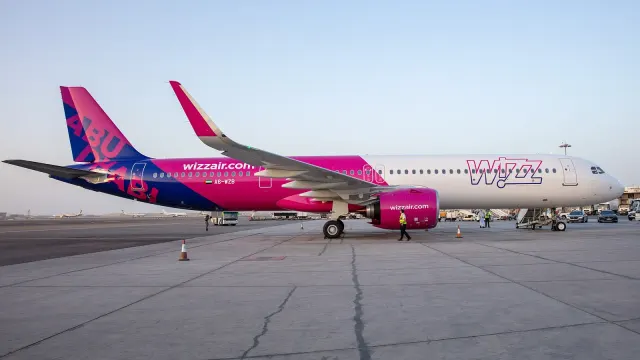
In Hungary, Tréner Flight Academy (Nyíregyháza) runs the Wizz Air Pilot Academy, a self-sponsored integrated ATPL, university pilot degrees and modular courses; CAVOK Aviation Training (Gödöllő) runs integrated and modular ATPL programmes; Hungaro Aviation (Szeged) trains from PPL to frozen ATPL; Simnest (Budapest) specialises in APS MCC and jet orientation.
In Slovakia, Technical University of Košice and University of Žilina combine degrees with pilot training, and Seagle Air (Trenčín), AeroJOB and SNA Letecká škola (Košice) run PPL, CPL and type ratings. See all flight schools in Poland, Czech Republic, Hungary and Slovakia.
Italy, Switzerland, Austria and Portugal
Italy: Aviomar (Rome Urbe) runs an integrated ATPL(A), instructor and type rating courses; European Aviation Academy (Fiumicino) offers a frozen ATPL pathway, distance-learning theory, MCC and A320 and 737 type rating renewals; FTO Padova runs CPL/IR ME and frozen ATPL on Garmin-equipped aircraft and Accademia del Volo (Perugia) cover PPL, CPL and ATPL.
Switzerland: Horizon Swiss Flight Academy (Kloten, Zurich) runs ATPL training; EFOS Flight (Kloten) and Air-Espace (Neuchâtel) run PPL, CPL, IR and MCC; Flugschule Grenchen (since 2000) trains PPL, CPL and IR; Aviatis (St. Gallen) adds PA-46 and TBM type ratings; Lufthansa Aviation Training Switzerland (Zurich) does type ratings and simulator training. Swiss schools train for both Swiss and EASA licences.
Austria: Sky Flight Academy (Krems, since 2009) runs integrated and modular courses, JW Flighttraining Graz lists PPL to ATPL, and P&B Helitrade (Kilb) trains helicopter pilots on Robinsons. Portugal: Gestair Flying Academy (Cascais) runs ATPL, CPL and PPL courses; Nortávia (Porto) offers ATPL(A) programmes with Cirrus SR20 G7 and Tecnam P2006T aircraft. See all flight schools in Italy, Switzerland, Austria and Portugal.
Ireland, Malta, Cyprus and the rest of Europe
Atlantic Flight Training Academy (Cork) runs integrated and modular training and is a Ryanair partner school. In Malta, European Pilot Academy, Malta School of Flying (since 2004, with an Alsim ALX simulator) and Diamond Flight Training Malta all fly from Malta International Airport. In Cyprus, Aviator Flight Center (Larnaca) trains from PPL to frozen ATPL with instructor and MCC courses; Dento Aviation (Larnaca) adds integrated and modular ATPL, Airbus and Boeing type ratings and examiner courses; Royal Flight Center and Nicosia Aeroclub (since 1996) cover PPL, CPL and IR.
Further east and south: Aviation Career Center (Maribor, Slovenia) runs an EASA integrated programme of about 18 to 24 months and an A320 cadet programme; HZNS (Zagreb, Croatia) runs an integrated ATP(A) that can be combined with a university aeronautics degree; Vazduhoplovna Akademija Beograd (Vršac, Serbia) runs an integrated ATPL(A); ALB Aviation Training (Oradea, Romania) and Sofia Flight Training (Bulgaria) cover training and type ratings; and ATO Pilotų Mokykla (Vilnius, Lithuania) trains airline transport pilots. In Turkey, AFA Atlantic Flight Academy (Istanbul, founded 2011) trains to EASA Part-FCL standards with an integrated ATPL(A); AYJET (Istanbul) runs integrated and modular ATPL and an MPL. See every school in our flight school category.
How to compare flight schools in Europe
Check the approval first
A school that trains for professional licences in the EU must be an Approved Training Organisation (ATO) certified by a national aviation authority under EASA Part-FCL rules. Ask for the ATO certificate number and check it with the authority (AESA in Spain, DGAC in France, LBA in Germany, ENAC in Italy, ULC in Poland and so on). Schools that only train for the PPL and LAPL may operate as Declared Training Organisations (DTO), which is fine for a private licence but not for a CPL or ATPL. UK schools are approved by the UK CAA and issue UK licences; Swiss schools by FOCA, whose licences are EASA-recognised; Turkish schools by the Turkish DGCA, some with EASA approval as well, so confirm which licence you will leave with.
Integrated or modular
The integrated ATPL(A) course takes you from zero to a "frozen ATPL" (a CPL with instrument rating, multi-engine rating, MCC and ATPL theory exams passed) in one continuous, full-time programme at a single school, normally 18 to 24 months, with a minimum of 195 flight hours. The ATPL itself is issued later, after 1,500 hours of flying with an airline. The modular route covers the same licences and ratings as separate courses (PPL, hour building, ATPL theory, CPL, IR, MEP, MCC), which can be taken at different schools and at your own pace; the CPL requires 200 hours of total flight time. Integrated courses are usually faster and are the route most airline cadet programmes use; modular is usually cheaper and lets you stop and work between stages. Neither produces a better pilot by itself.
What it costs
Prices vary widely by school and country, and schools change them often, so only a current written quote counts. Ask what the quoted price includes: landing fees, exam fees, accommodation, re-flights if you fail a test, type rating, and what happens to your money if the school closes. For ranges by country see our guide to pilot training costs by country.
Other things to ask
- Fleet and simulators: how many aircraft, how old, how many students per aircraft, and whether there is a multi-engine aircraft and an FNPT II or full flight simulator on site for the IR and MCC.
- Weather and location: Mediterranean schools generally lose fewer days to weather; northern schools teach you to fly in it.
- Airline links: some schools run cadet programmes with airlines. Ask what the offer is conditional on and what you pay if you do not get through.
- Language and class size: English is the working language of most integrated courses, and the ICAO English level 4 or higher is required for the licence.
- Medical: get an EASA Class 1 medical before you pay anything. It is the one requirement no school can get around.
- Graduates: ask to speak to recent students and ask where they are now.
Questions people ask
Can non-EU citizens train in Europe?
Yes. Most ATOs accept international students; you will need a student visa for a course longer than 90 days and an EASA Class 1 medical from an EASA-approved examiner. An EASA licence is widely accepted by airlines outside Europe, though conversion rules differ by country.
Is a UK licence valid in Europe?
Not automatically. Since January 2021 UK CAA licences and EASA licences are separate systems. Each can be converted to the other, but conversion means extra exams and checks, so choose the licence that matches the airlines you want to work for.
Schools on this list can claim and update their page. If you run a school in Europe and it is missing, add it. Our wider guide covers aviation schools around the world.
About the author
Radu Balas
Founder, Flying Engineer
View author profile Editorial policy and correctionsExplore Flight Schools in Europe
Browse 476 companiesCompare flight schools
Tell us what you want to learn and where, and we will pass it to suitable schools.