Antonov An-225 Mriya: The Story of the World's Largest Aircraft
 Radu BalasFounder, The Flying EngineerPublished Updated 10 min read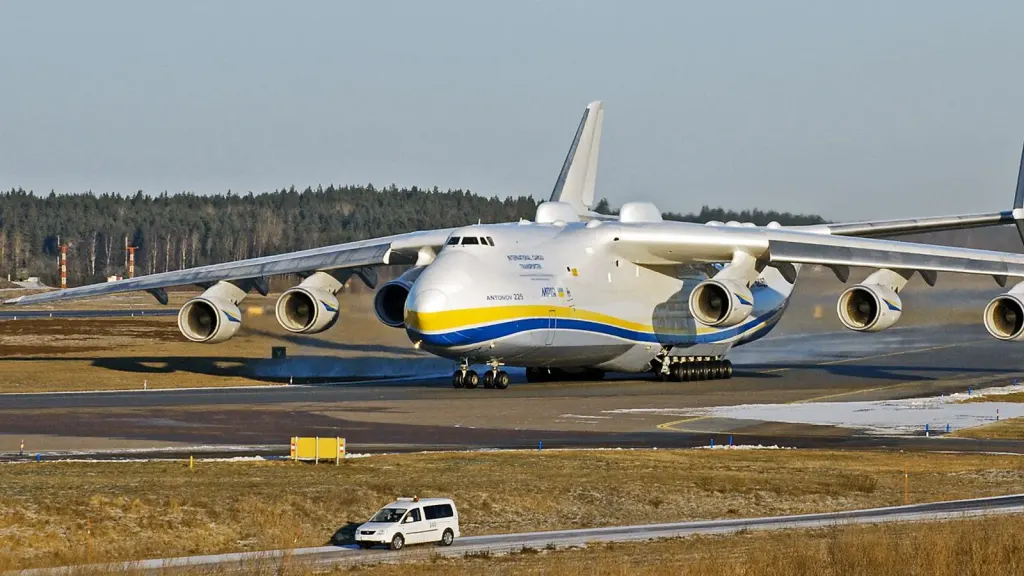
Only one was ever built. Only one ever flew. For decades, the Antonov An-225 Mriya stood alone as the largest aircraft to ever take to the skies.
Then, in February 2022, the world watched as this aviation icon disappeared in the flames of war. The aircraft that carried space shuttles, disaster relief supplies, and humanity's heaviest cargo was gone.
This is the story of Mriya - the dream that flew.
Why the An-225 Was Built
The An-225 wasn't designed to carry passengers or packages. It was built for one specific mission: transporting the Soviet Buran space shuttle.
In the 1980s, the Soviet Union competed with America's Space Shuttle program. They needed an aircraft capable of carrying the massive Buran orbiter between facilities and to the launch site.
From An-124 to An-225
Antonov already built the An-124 Ruslan - then the world's largest cargo aircraft. But even that giant couldn't carry the Buran on its back.
Engineers took an An-124 and made it dramatically bigger. They stretched the fuselage, added two more engines, extended the wingspan, and removed the rear cargo door to accommodate shuttle mounting.
The result flew for the first time on December 21, 1988. NATO gave it the reporting name "Cossack." The Soviets called it Mriya - Ukrainian for "dream."
The Buran Program
The An-225 successfully carried Buran on piggyback flights multiple times. The sight of a space shuttle riding atop the world's largest aircraft captured imaginations globally.
But the Soviet Union collapsed in 1991. The Buran program died with it. The An-225 suddenly had no purpose.
Just How Big Was the An-225?
Numbers barely capture the An-225's overwhelming scale. This aircraft dwarfed everything around it.
| Specification | Measurement | Context |
|---|---|---|
| Wingspan | 88.4 meters (290 feet) | Wider than a football field |
| Length | 84 meters (275.6 feet) | Nearly as long as wingspan |
| Height | 18.1 meters (59.3 feet) | Six-story building |
| Maximum Takeoff Weight | 640 tonnes (1.41M lbs) | Heaviest ever flown |
| Cargo Capacity | 250 tonnes (551,000 lbs) | 50+ cars inside |
| Cargo Hold Length | 43.32 meters (142 feet) | Longer than Boeing 737 |
| Engines | Six × Ivchenko Progress D-18T | 51,600 lbf thrust each |
| Landing Gear Wheels | 32 wheels total | Spreads massive weight |
Note: The 640-tonne maximum takeoff weight (highlighted in gold) represents the heaviest aircraft ever to fly. No other aircraft has matched this record. Swipe left to see full table on mobile devices.
The Six-Engine Giant
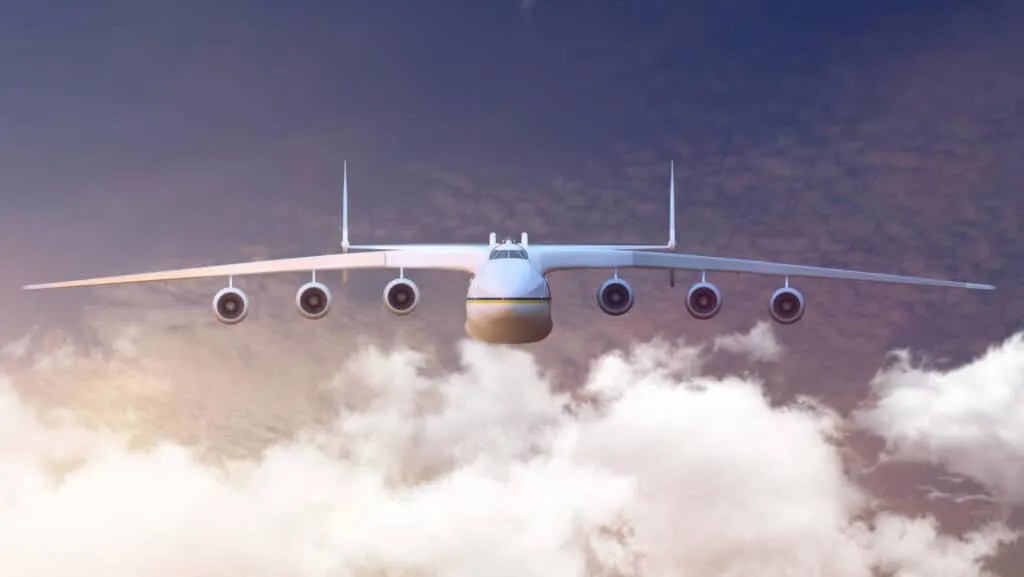
Most large cargo aircraft use four engines. The An-225 needed six.
Each Ivchenko Progress D-18T turbofan engine generated 51,600 pounds of thrust. Together, the six engines produced over 309,000 pounds of combined thrust - essential for lifting 640 tonnes.
Why Six Engines?
The math was simple: the An-225's weight exceeded what four engines could lift. Even massive engines couldn't generate enough thrust.
Six engines also provided redundancy and safety. The aircraft could theoretically continue flying with one or even two engines failed, though landing weight would need reduction.
The engine arrangement - three under each wing - created the An-225's distinctive profile. No other aircraft looked quite like it.
What Made the An-225 Unique
Beyond pure size, the An-225 featured engineering solutions found nowhere else in aviation.
32-Wheel Landing Gear
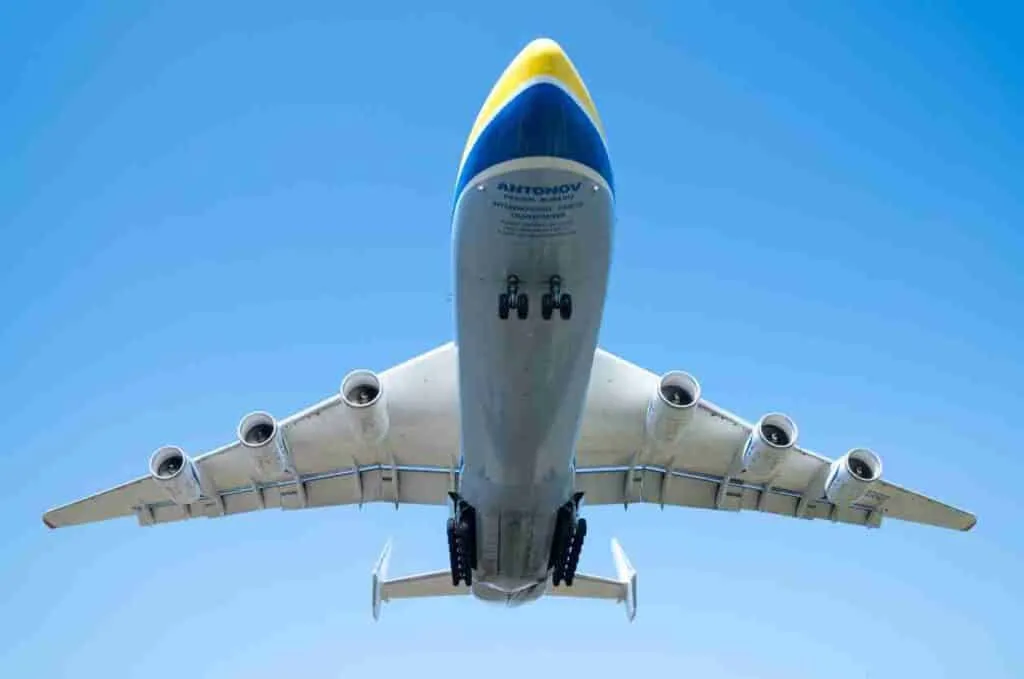
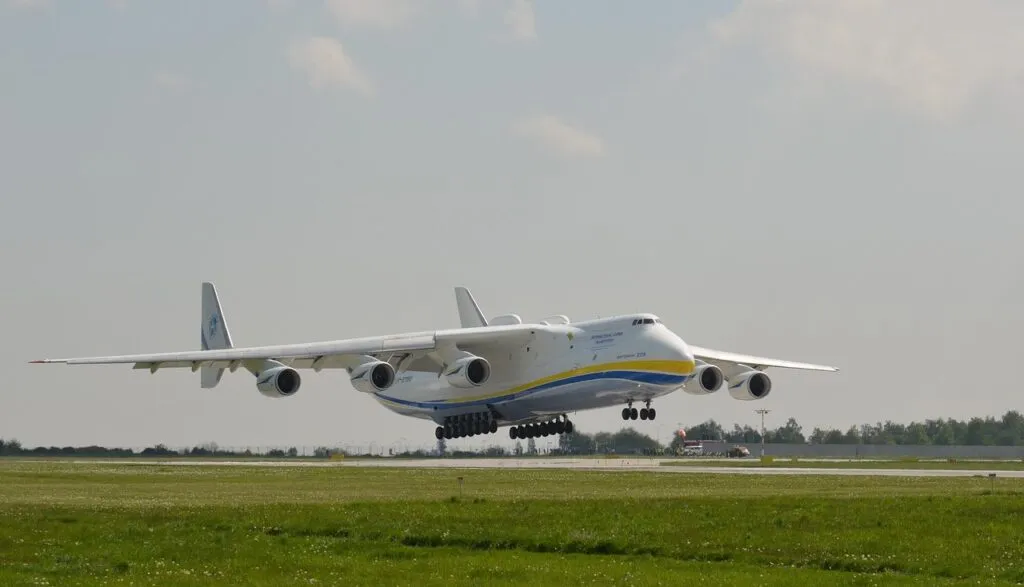
The An-225's landing gear featured 32 wheels total - 28 on the main gear and 4 on the nose gear. This distributed the aircraft's enormous weight across runways.
Without this many wheels, the An-225 would have crushed most runways. The weight per wheel stayed manageable despite total mass exceeding 640 tonnes.
Twin Vertical Stabilizers
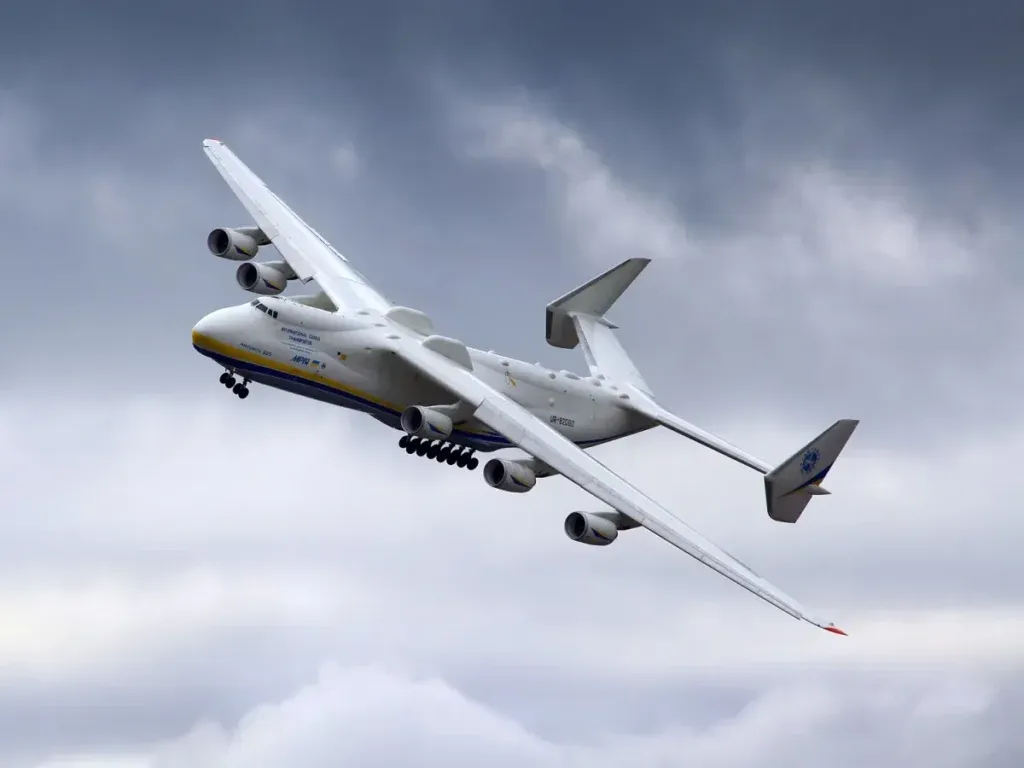
The An-225 had two vertical tails instead of one. This configuration created space between them for carrying cargo on top of the fuselage.
The Buran shuttle sat precisely in that gap between tails. The twin tail design also improved stability with massive external loads.
Nose Cargo Door
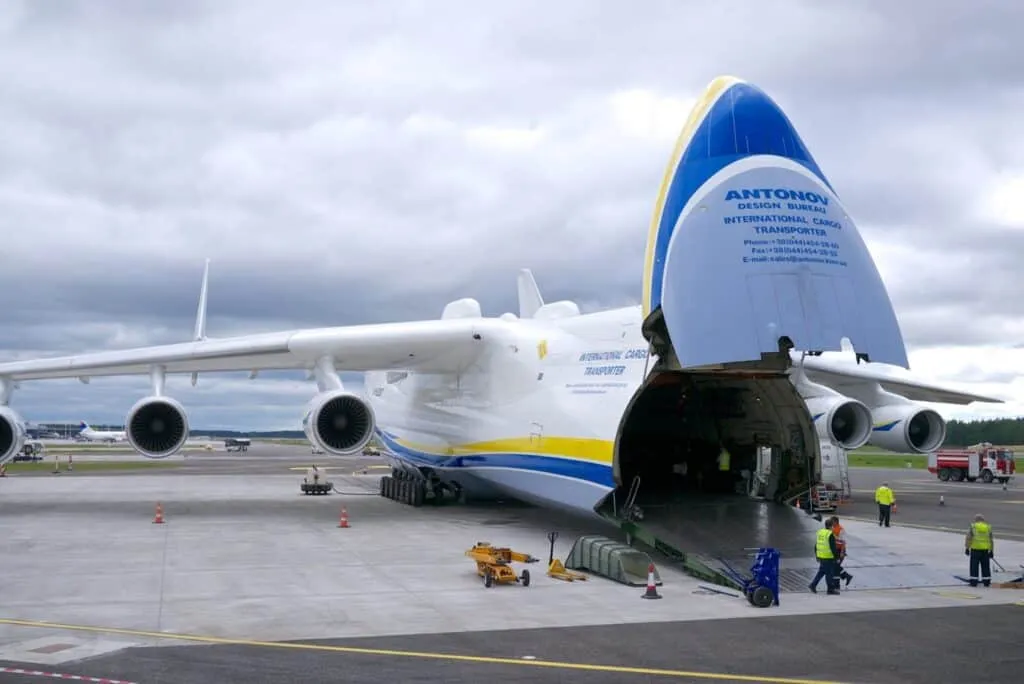
The nose lifted upward to allow straight-in loading of cargo. Items up to 43 meters long could slide directly into the cargo hold without bending or disassembly.
This feature made the An-225 invaluable for oversized cargo - turbines, generators, industrial equipment, and even other aircraft components.
Cargo Hold Dimensions
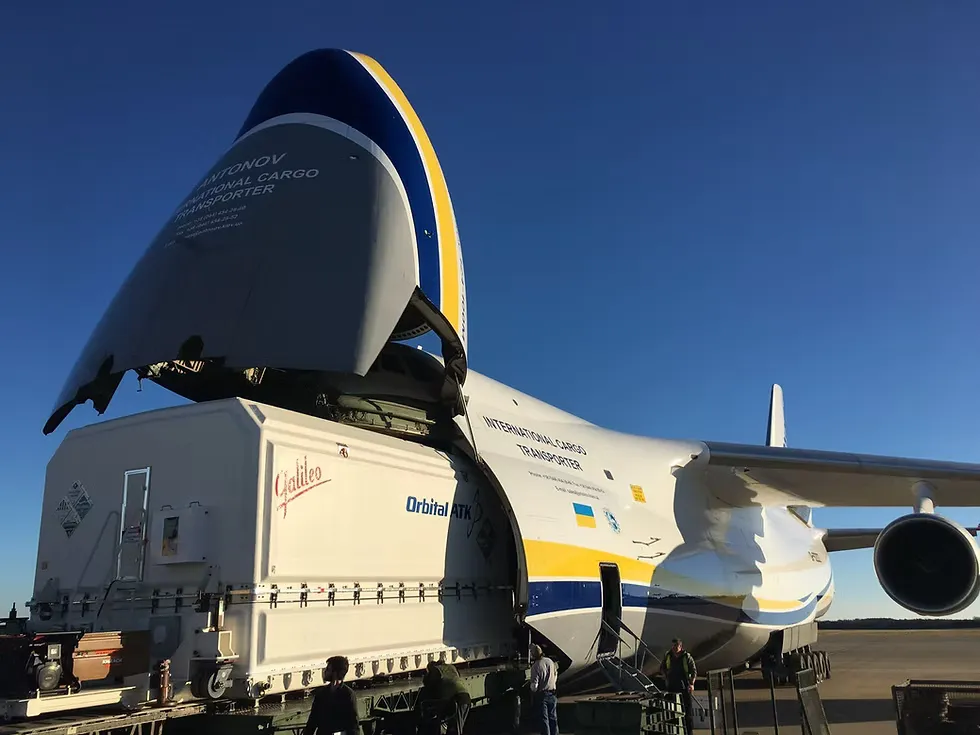
The cargo hold measured 43.32 meters long, 6.4 meters wide, and 4.4 meters high. You could fit multiple Boeing 737 fuselages inside.
Antonov equipped the hold with specialized loading equipment including cranes and winches capable of positioning 250-tonne loads precisely.
The Records It Broke
The An-225 didn't just set records - it shattered them. Many still stand today.
Heaviest Aircraft Ever Flown
On June 21, 2001, the An-225 took off weighing 253.82 tonnes of cargo plus fuel and aircraft weight, totaling over 600 tonnes. No aircraft before or since has matched this.
Longest Single Piece of Cargo
The An-225 carried a 42.1-meter wind turbine blade - the longest single cargo item ever transported by air. The blade fit lengthwise through the nose cargo door.
Most Powerful Commercial Aircraft
With 309,600 pounds of combined thrust, the An-225 generated more power than any other non-military cargo aircraft. This thrust-to-weight ratio enabled its record-breaking lifts.
Widest Wingspan in Operational Service
The 88.4-meter wingspan exceeded every operational aircraft. Only experimental aircraft like the Hughes H-4 Hercules (97.5m) had wider spans, but never entered regular service.
An-225 vs A380 vs 747: Size Comparison
How did the An-225 compare to other aviation giants? The numbers tell the story.
| Aircraft | Wingspan | Length | Max Takeoff Weight | Primary Purpose |
|---|---|---|---|---|
| An-225 Mriya | 88.4m (290 ft) | 84m (275.6 ft) | 640 tonnes | Heavy cargo |
| Airbus A380 | 79.75m (261.7 ft) | 72.7m (238.6 ft) | 575 tonnes | Passenger (853 max) |
| Boeing 747-8F | 68.4m (224.4 ft) | 76.3m (250.2 ft) | 448 tonnes | Cargo freighter |
Note: The An-225's wingspan exceeded the A380 by 8.65 meters and the 747 by 20 meters. Its maximum takeoff weight surpassed both competitors significantly (highlighted in gold). Swipe left to see full table on mobile devices.
The An-225 beat the A380 in wingspan and weight. The A380 was longer overall. The 747, while iconic, couldn't match either in size.
But size comparisons miss the point. The A380 carried passengers. The An-225 carried cargo no other aircraft could handle. Different missions entirely.
How the An-225 Served the World
After the Buran program ended, Antonov converted Mriya into a commercial cargo carrier. The aircraft found new purpose.
Commercial Cargo Operations
Antonov Airlines operated the An-225 commercially from 2001 onward. The aircraft flew missions worldwide carrying oversized cargo. Antonov Company managed the aircraft as its flagship asset.
Power plant generators, oil field equipment, aircraft engines, military vehicles - if it was too large for normal cargo planes, Mriya carried it. Understanding specialized cargo operations explains the An-225's commercial value.
Humanitarian Missions
The An-225 delivered disaster relief supplies globally. After earthquakes, hurricanes, and emergencies, Mriya carried medical equipment, emergency shelters, and rescue vehicles.
In 2020, the An-225 made multiple COVID-19 relief flights carrying millions of medical masks and protective equipment. The aircraft became a symbol of international cooperation.
Record Transport Missions
Mriya carried four battle tanks simultaneously. It transported locomotive cars, industrial turbines, and massive telecommunications equipment.
Each mission proved what the An-225 could do that nothing else could. The aircraft found its purpose serving global logistics needs.
The Destruction of Mriya in 2022
On February 24, 2022, the world changed. So did the An-225's fate.
When conflict erupted, the An-225 sat in Hostomel Airport near Kyiv undergoing maintenance. Antonov pilots attempted to evacuate the aircraft but ran out of time.
Hostomel became a battlefield. The hangar housing Mriya caught fire during fighting. Satellite images showed the facility destroyed.
On February 27, 2022, Antonov confirmed the An-225 was destroyed. Photos showed the aircraft's burned remains - the tail section, engines, and fuselage reduced to wreckage.
The aviation world mourned collectively. This wasn't just an aircraft - it was an irreplaceable piece of aerospace history.
Will the An-225 Be Rebuilt?
Days after the destruction, discussions about rebuilding began. The question remains complex.
The Second Airframe
A second An-225 was partially built in the 1980s but never completed. This airframe - approximately 60-70% finished - sits in storage.
Antonov has stated rebuilding could use this existing airframe as a starting point. This would save years compared to building from scratch.
The Cost Challenge
Estimates suggest rebuilding would cost $500 million to $3 billion depending on approach. That's enormous money for a single cargo aircraft. Professional aircraft appraisal methodologies help understand such valuations.
Finding funding presents the biggest obstacle. Would governments fund it? Private investors? International cooperation?
Technical Feasibility
The second airframe uses 1980s technology. Completing it would require sourcing old components or modernizing with current systems.
Engine production poses challenges. The D-18T engines aren't manufactured in large quantities anymore. Six would need building specifically.
Commercial Justification
Did the world economically need the An-225? Or did it survive commercially because it already existed?
Modern heavy-lift helicopters and multiple smaller cargo aircraft can handle most missions the An-225 performed. The business case remains uncertain.
Current Status
As of 2026, rebuild discussions continue but no concrete plans exist. Antonov maintains interest. Various organizations have expressed support.
Whether Mriya flies again remains an open question. Hope persists, but reality requires funding and commitment.
The Legacy That Lives On
Even destroyed, the An-225's impact endures.
The aircraft proved that extreme engineering could solve impossible problems. When you need to carry a space shuttle, you build a six-engine giant with 32 wheels.
Mriya inspired generations of engineers and aviation enthusiasts. Its unique design demonstrated that conventional limits were merely suggestions.
The An-225 showed the world what dedicated aerospace engineering could achieve. It expanded possibilities for all aircraft manufacturers.
In cargo aviation, the An-225 created a capability no one else offered. For three decades, when the impossible needed moving, you called Antonov.
The aircraft's loss represents more than destroyed metal. It symbolizes the end of an era when engineering dared to dream without limits.
Frequently Asked Questions
How many An-225 aircraft were built?
Only one An-225 was completed and flew. The aircraft first flew in 1988 and operated until its destruction in February 2022. A second airframe was partially constructed (60-70% complete) but never finished. This makes the An-225 unique - literally one of a kind in aviation history.
Why did the An-225 have six engines?
The aircraft's massive weight required six engines. With a maximum takeoff weight of 640 tonnes, four engines couldn't generate sufficient thrust. Each Ivchenko Progress D-18T engine produced 51,600 lbf thrust. Six engines together provided the 309,600+ pounds of thrust needed to lift the world's heaviest aircraft.
Was the An-225 bigger than the Airbus A380?
Yes, in wingspan and weight. The An-225's 88.4-meter wingspan exceeded the A380's 79.75 meters by 8.65 meters. The An-225's 640-tonne maximum takeoff weight surpassed the A380's 575 tonnes. However, the A380 was longer overall (72.7m vs 84m for An-225). They served completely different purposes.
Has the An-225 been rebuilt after its destruction?
No, the An-225 has not been rebuilt as of 2026. Discussions continue about potentially completing the second partially-built airframe, but no concrete rebuild project exists. Cost estimates range from $500 million to $3 billion. Funding and technical challenges remain significant obstacles.
How much cargo could the An-225 carry?
The An-225 could carry up to 250 tonnes (551,000 pounds) of cargo internally. It also transported oversized loads on top of the fuselage, such as the Buran space shuttle. The cargo hold measured 43.32 meters long - longer than a Boeing 737 fuselage. This capacity enabled transporting items no other aircraft could handle.
Why did the An-225 have two tail fins instead of one?
The twin tail design allowed external cargo mounting. The gap between the two vertical stabilizers created space for carrying the Buran space shuttle on top of the fuselage. This configuration also improved stability when carrying massive external loads. The twin tails became one of the An-225's most distinctive features.
What was the An-225's maximum range?
With maximum payload, the An-225 could fly approximately 4,000 km (2,500 miles). With reduced payload, range extended to about 15,400 km (9,600 miles). The aircraft wasn't designed for maximum range - it prioritized payload capacity. Most missions involved shorter distances with extremely heavy cargo.
Could the An-225 land at any airport?
No, the An-225 required specially rated runways. Its 640-tonne weight and 32-wheel landing gear needed runways designed for heavy aircraft. Not all airports could accommodate it. The An-225 typically operated from major cargo hubs and military facilities with reinforced runways.
Conclusion
The Antonov An-225 Mriya wasn't just the largest aircraft ever built. It was proof that engineering could make the impossible routine.
Built to carry a space shuttle, it ended up carrying hope - delivering medical supplies during pandemics, moving disaster relief after earthquakes, transporting the cargo other aircraft couldn't touch.
For 34 years, from 1988 to 2022, only one existed. That singularity made it special. When you saw Mriya, you witnessed something genuinely unique.
The numbers tell part of the story: 88.4-meter wingspan, 640-tonne takeoff weight, six massive engines, 32 wheels. But numbers can't capture the feeling of watching it take flight.
Its destruction in February 2022 hurt the aviation community deeply. This wasn't just losing an aircraft - it was losing an icon, a symbol, a dream made real.
Whether the An-225 flies again through rebuilding the second airframe remains uncertain. The technical possibility exists. The financial and political will remains unclear.
But even if Mriya never returns, its legacy endures. It showed what dedicated engineers could create. It proved that size limitations were merely challenges to overcome.
The An-225 carried space shuttles, but it also carried something more important - the idea that humanity could build machines matching our grandest ambitions.
That dream - that Mriya - lives on in everyone who ever watched those six engines lift the world's largest aircraft into the sky.
Rest in peace, Mriya. You flew further than anyone ever expected.
About the author
Radu Balas
Founder, Flying Engineer
View author profile Editorial policy and correctionsExplore Aircraft Sales
Browse 684 companiesNeed a charter, a part or a service?
Tell us what you need and we share it with up to 3 relevant companies, who reply to you directly.