
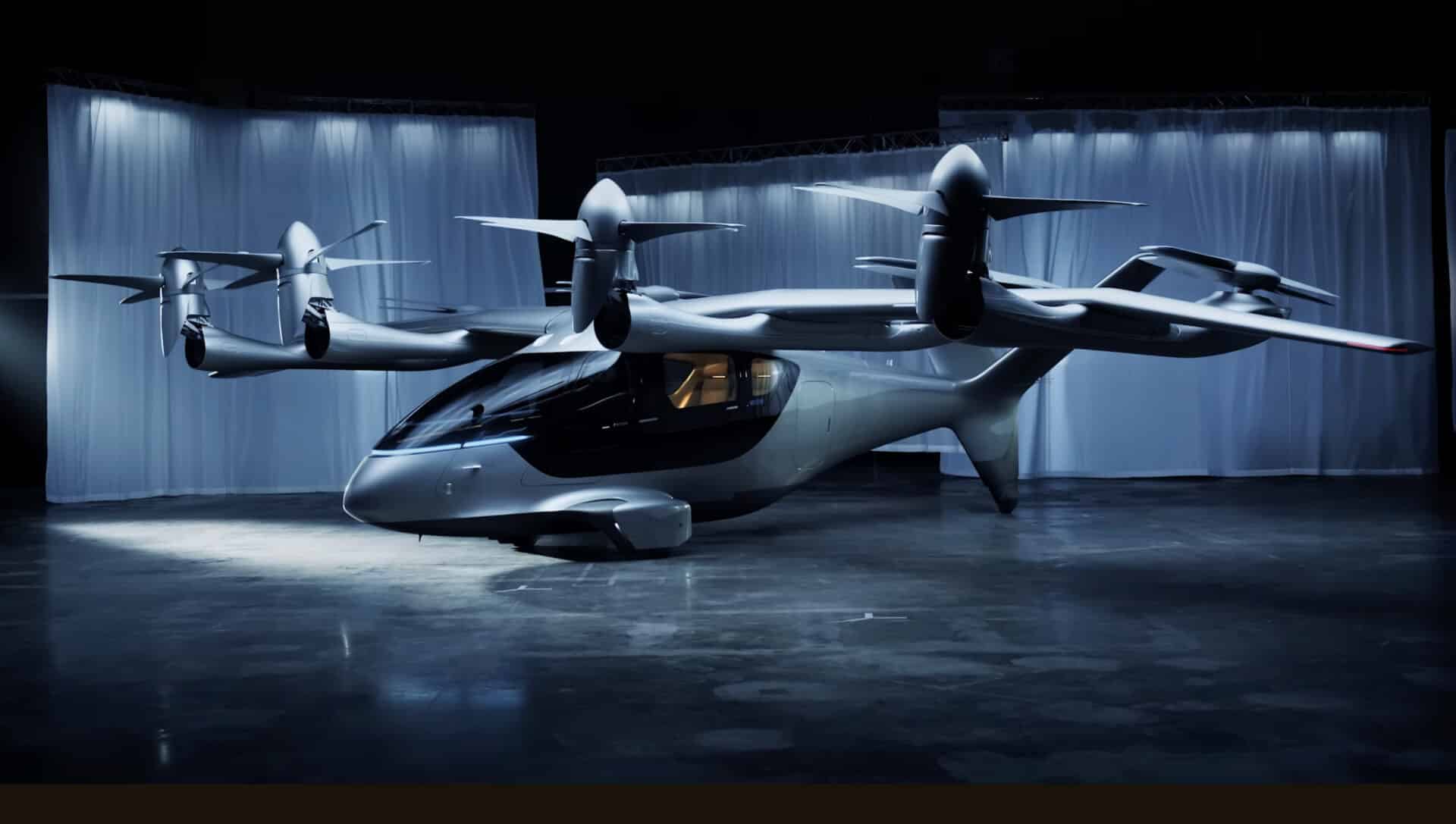
UK-based Vertical Aerospace eVTOL developer has successfully completed a piloted transition flight from hover to forward flight with its VX4 prototype aircraft, marking a critical certification milestone in the company’s path toward commercial air taxi operations. The test flight, conducted at the company’s UK testing facility, saw the aircraft achieve vertical takeoff before transitioning to conventional forward flight and landing.
The achievement represents a significant technical breakthrough for the eVTOL air taxi sector, with the hover-to-forward-flight transition widely recognized as one of the most challenging phases in electric vertical takeoff and landing aircraft development. Vertical Aerospace confirmed the VX4 reached 65 knots during the test, demonstrating stable aerodynamic performance throughout the critical transition phase that has proven technically complex for competitors in the emerging urban air mobility aircraft market.
The successful test flight advances Vertical Aerospace closer to certification under UK Civil Aviation Authority and European Union Aviation Safety Agency frameworks. Company officials described the milestone as a defining moment that validates years of engineering development and positions the VX4 program among leading contenders in the global race to bring electric air taxis to commercial service.
Vertical Aerospace employed an incremental testing approach that methodically expanded the aircraft’s flight envelope from hovering operations through the transition corridor to conventional wing-borne flight. The strategy involved testing acceleration from hover and deceleration from forward flight separately before completing the full one-way transition demonstrated in the recent test.
Test pilots reported the aircraft performed smoothly throughout the maneuver, with control systems managing the complex aerodynamic changes as the VX4 shifted from rotor-supported vertical flight to wing-generated lift during forward acceleration. The incremental methodology allowed engineers to collect detailed performance data across the entire speed range while maintaining rigorous safety protocols.
Technical Breakthrough in Transition Flight
The hover-to-forward-flight transition poses substantial engineering challenges because the aircraft must smoothly transfer from thrust-based vertical lift provided by multiple rotors to aerodynamic lift generated by fixed wings. During this phase, pilots must carefully manage power distribution, aircraft attitude, and control inputs while the vehicle operates in a complex aerodynamic regime where neither hovering flight nor conventional flight principles fully apply.
Control stability becomes particularly critical as airspeed increases and the aircraft experiences changing aerodynamic forces across its structure. The VX4 employs distributed electric propulsion with multiple rotors that must coordinate precisely to maintain stable flight while transitioning between flight modes, requiring sophisticated flight control software to manage the complex dynamics.
Battery power management adds another layer of complexity, as the transition phase demands substantial energy while the aircraft must retain sufficient reserves for continued flight and landing. Engineers must optimize power distribution to balance transition performance against overall mission endurance, a challenge amplified by current battery technology limitations affecting all electric aircraft programs globally.
Vertical Aerospace is pursuing certification under both UK CAA and EASA regulatory frameworks, positioning the VX4 for operations across European markets. The dual certification strategy reflects the company’s commercial ambitions beyond domestic UK operations, targeting major European cities where urban air mobility services could address congestion challenges in metropolitan areas.
The Bristol-based company has established partnerships with potential customers including aircraft lessors and regional carriers evaluating eVTOL operations for point-to-point urban transportation. Vertical Aerospace aims to achieve type certification by the mid-2020s, though exact timelines remain subject to testing progress and regulatory approval processes that have proven lengthy for novel aircraft categories.
Financial backing from both strategic aerospace investors and venture capital has supported Vertical Aerospace through the development and testing phases, though the company faces ongoing capital requirements as it progresses toward certification and production. The successful transition test provides tangible evidence of technical progress that could support future fundraising efforts and customer commitments.
Global eVTOL Race Intensifies
The global eVTOL sector remains intensely competitive, with multiple companies racing to achieve certification and commercial entry. Joby Aviation in the United States has conducted extensive flight testing and secured Federal Aviation Administration certification basis agreements, positioning the company among sector leaders with hundreds of test flights completed on full-scale prototypes.
Archer Aviation has similarly advanced its Midnight eVTOL through piloted transition testing, achieving Federal Aviation Administration approval for flight testing in 2023 and working toward type certification. The California-based company has secured significant pre-orders from United Airlines and other potential operators planning urban air mobility networks.
Lilium in Germany pursues a different technical approach with its ducted fan propulsion system, claiming advantages in efficiency and noise reduction compared to open rotor designs. The company completed transition testing in 2023 and continues working toward European certification, though it has faced financial challenges requiring additional capital raises to sustain operations.
Vertical Aerospace differentiates its VX4 design through a configuration featuring four tilting rotors plus four fixed lift rotors, creating what the company describes as optimized efficiency for both vertical and cruise flight phases. The aircraft targets a range of approximately 100 miles with pilot plus four passengers, suitable for typical urban air mobility missions including airport transfers and intercity connections.
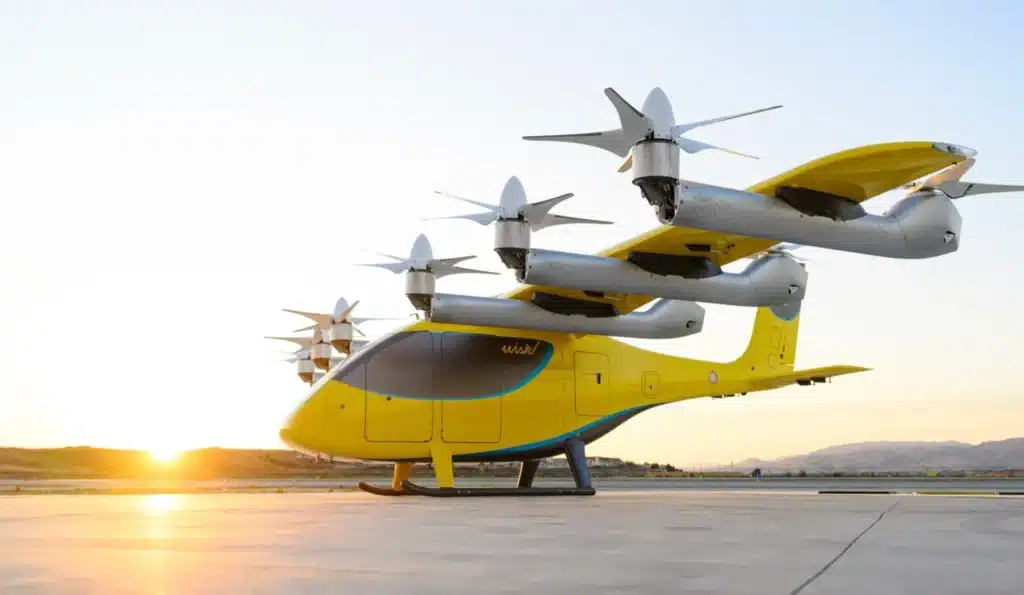
Commercial use cases for the VX4 center on congestion relief in major metropolitan areas where ground transportation faces capacity constraints. Airport-to-city-center routes represent primary target applications, offering time savings over ground alternatives during peak traffic periods when conventional transportation slows significantly.
Vertical Aerospace projects per-seat operating costs competitive with ground-based premium transportation options including private car services and helicopter shuttles currently serving similar routes. The electric propulsion system promises lower direct operating costs than turbine-powered helicopters, though achieving projected economics depends on achieving production scale and optimizing operational utilization.
Passenger capacity targeting four plus pilot positions the VX4 in the middle range among eVTOL competitors, larger than some two-passenger designs but smaller than concepts proposing six or more passenger seats. The capacity reflects tradeoffs between vehicle size, weight, battery requirements, and the need for economically viable passenger throughput per flight.
Certification and Infrastructure Challenges Remain
Certification remains the most significant near-term challenge, with civil aviation authorities developing novel regulatory frameworks for eVTOL aircraft that combine helicopter vertical flight characteristics with fixed-wing airplane cruise performance. The hybrid nature of eVTOL operations requires regulators to establish safety standards drawing from both rotorcraft and airplane certification bases while addressing unique considerations for electric propulsion and distributed thrust systems.
Battery technology limitations continue constraining eVTOL performance, with current lithium-ion cells offering energy density substantially lower than aviation kerosene. The energy storage constraint directly limits aircraft range and payload capacity, forcing designers to optimize for specific mission profiles rather than the operational flexibility traditional aircraft provide through higher energy density and rapid refueling.
Ground infrastructure development poses another obstacle, with urban air mobility operations requiring dedicated vertiport facilities for passenger processing, aircraft charging, and maintenance operations. Cities must designate locations, establish zoning approvals, and invest in infrastructure before eVTOL services can launch at meaningful scale.
Regulatory frameworks for eVTOL operations remain under development, with aviation authorities working to establish operating rules, pilot certification requirements, air traffic management integration, and noise regulations appropriate for urban environments. The regulatory development process proceeds in parallel with aircraft certification, creating uncertainty about operational constraints that will govern commercial service once aircraft achieve type certification approval.
Public acceptance represents an additional variable, with passenger willingness to adopt eVTOL transportation dependent on demonstrated safety records, acceptable noise levels, and pricing structures competitive with existing alternatives. Early operations will need to build public confidence while proving economic viability to attract the investment required for large-scale deployment.
Vertical Aerospace faces additional flight testing as engineers expand the VX4’s operational envelope toward the full performance specifications required for certification. Subsequent tests will explore higher speeds, various weather conditions, emergency procedures, and extended duration flights that demonstrate compliance with regulatory requirements for commercial passenger operations.
The company expects to conduct hundreds of additional test flights before submitting certification applications to regulators. Each test builds the data package regulators require to evaluate aircraft safety and performance, a process that typically spans several years even for conventional aircraft designs and proves more complex for novel vehicle categories lacking established certification precedents.
Industry analysts project the earliest eVTOL commercial services could launch in the mid-to-late 2020s, assuming leading developers maintain testing progress and navigate certification processes successfully. Initial operations will likely focus on specific high-value routes where economics prove most favorable and infrastructure development faces fewer obstacles than dense urban environments present.
The successful VX4 transition flight demonstrates tangible progress in a sector where technical risk has concerned investors and potential customers skeptical of ambitious timelines and performance projections. Visible testing milestones provide evidence that eVTOL technology is advancing beyond conceptual designs toward operational hardware capable of performing the mission profiles companies have long described.
Vertical Aerospace’s achievement adds momentum to the broader eVTOL sector while intensifying competition among developers racing to establish early market positions. The UK company joins a small group of programs that have successfully demonstrated piloted transition flight, a technical gate that eliminates some development risk while substantial challenges remain before commercial operations begin.
The path from successful testing to commercial service remains complex, requiring sustained engineering effort, regulatory approval, infrastructure development, and market acceptance. Vertical Aerospace has cleared one significant technical hurdle, though the company and its competitors face years of additional work before eVTOL air taxis transition from prototype testing to regular passenger service in cities worldwide.