
How Airlines Actually Make Money: The Business Model Revealed
Radu BalasPublished Updated 8 min read

Your $150 ticket doesn't come close to covering the fuel bill. Yet airlines generate billions in profit.
The math doesn't add up. Until you see where airline money really comes from.
Tickets are the obvious revenue stream. They're also not the most profitable one.
The Myth Everyone Believes
Walk through an airport. You see packed planes. Full flights suggest profitable operations.
Wrong assumption.
A 100% full aircraft can lose money. An 80% full flight can generate massive profits. The difference? How airlines fill those seats and what else they sell.
The world's largest airlines don't necessarily make the most money. Size and profitability operate under different economics.
Southwest sells cheaper tickets than American Airlines. Southwest also makes higher profit margins. That contradiction reveals everything about airline business models.

Ancillary Revenue: The Silent Money Printer
You book a $200 flight. Then the airline charges you.
Baggage fees: $35 checked bag, $25 carry-on (if you're unlucky).
Seat selection: $15-$80 depending on legroom.
Priority boarding: $20 to stand in line slightly earlier.
That $200 ticket just became $295. And you haven't eaten yet.
Onboard sales add another layer. Wifi: $8-$20 for a flight. Meals: $10-$15 for a sandwich. Premium drinks: $8 for wine, $10 for cocktails. Change fee? $200. Same-day standby? $75.
Low-cost carriers generate 30-40% of revenue from ancillaries. Spirit and Frontier perfected this model. Base fares look impossibly cheap. Total cost matches competitors. Global aviation data confirms ancillary revenue growth outpaces ticket revenue across all airline segments.
Allegiant takes it further. Hotel bookings, car rentals, attraction tickets—the airline operates as travel agency. Margins on these products exceed airline ticket margins.
Legacy airlines copied the playbook. Delta now charges for everything Spirit pioneered years ago. American and United followed. Premium brands adopted budget tactics.
Basic economy fares created new unbundling opportunities. No carry-on. No seat selection. Board last. Want those back? Pay extra for regular economy.
Ryanair takes ancillaries further. Priority boarding. Printed boarding passes. Seat selection. Even toilet paper was briefly discussed for monetization. Every passenger interaction creates revenue opportunity.
Ancillary revenue grows faster than ticket revenue. Much faster. It's predictable, high-margin, and customers pay willingly because the base fare looked cheap.
Loyalty Programs: The Billion-Dollar Hidden Asset
Frequent flyer miles seem like customer rewards. They're actually financial instruments.
American Express pays Delta $7 billion annually for the right to issue SkyMiles-earning credit cards. Delta's financial reports reveal these partnerships generate more predictable revenue than ticket sales. Delta prints miles. Banks buy them. Customers chase them.
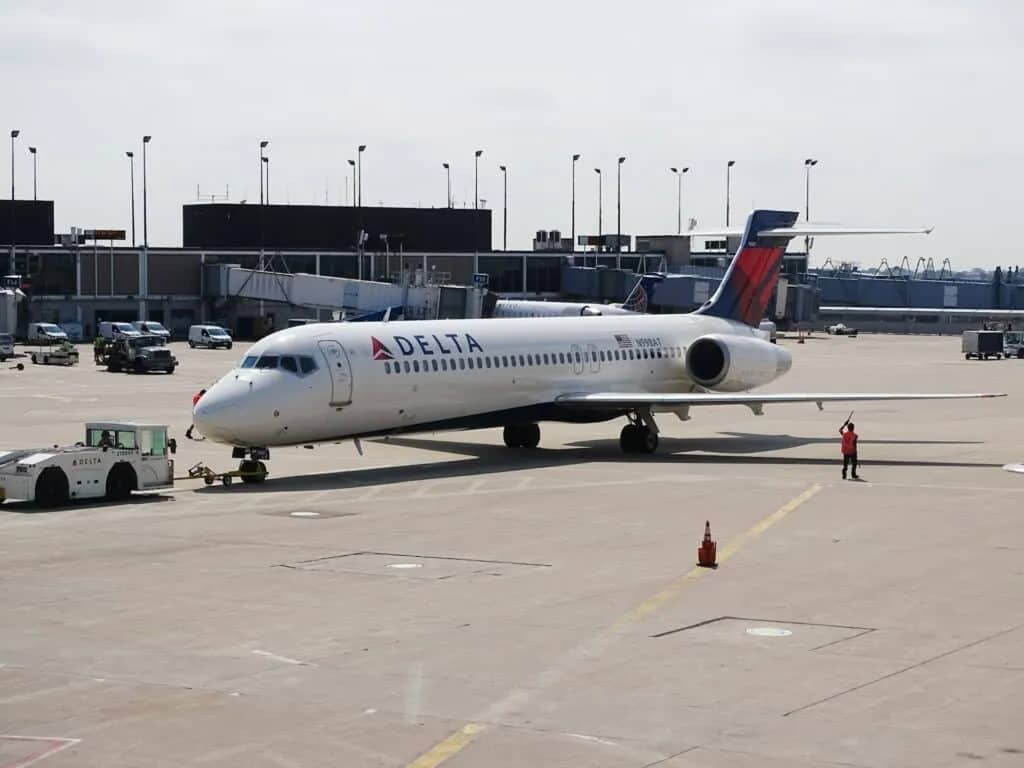
This arrangement generates more profit than flying planes.
Delta's loyalty program operates as standalone profitable business. If spun off separately, SkyMiles would value at $20+ billion. The airline attached to it? Less valuable than the points program.
United MileagePlus. American AAdvantage. Every major carrier runs the same model. Credit card partnerships generate guaranteed revenue regardless of flight operations.
Banks compete fiercely for these relationships. Chase, American Express, Citi, Capital One—they all want airline partnerships. Why? Credit card customers with miles accounts spend more and churn less.
The economics work brilliantly for airlines. Miles cost almost nothing to create. Accounting rules let airlines recognize revenue when miles are sold to banks, not when passengers redeem them.
Redemption rates stay low. Most members never use their miles. Perfect margin business. And even when customers redeem, airlines fill otherwise empty seats generating minimal cost.
Award seat availability mysteriously shrinks during peak travel. That's by design. Airlines sell miles for cash, then restrict redemption to maximize revenue. Customers complain but keep earning miles anyway.
Shopping portals add another revenue stream. Buy anything through airline mileage malls—retailers pay commission to the airline. Customers get miles. Airlines get cash from retailers for driving traffic.
Loyalty programs evolved from customer retention tools into financial engines. Some analysts value the programs higher than the airlines themselves. That's not hyperbole.
Cargo: The Overlooked Profit Engine

Passenger planes carry passengers. Obviously.
They also carry cargo. Lots of it. That belly space below your feet? Revenue machine.
Emirates generates 15-20% of total revenue from cargo. Qatar Airways operates dedicated freighters alongside passenger flights. Cargo margins exceed passenger margins on many routes.
Amazon packages, fresh flowers from Ecuador, pharmaceutical shipments, electronics components—billions in goods travel passenger aircraft belly holds. Airlines charge premium rates for next-day delivery.
Time-sensitive shipments command extraordinary prices. Overnight documents between financial centers, fresh seafood from Japan to Europe, critical medical supplies—cargo customers pay whatever it takes.
Widebody aircraft carry 20-25 tons of cargo in belly compartments. That's separate revenue on top of passenger tickets for the same flight. Fixed costs (fuel, crew, aircraft) get paid regardless. Cargo becomes almost pure profit.
COVID proved cargo's value. Passenger demand collapsed. Cargo rates tripled. Airlines flew empty passenger cabins just to move freight. Some carriers posted profits during the pandemic purely from cargo operations.
FedEx and UPS proved dedicated cargo airlines work. Passenger airlines learned the lesson. Cargo isn't secondary revenue anymore. It's core business strategy.
Different Airlines, Different Money Machines

Low-cost carriers operate one business model. Legacy airlines play an entirely different game.
Low-Cost Carrier Economics
Ryanair and Southwest prove simple beats complex. Single aircraft type reduces training costs. Secondary airports cost 60% less than major hubs. Fast turnarounds mean planes fly more hours daily.
Profits come from volume and efficiency, not premium pricing. Pack planes full. Fly them constantly. Minimize everything that doesn't generate revenue.
Crew productivity matters enormously. Southwest flight attendants work harder, turn aircraft faster, and operate under flexible work rules legacy carrier unions block.
Legacy Carrier Economics
Delta doesn't compete on price. They compete on corporate contracts and premium cabins.
Business class seats generate 3-5x more revenue per square foot than economy. One business traveler equals four economy passengers financially.
Hub dominance creates pricing power. Control Atlanta, set your own fares. Competitors can't match frequency without massive investment.
Legacy carriers monetize everything: Airport lounges (memberships + day passes), aircraft maintenance for other airlines, pilot training facilities, ground handling services. Airlines became diversified aviation conglomerates.
Gulf Carrier Economics
Emirates and Qatar Airways play by different rules. Government backing provides financial flexibility competitors lack.
Dubai and Doha hubs connect three continents. Sixth-freedom traffic (flying passengers between two countries via your hub) generates yields traditional airlines can't access.
Premium cabin focus drives extraordinary margins. Business class accounts for 60% of revenue on some routes despite occupying 20% of seats.
Cost Control: Where Profits Actually Live
Revenue gets headlines. Costs determine profitability. Industry economics reveal that successful airlines master both revenue generation and cost control simultaneously.
Fleet commonality saves billions. Ryanair operates only 737s. Pilots don't need separate type ratings. Mechanics master one aircraft. Spare parts inventory shrinks dramatically.
Airlines operating five different widebody types burn cash on complexity. Each aircraft requires dedicated crews, maintenance expertise, and parts stockpiles. Fleet diversity across multiple manufacturers sounds strategic until the bills arrive.
Fuel hedging separates winners from losers. Southwest locked in fuel prices years ahead. When oil spiked, competitors bled cash. Southwest posted record profits. Fuel efficiency depends on both aircraft technology and operational strategies.
Hedging requires sophisticated treasury operations. Many airlines lack expertise. They pay spot market rates and pray for stability.
Route optimization drives efficiency. Point-to-point flying avoids expensive hub operations. Major hubs require complex connections, ground crews, and facility costs. Direct routing cuts all that.
Labor represents 30-40% of airline costs. Union contracts at legacy carriers lock in restrictive work rules from decades past. Productivity gaps between low-cost and legacy carriers exceed 30%.
Why Airlines Fail While Others Thrive

Airline bankruptcy makes headlines regularly. Same reasons, different airline.
High fixed costs meet volatile demand. Aircraft leases come due whether planes fly or not. Fuel price spikes can't always pass to customers. Labor contracts prevent cost adjustments during downturns.
The profitable airlines? They built structural advantages before crises hit.
Southwest's fortress balance sheet carries minimal debt. Ryanair's cash reserves exceed some airlines' market capitalizations. Delta's diversified revenue streams provide stability passenger tickets alone can't deliver.
Failed airlines expanded too quickly, operated too many aircraft types, and chased growth over profitability. Thomas Cook, Wow Air, Primera Air—different names, identical mistakes.
Flybe collapsed despite decades of operation. The culprit? Thin margins on regional routes, aging aircraft, and no ancillary revenue strategy. When fuel prices spiked and pound sterling weakened, profits evaporated.
Norwegian Air's long-haul experiment nearly destroyed the airline. Cheap transatlantic fares looked appealing. Economics didn't work. Operating widebody aircraft at low-cost carrier pricing while paying union wages? Math never added up.
Pandemic bankruptcies revealed which carriers operated sustainable models. Low-cost carriers with strong balance sheets survived. Debt-heavy legacy carriers needed government bailouts.
Latin American airlines collapsed in waves. Currency volatility, dollar-denominated debt, and weak domestic economies created impossible situations. Avianca, LATAM, Aeromexico—all sought bankruptcy protection within months of each other.
The pattern repeats: debt, complexity, and thin margins kill airlines. Simplicity, efficiency, and diversified revenue create survivors.
The Future: How Airlines Will Make Money Tomorrow
Dynamic pricing already dominates. Prices change thousands of times daily based on demand algorithms.
Artificial intelligence takes this further. Airlines now predict which passengers pay premium prices, which dates see demand surges, and exactly when to discount empty seats.
Subscription flying experiments continue. Unlimited flight passes generated upfront cash for carriers testing the model. Wizz Air, Frontier, and several Asian carriers sold subscriptions.
Some programs s쳮ded. Others collapsed when subscribers actually flew. Airlines are still learning subscription economics.
Carbon costs represent the biggest unknown. Sustainable aviation fuel mandates approach. SAF costs 2-3x conventional fuel. Someone pays that premium.
Airlines pass costs to passengers through environmental surcharges. Transparency varies. Some carriers break out carbon costs separately. Others bury them in base fares.
Premium economy continues expanding. The cabin class that didn't exist 20 years ago now generates substantial revenue on international routes. Filling space between business and economy with slightly better seats at significantly higher prices? Pure margin expansion.
Aircraft leasing models evolve. Operating leases provide flexibility. Sale-leaseback transactions unlock capital. Asset-light strategies reduce balance sheet risk.
The Real Revenue Machine
Airlines aren't transportation companies. They're complex revenue optimization systems that happen to fly planes.
Every passenger interaction creates monetization opportunity. Every flight carries cargo. Every credit card swipe generates loyalty program revenue. Every route decision affects costs dramatically.
Profitable airlines master all these levers simultaneously. Failed airlines focus on filling seats and ignore everything else.
Next time you board a flight, remember: your ticket covered about half the cost. The airline made money from everything else you didn't notice.
That's the business model. And it's far more sophisticated than most passengers realize.