Industry
DGCA Collaborates with ICAO and Global Authorities on Advanced Air Mobility
India's DGCA said it is working with ICAO and other regulators on rules for eVTOL air taxis, with six working groups drafting requirements.
Updated 4 min read
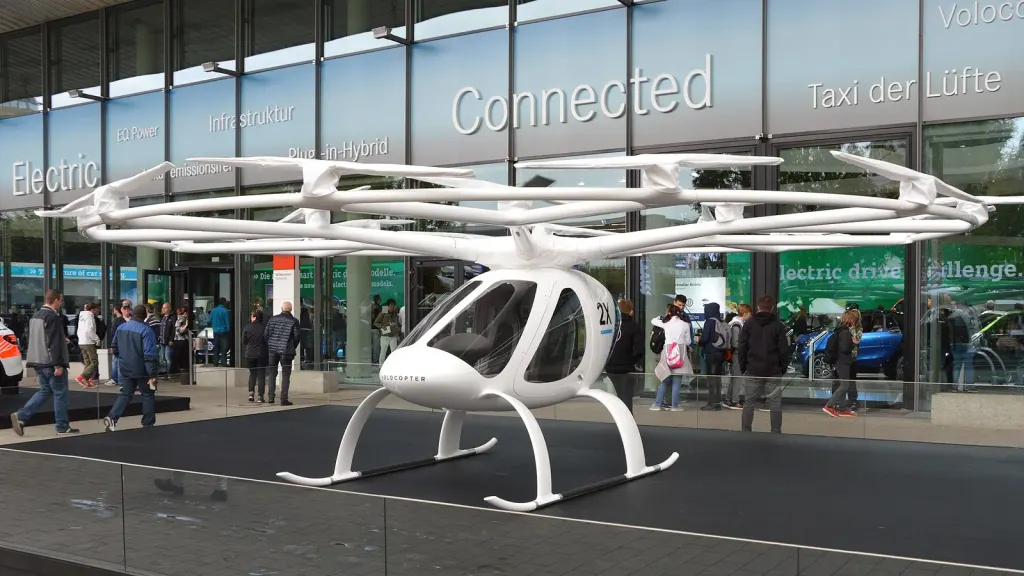
India's aviation safety regulator, the Directorate General of Civil Aviation (DGCA), is working with the International Civil Aviation Organization (ICAO) and other national authorities as it builds a regulatory framework for advanced air mobility (AAM). DGCA chief Faiz Ahmed Kidwai said on 21 January 2025 that innovation in the sector must not come at the expense of safety, and that regulators and industry alike had to keep safety at the centre of their plans.
Kidwai was speaking at the International Conference on Air Mobility in Greater Noida, organised by the Ministry of Civil Aviation and the Confederation of Indian Industry (CII).
Six working groups
Advanced air mobility covers new types of aircraft, chiefly electric vertical take-off and landing (eVTOL) air taxis, along with the infrastructure and air traffic systems needed to operate them in and around cities. To prepare rules for it, the DGCA has set up six working groups covering:
- vertiports
- type certification of VTOL-capable aircraft (VCA)
- crew licensing
- air operator permits
- unmanned aircraft system traffic management (UTM)
- maintenance, repair and overhaul (MRO)
The first two groups had already produced results. In September 2024 the DGCA issued guidance on the design, operation and authorisation of vertiports (ADAC 01 of 2024, published on 5 September) and on type certification of VTOL-capable aircraft (AEAC 01 of 2024, published on 11 September). Kidwai said the crew licensing group's output would follow soon, with the remaining groups still at work. He said the groups were drawing on input from national and international stakeholders.
Learning from other regulators
India is following, rather than leading, the main Western regulators. The European Union Aviation Safety Agency (EASA) published its Special Condition for VTOL aircraft in 2019 and has since built a set of rules for innovative air mobility. The US Federal Aviation Administration finalised a special federal aviation regulation for training and operating powered-lift aircraft in October 2024. At the same conference, officials said the DGCA was studying approaches taken by EASA, the FAA, Singapore and Dubai on airspace management and regulation.
ICAO's role is to develop common global standards so that aircraft certified in one country can be accepted elsewhere, and so that pilots, operators and maintenance organisations meet comparable requirements. For a country hoping to build and export eVTOLs, aligning with those standards early reduces the risk of having to recertify designs later.
Government plans for a regulatory sandbox
Civil Aviation Secretary Vumlunmang Vualnam told the same conference that the government was open to supporting AAM and was looking at a regulatory sandbox in India. The idea is to let companies test aircraft and operating concepts in a controlled setting while rules are finalised. DGCA officials were carrying out field visits to identify possible trial sites.
India's eVTOL developers
Several Indian start-ups are developing aircraft that would fall under the new rules:
- The ePlane Company, incubated at IIT Madras, received Design Organisation Approval from the DGCA in May 2023. In December 2024 the DGCA accepted its type certification application for the e200X, making it the first private company to enter the certification process under the September 2024 rules. ePlane is positioning the aircraft for air ambulance as well as air taxi use.
- Sarla Aviation, a Bengaluru start-up founded in October 2023, is developing an eVTOL air taxi called Shunya.
Large Indian airline and infrastructure groups have also signed agreements with foreign eVTOL makers, adding to pressure on the regulator to have a workable framework in place.
Why it matters
India has dense, congested cities where short air taxi hops could cut journey times, and a government that has made aviation growth a policy priority. But eVTOLs raise questions the existing rules were not written for: certifying aircraft that combine features of aeroplanes and helicopters, training pilots for them, siting vertiports on rooftops and urban land, charging batteries quickly and safely, and managing low-level traffic over cities alongside drones and helicopters. Kidwai's message was that the DGCA intends to answer those questions through internationally aligned rules rather than allowing services to start ahead of the safety case.
What has happened since
Work has continued on several fronts. In later replies to Parliament, the government listed DGCA guidance FCL 01 of 2025 on the training and endorsement of pilots for VTOL-capable aircraft, the output of the crew licensing working group.
On the industry side, by mid-2026 ePlane had completed assembly of its e200X, with ground and flight testing to follow, and has said it is targeting type certification and operational readiness for its air ambulance version around 2027 to 2028. On 8 August 2026 Sarla Aviation received Design Organisation Approval from the DGCA under CAR 21 Subpart J, presented by Civil Aviation Minister K Rammohan Naidu at the opening of the company's new Bengaluru headquarters. Sarla said its demonstrator had completed more than 500 test flights. The approval allows it to begin the formal type certification of Shunya.
No eVTOL had been certified or entered commercial service in India by October 2026.