
A single GE9X engine for the Boeing 777X costs approximately $25-40 million, making each aircraft’s two-engine powerplant worth $50-80 million before installation. This represents 15-25% of the 777X’s total $400-450 million list price, a cost that reflects extraordinary engineering complexity and decades of research investment rather than just manufacturing expenses.
The GE9X holds the distinction of being the world’s largest and most powerful commercial jet engine, with a 134-inch fan diameter that exceeds the entire fuselage width of a Boeing 737. This massive scale combines with cutting-edge materials, advanced aerodynamics, and unprecedented efficiency targets to create development costs exceeding $10 billion that manufacturers must recover through engine sales and long-term maintenance contracts.
Understanding why aircraft engines command such staggering prices reveals fundamental economics of aviation where upfront purchase costs represent just a fraction of total lifecycle expenses, and where engine manufacturers often profit more from decades of maintenance services than initial engine sales.
What Engine Powers The Boeing 777X?
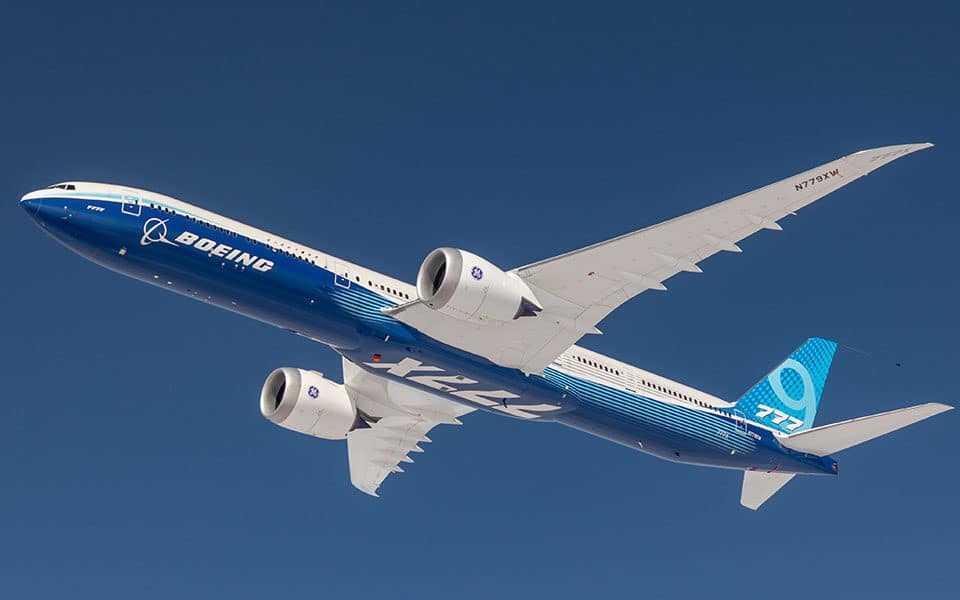
The Boeing 777X exclusively uses the GE9X turbofan engine developed by GE Aerospace specifically for this aircraft family. The engine represents the latest evolution of GE’s successful commercial engine lineage dating back decades through the GE90, CF6, and earlier powerplants.
The GE9X delivers 105,000 pounds of thrust at takeoff, making it the most powerful commercial jet engine ever built. This thrust capacity enables the 777-9 variant to carry up to 426 passengers over ranges exceeding 7,285 nautical miles, while the smaller 777-8 extends range to 8,730 nautical miles.
The engine’s 134-inch fan diameter creates a bypass ratio of 10:1, meaning ten times more air flows around the engine core than through it. This high bypass ratio generates thrust more efficiently than older low-bypass designs, reducing fuel consumption by 10% compared to the already-efficient GE90 powering current Boeing 777 variants.
Fourth-generation carbon fiber composite fan blades replace the titanium blades used in previous engines, reducing weight while increasing strength. Each blade undergoes extensive testing including ballistic impact scenarios where engines must contain blade failures without endangering aircraft safety.
The combustor section operates at temperatures exceeding 2,400°F (1,315°C), requiring advanced ceramic matrix composite materials that maintain structural integrity under conditions that would melt conventional metals. These materials represent breakthrough technologies developed specifically for this engine application.
A 16-stage compressor generates the extreme pressures needed for efficient combustion, while a six-stage turbine extracts energy from exhaust gases to drive the fan and compressor. The precision engineering required for these rotating components operating at temperatures and speeds approaching material limits drives substantial manufacturing costs.
How Much Does A GE9X Engine Cost?

Industry estimates place individual GE9X engine costs between $25-40 million depending on purchase volume, contract terms, and bundled maintenance agreements. Airlines typically never pay published “list prices” but negotiate substantial discounts through fleet orders and long-term partnerships.
A Boeing 777X requires two engines, creating a powerplant cost of $50-80 million per aircraft before installation, testing, and certification. This represents roughly 15-25% of the 777X’s $400-450 million list price, though actual transaction prices vary significantly from published figures.
Engine manufacturers typically subsidize initial purchase prices to secure long-term maintenance contracts worth far more than upfront engine sales. A “power by the hour” arrangement might see airlines paying $1,500-2,500 per flight hour for comprehensive engine maintenance, generating $15-25 million over a 20-year engine lifecycle.
Launch customers like Emirates and Qatar Airways likely negotiated engine prices toward the lower end of the range given their substantial fleet commitments. Later buyers with smaller orders face higher per-engine costs without the negotiating leverage of launch customers ordering 100+ aircraft.
The true “cost” to GE Aerospace for manufacturing each engine remains proprietary but likely represents 40-60% of the sale price after accounting for materials, manufacturing, testing, and delivery. The remainder covers R&D recovery, profit margins, and warranty obligations.
Why Aircraft Engines Are So Expensive
The extraordinary cost of commercial jet engines reflects multiple factors beyond just manufacturing complexity, with development investments and certification requirements creating barriers to entry that sustain high pricing.
Research And Development Costs
GE Aerospace invested over $10 billion developing the GE9X from initial concept through certification and production. This massive investment covered engineering salaries, test facilities, prototype engines, certification testing, and countless design iterations before the first production engine shipped.
The development timeline spanned more than a decade from initial design work to entry into service. Engineers conducted thousands of computer simulations, built dozens of test engines, and accumulated millions of hours in ground testing and flight validation before regulators approved commercial operation.
Wind tunnel testing, materials research, aerodynamics optimization, and manufacturing process development all require substantial capital investment in facilities and equipment. These fixed costs must be recovered through engine sales regardless of how many units ultimately sell.
Competitive engine development creates a duopoly where only GE Aerospace and Rolls-Royce possess the technical expertise, capital resources, and market access to develop large commercial engines. Pratt & Whitney exited the large widebody engine market after the Boeing 777 launch, leaving two manufacturers to share development costs and pricing power. Major airlines like Emirates and Qatar Airways negotiate engine pricing through massive fleet orders.
Advanced Materials And Manufacturing
The GE9X uses materials that didn’t exist when earlier engines launched, requiring development of entirely new manufacturing processes and supply chains to produce components meeting performance requirements.
Carbon fiber composite fan blades replace traditional titanium, reducing weight by 350 pounds per engine while maintaining strength to withstand bird strikes, blade-out failures, and thermal cycling from -65°F cruise conditions to +120°F ground operations. Each blade costs tens of thousands of dollars to manufacture using automated fiber placement processes.
Ceramic matrix composite materials in the combustor and turbine sections operate at temperatures 500°F higher than metal alloys can withstand. These materials combine ceramic fibers with ceramic matrices using processes developed over decades at costs measuring hundreds of dollars per pound for finished components.
Additive manufacturing (3D printing) produces fuel nozzles and other complex parts that would be impossible to make through traditional machining. A single 3D-printed fuel nozzle might cost $10,000-15,000 but replaces assemblies of 20+ conventional parts while improving durability and performance.
Titanium alloys, nickel-based superalloys, and advanced steels throughout the engine cost $20-100+ per pound in raw form before machining. A single turbine blade machined from a superalloy forging might start as a $500 piece of material requiring 40+ hours of precision machining to meet tolerances measured in thousandths of an inch.
Certification And Testing
The Federal Aviation Administration and international regulators require extensive testing before approving engines for commercial service. The GE9X completed over 5,000 hours of ground testing and thousands of flight test hours before receiving certification.
Bird strike testing fires dead chickens into spinning engines at velocities simulating flight conditions to verify fan blades can withstand impacts without catastrophic failure. Ice ingestion, water ingestion, and foreign object damage tests ensure engines operate safely in all environmental conditions.
Endurance testing runs engines continuously for thousands of hours at maximum power to validate component durability and identify potential failure modes. These test engines operate until failure to establish safe operating limits and maintenance intervals.
Altitude testing in specialized chambers simulates conditions from sea level to 40,000+ feet, while temperature testing validates operation from Arctic cold to desert heat. Each test regime requires expensive facilities, instrumentation, and engineering time to collect and analyze data.
Every production engine undergoes final testing in ground test cells where engineers verify performance across the operating envelope before shipping to Boeing for aircraft installation. This testing identifies manufacturing defects and ensures each engine meets specifications before entering service. Professional aircraft maintenance engineers perform these critical validation procedures.
How The GE9X Compares To Other Engines
Comparing the GE9X to other large commercial engines reveals how costs scale with size, complexity, and performance requirements.
| Engine | Aircraft | Thrust | Estimated Cost |
|---|---|---|---|
| GE9X | Boeing 777X | 105,000 lbs | $25-40 million |
| GE90-115B | Boeing 777-300ER | 115,000 lbs | $20-35 million |
| Rolls-Royce Trent XWB | Airbus A350 | 84,000-97,000 lbs | $18-30 million |
| GEnx-2B | Boeing 747-8 | 66,500 lbs | $12-18 million |
| Trent 1000 | Boeing 787 | 53,000-78,000 lbs | $10-16 million |
| GEnx-1B | Boeing 787 | 53,000-74,000 lbs | $10-16 million |
| CFM LEAP-1B | Boeing 737 MAX | 29,000 lbs | $8-12 million |
| PW1100G-JM | Airbus A320neo | 33,000 lbs | $8-13 million |
The comparison demonstrates how engine costs scale with thrust requirements and aircraft size. Narrowbody engines for aircraft like the Boeing 737 MAX cost $8-12 million, while widebody engines command $15-40 million depending on thrust and technology level.
Lifecycle Cost: Engines Cost More Than Just Purchase Price
The initial engine purchase represents just 20-35% of total lifecycle costs over 20-30 years of operation, with maintenance, overhauls, and spare parts consuming far more than upfront acquisition expenses.
Airlines typically budget $1,500-2,500 per flight hour for comprehensive engine maintenance under “power by the hour” contracts. On a long-haul route averaging 12 flight hours daily, this represents $6.6-10.9 million annually per aircraft in engine maintenance costs alone. Understanding aircraft depreciation and lifecycle costs becomes essential for financial planning.
A typical widebody engine undergoes performance restoration every 5,000-8,000 flight hours, requiring partial disassembly, inspection, and replacement of worn components. These shop visits cost $2-5 million each depending on damage discovered and parts requiring replacement.
Major overhauls occur every 15,000-25,000 flight hours, involving complete engine disassembly, inspection of every component, and replacement of all life-limited parts. A major overhaul costs $8-15 million and returns the engine to near-new condition for continued operation.
Spare engines represent significant capital investments as airlines cannot afford aircraft grounded waiting for engine repairs. A spare engine pool covering a fleet of 20 aircraft might require 3-4 spare engines worth $75-160 million sitting unused except during scheduled and unscheduled maintenance events. The tax implications of such capital investments significantly impact airline financial planning.
Engine leasing provides an alternative to ownership where airlines pay monthly fees to lessors owning spare engine pools. This shifts capital requirements from airlines to specialized leasing companies but adds leasing margins to total lifecycle costs. Airlines use similar financial strategies for fleet optimization decisions across their networks.
| Cost Component | Frequency | Estimated Cost |
|---|---|---|
| Initial Engine Purchase | Once (2 engines) | $50-80 million |
| Routine Maintenance | Continuous | $1,500-2,500/flight hour |
| Performance Restoration | Every 5,000-8,000 hours | $2-5 million per engine |
| Major Overhaul | Every 15,000-25,000 hours | $8-15 million per engine |
| Spare Engine Pool | Capital requirement | $25-40 million per spare |
| Total 20-Year Lifecycle | Per aircraft (2 engines) | $150-250 million |
Why Airlines Pay So Much For Engines
Airlines willingly pay premium prices for advanced engines because fuel efficiency improvements and reliability gains deliver returns far exceeding upfront cost differences over 20-30 year aircraft lifecycles.
Fuel efficiency directly impacts profitability. The GE9X’s 10% fuel burn improvement over the GE90 saves approximately 5,000-7,000 liters per long-haul flight. At $0.65 per liter, this represents $3,250-4,550 in fuel savings per flight.

On a typical long-haul aircraft flying 4,000 hours annually over 300 flights, fuel savings reach $975,000-1.4 million per year. Over 20 years, a single aircraft saves $19.5-27.3 million in fuel costs, easily justifying the GE9X’s price premium over older engines.
Reliability reduces operational disruptions. Modern engines achieve dispatch reliability above 99.98%, meaning fewer than one flight per 5,000 experiences engine-related delays or cancellations. Each avoided cancellation saves airlines $50,000-150,000 in passenger rebooking, crew costs, and reputation damage.
Improved time on wing between shop visits reduces maintenance downtime. If an engine operates 20% longer between overhauls, airlines need fewer spare engines in their pool, reducing capital requirements by millions of dollars.
Environmental compliance becomes mandatory. Stricter noise and emissions regulations favor newer engines meeting current standards over older powerplants facing potential operating restrictions or outright bans at noise-sensitive airports.
Airports in Europe and elsewhere impose noise penalties or restrict nighttime operations for aircraft not meeting the latest noise standards. Modern engines like the GE9X meet Stage 5 noise requirements with substantial margins, ensuring unrestricted airport access.
Passenger appeal matters for premium routes. Business travelers preferentially book aircraft with modern engines offering quieter cabins and smoother operations. This passenger preference particularly affects premium long-haul markets where cabin comfort drives booking decisions.
The Business Of Aircraft Engines
Engine manufacturers profit more from decades of maintenance services than initial engine sales, creating business models where upfront pricing reflects long-term contract value rather than just manufacturing costs.
The “razor and blades” model sees manufacturers accepting lower margins on engine sales to secure lucrative maintenance contracts. GE Aerospace, Rolls-Royce, and Pratt & Whitney generate 60-70% of total revenue from aftermarket services rather than new engine sales.
Proprietary designs and certification requirements create effective monopolies on engine maintenance. Airlines cannot source replacement parts from third parties or perform certain maintenance procedures without manufacturer authorization, ensuring decades of captive revenue from each engine sold.
Long-term service agreements (LTSAs) lock airlines into maintenance contracts spanning entire aircraft lifecycles. These contracts provide manufacturers with predictable revenue streams while airlines gain budget certainty and performance guarantees.
The duopoly structure where only GE Aerospace and Rolls-Royce compete on large widebody engines eliminates price competition that would exist in more competitive markets. Boeing’s decision to offer the 777X exclusively with GE9X engines rather than providing engine choice gave GE complete market power on this platform.
Engine manufacturers invest development costs knowing they’ll recover them over decades through maintenance revenue. This long-term business model justifies the billions spent developing new engines even when initial sales barely cover development expenses.
Emerging manufacturers face nearly insurmountable barriers to entry. China’s COMAC and Russia’s United Engine Corporation attempt to develop competitive engines but struggle with materials technology, certification requirements, and lack of in-service support networks that established manufacturers built over decades.
Frequently Asked Questions
How much does a Boeing 777X engine cost?
A single GE9X engine for the Boeing 777X costs approximately $25-40 million depending on purchase volume and contract terms. Each 777X requires two engines, creating total powerplant costs of $50-80 million per aircraft. Airlines typically negotiate substantial discounts from list prices through fleet orders and maintenance agreements. Launch customers like Emirates and Qatar Airways likely secured prices toward the lower end of this range given their large fleet commitments, while smaller buyers face higher per-engine costs without similar negotiating leverage.
What is the GE9X engine?
The GE9X is the world’s largest and most powerful commercial jet engine, developed exclusively for the Boeing 777X family. It delivers 105,000 pounds of thrust with a 134-inch fan diameter exceeding a Boeing 737 fuselage width. The engine features fourth-generation carbon fiber composite fan blades, ceramic matrix composite materials in hot sections, and a 10:1 bypass ratio delivering 10% better fuel efficiency than the GE90 it replaces. GE Aerospace invested over $10 billion developing the GE9X over more than a decade, with first delivery occurring in 2020 and entry into service expected as 777X aircraft begin commercial operations.
Why are aircraft engines so expensive?
Aircraft engines cost tens of millions due to extraordinary development expenses exceeding $10 billion per engine program, advanced materials like carbon fiber composites and ceramic matrix composites costing hundreds of dollars per pound, precision manufacturing requiring tolerances measured in thousandths of an inch, and extensive certification testing spanning thousands of hours. Only two manufacturers (GE Aerospace and Rolls-Royce) possess the expertise and capital to develop large commercial engines, creating a duopoly with limited price competition. The business model emphasizes long-term maintenance revenue over upfront sales, with manufacturers often subsidizing initial engine prices to secure lucrative service contracts worth far more over 20-30 year lifecycles.
Which is the most expensive jet engine?
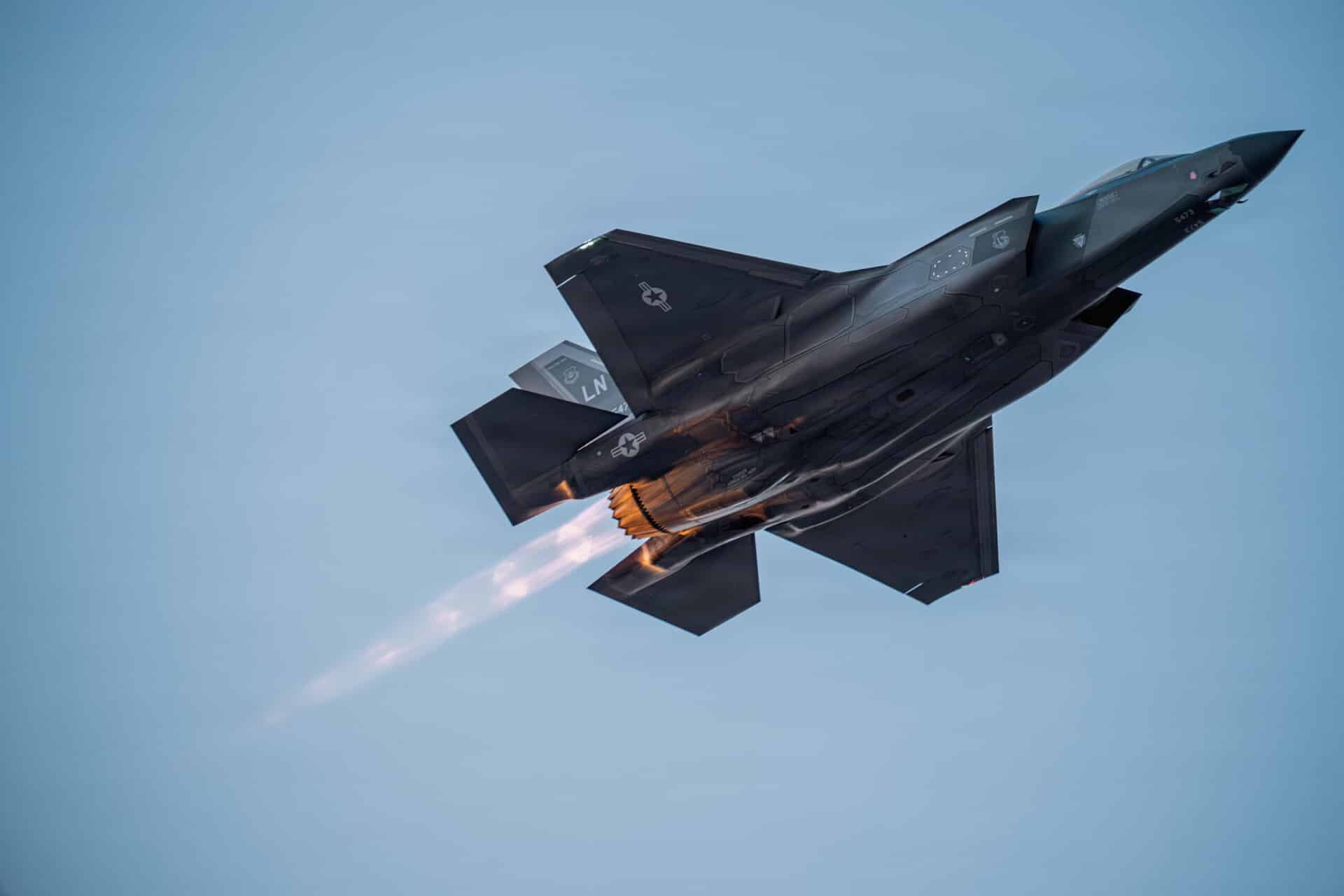
The GE9X for the Boeing 777X ranks among the most expensive commercial jet engines at $25-40 million per unit, though exact pricing remains proprietary and varies by contract. The GE90-115B for the Boeing 777-300ER costs $20-35 million, while Rolls-Royce Trent XWB engines for the Airbus A350 range from $18-30 million. Military engines like the Pratt & Whitney F135 powering the F-35 fighter cost $35-40 million each. However, comparing prices directly proves difficult as manufacturers rarely disclose actual transaction prices, and costs vary dramatically based on order volume, maintenance packages, and long-term contract terms negotiated between manufacturers and customers.
How long does a jet engine last?
Commercial jet engines typically operate 20-30 years or 40,000-60,000 flight hours before retirement, depending on operating environment and maintenance quality. However, engines don’t operate continuously without intervention – they undergo performance restoration every 5,000-8,000 hours ($2-5 million) and major overhauls every 15,000-25,000 hours ($8-15 million) that restore components to near-new condition. With proper maintenance, engines can far exceed design life. Some GE90 engines have accumulated over 70,000 flight hours. Harsh operating conditions like desert sand, coastal salt, or frequent short flights with thermal cycling reduce engine life, while gentle long-haul operations in clean environments extend service intervals.
Do airlines own their engines or lease them?
Airlines both own engines outright and lease them depending on financial strategy and fleet management approach. Ownership provides long-term cost advantages but requires substantial capital for spare engine pools. Engine leasing from specialized companies like Willis Lease Finance or Engine Lease Finance Corporation reduces upfront capital requirements while adding leasing margins to total costs. Many airlines use hybrid strategies, owning engines for their core fleet while leasing spares or engines for seasonal capacity. “Power by the hour” maintenance contracts from manufacturers bundle engine services into predictable hourly rates regardless of ownership structure, simplifying fleet management and budgeting.
Why did Boeing choose only GE9X for the 777X?
Boeing selected the GE9X as the exclusive engine for the 777X rather than offering Rolls-Royce alternatives because the development partnership reduced risk and costs for both companies while GE’s technology leadership provided the performance Boeing needed. Exclusive engine selection simplified aircraft certification, reduced development complexity, and allowed Boeing to optimize airframe design specifically for GE9X characteristics. Previous 777 models offered engine choice between GE90, Rolls-Royce Trent 800s, and Pratt & Whitney PW4000s, but market consolidation and development costs made dual-sourcing uneconomical for the 777X program. The decision gave GE complete monopoly power on 777X engines but ensured close collaboration throughout development.
How much does jet engine maintenance cost airlines annually?
Airlines typically spend $1,500-2,500 per flight hour on comprehensive jet engine maintenance under long-term service agreements. For a widebody aircraft flying 4,000 hours annually, this represents $6-10 million per year in engine maintenance costs alone. Fleet-wide expenses scale accordingly – an airline operating 50 widebody aircraft spends $300-500 million annually on engine maintenance across the fleet. This exceeds initial engine purchase costs over just 5-8 years of operation, explaining why manufacturers prioritize aftermarket revenue over new engine sales. Maintenance costs vary by engine type, operating environment, and contract structure, with harsh conditions or aging engines driving expenses higher while newer, reliable engines cost less to maintain per flight hour.
Conclusion
The GE9X engine’s $25-40 million price tag reflects extraordinary development investments exceeding $10 billion, advanced materials including carbon fiber composites and ceramic matrix composites, and precision manufacturing to tolerances measured in thousandths of an inch. The engine’s 134-inch fan diameter, 105,000 pounds of thrust, and 10% efficiency improvement over previous generation engines represent technological achievements that only two global manufacturers can deliver, creating a duopoly with substantial pricing power.
Initial purchase costs represent just 20-35% of total lifecycle expenses over 20-30 years, with maintenance, overhauls, and spare parts consuming $150-250 million per aircraft. Airlines willingly pay premium prices because fuel efficiency improvements worth $19.5-27.3 million over 20 years easily justify higher upfront costs, while reliability reduces operational disruptions costing $50,000-150,000 per avoided cancellation. Engine manufacturers profit primarily from decades of captive maintenance revenue rather than initial sales, creating business models where upfront pricing reflects long-term service contract value.
The industry’s concentration where only GE Aerospace and Rolls-Royce compete on large widebody engines, combined with Boeing’s decision to offer the 777X exclusively with GE9X powerplants, eliminates competitive pressure that might reduce pricing. As airlines prioritize fuel efficiency and environmental compliance in response to carbon reduction mandates and rising fuel costs, demand for advanced engines like the GE9X continues despite premium pricing, validating industry investment in next-generation propulsion technology that reshapes aviation economics for decades to come.