Aviation Loan Rates and Financing Options
 Radu BalasFounder, The Flying EngineerPublished Updated 14 min read
Aviation financing rates in 2025 remain elevated compared to pre-pandemic levels, though trending down from recent cycle highs.
Lenders demonstrate increased selectivity in aircraft type, borrower credit profile, and operational purpose.
Private credit markets continue expanding in aviation finance, offering flexible terms for well-qualified borrowers unable to access traditional bank financing.
OEM captive finance arms maintain competitive rates on new aircraft purchases, supporting manufacturer sales objectives.
Student financing for pilot training tightened considerably, with lenders requiring stronger co-signer commitments and school accreditation verification.
This comprehensive guide serves:
- Private jet owners seeking acquisition or refinance financing
- Part 91 corporate flight departments evaluating ownership structures
- Part 135 charter operators planning fleet expansion
- Flight schools establishing training fleets
- Student pilots pursuing commercial aviation careers
⚠️ IMPORTANT DISCLAIMER: All rates and terms presented are indicative examples for educational purposes only.
Actual financing terms vary based on creditworthiness, aircraft specifics, and lender policies.
Verify current rates directly with aviation lenders before making financing decisions.
This article does not constitute financial advice.
Types of Aviation Financing - Matching Products to Use Cases

Secured Aircraft Loans (Fixed & Variable Rate)
Description: Traditional loans secured by aircraft as collateral, providing full ownership from closing.
Typical Terms:
- Tenor: 5-20 years depending on aircraft age
- LTV Range: 60-85% for mid-life jets; 50-70% for aircraft over 15 years
- Collateral: First lien on aircraft, personal/corporate guarantee often required
- Early Exit: Prepayment penalties typically 1-3% declining over loan term
Best For: Owners planning long-term operation seeking tax depreciation benefits and eventual full equity.
Pros: Build equity, potential tax benefits, no residual value risk.
Cons: Higher down payment, maintenance responsibility, depreciation exposure.
Finance Lease vs Operating Lease
Finance Lease:
Lease-to-own structure where lessee gains ownership after lease completion.
Treated as asset purchase for accounting purposes.
Tenor typically 7-12 years with residual buyout option.
Operating Lease:
True lease where lessor retains ownership and assumes residual value risk.
Lessee returns aircraft at lease end or negotiates purchase.
Tenor commonly 5-7 years with flexible end-of-lease options.
Typical Terms:
- Monthly payments generally 10-15% lower than equivalent loan
- Maintenance reserves often required
- No down payment or modest security deposit
- Early termination penalties significant
Best For: Operators prioritizing cash flow flexibility, newer aircraft access, and offloading residual value risk.
Review our guide on financing vs leasing a private jet for detailed comparison.
Leaseback to Part 135 Charter or Flight School
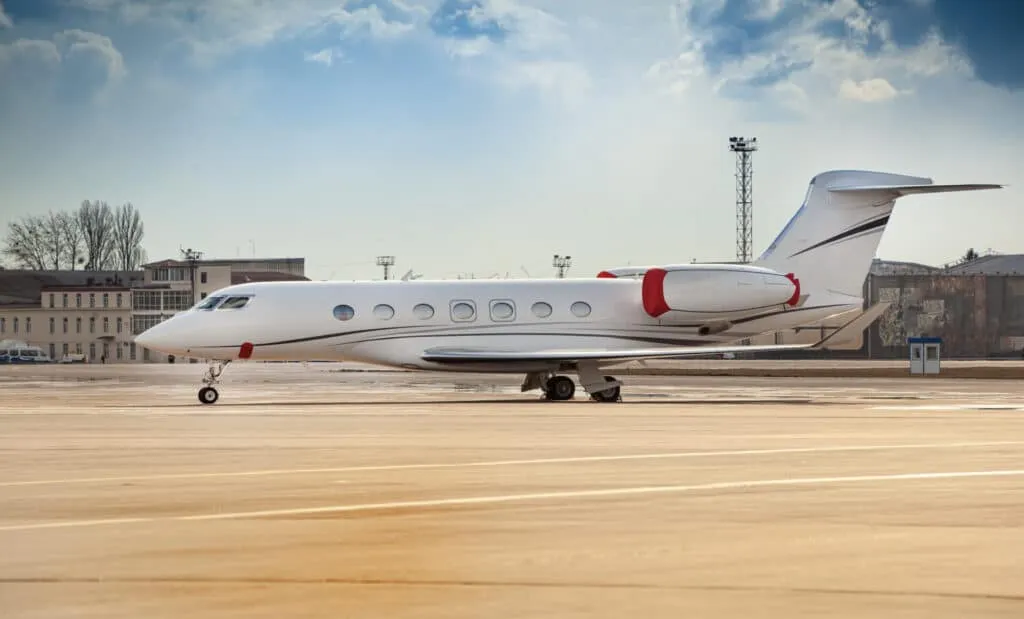
Description: Owner purchases aircraft and leases to Part 135 operator or flight school, generating rental income while retaining personal use rights.
Typical Terms:
- Owner finances aircraft conventionally
- Operator pays fixed monthly lease plus hourly usage fees
- Tax benefits include depreciation, interest deduction, and potential passive income treatment
- Operator handles maintenance, insurance, and regulatory compliance
Best For: Owners offsetting ownership costs through charter revenue while maintaining personal access.
Caution: Requires careful structuring for IRS compliance and appropriate insurance coverage.
Fractional Ownership & Jet Card Financing
Description: Financing fractional shares or jet card deposits for guaranteed aircraft access without full ownership.
Typical Terms:
- Fractional shares typically 1/16 to 1/2 ownership
- Initial capital requirement $200,000-$5,000,000 depending on share size and aircraft type
- Monthly management fees plus hourly occupied rates
- Limited financing available; most programs require cash
Best For: Users flying 50-200 hours annually seeking flexibility without full ownership responsibilities.
Refinance & Cash-Out Options
Description: Refinancing existing aviation loans to capture lower rates or extract equity for other purposes.
Typical Terms:
- Cash-out LTV generally limited to 70-75% of current market value
- Refinance requires current appraisal and condition assessment
- Engine program enrollment often mandated
- Break-even timeframe typically 18-36 months depending on rate differential and closing costs
Best For: Owners with 3+ years remaining on current loans seeing rate reductions of 1.5%+ annually.
Explore how to finance a private jet for detailed refinancing strategies.
MRO/Engine Program Financing & Maintenance Reserves
Description: Specialized financing for major maintenance events or engine program enrollment.
Typical Terms:
- Tenor: 24-84 months depending on event cost
- Rates typically 1-2% higher than aircraft acquisition loans
- Can be unsecured for strong credits or secured by aircraft
- Covers engine overhauls, major inspections, avionics upgrades
Best For: Operators facing upcoming maintenance events without liquid reserves.
Flight Training Loans (CPL/ATPL/Type Rating)
Description: Personal loans for pilot training expenses at accredited flight schools.
Typical Terms:
- Unsecured personal loans: $10,000-$150,000
- Tenor: 5-15 years with grace periods during training
- Rates: 6-14% APR depending on creditworthiness and co-signer
- School accreditation verification required
- Disbursement often direct to training institution
Best For: Aspiring professional pilots with clear career pathways and strong credit profiles or co-signers.
Compare training costs in our Commercial Pilot Training Costs by Country 2025 guide.
Review European training options in Best Flight Schools in Europe.
2025 Indicative Rate & Term Benchmarks (By Region)
⚠️ CRITICAL NOTE: The following table presents indicative rate ranges based on prime credit profiles and mid-life aircraft unless otherwise noted.
These are examples for educational comparison only.
Actual rates vary significantly based on individual circumstances, aircraft specifics, down payment, credit profile, and lender policies.
Verify current rates directly with aviation lenders before making decisions.e
⚠️ CRITICAL DISCLAIMER: These are indicative rate ranges for educational comparison only. Rates shown are based on prime credit profiles and mid-life aircraft. Actual rates vary significantly based on individual circumstances, aircraft specifics, down payment, credit profile, and lender policies. Verify current rates directly with aviation lenders before making any financing decisions. This table does not constitute financial advice.
| Region/Country | New Jet Fixed APR | Used Jet Fixed APR | Variable Rate Structure | Typical LTV | Tenor | Key Notes |
|---|---|---|---|---|---|---|
| United States | 6.5-9.0% | 7.5-10.5% | SOFR + 3.0-4.5% | 75-85% | 10-20 years | Competitive OEM captive rates for new aircraft |
| United Kingdom | 6.0-8.5% | 7.0-9.5% | SONIA + 2.75-4.25% | 70-80% | 7-15 years | VAT implications significant; registry requirements |
| EU (Eurozone) | 5.5-8.0% | 6.5-9.0% | EURIBOR + 2.5-4.0% | 70-80% | 7-15 years | Cross-border registration complexity |
| UAE (Dubai) | 7.0-9.5% | 8.0-11.0% | EIBOR + 3.5-5.0% | 65-75% | 7-12 years | Strong market for newer jets; registry requirements |
| Saudi Arabia/Qatar | 7.5-10.0% | 8.5-11.5% | SAIBOR/QIBOR + 3.75-5.25% | 60-70% | 5-10 years | Shorter tenors typical; strong creditworthiness required |
| India | 9.0-12.0% | 10.0-13.5% | MIBOR + 4.5-6.5% | 60-70% | 5-10 years | Import duties significant; rupee financing limited |
| Canada | 6.5-9.0% | 7.5-10.0% | CORRA + 3.0-4.5% | 70-80% | 10-15 years | Favorable for older aircraft; registry straightforward |
| Australia | 7.0-9.5% | 8.0-10.5% | BBSW + 3.25-4.75% | 65-75% | 7-12 years | Distance from major markets affects residual values |
| Singapore | 6.5-9.0% | 7.5-10.0% | SORA + 3.0-4.5% | 70-80% | 7-12 years | Hub status supports strong financing market |
| South Africa | 9.5-12.5% | 10.5-14.0% | JIBAR + 5.0-7.0% | 50-65% | 5-10 years | Currency risk significant; limited lender options |
All rates shown are indicative ranges (2025) and subject to change. Individual circumstances may result in rates outside these ranges. LTV = Loan-to-Value ratio.
Rates indicative only; subject to change; verify with lenders.
Example Pricing Stack - Understanding All-In Rates
Variable Rate Example (US Market):
Base Rate: SOFR 3-month = 4.75% (example market rate)
Lender Margin: +3.50%
All-In Variable APR: 8.25%
Note: SOFR fluctuates; monthly payment adjusts based on current rate plus fixed margin.
Fixed Rate Example (EU Market):
Quoted Fixed APR: 7.25%
This rate locked for loan duration; provides payment certainty but typically 0.5-1.0% premium versus variable at origination.
Owner Scenario - $5,000,000 Jet Purchase:
| Loan Parameter | Amount / Details |
|---|---|
| Aircraft Purchase Price | $5,000,000 |
| Down Payment (25%) | $1,250,000 |
| Financed Amount (Loan Principal) | $3,750,000 |
| Interest Rate Type | Fixed APR |
| Annual Percentage Rate (APR) | 8.0% fixed |
| Loan Term | 15 years (180 months) |
| Balloon Payment at Maturity (20%) | $750,000 (due month 180) |
| Monthly Payment (Principal + Interest) | $31,400 (approximate) |
| Total of All Monthly Payments | $5,652,000 (over 15 years) |
| Total Interest Paid Over Life of Loan | $2,152,000 (approximate) |
| Total Cost of Aircraft (All-In) | $6,902,000 (purchase + interest) |
| Effective Interest Rate Including Balloon | 57.4% markup over original price |
Important Calculation Notes:
- Payment calculations are approximate and for illustration only
- Actual monthly payments depend on exact interest calculation method used by lender
- Balloon payment requires refinancing, cash payment, or aircraft sale at maturity
- Does not include insurance, maintenance, operating costs, or closing fees
- Tax implications vary by jurisdiction and ownership structure
Student Pilot Scenario - $70,000 Training Loan:
| Loan Parameter | Amount / Details |
|---|---|
| Total Training Cost | $70,000 |
| Loan Amount (100% Financing) | $70,000 (with qualified co-signer) |
| Interest Rate Type | Fixed APR |
| Annual Percentage Rate (APR) | 9.5% (requires credit-worthy co-signer) |
| Loan Term | 12 years (144 months) |
| Grace Period During Training | 6 months (interest-only or deferred payments) |
| Monthly Payment (After Grace Period) | $780 (approximate) |
| Total Interest Paid Over Loan Life | $42,320 |
| Total Repayment Amount | $112,320 |
| Effective Cost of Training (All-In) | $112,320 (160% of original training cost) |
| Cost Per Month During Repayment | $780/month for 138 months (after grace period) |
Student Loan Reality Check:
- Monthly payment of $780 requires minimum salary of approximately $35,000-$40,000 annually for comfortable debt service
- First officer starting salaries at regional airlines typically range $40,000-$60,000
- Consider income-based repayment plans if available
- Explore airline cadet programs offering sponsorship or deferred payment options
- Without co-signer, expect rates of 12-18% APR or loan denial
- International students face additional visa and employment authorization requirements
Understanding Down Payment, LTV & Balloon Structures
Loan-to-Value (LTV) ratios vary significantly based on aircraft age and type.
Typical LTV Bands:
| Aircraft Age Category | Typical LTV Range | Down Payment Required | Special Considerations & Requirements |
|---|---|---|---|
| New Aircraft (0-5 years) | 80-85% | 15-20% | Best available rates; OEM captive financing often available; fastest approval process |
| Mid-Life Aircraft (5-15 years) | 70-80% | 20-30% | Standard underwriting terms; complete maintenance records required; full pre-buy inspection |
| Mature Aircraft (15-25 years) | 50-70% | 30-50% | Engine program enrollment often mandatory; recent major inspection required; higher rates typical |
| Older Aircraft (25-30 years) | 40-60% | 40-60% | Many traditional lenders decline; specialty aviation lenders required; comprehensive maintenance review |
| Legacy Jets (30+ years) | Cash purchase typically required | 100% | Very limited financing options available; niche lenders only; high rates if financing available |
These LTV ranges assume well-maintained aircraft with enrolled engine programs and current maintenance status. Aircraft type, popular models, and market liquidity significantly influence available financing terms. High-demand aircraft types may qualify for better LTV ratios than less liquid models of similar age.
Higher down payments (lower LTV) generally secure better interest rates and improve approval probability.
Balloon payments defer principal, reducing monthly payments but creating large final payment obligation.
Typical balloon structures: 10-30% of original loan amount due at maturity.
Benefits: Improved monthly cash flow; matches payment structure to depreciation curve.
Risks: Residual value risk if aircraft worth less than balloon at maturity; refinancing risk in adverse rate environments.
Prepayment penalties typically apply during first 3-5 years, ranging from 1-5% of outstanding principal on declining scale.
Lease vs Buy - Fast Decision Matrix
| Decision Factor | Purchase (Loan Financing) | Operating Lease |
|---|---|---|
| Initial Capital Outlay | 15-40% down payment required upfront | Minimal security deposit (typically 1-3 months rent) |
| Tax Treatment | Depreciation + interest deduction (jurisdiction-dependent) | Full monthly payment deductible as operating expense |
| Flexibility & Upgrades | Long-term commitment; prepayment penalties typically apply | Shorter terms (3-7 years); easier to upgrade or exit |
| Residual Value Risk | Owner bears full depreciation and market value risk | Lessor bears residual risk; predictable monthly costs |
| Monthly Payment | Typically higher monthly loan payments | 10-15% lower monthly payments vs equivalent loan |
| Optimal Usage Pattern | Long-term ownership (7+ years); 200+ annual flight hours | Short-medium term (3-7 years); flexible utilization needs |
| Balance Sheet Impact | Asset appears on balance sheet; debt liability shown | Off-balance sheet treatment (operating lease accounting) |
| Maintenance Responsibility | Owner fully responsible for all maintenance planning and costs | Maintenance reserves often required; clear return guidelines |
| End of Term Outcome | Full ownership achieved; asset value depends on market conditions | Return aircraft or negotiate purchase at current fair market value |
| Best Suited For | Established operations with predictable long-term needs; seeking tax depreciation benefits | Growing companies; frequent upgrade needs; cash flow preservation priority |
Note: This matrix provides general decision-making guidance. Individual financing decisions should consider specific tax situations, operational patterns, cash flow requirements, and long-term fleet strategy. Consult aviation financial advisors and tax professionals for personalized recommendations based on your specific circumstances.
Analysis: Purchase makes sense for operators flying 200+ hours annually with 7+ year ownership horizon seeking tax depreciation benefits.
Leasing suits operators prioritizing cash flow flexibility, frequent aircraft upgrades, or uncertain long-term utilization.
Consider total cost of ownership including operating costs per hour, depreciation, and tax benefits of aircraft ownership.
Eligibility, Underwriting & Lender Requirements
Private Owners & Corporate Flight Departments
Lenders evaluate:
- Financial statements (2-3 years audited financials for corporate borrowers)
- Debt Service Coverage Ratio (DSCR) typically 1.25x minimum
- Liquidity requirements (6-12 months reserves post-closing)
- Aviation experience or professional crew arrangements
- Comprehensive insurance with lender as loss payee
- Aircraft registry and exportability considerations
- Maintenance status and engine program enrollment
- Pre-purchase inspection by approved facility
Documentation Checklist:
- Personal financial statement or corporate financials
- Tax returns (2-3 years)
- Purchase agreement
- Aircraft specifications and maintenance records
- Insurance quotes
- Pre-buy inspection report
- Title search and lien verification
Part 135 Operators & Charter Startups
Additional scrutiny includes:
- AOC (Air Operator Certificate) status or application progress
- Safety Management System (SMS) documentation
- Utilization projections with supporting charter contracts or LOIs
- Pilot qualifications and crew depth
- Maintenance reserves and cash flow projections
- Part 135 insurance requirements (significantly higher limits)
Part 135 financing typically requires stronger financial profiles due to operational complexity and higher insurance costs.
Student Pilots & Training Finance
Lenders require:
- Credit score 680+ for unsecured loans; 640+ with qualified co-signer
- Co-signer with stable income and good credit (most common requirement)
- School accreditation verification (FAA Part 141, EASA approved, national accreditation)
- Visa status documentation for international students
- Career pathway evidence (conditional airline offers, cadet programs)
- Grace period during training (interest-only or deferment)
Scholarship and cadet program alternatives exist for qualified candidates, potentially covering partial or full training costs with employment commitments.
Special Cases & Hidden Cost Traps
Older Airframes & Upcoming Maintenance
Aircraft approaching major inspections or engine overhauls face:
- Reduced LTV ratios (often 50-60% maximum)
- Mandatory engine program enrollment as loan condition
- Maintenance reserves escrow requirements
- Prepayment of upcoming events from loan proceeds
Import/Export, Registry Changes & Cape Town Treaty
Cross-border transactions involve:
- Import duties and VAT/GST implications (can exceed 20% in some jurisdictions)
- Registry transfer complexities and timing
- Cape Town Convention protections (or lack thereof) affecting lender security
- Currency hedging considerations for international financing
- Legal opinion requirements (adding $10,000-$30,000 in closing costs)
Country-Specific Tax Considerations
Aviation tax treatment varies dramatically:
- US: Accelerated depreciation through bonus depreciation provisions
- EU: VAT complications requiring careful structuring
- Offshore registries: Potential tax advantages but compliance complexity
Consult jurisdiction-specific aviation tax advisors; rules change frequently.
Hidden Fees & Closing Costs
Beyond rate and payment, budget for:
Beyond quoted rates and monthly payments, aircraft acquisition involves substantial closing costs that buyers must budget for:
| Fee Category | Typical Cost Range | Notes & Considerations |
|---|---|---|
| Loan Origination Fee | 1-3% of loan amount | Charged by lender at closing; sometimes negotiable; can be financed into loan |
| Aircraft Appraisal | $3,000 - $10,000 | Required by lender; cost varies by aircraft type and complexity; certified appraiser required |
| Pre-Purchase Inspection | $15,000 - $50,000 | Depends on aircraft type; jets cost more than pistons; includes engine borescope, avionics check, airframe inspection |
| Legal & Documentation Fees | $10,000 - $30,000 | Attorney fees for closing; higher for international transactions; includes document review and title work |
| Title Search & Insurance | $2,000 - $5,000 | Verifies clear ownership; searches for liens and encumbrances; title insurance protects against claims |
| Escrow & Closing Services | $1,500 - $5,000 | Third-party transaction management; funds disbursement; document custody and filing |
| Aircraft Registration Fees | $1,000 - $5,000 | Varies by jurisdiction; international registrations typically more expensive; includes documentation fees |
| Import Duties / VAT / GST | 0-20% of purchase price | Highly jurisdiction-dependent; can be the largest single cost; careful planning essential; some exemptions available |
| First Year Aviation Insurance | $10,000 - $50,000+ | Required before closing; Part 135 operations significantly higher; based on hull value, usage, and pilot experience |
| Valuation Services (Vref/Bluebook) | $500 - $2,000 | Annual subscription for ongoing aircraft valuation; required by most lenders; useful for resale planning |
| Survey & Technical Records Review | $2,500 - $8,000 | Comprehensive logbook review; AD compliance verification; maintenance history analysis |
| Wire Transfer & Banking Fees | $500 - $2,500 | International wire fees; currency conversion costs; multiple transaction fees for complex closings |
| TOTAL TYPICAL CLOSING COSTS | 3-6% of purchase price | Plus VAT/duties if applicable (can add 10-20%) |
Budget Planning Example:
On a $5,000,000 aircraft purchase, expect:
- Standard closing costs: $150,000 - $300,000 (3-6%)
- Import duties/VAT (if applicable): $0 - $1,000,000 (0-20%)
- Down payment (25%): $1,250,000
- Total cash needed at closing: $1,400,000 - $2,550,000
Always request itemized fee schedules from lenders and include all closing costs in your acquisition budget. Hidden costs cause deal failures when buyers lack sufficient liquidity at closing.
Total closing costs commonly reach 3-6% of aircraft purchase price.
How to Secure Better Rates in 60-90 Days
Improve financing terms through strategic preparation:
- Increase down payment: Each 5% LTV reduction can lower rate 0.25-0.50%
- Enroll engines in hourly cost programs: Demonstrates maintenance commitment; reduces lender risk
- Complete pre-buy at reputable MRO: Removes inspection contingency; accelerates closing
- Provide audited financials: Stronger than tax returns; improves creditworthiness perception
- Solicit multiple lender proposals: Create competitive tension; leverage best terms
- Consider variable rate with cap: Lower initial rate with protection against excessive increases
- Pledge additional collateral: Real estate or securities can improve terms
- Demonstrate aviation experience: Experienced owners/pilots represent lower operational risk
Well-prepared borrowers with complete documentation packages close faster and negotiate better terms.
Frequently Asked Questions
Fixed vs variable rates in aviation finance?
Fixed rates provide payment certainty but typically cost 0.5-1.0% premium versus variable at origination.
Variable rates fluctuate with benchmark rates (SOFR, EURIBOR, etc.) plus fixed margin.
Choose fixed if expecting rising rate environment or requiring budget certainty; variable if expecting stable/declining rates and comfortable with payment fluctuations.
Maximum LTV for aircraft over 20 years old?
Lenders typically limit financing to 50-60% LTV for aircraft exceeding 20 years, with some declining financing entirely.
Exceptions exist for well-maintained aircraft with strong engine programs and recent major inspections.
Can Part 91 owners borrow against future charter revenue?
Lenders generally underwrite Part 91 acquisitions based on owner financial strength, not projected charter income.
However, leaseback arrangements with established Part 135 operators can provide income offsets recognized in underwriting.
Converting to Part 135 operations requires separate certification and significantly higher insurance costs.
Is aircraft loan interest tax-deductible?
Tax treatment depends on jurisdiction, aircraft use (business vs personal), and ownership structure.
US allows interest deduction for business aircraft; personal use allocation reduces deductibility.
Consult aviation tax advisors; rules vary significantly by country and change frequently.
This article does not constitute tax advice.
Can students obtain pilot training loans without co-signers?
Very limited unsecured student pilot financing exists without co-signers, typically requiring exceptional credit (750+ scores) and significant assets.
Most lenders mandate co-signers with stable income and good credit for training loans.
Alternative options include airline cadet programs, scholarships, and income-share agreements (review terms carefully before committing).
What happens if I default on an aviation loan?
Lenders can repossess aircraft through legal processes, sell at auction, and pursue personal/corporate guarantees for deficiency amounts.
Default severely damages credit and may include cross-default provisions affecting other financing.
Communicate proactively with lenders if experiencing payment difficulties; restructuring options may exist.
Do I need insurance before loan approval?
Lenders require binding insurance with them listed as loss payee before closing.
Obtain preliminary quotes during application process to understand insurance costs.
Review private jet insurance and aircraft hull insurance options early in acquisition planning.
Part 135 operators require substantially higher liability limits; consult specialists in aircraft liability insurance.
Conclusion - Strategic Aviation Finance Planning
Aviation financing in 2025 requires thorough preparation, realistic expectations, and strategic lender selection.
Rates remain elevated but competitive for well-qualified borrowers with strong credit profiles and appropriate down payments.
Key takeaways:
- Compare multiple financing options including loans, leases, and fractional programs
- Understand total cost including hidden fees, insurance, and ongoing maintenance
- Prepare comprehensive documentation packages before approaching lenders
- Consider tax implications and consult jurisdiction-specific aviation advisors
- Verify all rates and terms directly with lenders; indicative information changes rapidly
Aviation assets represent significant investments requiring careful financial planning.
Start evaluation 3-6 months before anticipated purchase to secure optimal financing terms.
Explore our comprehensive resources on aircraft depreciation and operational cost planning.
Need expert guidance? Connect with aviation finance specialists through The Flying Engineer's finance and consulting network for personalized assistance.
About the author
Radu Balas
Founder, Flying Engineer
View author profile Editorial policy and correctionsExplore Aircraft Financing
Browse 204 companiesGet aircraft finance options
Tell us the aircraft and the amount.