Industry
Alaska Sets Target Date for Launch of Seattle-to-Seoul Route
Alaska Airlines will start five weekly Seattle–Seoul Incheon flights on 12 September 2025, operated by sister carrier Hawaiian Airlines with an Airbus A330-200.
Updated 4 min read
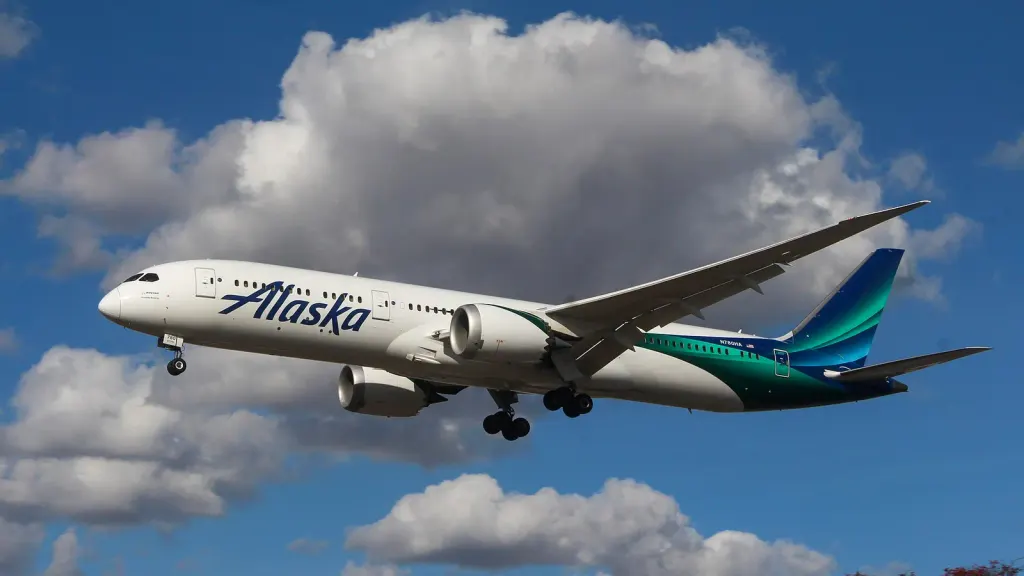
Alaska Airlines confirmed on 25 March 2025 that its new nonstop route between Seattle-Tacoma International Airport and Seoul Incheon will start on 12 September 2025. The flights will be operated by sister carrier Hawaiian Airlines with an Airbus A330-200, five times a week, and tickets went on sale through both airlines' websites the same day.
Alaska first revealed the route in December 2024, when it set out plans to build Seattle into an international long-haul gateway after its takeover of Hawaiian. Seoul will be the second widebody destination from Seattle under that plan, following daily Seattle–Tokyo Narita flights due to begin on 12 May 2025.
Schedule and aircraft
The route will carry Hawaiian flight numbers HA871 and HA872. As initially filed, the westbound flight leaves Seattle in the mid-afternoon and reaches Incheon in the early evening of the following day, with a block time of about 11 hours 25 minutes. The return leaves Seoul in the evening and arrives in Seattle in the afternoon of the same calendar day, taking about 10 hours 10 minutes thanks to prevailing tailwinds.
Hawaiian's A330-200s seat 278 passengers: 18 in business class and 260 in economy, laid out 2-4-2. The aircraft is a familiar type on the long Pacific sectors Hawaiian already flies from Honolulu, including its existing Honolulu–Incheon service.
The Seoul flights will follow the same model as the Tokyo service. Seattle–Narita, also sold by Alaska and flown by Hawaiian with an A330-200, is scheduled to run daily, giving the group two Northeast Asian gateways from Seattle by the end of 2025. Both routes depend on Hawaiian's widebody fleet and crews, so the Seattle flying adds a new strand to an operation that until now has been built almost entirely around Hawaii.
Why Hawaiian is flying an Alaska route
Alaska Air Group completed its acquisition of Hawaiian Holdings in September 2024. Alaska's own mainline fleet is made up entirely of Boeing 737s, so the deal gave the group its first widebody aircraft: Hawaiian's A330-200s and its growing fleet of Boeing 787-9s, with further 787s on order.
At the time of the Seoul announcement, Alaska and Hawaiian still held separate air operator certificates, so the flights had to be operated by Hawaiian under its own code even though they were sold as part of Alaska's Seattle network. The group's stated aim is to serve at least 12 international destinations from Seattle with widebody aircraft by 2030.
Competition and partners
Seattle–Seoul is already an established market. Delta Air Lines, Korean Air and Asiana Airlines all fly it, and Korean Air took control of Asiana in December 2024, giving the Korean group a strong position on the route. Alaska enters as the fourth airline.
Alaska is a member of the oneworld alliance, which it joined in 2021, and Hawaiian is due to join. Korean Air belongs to the rival SkyTeam alliance, but it has a long-standing bilateral partnership with Hawaiian. Seattle passengers will be able to connect from across Alaska's West Coast and Pacific Northwest network, while Incheon offers onward links into Asia.
Why it matters
For Alaska, the route is a test of whether it can turn Seattle from a largely domestic and transborder hub into a long-haul gateway able to compete with Delta, which has built its own transpacific operation there. Feeding long-haul flights from a dense domestic network is how the larger US airlines make international hubs pay, and Alaska already has that network in Seattle.
For travellers in the Pacific Northwest, Alaska and Hawaiian's loyalty programmes will now have a nonstop option to Korea on their own metal. For Seattle-Tacoma airport it adds another transpacific operator at a time when the airport is promoting itself as a gateway to Asia.
What has happened since
Before launch, Alaska upgraded the aircraft. The route opened on 12 September 2025 with a Boeing 787-9 instead of the A330, the first international 787-9 service for Alaska Air Group. That aircraft has 34 business class suites with sliding doors in a 1-2-1 layout and 266 economy seats, 79 of them with extra legroom. The Port of Seattle marked the first flight at Sea-Tac.
Further integration steps followed. Alaska and Hawaiian received a single operating certificate from the FAA on 29 October 2025, and Hawaiian was scheduled to join oneworld on 22 April 2026, when the two airlines moved to a single passenger service system and Hawaiian's HA code was phased out behind the scenes.
Alaska has also filed to add a sixth weekly Seattle–Seoul frequency from 30 March 2026, operated with the 787-9. The Seattle long-haul network has continued to grow: on 28 April 2026 Alaska flew its first transatlantic service, Seattle–Rome, and it scheduled new Seattle–London Heathrow and Seattle–Reykjavik services to begin in spring 2026. Competition on the Korean route is also increasing, with Asiana filing to fly Seoul–Seattle daily from 17 December 2026. Alaska's original route announcement is on its newsroom.

About the author
Ankit Kumar
Writer, Flying Engineer
View author profile Editorial policy and corrections