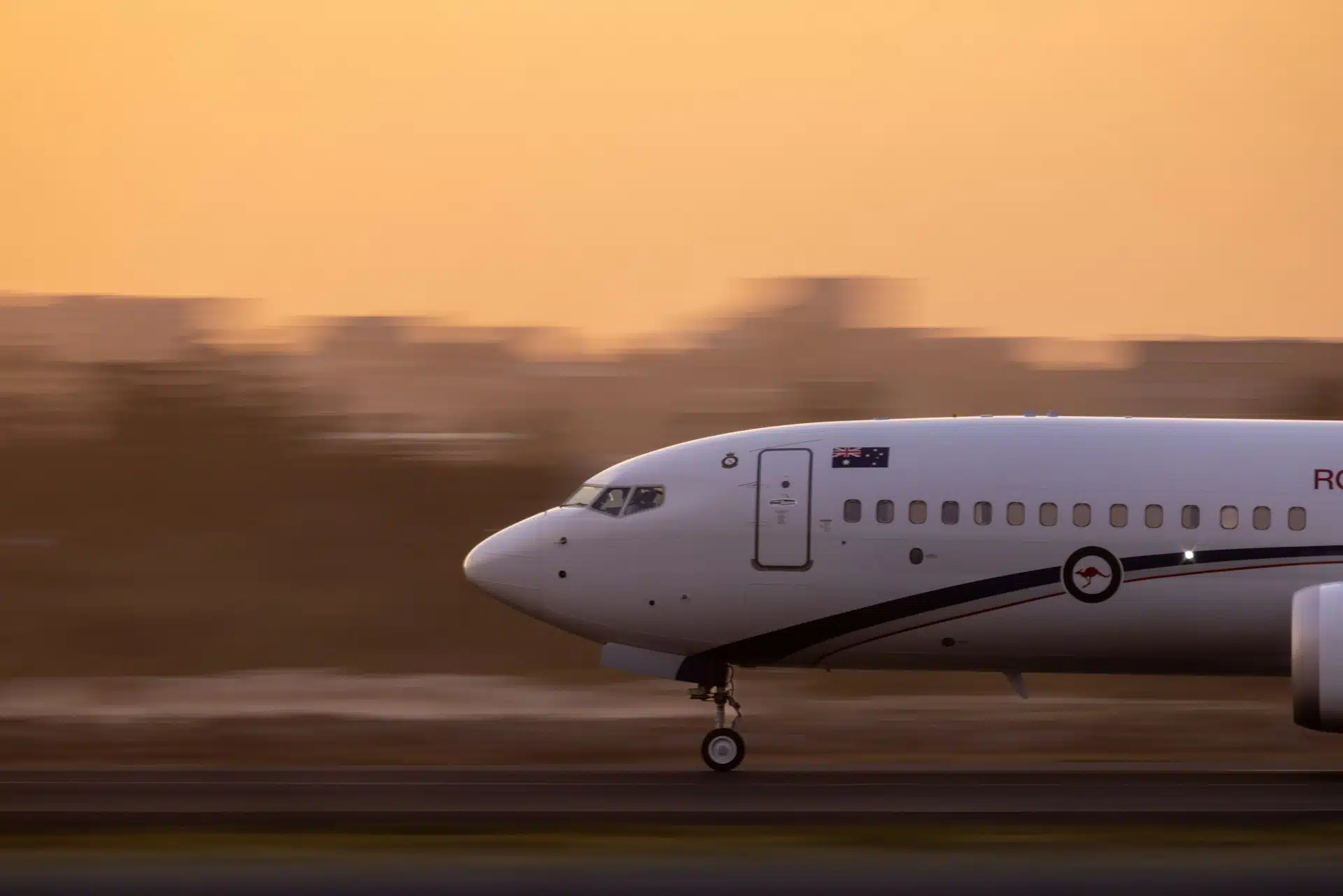
Walk onto any airport ramp and you’ll immediately notice striking differences in aircraft nose shapes. A Boeing 737’s gently rounded nose contrasts sharply with an F-16 fighter’s needle-like point, while cargo aircraft like the Airbus Beluga sport bulbous, almost cartoonish profiles that seem to defy conventional aerodynamics.
These dramatic variations aren’t aesthetic choices or random design preferences. Every curve, angle, and contour of an airplane nose design reflects careful engineering decisions balancing competing demands of aerodynamics, mission requirements, cockpit visibility, radar housing, and operational constraints.
Understanding why airplane noses are pointed requires examining how aircraft operate across vastly different flight envelopes. Commercial airliners optimize for subsonic fuel efficiency, supersonic fighters prioritize speed and radar performance, and cargo haulers sacrifice streamlining for practical loading access that saves hours of ground operations time.
This comprehensive engineering guide explores the aerodynamic principles, structural requirements, and mission-specific factors that determine aircraft aerodynamics nose configurations across military, commercial, and specialized aviation platforms.
What Determines Aircraft Nose Shape?
Three primary factors drive nose shape design decisions, with engineers constantly balancing tradeoffs between these often conflicting requirements.
Aerodynamic Efficiency
The nose represents the first point where air contacts the aircraft, making it critical for managing airflow over the entire fuselage. Poor nose design creates drag that compounds across the airframe, increasing fuel consumption and reducing range.
At subsonic speeds (below Mach 0.85), gently rounded noses efficiently split airflow with minimal drag. At supersonic speeds (above Mach 1.0), sharp pointed noses create shock waves that minimize wave drag more effectively than rounded profiles.
Operational Speed
Design speed fundamentally shapes nose geometry. Aircraft flying at 500 mph face different aerodynamic challenges than those exceeding 1,500 mph, requiring completely different solutions despite serving similar basic transportation functions.
Commercial jets cruising at 550 mph optimize noses for subsonic efficiency. Military fighters reaching Mach 2+ demands sharp profiles that handle supersonic shock waves. Speed directly dictates whether designers choose rounded or pointed configurations.
Mission-Specific Requirements
Beyond pure aerodynamics, aircraft noses accommodate radar systems, provide cockpit visibility, enable cargo loading, house sensors, and meet dozens of other operational needs. These practical requirements often override theoretically optimal aerodynamic shapes.
A cargo plane’s hinged nose sacrifices streamlining to load oversized freight quickly. Fighter radar systems require specific nose diameters. These mission-critical functions force compromises in aerodynamic purity.

Aerodynamics and Drag
Understanding how air flows around aircraft noses explains why certain shapes dominate specific aircraft categories.
Subsonic Airflow Patterns
Below the speed of sound, air behaves as an incompressible fluid that flows smoothly around properly shaped objects. Rounded noses split incoming air gently, allowing it to accelerate around the fuselage without separating from the surface and creating turbulent wakes.
The ideal subsonic nose approximates an elliptical profile that gradually transitions into the cylindrical fuselage. This shape minimizes form drag by preventing abrupt pressure changes that cause flow separation.
Supersonic Shock Waves
Above Mach 1.0, air becomes compressible and shock waves form where airflow transitions from supersonic to subsonic speeds. These shock waves create tremendous wave drag that dominates total aircraft drag at high speeds.
Sharp pointed noses create attached bow shocks that remain closer to the fuselage, reducing wave drag compared to rounded noses that generate stronger detached bow shocks extending further forward. The sharper the point, the weaker the shock wave and lower the drag penalty.
Drag Reduction Strategies
Engineers minimize nose drag through:
- Fineness Ratio – The nose length divided by maximum diameter. Higher ratios (longer, more slender noses) reduce drag but increase structural weight and complexity.
- Surface Smoothness – Eliminating gaps, rivets, and surface irregularities that trip laminar airflow into turbulent flow, increasing skin friction drag.
- Shape Optimization – Computer simulations test thousands of subtle contour variations to find shapes that minimize drag for specific speed ranges.
- Proper Transitions – Smooth blending between nose and fuselage prevents flow separation at the junction point.
Commercial Aircraft Nose Design
Commercial airliners universally feature rounded, blunt noses optimized for subsonic cruise efficiency between Mach 0.78 and 0.85. This design philosophy balances multiple operational requirements beyond pure aerodynamics.
Boeing 737 and Airbus A320 Families
These dominant narrowbody aircraft showcase classic commercial nose design. The rounded profile provides excellent cockpit visibility for pilots during takeoff, landing, and ground operations while maintaining good aerodynamic efficiency at cruise speeds.
The blunt nose houses weather radar in a fiberglass radome that doesn’t interfere with radio signals. The shape allows adequate space for avionics bays, air conditioning systems, and forward cargo holds without requiring excessive fuselage diameter.
Wide-Body Airliner Noses
Larger aircraft including the Boeing 777 and Airbus A350 maintain similar rounded profiles but scale proportions to match larger fuselage diameters. The nose fineness ratio remains relatively constant across aircraft sizes despite dramatic differences in overall dimensions.
These aircraft incorporate more sophisticated nose shapes using computational fluid dynamics to optimize every subtle curve. Minor refinements in nose contours can save thousands of gallons of fuel annually across airline fleets.
Cockpit Visibility Requirements
Pilot sightlines strongly influence commercial nose shapes. Regulations require unobstructed forward and downward vision for runway operations, particularly during landing when pilots need to see touchdown zones and taxiway markings.
The rounded nose positions cockpit windows high enough for good visibility while maintaining structural strength. Sharp pointed noses would force cockpit placement further aft, compromising pilot sightlines critical for safe operations.

Fighter Jet Nose Design
Military fighter aircraft adopt dramatically different nose philosophies driven by supersonic performance requirements and radar system integration.
Sharp Pointed Profiles
Fighters designed for supersonic combat feature needle-sharp nose cones that minimize wave drag at high Mach numbers. The F-16 Fighting Falcon’s distinctive pointed nose exemplifies this approach, optimized for speeds exceeding Mach 2.0.
The sharp point creates an attached oblique shock wave that stays close to the fuselage, reducing drag by 30-40% compared to blunt noses at supersonic speeds. This drag reduction directly translates to higher top speeds, better acceleration, and improved fuel efficiency during high-speed operations.
Radar System Integration
Modern fighter noses house powerful fire-control radars requiring specific antenna diameters for effective target detection and tracking. The nose diameter must accommodate the largest practical radar dish while maintaining aerodynamic efficiency.
Designers carefully shape the radome (radar dome) covering the antenna using materials transparent to radio frequencies. The radome must withstand enormous aerodynamic loads during supersonic flight while not distorting radar signals or adding excessive weight.
Examples Across Nations
Different air forces prioritize various nose design elements:
- F-16 Fighting Falcon – Extremely sharp point optimized for supersonic interception missions with relatively small radar system.
- F-15 Eagle – Slightly blunter nose accommodating larger, more powerful radar for beyond-visual-range combat.
- Sukhoi Su-27 Family – Russian fighters feature distinctive drooping noses providing excellent pilot visibility during close-in dogfighting.
- Eurofighter Typhoon – Delta wing design with moderately pointed nose balancing supersonic performance against maneuverability requirements.

Cargo Aircraft Nose Design
Cargo haulers prioritize loading efficiency over aerodynamic refinement, resulting in some of aviation’s most unusual nose configurations.
Hinged Nose Designs
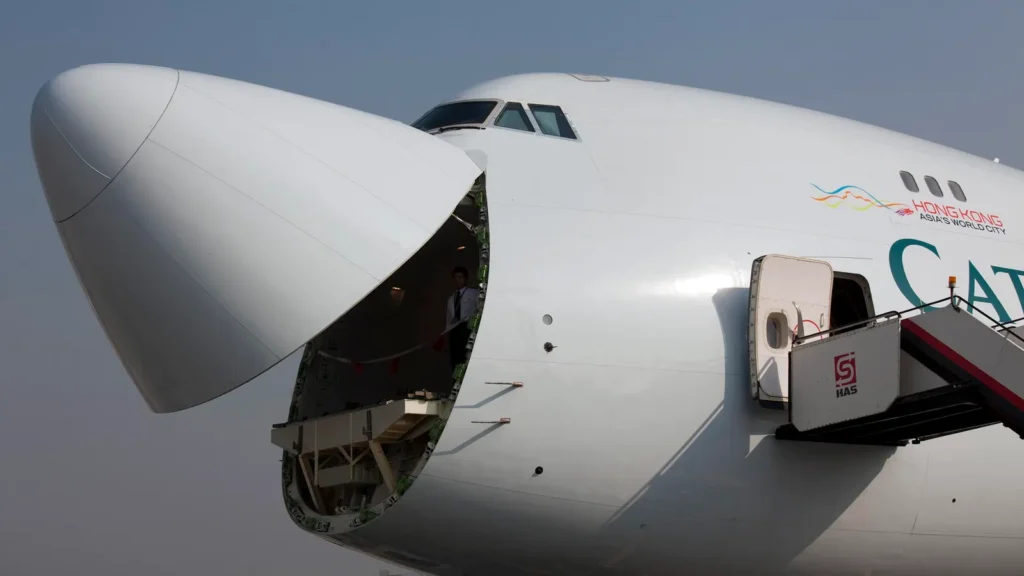
Large cargo aircraft including the Boeing 747-400F and Antonov An-124 feature upward-hinged noses that swing open, providing straight-line access to cargo holds. This design allows loading oversized freight including helicopters, missile sections, and industrial equipment that cannot fit through side cargo doors.
The hinged nose mechanism adds significant structural weight and creates aerodynamic penalties through panel gaps and imperfect sealing. However, the operational time savings during ground operations (loading in 30 minutes versus 4+ hours) justify these compromises for specialized cargo operations.
Airbus Beluga and Super Transporter
Perhaps aviation’s most distinctive nose belongs to the Airbus Beluga, designed to transport large aircraft components between European manufacturing facilities. The bulbous nose houses a cockpit positioned below the massive cargo bay, creating the whale-like profile that inspired its nickname.
This unconventional design maximizes internal cargo volume while keeping the cockpit accessible. Aerodynamic efficiency takes a back seat to cargo capacity, with the Beluga flying relatively slowly at reduced altitudes compared to conventional cargo jets.
Structural Reinforcement
Hinged noses require massive structural reinforcement to maintain fuselage integrity when the nose swings open. Heavy-duty hinges, latches, and locks add thousands of pounds but prove essential for safe operations with loads often exceeding 100 tons.
Radar and Avionics Influence
The nose cone (radome) serves as critical housing for weather radar on commercial aircraft and fire-control systems on military platforms, directly influencing nose shape and construction.
Weather Radar Requirements
All commercial jets carry weather radar in nose-mounted radomes that scan ahead for thunderstorms, turbulence, and precipitation. The radar dish requires sufficient diameter for effective range (typically 160-320 nautical miles) and enough space behind it for electronic components.
Radome materials must be transparent to radar frequencies while strong enough to withstand bird strikes, hail impacts, and extreme temperature variations. Modern radomes use advanced composites including fiberglass and Kevlar that provide strength without blocking radio signals.
Military Radar Systems
Fighter radar systems demand far more sophisticated performance than weather radar, requiring larger antenna diameters, more powerful transmitters, and complex signal processing equipment. These systems can detect, track, and engage multiple targets simultaneously at ranges exceeding 100 miles.
The radar antenna diameter directly limits detection range and resolution. Designers maximize nose diameter within aerodynamic constraints, creating the distinctive large-diameter noses on aircraft like the F-15 and Su-35.
Stealth Considerations
Low-observable (stealth) aircraft shape noses to minimize radar returns to enemy detection systems. The F-22 Raptor and F-35 Lightning II feature faceted noses with carefully angled surfaces that reflect radar energy away from the transmitter rather than back toward it.
Stealth shaping conflicts with traditional aerodynamic optimization, forcing engineers to accept slightly higher drag in exchange for drastically reduced radar signature that provides survivability advantages in contested airspace.
Supersonic Aircraft Nose Shapes
Aircraft designed for sustained supersonic cruise require specialized nose configurations that balance high-speed efficiency with low-speed handling and visibility.
Concorde’s Innovative Droop Nose
The Concorde supersonic transport featured one of aviation’s most ingenious nose designs. At cruise (Mach 2.0), the nose maintained a sharp streamlined profile optimized for supersonic efficiency. During takeoff and landing, the nose drooped downward 5 degrees, then an additional 12.5 degrees for landing, providing pilots with adequate forward visibility.
This movable nose solved the fundamental conflict between supersonic aerodynamics demanding long pointed noses and low-speed operations requiring good pilot sightlines. Complex hydraulic systems raised and lowered the nose automatically during different flight phases.
Modern Supersonic Designs
Contemporary supersonic business jet concepts including Boom Supersonic’s Overture employ similar droop-nose mechanisms. The long pointed nose essential for supersonic efficiency would completely block pilot vision during landing without the drooping capability.
Advanced materials and fly-by-wire controls allow designers to create lighter, more reliable droop-nose mechanisms than Concorde’s hydraulic systems. Some proposals use synthetic vision systems that could potentially eliminate mechanical nose drooping entirely.

Why Some Aircraft Look “Ugly” or Unusual
Some aircraft feature nose designs that seem aesthetically awkward or unconventional, but these shapes reflect engineering priorities favoring function over form.
Mission Over Aesthetics
The Airbus A300-600ST Beluga’s bulbous profile, the Antonov An-225’s flattened nose, and the Boeing KC-135’s distinctive refueling boom housing all prioritize operational requirements over visual appeal. These aircraft perform specialized missions where conventional streamlining would compromise functionality.
Engineers designing these platforms accept aerodynamic penalties knowing the mission benefits outweigh efficiency losses. An extra 10-15% fuel burn becomes acceptable when the alternative is making cargo loading physically impossible.
Prototypes and Experimental Aircraft
Research aircraft often feature unusual noses housing experimental sensors, probes, or test equipment. The NASA X-15’s sharp needle nose, various X-plane configurations, and early jet prototypes prioritized gathering data over aesthetic refinement.
These one-off designs push engineering boundaries, testing concepts that may or may not transition to production aircraft. Their unusual appearances reflect experimental nature rather than production design priorities.
Do Nose Shapes Affect Performance?
Nose design significantly impacts multiple performance parameters beyond obvious aerodynamic efficiency.
Fuel Efficiency Impact
At commercial jet cruise speeds, nose shape contributes approximately 10-15% of total aircraft drag. Poorly optimized noses can increase fuel consumption by 3-5% over an aircraft’s service life, costing airlines millions in additional fuel expenses across fleet operations.
The Boeing 787’s refined nose contours contribute to its overall 20% fuel efficiency improvement over comparable older designs. Small improvements in nose shape combine with wing, engine, and systems advances to achieve significant total performance gains.
Speed and Handling
Nose shape influences handling characteristics during specific flight conditions. Commercial aircraft noses affect pitch stability and control response during slow-speed operations including approach and landing.
Fighter aircraft rely on precisely shaped noses to manage airflow into engine inlets, maintain controllability at extreme angles of attack, and provide stable radar tracking platforms during combat maneuvering. Poorly designed noses create control problems that pilots cannot easily overcome.
Structural Weight
Longer, more streamlined noses require additional structural support, adding weight that can offset some aerodynamic benefits. Engineers carefully optimize the tradeoff between reduced drag and increased structural mass.
Cargo aircraft with hinged noses carry significant weight penalties from reinforced structures and operating mechanisms. These designs accept several thousand pounds of additional weight in exchange for operational flexibility.
Future Aircraft Nose Designs
Emerging technologies and new mission requirements are driving innovative approaches to nose design.
Blended Wing Body Concepts
Future aircraft may abandon conventional tube-and-wing layouts entirely, adopting blended wing body (BWB) configurations where the fuselage, wings, and nose merge into unified lifting surfaces. These designs eliminate traditional nose sections, distributing pilot stations across the leading edge.
BWB concepts promise 20-30% fuel efficiency improvements but require rethinking fundamental design assumptions including where to position cockpits, how to arrange passenger seating, and how to maintain structural integrity without cylindrical fuselage pressure vessels.
Advanced Materials and Manufacturing
Additive manufacturing (3D printing) enables creating complex nose shapes impossible with traditional fabrication methods. Engineers can optimize every square inch of surface area through computer-generated organic shapes that minimize drag while incorporating structural requirements.
Carbon fiber composites allow lighter, stronger nose structures that can adopt more aggressive aerodynamic shapes without excessive weight penalties. These materials also resist corrosion better than aluminum, simplifying maintenance.
Stealth Evolution
Next-generation fighters including the sixth-generation platforms under development will feature even more sophisticated nose shaping integrating stealth requirements with advanced sensor systems. Conformal antennas embedded within nose surfaces eliminate traditional radomes entirely.
Adaptive materials that can change shape during flight may allow future aircraft to optimize nose profiles for different flight phases, combining supersonic cruise efficiency with low-speed handling without mechanical droop-nose mechanisms.

Frequently Asked Questions
Why are airplane noses pointed?
Pointed noses reduce aerodynamic drag, particularly at high speeds. For supersonic aircraft, sharp points minimize wave drag created by shock waves forming as the aircraft exceeds the speed of sound. Commercial jets use moderately rounded points optimized for subsonic cruise speeds around 550 mph, balancing drag reduction against other requirements including pilot visibility and radar housing. The degree of pointing correlates directly with design speed, with faster aircraft requiring sharper profiles.
What is a radome and why is it important?
A radome is the nose cone covering an aircraft’s weather or navigation radar system. It protects sensitive radar equipment from weather, impacts, and aerodynamic forces while remaining transparent to radio frequencies so radar signals can pass through unobstructed. Radomes are constructed from fiberglass, Kevlar, or advanced composites that provide strength without blocking electromagnetic waves. Poor radome design can severely degrade radar performance or create dangerous aerodynamic characteristics.
Why do fighter jets have such sharp noses compared to commercial aircraft?
Fighter jets require sharp noses for two primary reasons. First, many fighters operate at supersonic speeds exceeding Mach 1.5 where sharp points dramatically reduce wave drag from shock waves. Second, fighter noses house powerful fire-control radars requiring specific shapes for optimal antenna performance. Commercial jets fly subsonically and prioritize pilot visibility, passenger comfort, and operational efficiency over maximum speed, making rounded noses more practical despite slightly higher drag.
Why do some cargo planes have noses that open?
Hinged opening noses allow cargo aircraft to load oversized freight that cannot fit through standard side cargo doors. This includes military equipment, helicopters, spacecraft components, industrial machinery, and emergency relief supplies. While opening noses add structural weight and create minor aerodynamic penalties from panel gaps, they reduce loading times from hours to minutes for specialized cargo. The operational efficiency gains justify accepting slightly worse fuel economy on these specialized aircraft.
How does nose shape affect fuel efficiency?
Nose shape contributes 10-15% of total aircraft drag at cruise speeds. A poorly optimized nose can increase fuel consumption by 3-5% over an aircraft’s lifetime, costing airlines millions of dollars in extra fuel expenses. Modern computational fluid dynamics allows engineers to refine nose contours to minimize drag while meeting operational requirements. Even subtle improvements in nose shaping, when combined with other efficiency enhancements, deliver significant total performance gains.
Will future aircraft have radically different nose designs?
Yes, emerging technologies enable revolutionary nose designs. Blended wing body concepts eliminate traditional noses entirely, distributing cockpits across leading edges. Adaptive materials may allow noses that change shape during flight, optimizing profiles for different speeds without mechanical systems. Advanced manufacturing techniques including 3D printing enable complex organic shapes impossible with conventional fabrication. Sixth-generation military aircraft will incorporate conformal antennas eliminating external radomes while maintaining stealth characteristics through carefully shaped surfaces.
Conclusion
Aircraft nose shapes represent elegant engineering solutions balancing aerodynamic theory against practical operational realities. From the Boeing 737’s efficient rounded profile to the F-16’s supersonic needle point to the Airbus Beluga’s cargo-optimized bulge, each design reflects careful optimization for specific mission requirements.
Understanding these engineering tradeoffs reveals why aircraft look the way they do and how designers navigate competing demands of speed, efficiency, visibility, payload capacity, and countless other factors. The next time you see an aircraft, look closely at its nose. That shape tells a story of engineering priorities, operational needs, and the fundamental physics governing flight.
As aviation technology advances through new materials, manufacturing methods, and design philosophies, nose shapes will continue evolving. Future aircraft may look nothing like today’s conventional designs, but the same fundamental principles of aerodynamics, mission optimization, and engineering compromise will guide their development.