Airbus A340-600: Technical Specs, Engine Details & Performance Explained
 Radu BalasPublished 22 min read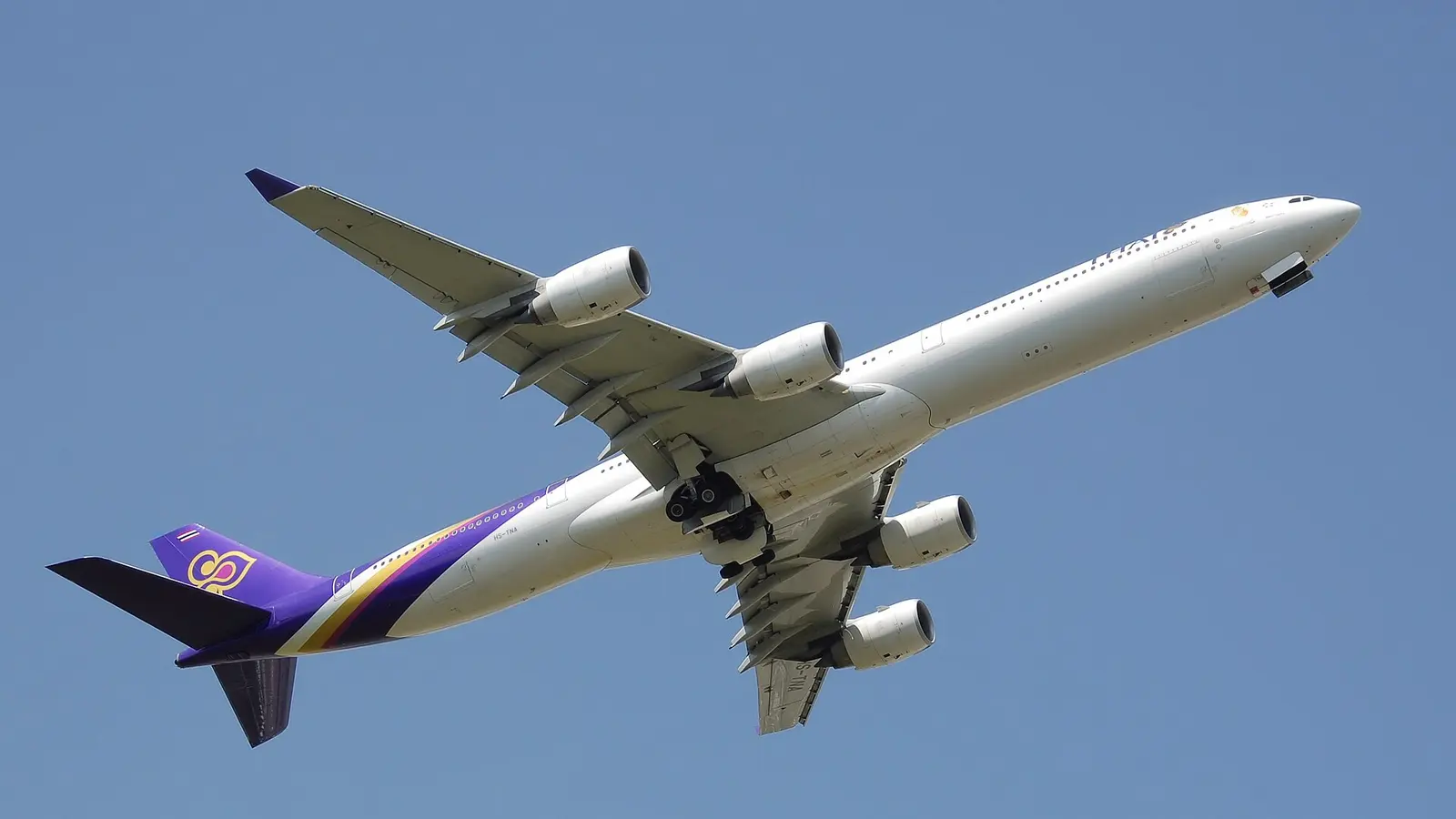
The Airbus A340-600 stands as one of aviation's most distinctive four-engine widebody aircraft, representing both the pinnacle and the sunset of quad-jet design for commercial aviation.
Launched in 2001 and entering service in August 2002 with Virgin Atlantic, this stretched variant became the world's longest commercial airliner, measuring 75.36 meters from nose to tail until the Boeing 747-8 claimed that record in 2010.
Designed as Airbus's answer to the Boeing 747-400 and early 777 variants, the A340-600 offered airlines a true early-model 747 replacement with 25% more cargo volume, lower trip costs, and better seat economics.
Featured in our guide to the world's largest passenger aircraft, the A340-600 remains one of the longest commercial jets ever built, even longer than the massive A380 in fuselage length.
What makes spotters and aviation enthusiasts continue to chase this aircraft today is its rarity combined with its dramatic four-engine silhouette.
As of early 2026, Lufthansa operates the last significant commercial A340-600 fleet with just six aircraft, scheduled for final retirement by summer 2026. The type's disappearing act from global skies has only intensified interest among planespotters, making each sighting increasingly precious.
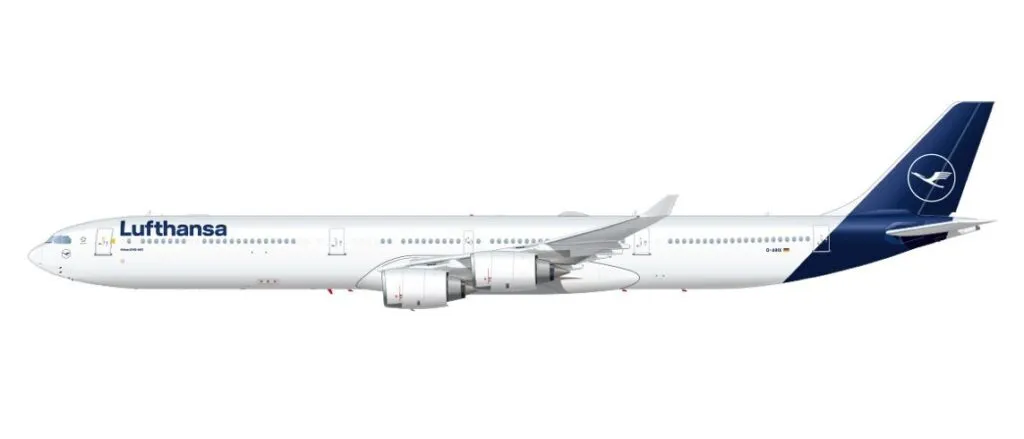
The A340-600's long fuselage creates unique operational characteristics. While providing exceptional passenger capacity (up to 380 in three-class configuration), the extended body requires careful rotation technique during takeoff to prevent tail strikes. Pilots maintain a maximum 8.5-degree angle of attack with the tail touching the ground, limiting actual rotation to approximately 6.7 degrees to keep clearance.
Airbus A340-600 Key Technical Specifications
The A340-600's specifications reflect its role as a high-capacity, ultra-long-haul workhorse designed for hot-and-high airports and trans-oceanic routes.
| Specification Category | Details |
|---|---|
| Length | 75.36 m (247 ft 5 in) — longer than Boeing 747-400 |
| Wingspan | 63.45 m (208 ft 2 in) |
| Height | 17.93 m (58 ft 10 in) |
| Engines | 4 × Rolls-Royce Trent 556 (249 kN) or Trent 560 (275 kN) |
| Maximum Takeoff Weight (MTOW) | 368,000 kg (811,300 lb) standard / 380,000 kg (837,800 lb) HGW variant |
| Operating Empty Weight | 177,000 kg (390,220 lb) |
| Maximum Payload | 66,000 kg (146,000 lb) |
| Range | 13,890 km (7,500 nm) standard / 14,630 km (7,900 nm) HGW variant |
| Typical Passenger Capacity | 326-380 (three-class) |
| Maximum Passenger Capacity | 475 (single-class, rarely used) |
| Cruise Speed | Mach 0.82 (871 km/h / 470 knots) |
| Maximum Speed | Mach 0.86 (914 km/h / 493 knots) |
| Service Ceiling | 12,634 m (41,450 ft) |
| Cargo Volume | 201.7 m³ (7,120 cu ft) — 25% more than 747-400 |
| Fuel Capacity | 204,500 liters (54,020 US gallons) |
| Takeoff Distance | 3,400 m (11,200 ft) at MTOW |
The A340-600's dimensions made it the world's longest commercial airliner from 2002 until 2010. At 75.36 meters, it exceeded the Boeing 747-400's length by 4.5 meters and remained 1.5 meters longer than the A350-1000, Airbus's current flagship widebody.
Engine Details — Rolls-Royce Trent 556 / Trent 560 Explained
The A340-600 is exclusively powered by Rolls-Royce's Trent 500 series engines, specifically the Trent 556 and Trent 560 variants. These engines represent a scaled development of the Trent family, combining the wide-chord fan from the Trent 700 with a core derived from the Trent 800.
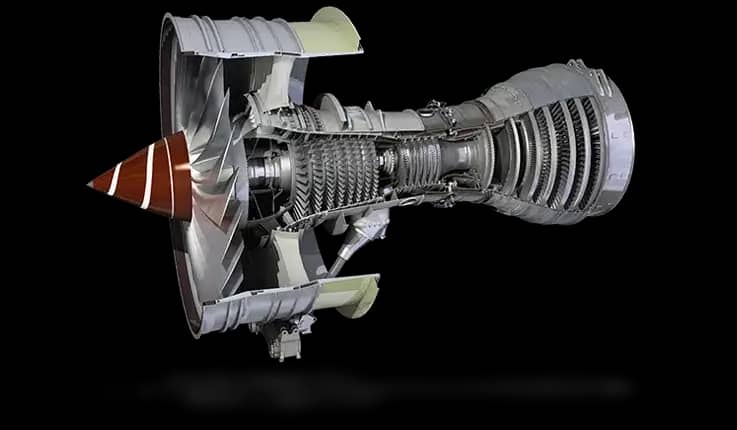
Trent 500 Series Technical Architecture
The Trent 556 and Trent 560 maintain Rolls-Royce's signature three-spool turbofan architecture, which provides superior efficiency and operational flexibility compared to two-spool designs. This configuration allows each spool to rotate at its optimal speed, improving thermodynamic performance across all flight regimes.
| Engine Specification | Trent 556 (Standard) | Trent 560 (HGW) |
|---|---|---|
| Maximum Thrust | 249 kN (56,000 lbf) | 275 kN (62,000 lbf) |
| Cruise Thrust per Engine | ~11,000 lb (49 kN) | ~11,000 lb (49 kN) |
| Fan Diameter | 2.47 m (97.4 inches) | 2.47 m (97.4 inches) |
| Bypass Ratio | 8.5:1 at cruise (7.5-7.6:1 overall) | 8.5:1 at cruise (7.5-7.6:1 overall) |
| Overall Pressure Ratio | 35-36:1 | 35-36:1 |
| Specific Fuel Consumption (SFC) | 0.568 lb fuel per lb thrust per hour | 0.568 lb fuel per lb thrust per hour |
| Dry Weight per Engine | 4,990 kg (11,000 lb) | 4,990 kg (11,000 lb) |
| LP Spool Speed | 3,900 rpm | 3,900 rpm |
| IP Spool Speed | 9,100 rpm | 9,100 rpm |
| HP Spool Speed | 13,300 rpm | 13,300 rpm |
Compression and Turbine Configuration
The Trent 500's compression system consists of three stages working in sequence. The single-stage wide-chord fan delivers initial compression while moving massive volumes of air. The fan's 2.47-meter diameter matches the Trent 700, providing proven reliability and performance.
The eight-stage intermediate pressure (IP) compressor continues compression through multiple stages, feeding into the six-stage high pressure (HP) compressor. This cascading compression achieves an overall pressure ratio of 35-36:1, compressing incoming air to temperatures and pressures necessary for efficient combustion.
The single annular combustion chamber burns fuel efficiently at high pressure and temperature. On the turbine side, the single-stage HP turbine extracts energy to drive the HP compressor, while the single-stage IP turbine powers the IP compressor. The five-stage LP turbine drives the large fan, with each turbine blade removing up to 560 kW (750 hp) from the gas stream.
Advanced Technologies
The Trent 500 incorporates several advanced technologies for its era. Hollow titanium fan blades with internal Warren-girder structure achieve high strength-to-weight ratios while maintaining damage tolerance. The 26 wide-chord fan blades reduce blade count compared to earlier designs, decreasing weight and maintenance requirements.
Turbine blades operate at temperatures exceeding their melting point, made possible by single-crystal nickel alloy construction with thermal barrier coatings. Cooling air bled from the compressor flows through laser-drilled holes in the hollow turbine blades, maintaining structural integrity at extreme temperatures approaching 1,835 Kelvin (1,562°C).
Full Authority Digital Engine Control (FADEC) manages all engine parameters electronically, optimizing performance across all flight conditions while reducing pilot workload. The FADEC system monitors thousands of parameters per second, adjusting fuel flow, variable geometry, and bleed air extraction for optimal efficiency.
Operational Characteristics
The Trent 500 processes approximately 870 kg of air per second at maximum thrust, with the high bypass ratio of 8.5:1 at cruise meaning most of this air bypasses the core. This delivers excellent propulsive efficiency, though not matching the 9:1 or higher ratios of modern engines like the GE9X on the 777X.
Time between overhaul (TBO) for the Trent 500 averages around 5,000 flight hours, typical for engines of this generation. The engine's noise signature measures 91.0 EPNdB on takeoff, meeting Stage 2 noise requirements but considerably louder than modern engines that achieve 15-20 EPNdB margins below current regulations.
Aerodynamics & Wing Design
The A340-600's wing derives from the A330/A340 common wing platform but incorporates significant modifications to handle the aircraft's increased length, weight, and range requirements. The wing features a 1.6-meter span extension with a tapered wingbox insert, increasing total wing area to support the aircraft's 380,000 kg maximum takeoff weight.
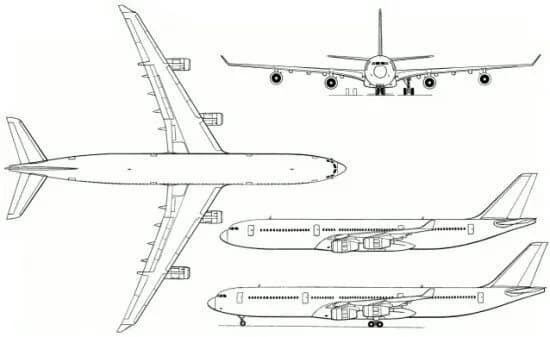
Wing Configuration and Loading
With a wingspan of 63.45 meters and wing area of 437 square meters, the A340-600 achieves favorable wing loading characteristics. The high-aspect-ratio wing design (wing area relative to span) provides excellent lift-to-drag ratios for long-range cruise efficiency.
The four-engine configuration distributes weight evenly across the wing, reducing bending moments compared to twin-engine designs where engines create asymmetric loading. This allows the wing structure to be optimized differently than twin-engine aircraft like the 787 and A350, where heavy engines concentrated at two points create higher structural loads.
Winglets on the A340-600 reduce induced drag by approximately 4% on flights over 2,800 km. While not as sophisticated as modern sharklets or raked wingtips, these devices significantly improve fuel efficiency on the ultra-long-haul missions the A340-600 was designed to operate.
Long-Fuselage Stability Features
The A340-600's exceptional length of 75.36 meters required specific aerodynamic solutions for stability. The aircraft uses an enlarged horizontal stabilizer and the A330-200's larger vertical fin to provide adequate pitch and yaw authority.
These enlarged tail surfaces ensure positive control throughout the flight envelope despite the long fuselage creating significant pitch moments.
Full electrical control of the rudder replaced mechanical linkages used on earlier A340 variants, providing precise control inputs needed for the long fuselage. The fly-by-wire system automatically coordinates rudder, aileron, and elevator inputs to maintain coordinated flight and prevent adverse yaw in all conditions.
Range, Payload & Real-World Performance
The A340-600's performance envelope reflects careful optimization for long-haul missions with high passenger loads, though with compromises that ultimately led to its market failure against more efficient twins.
Range Capabilities
The standard A340-600 achieves 13,890 km (7,500 nautical miles) range with 380 passengers in typical three-class configuration. The High Gross Weight (HGW) variant introduced in 2005 extends this to 14,630 km (7,900 nautical miles) through strengthened structure, increased fuel capacity, and advanced manufacturing techniques including laser beam welding.
This range enables true ultra-long-haul missions like Frankfurt to Buenos Aires (11,641 km), London to Hong Kong (9,648 km), and Johannesburg to New York (12,834 km). South African Airways operated the latter route with A340-600s for years, one of the world's longest commercial flights despite the aircraft's fuel-intensive four-engine configuration.
| Famous A340-600 Routes | Distance | Primary Operators |
|---|---|---|
| Johannesburg – New York JFK | 12,834 km (6,927 nm) | South African Airways |
| Frankfurt – Buenos Aires | 11,641 km (6,283 nm) | Lufthansa |
| Frankfurt – Hong Kong | 9,169 km (4,951 nm) | Lufthansa |
| London – New York JFK | 5,576 km (3,011 nm) | Virgin Atlantic |
| London – Los Angeles | 8,781 km (4,741 nm) | Virgin Atlantic |
| Madrid – Mexico City | 9,222 km (4,979 nm) | Iberia (largest A340-600 route by ASKs) |
| Frankfurt – Boston | 5,841 km (3,154 nm) | Lufthansa (busiest route in 2025) |
| Madrid – Bogotá | 8,078 km (4,361 nm) | Iberia |
Payload Flexibility
The A340-600's maximum payload of 66,000 kg enables strong cargo capacity alongside passengers. The 201.7 cubic meter cargo hold provides 25% more volume than the Boeing 747-400, making the aircraft attractive for routes combining passenger and freight revenue.
This payload advantage proved particularly valuable on routes to South America and Africa, where airlines could carry substantial belly cargo in addition to passengers.
Iberia selected the A340-600 specifically for Latin American routes, where hot-and-high airports and long distances demanded both payload capacity and four-engine performance.
Hot-and-High Performance
Four engines provided excellent hot-and-high airport performance, a key selling point for airlines operating from elevated airports in hot climates. With total thrust of 996 kN (224,000 lbf) from four Trent 556 engines, the A340-600 maintained strong climb performance even in density altitude conditions where twin-engine aircraft struggled.
Airports like Johannesburg (1,694 meters elevation), Bogotá (2,548 meters), Mexico City (2,316 meters), and Quito (2,850 meters) all saw regular A340-600 operations. The four-engine configuration provided both performance margins and passenger confidence for airlines operating from these challenging airports.
Oceanic Crossing Stability
The A340-600's four-engine layout provided exceptional stability on long oceanic crossings. Engine-out scenarios at cruise altitude required less dramatic maneuvers than twins, with three remaining engines providing 75% of total thrust compared to 50% on a twin.
This operational margin, while less economically important after ETOPS expansion, provided psychological comfort for passengers and crews on 10+ hour overwater flights.
A340-600 Fuel Burn (And Why It Eventually Lost to Twin-Engines)
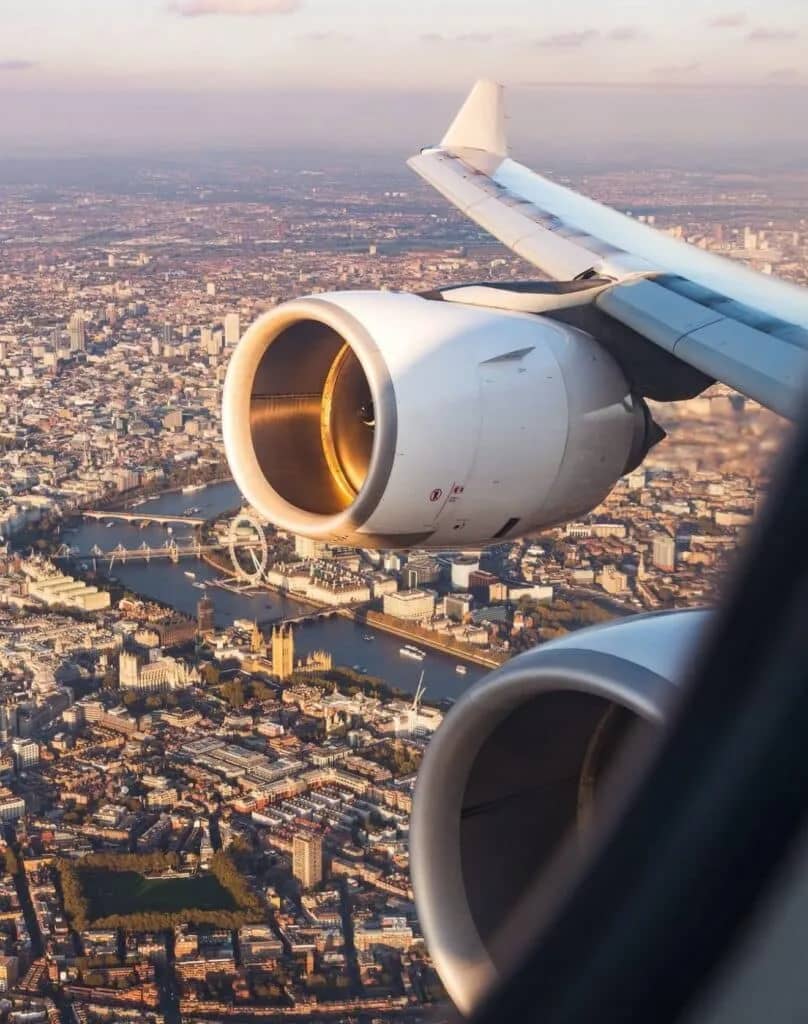
The A340-600's fuel consumption tells the story of why four-engine aircraft became economically obsolete, despite strong technical capabilities in other areas.
Absolute Fuel Burn Figures
The A340-600 burns approximately 8,000-10,000 kg (8-10 tonnes) of fuel per hour during cruise, depending on weight, altitude, and speed. On the Paris-Singapore route (11,275 km), a fully loaded A340-600 requires approximately 95,000 kg of fuel total, representing a fuel efficiency of 8.4 kg per kilometer.
This hourly burn rate stems from the combined output of four Trent 556 engines, each consuming fuel at a specific fuel consumption (SFC) rate of 0.568 lb per lb of thrust per hour. At cruise thrust of approximately 11,000 lb per engine, total cruise fuel flow reaches 25,000 lb per hour (11,340 kg per hour) for all four engines combined.
Comparison with Boeing 777-300ER
The competitive disadvantage becomes clear when comparing the A340-600 to the Boeing 777-300ER, its primary market competitor. The 777-300ER's twin GE90-115B engines achieve 0.530 lb per lb thrust per hour SFC, approximately 7% better than the Trent 500 series. More critically, operating two engines instead of four eliminates baseline fuel burn from the additional engines.
| Aircraft | Engines | Cruise Fuel Burn | Per-Seat Efficiency | Advantage |
|---|---|---|---|---|
| A340-600 | 4 × Trent 556 | 8,000-10,000 kg/hr | ~25 kg/hr (380 pax) | Higher capacity |
| 777-300ER | 2 × GE90-115B | 6,800-7,500 kg/hr | ~19 kg/hr (396 pax) | 25-30% lower per-seat burn |
| A350-1000 | 2 × Trent XWB-97 | 5,800-6,500 kg/hr | ~16 kg/hr (366 pax) | 35-40% lower per-seat burn |
Industry analysts calculated the 777-300ER offered 14-17% lower total fuel burn than the A340-600 on most routes. When normalized per seat, the advantage ranged from 25-30% depending on configuration. The modern A350-1000 extends this advantage to 35-40% better fuel efficiency per seat compared to the A340-600.
Why Airlines Moved Away From Four-Engine Aircraft
The expansion of ETOPS (Extended-range Twin-engine Operational Performance Standards) regulations eliminated the primary advantage four-engine aircraft once held. As engine reliability improved through the 1990s and 2000s, regulatory authorities progressively extended the distance twins could operate from diversion airports.
ETOPS-180 certification allowed twins to fly routes up to 180 minutes (approximately 3,000 km) from diversion airports, covering virtually all trans-Atlantic and trans-Pacific routes. By 2007, ETOPS-330 and eventually ETOPS-370 certifications opened even the most remote oceanic routes to twin-engine aircraft, rendering the four-engine safety margin operationally unnecessary.
The Economic Reality: At 2008 fuel prices of $140 per barrel, airlines calculated they needed to fill 120% of A340 seats to break even on ultra-long-haul routes.
Thai Airways, despite consistently achieving 80% load factors on Bangkok-New York flights, could not operate the route profitably with A340s. Airlines that continued A340 operations through this period hemorrhaged cash, accelerating retirement programs.
The financial case became overwhelming. Operating two massive engines proved cheaper than four smaller ones, even when the larger engines cost more per unit. Maintenance, spare parts inventory, overhaul costs, and complexity all multiplied with four powerplants.
When combined with 30% higher fuel burn per seat, the A340's economics collapsed against modern twins.
Cockpit, Avionics & Flight Deck Technology
The A340-600 features Airbus's common fly-by-wire flight deck, providing high commonality with the A320, A330, A340-200/300, and A380. This commonality delivers substantial training cost savings and operational flexibility for airlines operating mixed Airbus fleets.
Flight Control Systems
Fly-by-wire technology replaces mechanical linkages between pilot inputs and control surfaces with electronic signals interpreted by flight control computers. This system provides envelope protection, preventing pilots from exceeding aircraft limits in pitch, roll, bank angle, and speed.
The A340-600 uses five flight control computers working in voting configuration, ensuring redundancy even with multiple failures. Control laws automatically adjust based on flight conditions, providing consistent handling characteristics throughout the flight envelope while optimizing aerodynamic efficiency.
Airbus's distinctive side-stick controllers replace traditional control yokes, providing better ergonomics and unobstructed forward panel visibility. The side-stick philosophy differs from Boeing's approach, with Airbus arguing the design reduces pilot fatigue on long-haul flights and provides clearer panel access.
Glass Cockpit Configuration
The A340-600's flight deck features six primary display screens: two Primary Flight Displays (PFDs), two Navigation Displays (NDs), and two Engine/Warning Display (E/WD) systems. While earlier A340s used CRT displays, later production incorporated LCD screens with better brightness, contrast, and reliability.
The Electronic Flight Instrument System (EFIS) integrates all critical flight information on the PFDs, including attitude, heading, airspeed, altitude, and vertical speed. NDs show route, weather radar, TCAS traffic, and terrain awareness on a single configurable screen.
Engine parameters, warnings, and systems status appear on the E/WD screens, using color coding to prioritize information. Red alerts require immediate action, amber cautions need awareness, and green status confirms normal operations. This standardized presentation reduces cockpit confusion during abnormal situations.
A330 Type Rating Commonality
Pilots type-rated on the A330 can fly the A340-600 with minimal additional training, typically requiring just differences training rather than a full type rating course. This commonality stems from identical flight control philosophy, similar systems architecture, and common cockpit layout despite the four-engine versus twin-engine configuration.
This cross-qualification capability delivers significant value for airlines operating mixed fleets. Lufthansa, for example, can roster pilots across A330, A340, and even A350 aircraft (which shares further commonality) with appropriate differences training, maximizing crew utilization and reducing training costs.
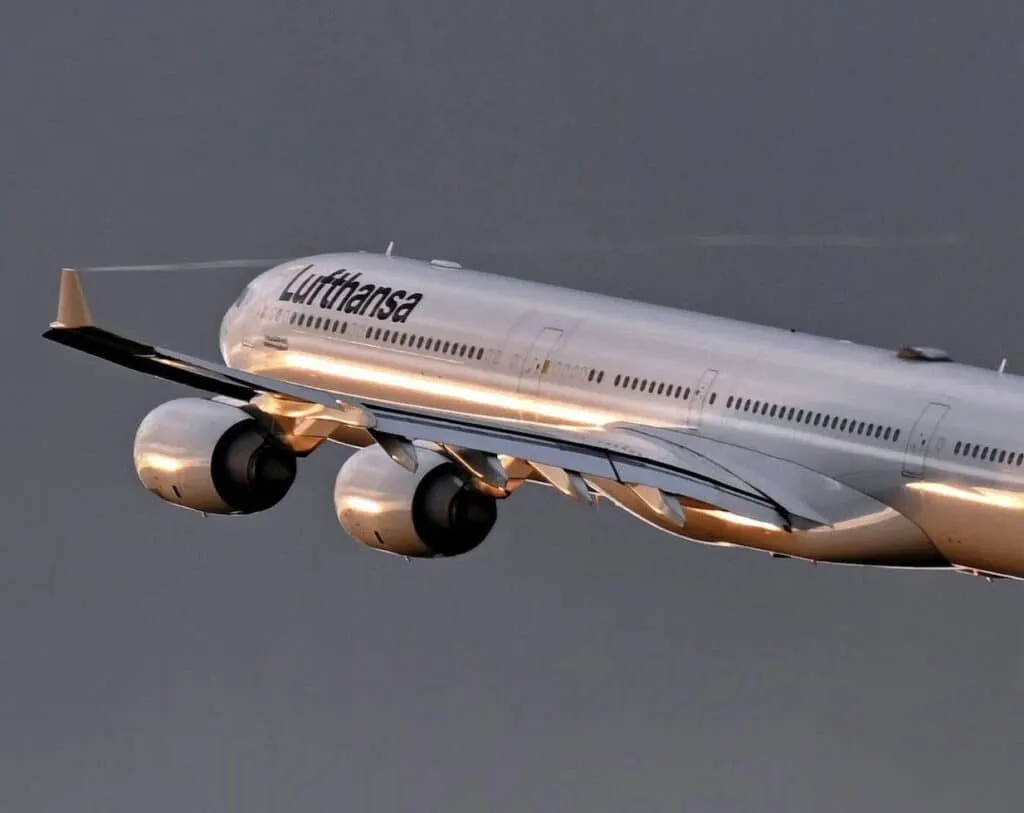
Cabin Experience — Layout, Comfort & Airline Configurations
The A340-600's exceptional fuselage length of 75.36 meters creates unique cabin layout possibilities. The constant-section fuselage maintains Airbus's standard widebody cross-section of 5.64 meters internal width, matching the A330 and A300.
Typical Cabin Configurations
Airlines configured the A340-600 with substantial variation based on route requirements and business model. Lufthansa's configuration exemplifies premium-heavy layout with 281 seats: 8 first class, 44 business class, 32 premium economy, and 197 economy class. This layout prioritizes high-yield passengers for long-haul European and trans-Atlantic routes.
Virgin Atlantic operated 308 seats in four classes including luxurious Upper Class Suites at the front of the aircraft. The long fuselage allowed Virgin to create substantial premium cabin space without sacrificing total capacity. The airline marketed the A340-600 as "4 engines 4 long-haul," emphasizing both safety perception and comfort.
Iberia configured its A340-600 fleet with 342 seats, while other operators ranged from 326 to 380 in three-class layouts. High-density configurations could theoretically accommodate 475 passengers, though no operator deployed such layouts commercially.
Passenger Comfort Characteristics
The A340-600's cabin width of 5.64 meters typically accommodates 8-abreast seating in economy (2-4-2 configuration) though some carriers used 9-abreast (3-3-3). The 2-4-2 layout provides direct aisle access for window passengers, a significant comfort advantage on ultra-long-haul flights.
Cabin altitude on the A340-600 maintains 8,000 feet equivalent pressure, typical for aluminum-fuselage aircraft of its generation. While higher than the 6,000 feet cabin altitude on modern 787 and A350 aircraft with composite fuselages, the A340 was comfortable by the standards of its era.
Engine placement far outboard on the wings and significant distance from the cabin reduces engine noise in the passenger compartment. The four-engine configuration also means no single engine dominates noise at any seating position, creating more uniform acoustic characteristics throughout the cabin.
Premium Cabin Position
The long fuselage enabled airlines to position first and business class cabins at the very front of the aircraft, maximizing the premium passenger experience. With 20+ meters of fuselage ahead of the wing, carriers could create spacious forward cabins with lie-flat seats and substantial passenger amenities without compromising total capacity.
This front-cabin positioning places premium passengers furthest from engine noise and provides smoother ride quality, as the nose experiences less vertical movement during turbulence than the tail section. Airlines exploited this advantage in marketing, emphasizing the quiet, comfortable premium experience the A340-600's length enabled.
Famous A340-600 Long Flights
The A340-600 operated some of the world's most demanding ultra-long-haul routes during its service life, connecting continents with minimal infrastructure between departure and destination.
Johannesburg – New York (South African Airways)
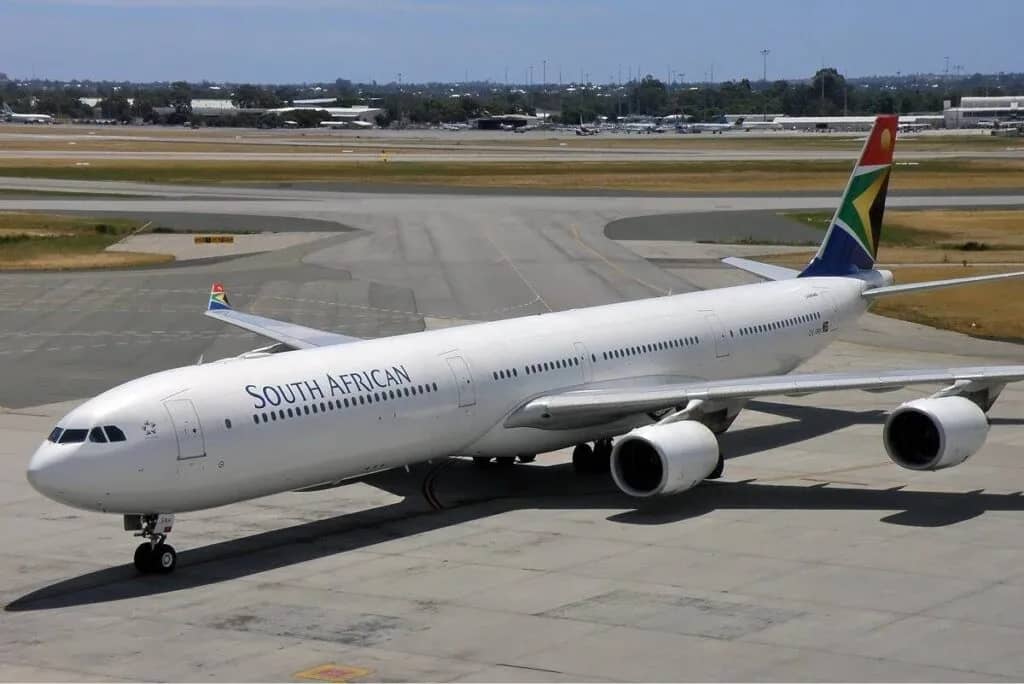
At 12,834 km, South African Airways' Johannesburg to New York JFK route represented one of the longest commercial flights in the world during the A340-600's operational peak. The 16-hour westbound flight and 14-hour eastbound return crossed the entire Atlantic Ocean with limited diversion options over the mid-ocean.
This route exemplified the A340-600's design mission: ultra-long distance with strong payload from a hot-and-high airport. Johannesburg sits at 1,694 meters elevation with summer temperatures exceeding 30°C, conditions where four engines provided crucial thrust margins for safe operations.
London – Hong Kong (Virgin Atlantic, Cathay Pacific)
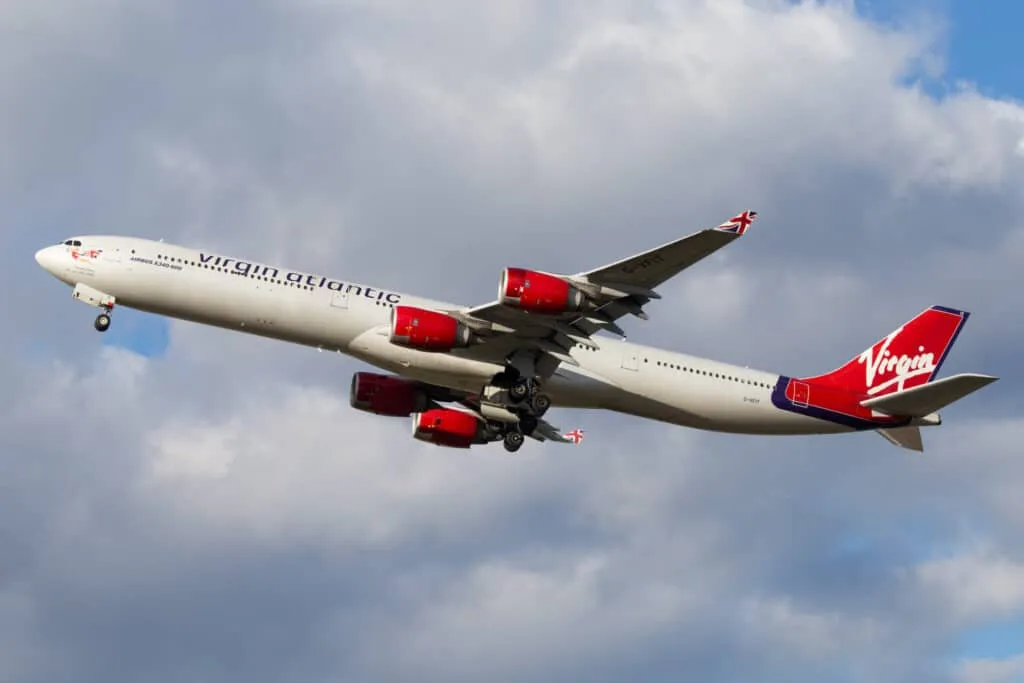
The 9,648 km route between London and Hong Kong saw regular A340-600 service from both Virgin Atlantic and Cathay Pacific. This route crosses central Asia and demonstrates the A340-600's ability to serve major city pairs with strong business demand, though it ultimately proved too fuel-intensive compared to 777-300ER alternatives.
Frankfurt – Buenos Aires (Lufthansa)
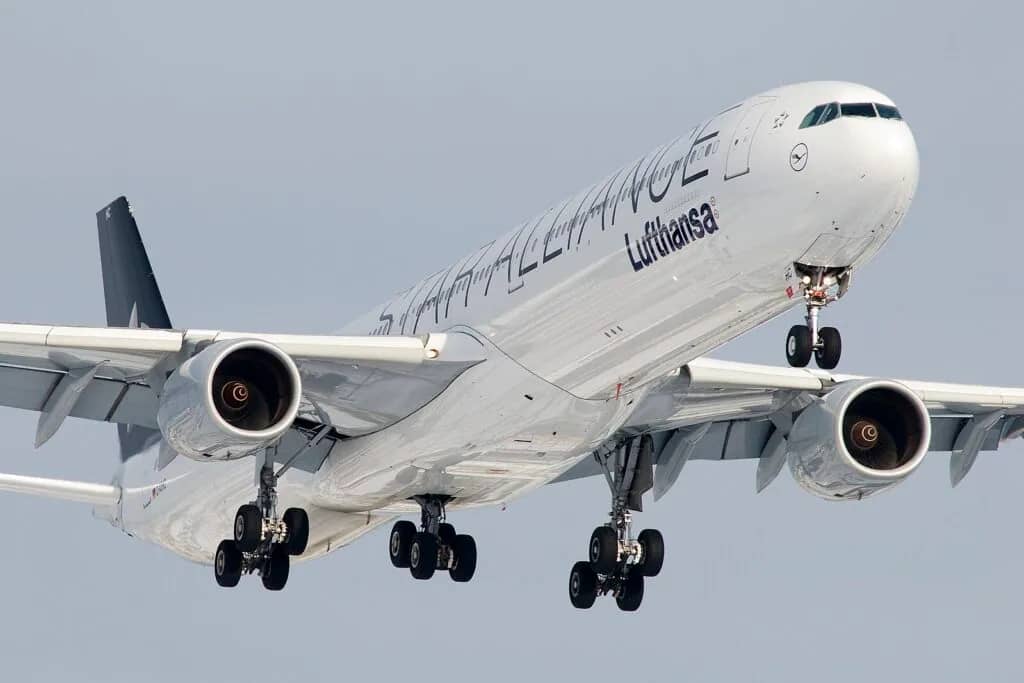
Lufthansa's 11,641 km Frankfurt to Buenos Aires service connected Europe with South America's southern cone. The route required strong payload capability for both passengers and cargo, with freight revenue helping justify operations despite challenging economics.
Buenos Aires' elevation of 25 meters made hot temperatures rather than altitude the primary performance challenge, with summer conditions demanding careful weight management even with four-engine thrust.
Madrid – Mexico City (Iberia)
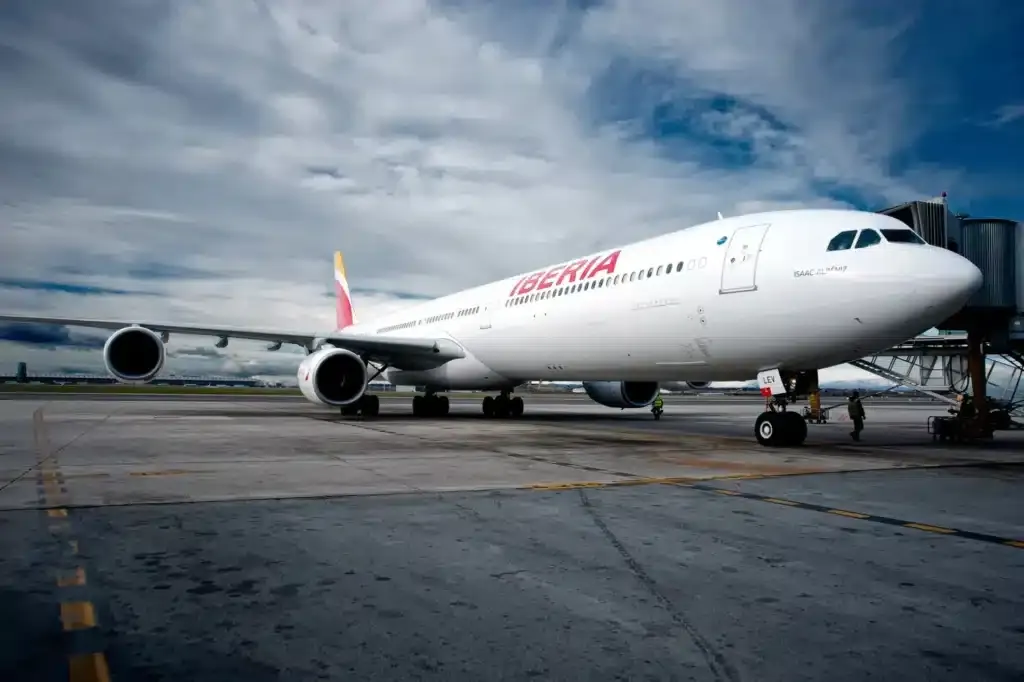
Iberia's Madrid to Mexico City route became the largest A340-600 route measured by available seat kilometers (ASKs). The 9,222 km flight to Mexico City's high-elevation airport (2,316 meters) made the A340-600's four-engine configuration particularly valuable.
Mexico City's density altitude frequently exceeds 8,000 feet equivalent during hot summer days, conditions where twin-engine aircraft required payload restrictions. The A340-600's four Trent 556 engines provided margins that enabled Iberia to carry full payloads year-round.
Why the A340-600 Is Still Loved in 2026
Despite commercial failure and rapid fleet withdrawal, the A340-600 maintains passionate following among aviation enthusiasts, planespotters, and travelers who appreciate its distinctive character.
Photogenic Four-Engine Symmetry
The A340-600's four-engine configuration creates stunning visual symmetry that modern twins cannot replicate. Two engines under each wing, combined with the aircraft's exceptional length, produces an elegant profile that photographers find irresistible. The aircraft's rarity in 2026 makes each sighting a significant event for spotters.
Instagram and aviation photography communities celebrate the A340-600's distinctive silhouette. The long fuselage stretching ahead of the wing, combined with four Trent 500 engines creating visual balance, represents a design philosophy unlikely to return in commercial aviation.
View this post on Instagram
The Last of the Long-Haul Quad-Jets
The A340-600 represents the final generation of four-engine long-haul commercial aircraft designed for passenger service. With the 747 and A380 retired or retiring, and no manufacturers developing new quad-jets, the A340-600's extinction marks the end of an engineering philosophy that dominated long-haul aviation for decades.
This end-of-era status creates nostalgic appeal similar to the Boeing 747's emotional resonance. Enthusiasts recognize they're witnessing the final days of a species, making each flight and sighting precious. When Lufthansa retires its last A340-600s in summer 2026, commercial aviation loses a distinctive chapter of its history.
Unique Technical Character
The A340-600's combination of four engines, exceptional length, and hot-and-high capability created unique operational characteristics that enthusiasts appreciate. The aircraft's ability to operate full payloads from challenging airports, combined with its ultra-long-haul range, demonstrated engineering excellence even if economic forces rendered it obsolete.
Aviation enthusiasts particularly appreciate the A340-600's three-spool Trent 500 engines, representing sophisticated engineering rarely visible to passengers. The distinctive sound of four Trent engines spooling up for takeoff, combined with the long takeoff run required by the aircraft's length, creates memorable experiences for both passengers and spotters.
Cult Following Among Spotters
As the A340-600 becomes increasingly rare, dedicated spotters track remaining aircraft and make special trips to photograph the last operational examples. Lufthansa's Frankfurt base became a pilgrimage site for enthusiasts in 2025-2026, with planespotters traveling internationally to capture A340-600 departures before retirement.
Online communities share sighting reports, registration numbers, and retirement speculation. Each withdrawn aircraft receives farewell attention, and enthusiasts document paint schemes, special liveries, and operational history. This passionate community ensures the A340-600's legacy endures beyond its commercial service life.
The A340-600 in 2026 — Retirement Timeline & Future Outlook
The A340-600's commercial service life is rapidly approaching its conclusion, with only a handful of aircraft remaining in passenger operations as of early 2026.
Lufthansa's Final A340-600 Operations
Lufthansa operates the world's last significant A340-600 fleet with six aircraft based at Frankfurt Airport. The airline originally planned retirement by late 2025 but extended operations into 2026 due to Boeing 787 delivery delays and certification issues with the new Allegris cabin.
As of December 2025, Lufthansa operates A340-600s on limited routes: Frankfurt-Boston, Frankfurt-New York JFK, and Frankfurt-Riyadh. The final scheduled flight is planned for summer 2026, connecting Frankfurt with Riyadh before the type's permanent retirement from scheduled commercial service.
Lufthansa's A340-600s average over 20 years in age, with the first delivered in November 2003. While structurally sound, the aircraft face increasing maintenance costs as aging systems require attention. More critically, fuel burn economics make each flight financially painful compared to A350 or 787 alternatives.
Other Remaining Operators
Beyond Lufthansa, only small numbers of A340-600s remain in commercial service. Mahan Air in Iran operates 3-4 aircraft on international routes from Tehran, while Venezuela's Conviasa flies 2-3 A340-600s on a mix of domestic and international services.
These operators benefit from specific circumstances (low fuel costs in Iran, limited alternatives for sanctioned carriers) that make quad-jet operations economically viable.
South African Airways historically operated A340-600s on its ultra-long-haul routes but has retired the type. Most other major operators including Virgin Atlantic, Iberia, Etihad, Emirates, and Qatar Airways withdrew their A340-600 fleets between 2015-2024 in favor of 777-300ERs, A350s, and 787s.
Cargo Conversion Prospects
Unlike the successful 747 cargo conversion programs, the A340-600 faces limited cargo conversion interest. The aircraft's four-engine fuel consumption makes it uncompetitive against modern freighters like the 777F, 747-8F, and A350F for scheduled cargo operations.
Several aircraft have been stored rather than scrapped, preserving options for specialized cargo conversions or VIP/government transport applications where fuel burn concerns matter less than capacity and range. However, no major cargo conversion programs have emerged, and most retired A340-600s proceed directly to part-out or scrap.
Legacy and Historical Significance
The A340-600's place in aviation history is secure despite commercial failure. As the longest commercial airliner for eight years (2002-2010), it pushed engineering boundaries and demonstrated Airbus's capability to develop stretched variants with exceptional range and capacity.
The aircraft proved critical for airlines operating from hot-and-high airports before ETOPS expansion, enabling routes that would have been impossible with twins. While ultimately overtaken by economics, the A340-600 successfully served its intended mission during the 2000s transition period.
Total production reached 97 aircraft from 2001-2011, far below the 844 Boeing 777-300ERs delivered or the projected market Airbus initially forecast. Nevertheless, the A340-600 demonstrated technical excellence and provided valuable lessons that informed subsequent Airbus programs, particularly the A350 development.
Production Summary: Airbus delivered 377 total A340 family aircraft from 1993-2011: 28 A340-200s, 218 A340-300s, 34 A340-500s, and 97 A340-600s. The last A340 was delivered to Iberia in November 2011, ending production after 18 years.
Frequently Asked Questions About the Airbus A340-600
How many passengers does the Airbus A340-600 carry?
The A340-600 typically carries 326-380 passengers in a three-class configuration with first, business, and economy sections. Airlines like Lufthansa configured 281 seats (premium-heavy), while operators like Iberia used 342 seats.
Maximum high-density configuration allows up to 475 passengers in single-class layout, though this was never used commercially. The aircraft's 75.36-meter fuselage length provides substantial cabin space, enabling flexible layouts optimized for different market requirements.
Why does the A340-600 have four engines?
The A340-600 was designed with four engines to bypass ETOPS restrictions that limited twin-engine aircraft on long overwater routes during the 1990s and early 2000s. Regulations at the time required twin-engine aircraft to remain within specific distances (initially 60 minutes, later extended to 120 and 180 minutes) of suitable diversion airports.
Four engines provided operational flexibility for ultra-long-haul flights before ETOPS expansion made twin-engine aircraft viable for all routes. The four-engine configuration also provided excellent hot-and-high airport performance and passenger confidence on long oceanic crossings.
What engines power the A340-600?
The A340-600 is exclusively powered by four Rolls-Royce Trent 556 or Trent 560 turbofan engines from the Trent 500 series. The standard Trent 556 produces 249 kN (56,000 lbf) thrust, while the Trent 560 delivers 275 kN (62,000 lbf) on the High Gross Weight variant.
Both engines feature Rolls-Royce's three-spool architecture with a 2.47-meter fan diameter, 8.5:1 bypass ratio at cruise, and 35-36:1 overall pressure ratio. The engines combine the Trent 700's wide-chord fan with a scaled Trent 800 core, optimized for long-distance cruise efficiency.
Is the A340-600 still in service in 2026?
Yes, but in very limited numbers. As of early 2026, Lufthansa operates the last significant commercial A340-600 fleet with six aircraft based at Frankfurt Airport, scheduled for final retirement by summer 2026. Limited operations continue with Mahan Air in Iran (3-4 aircraft) and Conviasa in Venezuela (2-3 aircraft).
Most major carriers including Virgin Atlantic, Iberia, Etihad, Emirates, and Qatar Airways retired their A340-600 fleets between 2015-2024. By mid-2026, the A340-600 will likely be extinct from scheduled commercial passenger service, with only a handful of aircraft remaining in specialized roles.
Why did airlines stop buying four-engine aircraft?
ETOPS expansion allowed twin-engine aircraft to fly long overwater routes, eliminating the primary advantage four engines once held. Modern twins like the Boeing 777-300ER and Airbus A350-1000 offer 25-30% lower fuel burn per seat compared to four-engine aircraft. With two engines instead of four, airlines reduce maintenance costs, spare parts inventory, and operational complexity.
The 777-300ER's GE90 engines achieve 7% better specific fuel consumption than the A340-600's Trent 500 engines, and operating two massive engines proves cheaper than four smaller ones. At high fuel prices, the A340-600's economics collapsed, forcing early retirement despite remaining structural life.
Which airlines still fly the A340-600?
As of early 2026, only three carriers operate the A340-600 in scheduled passenger service. Lufthansa leads with 6 aircraft flying Frankfurt-Boston, Frankfurt-New York JFK, and Frankfurt-Riyadh routes until summer 2026 retirement.
Mahan Air operates 3-4 A340-600s from Tehran on international routes to destinations including Dubai, Istanbul, and European cities. Conviasa in Venezuela flies 2-3 A340-600s on domestic and limited international services.
All major carriers that once operated large A340-600 fleets (Virgin Atlantic with 19, Iberia with 17, Etihad, Emirates, Qatar Airways) have fully retired the type in favor of more efficient twins like the 787 Dreamliner and A350.
Conclusion: The A340-600's Complex Legacy
The Airbus A340-600 represents both engineering achievement and commercial miscalculation. As the longest commercial airliner ever built by Airbus, it pushed technical boundaries and enabled routes previously impossible with twin-engine aircraft. The combination of four Rolls-Royce Trent 556/560 engines, 75.36-meter fuselage, and 14,450 km range created unique capabilities for ultra-long-haul operations from challenging airports.
Yet the aircraft arrived at precisely the wrong moment in aviation history. ETOPS expansion eliminated its primary operational advantage, while rising fuel prices magnified its 30% fuel burn disadvantage against twin-engine competitors. The 777-300ER's market dominance and the A350's superior efficiency rendered the A340-600 economically obsolete within a decade of introduction.
As Lufthansa prepares to retire the last commercial A340-600s in summer 2026, aviation loses a distinctive four-engine icon. The aircraft's dramatic silhouette, distinctive Trent 500 engine sound, and exceptional length will be missed by enthusiasts and travelers who appreciated its unique character. While commercially unsuccessful, the A340-600's technical achievements and operational contributions secured its place in aviation history as the last great four-engine long-haul passenger aircraft.
For those interested in comparing modern widebody alternatives, explore our comprehensive guides to the Boeing 777X vs Airbus A350-1000 and 787 Dreamliner vs A350 XWB, the twin-engine aircraft that replaced the A340-600 on ultra-long-haul routes worldwide. Learn more about sustainable aviation fuel initiatives driving the industry toward even greater efficiency, or explore our coverage of aircraft leasing strategies and depreciation patterns affecting widebody fleet economics.