
State-owned Qatar Airways reported a 7.1% decline in annual net profit Wednesday as the carrier works to rebuild its global schedule following operational disruptions triggered by the Iran conflict that erupted in late February.
The Gulf carrier posted net profit of 7.08 billion QAR ($1.94 billion) for the 12 months ending March 31, down from the previous year as Qatar Airways Iran conflict impacts forced extensive route rescheduling. Passenger numbers fell to 41.8 million from 43.1 million year-over-year.
CEO Hamad Al-Khater said the airline is “actively rebuilding our global network” while navigating continued regional instability that represents the aviation industry’s most severe operational crisis since COVID-19 pandemic travel restrictions.
“We are rebuilding with the confidence that comes from a balance sheet that has never been stronger, partnerships that proved their depth when we needed them most and an organisation that has demonstrated, under genuine pressure, exactly what it is capable of,” Al-Khater said in a statement.
The airline targets expansion to more than 160 destinations by summer 2026, though capacity remains significantly below pre-conflict levels across Gulf aviation operations.
Temporary Middle East airspace closures triggered thousands of flight cancellations since late February when the conflict began. Qatar Airways absorbed substantial operational costs from mandatory flight path diversions, with rerouted flights adding between 400 and 1,000 nautical miles to typical Europe-Asia routes depending on city pairs.

The additional distance directly increased fuel burn, crew duty time complications, and aircraft utilization inefficiency. The carrier’s hub-and-spoke model through Hamad International Airport in Doha amplifies vulnerability to regional airspace restrictions, as alternative routing options remain geographically constrained.
Flight scheduling complications extended beyond simple distance additions. Aircraft rotations designed for optimal efficiency under normal routing became impossible to maintain, forcing fleet redeployment and reducing overall network productivity.
Industry observers note Gulf carriers face unique exposure to Middle East geopolitical instability compared to European or Asian competitors with more diverse routing alternatives. Major airline disruptions typically result from weather events or technical issues affecting specific airports; regional conflict creates sustained, unpredictable operational environments.
The 7.1% net profit decline understates the full financial impact, as Qatar Airways benefited from robust post-pandemic travel demand that partially offset conflict-related costs. Fuel expenses increased substantially through longer routing, while revenue per available seat kilometer declined as load factors dropped amid passenger uncertainty about Middle East travel.
Gulf carriers operate on thin profit margins despite strong revenue figures, relying on high-efficiency hub operations connecting three major global regions through geographically advantageous Middle East locations. Operational disruptions directly erode this efficiency advantage.
Qatar Airways faces particular pressure maintaining premium passenger loyalty critical to its business model. The airline targets business and first-class travelers willing to pay substantial premiums for service quality and schedule reliability.
Extended flight times, increased connection complexity, and schedule uncertainty directly threaten this premium market segment where competitors like European legacy carriers and established long-haul airlines can offer more stable alternatives.
Analysts note the carrier’s strong balance sheet provides operational flexibility unavailable to more financially constrained competitors, enabling continued investment in service quality despite short-term profit pressure. However, sustained conflict could force more significant strategic adjustments if regional instability persists through the critical summer travel season.
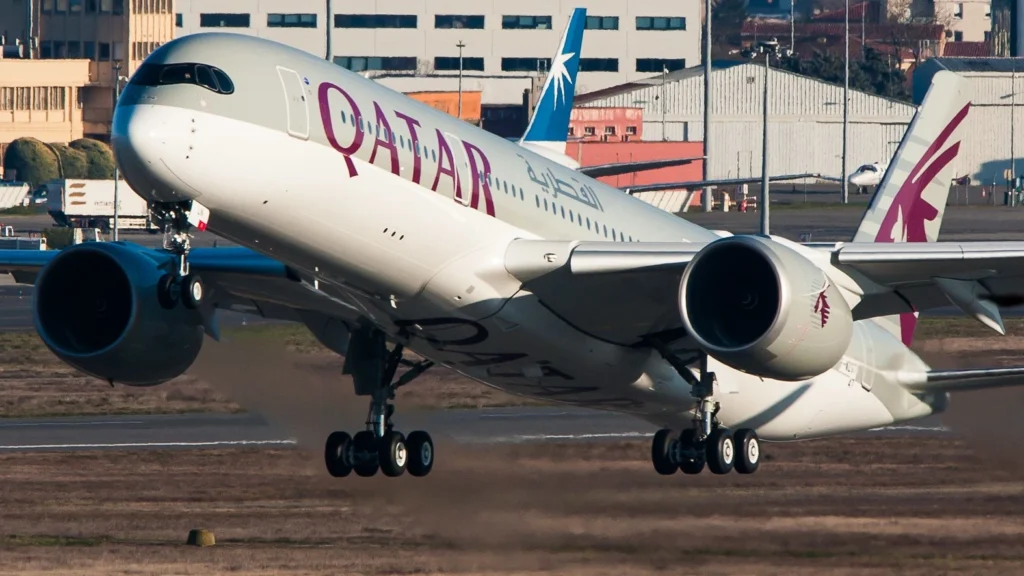
The airline’s recovery strategy focuses on restoring pre-conflict frequency on key business routes while maintaining schedule reliability to rebuild passenger confidence. The carrier prioritizes high-yield city pairs connecting major business centers, accepting lower capacity utilization on some leisure routes where demand remains suppressed.
Aircraft redeployment represents a critical component of network optimization. Qatar Airways shifted wide-body capacity from Europe-Asia routes requiring extensive detours toward more viable routings less affected by airspace restrictions.
The Doha hub’s geographic position remains both advantage and vulnerability. Under normal conditions, Qatar Airways operates one of the aviation industry’s most efficient connecting banks, enabling passengers to transit between three global regions through a single connection. Airspace restrictions complicate this model by extending connection times.
Passenger confidence rebuilding may prove more challenging than operational schedule restoration. Business travelers prioritize schedule reliability and journey time predictability. Extended connection times create competitive disadvantages even after specific flights return to schedules, as corporate travel policies may restrict Middle East routings until regional stability demonstrates clear improvement.
| Airline | Primary Impact | Operational Challenge |
|---|---|---|
| Qatar Airways | 7.1% profit decline, passenger drop to 41.8M | Hub efficiency loss, Europe-Asia rerouting costs |
| Emirates | Network capacity reduction, scheduling disruption | Dubai hub operations affected by UAE airspace concerns |
| Etihad Airways | Abu Dhabi hub operations complexity increased | Regional instability affecting passenger confidence |
| Turkish Airlines | Northern routing advantage over Gulf competitors | Capacity constraints limit market share gains |
Dubai-based Emirates and Abu Dhabi’s Etihad Airways confront similar operational challenges, though specific impacts vary by network structure and hub geography. Emirates’ larger fleet and more extensive Europe network provide some operational flexibility advantages, while Etihad’s smaller scale limits both vulnerability and recovery options.
Turkish Airlines benefits from geographic positioning north of primary conflict zones, enabling more consistent routing through Turkish airspace connecting Europe and Asia without significant Middle East exposure. This competitive advantage positions the carrier to capture market share from Gulf competitors unable to maintain pre-conflict efficiency levels.
Industry data from Eurocontrol indicates Europe-Asia traffic flows through Middle East airspace remain 15-20% below pre-conflict levels, with recovery timelines highly dependent on regional stability improvements.
The renewed attacks on the United Arab Emirates in May, despite an April ceasefire, underscore the operational uncertainty confronting Gulf aviation. Airlines struggle to plan network recovery when the security environment remains fundamentally unpredictable.
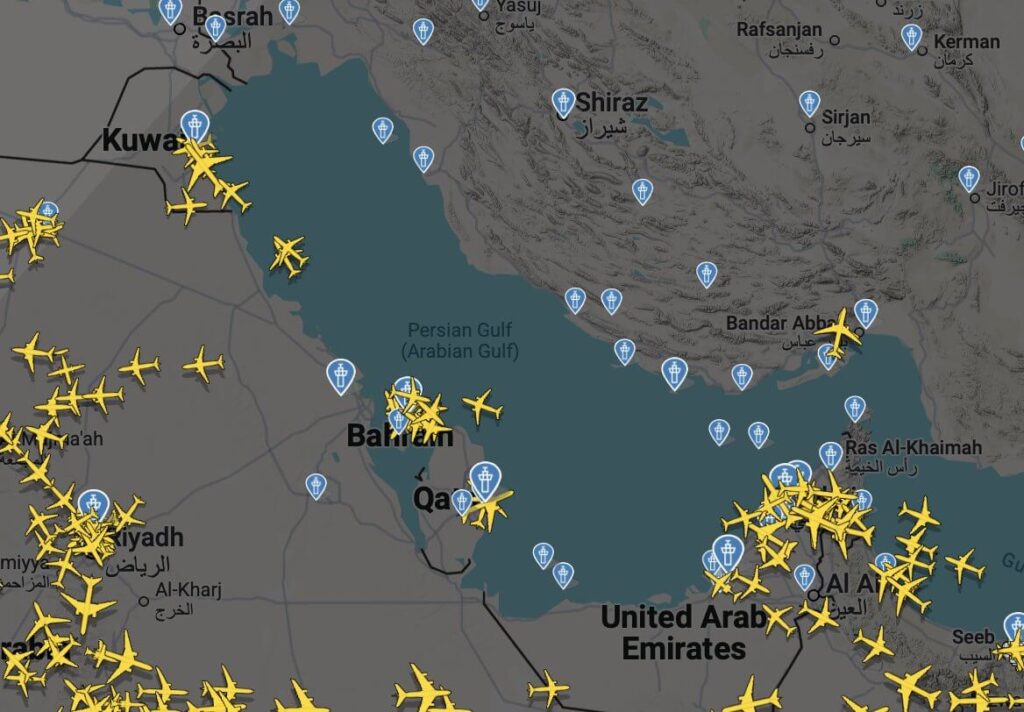
[Image: Aircraft route diversion map showing Middle East conflict zone rerouting | Alt: airline route diversions around Iran conflict zones affecting Gulf carriers]
The crisis exposes fundamental strategic risks in Gulf carriers’ hub-and-spoke business models that prioritize geographic advantage over operational redundancy. Unlike network carriers with multiple hub options, Gulf airlines concentrate operations through single primary hubs lacking meaningful alternative routing when regional instability affects core geography.
Qatar Airways operates the world’s fifth-busiest international airport by passenger traffic through Hamad International, with nearly all long-haul passengers transiting the Doha hub. This concentration creates unmatched operational efficiency under stable conditions but eliminates flexibility when regional airspace becomes constrained.
European legacy carriers like Lufthansa or Air France-KLM operate multiple hubs across different countries, enabling traffic flow redistribution when specific routes face disruption. Gulf carriers lack this geographic diversity, making them structurally vulnerable to regional instability.
Sustained regional instability could force strategic reconsideration of the Gulf carrier business model’s fundamental assumptions. If Middle East routing proves unreliable over multi-year periods, the geographic advantage that enabled Gulf carrier growth becomes a strategic liability.
Recovery timelines remain uncertain. Industry executives say passenger confidence restoration depends on sustained regional stability rather than temporary ceasefires that collapse under renewed attacks. Corporate travel managers increasingly direct employees toward alternative routings through European or Asian hubs despite longer total journey times, prioritizing predictability over efficiency.
Qatar Airways’ financial strength provides breathing room unavailable to weaker competitors, but the strategic challenge extends beyond short-term profitability. The carrier must demonstrate operational reliability under continued regional uncertainty while rebuilding the premium passenger base that generates disproportionate revenue.
Al-Khater acknowledged the challenge in Wednesday’s statement, emphasizing partnership strength and organizational resilience. The airline’s ability to restore its global network while maintaining service quality under operational pressure will determine whether it emerges from the crisis with its competitive position intact or fundamentally weakened.
The summer travel season represents a critical test. If Qatar Airways successfully rebuilds schedule reliability and passenger confidence during peak demand months, the carrier positions itself for stronger recovery as regional stability eventually improves. Continued operational challenges through summer could trigger more significant strategic adjustments including potential network restructuring away from Middle East hub dependency.
($1 = 3.6450 Qatar riyals)